Of arbitrariness and arbiters: The Freedom to Speak Up project three years on.

By Dr Minh Alexander NHS whistleblower and former consultant psychiatrist, 7 February 2018


Introduction

The National Guardian’s Office (NGO) costs the taxpayer £1 million a year, but what help does it give to whistleblowers in difficulties?

The National Guardian rightfully exposed CQC failure to treat whistleblowers fairly at Southport and Ormskirk Hospital NHS Trust.

The CQC accepted as satisfactory a fundamentally flawed FPPR investigation report, produced without anyone speaking to the whistleblowers in question. It would have been risky for the National Guardian not to acknowledge this serious CQC failure, as the evidence of the failure lies in a ticking time bomb of a report that the trust has not yet published but will no doubt surface eventually. Nevertheless, it was the right thing to do and this should be acknowledged.

But what else has the NGO done? Events to date suggest that the NGO makes up its own rules, which fail whistleblowers.

Has Robert Francis has stayed true to his original recommendations in the Freedom To Speak Up Review report or is he supporting a watered down interpretation of his recommendations?

Lloyd Armstrong is an NHS whistleblower who was sacked in the summer of 2017 after he made public interest disclosures about patient safety and poor governance at troubled North Essex Partnership NHS Foundation Trust.

This was after unsuccessfully seeking help from the National Freedom To Speak Up Guardian in January 2017, four months after she took up post.

Armstrong approached the National Guardian for help after his local trust Speak Up Guardian refused to intervene and advised him that the HR process had to be completed before she would examine any concerns about unfairness:

“You have been suspended from work since June and so this process must be followed through and brought to an end. As the hearing is so imminent I do not want to give you false hope that the disciplinary process will be halted. As I have said to you at [sic] the telephone, at this late stage my feeling is that the Guardian Service will proceed to look at the process if you feel you have been unfairly treated once it has ended.”

Email from North Essex Partnership University NHS Foundation Trust Speak Up Guardian 14 January 2017

Even though Armstrong was facing dismissal, the National Guardian advised that she could not take his case on because she had not yet established her procedures for handling cases.

Armstrong asked the National Guardian to invite his employer to temporarily pause proceedings against him, to allow her time to decide whether she wanted to take his case on. She refused to do so and Armstrong was subsequently sacked.


What are the National Guardians rules of procedure?

There has been much controversy about the National Guardian’s interpretation of the office’s role and responsibilities.

The 2016 CQC report on the outcome of a public consultation about the Office revealed that contributors believed that the National Guardian should protect whistleblowers from reprisal.

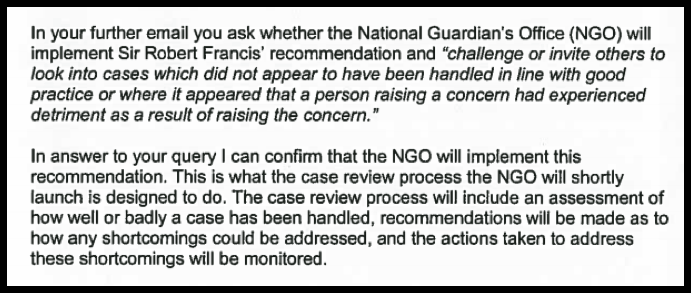
The CQC twisted and turned but its CEO David Behan eventually conceded that the National Guardian should challenge detriment:

Screen Shot 2018-02-07 at 04.59.26`Letter from David Behan 20 April 2017


However, the National Guardian later stated in case review guidance, published June 2017, that she sees the role as one of helping employers:

Therefore, the purpose of a case review will be primarily to support NHS trusts to identify how they can improve their own processes and support for staff when raising concerns by reviewing how NHS trusts responded to such concerns.”

This represents very significant drift from the original purpose of the Office as set out in Robert Francis’ report of the Freedom To Speak Up Review.

Francis originally proposed the establishment of the Office to primarily help whistleblowers who had nowhere else to go:

The deficiencies in the way concerns are investigated, and subsequent victimisation of individuals have been addressed in 6.4 and 7.5 respectively. What seems to be missing is any sort of external review mechanism, not to take over investigation of the concerns, but to provide a non-legalistic option to review what has been done locally, and make recommendations for further action as appropriate”

Report of the Freedom To Speak Up Review February 2015


Francis recommended that the Office should help ensure redress for patients and whistleblowers who are harmed as a result of whistleblowing governance failures. 1

Francis originally felt strongly enough to advise that the National Guardian should seek a direction from regulators if needed, to ensure such redress. 1

Moreover, the National Guardian has stated in current case review guidance:

Therefore cases should only be considered for possible review where there is clear evidence received in the referral that the NHS body has already responded to a concern and has failed to do so appropriately.”

This does not help whistleblowers where employers simply refuse to respond.

Moreover, the National Guardian’s guidance states that cases will be reviewed:

Where it is practicable for the NGO to review the case in question”

 ‘Practicable’ has the look of another escape clause.

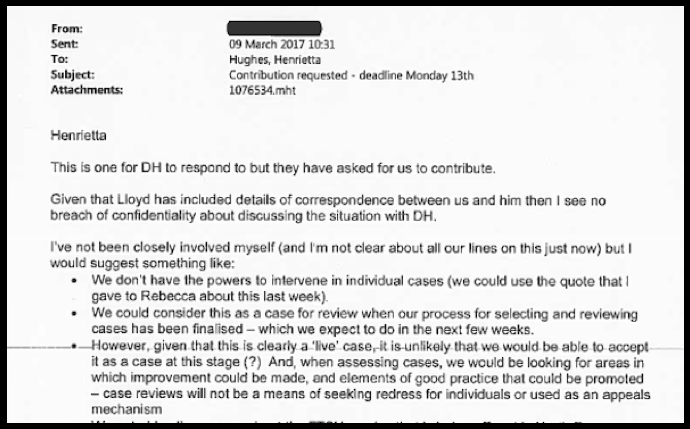
Data obtained via Subject Access Request revealed that the National Guardian’s Office may baulk at cases which are subject to ongoing processes:


Screen Shot 2018-02-07 at 05.07.36

This internal correspondence by the NGO also stated:

 “case reviews will not be a means of seeking redress for individuals”

which contradicts Robert Francis’ original aims for the Office and his explicit view that the Office should have a key role in facilitating redress for harmed whistleblowers.


I asked the National Guardian to clarify what ‘live’ cases were:

Letter to National Guardian 7 May 2017

I have been provided with information which suggests that your office will not accept referrals on ‘live’ cases.

Should I understand from this that your office intends to wait until say, employers’ disciplinary processes against whistleblowers have concluded and have potentially resulted in disciplinary action and dismissal, before the office will consider reviewing the whistleblower cases in question?”

 The reply from the NGO on 17 May 2017 confirmed the intention to exclude cases with ongoing processes

“ …we will initially select cases for review where there are no outstanding decisions to be made. As the trial period progresses, we will review this approach and explore whether we can effectively open up the parameters within which we will be able to accept cases for review.”

I raised concerns about this and asked if ‘outstanding decisions’ included decisions by Employment Tribunals. I have no record of any response by the National Guardian and have sought further clarification. Clearly though, if the National Guardian sits on her hands whilst Employment Tribunals proceed over many months and sometimes years, irreparable damage will be done to whistleblowers.

Neither has the National Guardian responded yet to a question about the clause in her case review guidance which says that she will not touch cases until employers have responded to whistleblowers, which therefore implies there can be impunity for employers who simply ignore whistleblowers.


What is Robert Francis’ position on the National Guardian’s role?

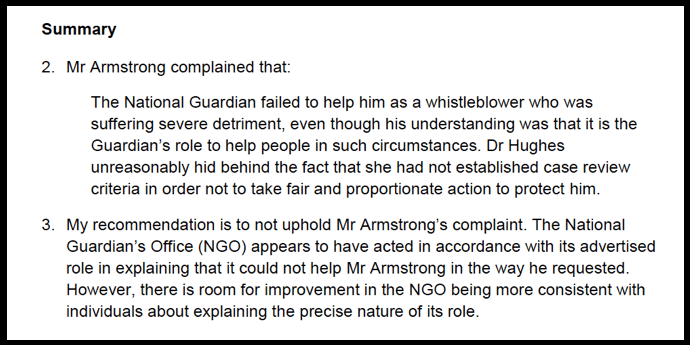
Armstrong complained about the National Guardian’s Office and the decision not to help him. It was investigated by NHS Improvement who found in the NGO’s favour, with the conclusion:

Screen Shot 2018-02-07 at 05.10.11

A fundamental flaw in this complaint response by NHS Improvement is that it judged the fairness and proportionality of the NGO’s actions according to its ‘advertised role’.

This is because Armstrong’s complaint was founded on a concern that the National Guardian had taken an erroneous position and wrongly interpreted her remit. Her ‘advertised role’ had been questioned as part of the complaint, but this was sidestepped by NHS Improvement.

This is to be expected though, as the governance arrangements for the National Guardian’s Office are flimsy and introduce conflicts of interest. The National Guardian is expected to hold all to account, but complaints about the National Guardian are investigated by one of the bodies that she purportedly holds to account, NHS Improvement.

Nevertheless, it was significant that NHS Improvement conceded:

“there is room for improvement in the NGO being more consistent with individuals about explaining the precise nature of its role”.

Robert Francis adjudicates on complaints about the National Guardian, in his role as Chair of the National Guardian’s Liaison and Accountability Board. NHS Improvement’s complaint investigation reports are sent to him for a final decision.

Worryingly, in Armstrong’s case, Francis took the National Guardian’s and NHS Improvement’s view. He concluded that the NGO had no remit for intervening:

“I have considered his report [the NHS Improvement complaint investigation report] carefully and have decided to accept his recommendation that your complaint not be upheld…I do agree that it is not part of the National Guardian’s role to intervene in individual disciplinary processes’

Letter by Robert Francis to Lloyd Armstrong of 4 August 2017

However, Francis concurred with NHS Improvement that the NGO should set out more clearly the range of recommendations that it might make after undertaking a case review:

“I also agree with Mr Grimes’ view that it is desirable that the National Guardian’s Office clarifies what type of recommendations it considers it can make following a case review under the new review process it is in the course of setting up”

Letter by Robert Francis to Lloyd Armstrong of 4 August 2017

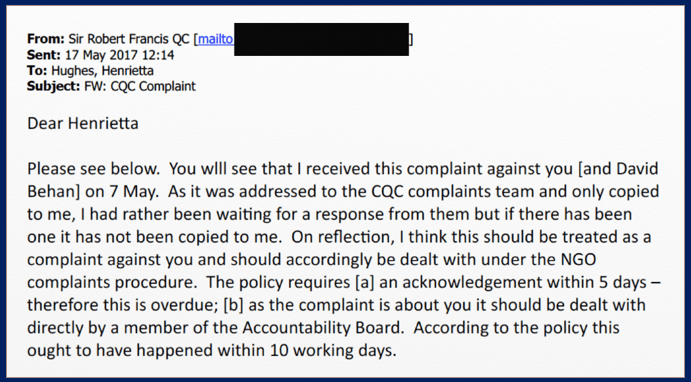
Disclosed correspondence also showed that Francis commented on non-adherence to the National Guardian’s complaint procedure:

Screen Shot 2018-02-07 at 05.12.13

There appears to be no evidence that the NGO has acted upon NHS Improvement’s and Francis’ recommendation that it should clarify what type of recommendations might be made following a case review.

The NGO’s original case review guidance from June 2017 remains online with no sign of a later revision. Neither do the NGO’s supplementary guidance for referrers and FAQs provide the clarification that NHS Improvement and Francis thought it should produce. Only broad reference is made to the original Freedom To Speak Up Review report proposals.

Furthermore, on 1 February 2018 the National Guardian published a case review report which revealed that her Office looked at whistleblower cases at Northern Lincolnshire and Goole NHS Foundation Trust despite internal processes not having concluded in these cases.

This report indicates that the NGO intervened and asked questions about an internal disciplinary process in the case of a whistleblower who was subjected to counter-allegations and investigation after whistleblowing, despite the Office’s previous advice to Armstrong that it could not intervene.

Even so, in the case of the Northern Lincolnshire and Goole NHS Foundation Trust whistleblower who was subjected to investigation after whistleblowing, the NGO appeared to accept the trust’s assurance that its internal investigation into the counter-allegations:

had looked for evidence of any malicious motive, but had not found any.

The National Guardian gave no evidence in this report that this claim by the trust was independently weighed by her office.

Neither is there any indication of potential redress for the whistleblower for any detriments suffered.

More generally, there is also a dearth of evidence about how the National Guardian conducts her business. Strangely, her first annual report was silent on how many referrals she had received for case review, and how many of these she had accepted.

The National Guardian has so far attended and held numerous conferences and other high profile events, but has announced only three cases reviews since June 2017 – on Southport and Ormskirk Hospital NHS Trust, Northern Lincolnshire and Goole NHS Foundation Trust and Derbyshire Community Health Services NHS Foundation Trust.

There was also no evidence in her annual report that she has collected satisfaction data from whistleblowers who have contacted her Office. This is despite the fact that she expects local Speak Up Guardians to collect such data.

Armstrong has now lodged a further complaint about the apparent inconsistencies in the NGO’s approach to whistleblowers.

He has formally submitted questions to the National Guardian’s Office on its case review activity.

He has also asked Robert Francis to explain his position more clearly:

“I would be very grateful if you could clarify to me what was in your mind when you made your original recommendation in the report of the Freedom To Speak Up Review that the National Guardian should help ensure redress for harmed whistleblowers, including through a direction by a regulator if necessary.

 Please could you give some practical indications of the sort of cases and scenarios that would in your view qualify for such help from the National Guardian.”

Letter by Armstrong to Robert Francis of 4 February 2018


As more evidence of the National Guardian’s Office’s inefficacy mounts, both in terms of design and execution, will Francis rethink his Freedom To Speak Up Review recommendations?

In lawyerly fashion, he left himself some escape clauses. In February 2015 he rejected the proposal of a properly constituted Office with legal powers to protect whistleblowers. But he did leave the door slightly ajar:

While I do not see the need to go as far as this, certainly at this stage, I do see a need for some form of external review mechanism.”

 Page 168, report of the Freedom To Speak Up Review

What is finally needed to push that door open? More avoidable deaths at scale? It should not take such tragedy to usher in proper reforms.

But whilst they wait for that door to open, whistleblowers would be very glad to hear from the National Guardian exactly what she is doing for them and for patient safety.

That is of course, assuming she knows.


RELATED ITEMS

UK whistleblowing law is an ass. Helen Rochester v Ingham House Ltd and the complicit CQC

Sir Robert Francis and reform of whistleblowing law


NOTES

1 Page 168 of Robert Francis’ report of the Freedom to Speak Up Review:


7.6.12

The INO [National Guardian] should be authorised by these bodies to use his/her discretion to:

  • review the handling of concerns raised by NHS workers where there is cause for concern in order to identify failures to follow good practice, in particular failing to address dangers to patient safety and to the integrity of the NHS, or causing injustice to staff


  • to advise the relevant NHS organisation, where any failure to follow good practice has been found, to take appropriate and proportionate action, or to recommend to the relevant systems regulator or oversight body that it make a direction requiring such action.

 This may include:

– addressing any remaining risk to the safety of patients or staff 

– offering redress to any patients or staff harmed by any failure to address the safety risk

– correction of any failure to investigate the concerns adequately”

http://webarchive.nationalarchives.gov.uk/20150218150953/https://freedomtospeakup.org.uk/wp-content/uploads/2014/07/F2SU_web.pdf


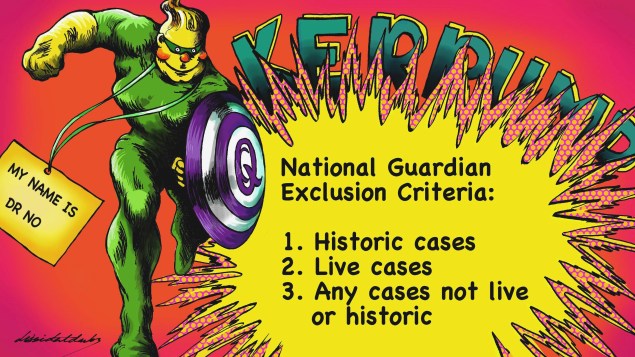
DR NO (1)

The National Freedom To Speak Up Guardian’s Social Media Policy

By Dr Minh Alexander, NHS whistleblower and former consultant psychiatrist, 31 January 2018


Jeremy Hunt’s and Robert Francis’ love child, the National Guardian’s Office, has been beset by PR disasters.

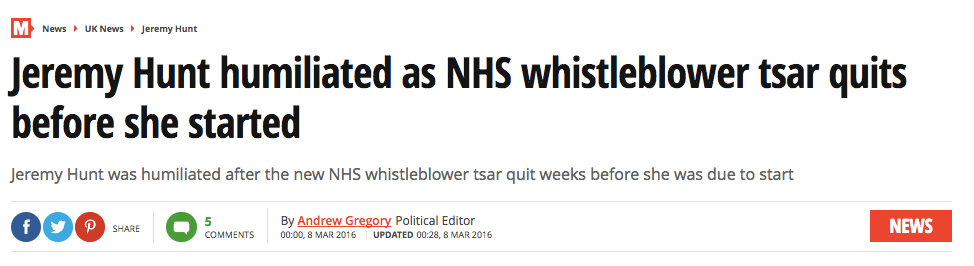
The first National Guardian Eileen Sills, was appointed in January 2016 but had resigned by March 2016 before she had taken up post.


Screen Shot 2018-01-31 at 05.58.24


When asked about her opinion on UK whistleblowing law, the Public Interest Disclosure Act (PIDA), Sills revealed the decorative nature of the Office by replying that it was too soon to tell.

Although clearly unbeknown to Sills, PIDA had in fact been in place for almost twenty years.

The Department of Health and Social Care has been keen to spin that Sills’ replacement, Henrietta Hughes, is a front line GP.  Thus conveniently overlooking that Hughes was an NHS England Medical Director in the London area.

There was a testy exchange about this in parliament, between the excellent Philippa Whitford MP and the then Under Secretary of State for Health Ben Gummer during the debate on badly mishandled whistleblowing at Liverpool Community Health NHS Trust.

An NHS England Medical Director is not a natural choice for a confidante and defender of the front line.

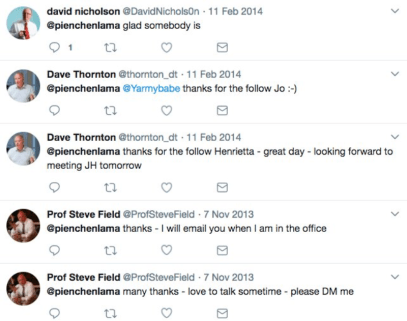
Of great concern regarding transparency and tone, Henrietta Hughes’ twitter account from her previous existence, under the handle @pienchenlama, was deleted around the time that she was appointed as National Freedom To Speak Up Guardian.

All those smiling group selfies and chatty, friendly encounters with fellow senior NHS managers such as David Nicholson the former CEO of the NHS were scrubbed.


Fragments and shadows remain of what was:

Screen Shot 2018-01-31 at 03.49.26


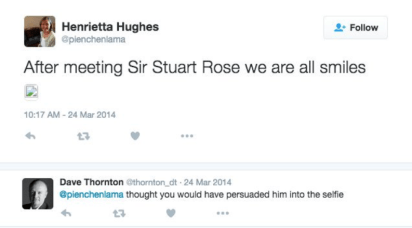
Smiles and selfies had been a theme:

Screen Shot 2018-01-31 at 03.51.43


Indeed, we know that the National Guardian is so keen on smiles that she made it compulsory in her previous role. The specifications were precise:


Screen Shot 2018-01-31 at 06.35.52


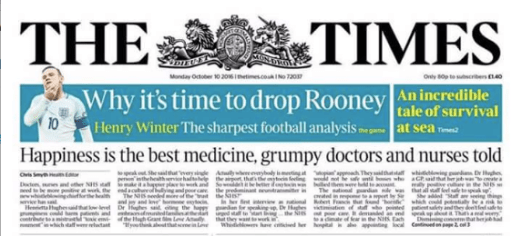
Hughes even gave a press interview about the importance of smiling when she took up post, resulting in some derisive press headlines and workforce responses.

front-page


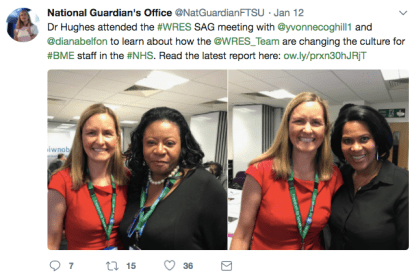
After over a year in post, the National Guardian finally returned to twitter via an official account, which started tweeting earlier this month.

Lots of smiles and selfies. And mutually reinforcing claims of culture change, which to many is not apparent:

Screen Shot 2018-01-31 at 03.57.44


We have already seen the painfully mechanical WRES Communications Strategy, its remarkable cache of stock tweets aimed at pumping out Good News.

What of the National Guardian’s own social media policy? An enquiry has resulted in this disclosure:

National Guardian Social Media Handbook


Ironically, this policy acknowledges that deleting tweets is not transparent:

Screen Shot 2018-01-31 at 04.06.27


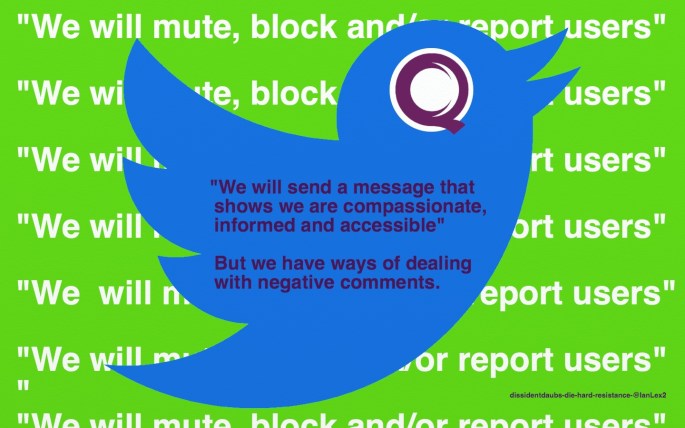
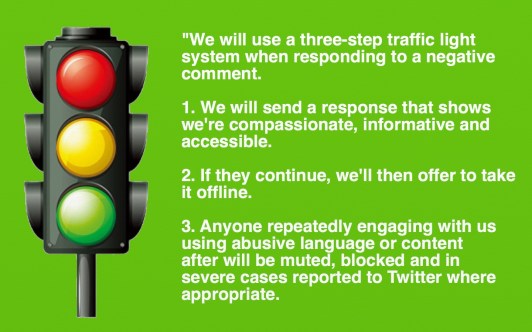
And how does the National Guardian intend that her team should deal with dissent?


Traffic lights:

National Guardian traffic lights negative comments


There is little reflection implied by these few lines. It is implied that ‘negative’ comments are de facto wrong, unjustified and undesirable.

It seems literally unthinkable to the National Guardian and her staff that the Office itself might need to take criticism on board.

An ironic state of a affairs for an entity whose raison d’être is to ensure that the workforce will be heard when it raises concerns.

Instead of genuinely championing the value and energy of dissent, the Office at its heart simply has tired old NHS managerial inclinations to stifle and suppress.

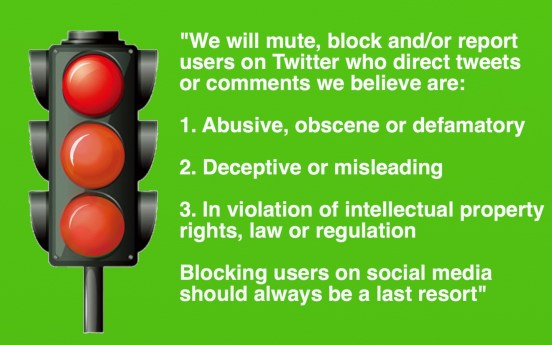
What will incur sufficient ire to warrant a twitter block by the National Guardian’s office? Quite a lot it seems:

National Guardian twitter blocking reasons


Well, that might spare the National Guardian and her staff the inconvenience of unsmiling whistleblowers who continue to be harmed, traduced and starved out by her masters.

But it won’t do much to achieve the Office’s social media policy aim of:

“Furthering the conversation about speaking up” 

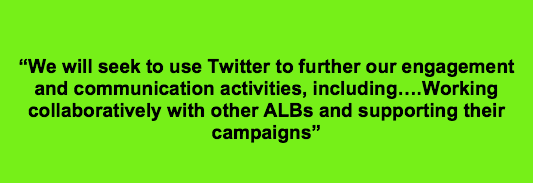
 As for her Office’s purported independence, her social media policy shows that she intends to stay on message and with the crowd:

Screen Shot 2018-01-31 at 06.43.17

And patients, where do patients feature in the National Guardian’s grand scheme?

A search of the National Guardian’s handbook gives this result:

Screen Shot 2018-01-31 at 06.17.51


Got the message?

Get with the programme.


UPDATE 1 FEBRUARY 2018

Letter 1 February 2018 to Gavin Rogers the National Guardian’s Comms Manager cc National Guardian and Robert Francis


RELATED ITEMS

Letter of 11 September 2017 to Public Accounts Committee requesing a review of whistleblowing

National Guardian Expects


By day Henrietta, by night Lanyard Woman


Safe in their hands? Government’s response to coroners’ warnings about the NHS

By Dr Minh Alexander, NHS whistleblower and former consultant psychiatrist

In August 2017 I reported on four years of data published on the Chief Coroner’s website, which revealed that over 1700 coroners’ reports on action to prevent future deaths had been issued between July 2013 and July 2017, 57% of which related to NHS organisations.

Worryingly, there were no published responses from the parties who had been sent coroners’ warning reports in 62% of these cases.

I made some further enquiries, focussing on the Chief Coroner’s office and central NHS bodies, from the Department of Health and Social Care downwards. This has uncovered further anomalies and concerns.

My full update findings, with all supporting responses from the Chief Coroner Department of Health and Social Care and arms length bodies and disclosed documents, are reported here

This is the summary of the update report:

“Summary

How diligently does the government protect the public from risks?

This is a follow up paper about the system response to coroners’ Section 28 warning reports on Action to Prevent Future Deaths, and how the NHS in particular responds risks to public safety.

The overall picture at the top of the NHS is one of defensiveness, half-answered questions and some conflicting accounts from different bodies, or even from the same body. It is very unclear to what extent the audit cycle is safely closed after coroners raise a concern.

If that is the example set at the top, this raises concerns about governance through the system.

Since 2013, coroners in England and Wales have been under a duty to issue a Section 28 report on action to prevent future deaths (also known as PFD reports) if they find risk factors that pose a threat to life.

Parties who receive a Section 28 report must provide a written response within 56 days.

By law, Coroners are required to send their report and any responses to the Chief Coroner.

Coroners and Justice Act 2009

“Schedule 5 Powers of Coroners  

Action to prevent other deaths 7 (1) Where— (a) a senior coroner has been conducting an investigation under this Part into a person’s death, (b) anything revealed by the investigation gives rise to a concern that circumstances creating a risk of other deaths will occur, or will continue to exist, in the future, and (c) in the coroner’s opinion, action should be taken to prevent the occurrence or continuation of such circumstances, or to eliminate or reduce the risk of death created by such circumstances, the coroner must report the matter to a person who the coroner believes may have power to take such action. (2) A person to whom a senior coroner makes a report under this paragraph must give the senior coroner a written response to it. (3) A copy of a report under this paragraph, and of the response to it, must be sent to the Chief Coroner.”

http://www.legislation.gov.uk/ukpga/2009/25/pdfs/ukpga_20090025_en.pdf

The Chief Coroner has discretion to publish the reports and corresponding responses, or not:

The Coroners (Investigations) Regulations 2013

 “PART

28. (5) On receipt of a report the Chief Coroner may—

(a)publish a copy of the report, or a summary of it, in such manner as the Chief Coroner thinks fit; and

(b)send a copy of the report to any person who the Chief Coroner believes may find it useful or of interest.”

http://www.legislation.gov.uk/uksi/2013/1629/part/7/made


The Chief Coroner has advised in his 2016/17 annual report that in 2016, 46% (241,211 of 524, 723) of registered deaths were referred to coroners. 40,504 of these cases that were reported to coroners were deemed to need investigation and inquest.

Section 28 reports are exceptionally issued and represent very significant concern by coroners. The Chief Coroner advised that between June 2016 and July 2017, 375 Section 28 reports were issued. My enquiries and other data have shown that whilst an NHS trust may have hundreds of inquests, they may typically be issued only a handful of Section 28 reports.

The coronial system relies on reporting but is hampered by failures of reporting. This context increases the significance of Section 28 reports.

Earlier this year, I analysed four years of data published by the Chief Coroner and found that there were no published responses to 62% of the Section 28 reports on the Chief Coroner’s website.

Four years of published coroners’ Section 28 reports in England and Wales, 24 August 2017

In some cases, this has since proved to be because respondents had failed to comply with Section 28 notices. For example, the government failed to respond to a coroner’s 2015, pre-Grenfell warning about the need for sprinklers in housing stock, especially for vulnerable residents. It only replied to the coroner in December 2017, after an enquiry about its missing response:

https://www.judiciary.gov.uk/publications/emma-waring/

https://minhalexander.com/wp-content/uploads/2018/01/171214-dclg-response-to-coroner-waring175602.pdf

My search of the Chief Coroner’s website was laborious as the website has minimal search capability, and Section 28 data has to be manually sifted.

I also found no published evidence of corresponding central analysis by the NHS of Section 28, from the Department of Health and Social Care downwards.

Subsequent enquiries to the Chief Coroner’s office and the Department of Health and Social Care and other central NHS bodies revealed some conflicting statements about whether responses to Section 28 reports had been withheld from publication by the Chief Coroner.

CQC claimed that it had asked for some its responses to Section 28 reports to be withheld from publication by the Chief Coroner. The Chief Coroner advised that his office had not received any such requests. In the face of this information from the Chief Coroner, the CQC indicated that it did not contest the Chief Coroner’s account of events.

There also appeared to be variance between some coroners and the Chief Coroner’s office. The Chief Coroner advised that he published all or most of the material received from coroners.

A sample of 21 coroners reported that they had submitted all Section 28 reports and related responses to the Chief Coroner. However, the Chief Coroner’s website showed a total of 342 Section 28 reports from these 21 coroners over a four year period, for which there were published responses in only 128 (37%) cases.

Similarly, information from some test enquiries to trusts also suggested not all Section 28 reports that are issued to trusts reach the Chief Coroner’s website. The Chief Coroner was alerted to this.

Nonetheless, the Chief Coroner has now committed in principle to full publication of all Section 28 reports and related responses.

There is no apparent system for ensuring compliance by coroners and the Chief Coroner has stated that he merely encourages coroners to write and submit reports when appropriate.

With regards to government learning from the Section 28 data, there appears to have been a change of policy in that the Chief Coroner’s office stopped producing regular trends analysis of Section 28 reports after September 2013. The office also advised that it was not sufficiently resourced to make improvements to its public facing database, to give the public greater access.

With regards to the NHS, there was limited evidence of systematic analysis and learning, with only relatively recent attempts to track and analyse trends shown by Section 28 reports. Moreover, the learning from thematic analyses has not been shared with service providers or the public.

There was reluctance by CQC to disclose analyses that it had undertaken, with initial claims that these were exempt from disclosure that were eventually waived.

The Department of Health and Social Care (DHSC) showed the greatest resistance to learning. It essentially claimed that analyses of Section 28 data were not worthwhile because the data is insufficiently standardised. This is difficult to square with its arms length bodies’ differing approaches and commitment to better future analysis of this data. Indeed, NHS England considered coroners’ Section 28 reports to be a ‘reliable’ source of data.

There was also no evidence that the arms length bodies are working together to reliably share information on Section 28 reports. NHS Improvement advised that it relies on trusts to notify it of Section 28 reports, when it could in fact make use of routine notifications by coroners to the CQC.

The DHSC, NHS England, the CQC and NHS Improvement all refused to disclose copies of their responses to particularly significant Section 28 reports that had been missing from the Chief Coroner’s website. NHS England, CQC and NHS Improvement relied on a past ICO decision that responses to coroners’ Section 28 reports are court documents and exempt under Section 32 FOIA. This is despite the fact that the ICO has confirmed to me that there is nothing to stop these bodies from voluntarily disclosing their responses to coroners if they chose to do so:

An organisation can choose to proactively publish information even if that information is exempt from disclosure under the Freedom of Information Act, or if the organisation is not subject to the Act.” 

ICO Group Manager of FOI Appeals and Complaints Department 6 December 2017

The DHSC tried to washed its hands of responsibility by claiming that it was the Chief Coroner’s responsibility to publish the documents, and stated that FOI exemptions would likely apply in any case.

This concerted opacity is a failure of leadership and accountability. It leaves major questions about under-resourcing of the NHS and systemic governance flaws unanswered. For example, whether national failings in managing ligature point risk have been addressed.

That said, although the CQC and NHS England refused to disclose key missing responses to some key Section 28 reports, some of the missing responses have now quietly appeared on the Chief Coroner’s website.

For example, the CQC’s previously missing 2014 response to a 2013 Section 29 report about national guidelines on night time staffing levels, which shows that CQC side-stepped the issue of committing to firm standards.

Another previously withheld but recently published CQC response to a high profile  avoidable death at the private facility the London Bridge Hospital, rated ‘Outstanding’ by the CQC, reveals that the hospital initially informed the CQC that the death was ‘expected’.

Overall, there needs to be a more proactive, joined up and transparent system response to coroners’ Section 28 reports.

The government should ensure that all Section 28 reports and responses are published, and the NHS should adopt a policy of open reporting on Section 28 reports, responses and related analyses, subject to redaction of third party personal data where required.

The NHS should not be hiding behind FOI exemption, especially when the Chief Coroner has agreed that all Section 28 reports and responses should be published.

The Chief Coroner’s office should also be adequately resourced so that it can once again report on a regular basis on national trends in Section 28 reports and maintain a database with sufficient functionality to allow meaningful, open access by the public.”


I provide below a vignette to illustrate some of the manoeuvring by central NHS bodies:

How the Care Quality Commission dodged the coroner’s warning about John Gwynfryn Morris’s (‘Gwyn’s’) death and safe staffing standards 
Screen Shot 2018-01-27 at 15.59.42

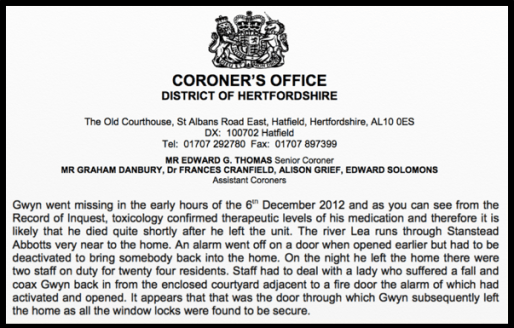
Gwyn suffered from dementia and died of hypothermia after going missing from a care home one night in December 2012.

The staff on duty were very stretched. There were two staff caring for 24 residents and Gwyn slipped out of the care home whilst staff were attending to an incident.

The coroner issued a warning report to the CQC on 11 November 2013, stating:

“I am drawing this case to your attention so that you and your inspectors can look carefully at whether staffing levels for night time are adequate to meet the various needs of all the residents/patients in residential, nursing and hospital environments. It seems to me that only two members of staff caring for over twenty four residents, some of whom suffer from dementia and are restless, is not enough to meet all the complex needs, especially with their other duties over a long shift of almost twelve hours.”

In retrospect, this was a significant and politically sensitive coroner’s letter in the context of the subsequent, hugely controversial decision in June 2015 to suspend the National Institute for Health and Social Care Excellence’s (NICE) work on safe staffing.

The CQC should have provided a written response to the coroner’s warning within 56 days. The coroner indicated that he expected a response by the week ending 10 January 2014.

However, I found that CQC’s response was missing from the Chief Coroner’s website as of July 2017.

Accordingly, I asked CQC for a copy but CQC refused to disclose its response, claiming an FOI exemption that according to advice from the ICO was entirely discretionary.

I subsequently noticed that CQC’s response to the coroner had been quietly published on the Chief Coroner’s website.

This showed that CQC did not reply to the coroner’s warning until 16 April 2014.

CQC’s response to the coroner of April 2014 skirted around the issue of safe staffing standards. CQC refused to commit to a clear opinion about whether the home had been under-staffed.

However, CQC assured the coroner:

“The care that is given to people who live with dementia is taken extremely seriously by the Commission.

…In terms of night time inspections, the Commission does currently carry out inspections at night if we have a concern about the care being provided at night, and we will be undertaking more out-of-hours inspections in the future.”

The CQC also informed the coroner that it had undertaken a ‘themed inspection’ on the care of people with dementia between December 2013 and February 2014.

CQC promised it would address safe staffing issues in a national report in May or June 2014, based on its themed inspection.

A national CQC report on the care of people with dementia  was eventually published in October 2014.

This was what the report said about levels of staffing:

4.4 Staffing

Staff have an important role in supporting people living with dementia to have a good quality of life. Having the right knowledge, skills and time is essential to good care. Key to achieving this is ensuring that there is the right number of staff, with the right values, who are supported through training, supervision and access to resources.”

“4.4.3 Numbers of staff  

The time staff had to spend with people, over and above providing the required aspects of personal and clinical care, varied across the care homes and hospitals visited. However, it was often a significant factor in caring for people living with dementia. We spoke to several managers and staff who expressed frustration that, due to a lack of resources, they were not able to provide the care needed.

We saw how people living with dementia were affected when there was not enough staff, including changes to their behaviour that caused distress to them and others around them.”

So, no clear commitment to rigorous inspection, and no measurable, enforceable standards.

In fact, just empty platitudes and nothing to embarrass any Minister.

And despite the CQC’s above emollient assurances to the coroner that it would conduct more out of hours inspections, whistleblowers and FOI data show that CQC’s efforts remain very poor.

The Secretary of State for Health and Social Care promised over two years ago that there would be ‘Learning Not Blaming’. This needs to start at the top.


RELATED ITEMS

Care home deaths and more broken CQC promises

CQC, coroners’ warnings and the neglect of older people in hospital

Who Speaks for the Dead? Ivy Atkin and the Unaccountable CQC

The above update report on the government’s handling of coroners’ warnings has also been summarised in a blog for the Centre for Health and the Public Interest. The Centre’s website features many items on health and the public interest, such as the implications of PFI and the safety of private health services.


UK Whistleblowing Law is an Ass: Helen Rochester v Ingham House Ltd and the Complicit CQC

Please sign and share:

Petition to replace weak UK whistleblowing law to protect whistleblowers and the public


By Dr Minh Alexander NHS whistleblower and former consultant psychiatrist, 25 January 2018


Introduction

The case of vindicated whistleblower Helen Rochester illustrates the weakness of protection for UK whistleblowers.

The current UK whistleblowing law, the Public Interest Disclosure Act (PIDA), came into being in 1998.

It has not upheld the public interest nor protected whistleblowers.

It has not ensured that whistleblowers’ concerns are properly investigated and acted upon. It has failed to give many whistleblowers justice and it has allowed countless wrongdoers off the hook.

Whistleblowers who are unfairly treated by employers may make a claim to the Employment Tribunal under PIDA.

The Employment Tribunal system is meant to be user-friendly so that ordinary people can represent themselves and access justice.

In reality, employers with deeper pockets outgun employees. It is not unknown for whistleblower litigants in person to find themselves pitted against QCs.

Whistleblowers must also run the gauntlet of several tests:

  • They must show they made the right disclosures to be considered a whistleblower within the meaning of PIDA


  • They must show they have raised their concern in the right way


  • They must show that they have suffered detriment


  • They must show that the detriment was due to the whistleblowing


Whistleblowing cases often founder at this last test, with much benefit of the doubt given to employers.

The organisation Blueprint for Free Speech undertook a review of UK whistleblowing law against other jurisidictions, which highlights PIDA’s considerable flaws.


Helen Rochester and the complicit CQC

Helen Rochester, an experienced former nurse and care home whistleblower has added another example of PIDA’s failures to the already towering pile.

Helen Rochester v Ingham House Ltd ET judgment 2301154-2017

Rochester came into conflict with her former employer Ingham House Ltd, which runs Ingham House care home, where she was briefly employed as a Team Leader on nights.

Rochester claimed for whistleblower victimisation in the form of unwarranted referral to the Disclosure and Barring Service, unfair dismissal (this was a protective element of the claim: Rochester had actually resigned but her employer made a spurious, post hoc claim that she had been dismissed) and unlawful deduction of wages.

Rochester represented herself without a penny of assistance from anyone, against a legally represented employer.

She proved the facts of her case, but she still lost on the final hurdle of linking detriment to whistleblowing.

Rochester started working at Ingham House care home in April 2017 but resigned after a few nights’ duty because she was very concerned by what she had witnessed.

Immediately after resigning, she put her concerns in writing to both the care home and to the CQC about poor care standards and serious risk to residents’ safety. Rochester’s disclosure correspondence was impressive in its detail and precision.

Ingham House Ltd, the company which ran the care home, later maintained that Rochester had not resigned but had been dismissed. However, an Employment Tribunal preferred Rochester’s account of events.

Because the Tribunal determined in Rochester’s favour that she had resigned and had not been dismissed, accordingly, Rochester’s protective claim of unfair dismissal fell.

Ingham House also settled the claim for unlawful deduction of wages, albeit at the eleventh hour before the hearing.

Ingham House admitted that Rochester had made public interest disclosures.

The Employment Tribunal determined that Rochester had suffered a detriment because Ingham House Ltd had referred her to the Disclosure and Barring Service (DBS). This was because although the DBS rejected the referral and did not place Rochester on the barred list, the matter was left to lie on file for 10 years.

But crucially, the Employment Tribunal determined that this detriment was not due to Rochester’s whistleblowing.

This was because Employment Tribunal accepted Ingham House Ltd’s assertions that it had formed an intention to dismiss Rochester before she resigned and whistleblew.

The Tribunal concluded this despite:

  • The Tribunal having in effect concluded that Rochester’s evidence was more reliable on the resignation v dismissal issue.


  • The Tribunal accepting that:

“There is a strong chronological link between the protected disclosures made by the Claimant and the referral to the DBS.”


  • The Tribunal accepting that the manager of the care home made the DBS referral as a result of Rochester whistleblowing to the CQC:

“We find that Ms Sterling would not have considered making a DBS referral if the Claimant had not referred the home to the CQC.”


  • A lack of contemporaneous records to evidence Ingham House Ltd’s intent to dismiss Rochester:

“Ms Sterling did not make a note of her conversation with Ms Kemp. At some point she spoke to the other member of staff on duty, ‘Drita’, who had been present when Z had been given medication. She did not make a note of that conversation either, and no written statement was taken from Drita until 8 May, after the DBS referral had been made”


  • A poor internal investigation by Ingham House Ltd and an inconsistent account of the allegations against Rochester:

“We find that the investigation that Ms Sterling had carried out into what had actually happened during the two nights in question was not as rigorous as it could have been. She failed to document a number of conversations that she had with employees. We have observed that the account she eventually provided to the DBS differs from the one contained in the written witness statement received from the employee, Drita, which is dated 8 May, after the referral had been made.”


  • The local authority Safeguarding team not upholding Ingham House Ltd’s allegations against Rochester – it considered that Rochester had acted appropriately and no residents had been harmed


  • A delay between the alleged concerns about Rochester, and the DBS referral. The Employment Tribunal accepted Ingham House Ltd’s explanation that the delay occurred because there was ‘a lot going on’ at the time. The Tribunal evidently failed to understand basic Safeguarding principles. It accepted the care home’s excuse that there was no urgency as Rochester was no longer working at that particular care home, when in fact putative risk to service users in general had not been mitigated.


Although the Tribunal judgment weighed the quality of the investigation into allegations against Rochester, it omitted to mention at all whether Ingham House Ltd investigated Rochester’s whistleblowing concerns.

This surely was relevant information when weighing whether the employer acted in good faith, or was covering up.

Indeed, the recommendations of Judge Sir Anthony Hooper to the General Medical Council on the handling of whistleblowing cases include important advice that the GMC should adduce the probability of vexatious regulatory referral partly based on whether the employer has properly responded to a whistleblower’s concerns.

There is of course also Rochester’s past history of entirely justified whistleblowing about another care home scandal, which caused the CQC embarrassment when its failings were reported by Private Eye in 2015.

Importantly, the Employment Tribunal concluded that Ingham House Ltd only referred Rochester to the DBS because the Care Quality Commission had suggested that it should do so:

“18. On 20 April the Claimant wrote to the Care Quality Commission raising her concerns about the operation of the home. On the same day, anticipating the Claimant’s complaint, Ms Sterling wrote to the CQC setting out her account of what had happened. 

19. CQC notified Adult Safeguarding Services at the local authority of the matters raised. Ultimately Adult Safeguarding took the view that resident Z had been medicated appropriately and that no residents had been harmed and they did not conduct an investigation.

20. On 24 April Beverley Deadman, an Inspector at the Care Quality Commission wrote to Ms Sterling acknowledging the information received and the action which the home had said it was going to undertake. She included this paragraph: “I suggested that you may wish to contact DBS (ISA) to report your concerns regarding this person if you felt the concerns were of a serious nature, and to ensure that all contact and emails, disciplinary action were logged and copies sent to identify a clear audit trail”.

21. We find that if Ms Sterling had not received this advice from Ms Deadman she would not have considered a referral to the DBS. Having received that letter and having previously spoken to Ms Deadman, she now considered whether to make a DBS referral. We find that she was not under any obligation to do so, but had a discretion to refer if she considered that the Claimant was at risk of causing harm to vulnerable adults.”


The CQC advised Ingham House Ltd to refer Rochester to the DBS despite knowing that Rochester had raised multiple serious care standards concerns about the care home. CQC also advised DBS referral without trying to verify whether there was any reasonable basis for these allegations.

Rochester filed a claim against CQC to the ET but this has been struck out on the basis that the ET had no jurisdiction. Rochester could in theory find other legal avenues to sue for negligence, but this would require funds that she has not got.

And has the CQC demonstrated that it has learned from the episode and specifically changed its processes, so that it will not harm and betray future whistleblowers in this manner?

No.

Not even though this was the second time that the CQC had betrayed Rochester, having breached her confidentiality when she previously whistleblew about another care home.

As previously reported, the CQC failed to act upon Rochester’s concerns about Ingham House and did not even re-inspect the care home until she embarrassed the CQC by attending its public board meeting in June 2017 to question this failure.

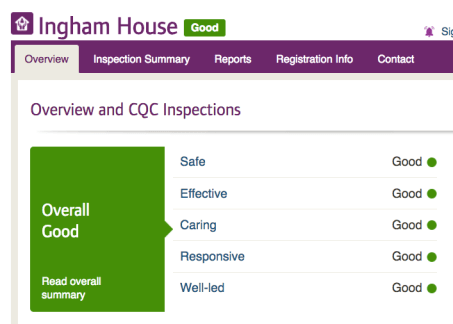
CQC then failed to follow up her concerns properly and rated Ingham House ‘Good’ across the board despite her serious concerns.


Screen Shot 2018-01-25 at 05.54.47.png

CQC rating on 30 August 2017 from an inspection on 13 July 2017


Most importantly, the CQC did not re-inspect early enough in the morning to detect the institutionally abusive practices that Rochester had alleged were taking place on the night shift, and an FOI by Rochester showed that CQC is failing on a national basis to inspect care homes and hospitals out of hours.

Relevant to this, I will report shortly on how CQC wriggled out of accounting properly to a coroner who had concerns about national standards for night staffing in care home and hospitals.

The Rochester saga is not over yet. More of that another time.

On 4 November 2017 I wrote to the CQC manager who according to the National Guardian is leading a renaissance of CQC’s whistleblowing governance, and I requested that this work should involve whistleblowers. The answer was initially opaque, and then non-committal:


“Dear Dr Alexander

I am sorry if my response was not clear – it is my intention to explore what we do currently and what we should do in the future as part of my assessment of where we are, and that will include considerations of co-production as part of our approach to policy development.

 Best wishes

Ursula Gallagher”

Ursula Gallagher, CQC Deputy Chief Inspector, 16 November 2017


At the time of writing, there is still no sign that the bizarre CQC is transparently involving whistleblowers in re-designing its whistleblowing governance.

In all, serious injustices and cover ups will continue for as long as UK whistleblowing law is so weak, and whilst whistleblowing is handled primarily by lower, non-specialist courts.

Even in cases where whistleblowers are legally represented, there are often losses. Even where whistleblowers ‘win’, the compensation is very inadequate and they are left struggling. PIDA has been tested to destruction for twenty years. It is time to stop throwing good money after bad and to scrap it.

Whistleblowing cases are not simply matters concerning employment contracts between two parties. They are about matters that are crucially important to everybody, and they are often related to public safety.

For example, if the CQC et al had listened more to ambulance service whistleblowers, more might have been done to avert the horrendous ambulance crisis that is now unfolding: Whistleblower claims 20 people died where ambulances were late

The public deserves much better.

Politicians and the Law Commission resist whistleblowing law reform as transparency would result in a real transfer of power to the public.


The National Freedom To Speak Up Guardian has also refused to support Law reform:


I do understand the views of campaigners who say that the current legislation requires reform. However, we are not currently seeking to campaign for changes to the law. Instead, we will be working collaboratively with a wide range of bodies to deliver a reformed NHS culture where freedom to speak up is ingrained and becomes ‘business as usual’.”

Letter from Henrietta Hughes, National Guardian, 16 February 2017


The above Department of Health and Social Care slogan, ‘Making Speaking Up Business as Usual,’ is empty fluff.

The Department of Health and Social Care et al contend that culture change is more important than law reform.

Imagine if crimes against the person were managed with culture change programmes and trite sloganising. ‘Murder isn’t nice’. ‘Make GBH history’. ‘Let’s not be naughty’.

The truth is that effective law drives culture change and shifts behaviour. Think seat belts. Think drink driving.

UPDATE 13 APRIL 2018

Over a year after rejecting a request from campaigners inviting her to support reform of whistleblowing law, the National Guardian asked me during a meeting on 27 March 2018 why law reform is important to whistleblowers.

This is my answer:

Letter to National Guardian 13 April 2018 on ‘Why is Whistleblowing Law Reform Important to Whistleblowers?’


Please sign and share:

Petition to replace weak UK whistleblowing law to protect whistleblowers and the public


delay-deny


RELATED ITEMS

Letter to the Health Service Journal’s Patient Safety Correspondent

Engineered Failure to Investigate NHS Whistleblowers’ Concerns

The Assimilation of Whistleblowers. Patients First and Whistleblower X


BMA Says No to Whistleblowers

By Dr Minh Alexander NHS whistleblower, former consultant psychiatrist 23 January 2018

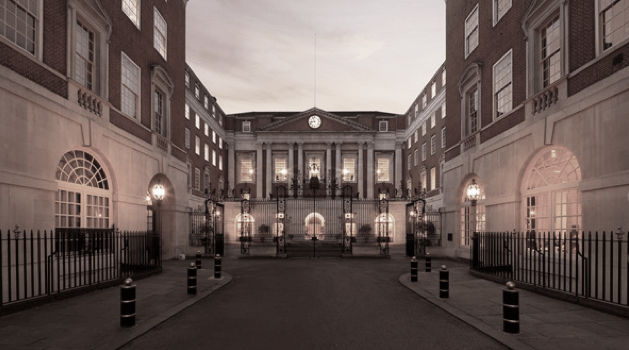
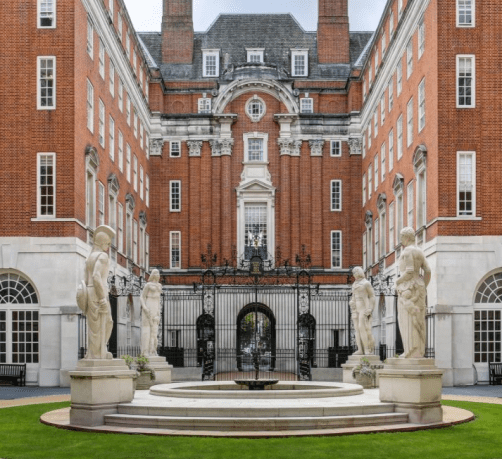
Powerful and political, the British Medical Association is not short of a bob. Wealth oozes from its gracious grade II HQ in the heart of London, designed by Lutyens. There it wines and dines its important old boys and the great and the good.

Screen Shot 2018-01-23 at 08.56.33

The rank and file’s subs are used to support this largesse, in preference to supporting whistleblowing cases.

In the current system, whistleblowing cases are complicated and expensive. The BMA often claims to whistleblowers that their cases do not pass its legal merits assessments.

The BMA does little to challenge the policy failings that lead to whistleblowers being harassed and that result in protracted employment disputes, and therefore expensive litigation. The BMA seldom agitates for whistleblowing reforms that would make a real difference to NHS staff and patients.

No, the BMA is more likely to issue vapid advice that bears little relation to reality, and may lead unsuspecting members into hot water as a result of raising concerns without fully understanding the consequences. For instance:

You should be guided by this question: if you let the situation carry on is it likely to result in harm to others? If in doubt, you should always err on the side of raising the concern with your manager/immediate superior, and you should do it as soon as you can.”

BMA guide to raising concerns

The BMA over-emphasises the need to raise concerns internally in the first instance, and is overly discouraging of external disclosure:

Only once you have exhausted all local workplace policies and procedures should you consider raising your concerns externally.”

Going directly to your local elected representative (such as your relevant MP, MSP, AM or MLA) or the media is only advisable if your employer has a record of ignoring, discouraging or suppressing concerns that have been raised and this is the experience you are having even after escalating it to the highest level.” 

The relevant law does not actually require whistleblowers to have personally experienced suppression before making external disclosure, but to have a reasonable belief that they may experience detriment or that there may be a cover up if they raise concerns with their employer. Alternatively, they may disclose externally if substantively the same concern has been raised internally already, or with a prescribed regulator

“Public Interest Disclosure Act 1998

43G Disclosure in other cases

(2)The conditions referred to in subsection (1)(d) are—

(a)that, at the time he makes the disclosure, the worker reasonably believes that he will be subjected to a detriment by his employer if he makes a disclosure to his employer or in accordance with section 43F,

(b)that, in a case where no person is prescribed for the purposes of section 43F in relation to the relevant failure, the worker reasonably believes that it is likely that evidence relating to the relevant failure will be concealed or destroyed if he makes a disclosure to his employer, or

(c)that the worker has previously made a disclosure of substantially the same information—

(i)to his employer, or

(ii)in accordance with section 43F.”

And whilst I do not recommend it, Employment Tribunals have even been known to find in favour of whistleblowers who did not meet these preconditions before making external disclosures:

Screen Shot 2018-01-23 at 07.35.03

Source: Public Concern at Work

Screen Shot 2018-01-23 at 07.35.51      Source: Public Concern at Work

But in delaying external disclosure, the whistleblower is subject to more prolonged slings and arrows from their employer. It also allows for a breakdown of ‘trust and confidence’ argument to be more easily cooked up by an employer. This in turn may permit lawful dismissal under Some Other Substantial Reason, even if the employer started the quarrel.

In addition to restraining external whistleblowing through its over-cautious advice, the BMA may also queer the pitch for whistleblowers by aggressively lodging Employment Tribunal claims, and even repeated claims in some cases. This can leave the whistleblowers high and dry when the BMA pulls out. Conflict will have been irretrievably escalated and the whistleblower’s career will by that point be destroyed if not severely damaged.

It must be asked why the BMA takes such aggressive action when it knows that it will not fund many cases to full hearing. Why does it not tell members at the outset of the stats and its likely withdrawal, and thereby give them a chance to make more informed decisions? Whatever the BMA’s motives, its actions have the effect of helping to flush whistleblowers out of the NHS.

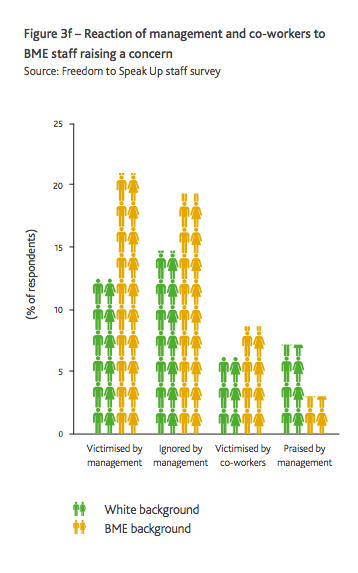
Not to mention of course that BME staff were shown to fear and suffer the greatest detriment for whistleblowing, by the research carried out by the Middlesex University for the Freedom To Speak Up Review , and that the white BMA patriarchy does not have a good record on Race.

(Current BMA council count: 10 visible BME, 13 women out of 51 members).

Risibly, the the BMA claimed in its 2014 Freedom To Speak Up Review submission  to Robert Francis’ Freedom To Speak Up Review:`

A doctor making a protected disclosure is protected against detriment or dismissal; the employer must not act against them for making such a disclosure. The protection lies in the doctor’s ability to take legal action for compensation.”

This supposed deterrent effect against dismissal, conferred by a ‘doctor’s ability to take legal action for compensation,’ is invisible to everyone except the BMA. Indeed, it is the BMA’s imaginary little friend.

Such is the power of the club and the perceived advantages of belonging, to my knowledge, none of the BMA’s past presidents have broken ranks and spoken out publicly against the BMA’s ludicrous claims and treatment of whistleblowers. But then it is easy to overlook the club’s shortcomings when it is pouring lavishments and wine.


An important ongoing controversy is the whistleblowing case of Dr Chris Day and unsatisfactory whistleblowing protection for junior doctors

The BMA stands accused of not defending junior doctors’ rights, as does the National Freedom To Speak Up Guardian

Please see Dr Day’s website: http://www.54000doctors.org/

Screen Shot 2018-01-19 at 12.25.08

I asked the Dr Chaand Nagpaul the Chair of BMA Council about some off colour publicity material which BMA had reportedly emailed to some members of the public about Dr Day. The BMA has regrettably not specifically addressed this in its latest response.

Dr Day is a brave and resourceful campaigner, but the BMA should show some grace and remember that he is all things considered, a young doctor, with a young family.


The BMA has long resisted my requests for information about its member services, and in particular the handling of whistleblowing cases. After several years of tooth-pulling correspondence, and the latest BMA reply under the stewardship of the BMA’s new chair of Council, this is all I know:


  • The BMA case file retention period is 6 years


  • The BMA advised that their lawyers reported handling five whistleblowing claims by members between 2006 and March 2015 which were settled via COT3 (compromise settlements)


  • The BMA said it had no Race and Gender stats


  • In March 2015, the BMA promised to keep better records in future, it said it had set up a task and finish group on raising concerns and indicated that it would consider a suggestion to audit its handling of whistleblowing cases

BMA response 5 March 2015 about member services


  • In February 2016 the BMA advised that its task & finish group had concluded, that it was setting up a pilot of trial support for doctors on raising concerns but had decided against external review of its handling of whistleblowing matters

BMA correspondence about task and finish group on raising concerns

Report of BMA task and finish group on raising concerns


  • In its latest response of 29 November 2017, the BMA gives this additional information about it member services:

The BMA is wholly committed to and continues to provide support to individual members who wish to raise concerns about patient safety. We have previously informed you of the pilot arrangements that existed in the North West, were then extended to the South West and are now being rolled out across England. Through this service we provide individual advice to members and educational talks to doctors. Additionally, we advise, support and represent members who believe that as a result of raising a concern they may have suffered a detriment. In total from March 2015 to July 2017 we have supported some 221 doctors in this regard.

 As with all disputes our principle is to work with the member to resolve matters at the earliest opportunity. Many cases have been resolved through the employer’s internal process following advice/support/representation by our advisers. Others have been resolved at First Point of Contact as they required relatively straightforward advice / signposting to information on our website. Sometimes members have decided that they do not wish to pursue the case, or there is insufficient evidence available to support a referral for a merits assessment – the key to this being evidence that links the disclosure (which needs to be one considered as protected) with the detriment suffered.

In terms of support provided at Tribunal, or similar courts, for all types of claim we have pursued 1076 cases since 2006 and secured a total compensation of £14.884m with an average compensation of £13,162. (NB: A number of cases will be considered collective matters and therefore relate to a number of doctors.)”

All the above information combined suggests that a very low number of whistleblowing cases pass BMA lawyers’ merits assessments. There are evidently over a hundred cases a year, but BMA lawyers previously apparently identified only five cases litigated between 2006 and March 2015, assuming that data is broadly accurate.

There is also a self-fulfilling element. The less the BMA supports whistleblowing cases, the more difficult it will seem for whistleblowers to win, and whistleblowing cases are written off as a bad risk.

In retrospect, it is also surprising that the BMA previously refused on 29 November 2016 (under its former Council Chair) to release any information about whistleblowing cases on the basis of small numbers and potential identifiability:

We are proactively reviewing whistleblower cases and collating the more detailed quarterly data on them but, given the small number of cases and the risk of providing information from which individuals could be identified, will not be sharing these data. We continue to give high priority to supporting members who raise concerns about patient care.”

With regards to fundamentally flawed UK whistleblowing law which is at the heart of countless injustices, and failures to protect the public interest that it is supposed to serve, what does the rich and powerful BMA have to say?

We remain very aware of the concerns about the legal position of whistleblowers and the difficulties involved in demonstrating a link between a detriment and a disclosure and will continue to give these issues very serious consideration.” 

That ought to do it chaps.


  • The BMA now says this with regards to supporting whistleblowers with re-employment:

“With regard to sacked whistleblowers re-entering NHS employment, if approached by a member, we would seek to advise, support and represent their interests with prospective employers, the deanery etc, for example with regard to their application and recruitment process, and to challenge employers on their behalf. This might involve subject access requests related to the assessment/appointment process or discussions with the deanery (for juniors) about other opportunities. If the member was protected under PIDA, then clearly there would be opportunities to enforce this under the legal process. This might indeed include trial periods of employment with other employers for retraining purposes. The situation would be more difficult, however, if they were not deemed to be protected under PIDA. Also, as you might be interested in the position we have taken in response to the Department of Health consultation on protecting whistleblowers against discrimination in recruitment, I am attaching the consultation and our response.” 

BMA response to DH consultation on whistleblower blacklisting

 The BMA Director of Policy who penned this BMA response to the DH’s consultation missed the point that legislation to deter blacklisting of sacked whistleblowers is closing the stable doors after the proverbial, and was over optimistic that this piece of DH window dressing would change culture:

We believe that these draft regulations should be treated as part of a wider cultural change that normalises the raising of concerns and the protection of the employees who raise them. It will be important to raise awareness among employers of the prohibition of discrimination against whistleblowers in recruitment and the compensation which may be awarded for such discrimination.” 

And how many unemployed whistleblowers could actually afford to sue anyway, given the BMA’s track record on refusing and dropping whistleblowing cases?


  • Lastly, in response to my request that the BMA supports whistleblowers with the near cost-neutral option of allowing them access to online library services and medical journals, the BMA flatly refuses this: 

With regard to access to our online resources without charge, I have raised this with the membership department. Their response is that the unwaged membership fee has been designed to be a substantial reduction and to be affordable for all doctors not in employment whatever their reason. It also offers full membership benefits, i.e. not just online access to educational material but also free places at BMA CPD courses and events as well as wider benefits.”

I should let you into a little secret dear reader. I already knew that the BMA had agreed to waive the membership fee for one sacked whistleblower. This is what the BMA said:

“Unemployment is an unfortunate reality for some members and we have taken into account the enormous impact this can have on a members’ finances. In order to support them through what is likely to be a financially difficult time, we offer a temporary waiver of their annual subscription. It is not uncommon for members in this situation to be on jobseekers allowance or other benefits and we ask for confirmation of this as part of their claim process.”

So it would appear that when a white whistleblower asks the BMA for free membership it says ‘Yes’.

But when a BME whistleblower asks the BMA to merely allow sacked whistleblowers access to online medical journals, it says ‘Bugger off’.

Pass the port.

This is the latest correspondence with the BMA.

Screen Shot 2018-01-23 at 06.31.18


RELATED ITEMS

Letter to BMA Chair of Council, President and Past Presidents

Is the BMA worth £163? Are new socks better?


At the Court of the BMA:

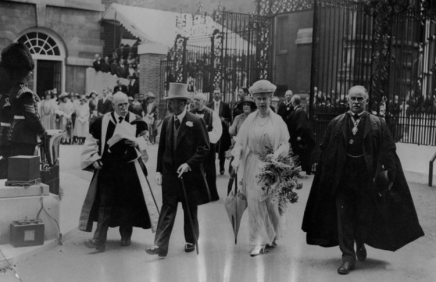
‘King George V and Queen Mary enter the Gates of Honour, during the opening ceremony [of BMA House], on 13th July 1925’

Screen Shot 2018-01-23 at 08.59.01

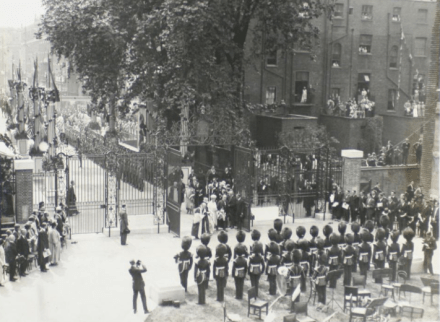
‘The royal procession through the Court of Honour during the opening ceremony of BMA House, 13 July 1925’

Screen Shot 2018-01-23 at 09.01.53

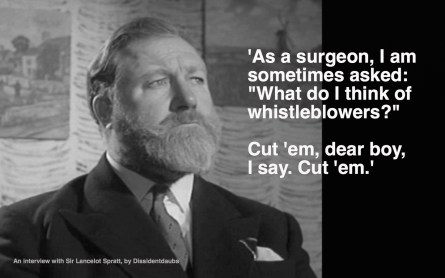
Sir Lancelot Spratt, a few words of wisdom, 23 January 2018

Lancelot Spratt

The Assimilation of Whistleblowers

By Dr Minh Alexander NHS whistleblower and former consultant psychiatrist, 20 January 2018


Whistleblowers upset power.

Everything to do with power is complex, multi-layered, frequently involves trickery, decoys, double dealing and the department of dirty tricks.

Power protects itself and dissidents must therefore be contained, controlled or sometimes even destroyed.

The ongoing spycops scandal and public inquiry shows some of the depths to which some elements of the State will stoop to maintain control, even in a seemingly mature, liberal democracy.

The same age old strategies of infiltration, disruption, capture and splitting are applied to whistleblowers, especially when they organise in any way.

The agencies set up to protect whistleblowers, if not corrupt from the outset, become captured too.

These patterns repeat, and have been described before:

Jean Lennane What Happens to Whistleblowers and Why


In July 2015, an unpleasant drama tumbled into my inbox.

A Scottish whistleblower who we shall call X, a then member of the whistleblowing organisation Patients First copied me into acrimonious correspondence between himself and the leaders of that organisation.


About Patients First

This organisation was originally set up by several founder whistleblowers with the aim of specific test litigation.

Some founding members left.

It became a more broadly focussed group, run as a limited company.

According to Companies House, this dissolved on 17 February 2015:

https://beta.companieshouse.gov.uk/company/07783392

On 9 March 2015 Patients First emailed its members with the message:

“The proposal is that PF will no longer be set up as a limited company but will in the future operate as an unincorporated body (ie the members) which is also a charity, with charity trustees”

The following constitution was circulated and was to my knowledge adopted:

PF Constitution

This is information about un-registered charities:

https://www.gov.uk/government/publications/excepted-charities/excepted-charities–2

https://www.gov.uk/government/publications/exempt-charities-cc23

The Patients First website has been sporadically maintained over the last few years, and was sometimes inaccessible. The organisation’s twitter account used to link to the website,

However, even the sporadic web presence seems to have petered out completely now:

www.patientsfirst.org.uk


At the time that this conflict hurtled onto my screen, I too was a Patients First member but have since resigned as the organisation did not reflect my values.

What I now recount is done so with whistleblower X’s express permission.

The nub of the conflict was this: X was concerned that the Scottish government may have acted illegally.

I do not know if he was right, but I do know that he had received relevant expert advice and had consulted with other experienced whistleblower peers.

I have seen some of the summarised expert written advice that he received and correspondence from government agencies refusing to investigate untoward deaths. I have followed group correspondence and press coverage of the debates in Scotland about the concerns.

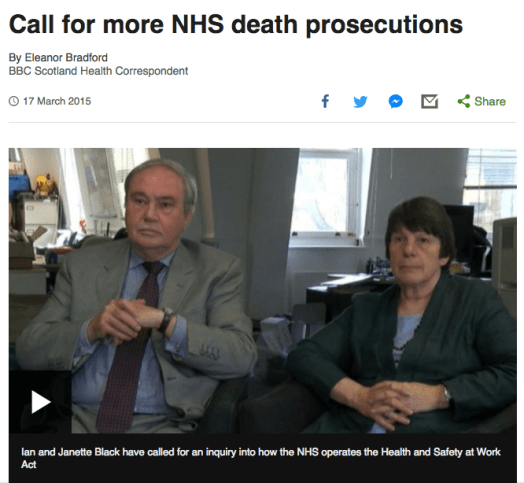
Screen Shot 2018-01-20 at 17.38.38

http://www.bbc.co.uk/news/uk-scotland-31914170

https://www.express.co.uk/news/uk/731680/Roger-Livermore-exposes-deadly-healthcare-bureaucracy

https://www.dailyrecord.co.uk/news/health/former-prosecutor-calls-health-boards-5350706


It seems to me that X’s concerns were based on reasonable belief.

As a result of his concerns, he covertly recorded a meeting in March 2015 with a Scottish Health Minister, attended by other Patients First members

The matter escalated within Patients First.

The leadership of Patients First took the view that he should not have made a covert recording of the meeting.

One of the senior figures in Patients First made a complaint about him.

Another senior figure carried out an investigation.

X made no attempt to deny the facts of the matter.

The disagreement was about the appropriateness of his actions.

X was asked by Patients First to destroy the audio recording and to apologise to the Minister.

X refused to co-operate with either request.

X pointed out that his actions were not illegal. In fact, X believed it would have been improper of him to destroy evidence of what he believed were likely to have been illegal actions by the Minister.

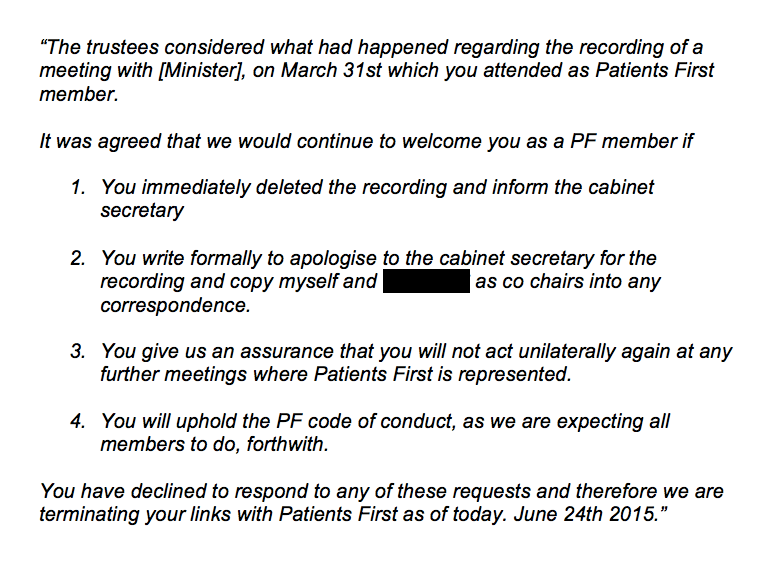
A Co-chair of Patients First wrote on 24 June 2015 to tell X that he was being expelled.

Screen Shot 2018-01-20 at 21.49.56 I asked Patients First why it was expelling X but not another member, who had made frequent reference on social media to making covert recordings of her employer.

A Patients First Co-Chair wrote to me on 7 July 2015:

“This was a breach of our normal way of going about meetings with politicians and showed a complete disregard for colleagues also present. It was unnecessary as there were many witnesses.

 The Board were unanimous in their condemnation of this occurrence as a unilateral act.

 We have had considerable support for our contistution (sic) and code of conduct.

 People who wish to act unilaterally probably should campaign unilaterally – we try to be fair to everyone. What we will not tolerate is harassment and breach of respect for each other. Sadly this was a perfect example of that unhelpful behaviour. There has been no remorse or apology.

 Of course we understand why people might think such actions are a good idea but they are in our view not helpful. We offered time for reflection and to delete the recording. Sadly X is unrepentant and therefore we cannot see how he could remain within Patients First. Simple as that.”

A Patients First Trustee, delegated by the same Co-Chair after I indicated that I did not feel my specific questions had been answered, wrote additionally to me on 7 July 2015:

“…the decision to make a secret recording by an individual in conflict with her employer over whistle blowing cannot be equated with X’s actions”

“You ask for PF’s “position on covert recording of politicians.” Realistically you would not expect there to be a written policy about every eventuality which could possibly arise, including this one. But venturing my personal view, I think this would only happen in extreme circumstances. The decision to do so, if ever this were to happen, would have to be taken by the leadership of PF in consultation with legal advisers. It would never be the prerogative of a maverick individual to make such a decision.”

So if I understand this correctly, it seems an individual may covertly record their employer, but only the commissariat can sanction political recordings.

Don’t misunderstand me. I don’t advise whistleblowers to covertly record willy-nilly. It’s a limited strategy that can close doors in the long run. You may also shoot yourself in the foot at Tribunal by landing a gleeful ‘loss of trust and confidence’ argument from the opposition.


The Twist in the Tale

When X was asked to destroy the offending audio recording of the meeting with the Minister, the leadership of Patients First did not know if it was evidence of illegal actions by the Minister.

This is evidenced by the fact that the trustee of Patients First, delegated by a Co-chair of Patients First wrote thus to me on 7 July 2015 regarding X’s concerns about deleting evidence of illegal actions:

“Whether the content of the recording reveals the Minister to be acting illegally we do not know.”

I was stunned.

There is a lot more that I could say about this very unfortunate incident, but all the other unpleasantness pales into insignificance set against this one central fact.


X was a bit bruised but ultimately relieved to be marched off the Patients First premises, metaphorically speaking.

Several other Scottish Patients First members who unsuccessfully tried to intervene on his behalf also resigned.

A new campaigning group was born – ASAP Scotland – a heterogeneous group of whistleblowers and other health campaigners.

Judge for yourself:  http://asapnhs.uk/


What is most important now is that a critically important consultation by the Scottish government is about to start on NHS whistleblowing policy and infrastructure.

Invitation from the Scottish government to a consultation event on 30 January 2018:

Background

 The Scottish Government plans to bring forward legislation in 2018 so that the Scottish Public Services Ombudsman (SPSO) can take on the new role of Independent National Whistleblowing Officer for the NHS in Scotland (INWO). This will introduce an external review function for individual staff members who whistleblow and have a concern about a Health Board’s handling of their case. The INWO will consider the application of local process, decision making and the Health Board’s culture and approach to whistleblowing – particularly where a whistleblower claims to have been unfairly treated as a result of raising a concern. 

The INWO will also have a national leadership role providing support and guidance to Health Boards with a focus on continuous improvement, early resolution, good practice and reporting. Our priority is to have a health service which has an open and honest reporting culture and where staff can speak up in the knowledge that an independent, external body can review their case if they feel it has not been handled appropriately. This will allow cases to be brought to a clear, final and fair conclusion.

 Workshop

 This workshop will be led by Tracy Boylin and supported by the Scottish Public Services Ombudsman. Tracy Boylin was formally HR Director at the Christie Hospital, a leading cancer treatment centre in England. As a whistleblower herself, Tracey has first-hand experience of the issues involved. As you may be aware, Tracy is also an active member of Patients First and has worked with NHS England researching the link between bullying and patient safety and with NHS Improvement on a new employment support scheme for whistleblowers”

Moreover, a prominent member of Patients First from the English NHS has been recruited by the Scottish government to help lead this project, but without to my knowledge any sign of advertisement.

What happens next will affect the future of Scottish patients and NHS staff for years.


RELATED ITEMS

Medics appeal to health minister to intervene over suspended Grampian surgeons

http://www.heraldscotland.com/news/13413598.Medics_appeal_to_health_minister_to_intervene_over_suspended_Grampian_surgeons/

NHS whistleblower claims she was sacked to protect HIV infected surgeon

http://www.heraldscotland.com/news/15299703.NHS_whistleblower_claims_she_was_sacked_to_protect_HIV_infected_surgeon/

Just a very few practical tips for the unsuspecting whistleblower, from Mr Spock

  • Be careful
  • Proceed slowly if you can
  • Give your trust judiciously

Spock


The Flexible CQC, FPPR & Kettering General Hospital NHS Foundation Trust

By Dr Minh Alexander, NHS whistleblower and former consultant psychiatrist, 16 January 2018 

The CQC has thoroughly disgraced itself in failing to hold unfit NHS trust directors to account despite being assigned powers in 2014, under Regulation 5 Fit and Proper Persons (FPPR).

CQC’s senior staff have been involved in turning a blind eye to wrongdoing such as whistleblower reprisal and suppression of patient safety issues. CQC’s former Chief Inspector of Hospitals personally shut down an FPPR referral on the hospital boss Paula Vasco-Knight who was shortly after charged with fraud, and eventually convicted.

https://minhalexander.com/2017/01/27/cqc-a-chief-inspector-doesnt-call/

https://minhalexander.com/2017/05/23/fppr-cqc-has-lost-all-moral-authority-but-what-will-the-national-guardian-do/

In May 2017 last year a scandal erupted when the BBC reported allegations of a waiting list fiddle at Kettering General Hospital NHS Foundation Trust, based on information provided by a whistleblower, who had started raising concerns internally in 2015.

Kettering General Hospital ‘fiddled’ waiting time records

By Matt Precey BBC East

26 May 2017

Screen Shot 2018-01-15 at 08.53.23

http://www.bbc.co.uk/news/uk-england-northamptonshire-40014896

The trust denied wrong doing but by July 2017, both the trust CEO and Chair resigned:

http://www.bbc.co.uk/news/uk-england-northamptonshire-40496685

Prior to the BBC coverage of the waiting list allegations, the CQC had rated the trust ‘Inadequate’ in April 2017 and placed it into special measures:

CQC inspection report Kettering April 2017 AAAF9991

Kettering was rated ‘Inadequate’ again in September 2017:

CQC inspection report Kettering September 2017 AAAG6609

Mike Richards the former CQC Chief Inspector of Hospitals wrote the introductory letter for the CQC inspection report on Kettering of April 2017.

Whilst Richards noted that the CQC had judged the trust to be ‘Inadequate’ on the ‘Well-Led’ domain and required Special Measures, he made no comment on Regulation 5 issues or whether trust directors were Fit and Proper Persons.

Neither was the trust’s compliance with FPPR discussed anywhere else in the CQC’s April 2017 report.

Curiously, there were almost no comment in general about the senior leadership of the trust in the report, with most comments in CQC’s report being directed only at the leadership of individual service areas.

The CQC inspection report informed the public that the trust had been served with a formal Section 29A warning notice, but few details were given:

Screen Shot 2018-01-16 at 17.21.11

I later asked the trust for a copy of CQC’s Section 29A warning notice. It proved to be lengthy and detailed:

CQC FOI REF 4060 s29A Warning Notice Kettering General Hospital NHS Foundation Trust.

Of interest, the CQC’s Section 29A letter to Kettering of 18 November 2016 revealed that the CQC had been concerned about weak FPPR procedures at the trust:

Screen Shot 2018-01-16 at 19.19.31

Inexplicably, none of this troubling information appeared in CQC’s subsequent inspection report in April 2017.

It is both interesting and of concern that CQC withheld this information from the public, in addition to the paucity of comment in its inspection report about the trust’s senior leadership.

The more so given CQC’s now long track record of protecting erring and failing trust directors.

It has to be asked what else the CQC has been hiding from the public, and why.

Such economy with the truth may not be unconnected to the fact that trust directors are themselves expected to support political pantomimes and not to make too much fuss about undeliverable policies.

Such a house of cards would fall if folks who know where the bodies are buried are pushed too far.

This example at Kettering also illustrates another typical aspect to CQC’s behaviour. Whether by action or omission, it helps to shield senior managers involved in whistleblowing cases, and is thus an essential cog in the Department of Health’s reputation management machine.

UPDATE 31 DECEMBER 2018

PHSO has partially upheld a complaint about CQC’s mishandling of an FPPR referral about former NHS trust chief executive Paula Vasco-Knight and made a finding of maladministration and systemic failure. Alas, the graceless CQC remains defiant and keeps spinning itself deeper into a hole:

Sorry is the hardest word: CQC, Paula Vasco-Knight and Regulation 5 Fit and Proper Persons

DH Shooting messenger

RELATED ITEMS

This is disclosed FOI material from CQC which includes guidance to inspection teams and a withering internal audit:

Disclosed: CQC’s internal technical guidance on Regulation 5 Fit and Proper Persons and an internal audit on CQC’s woeful handling of FPPR

Post-scripts on Paula, NHS England’s apologia and regulatory reticence

Letter to Public Accounts Committee 11 September 2017 requesting a review of whistleblowing

More loopholes in Jeremy Hunt’s ‘support’ scheme for whistleblowers

By Dr Minh Alexander NHS whistleblower and former consultant psychiatrist 21 December 2017


Super-gagged whistleblowers cannot acknowledge the existence of the compromise agreements that gag them.


To illustrate, NHS Employers charmingly recommends this form of words for a compromise agreement:

“1. Confidentiality

1.1 In consideration of the Employer entering into and complying with its obligations under this Agreement, the Employee warrants that:

a. save for immediate family (having instructed them on all of the confidentiality provisions of this clause) and for the purposes of taking professional legal and financial advice or where required by any competent authority or by a Court of Law or HM Revenue and Customs or as otherwise required by law, [he/she] has not divulged and shall not divulge to any person whatsoever the fact of, negotiation and/or terms of this Agreement

NHS Employers April 2013, The use of compromise agreements and confidentiality clauses

Click to access compromise-agreements.pdf


Whistleblowers’ compromise agreements will also in some cases forbid contact with former employers.

This combined with the super-gags makes participation in the NHS whistleblower employment support scheme impossible.

Not that it is called that anymore. As reported previously, NHSI and NHSE surreptitiously changed the scheme name from ‘whistleblower employment support scheme’ to ‘whistleblower support scheme’.

NHS England was asked to address the issue of gagged whistleblowers’ access to the scheme as early as November 2016.

NHS Improvement was asked to address it in February 2017.

Neither body seems capable of understanding the basic problem and have still not come up with any credible plan to manage the issue safely and fairly.

They should of course seek a waiver from the government to guarantee that gagged whistleblowers may safely disclose the existence of gags and or approach former employers as required. But neither body will agree to do so despite repeated requests that they take this logical action.

As ever, officialdom meanders on its thoughtless way, oblivious to injustice.

Whilst I am not at liberty to reveal all details, I have seen an NHS Improvement list of 18 non-whistleblower panellists for the panels that decide whether whistleblowers will be accepted for the scheme.

Some panellists are managers from trusts that have admitted to super-gagging whistleblowers, or as evidenced by external review, are known to have harmed whistleblowers and covered up wrongdoing.

Just under half of the panellists are also Speak Up Guardians.

NHS Improvement has also not considered the ethnicity of panellists, but has advised that it may consider doing so in future.

Robert Francis recently criticised the delay in establishing the whistleblower employment support scheme, when speaking at a public event. He remarked that he did not think it was working very well.

Click to access francis-culture-and-conduct-comments-7-11-2017-transcript.pdf

Francis also referred to his original vision as being one of a ‘re-employment’ scheme, which both NHS England and NHS Improvement have gone out of their way to stress is not what the scheme is about.

So as usual, a few hundred thousand pounds later, someone has benefited but it’s not the whistleblowers.

Merry Christmas.

Screen Shot 2017-12-21 at 11.18.03


RELATED ITEMS:

Jeremy Hunt’s Secret Whistleblower (Non-Employment) Scheme, 14 October 2017

Jeremy Hunt’s Secret Whistleblower (Non-Employment) Scheme

CQC’s Asleep on the Night Shift

By Dr Minh Alexander, NHS whistleblower and former consultant psychiatrist, 16 December 2017


The Care Quality Commission the health and social watchdog should carefully examine care given at night, but its own data shows that it fails to do so.


Background

In 2012 the Royal College of Nursing surveyed its members about what they would hope for from the regulator, and submitted this evidence to the parliamentary Health Committee. A most interesting finding was that nurses wanted the CQC to inspect at night:

Screen Shot 2017-12-16 at 05.05.55

RCN 2012 Putting_Quality_into_the_Care_Quality_Commission_England


A perceptive reader might understand this to be a plea for help from a concerned workforce, that was not confident in speaking out. Any regulator worth its salt should have taken this seriously.

When there are severe pressures on services, a temptation for hard pressed managers is to make savings on staffing levels. Night shifts can be disproportionately cut by non-clinical managers who may assume reduced demand, and do not fully appreciate the clinical consequences or turn a blind eye.

Combined with staffing shortages, a controversial junior doctors’ contract and rota gaps, some very serious situations can arise.

In September, it was reported that two junior doctors at Plymouth were left looking after 436 patients.

Screen Shot 2017-12-16 at 05.15.14

https://www.theguardian.com/uk-news/2017/sep/18/plymouth-hospital-report-reveals-unsafe-night-shift-practices


Indeed, the well known and ongoing case of NHS whistleblower Dr Chris Day originated from a phone call that he made one night about an under-staffed shift.


“The dedicated NHS doctor they tried to gag then destroy:

“So when, during yet another night shift, Chris made a telephone call to report to the duty manager that he believed overnight staffing levels were unsafe, and that patients with life-threatening conditions may be left ‘dangerously’ at risk, he simply believed he had discharged his duty as a responsible doctor.

During his time on the unit, two ICU patients had died at night, in circumstances formally recorded by Lewisham and Greenwich NHS Trust as serious untoward incidents – meaning the deaths were unexpected or preventable.

Yet unbelievably, that polite phone call left his career in tatters and sparked a two-year legal battle which is estimated to have cost the NHS hundreds of thousands of pounds in public funds.

Rather than support his claim, NHS agencies accused him of having ‘personal and professional conduct issues’, removed his right to continue training and used the full weight of the law against him – destroying his promising career.”

http://www.dailymail.co.uk/news/article-4503734/The-dedicated-NHS-doctor-tried-gag-destroy.html

Dr Day’s campaign website: 

https://www.crowdjustice.com/case/junior-doctors-round-3/


A subsequent critical care peer review of the hospital in question flagged multiple areas of concern, including:

The consultant to patient ratio was significantly low, presenting an area of serious concern…High number of peri-arrest calls and inadequate escalation pathway for deteriorating patients on the ward….Wards will tolerate a high NEWS scores and sometimes not report until score reaches 9” 

Lewisham and Greenwich FOI-053581-Peer-Review-Report_Redacted


Understaffing at night can coincide with a vulnerable time for some patients. Older, confused patients may wander more and be at risk of falls and injury, particularly if they have received sedative medication.

Line of sight care is preferable for the most vulnerable but becomes impossible when nurse : patient ratios are insufficient to support suitably safe and intensive care.

There have been repeated coroners’ reports on deaths in which there was a failure to provide planned care – including 1-1 care – for confused patients who suffered falls and sustained major injury. For example:

Screen Shot 2017-12-16 at 05.59.09

https://www.judiciary.gov.uk/publications/leslie-murray/


Unsafe nursing ratios also intermittently hit the headlines:

Screen Shot 2017-12-16 at 05.10.27

http://www.mirror.co.uk/news/uk-news/nhs-patients-suffering-falls-night-7826584


However, the government dismantled the Safe Staffing work by NICE and it stubbornly resists mandating safe staffing levels, in contrast to the Welsh government which passed legislation that will come into force in April 2018.

Under the new Welsh law, there is a requirement to calculate and deliver a safe level of staffing:

Screen Shot 2017-12-16 at 03.34.29

http://gov.wales/topics/health/publications/health/guidance/staffing-levels/?lang=en

https://rcni.com/nursing-standard/newsroom/analysis/nurses-welcome-safe-staffing-law-wales-warn-it-may-be-hard-to-enforce-122581


Night staff in health and care settings can also be neglected and marginalised. Weak management can lead to silos and pockets of troubled culture. Unsupported staff may also sometimes escape from day time work to night work as a way of coping with unaddressed issues. I have worked in poorly led services where there was a very uncomfortable and noticeable Race divide, with some wholly BME staffed night shifts.

In the private care home sector, there are repeated reports of institutional abuse arising from chasing profit, mitigating against local authority cuts and skimping on staffing levels. A notorious practice is to drag residents out of their beds very early in the morning, for institutional convenience and to squeeze the most value out of night staff.

Publicly, CQC disapproves of this practice:


Staff got some residents out of bed to be washed and changed as early as 5.15am, so that it was “easier” for staff to look after them. Some were then put back to bed. One nurse told Dispatches how she had to get people up at 3.30am to give them bed baths.”

Andrea Sutcliffe, the CQC chief inspector of adult social care, was appalled at “shocking evidence” of understaffing, bad practice and poor care.

“The examples of poor care and a culture of inappropriate, institutionalised practice highlighted by this programme are wholly unacceptable,” she said.

“Bupa has betrayed the very people it is paid to look after.”

https://www.theguardian.com/society/2017/jul/06/vulnerable-people-left-betrayed-by-englands-care-and-nursing-homes


The real CQC

But CQC did shockingly little when Helen Rochester a care home whistleblower reported a prime example of such practice.

CQC did not inspect for three months after Rochester’s disclosures. It only grudgingly pitched up at the care home after Rochester embarrassed the CQC board by attending its video recorded public meeting in June this year.

In April 2017 Rochester reported to CQC:

“I am also aware of institutional abuse happening on nights with the blessing of management. There is a list of 11 residents that have to be got up for the day staff and on Monday – Thursday carers start at around 04.15 to do this. I refused to do this at the weekend and when I questioned this I was told “they can sleep in their chairs”. I was also told all 11 have “other needs” that make them eligible for this treatment by the deputy. If that is the case then the home needs to be staffed accordingly so they can be got up unrushed at a sensible time.

On one night I saw this man being got up at 05.20 against his wishes to accommodate the day staff. His name is on the list of 11”

Despite being given this information, when CQC eventually sauntered along to the care home three months later, it did so at 06.00 am:

The inspection took place on the 13 July 2017. This visit was unannounced and started at 06.00 in the morning in order to review what care was being provided by night staff to people early in the morning. It was completed by two inspectors”

And despite the serious Safeguarding concern raised by Rochester, the dilatory CQC only spoke to three residents:

“During the inspection we talked with three people who use the service and five relatives”

and cheerily reported:

“When the inspectors arrived six people were in the lounge. Although they were alone in a lounge area, the homes’ chef was nearby and provided early morning drinks. People were comfortable and chatting with each other. One told us they were very happy to be up and about early. “I am an early bird.””

To add insult to injury, and despite Rochester (an experienced former nurse and a previously vindicated whistleblower in another serious care home scandal) reporting a catalogue of other serious care failures, CQC rated the care home ‘Good’, safe and well-led.

Rochester complained about CQC’s conduct, but the CQC investigated and exonerated itself as usual. CQC informed Rochester that both the CQC Chair and Chief Executive had sight CQC’s dismissive complaint response before it was sent to her.

Undeterred, Rochester filed a Freedom of Information request about CQC’s out of hour inspection activity:

Helen Rochester FOI CQC out of hour inspections 14.11.2017

CQC’s response reveals unimpressive performance:

Out of hours response 201712012 Final FOI Response CQC IAT 1718 0550

Out of hours inspections 20171208 Data for disclosure CQC IAT 1718 0550

CQC disclosed that it has no definition of what constitutes an ‘out of hour inspection’.

CQC also failed to answer whether it has guidance for its staff on when an out of hours inspection should be conducted.

In its usual self-justifying style, CQC maintained that it did not respond to the RCN’s 2012 recommendations for more night time inspections because the Health Committee did not ask it to do so:

“There were no specific questions put to CQC by the Committee and therefore no response to those comments was required.” 

Importantly, CQC revealed that a mere 1.5% (836 out of 55, 331) of its inspections take place out of hours:

Screen Shot 2017-12-16 at 04.20.37

This is perhaps understandable – so much nicer to arrive announced, when the reception committee has been fully prepared and the hospitality budget has been apportioned:

Screen Shot 2017-12-16 at 04.56.05

https://www.whatdotheyknow.com/request/cqc_spend?unfold=1


Extrapolating from CQC’s figures, these are the specific rates of out hour inspections for different sectors:

Screen Shot 2017-12-16 at 06.49.27


Specifically for care homes, CQC’s data shows that it conducts only 0.4% (123 out of 26,642) of its inspections out of hours:

Screen Shot 2017-12-16 at 05.24.42

CQC’s reluctance to grapple with the issues facing care and health staff at night is clear.

Whistleblowers like Rochester who knock on CQC’s door in good faith unwittingly disturb a hostile force, that sometimes unscrupulously wreaks serious damage on those who trespass on no-go areas.

In Rochester’s case, CQC breached her confidentiality as a whistleblower in an earlier case. It then advised her most recent employer to refer her to the Disclosure and Barring Service on spurious grounds, that were later dismissed by the DBS.

All whilst the CQC Chief Inspector for Adult Social Care is frequently seen in the limelight and writes articles extolling compassionate care and progressive workforce practices.

Screen Shot 2017-12-16 at 05.01.09


A very important coroner’s Section 28 warning report was issued to CQC in 2013. This considered that there should be clear standards on safe night time staffing levels in care homes and hospitals:


“I know that many hospitals are looking carefully at their staffing levels at night particularly in the wards where patients suffer from dementia and may be at a risk of falls through wandering and I am drawing this case to your attention so that you and your inspectors can look carefully at whether staffing levels for night time are adequate to meet the various needs of all the residents/patients in residential, nursing and hospital environments. It seems to me that only two members of staff caring for over twenty four residents, some of whom suffer from dementia and are restless, is not enough to meet all the complex needs, especially with their other duties over a long shift of almost twelve hours.”

https://www.judiciary.gov.uk/publications/morris-2013-0295/


When I reviewed the Chief Coroner’s database of Section 28 reports earlier this year, I noticed that CQC’s response to this key Section 28 report had not been published by the Chief Coroner.

In September, I asked David Behan CQC Chief Executive to publish this missing response amongst others. After a reminder, CQC replied thus:

CQC will keep the suggestions you make under consideration. We do not intend to engage in further correspondence with you on this matter.”

However, CQC’s response of April 2014 has now been quietly published on the Chief Coroner’s website:

https://www.judiciary.gov.uk/wp-content/uploads/2013/12/2013-0295R.pdf

In its response, CQC dodged the issue of safe staffing standards.

CQC also reassured the coroner:

Screen Shot 2017-12-16 at 06.02.12

Sleep tight.


RELATED ITEMS:

CQC, Coroner’s warnings and the neglect of older people in hospital

CQC, coroners’ warnings & the neglect of older people in hospital

Care home deaths and more broken CQC promises 

Care home deaths and more broken CQC promises

Breach of confidentiality by CQC and complicity in referring a whistleblower to the Disclosure and Barring Service

Breach of confidentiality by CQC and complicity in referring a whistleblower to the Disclosure and Barring Service

Helen Rochester v CQC Act II: Wherein a Whistleblower Sueth a Prescribed Person

Helen Rochester v CQC, Act II: Wherein a Whistleblower Sueth a Prescribed Person


Handshake


Two years of national CQC whistleblowing data on health and social care services

Please sign and share:

Petition to replace weak UK whistleblowing law to protect whistleblowers and the public


By Dr Minh Alexander NHS whistleblower and former consultant psychiatrist, 13 December 2017

NHS and social care staff take a great leap of faith in whistleblowing to the health and social care watchdog, the Care Quality Commission.

It is an organisation with a poor reputation, particularly for serial failures towards whistleblowers.

CQC has:

  • Repeatedly not listened to whistleblowers properly or at all 1
  • Resisted taking action on gagging 2
  • Breached whistleblowers’ confidentiality and even been complicit in reprisal 3
  • Refused point blank to audit how well it is protecting whistleblowers’ confidentiality in general 4
  • Resisted sharing sufficiently meaningful data on whistleblowing 1 5
  • Refused to hold those who have harmed whistleblowers and suppressed patient safety matters to account 6
  • Falsely claimed that an investigation at Southport and Ormskirk Hospital NHS Trust into concerns by BME whistleblowers was ‘thorough’ when no one spoke to the whistleblowers 7


A year ago, the CQC was exposed for hiding important data on whistleblowing and its own inaction on very serious whistleblowers’ disclosures:

https://minhalexander.com/2016/12/05/whistleblowers-unheard-by-cqc/

After this, CQC started publishing superficial whistleblowing data on a regular basis as part of its board papers. However, even this data revealed that CQC was shoving about half of whistleblower disclosures in drawers, by taking no action at all or just noting the disclosures as information for future inspection.

For example:

CQC Board Sept

Source: CQC Board papers September 2017

Click to access CM091704%20Item%204%20Chief%20Executive%20report%20to%20Board%20PUBLIC%20Annex%201%20Performance%20Report.pdf


Robert Francis was embarrassed enough to murmur some mild protest at the CQC Board, over the summer, about this gross level of inaction.

CQC has in particularly resisted revealing patterns across the spectrum of providers, and when asked for data under past FOI requests it has maintained that it can only release data on a limited number of providers due to cost limits.

This stance has helped to keep the lid on the national picture and to avoid revealing firm reference points by which the public can compare how organisations perform over time, and or how they compare with other organisations.

An FOI request by whistleblower Clare Sardari @SardariClare  earlier this year clarified the manner in which information is stored on CQC’s whistleblowing computer database:

CQC FOI centrally held data on whistleblowing 20170714 Decision notice CQC IAT 1718 0196

A recent FOI request was submitted on the basis of this knowledge, for national whistleblowing data. The request was constructed so that CQC could not refuse the substantive request on cost grounds, because no manual searches would be required.

CQC FOI request centrally held whistleblowing data 14.11.2017

CQC has responded and provided the core, national data requested on numbers of all whistleblowing contacts to CQC  about registered providers over a two year period, 20156/16 and 2016/17:

CQC Whistleblowing FOI 20171211 Final Response to CQC IAT 1718 0545

CQC FOI disclosure 20171211 Whistleblowing information

CQC has wriggled out of some qualified requests on cost exemptions. But this has revealed that CQC – by its own admission – has recorded its whistleblowing data in such a format that it cannot easily interrogate its own database for the following information:


5.     If the data is held in is held on your central database and easily retrievable by automated search/ filter within the cost limits, whether the whistleblowing concern related to the care of a person(s) detained under the Mental Health Act


  1. If the data is held in is held on your central database and easily retrievable by automated search/ filter within the cost limits, whether the whistleblowing concern related to possible abuse and neglect


  1. It the information is held on your central database in a sufficiently anonymised format and the data is easily retrievable by automated search/ filter within the cost limits, please also include data on the broad nature of the whistleblowing concern”


This seems unimpressive given that parliament made it clear over three years ago that it expected government departments and their arms length bodies to be proactive in analysing and learning from whistleblowing intelligence. 8

Notwithstanding, CQC has disclosed that out of a total of 16,457 whistleblowing contacts in 2015/16 and 2016/17, there were 9,760 outcomes which basically consisted of shoving whistleblowers’ disclosures in a drawer (no further action or information noted only for future inspection):

Screen Shot 2017-12-13 at 09.00.14

The CQC points out that some whistleblowing contacts may result in more than one outcome but even so, this sheer scale of inaction is very disappointing.

I have shared the full data above so that people can search and analyse it, and make any further requests to CQC based on their own needs.

It may assist those who seek further information about particular providers to know that CQC has in the past disclosed more detailed data about the nature of whistleblowing disclosures and its responses. For  example, this previous CQC disclosure on whistleblowing about North Cumbria :

North Cumbria FOI 20161019 FINAL Information for Disclosure CQC IAT 1617 0427

I have carried out a preliminary analysis of the national data on whistleblowing contacts relating to NHS trusts:

ANALYSIS OF CQC WHISTLEBLOWING DATA – NHS TRUSTS BY NUMBER OF WHISTLEBLOWING CONTACTS 2015-16 AND 2016-17 13.12.2017

If CQC is to be believed, 18 trusts generated no whistleblowing contacts to CQC at all in the two years in question:


BIRMINGHAM CHILDREN’S HOSPITAL NHS FOUNDATION TRUST

BRIDGEWATER COMMUNITY HEALTHCARE NHS FOUNDATION TRUST

CHRISTIE NHS FOUNDATION TRUST

CITY HOSPITALS SUNDERLAND NHS FOUNDATION TRUST

CLATTERBRIDGE CANCER CENTRE NHS FOUNDATION TRUST

GREAT ORMOND STREET HOSPITAL FOR CHILDREN NHS FOUNDATION TRUST

GUY’S AND ST THOMAS’ NHS FOUNDATION TRUST

HOUNSLOW AND RICHMOND COMMUNITY HEALTHCARE NHS TRUST

MID CHESHIRE HOSPITALS NHS FOUNDATION TRUST

MOORFIELDS EYE HOSPITAL NHS FOUNDATION TRUST

NORFOLK COMMUNITY HEALTH AND CARE NHS TRUST

NORTHERN DEVON HEALTHCARE NHS TRUST

POOLE HOSPITAL NHS FOUNDATION TRUST

QUEEN VICTORIA HOSPITAL NHS FOUNDATION TRUST

ROYAL MARSDEN NHS FOUNDATION TRUST

WALTON CENTRE NHS FOUNDATION TRUST

WHITTINGTON HOSPITALS NHS TRUST

WIRRALL COMMUNITY NHS TRUST


This might be more understandable for specialist and community trusts, but is a very unexpected claim with regard to acute trusts.

The data supplied by CQC showed that in 2015/16 and 2016/7, there were a total of 1535 whistleblowing contacts to CQC about 218 NHS trusts.

The number of whistleblowing contacts from NHS trusts has dropped from 951 in 2015/16 to 584 in 2016/17.

There was considerable variation between trusts from zero to a whopping 58 whistleblowing contacts by staff of Mid Yorkshire Hospitals NHS Trust, which has a poor reputation amongst whistleblowers.

The 40 trusts which generated the most whistleblowing contacts to CQC included 11 trusts currently rated ‘Good’ by CQC and two trusts (Frimley and Western Sussex) currently rated ‘Outstanding’ by CQC:

Screen Shot 2017-12-13 at 12.37.54

I happen to know of solid evidence that Frimley is a far from the saintly organisation that Jeremy Hunt and CQC have spun it to be, and that its whistleblowing governance leaves much to be desired.

In a similar vein, Jeremy Hunt and the CQC have for their own reasons been spinning University Hospital of Morecambe Bay NHS Foundation Trust (UHMBT) as reformed character. This is despite recent and serious whistleblower reprisal 9 and a high number of Employment Tribunal Claims. 10

UHMBT is rated ‘Good’ by CQC, but in fact had 33 whistleblowing contacts in 2015/16 and 2016/17 – the third highest number nationally.

Hot on UHMBT’s heels is Lancashire NHS Foundation Trust, which had 30 whistleblowing contacts and is also rated ‘Good’ by CQC.

Raw data on numbers of whistleblowing contacts can only be a broad indicator and more detail is required about the nature of disclosures.

However, it is a very significant event when workers go outside of their organisations to whistleblow to a regulator.

It is also important to remember for every whistleblowing disclosure to CQC, a larger number of disclosures will have been made internally within trusts.

Questions arise about why CQC is rating trusts from which it receives exceptionally high numbers of whistleblowing contacts as ‘Good’.

CQC should in future publish comparative whistleblowing data that shows the variations between providers.

CQC should also in future record its whistleblowing data in a format that allows the data to be more easily interrogated, analysed and transparently reported, so that trends about the nature of concerns and outcomes can be detected and acted upon.

CQC cannot be held properly to account on whistleblowing governance without such transparency.

I in fact invited CQC to publish its FOI response to me on its website, but it declined to do so, which suggests regrettable, continuing opacity.

Indeed, in contrast to many of the NHS providers that it regulates, CQC does not publish its FOI responses. It only publishes a catalogue of requests and whether the requests have been successful.

A genuine spirit of transparency still eludes the CQC.

I will submit this further evidence to the Public Accounts Committee for its current inquiry on CQC.


Please sign and share:

Petition to replace weak UK whistleblowing law to protect whistleblowers and the public


RELATED ITEMS

Letter 11 September 2017 to Public Accounts Committee on whistleblowing reform:

Click to access letter-to-public-accounts-committee-11-sep-2017-re-review-of-whistleblowing.pdf


REFERENCES

1 Whistleblowers unheard by the CQC

https://minhalexander.com/2016/12/05/whistleblowers-unheard-by-cqc/


2 NHS Gagging: How CQC sits on its hands

https://minhalexander.com/2016/09/23/nhs-gagging-how-cqc-sits-on-its-hands-2/


3 Breach of confidentiality by CQC and complicity in referring a whistleblower to the Disclosure and Barring Service

https://minhalexander.com/2017/06/22/cqc-involved-in-a-whistleblowers-referral-to-the-disclosure-barring-service/

Helen Rochester v CQC II, Wherein a Whistleblower sueth a Prescribed Person

https://minhalexander.com/2017/09/09/helen-rochester-v-cqc-act-ii-wherein-a-whistleblower-sueth-a-prescribed-person/

4 CQC denies denial

https://minhalexander.com/2017/09/16/newsflash-cqc-denies-denial/

National Guardian expects

https://minhalexander.com/2017/09/03/national-guardian-expects/

5 I had extensive correspondence with CQC following the publication of the Freedom To Speak Up Review report in February 2015 as this was singularly uninformative. CQC refused to divulge much data on whistleblowing or to engage a great deal on how its data gathering could be improved.

6 A Chief Inspector doesn’t call

https://minhalexander.com/2017/01/27/cqc-a-chief-inspector-doesnt-call/

FPPR: CQC has lost all moral authority but what will the National Guardian do?

https://minhalexander.com/2017/05/23/fppr-cqc-has-lost-all-moral-authority-but-what-will-the-national-guardian-do/

7 In 2015 the CQC inspected Southport and Ormskirk Hospital NHS Trust and claimed that an FPPR investigation report into concerns raised by BME staff was ‘thorough’:

https://minhalexander.com/wp-content/uploads/2017/11/cqc-southport-and-ormskirk-inspection-report-aaab8967.pdf

A recently published case review by the National Guardian revealed that the FPPR investigators did not speak to the BME staff who raised concerns:

https://minhalexander.com/wp-content/uploads/2017/11/national-guardian-case-review-20171115_ngo_southportormskirk.pdf

8 Public Accounts Committee. Whistleblowing, 1 August 2014

https://publications.parliament.uk/pa/cm201415/cmselect/cmpubacc/593/593.pdf

9 Morecambe and wise counsel

https://minhalexander.com/2016/10/17/morecambe-and-wise-counsel/

10 The NHS in the Employment Tribunal: A five month sample

https://minhalexander.com/2017/07/06/the-nhs-in-the-employment-tribunal-a-five-month-sample/