Dr Minh Alexander retired consultant psychiatrist 20 August 2022
We have a perfect storm of collapsed emergency services. Years of under investment in the NHS and social care, loss of safe capacity, bed cutting, delayed discharges, loss of NHS staff from Brexit, a pandemic that has been allowed to run wild and wreak havoc, COVID related NHS staff sickness, and dangerous waiting lists. Not a storm, a tsunami.
Nevertheless, it is useful for context to this investigation to glance at relevant indicators that may shed light on NEAS’ workforce practices and governance.
Firstly, NEAS has been caught out trying to silence whistleblowers with highly inappropriate and unlawful secrecy clauses, to prevent them from pursuing public interest disclosures and requiring them to destroy evidence of wrongdoing.
NEAS’ past FOI disclosures and other information show following outlay on settlement agreements:
The settlement in 2021/22 is of special interest given what is known about the trust’s attempts to silence whistleblowers in the current deaths scandal, and the timeline of the scandal.
Based on NHS Digital data, NEAS has a trend towards increasing numbers of staff leaving in recent years. It shares this in common with other ambulance trusts.
Between 2011 and 2019, 1,395 NEAS staff resigned. The trust’s establishment is about 3,000 staff.
Between 2011 and 2019, a total of 42,350 NHS ambulance trust staff in England left:
Between 2011 and 2019 a total of 27,205 NHS ambulance trust staff in England resigned:
The NHS staff survey is another source of data on workforce relations. The overall response rate for the NHS is poor. Amongst ambulance trusts there is great variation in the response rate, raising some questions about the validity of the data and staff engagement in some of the trusts. Alternatively, it may also reflect the management approach to staff “compliance” with the survey:
From NHS Staff Survey 2021
The 2021 NHS staff survey confirmed that ambulance trust operational staff experience the highest levels of burnout:
The 2021 NHS staff survey revealed that ambulance staff are the group most likely to report detrimental understaffing:
From NHS Staff Survey 2021
This table shows how this metric on the NHS staff survey plummeted at ambulance trusts between 2020 and 2021. The most shockingly low score was at East of England Ambulance Service, where only 12.2% of staff thought there was sufficient staffing:
From NHS staff survey 2021
In recent years, roughly only a quarter of NEAS staff thought that there was safe staffing:
From NHS Staff Survey 2021
Ambulance trusts used to be gross outliers for bullying. This has improved in recent years, but most ambulance trusts still have levels of bullying above the national average. East of England Ambulance Service remains a gross outlier. This was the rate of reported bullying for each ambulance trust in 2021:
From NHS Staff Survey 2021
Ambulance trust staff gave mixed messages on the 2021 staff survey questions about whistleblowing, in common with the rest of the NHS. There is higher scoring on feeling able to report unsafe care, but a decrease in the perception that staff can speak out about anything. As has consistently been the case, staff are less likely to think that concerns will be addressed:
From NHS Staff Survey 2021From NHS Staff Survey 2021
The above are hypothetical questions about what might happen.
On a question about what actually happened, Ambulance trust staff said they under-reported bullying to the following degrees, which raises questions of engagement and trust. Ambulance trusts are all below the national NHS average for reporting bullying:
From NHS Staff Survey 2021
But that might not be so surprising given that the NHS staff survey composite scores on “compassionate leadership” is the lowest overall for ambulance trusts:
From NHS Staff Survey 2021
We shall see how the Dame handles the deaths scandal at NEAS.
It is worth bearing in mind that she had a whistleblowing scandal of her own, which the former National Freedom To Speak Up Guardian helped to suppress by breaching her own procedures in a most arbitrary and extraordinary way:
Please click and add your signature to this petition to reform UK whistleblowing law – whistleblowers protect us all but weak UK law leaves them wholly exposed, lets abusers off the hook and it is a threat to public safety.
Dr Minh Alexander retired consultant psychiatrist 19 August 2022
The Employment Tribunal was meant to provide accessible justice but in reality claimants who are unrepresented are much disadvantaged, as reported by this Cardiff University paper which looked at family courts and other civil cases::
“8. Unrepresented litigants participated at a lower intensity but made more mistakes. Problems faced by unrepresented litigants demonstrated struggles with substantive law and procedure. There was other evidence of prejudice to their interests.
9. There was at best only modest evidence that cases involving unrepresented litigants took longer, though cases with unrepresented parties were less likely to be settled.”
Employment Tribunal (ET) claimants, unfamiliar with the legal bear traps, tend to be over-optimistic about their chances of success:
“Claimants’ expectations about the outcome of the case at the point of initiating their claim were generally positive (Table 7.1). Nearly all claimants (92 per cent) thought that they had at least an even chance, and this included 53 per cent who thought that they were very likely to be successful. These positive views were widespread, even where the outcome turned out to be unsuccessful. For example, only 2 per cent of those whose claim turned out to be unsuccessful at tribunal, expected this to be the outcome at the start of the claim”
In the ET, only those who can match employer’s firepower with equal quality of legal representation have much chance of success and even then, many are only partly successful.
A guide written by a lawyer for lawyers facing unrepresented claimants or “litigants in person” in personal injury cases, , gives an example of how the other side might think:
In the ET, discrimination and whistleblowing cases have particularly poor outcomes for claimants, because the legal tests favour employers.
Many whistleblowers who go to Court are unrepresented.
A 2020 Greenwich University study found that half of whistleblowers are unrepresented in the Employment Tribunal:
A thorny issue is the price of justice.
Lay people may not understand how much justice costs.
The Courts have to manage this cost with fairness and the public purse in mind, and also the list of waiting cases. The Court backlog has grown as a result of the pandemic. Case management hearings are an opportunity for Tribunals to ensure the most efficient handling of cases.
But claimants who represent themselves, are at special risk of driving up the cost of cases and exposing themselves to a cost claim by the other side (the “Respondent”).
If Claimants are deemed to have caused unreasonable and unacceptable costs, possibly because of insufficient objectivity or perhaps because they do not fully understand the cost implications of the way in which they conduct their claim, they may have to pay the other side’s costs.
“Employers were more likely than claimants to be aware that costs could be awarded against a party if they unreasonably pursued and employment tribunal case. While 67 per cent of employers said they were aware of this, this applied to only 54 per cent of claimants”
“When a costs order or a preparation time order may or shall be made
76.—(1) A Tribunal may make a costs order or a preparation time order, and shall consider whether to do so, where it considers that—
(a)a party (or that party’s representative) has acted vexatiously, abusively, disruptively or otherwise unreasonably in either the bringing of the proceedings (or part) or the way that the proceedings (or part) have been conducted; or
(b)any claim or response had no reasonable prospect of success.
(2) A Tribunal may also make such an order where a party has been in breach of any order or practice direction or where a hearing has been postponed or adjourned on the application of a party.
(3) Where in proceedings for unfair dismissal a final hearing is postponed or adjourned, the Tribunal shall order the respondent to pay the costs incurred as a result of the postponement or adjournment if—
(a)the claimant has expressed a wish to be reinstated or re-engaged which has been communicated to the respondent not less than 7 days before the hearing; and
(b)the postponement or adjournment of that hearing has been caused by the respondent’s failure, without a special reason, to adduce reasonable evidence as to the availability of the job from which the claimant was dismissed or of comparable or suitable employment.
(4) A Tribunal may make a costs order of the kind described in rule 75(1)(b) where a party has paid a Tribunal fee in respect of a claim, employer’s contract claim or application and that claim, counterclaim or application is decided in whole, or in part, in favour of that party.
(5) A Tribunal may make a costs order of the kind described in rule 75(1)(c) on the application of a party or the witness in question, or on its own initiative, where a witness has attended or has been ordered to attend to give oral evidence at a hearing.”
“Ability to pay84. In deciding whether to make a costs, preparation time, or wasted costs order, and if so in what amount, the Tribunal may have regard to the paying party’s (or, where a wasted costs order is made, the representative’s) ability to pay.”
It is held that it is harder for employers to win costs against unrepresented claimants,
But most private individuals can ill afford costs of any sort.
Particularly sacked whistleblowers who face the prospect of blacklisting and loss of livelihood.
An interesting ET judgment has been published in which the Court ruled that a claimant conducted her case unreasonably, racking up costs with little understanding that she was doing so. BUT it has decided not to make her pay costs because her former employer, Kings, failed to give her a cost warning:
“Although the claim had no prospects of success and notwithstanding the Claimant was told this, she continued with it up to the hearing, she seemed genuinely perplexed by the legal complexities involved. The Tribunal considers that she would have had no understanding of the costs implications of what she was doing. The Tribunal considers that the Claimant ought to have received a costs warning to make her appreciate the implications of what she was doing. It was not enough to state the legal position to her on three occasions. In these circumstances, the application is refused.”
So it seems ignorance can be a defence sometimes.
Going to the other extreme, some employers make aggressive cost applications as a means of intimidating claimants, and if they are represented, running up the claimant’s legal bill.
A costs warning letter can in certain circumstances be a useful tool in persuading claimants to settle or drop a matter before a final hearing. The content of a good costs warning letter should include a detailed overview of why the claimant’s claim is legally flawed and, in no uncertain terms, set out the consequences of a claimant going on to pursue his or her claim to a final hearing. Careful thought does however need to be put into the content, timing and tone of a costs warning letter. Not every case is right for a costs warning letter, and Tribunals often take unkindly to overly aggressive costs letters against unrepresented claimants.” [my emphasis]
Regardless of any possible leniency and considerations by the Court for unrepresented claimants, do be very circumspect if as a whistleblower you are forced into the Courts. No matter how provoked you are, do your utmost to be reasonable and try to ensure that your conduct cannot be criticised. Otherwise it could be expensive.
Better still, try and avoid an employment dispute altogether, as few whistleblowers walk away from such disputes without emotional, professional and financial loss. There is also huge impact on families, especially where there are dependants.
In these days of great unreliability and corruption in government and captured regulators, it is worth considering whistleblowing directly to the press either anonymously or with agreed protection of your identity. Take careful advice before doing so.
Obviously there will be circumstances when some whistleblowers feel that such whistleblowing will not be sufficient to resolve their concerns, and they must go on the record.
In which case, prepare as much as you can for all eventualities, and again, take careful advice.
Dr Minh Alexander retired consultant psychiatrist 12 August 2022
Very important new evidence has arisen from hard-won FOI data that the US government bounty hunting programme has been tainted by cronyism and a revolving door between regulators and industry, and all facilitated by secrecy.
Alexander Platt an Associate Professor of Law at the University of Kansas has succeeded, after a two year battle, in uncovering the dominance of a small number of specialist law firms. Under cover of great secrecy, these “repeat players” have been hoovering up the bounty cash. It also seems that there is a revolving door and that law firms with ex-regulatory staff have been more favoured. Eye watering amounts of public cash have been involved, with law firms taking upwards of 30-40% contingency fees from hundreds of millions dollars of bounties.
Platt reported that one former senior Securities and Exchange Commission (SEC) lawyer, now a bounty hunter, was:
“…responsible for 10 awards in my [his] dataset, accounting for $152,575,000 – about 20% of all dollars awarded.”
The terrible mess described by this study is the very system that the lamentable Whistleblowing APPG and its troubling secretariat WhistleblowersUK want to introduce to the UK.
It is hardly surprising that monetising a core public function would lead to such a situation. This is a key reason why so many genuine whistleblowers oppose the appalling proposals.
I have been exchanging correspondence with the government department which currently controls UK whistleblowing law, BEIS, to raise concerns about the Whistleblowing APPG’s proposals.
As per usual, the government’s responses have been deflective and impenetrable. But I have now sent through the Platt paper as further evidence of concern. Given the high risk of misuse of public funds if the US bounty hunting model is replicated in the UK, I have copied my correspondence to the Public Accounts Committee, the Standards Committee and to Lord Evans, Chair of the Committee on Standards in Public Life.
Minister for Business, Energy and Corporate Responsibility
12 August 2022
Dear Lord Callanan,
University of Kansas: Evidence that the US bounty hunting model of whistleblowing sets up perverse incentives and wastes public funds on an industry that massively profits lawyers
Thank you for the letter from your department of 30 June 2022, attached, which is a reply to my letter to you of 30 May 2022, copied below.
In my letter I raised serious concerns about the nature of the Whistleblowing APPG, the APPG’s legislative ambitions, the PM’s Anti Corruption Champion John Penrose MP’s support of these ambitions and the conduct of its secretariat the private organisation WhistleblowersUK.
My reading of your department’s response to me is that it has not truly engaged with widespread whistleblowers’ concerns about those who would replace very weak existing UK law with something that is no better, and is in fact arguably worse in its exploitativeness.
I write now to pass on an item of academic research from Kansas University which has found cronyism and highly questionable practices at the heart of the US bounty hunting model, that some wish to import to the UK.
This is a link to the substantive report by Alexander Platt, Associate Professor of Law at Kansas:
It concludes that the US Securities and Exchange Commission and the US Commodity Futures Trading Commission have operated their whistleblower reward programmes in such a way that:
“…private whistleblower lawyers operate free from virtually all public accountability, transparency, or regulation”
A press report by Kansas University sums up the findings thus:
“the CFTC has awarded nearly two-thirds of all money to tipsters represented by a single law firm and the SEC had disproportionately favored tipsters represented by former SEC officials”
“About one-quarter of dollars awarded by the SEC have gone to clients of lawyers who formerly worked for the agency. Platt estimates that means as much as $70 million has been paid by the SEC to its own alumni.”
These revelations came only after a two year FOI battle by Professor Platt with the Securities and Exchange Commission and Commodity Futures Trading Commission, with improper secrecy being another criticised aspect of the matter.
The relevant tables from Professor Platt’s paper are copied below.
These tables show that a huge proportion of the monies paid out from the public purse go to the lawyers, and that a small number of law firms (“repeat players”) dominate the scene.
Astonishingly, Professor Platt also established from the FOI data that Jordan Thomas the former US official, who established SEC’s whistleblower programme but went into private practice, was:
“…responsible for 10 awards in my [his] dataset, accounting for $152,575,000 – about 20% of all dollars awarded.”
I hope all this illustrates graphically how ill-advised monetisation of whistleblowing will introduce all sorts of perverse incentives practices, that have nothing to do with the public interest whatsoever.
It would serve only to enrich a tiny few, whilst large tranches of socially important but unprofitable whistleblowing will be pushed aside by those who primarily seek to extract money from whistleblowing. The repeated scandals in the health and care sectors will not be improved by adopting this very flawed US model, as it rests only on financial recovery of looted money from scams in the financial sector.
I really do urge the government not to follow the US down this rabbit hole of injustice and highly questionable use of public money.
I should point out that the much-criticised Whistleblowing APPG and its even more troubling secretariat have received funds from the US bounty hunting law firm Constantine Cannon.
In December 2021, Constantine Cannon was open about its recruitment of a former SEC official:
I would be grateful to know where the government currently stands on adoption of the Whistleblowing APPG’s proposals for an Office of the Whistleblower as set out in the Robinson/Kramer Bills:
I copy this to Public Accounts Committee, the Standards Committee and Lord Evans of the Committee for Standards in Public Life with reference to the high risk of misuse of public funds if the Whistleblowing APPG’s proposals are adopted.
Yours sincerely,
Dr Minh Alexander
Public Accounts Committee
Standards Committee
Lord Evans, CSPL
From: “BEIS Correspondence” [address redacted]
Subject: A response to your recent enquiry – Ref: TOB2022/13299
Date: 30 June 2022 at 14:44:53 BST
To: Minh Alexander [address redacted]
Reply-To: BEIS Correspondence
Dear minh alexander,
Please find attached our response to your recent enquiry.
Subject: Concerns about lobbying by various parties to add flawed whistleblowing provisions to the Economic Crime Bill
BY EMAIL
Lord Callanan
Minister for Business, Energy and Corporate Responsibility
30 May 2022
Dear Lord Callanan,
Concerns about lobbying by various parties to add flawed whistleblowing provisions to the Economic Crime Bill
I write to raise a concern about the proposals by a number of parties to insert whistleblowing clauses into the Economic Crime Bill (ECB), which will not serve the public interest.
1) The organisation Protect has petitioned to piggyback the creation of its version of a Whistleblowing Commission onto the ECB.
Protect’s Whistleblowing Commission ultimately does not compel investigation of and follow up on whistleblowers’ concerns, thereby replicating the core weakness of existing UK whistleblowing legislation which has been failing whistleblowers for over twenty years.
2) The controversial Whistleblowing APPG, established with funding from US bounty hunting lawyers, has lobbied to piggyback the creation of an even worse US style “Office of the Whistleblower” onto the ECB.
Shockingly, WhistleblowersUK has approached bereaved people on social media to proffer legal services. I see this as part of a campaign to broaden the UK definition of whistleblower, to create the conditions for US style bounty hunting, where any informant can claim a bounty, even criminals.
Some members of the Whistleblowing APPG have also called for whistleblowers to be “rewarded” and “incentivised”.
The majority of genuine whistleblowers do not support such a US bounty model. Apart from conflicting with public sector Nolan principles, conflating genuine whistleblowing with the use of paid informants brings the good name of whistleblowers and whistleblowing into jeopardy. Whistleblowers already struggle to be heard and believed. They do not need to be further stigmatised.
Any Office set up primarily to retrieve money will also neglect whistleblowers from non-financial sectors and those whose disclosures are concerned with protecting people and not property.
If those lobbying in the interests of the bounty hunting industry succeed in massively widening the UK definition of a whistleblower, in order to recoup maximum profit for the industry, this dilutes the availability of finite protection resources for workers who are the real whistleblowers, and who need protection from severe detriment such as job loss.
The recent ten minute Bill put forward by the Whistleblowing APPG on 26 April 2022 has many worrying features. It can be understood as a bounty hunters’ Bill. The Bill proposes a scheme for whistleblower “recognition” which appears to mean financial recognition. The Bill also proposes massive fine of up to £18 million or more, which would cause great harm if levied against a public service. Whistleblower colleagues and I have prepared a formal critique to point out numerous areas of concern in the Whistleblowing APPG’s Bill, and the ways in which it gives comfort to bounty hunters:
I ask that if the government makes any whistleblowing provision within the Economic Crime Bill,
1) That it does not create any Whistleblowing Office or Commission under government control. Independence is key and the majority of whistleblowers see full independence of a whistleblowing agency as a key issue.
2) That the list of those protected is restricted to workers, close relatives who may be equally affected by detriment and a number of relevant non-workers such as listed by the EU Whistleblowing Directive (contractors etc…)
3) That it ensures that any whistleblowing body created has a remit and powers to investigate whistleblowers’ concerns if employers and regulators fail to investigate or fail to investigate appropriately
4) That financial rewards for whistleblowing are explicitly prohibited, and that fair compensation for loss and non-financial redress are the remedies
5) That any whistleblowing body created has powers to litigate to protect the interests of whistleblowers, for example by making relevant third party interventions
6) That any whistleblowing body created does NOT have the power to impose fines on public bodies, only against individuals, in recognition that public services should not suffer because of wrongdoing by senior managers.
7) That any whistleblowing body created is tasked with ensuring maximal early protection, conflict resolution and minimisation of wasteful litigation. The Whistleblowing APPG’s Bill fails to provide these elements, and perhaps unsurprisingly so, as it is not in the bounty hunting industry’s interest for conflict and litigation to be reduced.
8) That criminal offences are created in line with the full range of dissuasive penalties specified in the EU Whistleblowing Directive, and that any new whistleblowing body has powers of prosecution and to refer for prosecution.
9) That there are no legal barriers inserted which could be abused in order to persecute whistleblowers. For example, the Whistleblowing APPG Bill proposes, without definitions, that its Office of the Whistleblower may reject “frivolous, malicious or vexatious” whistleblower complaints. Given that the ‘good faith’ test of the Public Interest Disclosure Act was much abused before it was abolished, it would be seriously retrograde to re-introduce a means by which whistleblowers could be smeared as a legal technique for undermining their cases.
Lastly, please find below a link to an FOI disclosure by the Home Office which reveals email correspondence between the Whistleblowing APPG Chair and the Prime Minister’s Anti Corruption Champion. This confirms that the intention was to use a ten minute rule Bill by the APPG to target the Economic Crime Bill:
Former Health Secretary Sajid Javid announced that an independent investigation would take place into these matters, but not a public inquiry as requested by NEAS whistleblowers and bereaved families. The terms of reference are still awaited. The following written exchange took place in parliament on 1 August 2022:
To ask the Secretary of State for Health and Social Care, when he expects the independent review into the North East Ambulance Service (NEAS) to be completed; if he will publish the report of that review; and what steps he plans to take to help ensure that the standard of service provided by NEAS improves as quickly as possible.
NHS England is establishing governance arrangements for an independent review to formally commence as soon as is practicable. The families and staff affected will have an opportunity to contribute to the review’s Terms of Reference in due course. Once the review is completed, its report will be published independently of the National Health Service. Local commissioners and the NHS will support the implementation of any recommendations to improve the culture within and the quality of service provided by the North East Ambulance Service as soon as possible. Further details will be available shortly.
NHS England advises that the North East Ambulance Service NHS Foundation Trust has measures in place to improve the standards of service it provides. An investment of £38 million has been agreed for 2022/23 to improve clinical care, recover ambulance response times, increase the operational and Emergency Operations Centre (EOC) workforce and the establishment of an additional EOC in the south of the Trust’s area.
This revealed that trust managers failed to heed legal advice from the trust’s own solicitors about complying with coronial law.
The trust initially claimed in response to a recent FOI request, for an earlier and more clinically detailed interim AuditOne report of March 2020, that disclosure was exempt due to prejudice to the conduct of public affairs. It is currently responding to a request to internally review this refusal.
Alongside the 2020 AuditOne investigation of coronial process at NEAS, the trust also commissioned an external investigation into governance and workforce issues, including whistleblowing governance and bullying.
This was reportedly carried out by external investigators, Jennie Stanley (nee Fecitt) and Tracy Boylin.
NEAS was asked about the number of external whistleblowing and bullying and harassment investigations that it has commissioned in the last three years. It declined to answer on grounds that the numbers were too small and that disclosure might breach privacy through identifiability.
Asked why it opted to pay for private investigative services instead of seeking a review by the National Guardian’s Office, NEAS replied that it held no information about this.
NEAS refused to give even a summary of the recommendations arising from the Stanley report on whistleblowing and bullying.
It wriggled out of this with the implied claim that there are no existing summaries to disclose, and that it is not required under FOIA to generate new information:
“The Freedom of Information Act states that public authorities are not required to create new information to comply with a request for information under the act.”
Whilst this may be technically correct, assuming that NEAS is telling the truth that it has no existing summary of the recommendations to disclose, it seems a poor return for public expenditure.
Surely the public are entitled to at least a short explanation of why an investigation was needed, and what now needs to be done?
NEAS also contended that the information requested constituted personal data, and claimed this as a further exemption.
In the circumstances, given that bullying seems inked with poor whistleblowing governance, NEAS whistleblowers’ claims that the trust tried to apply unlawful gagging clauses to stop them raising public interest concerns and requiring whistleblowers to destroy evidence of wrongdoing, serious breaches of coronial law and apparent cover up of fatal care failures, the public interest arguably overrides the privacy exemption by NEAS.
NEAS has been asked to:
Clarify whether it has an existing summary of the Stanley report recommendations and to disclose if so;
The seniority of the individuals whose privacy NEAS claims would allegedly be breached – are of them any directors? This has a bearing on the public interest test in favour of disclosure.
Disclose the original recommendations of the Stanley report.
Local MPs have been informed of NEAS’ withholding of what appears to be significant data from public scrutiny.
Perhaps NEAS would be wise to think on this principle.
PETITION
Please click and add your signature to this petition to reform UK whistleblowing law – whistleblowers protect us all but weak UK law leaves them wholly exposed and it is a threat to public safety
Recent examples of NHS whistleblowers who were unprotected and unfairly dismissed despite the introduction of the ineffective Freedom To Speak Up model include Nephrologist Dr Macanovic and Jane Archibald Senior Nurse. Both of these blameless professionals have had to suffer years long ordeals and legal battles that are still not concluded:
Dr Minh Alexander retired consultant psychiatrist 1 August 2022
This is a brief post to share FOI data for anyone interested in events at BCUHB
Lack of NHS safe staffing and the linked issue of chronic NHS underfunding are unresolved issues that seem likely to remain with us for the foreseeable future, given our economic woes and troubled politics.
A cycle of politically driven suppression and bullying trail in their wake.
The same story plays out time and gain, and the same care scandals recur, despite investigations and inquiries such as the Mid Staffs public inquiry. The latter was politically awkward in that it advised that care should be driven by fundamental standards (ie. not resource driven). The inquiry laid a heavy emphasis on ensuring safe staffing levels, after cost-cutting, unsafe staffing levels were uncovered as a pivotal failure in the Mid Staffs disaster.
But then Robert Francis was knighted and appointed to the Care Quality Commission’s board and Jeremy Hunt the then Health Secretary scrapped NICE’s work on safe staffing standards and refused to introduce legislation on mandatory safe staffing.
On the frontline, a vicious cycle is set up of forced errors from thinly spread, stressed staff making inevitable errors and omissions and then being harshly scapegoated and punished for what are primarily system failings. Or they may not report incidents for fear of blame. Or if they raise concerns about system faults, they are bullied for that too.
Unsafe staffing is brutalising for both staff and patients. Burnt out staff cannot give of their best.
BCUHB consequently announced an investigation into these matters. The investigation should have concluded in July.
Via an FOI response of 19 July 2022, the health board has disclosed that staff raised a total of 3006 adverse events affecting staff levels over a three year period:
“From 1st April 2019 to 31st March 2022, there have been 3006 adverse events that affected staffing levels, please note this figure includes staff reporting positive COVID-19 statuses.”
The investigation was reportedly overseen by an external party, but my reading of the terms of reference is that an internal “review support team” assisted the external investigator:
Royal College of Nursing
This is a link to the RCN’s ongoing work on safe staffing:
By Dr Minh Alexander retired consultant psychiatrist 30 July 2022
Earlier this month I submitted evidence to parliament via Public Accounts Committee (PAC), one of the more rigorous committees in holding the Care Quality Commission to account.
I asked PAC to consider CQC’s track record of failure in the last eight years to properly apply Regulation 5 Fit and Proper Persons (FPPR). This is supposed to ensure that service providers have suitable directors who have not been guilty of or privy to serious misconduct or mismanagement.
Unsurprisingly, it was recently confirmed by FOI that CQC has NEVER found any NHS trust to be in breach of FPPR.
Unusually, the Committee has advised that it has passed the evidence to the National Audit Office, “who may be able to look into your [my] concerns”.
I have no idea if anything will come of this.
The NAO does solid work most of the time, but it had a touch of the vapours when dealing with an issue of whistleblowing policy and the CQC some years ago. It examined itself and the CQC amongst some other bodies, as examples of Prescribed Persons under our woeful whistleblowing legislation, and came to some surprisingly sunny conclusions.
In the meantime, the correspondence exchange with PAC is provided below.
CORRESPONDENCE WITH PUBLIC ACCOUNTS COMMITTEE
—–Original Message—– From: NATHOO, Heather <REDACTED> To: Minh Alexander <REDACTED> Sent: Thu, 21 Jul 2022 12:10 Subject: RE: Almost non-existent regulation of failing NHS managers is still the norm – gagging
Dear Dr Alexander
Thank you for your email to the Public Accounts Committee and for sharing the information below. I have forwarded this to my colleagues at the National Audit Office who will be able to look into the details of your concerns. They will be in touch if they have any questions.
If the PAC have any upcoming inquiries related to CQC then there is also the opportunity to submit written evidence. Evidence can be submitted anonymously.
The committee is currently agreeing on its future programme. Whilst I am not aware of any plans to look into the CQC in the near future, our website will be kept up to date so it’s worth checking intermittently to see what we have open.
Thank you again for writing to the PAC, and all the best
This covers an important additional detail in the case of whistleblower surgeon Mr Tristan Reuser.
His trust, University Hospitals Birmingham NHS Foundation Trust tried to settle with him in the latter stages of the Employment Tribunal litigation. The trust explicitly sought to gag him and to arrange settlement entirely outside of the ET process.
The effect of this would have been to conceal the damning reasons issued by the ET for its cost order against the trust, in which it criticised the trust severely for failure to disclose documents, from which the ET could not rule out “deliberate dishonesty”.
Settlement was not reached but the trust was reportedly willing to pay almost £100K for silence, which in the circumstances seems a serious misuse of public funds.
There has been no accountable [sic] for this conduct by trust managers, illustrating the general point that regulation of failing NHS managers is still almost non existent.
Yours sincerely,
Dr Minh Alexander
—–Original Message—– From: Minh Alexander To: [Public Accounts Committee and others, email addresses redacted] Sent: Mon, 4 Jul 2022 15:13 Subject: Re: Almost non-existent regulation of failing NHS managers is still the norm
BY EMAIL
Dame Meg Hillier MP and Public Accounts Committee colleagues
Health and Social Care Committee
4 July 2022
Dear Dame Meg and colleagues,
Re: Almost non-existent regulation of failing NHS managers is still the norm
I write to raise a serious concern that the Care Quality Commission and others are continuing to fail to protect the public and NHS staff from failing NHS managers.
As far as I can see, there has been no real learning from the MidStaffs disaster or the related public inquiry which concluded that a key contributory factor was serious failure by the trust board.
CQC AND REGULATION 5 FIT AND PROPER PERSONS
The government has gone through the motions of enacting a recommendation of the 2013 MidStaffs Public Inquiry report by amending the CQC’s regulations in 2014 and giving the CQC the responsibility of regulating whether service providers have Fit and Proper directors.
However, the CQC has now admitted that it has NEVER found any NHS trust to be in breach of CQC Regulation 5 Fit and Proper Persons since 2014:
CQC weakly contends that it might have done, had some individuals not resigned or been sacked before the FPPR process concluded.
However, as CQC has not ever breached any trusts even in the face of gross evidence of unethical conduct, such as Employment Tribunal-tested evidence of whistleblower reprisal or being party to manipulation of evidence, it is arguable as to whether CQC’s contention is credible.
CQC has claimed on many occasions to the public (patients, families and whistleblowers) that it has no responsibility for determining whether providers’ directors are Fit and Proper Persons.
It has instead typically claimed that its remit is limited to regulating the soundness of providers’ processes for ensuring their directors’ fitness.
Usually, the CQC gives no account of how it achieves this. Referrers are faced with a black box into which they insert a referral, from which they then receive the briefest of letters from the CQC telling them that the regulator has been satisfied that the providers’ process is satisfactory and that there is no breach of Regulation 5.
Very seriously, I discovered that the CQC failed even to ensure a sound FPPR process with any diligence. This arose from an FPPR process concerning the CEO of University Hospitals Birmingham NHS Foundation Trust. I asked for confirmation that the CQC had reviewed original assurance documents, as some parties were concerned that this had not happened. In replying to me, the CQC misled me by claiming that an “independent” FPPR review had been arranged by the trust.
This was untrue. It became evident that a subordinate trust employee and a lawyer from a firm previously retained by the trust, which had undertaken almost £500K worth of work for the trust in the previous three years, had conducted the FPPR review.
A trust non executive director who had been a party to related
disciplinary processes criticised by an Employment Tribunal was also involved in the FPPR review, creating another conflict of interest.
It now appears that the same retained law firm also conducted a previous FPPR review for the trust, which may have been an FPPR review on the same director. I am waiting for the trust’s clarification.
A question arises of how many times has the CQC accepted such compromised FPPR evidence?
The CQC dug itself in deeper by claiming that it had no say over how trusts conducted FPPR reviews, despite its published and internal material making it plain that its regulatory process includes assessing whether providers have “robust” FPPR process.
As a late development in the case, the Employment Tribunal published reasons for a cost order issued against University Hospitals Birmingham NHS Foundation Trust on 5 May 2022, which were damning:
There were serious criticisms of the trust for failures to disclose highly relevant documents either to the Tribunal or to the whistleblower Mr Tristan Reuser surgeon under GDPR. The Tribunal concluded that it could not rule out “deliberate dishonesty” by the trust and also observed that it considered that there could be future failings of governance by the trust.
I sent the above ET reasons document to Rosie Benneyworth the CQC Chief Inspector for Primary Care and current Chair of CQCs FPPR panel. She did not respond.
The truth is that the CQC admitted to whistleblowers in 2014, and again in its internal guidance to its own staff, that:
1) CQC can make a determination of whether providers directors are unfit, if it so wishes
2) CQC does not have direct powers to remove an unfit director, but can indirectly pressure a provider to remove an unfit director by using other powers
“It is not the responsibility of CQC to ensure fitness although we can take action against the provider if we believe an unfit person to be in a directorship position.”
The internal CQC guidance which makes this clear can be found here:
It appears that CQC simply does not have either the political will or the permission to act.
Disclosed correspondence of 4 May 2022 from the CQC to the Health Secretary about CQC’s failures in regulating maternity safety at Shrewsbury and Telford Hospital NHS Trust, reveals renewed CQC promises that the organisation has purportedly – yet again – revamped its processes:
This seems an empty claim when set against the reality of how CQC actually responds when asked to take action under Regulation 5 Fit and Proper Persons.
NHSENGLAND/IMPROVEMENT, DHSC AND THE KARK REVIEW
As a result of concerns about the disappointing lack of action under Regulation 5 Fit and Proper Persons and in view of very similar governance failures at Liverpool Community Health NHS Trust as were seen at MidStaffs, the government in 2018 commissioned the Kark Review on addressing failures of NHS management:
The review stopped short of recommending full regulation for NHS managers but it did consider a range of structured measures, including creation of a database to help track findings of misconduct and unethical behaviour, and a disbarring mechanism.
This too has simply not been acted upon.
NHS England/Improvement set up a steering group – the so called Kark Reference Group – but this was not transparent and minutes were not public. The majority of the minutes remain withheld.
A recent meeting with NHSE/I revealed that the NHS was still waiting for permission from Ministers to implement the Kark review recommendations in some form:
It is not even clear if a Kark register on NHS managers, if approved, will be retroactive. So it is possible that the longer the delay in implementation drags on, the more historical misconduct will be omitted from any register that is eventually set up.
NHS whistleblowers continue to be seriously harmed all the time.
Some of these whistleblowers are falsely promised that CQC will protect them and will hold erring NHS directors to account with Regulation 5. I have recently seen text correspondence from the CQC to this effect. The reality is the opposite.
A cabal of senior NHS managers, operating through a revolving door between providers and regulators, and sometimes the Department of Health and Social Care, more often than not acts with impunity. Failure is rewarded, cronyism and cover ups are the norm, faux governance and questionable investigations are arranged time and again, thus wasting public money to protect senior individuals’ reputations.
Only today, I received news that NHS England/Improvement is proposing effectively to investigate itself in an extremely serious matter of covered up deaths, exposed by whistleblowers who made futile attempts to seek help from NHSE/I.
This self-serving behaviour and impunity contrasts with the arbitrary, harsh discipline that is meted out to frontline staff when it suits abusive managers to do so, in the name of control or cover up. The panoply of abuse includes wholly unnecessary or even malicious suspensions, engineered dismissals through employer-provoked breakdown of relationships and vexatious referrals to professional regulators.
Some NHS boards refuse to accept the enormous impact of their harsh disciplinary actions against frontline staff. The Chair of University Hospitals Birmingham NHS Foundation Trust astonishingly stated in correspondence that GMC referrals should not be seen as punitive, despite the well-publicised deaths of and illness in doctors who are referred.
This is all the more remarkable because this trust admitted that of 26 GMC referrals made by the trust over a ten year period, none resulted in any further action against the referred doctors by the GMC. This raised questions about the quality of this trust’s referrals and whether the trust referred the right doctors.
The failure by the government and the NHS to act on NAO 2003 recommendations to track NHS staff suspensions rather says it all about poor NHS managers being allowed to flourish:
This normalised abuse represents an unaffordable waste of precious and very expensively trained and developed personnel, especially at a time when the workforce has been strained and depleted by the pandemic and socioeconomic factors.
We also see the cost, human and economic, in the continuing trail of NHS-related public inquiries and external reviews into serious care failings.
The prospect of being referred to a professional regulator is something that does not currently constrain NHS managers.
If it were, this might perhaps inject more accountability to the public, as opposed to the downwards pressure from the Department of Health and Social Care that has so often been identified as an unhelpful factor in care failings.
REQUEST
I would be very grateful if PAC could turn its attention to the poor regulation of failing NHS managers, and in particular the CQC’s poor performance, NHSE’I’s failure to implement the Kark review and the DHSC’s reported failure to give NHSE/I permission to implement Kark.
I would also be grateful if PAC and HSCC would take this evidence submission into account whenever they next hold their respective CQC accountability hearings.
Yours sincerely,
Dr Minh Alexander
Retired consultant psychiatrist and NHS whistleblower
PETITION
Please click and add your signature to this petition to reform UK whistleblowing law – whistleblowers protect us all but weak UK law leaves them wholly exposed and it is a threat to public safety
University Hospitals Birmingham NHS Foundation Trust also made the headlines on 5 June 2022 because of reportedly poor treatment of doctors in training in obstetrics and gynaecology, requiring regulatory intervention:
Based on Tristan Reuser’s case and others, NHS Resolution agreed that NCAS’ successor body will consider safeguards against being fed false information by unscrupulous employers:
“We know that most people get good care in the NHS, but sometimes they don’t get the outcomes they need or things go wrong. In these circumstances, it is vital that as a system we reflect and learn from these events to improve the safety of care”
“Rosie takes up her post with HSIB on 1 August 2022.”
Let us hope that Benneyworth does not take to tearing up any rule books at HSIB.
A particularly gross example of CQC conflict of interest and failure on FPPR was when it passed its notorious former Chair Jo Williams as a Fit and Proper Person, removing obstacles to her recycling back into the NHS fold:
Jane Archibald’s shocking whistleblowing case about a cover up of an unqualified assistant being allowed to run epilepsy clinics and vary complex epilepsy medication featured a failure by her former CEO Stephen Eames to respond to her disclosures. He simply did not respond to her correspondence. NHSE/I has been asked to review his suitability for his current post as CEO of the Humber region ICS.
Dr Jasna Macanovic’s recent NHS whistleblowing case adds to the pile of managerial recycling scandals. John Knighton the medical director found by the ET to be centrally involved in her premeditated unfair dismissal has been protected by the trust and Mark Cubbon the trust CEO who failed to ensure her protection as a whistleblower has been promoted to a senior post at NHS England.
An FPPR referral has now been made arising from the executive failures in this matter.
By Dr Minh Alexander retired consultant psychiatrist 27 July 2022
This is a brief post to share correspondence.
The National Guardian’s Office previously signalled an intention to carry out a thematic case review of ambulance services, with no details provided.
In March of this year I asked for more information.
By correspondence of 6 April 2022, the National Guardian’s Office informed me that it first discussed the idea of reviewing speak up culture in ambulance trusts in June 2020.
The NGO refused to disclose any relevant correspondence with ambulance trusts, along with other requested documents, on grounds that these were all intended for publication.
The NGO later published some cursory plans for the review without publishing the withheld correspondence.
After prompting, the NGO has now reluctantly disclosed a single item of correspondence to ambulance trusts dated 13 April 2022.
This letter by the National Guardian announces an initially desk based review of information already in the public domain. The NGO also seeks access to reviews previously conducted by individual ambulance service trusts.
That is to say, the National Guardian’s work on the ambulance review did not begin until almost TWO YEARS after it was planned, and only after I made enquiries in March.
This is despite the obvious governance mess and great distress of ambulance service staff over several years and the much-publicised staff suicides at East of England Ambulance service.
The letter, which is signed by the National Guardian herself, claims that the ambulance service review was first decided in “early 2020” and that it did not go ahead because of the pandemic:
“In early 2020, the National Guardian’s Office (NGO) proposed a speak up review of NHS Ambulance Trusts.”
“During the pandemic, with ambulance trusts facing unprecedented pressures, it was not possible to undertake a review.”
In my view, this makes it sound like the ambulance review was planned before the pandemic got underway and was then parked because of the pandemic.
The truth is the ambulance review was planned in June 2020, when the pandemic was established. The UK had only just emerged from its first lockdown. As the NGO previously informed me:
“As you have indicated, the piece of work we are about to undertake was triggered as we seek to better understand the relationship between the FTSU Index and CQC ratings. This was first discussed with our Advisory and Liaison Board in June 2020.” [my emphasis]
Why was it not possible to at least undertake the desk based element of the review?
Tone deaf to the signs of emergency care collapse in recent months, the National Guardian’s letter maintains its self-justifying narrative for not acting until now with the following argument:
“However, as the pressures ease to some degree, we would like to commence the review.”
The NGO’s flexible approach to history aside, this is the letter to ambulance trusts:
My reading of this letter is that trust managers have little to fear and that ambulance whistleblowers have little reason to expect much from this exercise.
PETITION
Please click and add your signature to this petition to reform UK whistleblowing law – whistleblowers protect us all but weak UK law leaves them wholly exposed and it is a threat to public safety
Whilst the National Guardian’s Office sat on its hands, ambulance whistleblowers continued to suffer very serious detriment and patients and families suffered along with them:
Paul Calvert one of the NEAS whistleblowers gave an interview to the Northern Echo revealing disclosures to NHSE England/Improvement in 2021. In his disclosure correspondence he reported that NEAS’ internal whistleblowing arrangements – the Freedom To Speak Up structure – was used to delay and prevent transparency:
I have asked NHSE/I if it has looked into this extremely serious concern. The regulator has indicated that it will get back to me on this issue.
There was a conflict of interest in NEAS’ freedom to speak up arrangements in that the Freedom To Speak Up Guardian held a corporate role and reported directly to the Executive Nurse on a number of matters.
By Dr Minh Alexander retired consultant psychiatrist, 23 July 2022
Dysfunctional organisational dynamics affecting patient safety, at the Healthcare Safety Investigation Branch, were reviewed by the Kings Fund last year. NHS England hired the Kings Fund to undertake this review, but it did not openly announce that it had done so. Nor did it transparently publish the review report. The existence of the review only came to light because of whistleblowing to the press, and the review report had to be obtained via FOIA.
The King’s Fund report also revealed that there had been previous reviews about HSIB culture and leadership. The Kings Fund reported staff were mistrustful because these previous reviews had not been shared with staff and or had been altered before being shared with staff.
However, in the public domain was evidence that another investigation had possibly been undertaken. Susan Newton a former Monitor HR manager had privately conducted whistleblowing investigations – possibly for NHS England – as part of work done through her company, Susan Newton Consulting Limited.
Taken from Susan Newton’s LinkedIn entry
The timing of these investigations fitted with the known timeline of emergent whistleblowing at HSIB, which was first reported by the press in 2019.
Via FOI, NHS England disclosed that between 2017 to 2022 it had spent a total of £140,595.70 on Susan Newton’s services:
These services included two specific investigations into whistleblowing in 2021 and 2022 respectively.
Investigations undertaken by Susan Newton the last five years, according to NHS England. are shown below:
Table from NHS England FOI disclosure 19 July 2022
The summary of recommendations provided by NHSE arising from Susan Newton’s investigations confirmed that she investigated whistleblowing at HSIB, and concluded that there were failures in the handling of conflicts of interest affecting HSIB investigators:
“Changes were made to the way HR cases were managed and a flowchart was created for staff raising concerns, complaints and issues, this means that all staff are aware of how we handle employee relations issues.
Conflicts of interest: recommendations were made to improve the management of declaring and mitigating conflicts of interest, including how work is allocated to investigators.
Teams now complete a declaration of Interest form annually and are in addition required to highlight situations which may present themselves where a conflict is identified. The team leaders have a record of all the conflicts within their team to ensure cases are allocated correctly. Improvements will be made to the Standards of Business Conduct Policy as Healthcare Safety Investigation Branch (HSIB) moves towards independence as the policy does not provide the level of detail the teams require.”
Conflicts of interests amongst HSIB investigators have the potential to be extremely serious and to pose a threat to patient safety. The greatest potential for conflicts of interest arises from the maternity investigation arm of HSIB, which is not centrally located but dispersed through the regions and drawn from local personnel:
The above FOI disclosure also suggests that NHSE – and specifically HSIB – so lacks competence at distinguishing between staff whistleblowing and complaints that a diagram is needed to help its managers understand and to apprise staff of the proper organisational response:
“Changes were made to the way HR cases were managed and a flowchart was created for staff raising concerns, complaints and issues, this means that all staff are aware of how we handle employee relations issues.”
NHSE’s FOI response also gives further confirmation of concern about HSIB’s culture, governance and leadership:
“Organisational culture: recommendations were made to review culture, leadership and governance of the organisation”
NHSE explained in its FOI response that following on from the investigation by Susan Newton, the King’s Fund were commissioned to undertake their review of HSIB.
Two shocking but unsurprising matters arising from NHSE’s FOI response are:
NHSE’s previous failure to disclose the existence of these investigations by Susan Newton when it was previously asked to disclose all unpublished reviews of HSIB.
If NHSE considered this information fell under an exemption of FOIA, it was under a legal duty to confirm that it held the data and to cite the specific exemptions to disclosure which it believed applied.
The King’s Fund’s decision to only mention these highly significant whistleblowing investigations by Susan Newton in a single sentence in its report:
“At the beginning of the work, staff had been clear that they would not trust the report outcomes if they were first shared with the executive team, owing to a perception that the findings of previous reviews had been changed before publication, or not shared at all.”
This is especially so given that NHSE has now revealed that it was Susan Newton’s whistleblowing investigation which specifically paved the way for the King’s Fund review.
The King’s Fund was tightly supervised by NHSE and the DHSC during its conduct of the HSIB review, through a steering group. And due to redaction, we were unable to see what instructions the key supervising NHSE officer Aidan Fowler gave when he commented on the draft of the King’s Fund report.
Did the King’s Fund self-censor or was it asked to make minimal reference to highly relevant source material?
It is not a good look for an oversight body which regulates the whistleblowing governance of provider organisations to be less than candid and transparent about whistleblowing by staff under its care, or about whistleblowing investigations paid for out of the public purse.
Importantly, it is implied that the HSIB whistleblower(s) may have suffered detriment, because Susan Newton investigated a grievance related to whistleblowing.
However, we remain in the dark as NHSE’s secrecy about this affords putative abusers an escape route from accountability.
All the above emphasises that it is quite wrong that the legislation concerning Fit and Proper Persons in the NHS only applies to provider organisations. The misdeeds of those in oversight bodies are arguably much more serious and have much greater impact on patients, all the way up to the DHSC.
The Kark review recommendations sought to broaden the scope of the NHS Fit and Proper Person test, albeit stopping short of posing any threat to the incumbents of the DHSC.
I have now received confirmation from NHSE that ministerial approval has been given for the Kark implementation to proceed. The work since 2018 has been so slow that part of the current implementation is to decide on what will be implemented,
It has also been claimed that Terms of Reference have also been produced. A request for sight of these terms of reference has yet not borne fruit.
PETITION
Please click and add your signature to this petition to reform UK whistleblowing law – whistleblowers protect us all but weak UK law ignores their concerns, leaves them wholly exposed, lets abusers off the hook and it is a threat to public safety.
By Dr Minh Alexander retired consultant psychiatrist 16 July 2022
Summary: North East Ambulance NHS Foundation Trust like other NHS ambulance trusts is highly stressed and has been failed by the government. It is also a dysfunctional organisation. Most recently, it was alleged by the Sunday Times to have covered up care failings and related patient deaths, and to have withheld and or “doctored” evidence submitted to coroners. It was alleged that such failings continued. The trust denied this. The concerns revolved around a trust committee called the SEACARE group which operated 2019-2020, reportedly meeting weekly on at least 75 occasions. The trust’s lawyers Ward Hadaway and external counterfraud auditors AuditOne criticised the operation of this committee, respectively in 2019 and in 2020. They advised NEAS that the SEACARE group usurped the trust’s pre-existing mechanisms for coroner liaison and made unsafe decisions to withhold and or altered evidential documents disclosable to the coroner, which might amount to criminal offences. Very seriously, AuditOne concluded that NEAS failed to act on the 2019 legal advice from Ward Hadaway, raising a possible issue of wilfulness in NEAS’ conduct. AuditOne also noted that expert staff from the trust’s Coroners and Claims team were criticised when they appropriately disclosed evidence to which the coroner was entitled. The trust has not to date openly published the 2019 report by Ward Hadaway or two 2020 reports by AuditOne. I obtained one of the AuditOne reports and provide it in this post. The SEACARE group fell within the executive portfolio of NEAS’ previous Executive Nurse Joanne Baxter, who now works at Gateshead Health NHS Foundation Trust. Gateshead’s CEO Yvonne Ormston, who was CEO at NEAS between 2014 to 2019, was asked if a Fit and Proper Person (FPPR) review of Joanne Baxter was indicated by the above events. She has responded generically but not specifically. Joanne Baxter’s published details indicate that she is also an executive reviewer for the Care Quality Commission. This means that she inspects providers on the Well Led domain on CQC inspections.
In 2019 NEAS established an unusual group, named SEACARE, which was reportedly an acronym of different teams which fed into the group.
A trust quality report signed off by NEAS’ CEO in 2020 gave a slightly different account of the SEACARE group, describing it as a group which screened incidents for moderate and more serious harm, for onwards referral to other trust processes for learning from incidents:
“Each incident reported as a moderate harm is reviewed weekly at a group called SEACARE, this group includes patient Safety incidents, patient Experience concerns, Adult safeguarding concerns, Children’s safeguarding concerns, Audit from the learning from deaths process, Risk which incorporates coronial requests and concerns and External requests for information related to care provided by NEAS. Incidents determined to have a moderate harm level are further reviewed at Clinical Review Group, which enables a multi-disciplinary discussion to take place, and incidents are reviewed against the NHS England Serious Incident Framework. Incidents identified to potentially met the criteria are then discussed with the Director of Quality & Safety (Executive Nurse) or Medical Director and when confirmed, reported externally. This process ensures the correct level of review and scrutiny occurs and an opportunity for real learning and action to take place, in order to minimise the risk of harming occurring to patients.”
The contradictory private versus published accounts of the SEACARE group’s function gives concern as to motive for establishing the SEACARE group, as raised by the Sunday Times and other media.
Strangely, coronial requests for information were placed within the ambit of the SEACARE group. The two main reasons given by the trust for SEACARE’s existence, ensuring GDPR compliance and the trust’s assessment of harm, are irrelevant to the legal obligations upon the trust to comply with coroners’ requests for information. If the coroner asks for documents, the trust must disclose, whether or not it believes they are relevant and regardless of GDPR. It is for the coroner to determine relevance. Could the decision to give SEACARE influence over coronial process have been based on a consideration of reputational risk, given the CEO’s words?
“Risk which incorporates coronial requests“
But interference with evidence that is disclosable to a coroner, to manage reputation, is a potentially very serious matter, with possible criminal penalties:
Coroners and Justice Act 2009
The SEACARE group fell within the portfolio of the Director of Nursing Joanne Baxter, whose full title was Director of Quality and Safety and Executive Nurse.
A trust diagram from 2020 shows the SEACARE group’s place in the trust committee structure:
The creation of the SEACARE group and its remit to screen information released to coroners was odd and significant because NEAS already had a dedicated and qualified team which liaised with coroners: The Coroners and Claims team.
By creating SEACARE, the trust arguably placed a filtration system in place to control documents which reached the Coroners and Claims team.
AuditOne noted that inserting the SEACARE group into the coronial process caused additional delays:
On 26 May 2022 NEAS chief executive Helen Ray issued a statement minimising the concerns and claiming that the trust had NOT withheld evidence from coroners. She cited as proof that all was now well the fact that the police and the Care Quality Commission had taken no further action.
“We fully accepted the findings of these reviews, and a task group was established to ensure full disclosure to coroners of any historical reports and a change to the process in place for dealing with future disclosures. This was led by three of our non-executive directors, supported clinically by our medical director, Dr Mathew Beattie.
The claims made that we continue to fail in respect of disclosure are incorrect. We have reaudited our process, worked with coroners and with the CQC, and have embedded regular reviews to ensure these issues cannot reoccur.
The Care Quality Commission formally responded in late 2020 to confirm they had closed the matter with no further action deemed necessary.
Northumbria Police also investigated following allegations that we had deliberately failed to disclose, conceal or destroy evidence. We worked closely with the police and their investigation was closed with no action taken. The police referred the matter back to the coroners in our region, with whom we have worked with and kept informed of our reviews and actions.”
As followers of NHS scandals will be aware, assurance by the CQC does not count for much, as the regulator has been complicit in a number of scandals and cover ups. It functions as a government flak catcher. It is particularly energetic in situations where its own regulatory failures have contributed to patient harm.
Indeed, CQC is based in the North East, and many of its functionaries are drawn from the local area. What impact does that have on the regulation of local trusts such as NEAS?
Longstandingfailures of ambulance services are a systems issue
The government has failed ambulance services and the public for many years It has been plain that something is seriously awry in the way that ambulance services are organised, managed, funded and how the rest of the system impacts on ambulance services.
Ambulance trusts have the highest levels of bullying.
Emergency call handling has been repeatedly criticised.
Shortage of paramedic staff and their working conditions are chronic problems.
Broken, defunded social care, delayed hospital discharges and an inadequate number hospital beds cause wasteful and dangerous ambulance queues.
NEAS is no exception and has over the years attracted adverse media attention and the trust’s failures have also been debated in parliament by MPs, who have reported terrible stories of harm to constituents.
As for the reported police decision not to pursue any action, time will tell whether NEAS committed crimes in its handling of data disclosable to coroners. Bereaved families have called for a public inquiry. One of the NEAS whistleblowers has also been calling for a public inquiry because he believes there has been a multi-agency cover up, such that only a public inquiry has the power to uncover the facts.
I asked the trust for a copy of the AuditOne report cited by the Sunday Times to see what it said about the alleged tampering with evidence to coroners.
NEAS refused to give data on spurious grounds of prejudice to the conduct of public affairs, but it did admit that the SEACARE group met weekly for a total of 75 times between 18 June 2019 to 1 December 2020. I have asked for an internal review of the trust’s decision to withhold the report and other data.
I subsequently learnt that the trust had already previously disclosed an AuditOne report under FOIA. A good Samaritan sent me a copy.
This final report gives mostly summary conclusions. It notes that an earlier, interim report was submitted by AuditOne to the trust in March 2020, presumably with more detail about cases and related trust governance failures. I surmise that this earlier and still unpublished interim report was the report cited by the Sunday Times, which discusses cases in some detail.
The final June 2020 AuditOne report also refers to a 2019 review by trust lawyers, Ward Hadaway. Ward Hadaway was reportedly critical and flagged up serious issues with the SEACARE group’s interference with the coronial process:
This revelation about the legal advice to NEAS in 2019 is especially serious in terms of the timeline. It implies that NEAS continued the flawed operation of the SEACARE group despite this very clear warning in 2019.
This report of Ward Hadaway’s advice also suggests that NEAS vilified staff in its Coroners and Claims team for simply doing their job, for complying with legislation and acting in the public interest.
The question that therefore arises is whether the trust intended that evidence sent to coroners should be controlled by the SEACARE group.
This links back to the fact that an element of intent defines the above criminal offences of obstructing a coroner by destroying, concealing or interfering with disclosable evidence.
The final AuditOne report of June 2020 report gives very little insight into their methodology. There is no firm indication that an in-depth investigation was conducted. It is possible of course that methodology was set out in the interim report.
The final AuditOne final report is also light on substantiating detail and facts. Again, some of the detail may have been contained in AuditOne’s interim report.
Some of the final AuditOne report’s findings are implied, but nevertheless still very serious.
For example, it is implied that the trust substituted edited corporate responses for individual statements:
The final AuditOne report also concluded that the SEACARE group possibly unlawfully withheld documents from coroners:
AuditOne concluded that the trust was at “real risk of committing criminal offences” and that the SEACARE group’s role in coronial process was “not fit for purpose”:
AuditOne recommended that control of the coronial process within the trust should be rightly returned to the Coroners and Claims team.
The whistleblowers were vindicated.
The SEACARE group was, according to the trust, dismantled after December 2020.
But the trust still reportedly tried to gag the whistleblowers, using unlawful clauses such as those requiring them to destroy evidence supporting their public interest disclosures:
Responding to this media coverage, NEAS’ current CEO Helen Ray reportedly made these comments:
“Claims made that we continue to fail in respect of disclosure are incorrect.
“We have reaudited our process, worked with coroners and with the CQC.
“We are confident that the system in place now is robust.”
NEAS’ claims that there is nothing to see and that all necessary learning and action has been taken hardly sits well with the trust’s continuing secrecy and failure to openly share both of the 2020 AuditOne reports and the 2019 Ward Hadaway report on its website.
Their final report of June 2020 was submitted to the NHS Chair, Carolyn Peacock NED and Jennifer Boyle Trust Secretary.
Jennifer Boyle was also the trust Freedom To Speak Up Guardian, with NEAS receiving tiny numbers of staff disclosures.
Carolyn Peacock was the Non Executive Lead for Freedom To Speak Up.
The NEAS Executive Director for Freedom To Speak Up was Joanne Baxter NEAS Director of Quality and Safety and Executive Nurse 2013-June 2020, who therefore also held the director portfolio for the SEACARE group.
Baxter moved to Gateshead Health NHS Foundation Trust, where she is now working as Chief Operating Officer under Yvonne Ormston Gateshead CEO and former CEO of NEAS 2014 to 2019.
I asked Ormston if Gateshead had considered a review of Baxter’s fitness under CQC Regulation 5 Fit and Proper Persons, in view of the scandal about the SEACARE group and the Health Secretary’s announcement of an independent review. This was her reply of 8 July 2022:
“Dear Dr Alexander
We conduct annual fit and proper person tests for all of our Board Members in line with CQC requirements and our policy. We also require all Board Members to complete a self-declaration, which forms part of the fit and proper person annual checks. Should information be declared or become known to us during the year that may impact upon individual compliance with fit and proper persons requirements, we undertake fit and proper person testing more frequently.
Best wishes
Yvonne Ormston“
What’s more, Baxter is an executive reviewer for the CQC, which means that she inspects other providers on the Well Led domain on CQC inspections.
PETITION
Please click and add your signature to this petition to reform UK whistleblowing law – whistleblowers protect us all but weak UK law leaves them wholly exposed and it is a threat to public safety
Paul Calvert one of the above NEAS whistleblowers gave an interview to the Northern Echo revealing disclosures to NHSE England/Improvement in 2021. In his disclosure correspondence he reported that NEAS’ internal whistleblowing arrangements – the Freedom To Speak Up structure – was used to delay and prevent transparency:
I have asked NHSE/I if it has looked into this extremely serious concern. The regulator has indicated that it will get back to me on this issue.
There was a conflict of interest in NEAS’ freedom to speak up arrangements in that the Freedom To Speak Up Guardian held a corporate role and reported directly to the Executive Nurse on a number of matters.
By Dr Minh Alexander retired consultant psychiatrist 29 June 2022
The government’s regulatory poodle, the Care Quality Commission (CQC) has a history of bending with whatever political winds are blowing.
CQC wrongly claimed that University Hospitals Birmingham NHS Foundation Trust arranged an “independent” FPPR review of its CEO David Rosser.
This FPPR review, instigated in 2020, was in fact conducted by a trust employee with help from Bevan Brittan LLP a law firm which was an existing supplier to the trust. Bevan Brittan’s own publicity material had named UHB as a “key client”:
One imagines it is not good for business to upset key clients.
Auditors and conflicts of interest
As a general principle, there have been many corporate scandals related to failures of audit, and auditors have been fined vast sums of money.
It is generally considered bad practice for firms to audit clients to whom they provide non-audit services, because of the temptation to give good audit results in return for continued business.
Even if Bevan Brittan did a perfectly satisfactory and fair job on the 2020 Rosser FPPR review, justice needs to be seen to be done, and a conflict of interest is unacceptable.
The matters were compounded by the fact that the investigating UHB employee falsely told Mr Tristan Reuser, a whistleblower who was a centrally affected in this affair, that Bevan Brittan had no prior connection with UHB.
From email by Berit Reglar of 3.11.2020, answering questions by Mr Reuser about the trust’s proposed FPPR process
Clare Sardari @SardariClare NHS whistleblower recently asked UHB how much money it spent on Bevan Brittan’s services in the years leading up to the 2020 Rosser FPPR Review.
The trust was unresponsive. Clare Sardari had to complain to the ICO, who ordered the trust to respond. The data has now finally been released.
UHB’s FOI response Ref 2174 28 June 2022 shows that in the three years prior to Bevan Brittan being hired to undertake the 2020 Rosser review, UHB spent £497,000 on Bevan Brittan’s services.
It also shows that UHB has a contract with Bevan Brittan.
Some might see this as a possible conflict of interest.
Interestingly, UHB’s FOI response also shows that Bevan Brittan undertook an FPPR review for UHB sometime in the period 1 April 2017 – 31 March 2020.
So it appears that not only did the trust falsely inform Tristan Reuser in November 2020 that there was no previous link between Bevan Brittan and UHB, the trust omitted the significant fact that Bevan Brittan had undertaken a previous FPPR review for UHB.
Could this have been an earlier, undisclosed FPPR review on David Rosser?
In November 2020 Tristan Reuser specifically asked if UHB had previously reviewed Rosser under FPPR.
UHB refused to say whether there had been a previous FPPR review on David Rosser, claiming that it was undisclosable personal information:
From email by Berit Reglar of 3.11.2020, answering questions by Mr Reuser about the trust’s proposed FPPR process
It does seem odd that my FPPR referral on Rosser, made in October 2018 and shortly followed by other referrrals, did not apparently lead to an FPPR investigation until the autumn of 2020. Or so it seemed.
It is conceivable therefore, that there was a prior FPPR review on Rosser by Bevan Brittan, in the unexplained gap, which for whatever reason, was suppressed.
Supporting this possibility, I have seen a letter from Nadine Dorries of August 2020, who was then Minister of State for Mental Health, Suicide Prevention and Patient Safety, to Sheryll Murray MP. The letter related to concerns about David Rosser’s conduct, which had been raised by one of Murray’s constituents.
It stated that following the publication of the Employment Tribunal judgment in favour of Mr Tristan Reuser in 2018, “an independent review took place in 2018” at UHB.
The same letter of August 2020 went on to state that UHB had “since commissioned a further Fit and Proper Persons Regulations (FppR) review.”
The letter therefore seems to suggest that there was indeed an earlier FPPR review on David Rosser.
Additional supporting evidence for the existence of an earlier FPPR review comes from an FOI request by Martin Morton, social care whistleblower, made in 2019.
UHB admitted in the 2019 correspondence with Martin Morton that an FPPR review had been conducted at cost of £5,000, albeit the trust did not reveal the subject of the FPPR:
“The review was conducted with the support of external legal firm due to the context of the complaint”
The saga of UHB’s untruthful FOI response to Martin Morton
This detail is included as another example of UHB’s record as an unreliable historian.
If there was an early FPPR investigation on David Rosser by Bevan Brittan, it would make a mockery of the ‘official’ FPPR review that was instigated in autumn 2020.
The latter could not be said to be a fresh, independent and untainted review, despite by the CQC’s claims that the external element by Bevan Brittan was “independent”.
It would also reflect even more badly on the trust’s claim that Bevan Brittan had no prior link with the trust.
CQC claimed that the trust’s explanations for its 2020 FPPR process were “reasonable”
“The trust gave their reasons for carrying out the review lead by a member of UHB staff (who is a qualified and practising solicitor) supported by an independent HR lawyer. The panel accepted that their decision was reasonable.” [my emphasis]
How does CQC define independence?
How does CQC assess whether an FPPR reviewer is independent?
Does CCQ even make an assessment, or does it simply accept what a trust claims?
Is the CQC happy to look the other way even if knows that an FPPR reviewer is not independent at all?
In a letter of 26 April 2022, Rosie Benneyworth the CQC Chief Inspector of Primary Care and Chair of CQC’s FPPR panel went so far as to claim that :
“It is not for CQC to determine the process on how the CQC carries out the review of the FPPR.”
Based on the Rosser/ Reuser example, one is left with a most unfavourable impression.
Therefore, I will now pass the evidence of CQC’s failings directly to parliament.
PETITION
Please click and add your signature to this petition to reform UK whistleblowing law – whistleblowers protect us all but weak UK law leaves them wholly exposed and it is a threat to public safety
University Hospitals Birmingham NHS Foundation Trust also made the headlines on 5 June 2022 because of reportedly poor treatment of doctors in training in obstetrics and gynaecology, requiring regulatory intervention:
Based on Tristan Reuser’s case and others, NHS Resolution agreed that NCAS’ successor body will consider safeguards against being fed false information by unscrupulous employers:
A particularly gross example of CQC conflict of interest and failure on FPPR was when it passed its notorious former Chair Jo Williams as a Fit and Proper Person, removing obstacles to her recycling back into the NHS fold:
Jane Archibald’s shocking whistleblowing case about a cover up of an unqualified assistant being allowed to run epilepsy clinics and vary complex epilepsy medication featured a failure by her former CEO Stephen Eames to respond to her disclosures. He simply did not respond to her correspondence. NHSE/I has been asked to review his suitability for his current post as CEO of the Humber region ICS.
Dr Jasna Macanovic’s recent NHS whistleblowing case adds to the pile of managerial recycling scandals. John Knighton the medical director found by the ET to be centrally involved in her premeditated unfair dismissal has been protected by the trust and Mark Cubbon the trust CEO who failed to ensure her protection as a whistleblower has been promoted to a senior post at NHS England.
An FPPR referral has now been made arising from the executive failures in this matter.
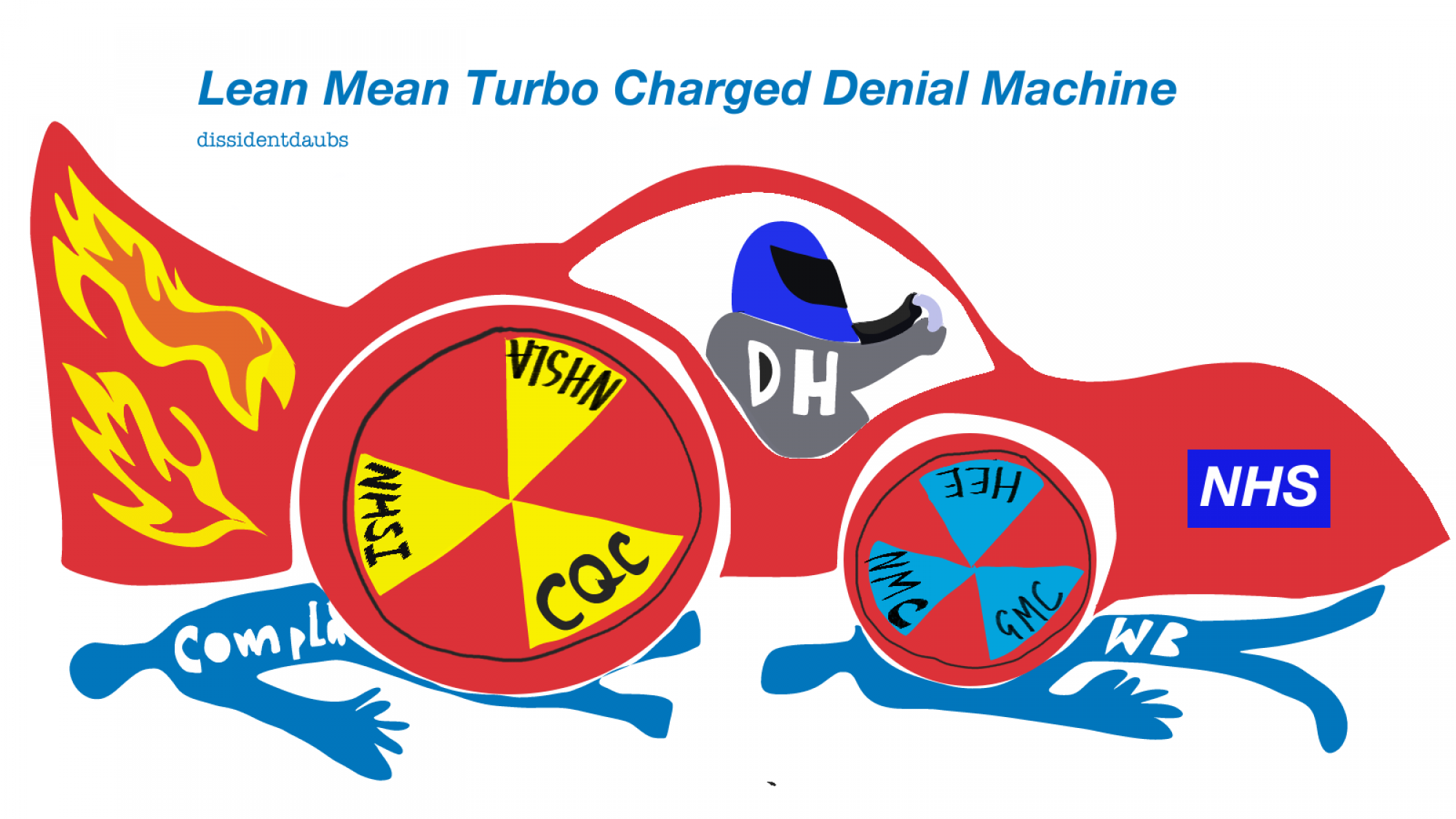
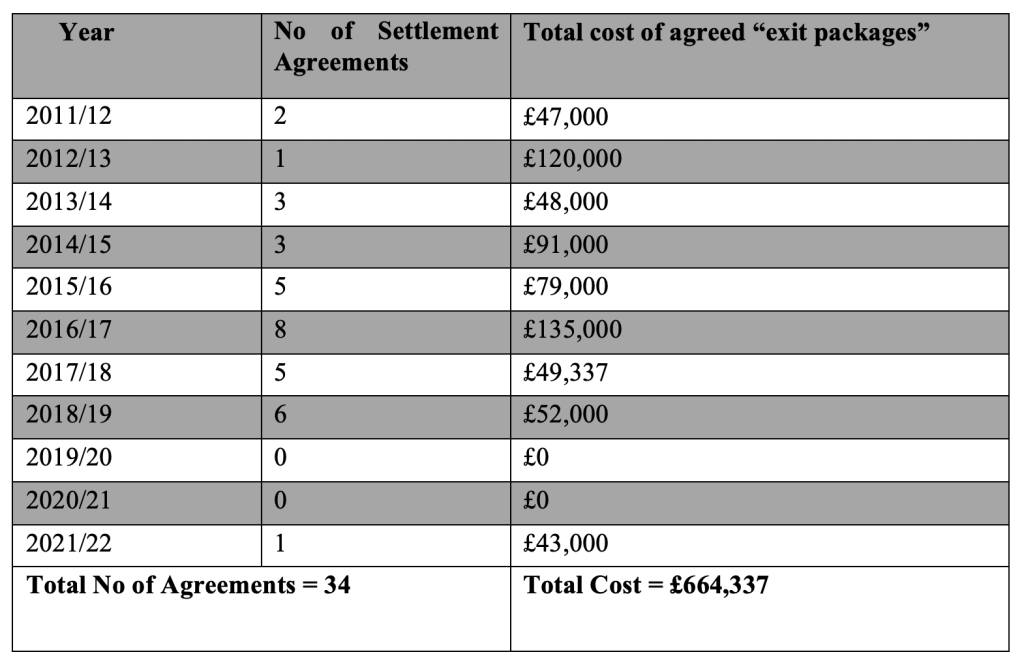
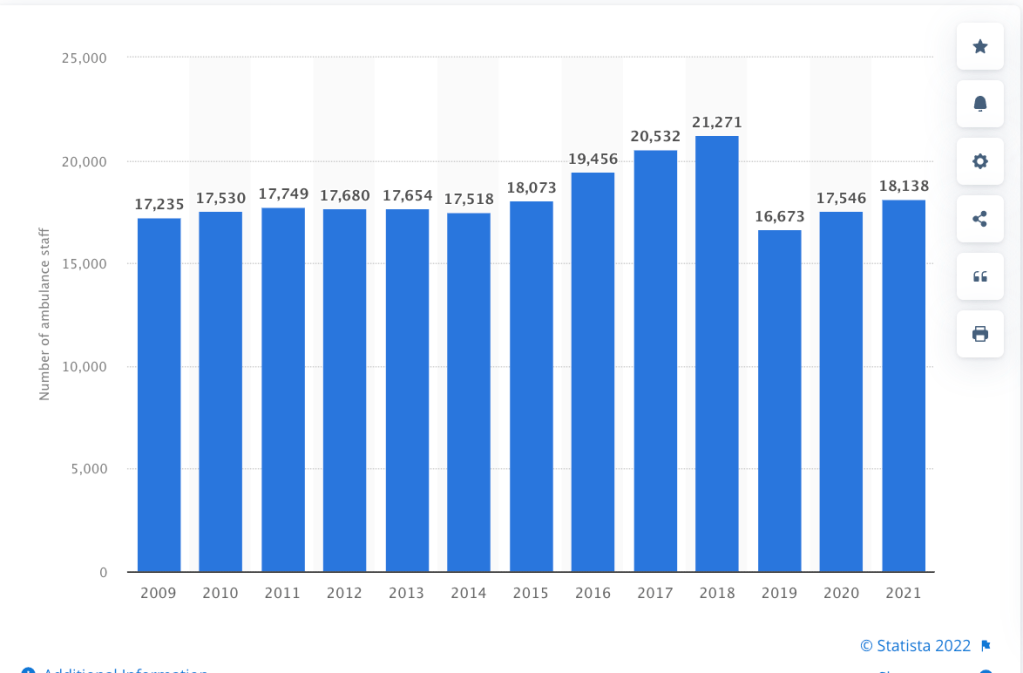

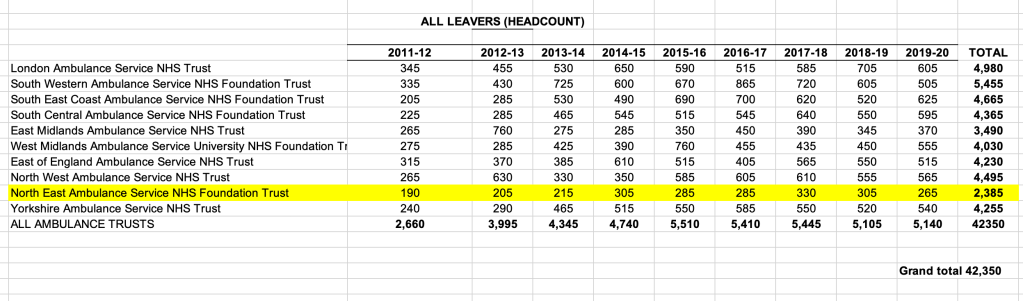
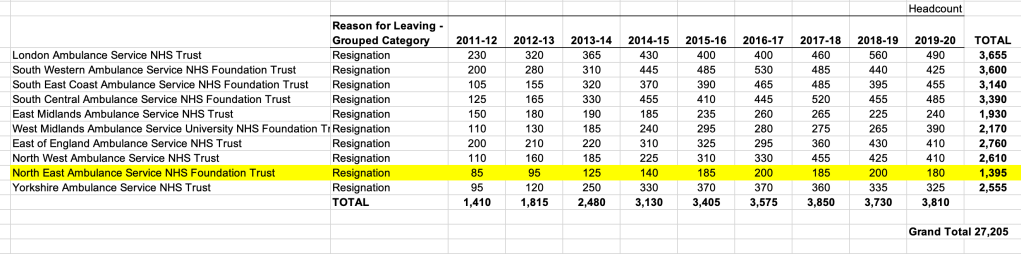
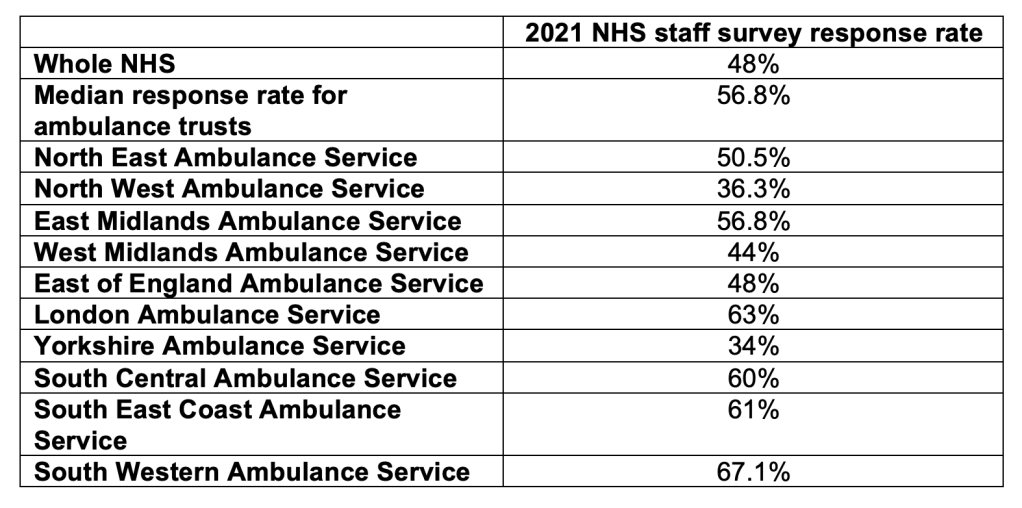
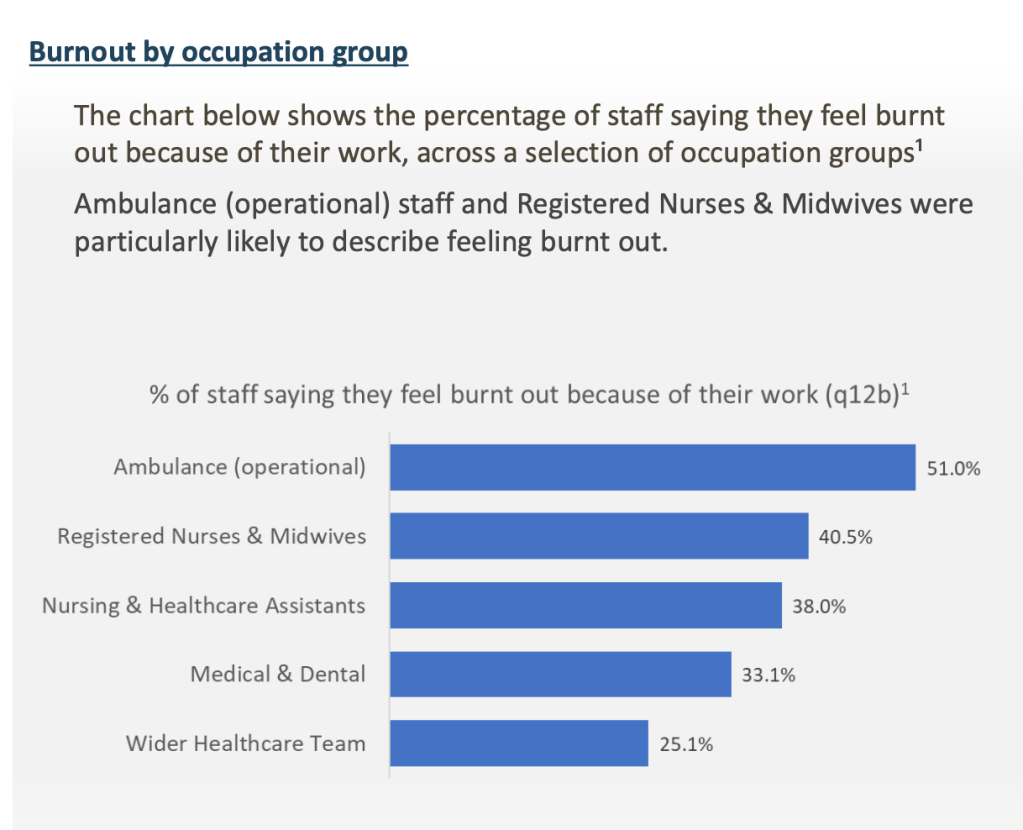
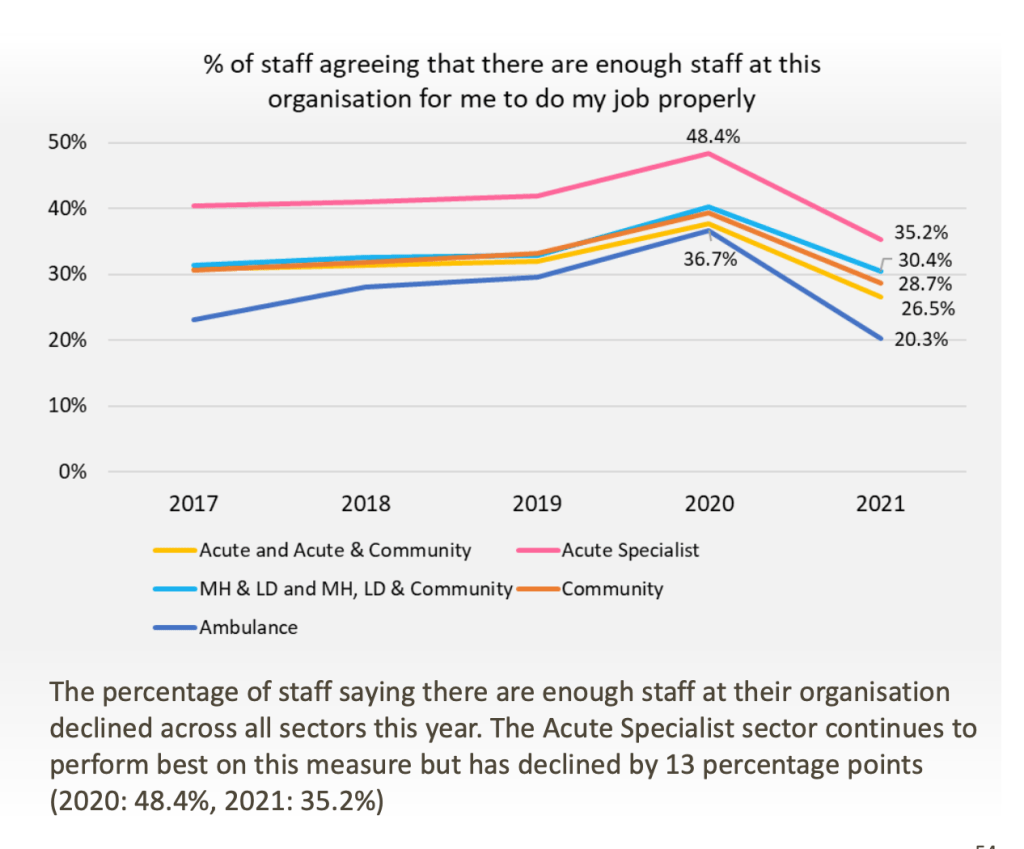
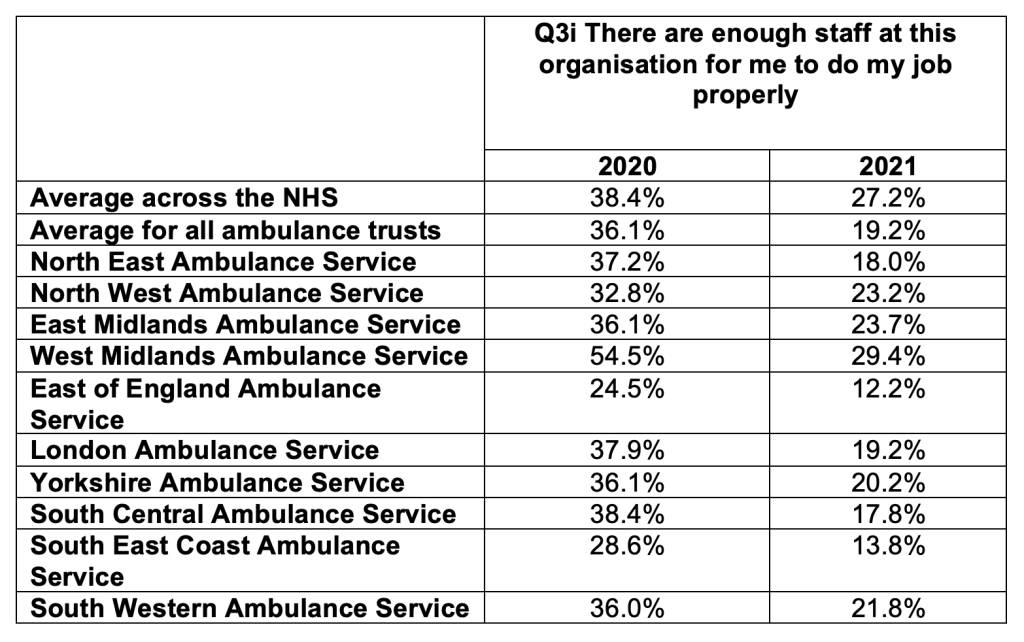
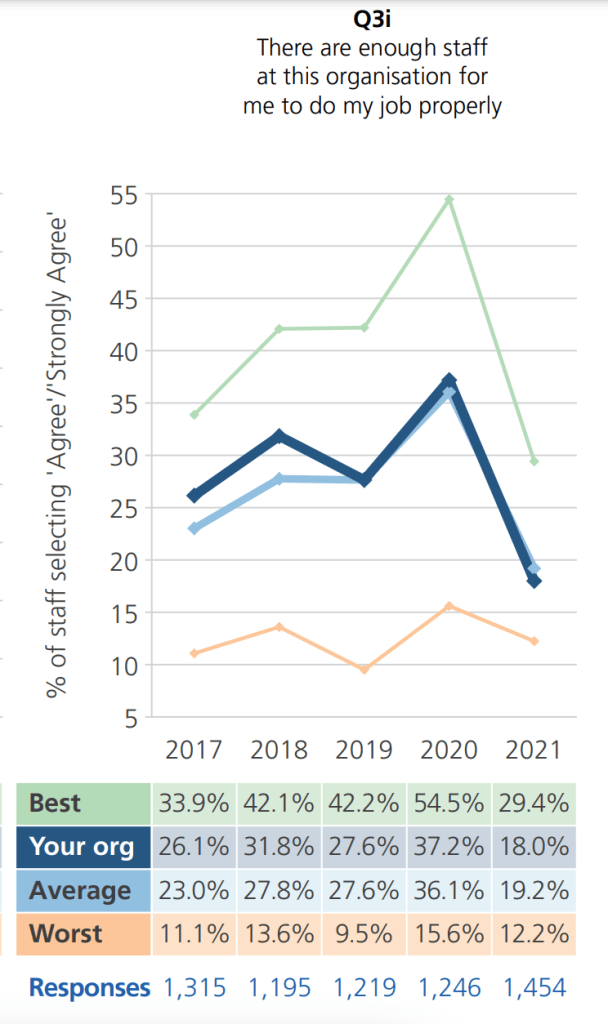
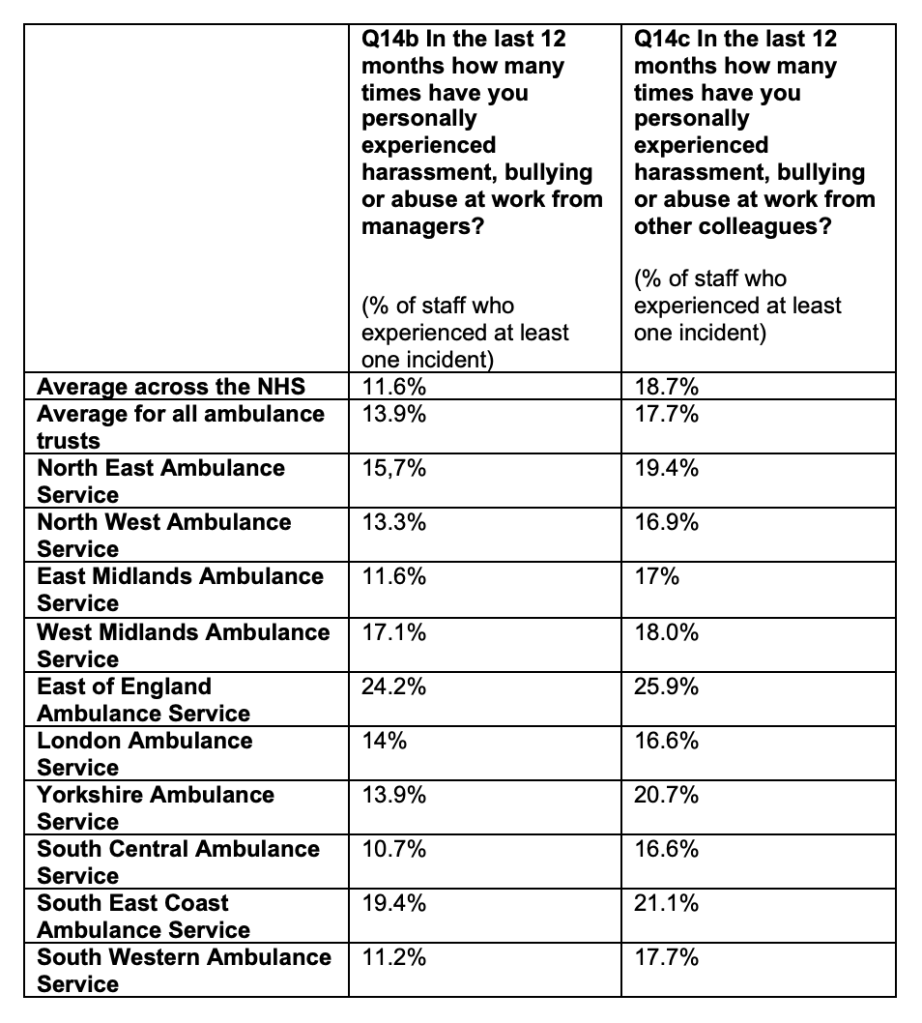
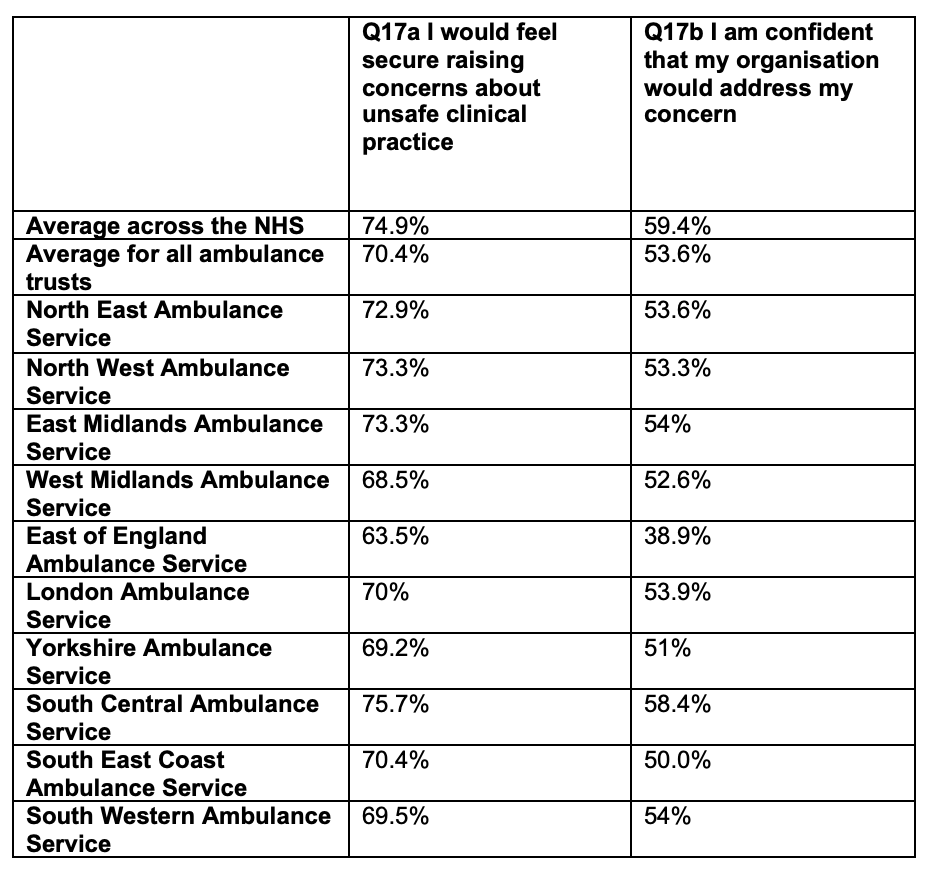
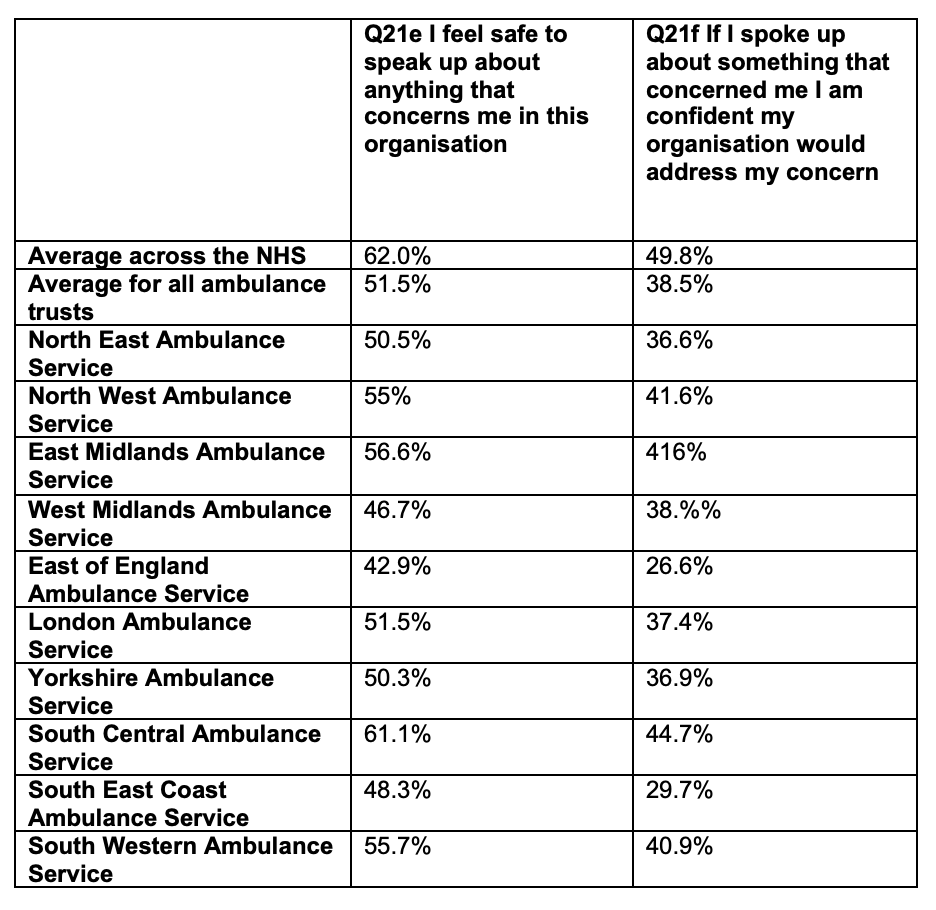
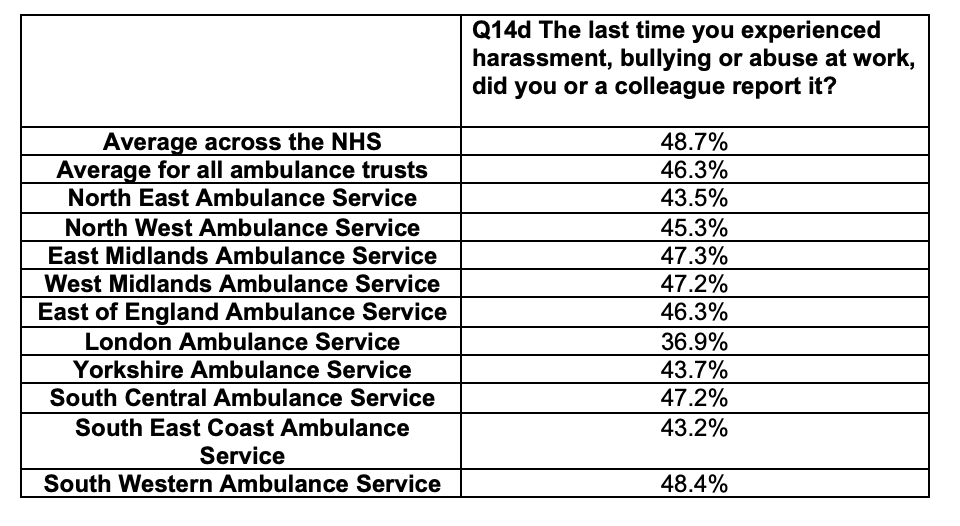
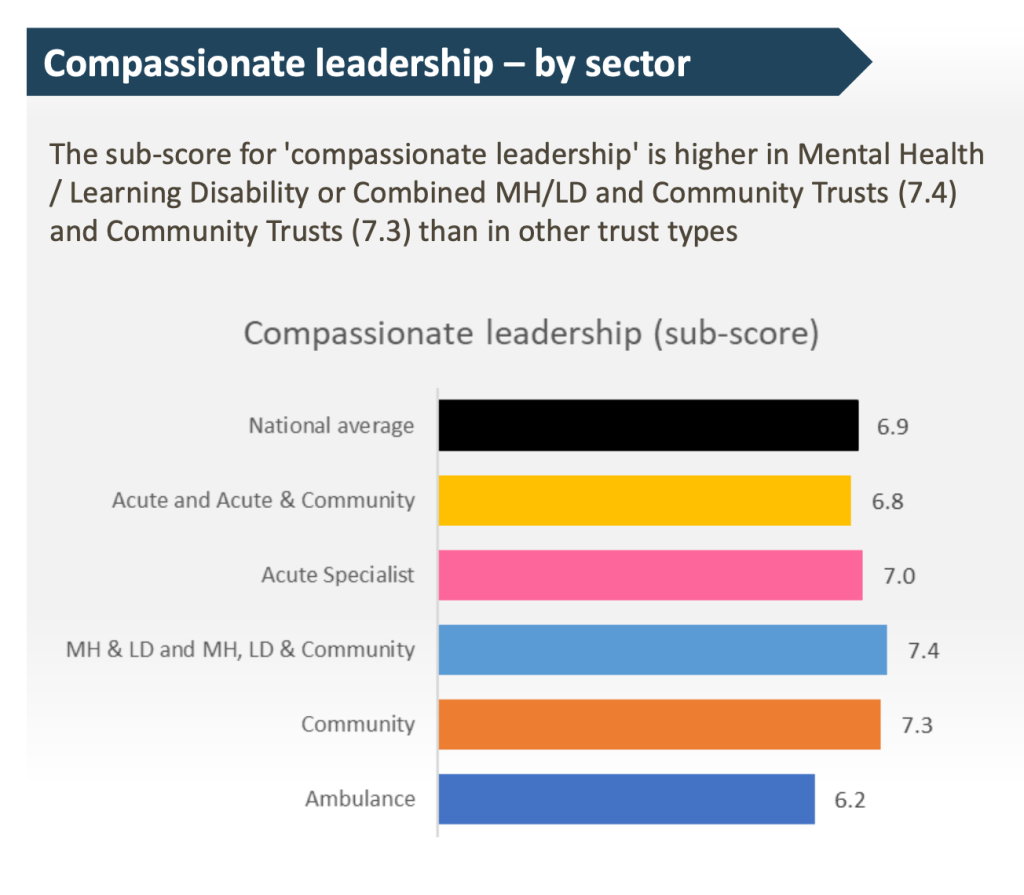


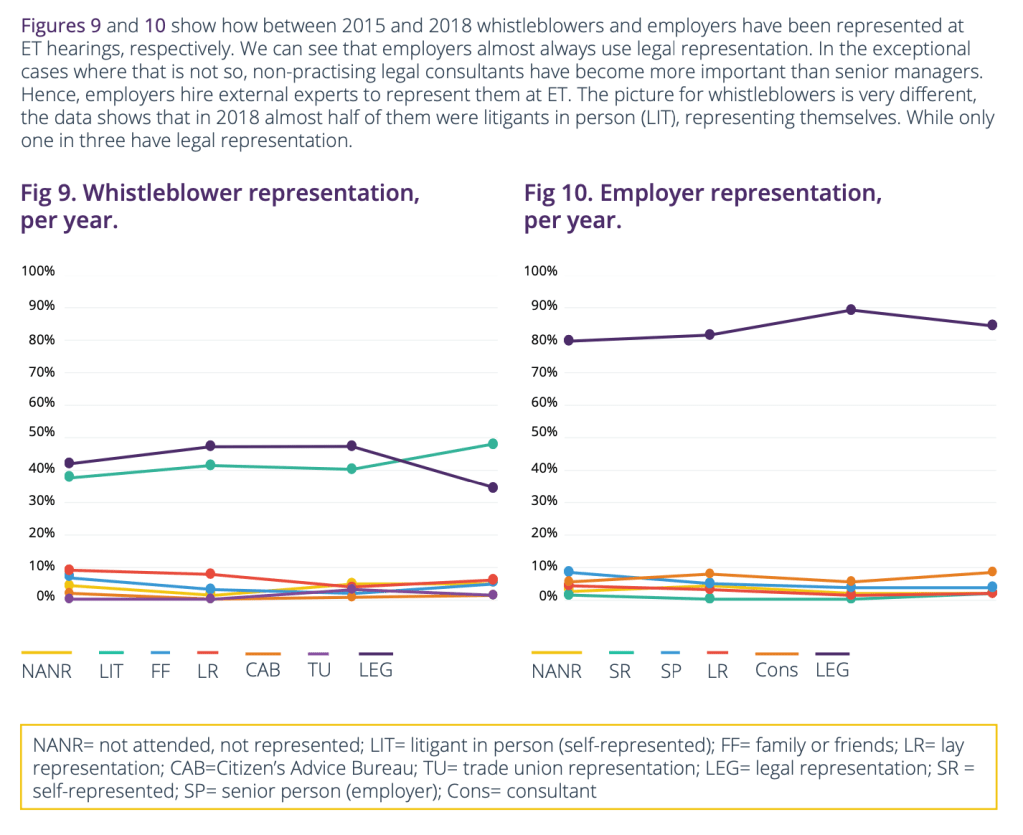

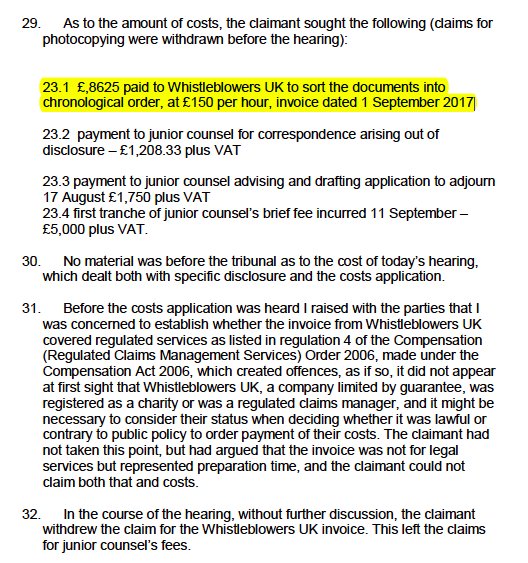
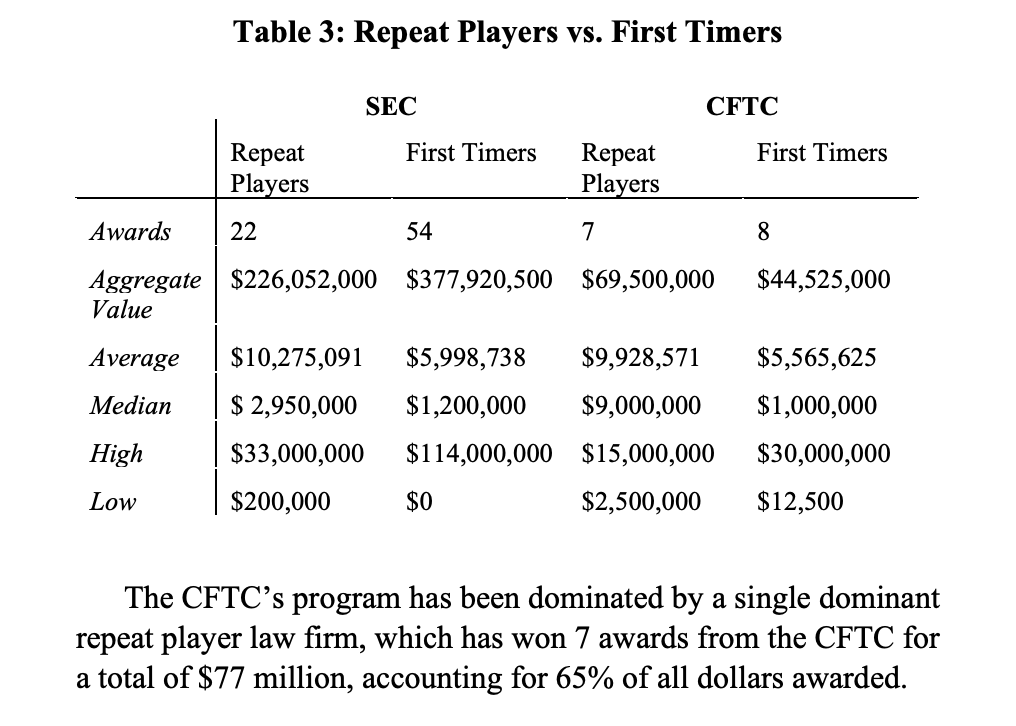
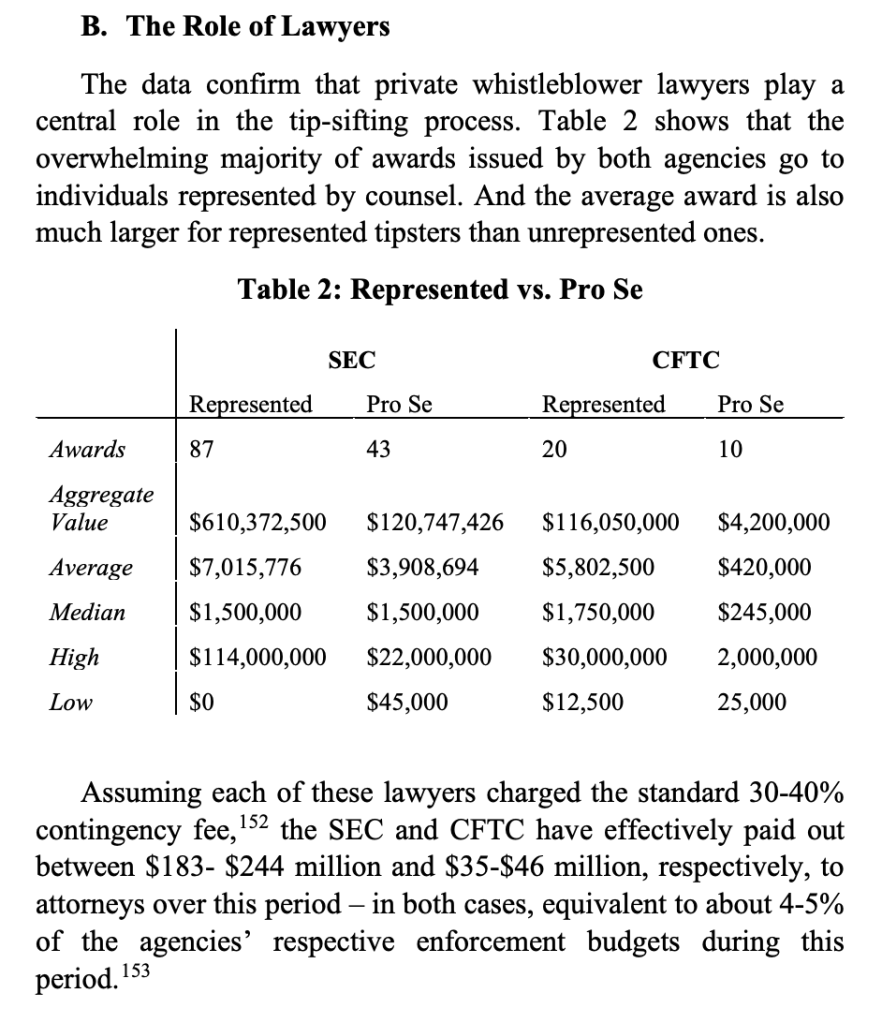
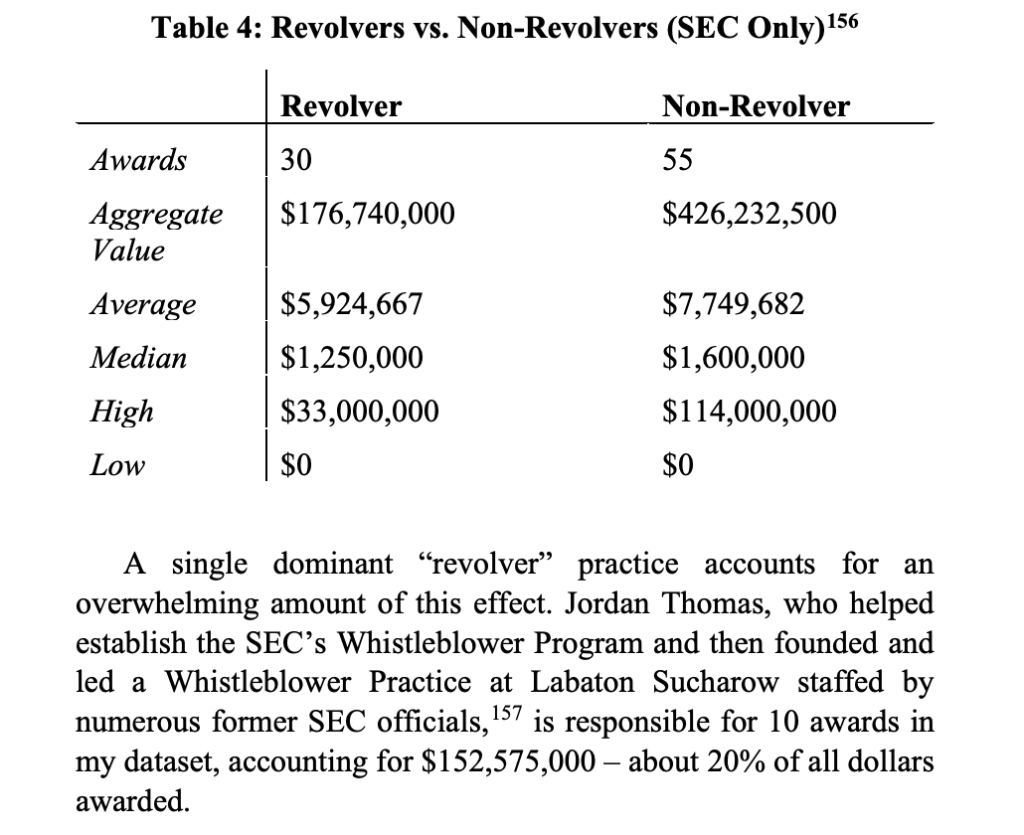
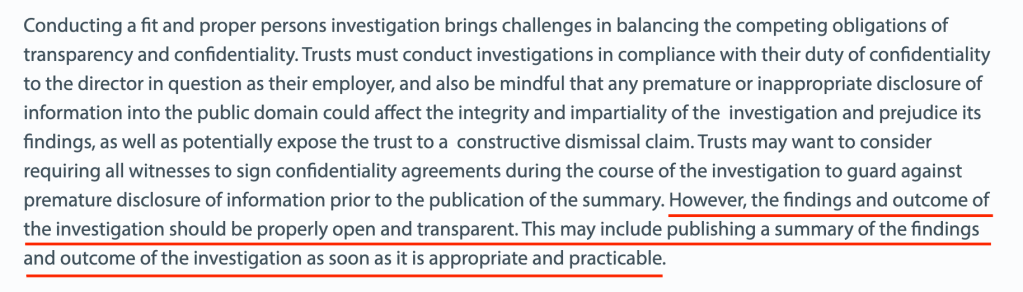
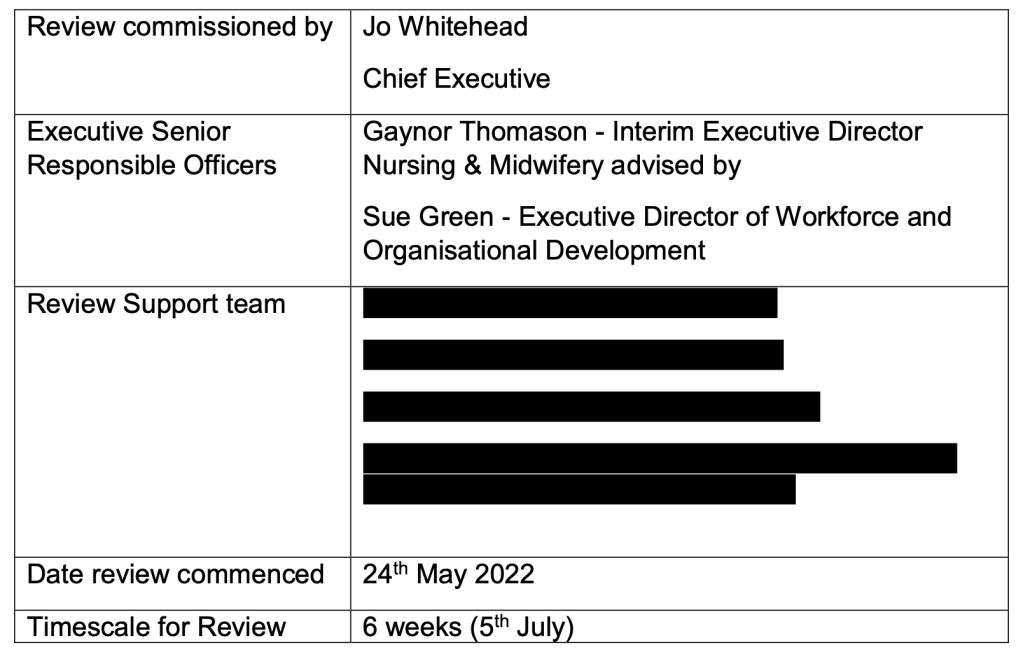
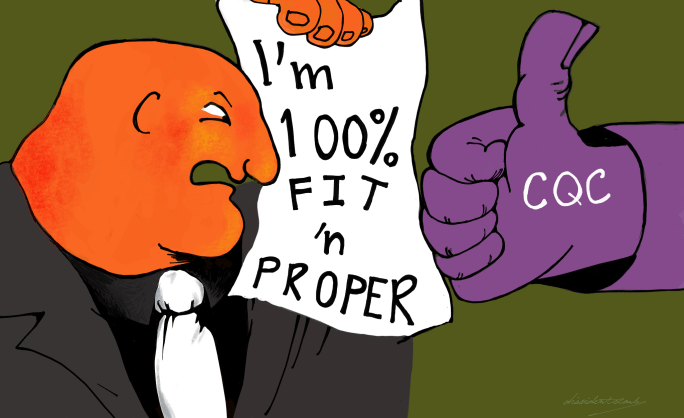
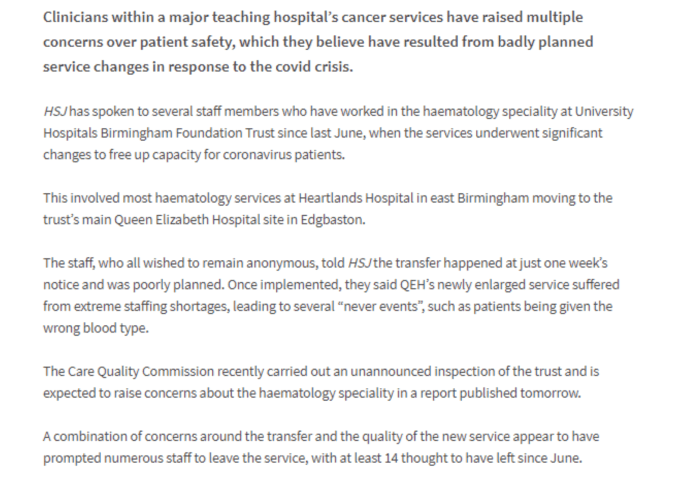
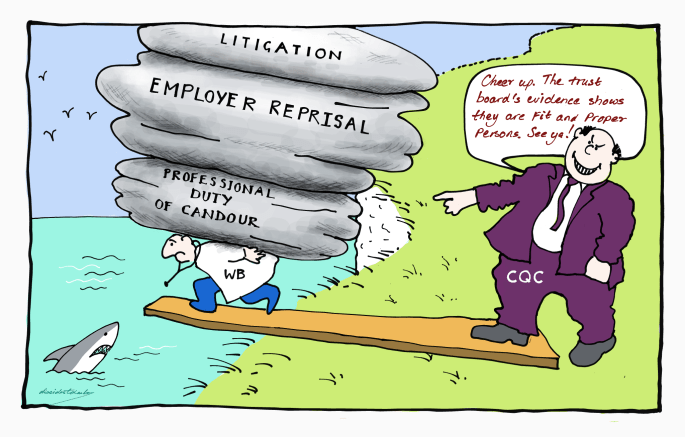

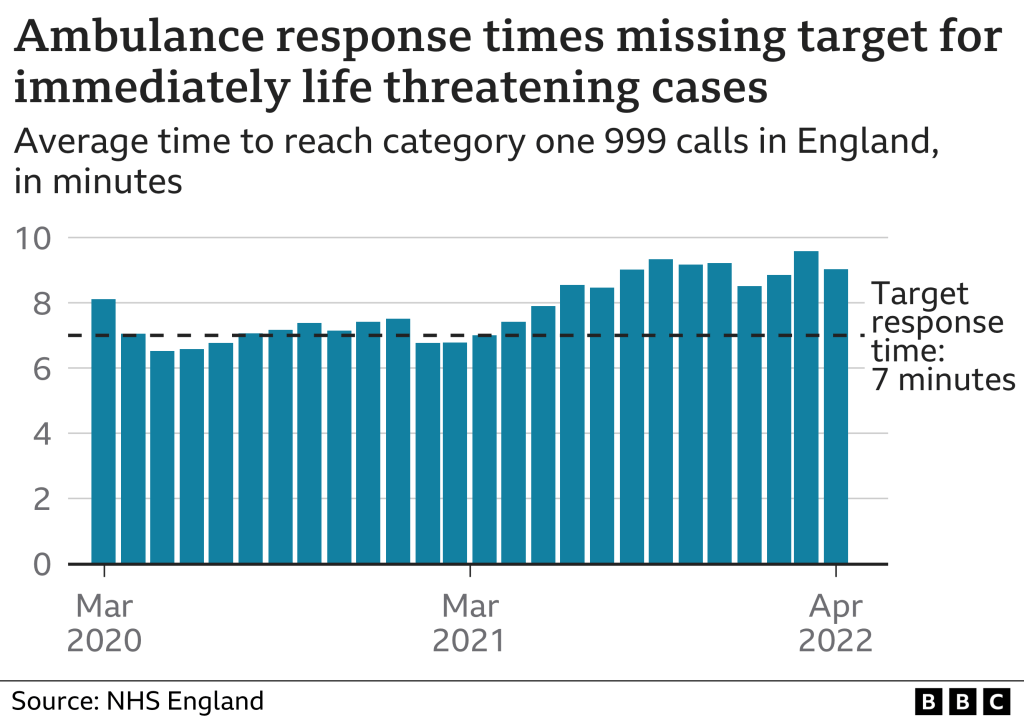
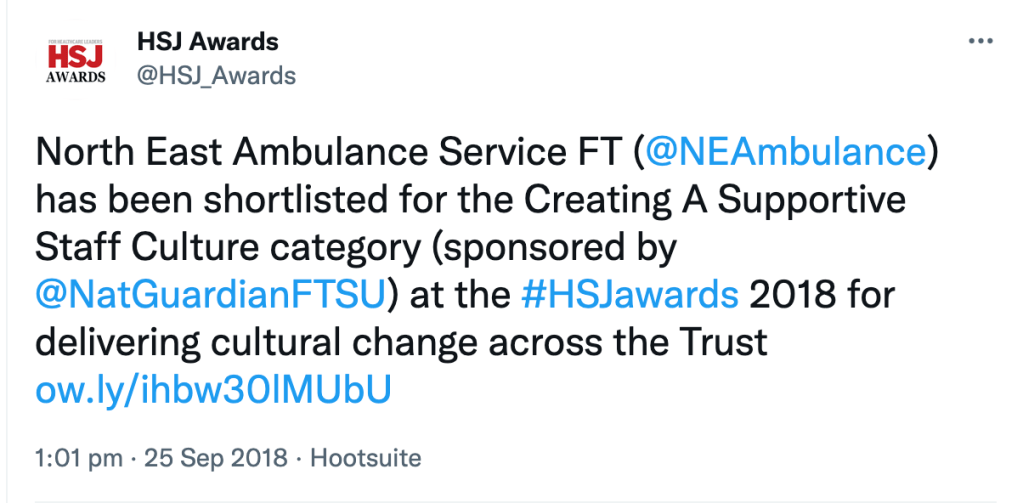
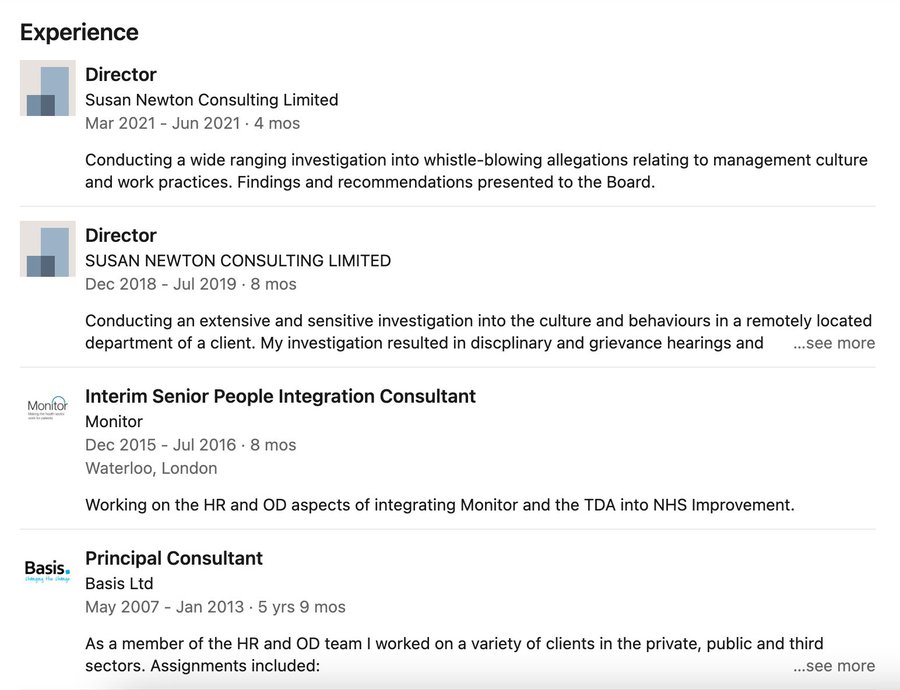
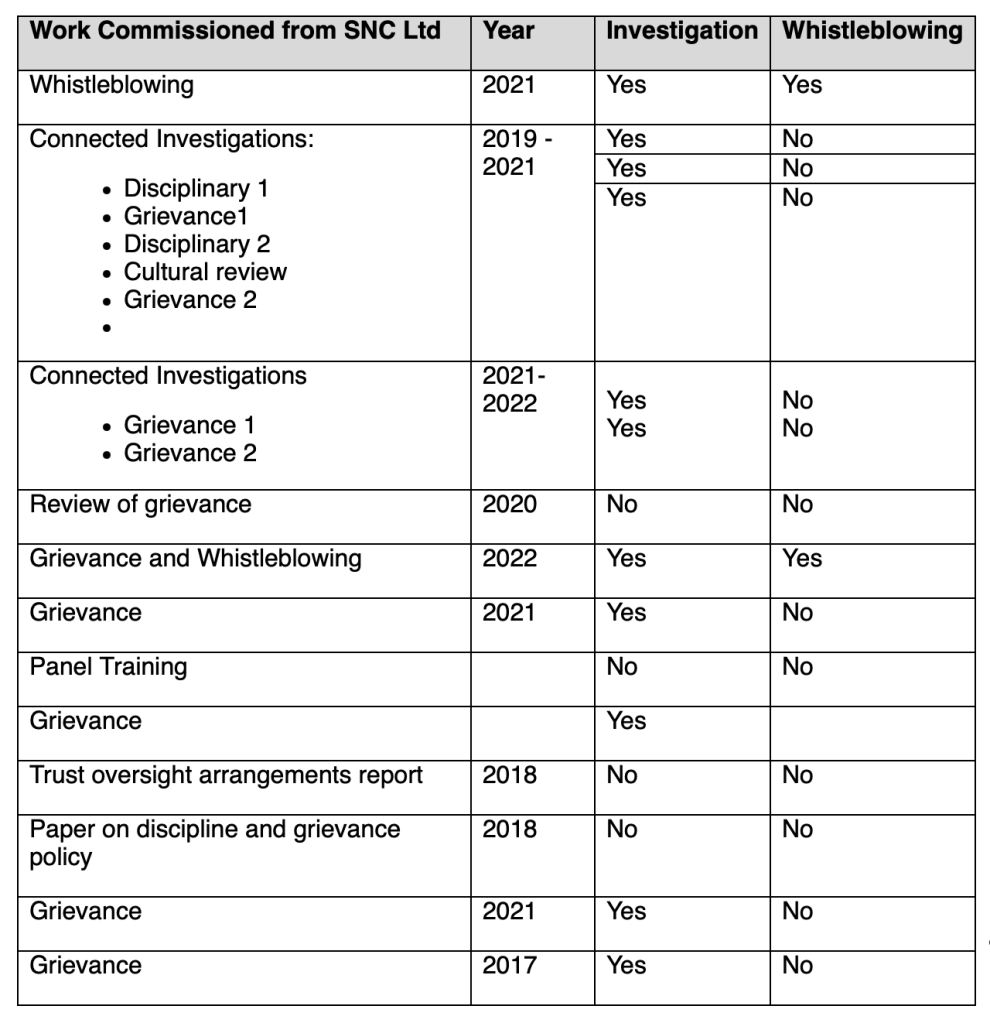
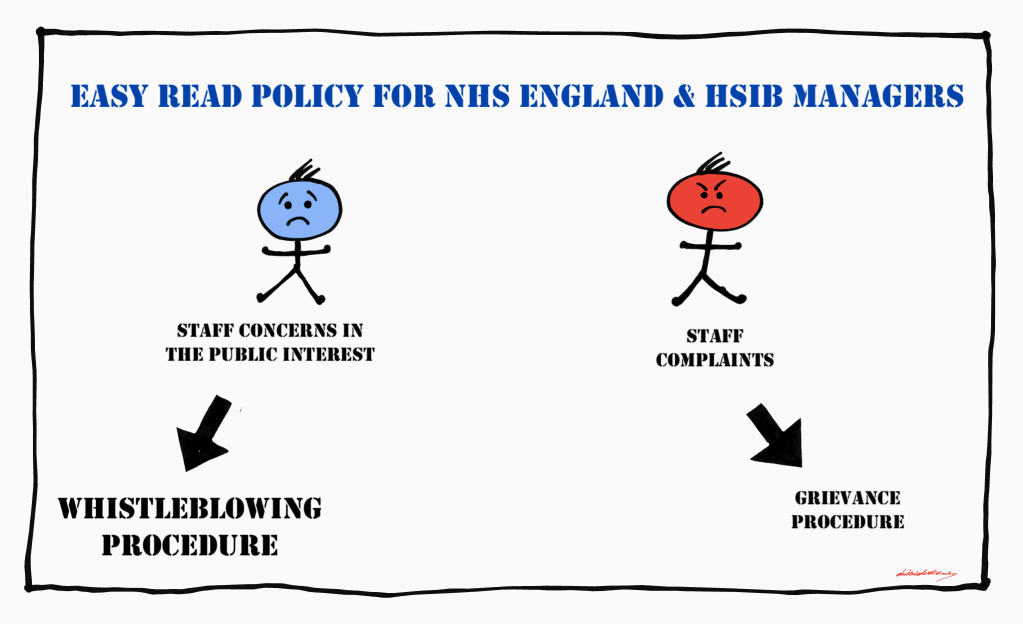
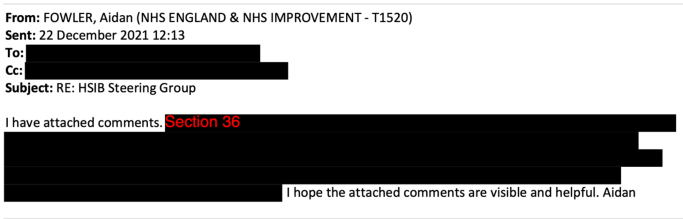


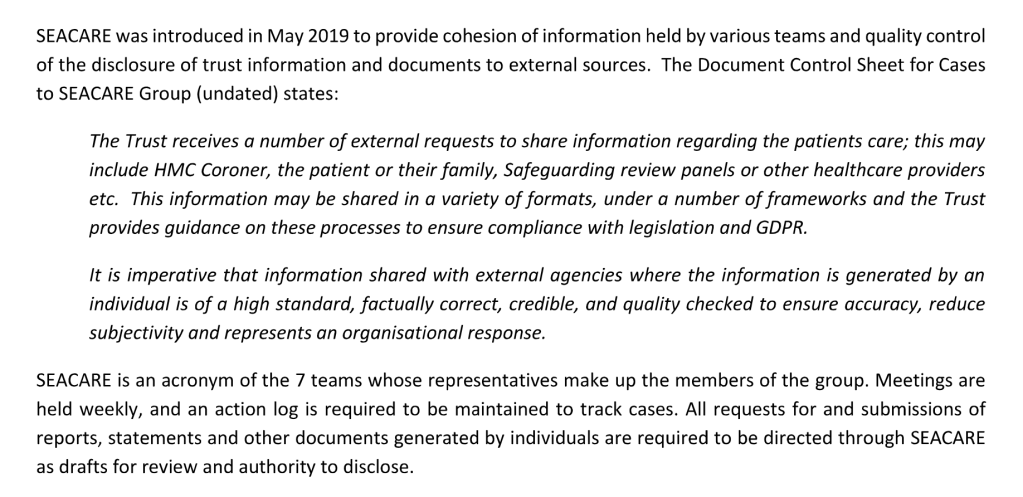
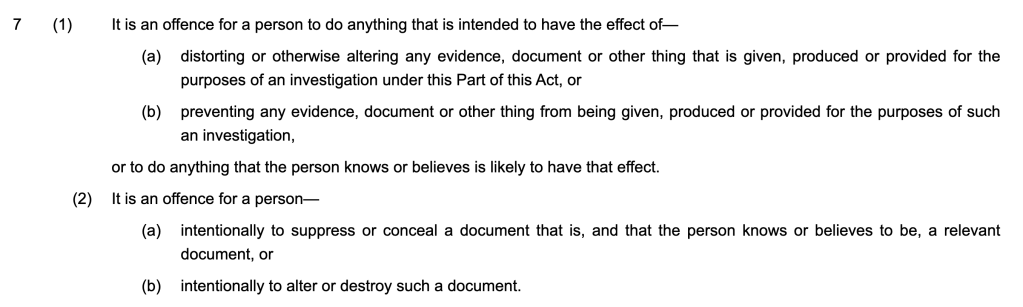

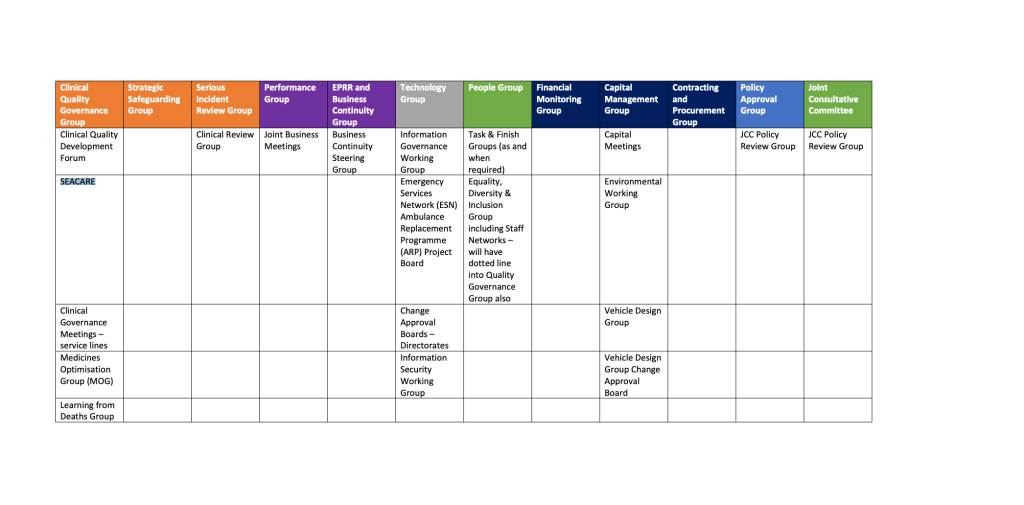

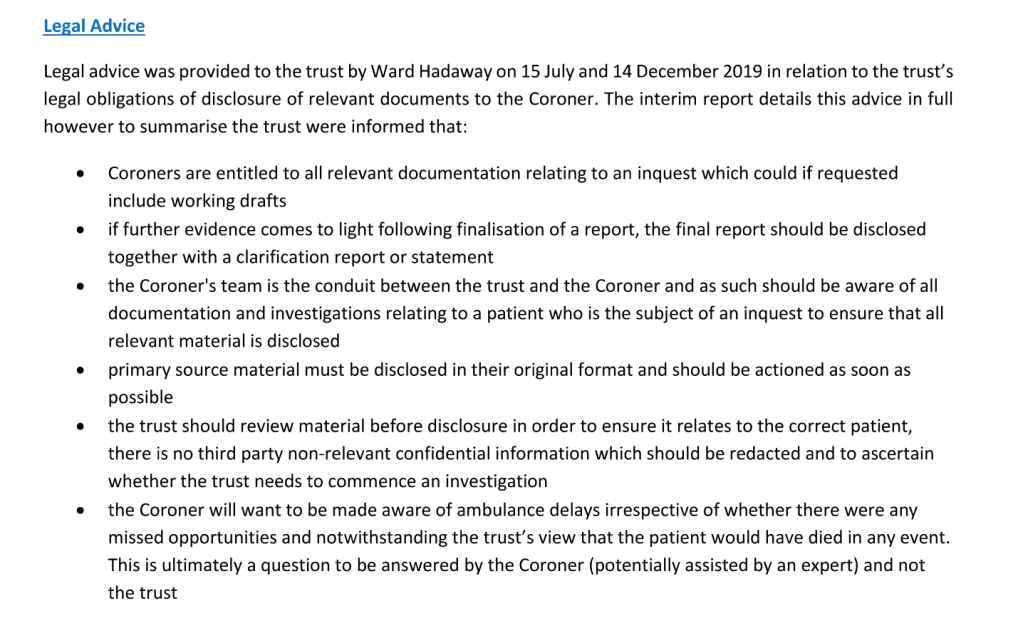
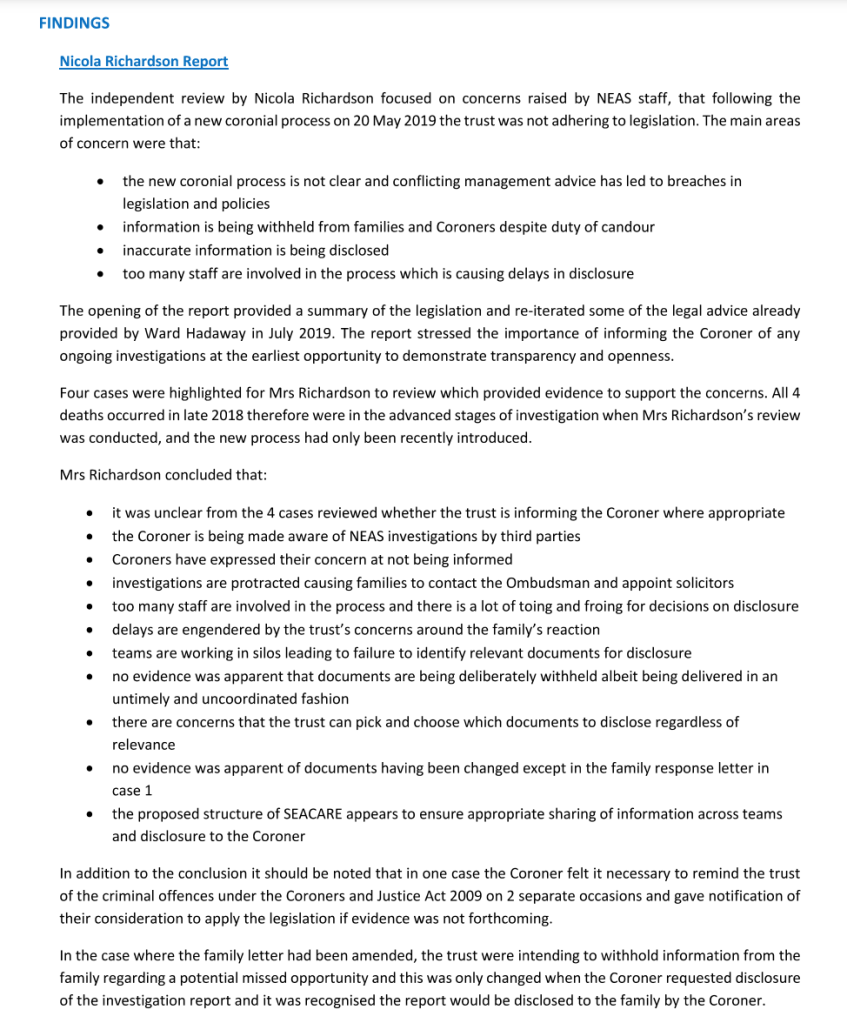
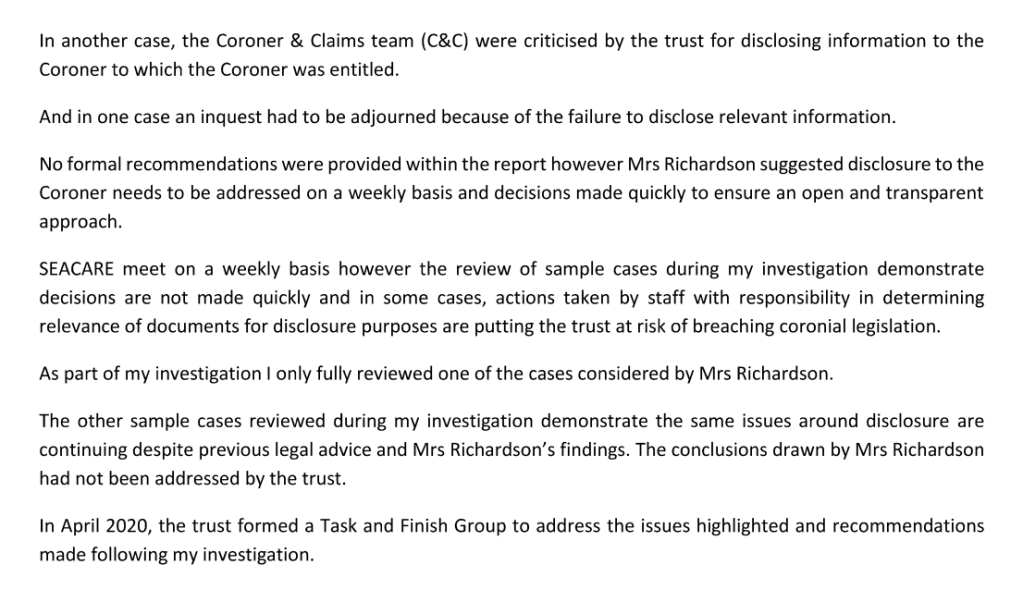
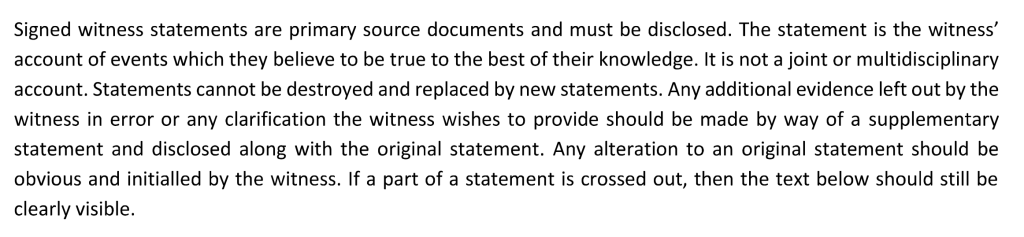





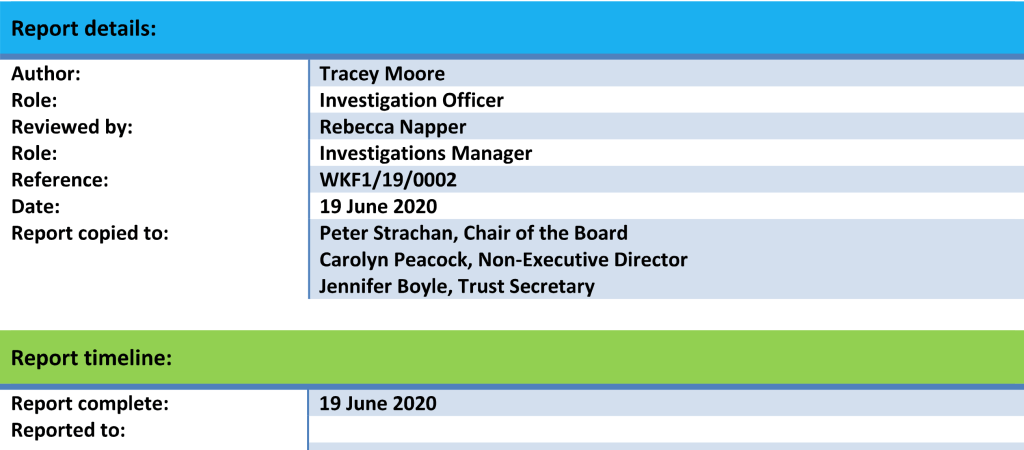
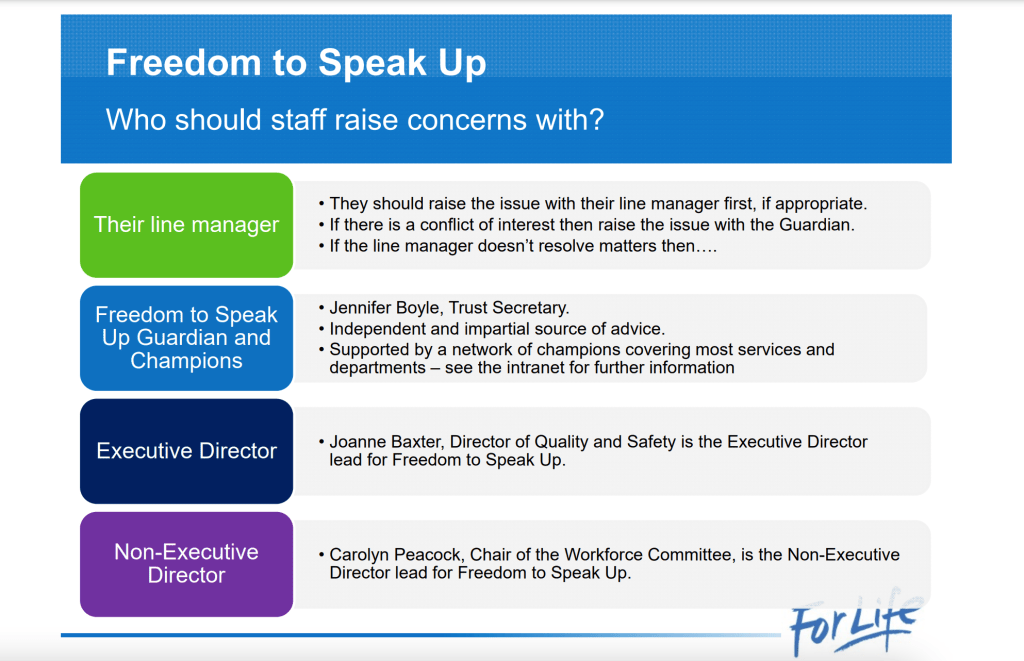

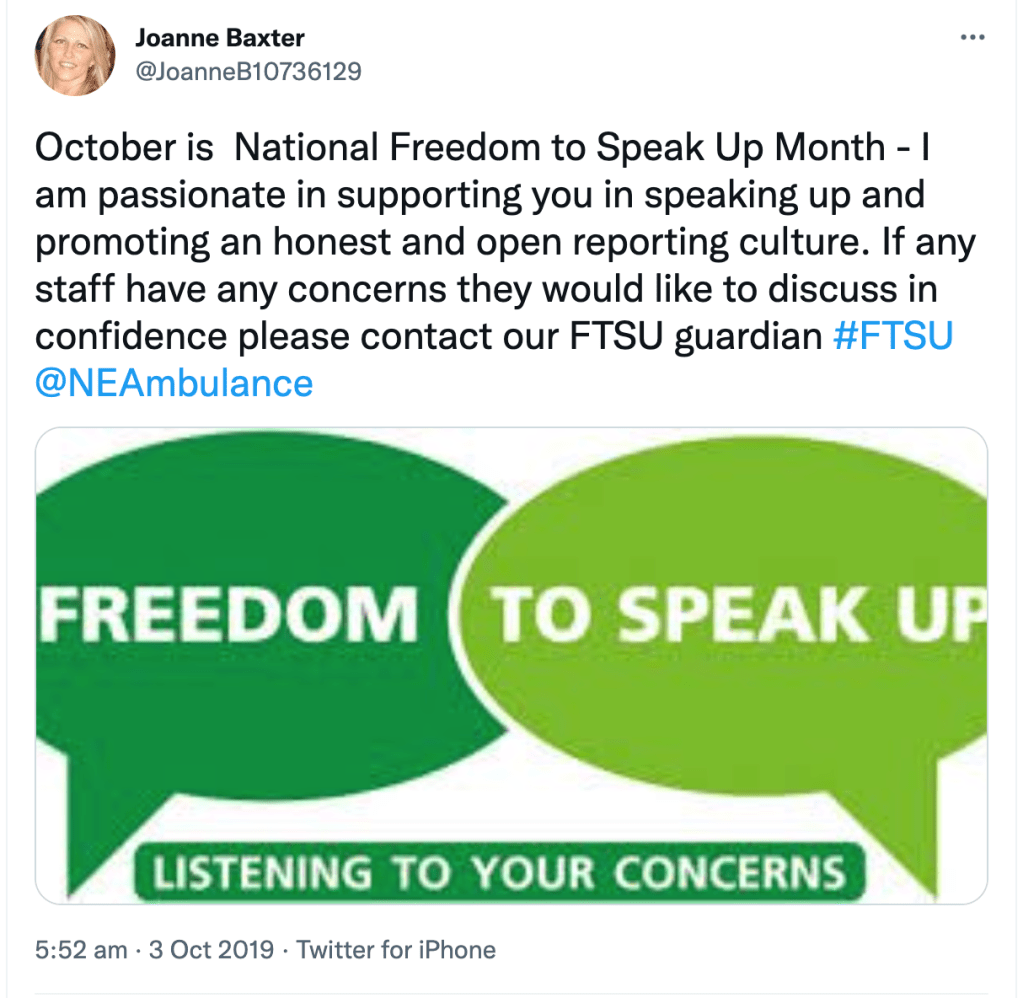


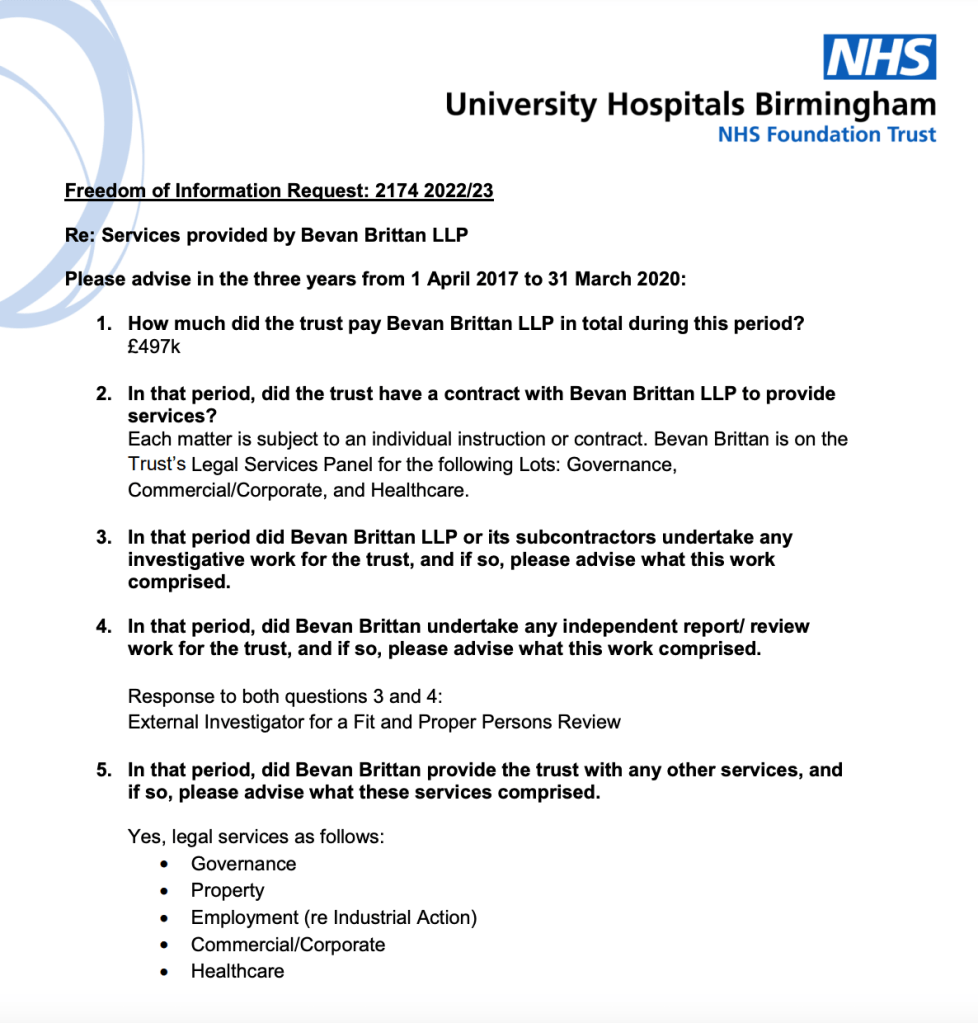


 Alexander's Excavations