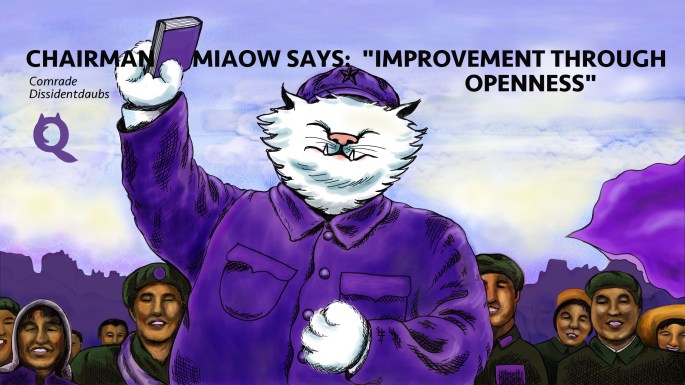
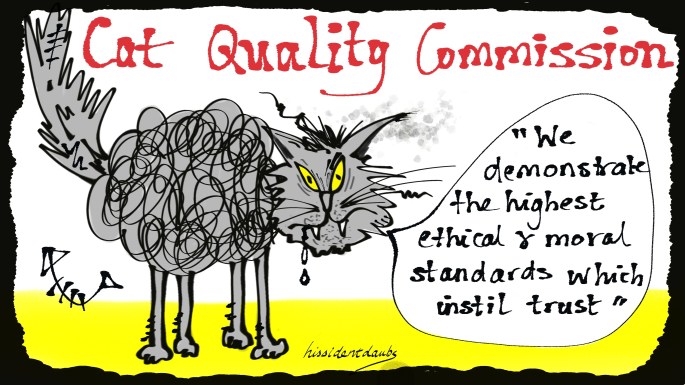
The CQC Denies…

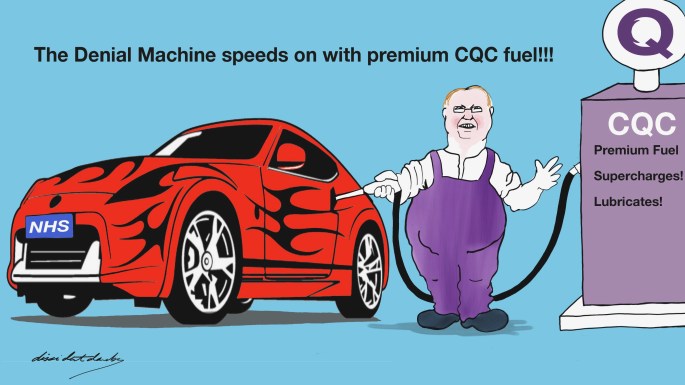
According to a statement made to the Times, the CQC doesn’t seem to accept that the NHS continues to merrily gag its staff.

The CQC’s Chief Inspector said:

“People’s disclosures to us are very important and they will be listened to – and to the point that the CQC “does little to deter gagging”, it [sic] worth saying that “gagging clauses” were banned in the NHS by the Department of Health in 2013.”

I have written to CQC to give an alternative perspective, as below.

delay-deny

LETTER TO PROFESSOR MIKE RICHARDS CQC CHIEF INSPECTOR 7 JANUARY 2017:

Prof Mike Richards

Chief Inspector of Hospitals

Care Quality Commission

7 January 2017

Dear Professor Richards,

Re CQC’s oversight of NHS gagging and your claim to the Times that gagging clauses have been banned 

I understand that you gave the Times the following statement with regard to its article of 6 December 2016 about CQC’s various failures to listen to, act upon concerns and to protect whistleblowers1:

“Professor Sir Mike Richards, Chief Inspector of Hospitals, Care Quality  Commission. “CQC takes concerns raised by staff extremely seriously, and  we act on these concerns where appropriate – whether this action is carrying  out or bringing forward an inspection, raising concerns directly with the provider, or alerting another organisation – including the police – who might be  better placed to deal with the issue. In the past six month reporting period we have received around 4,000 concerns raised by staff or ex-staff from across health and social care settings – around 10% of these resulted in an inspection, around 40% were noted for future inspections (some of which were already imminent), around 20% were referred to other bodies, and in 10% of cases it was determined that no action was required. The remainder remain under review currently. People’s disclosures to us are very important and they will be listened to – and to the point that the CQC “does little to deter gagging”, it worth saying that “gagging clauses” were banned in the NHS by the Department of Health in 2013.”

The term “gagging clauses” 2 is common parlance for clauses that require signatories not to disclose the contents or the existence of agreements, and non-disparagement clauses.

Despite repeated criticism by the Mid Staffs Public Inquiry and others of their injudicious use in the NHS, including by CQC in the past3, such gags are still used routinely by some NHS bodies and are common place. For example:

  • Mersey Care NHS Trust which you rated ‘Good’ admitted to 443 super-gags (clauses that required staff not to disclose the existence of settlement agreements).4
  • Your former trust (and the first National Freedom to Speak Up Guardian’s trust), Guy’s and St. Thomas’ admitted to not only using confidentiality clauses, but also using them in settlement agreements with whistleblowers.5
  • Even the CQC Chair’s former trust admitted to super-gagging 22 staff 6 and the CEO of NHS Improvement’s former trust admitted to super-gagging 45 staff.7

I was therefore most surprised to see that you informed the Times that gagging clauses were banned from the NHS in 2013.

The only action that the NHS took in 2013 was to start inserting a qualifying clause into settlement agreements, which stated that signatories were still free to make public interest disclosures.8 9

However, this just created confusion, fear and paralysing ambiguity for staff, as acknowledged by your own Non Executive Director Sir Robert Francis, in his report of the Freedom to Speak Up Review 10:

It is also clear that there is an atmosphere of fear and confusion surrounding the obligations of confidentiality in such agreements so as to make them a deterrent against public interest disclosures even where they do not have that effect in law.”

“There were some however which contained restrictions that seemed unnecessarily draconian, and I can appreciate how individuals might think they were ‘gagged’.”

Staff are not lawyers and are not in a position to understand the usually legalistic and intimidating language (also noted by Sir Robert) in settlement agreements. 11 Moreover, even lawyers argue about what meets the legal definition of a public interest disclosure, and staff can therefore be anticipated to struggle even more.

There are many staff who would like to reveal their experiences but refrain from doing so out of fear that this may jeopardise their settlement agreements.

There is no justification in particular for the widespread and continuing use of secrecy clauses that prevent staff from disclosing even the existence of settlement agreements, as acknowledged by Sir Robert:

I have seen some [settlement agreements] which seem unnecessarily draconian or restrictive, for example, banning signatories from disclosing the existence of a settlement agreement.” 10

It is disappointing that the CQC has neglected this important aspect of whistleblowing governance, despite Sir Robert’s advice that CQC should review settlement agreements.12 And it is disappointing that CQC admits that it has no structured methodology for inspecting NHS bodies’ use of gags 13, that it says it has no intention to review the use of NHS gags in the NHS 14, that there is no evidence that CQC inspects any organisation’s use of gags 15  and that through your above statement to the Times, CQC seems even to deny the continuing use of gags.

Please let me know if you would be willing to schedule a call to discuss these issues.

In the meantime, I draw your attention to this paper on CQC’s inaction on inappropriate use of gags by NHS trusts:

https://minhalexander.com/2016/09/23/nhs-gagging-how-cqc-sits-on-its-hands-2/

Yours sincerely,

Dr Minh Alexander

Health Committee

Public Accounts Committee

Public Administration and Constitutional Affairs Committee

Peter Wyman Chair CQC

Sir Robert Francis

Katherine Murphy CEO Patients Association

Dr Henrietta Hughes National Freedom to Speak Up Guardian, CQC


RELATED ITEMS

Whistleblowers unheard by CQC

A report on CQC’s failures to listen to, act upon disclosures and to protect whistleblowers, with supporting FOI and other evidence, and a related Times article of 6 December 2016 which reported on these matters.

https://minhalexander.com/2016/12/05/whistleblowers-unheard-by-cqc/

Tall stories by the CQC

A challenge to CQC’s evidence to Health Committee on 6 December 2016, which played down CQC’s failures on whistleblowing, and in which David Behan insisted that CQC had a “good story to tell”

https://minhalexander.com/2016/12/09/tall-stories-by-the-cqc/


REFERENCES

1 Patients at risk as thousands of safety warnings are ignored. Chris Smyth, The Times, 6 December 2016

http://www.thetimes.co.uk/article/patients-at-risk-as-thousands-of-safety-warnings-are-ignored-qtv5gr6cl

2 Under the section of the Mid Staffs Public Inquiry report headed “Non-disparagement clauses and gagging clauses”, Sir Robert Francis commented thus of a non-disparagement clause in CQC’s settlement agreement with Dr Heather Woods the lead investigator who uncovered failings at Mid Staffs:

Therefore the agreement had a “chilling effect” inimical to the public interest and inconsistent with the role of the CQC as a regulator in a sector in which the public have a distinct right to know about concerns affecting their health and well-being.”

3 Health regulator ‘gagged own staff against speaking of failures’. Rebecca Smith, Telegraph, 30 March 2012

http://www.telegraph.co.uk/news/health/news/9170951/Health-regulator-gagged-own-staff-against-speaking-of-failures.html

4 Freedom of information disclosure by Mersey Care NHS Foundation Trust 27 July 2016

http://twitdoc.com/view.asp?id=298262&sid=6E52&ext=PDF&lcl=Mersey-care-received-28-07-2016.pdf&usr=alexander_minh

5 Freedom of information disclosure by Guy’s and St. Thomas’ NHS Foundation Trust 21 March 2016

https://minhalexander.com/wp-content/uploads/2016/09/guys-compromise-foi-response-foia-53147_alexander-final-response.pdf

6 Freedom of information disclosure by Yeovil District Hospital NHS Foundation Trust 4 January 2016

https://minhalexander.com/wp-content/uploads/2016/09/yeovil-foi-disclosure-compromise-agreements-4-january-2016.pdf

7 Freedom of information disclosure by Northumbria Healthcare NHS Foundation Trust 15 February 2016

northumbria-compromise-agreements-foi-disclosure-15-02-2016

8 NHS can use gagging clauses as long as employees know they don’t apply to safety issues, guidance says. Clare Dyer BMJ 13 April 2013

http://careers.bmj.com/careers/advice/view-article.html?id=20011942

To illustrate, this an example of the sort of clause that the NHS, since 2013, has been inserting into agreements that contain gagging clauses:

Equally, nothing in this Agreement, including but not limited to clauses 10 and 11, shall

prejudice any rights that you have or may have under the Public Interest Disclosure Act 1998

(“PIDA”) (or any other enactment which PIDA amends) and/or any obligations that you have

or may have to raise concerns about patient safety and care with regulatory and other

appropriate statutory bodies pursuant to your professional and ethical obligations including

those obligations set out in guidance issued by regulatory or other appropriate statutory

bodies from time to time.” [disclosed by Mr Mackey’s former trust Northumbria Healthcare

NHS Foundation on 11 May 2016]

9 In 2013 the Secretary of State wrote to NHS Trusts urging them to use gags more appropriately but his letter contained no clear standards, performance targets or compulsion.

https://www.gov.uk/government/uploads/system/uploads/attachment_data/file/217036/open-culture-letter.pdf

10 Report of the Freedom to Speak Up Review February 2015

http://webarchive.nationalarchives.gov.uk/20150218150343/https://freedomtospeakup.org.uk/wp-content/uploads/2014/07/F2SU_web.pdf

11 Report of the Freedom to Speak Up Review February 2015

Often confidentiality clauses are drafted in complex legalistic language and such agreements are often made at times of particular stress and anxiety for the member of staff involved.”  

12 Report of the Freedom to Speak Up Review February 2015:

All settlement agreements should be available for inspection by the CQC”

13 Letter from Rebecca Lloyd-Jones CQC Director of Legal Services 2 August 2016

https://minhalexander.com/wp-content/uploads/2016/09/cqc-further-response-gags-2-08-2016.pdf

14 Letter from Alex Baylis CQC Head of Acute Sector Policy 11 January 2016

https://minhalexander.com/wp-content/uploads/2016/09/cqc-response-re-inspecting-review-of-compromise-agreements-alex-baylis-11-01-2016.pdf

15 NHS Gagging: how CQC sits on its hands. Minh Alexander 23 September 2016

National Clinical Assessment Disservice

By Dr Minh Alexander NHS whistleblower and former consultant psychiatrist, 6 January 2017

Summary: The National Clinical Assessment ‘Service’ (NCAS – previously known as the National Clinical Assessment Authority) is an important but little known NHS quango that was established in 2001. It purportedly helps to manage poor medical performance but is implicated in the mistreatment of whistleblowers, as I shall set out below. NCAS agreed in 2015 to review its processes with respect to whistleblowers, but appears to have resisted reform. This is more evidence of the ineffectiveness of the Freedom to Speak Up Review.

NCAS was created on the back of the Chief Medical Officer’s paper “Supporting Doctors, Protecting Patients” 1 This proposed that there should be speedier, more standardised processes for dealing with poor medical performance in the NHS.

The government in fact took the opportunity to remove doctors’ rights of external appeal: we are intending to abolish the “Paragraph 190” rights of appeal that are still held by certain doctors and dentists, replacing this right with a process internal to the employing organisation”. 2

Some might say this was part of a long term strategy of managerialism and deliberate weakening of the power of frontline professionals within the NHS.

Notwithstanding, NCAS was in theory meant to help moderate wasteful and oppressive NHS suspension culture, which had caused many outcries 3 4 5 and by the DH’s own admission, had run amok. 5

The plight of suspended doctors was repeatedly raised in parliament, for example by Baroness Knight:

“I know of a case in which the wife of a suspended hospital doctor was dying of cancer in the same hospital and, because of his suspension, he was not even allowed to visit her.”

“Even if all the doctors were guilty, there is no justification for treating them in that way. Even felons who commit the worst crimes in the criminal calendar are treated better than those trained and dedicated hospital doctors. However, the overwhelming majority of them are not guilty; they are found to be innocent of all charges. In the debate last year, I stated that out of 201 cases of suspended doctors that I knew of, only 25 were subsequently found to be guilty of the charges against them. I repeat: only 25 out of 201 were found to have acted wrongly. Some of the remaining 176 must wait years to be cleared.” 3

 Establishing NCAS was part of the government’s claims that it wanted to “offer support and help to put things right where possible rather than a regime of punishment.” 2

NCAS describes its role thus:

NCAS works to resolve concerns about the practice of doctors, dentists and pharmacists by providing case management services to health care organisations and to individual practitioners. Our aim is to work with all parties to clarify the concerns, understand what is leading to them and make recommendations to help practitioners return to safe practice.” 6

It assesses the behaviour and performance of practitioners deemed to be problematic by NHS organisations. There have been controversies about abuse of this facility by employers to bully doctors, and the validity of NCAS’ method and assessments. 7 8

Crucially, NCAS also has a role in advising NHS employers who suspend practitioners under procedures euphemistically named “Maintaining High Professional Standards in the Modern NHS” (MHPS) 9.

Under MHPS, practitioners are at the mercy of internal procedures, which in too many cases are just kangaroo courts. As above, MHPS replaced more rigorous provisions that protected doctors against false allegations. It has been criticised thus by a leading employment barrister:

“Without doubt Maintaining High Professional Standards in the Modern NHS, in relation to allegations of professional misconduct, constitutes a downgrading of consultants’ protection which appears to have met surprisingly little resistance and was agreed by the BMA (and the BDA). The most striking features are the abolition of the independent and legally chaired panel to hear serious disciplinary allegations, and the removal of the right of legal representation.” 10

Whenever practitioners are suspended under MHPS they are automatically referred to NCAS, which then supposedly gives their employers advice on adherence to MHPS, general good practice principles and the fair treatment of suspended practitioners. 11 In short, NCAS is supposed to be a safeguard.

However, NCAS has in too many cases proved to be an instrument of reprisal for NHS staff whom bullying managers want to put through the wringer, whistleblowers being a case in point.

Many whistleblowers report that NCAS uncritically rubber stamps NHS employers’ decisions, and stonewalls when whistleblowers report that disciplinary action against them is in fact reprisal for raising concerns.

NCAS’ typical response to whistleblowers’ appeals is to wash its hands, and to claim that it is an advisory body that does not investigate, and so cannot verify what it is told by either employers or referred practitioners.

In fact NCAS fails to follow its own advice when it gives this passive response. This is because its guidance says that employers should instigate parallel investigations into any concerns raised by referred practitioners 12, and NCAS should actively advise employers accordingly.

Quite often, NCAS carries on a correspondence with employers that is not openly shared with referred practitioners. NCAS advises employers to disclose this correspondence, but does not compel them to do so. Many referred practitioners only get to see the full correspondence about their cases by making a Subject Access Request for personal data.

In short, bewildered whistleblowers who find themselves referred based on fabricated allegations of misconduct, mental disorder or poor clinical performance can expect little help from NCAS. The whole experience is often Orwellian and extremely disempowering.

In March 2015 Sir Anthony Hooper issued recommendations for reform of the similarly shabby way in which the GMC treated whistleblowers. 13

In April 2015 I opened correspondence with NCAS, via the CEO of the NHS Litigation Authority (NCAS has been under NHSLA’s auspices since 2013), to ask if NCAS would consider similar changes. 14

After a meeting in September 2015 between whistleblowers and the Director of NCAS, NCAS agreed to review its process and involve whistleblowers.

A whole year then passed with no further contact from NCAS.

A reminder was sent in September 2016, which also pointed out gross failure in NCAS’ handling of Race Equality issues, which had by then been revealed by an FOI disclosure:

https://minhalexander.com/2016/09/24/letter-to-director-of-national-clinical-assessment-service-ncas-22-september-2016/

NCAS promised to provide a response some time in October 2016.

On 26 November 2016 the Director of NCAS promised a substantive response within a week, but did not make good this promise.

A further reminder was sent on 17 December 2016.

What came next? You guessed it – more silence.

So the body that helps to pass judgment on sometimes entirely innocent clinicians is itself showing little sign of accountability and professionalism.

There seems to be no urgency about treating whistleblowers fairly, even though this is an important aspect of safety culture, and NCAS purports to be a patient safety agency.

Robert Francis opted for warm and fuzzy trust in people’s better nature when designing his recommendations from the Freedom To Speak Up Review. Two years later, it is clear that some NHS officials are still behaving as badly as ever.

That is two years in which more innocent staff will have been terrorised simply for doing their duty by speaking up.

And two years in which more risk and harm to patients will have been suppressed by smearing and neutralising whistleblowers.

I have written to the Chief Executive of the NHSLA about this further failure and I have copied the correspondence to Robert Francis.


LETTER TO HELEN VERNON CEO NHS LITIGATION AUTHORITY 6 JANUARY 2017:

To Helen Vernon Chief Executive NHS Litigation Authority 6 January 2017

Dear Ms Vernon,

Protection of NHS whistleblowers who are vexatiously referred to the National Clinical Assessment Service

It is almost two years since the Freedom to Speak Up Review was published, when serious failures of whistleblower protection were acknowledged by the Department of Health.

Very seriously, NHS whistleblowers may be vexatiously referred to professional regulators and to NCAS as part of reprisal.

I asked you in April 2015 if NCAS would review its processes and ensure that it treated vexatiously referred whistleblowers more fairly.

I still have no substantive response, despite NCAS promises to act.

I copied you into correspondence in September 2016 about NCAS’ silence and apparent inaction (and also its failure on Race issues). There were subsequently a couple of notes from NCAS assuring me that a substantive response would be provided. The last communication from NCAS was a brief note from the Director of NCAS on 26 November 2016.

However, nothing has materialised, despite a further reminder.

I cannot see that there is any seriousness at all about protecting whistleblowers and treating them fairly, or by extension, protecting patients.

I would be grateful for your help in resolving this situation and to hear from you on how you will ensure a more appropriate response from NCAS.

Many thanks,

Dr Minh Alexander

cc Health Committee

Public Accounts Committee

Public Administration and Constitutional Affairs Committee

Sir Robert Francis

RELATED ITEM

When Managers Rule patients may suffer, and they’re the ones who matter

BMJ Editorial by Prof Sir Brian Jarman

Click to access when-managers-rule-brian-jarman-bmj-dec-2012.pdf


REFERENCES

1 Supporting doctors, protecting patients. Department of Health January 199

http://webarchive.nationalarchives.gov.uk/20081006105248/http://dh.gov.uk/en/Publicationsandstatistics/Publications/PublicationsPolicyAndGuidance/DH_4005688

2 Assuring the quality of medical practice: implementing Supporting doctors, protecting patients. Department of Health January 2001

http://webarchive.nationalarchives.gov.uk/+/www.dh.gov.uk/en/Publicationsandstatistics/Publications/PublicationsPolicyAndGuidance/DH_4006753

3 Hansard 12 April 2000 Suspension of Hospital Medical Practitioners Bill

http://www.publications.parliament.uk/pa/ld199900/ldhansrd/vo000412/text/00412-06.htm

4 Hansard 13 January 1999 Hospital Disciplinary Procedures

http://hansard.millbanksystems.com/lords/1999/jan/13/hospital-disciplinary-procedures

5 The Management of Suspensions of Clinical Staff in NHS Hospital and Ambulance Trusts in England. National Audit Office. November 2003

https://www.nao.org.uk/wp-content/uploads/2003/11/02031143.pdf

6 NCAS published information:  http://www.ncas.nhs.uk/about-ncas/

7 NCAS performance assessment is seriously flawed. Helen Birch BMJ 3 May 2013

http://www.bmj.com/content/346/bmj.f2775

8 Why is bullying rife in the NHS? BMJ rapid response by Dr Stephen Novak 11 May 2015

http://www.bmj.com/content/350/bmj.h2300/rapid-responses

9 Maintaining high professional standards in the modern NHS. Department of Health February 2005.

http://webarchive.nationalarchives.gov.uk/20130107105354/http:/www.dh.gov.uk/en/Publicationsandstatistics/Publications/PublicationsPolicyAndGuidance/DH_4103586

10 Employers’ discipline of doctors in the NHS, John Hendy QC from “A Savage Enquiry Re-visited” 2007

https://minhalexander.com/wp-content/uploads/2016/09/john-hendy-qc-on-doctors.pdf

11 Handling Concerns about the Performance of Healthcare Professionals:

Principles of good practice. NPSA, NCAS, DH 2006

http://webarchive.nationalarchives.gov.uk/+/www.dh.gov.uk/en/Publicationsandstatistics/Publications/PublicationsPolicyAndGuidance/DH_4140207

12 NCAS guidance: Handling concerns about a practitioner’s behaviour and conduct Version 1 – June 2012

“Any counter allegations by the practitioner should be fully investigated separately and robustly.

http://www.ncas.nhs.uk/resources/handling-concerns-about-a-practitioners-behaviour-and-conduct/

13 The handling by the General Medical Council of cases involving whistleblowers Report by the Right Honourable Sir Anthony Hooper to the General Medical Council presented on the 19th March 2015

http://www.gmc-uk.org/Hooper_review_final_60267393.pdf

14 Letter to Helen Vernon CEO NHS Litigation Authority 30 April 2015:

To: Ms Helen Vernon Chief Executive NHS Litigation Authority, 30 April 2015

Dear Ms Vernon,

Re: NCAS handling of whistleblowers who are referred by their employers

I write following the recent publication of Sir Anthony Hooper’s review of the GMC’s handling of whistleblowing issues, and the way in which whistleblowers have been treated.

As Sir Anthony and Sir Robert (Freedom to Speak Up review) have both acknowledged that there is serious persecution of NHS staff who raise concerns; and that this is a substantial and current issue.

It has also been acknowledged by reviews, Health Committee and Public Accounts Committee that the poor handling of whistleblowing results in unnecessary and costly litigation which drains the public purse.

As you will no doubt be aware, in order to manage the risk of malicious counter-allegations against doctors who have raised concerns, Sir Anthony made a number of new and important recommendations on how the GMC should improve its

procedures; including suggesting that all referrals should be signed by registered doctors, and should include a statement of truth.

He also recommended that organisations should declare in their referrals whether the referred practitioner has raised concerns.

There are three specific areas on which I would be grateful if you could comment:

Will NCAS, now under the purview of NHSLA, will accept the learning from Sir Anthony’s review, and make the corresponding policy changes necessary to ensure that whistleblowers are treated fairly?

What safeguards do NCAS intend to employ henceforth, to ensure appropriate handling of malicious referrals and untrue allegations by employers against staff who raise concerns?

Will NCAS adopt Sir Anthony’s recommendation that all referrals should be signed by a registered doctor and include a statement of truth, and that organisations are required to declare whether a referred practitioner has raised concerns?

Yours sincerely,

Dr Minh Alexander

Former consultant psychiatrist

cc Sir Jeremy Heywood, Head of Civil Service

Health Committee

Public Accounts Committee


National Guardian: Tidings of comfort and Joy


A patient safety campaigner has reported that Henrietta Hughes the National Guardian has indicated that she is seeking good news stories about NHS whistleblowing:

https://minhalexander.com/2016/12/23/good-news-culture-at-the-national-guardians-office/

Good news culture has been highlighted as an obstacle to patient safety and NHS transparency, by the Mid Staffs Public Inquiry and other authorities.

I have now written to Dr Hughes about lack of engagement by her office and the need for robust evaluation of NHS whistleblowing governance, rather than spin about selected cases.


LETTER:

BY EMAIL

Dr Henrietta Hughes National Freedom to Speak Up Guardian

Care Quality Commission

26 December 2016

Dear Dr Hughes,

Comfort seeking organisations and other matters

Further to your email to me of 7 July 2016 1, advising that you could not liaise or answer my questions about your role at that point but would be consulting widely, I note no invitation to participate in any consultation has been sent to me by your office.

Rather, I was refused when I asked to attend and observe an event for local trust Guardians. Indeed, a further enquiry to you about the timetable for your office’s development resulted in no response, such that I asked CQC to confirm your correct email address. This resulted in an incorrect and misleading reply from CQC, which insisted that you had to be contacted via a CQC email address. CQC later retracted this false claim. I twice wrote, without reply, to your National Engagement Manager. Furthermore, I sent you a copy of correspondence from me and other whistleblowers to the CQC chair about CQC’s serious and continuing failures on whistleblowing (see attached and below). 2 3  I have yet to hear from you about these important matters.

I hope therefore that you can appreciate that whilst you have undertaken numerous public engagements since starting your post in October,  I – as a whistleblower – have to date found you largely inaccessible. This is disappointing as there are important, unresolved issues of NHS whistleblowing governance that require discussion. The majority of whistleblowers have serious concerns about government inaction since the Freedom to Speak Up Review. 4

I understand from Richard von Abendorff, Patients Association Patient Safety Ambassador and NHSI Public and Patient Voice, that you recently indicated at a patient safety conference that you plan to seek good news stories about whistleblowing in the NHS. 5

As the Mid Staffs scandal and other evidence shows us, it is important that NHS institutions listen to all voices and not just those that provide comfort and good news.

In 2008, external auditors concluded thus of Mid Staffs trust’s comms:

“The communications strategy lacked credibility, as it consisted of releasing good news stories.” 6  

Sir Robert Francis wrote in his 2013 report of the Mid Staffs Public Inquiry:

“The Trust’s culture was one of self promotion rather than critical analysis and openness. This can be seen from the way the Trust approached its FT application, its approach to high Hospital Standardised Mortality Ratios (HSMRs) and its inaccurate self declaration of its own performance. It took false assurance from good news, and yet tolerated or sought to explain away bad news” 7

Dixon-Woods et al found that NHS mortality measures were inversely related to positive organisational culture:

“Our analyses of NSS data showed that hospital standardised mortality ratios were inversely associated with positive and supportive organisational climates.” 8  

Dixon-Woods et al described negative cultures as “comfort seeking” and “preoccupied” with good news. They also tended to be dismissive of concerns and to view dissent as “disruptive”:

“Comfort-seeking behaviours are defined here as being focused on external impression management and seeking reassurance that all was well; consequently, what was available to organisations was data, but not intelligence. Serious blind spots could arise when organisations used a very limited range of methods for gathering data, were preoccupied with demonstrating compliance with external expectations, failed to listen to negative signals from staff or lacked knowledge of the real issues at the frontline. Comfort-seeking tended to demonstrate preoccupation with positive news and results from staff, and could lead to concerns and critical comments being dismissed as ‘whining’ or disruptive behaviour.” 8

Dixon-Woods et al concluded that a defining characteristic of safe and successful (“problem sensing”) organisations was their active search for evidence, in all forms 

“While sometimes discomfiting, this less routinely gathered knowledge enabled fresh, more penetrating insights to complement quantitative data.” 8  

Dixon-Woods et al concluded that safe and successful senior teams were also cautious about claiming success:

“Senior teams displaying problem-sensing behaviours tended to be cautious about being self-congratulatory” 8  

In the Freedom to Speak Up Review, Francis quoted some evidence that he received about dysfunctional good news culture:

“Ultimately there needs to be a change in culture across the NHS which must start at the top. Significant pressure for positive results and good news stories from politicians and senior management often results in efforts to hide problems for fear of reprisals” Page 59 Freedom to Speak Review report 4

Francis also suggested in his report of the Freedom to Speak Up Review that examples of successful whistleblowing should be “celebrated”:

“Employers should show that they value staff who raise concerns, and celebrate the benefits for patients and the public from the improvements made in response to the issues identified.” Page 25 Freedom to Speak Up Review report 4

Whilst this may sound like a good idea, it is important that there is balance in how matters are reported. I am aware that some NHS employers have publicised such purported ‘good news’ whilst simultaneously seriously victimising whistleblowers behind closed doors.

Accordingly, I hope that you will take a circumspect view of any purported good news and seek out robust evidence of progress beyond the mere self report of employers and selected cases brought to your attention.

It would be very useful to meet and discuss your intended approach to evaluation of NHS whistleblowing governance and how in particular you propose to respond to the evidence of regulatory failure to listen to and help protect whistleblowers.

I look forward to your response.

Yours sincerely,

Dr Minh Alexander

cc Sir Robert Francis

     Katherine Murphy Chief Executive Patients Association

     Health Committee

     Public Accounts Committee

     Public Administration and Constitutional Affairs Committee

delay-deny

RELATED ITEMS

New Employment Scheme (But not as you know it)

Published 19 December 2016

Leaked information about the National Guardian’s plans reveals that a very important forthcoming consultation event is a largely corporate affair with few frontline whistleblowers invited. This reluctance to engage with those whose very misfortunes and insights led to the creation of the National Guardian’s office undermines the office’s credibility. The last body that should be replicating comfort-seeking club culture is the National Guardian’s office.

https://minhalexander.com/2016/12/19/new-employment-scheme-but-not-as-you-know-it/

REFERENCES

1 Email from Henrietta Hughes 7 July 2016

“Dear Dr Alexander

Thank you very much for your kind email.

I plan to start in my new role in October and until then I am not dealing with any queries about the office as I have ongoing responsibilities in my current job. Over the coming months the precise scope and design will be defined. I will be seeking views from a wide range of individuals and organisations both from within the NHS and externally to ensure that best practice can be shared. 

For any specific queries that you have at this time please may I redirect you to the office at the  following phone number 0300 067 9000.   

With warm regards 

Henrietta

Henrietta Hughes

Medical Director”

2 Tall Stories by the CQC, letter to Peter Wyman 9 December and related article

https://minhalexander.com/about/

3 Whistleblowers unheard by the CQC, report 30 November 2016 and related Times letter and article 6 December 2016

https://minhalexander.com/2016/12/05/whistleblowers-unheard-by-cqc/

4 Report by Robert Francis of the Freedom to Speak Up Review, 11 February 2015

http://webarchive.nationalarchives.gov.uk/20150218150343/https://freedomtospeakup.org.uk/wpcontent/uploads/2014/07/F2SU_web.pdf

5 Stop the tokenism used as cover. Letter by Richard von Abendorff 23 December 2016

https://minhalexander.com/2016/12/23/good-news-culture-at-the-national-guardians-office/

6 Volume 2 of the report of the Mid Staffs Public Inquiry

http://webarchive.nationalarchives.gov.uk/20150407084003/http://www.midstaffspublicinquiry.com/sites/default/files/report/Volume%202.pdf

7 Executive summary of the report of the Mid Staffs Public Inquiry

http://webarchive.nationalarchives.gov.uk/20150407084003/http://www.midstaffspublicinquiry.com/sites/default/files/report/Executive%20summary.pdf

8 Culture and behaviour in the English National Health Service: Overview of lessons from a large multi-method study. Mary Dixon-Woods et al 9 September 2013

http://qualitysafety.bmj.com/content/early/2013/08/28/bmjqs-2013-001947.full


Good news culture at the National Guardian’s office?

Letter by Richard von Abendorff to the Patients Association 22 December 2016

Richard von Abendorff is a patient safety campaigner. He campaigned against the odds to secure a patient safety alert about an important potential drug interaction. He is a Patient Safety Ambassador for the Patients Association and a Patient and Public Voice for NHS Improvement (NHSI). Richard is working to raise awareness of an NHS safety reporting portal which is open to everyone, including patients and families, and he is also working with NHSI on the system’s response to concerns raised via this route:

http://www.nrls.npsa.nhs.uk/report-a-patient-safety-incident/

Richard has written to the Chief Executive of the Patients Association, copied to Sir Robert Francis the President of the Patients Association about his concerns regarding the National Freedom to Speak Up Guardian’s office.

Both Sir Robert Francis and the Patients Association took part in the appointment process for both the current and previous National Guardian. The Patients Association is also invited to a crucial National Guardian event in the New Year, that will discuss how a ‘stakeholder advisory group’ for the National Guardian’s office will be established. Dr Henrietta Hughes the National Guardian has informed the Health Service Journal that this stakeholder advisory group will choose the whistleblowing cases to be reviewed by the National Guardian.

LETTER:

Stop the tokenism used as cover

I am a patient whistle-blower to harmful healthcare failings. NHS Improvement has asked me to be candid and challenging as a Patient Public Voice. The Patients Association asked me to be their Patient Safety Ambassador.

For these reasons, I will be candid about Minh Alexander’s continuing revelations on the scandalous failures to listen to and protect whistle-blowers. They need attention and action now.

There are three things I have learned on my more than 5 year journey:

1) Harmful events need diligent, robust, honest expert attention leading to learning and action. All authorities agree this is not happening nearly often enough

2) How patient and health care whistle-blowers are treated is key indicator of the extent of systemic cover up in the NHS. The labelling of patients and families as vexatious and horrific sanctions against whistle-blowers leading to career and life changing consequences reveal an unacceptable system.

The failure of regulators and other bodies of last resort (e.g. CQC, PHSO) to do their job to address these matters is truly shocking and shameful.

3) The final damning cap on it all is when potential solutions to these systemic failings are designed from the outset to be weak and feeble, with only tokenistic representation from those on the front line directly affected e.g. patients and whistle-blowers.

I urge the Patients Association and any other body purporting to represent the urgent needs of harmed patients not to be used as a ‘human shield’ to legitimise tokenistic and ineffective measures, even if with good intentions.

I write this all in reference to the list of those invited to the new National Guardian’s table, to scrutinise and help develop her proposed plans, which includes very few whistle-blowers.

We cannot connive any more with establishment cover up.

The advocates of harmed patients must be at the centre of any scrutiny processes. They must be able to speak out strongly and honestly. Berwick’s report effectively urged this. We need to act on it.

I recently heard Henrietta Hughes say words to the effect that she wants good news stories about whistle-blowing. Any good news must come from robust evidence of real progress and genuine staff confidence, not spot lighting of anecdotes and only selected cases. We have all had enough of NHS spin.

Mere hope and aspiration, as I have heard Henrietta Hughes describe it, is not nearly enough. In fact it is worse than nothing. As it raises false hopes and is cover for continuing harm to too many.

Richard von Abendorff

December 2016

If you’d like to contact Richard about his ongoing work or have questions about the above safety reporting portal, drop a line through the contact page on this website and it will be passed on.

RELATED ITEMS

1. New Employment Scheme (But not as you know it)

Published 19 December 2016

The National Guardian’s office is designed to be ineffective. The National Guardian has not reviewed any cases to our knowledge and the machinery for choosing cases will not be established until next year. Leaked information shows that there are few frontline whistleblowers invited to a crucial National Guardian consultation event on 20 January. The delegate list suggests that this is a largely corporate affair and thus likely to be remote from the harsh realities that staff experience on the ground.

https://minhalexander.com/2016/12/19/new-employment-scheme-but-not-as-you-know-it/

2. Hot Air About Just Culture

Published 1 September 2016

This article argues that NHS cover ups are ultimately due to  top down political pressure, and that whilst governments say they want to ensure NHS learning on safety issues, the NHS is managed in a bullying way by politicians, which encourages suppression and unfairness to patients and staff.

https://minhalexander.com/2016/09/24/hot-air-about-just-culture/

 3. National Guardian: Tidings of comfort and joy

Letter to Henrietta Hughes 26 December 2016 about harmful good news culture in the NHS, and a request for clarity about how she intends to evaluate the state of whistleblowing governance in the NHS.

https://minhalexander.com/2016/12/26/national-guardian-tidings-of-comfort-and-joy/

New Employment Scheme (but not as you know it)

By Dr Minh Alexander NHS whistleblower and former consultant psychiatrist, 19 December 2016

Against advice and calls for independence, the Department of Health safely lodged the new office of the National Guardian for NHS whistleblowing with its accommodating regulator, the CQC.

The National Guardian answers directly to CQC’s Chief Executive David Behan, a Department of Health old boy.

Two successive corporate appointees were chosen. The first resigned within two months.  Henrietta Hughes, an NHS England Medical Director was appointed as the replacement National Guardian in July and took up post over two months ago.

The National Guardian’s remit is restricted to the point of irrelevance.

She will reportedly not investigate any whistleblower cases, merely ‘review’ a select few, whatever that means.

I’m not an investigation body; I’m not an ombudsman body; I can’t determine..” 1

She is taking her time. No cases appear to have been ‘reviewed’ yet 2 and an FOI disclosure revealed that the machinery for choosing cases won’t even be established until next year. 3

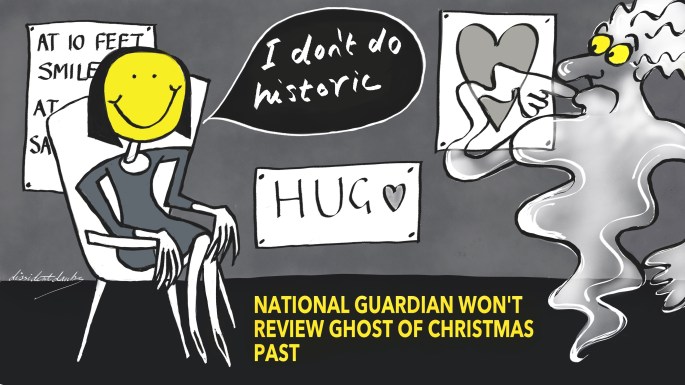
That of course means that even more whistleblowers may be turned away on the grounds that their cases are ‘historic’. The National Guardian does not do ‘historic’ 4 and has said that she doubts it would be value for money to look back.

Dr Hughes said attempting to “unpick historic situations that may be in organisations which no longer exist, with members of staff who’ve moved on” would not be the “best use of the small and limited resources that I have”. 1

I contacted Henrietta Hughes in July and was told that she would be consulting widely in due course. 5 No public announcements or invitations followed.

I asked to attend an event for Local Guardians, to observe, and was refused. In October I wrote enquiring about a timetable for the office’s development, but I have not received a reply.

My sources tell me that there will be a National Guardian event on Friday 20 January, that has not been advertised.

This is a critically important meeting because the event’s purpose is to discuss how a stakeholder advisory group – which according to HSJ will reportedly pick the cases to be reviewed by the National Guardian 1 – will be established:

we are planning to hold a meeting on the 20 January 2017… to identify the key roles and responsibilities of the stakeholder advisory group and potential membership”

It looks a corporate affair, with a lot of familiar faces and some added local Trust Guardians, some of whom worryingly are also senior managers. For example, a non executive director and a director of corporate affairs.

Whilst this may all be very agreeable and comfortable for participants, is it right that so many frontline whistleblowers have been shut out of a key discussion about the mechanism for choosing cases for review?

But perhaps whistleblowers will be comforted by the thought that their travails have launched an industry, and created employment for others.

Pass the oxytocin please.

Have a look at the delegate list and judge for yourself:


REPORTED LIST OF DELEGATES FOR A NATIONAL GUARDIAN STAKEHOLDER EVENT ON FRIDAY 20 JANUARY 2016

Jerina Brown, Corporate Secretary CQC
Heather Bruce University Hospitals of Morecambe Bay NHSFT
Cassandra Cameron NHS Providers
Claire Campbell George Eliot Hospital NHST
Georgina Charlton Guy’s & St Thomas’ NHSFT
Chris Chrysochou Salford Royal NHSFT
Neil Churchill NHS England
Keith Conradi HSIB
Mary Cridge CQC
Helene Donnelly Cultural Ambassador Stoke On Trent & Staffordshire on Trent
Ginny Edwards West Hertfordshire Hospitals NHST
Kate Erskine Imperial College Healthcare NHST
Judith Graham Rotherham Doncaster and South Humber NHSFT
Tom Grimes NHS Improvement
Chris Ham King’s Fund
Cathy James Public Concern at Work
Paula Johnson South Staffordshire and Shropshire NHSFT
Narinder Kapur Psychologist
Roger Kline NHS England
Sharon Landrum
Chris McGhee Liverpool Women’s Hospital NHSFT
Neelam Mehay Speak Up Guardian West Midlands
Danny Mortimer NHS Employers
Katherine Murphy Patients Association
Newcastle Speak Up Guardian
Sonia Pearcey Gloucestershire Care Services NHST
Susan Robinson Healthwatch England
Nick Ross
Anne Sharp ACAS
Lisa Smith York Teaching Hospitals NHSFT
Wayne Walker Torbay and South Devon NHST
Elaine Williams Berkshire Healthcare NHSFT

delay-deny

RELATED ITEMS

Hooray Henrietta

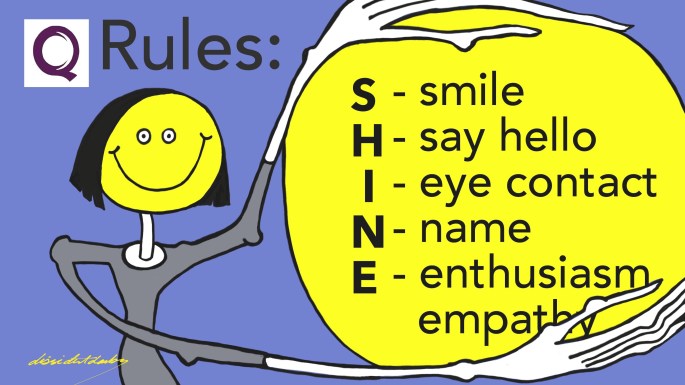
About Henrietta’s penchant for Love Actually and oxytocin, as revealed by an Times interview, and a rule that she introduced for staff on compulsory smiling at 10 feet.

Hooray Henrietta

Why no one believes Jeremy Hunt on patient safety and whistleblowers, not even his own appointees

A little stroll down memory lane regarding events surrounding the short lived first National Guardian’s appointment

No one believes Jeremy Hunt on patient safety or whistleblowers – not even his own appointees. Unmasking the faux National Guardian Office.

REFERENCES

1 Whistleblower guardian will not be an ‘investigation body’. Will Hazel Health Service Journal, 12 October 2016

“She said the cases the office would look at would be decided by a “stakeholder advisory group”, which would include people with experience of whistleblowing.”

https://www.hsj.co.uk/topics/workforce/whistleblower-guardian-will-not-be-an-investigation-body/7011388.article

2 NHS whistleblowing tsar hasn’t investigated a single case and won’t review any patient neglect claims until 2017, Andrew Gregory, Mirror 13 December 2016

http://www.mirror.co.uk/lifestyle/health/nhs-whistleblowing-tsar-hasnt-investigated-9452059

3 CQC FOI disclosure 6 December 2016

foi-disclosure-by-the-cqc-about-the-national-guardians-office-6-december-2016

4 CQC FAQs about the National Guardian’s office

The office is not an appeal body and does not have powers to review historic cases.”

http://www.cqc.org.uk/content/frequently-asked-questions-about-national-guardian

5 Email from Henrietta Hughes 7 July 2016:

Dear Dr Alexander

Thank you very much for your kind email.

I plan to start in my new role in October and until then I am not dealing with any queries about the office as I have ongoing responsibilities in my current job. Over the coming months the precise scope and design will be defined. I will be seeking views from a wide range of individuals and organisations both from within the NHS and externally to ensure that best practice can be shared. 

For any specific queries that you have at this time please may I redirect you to the office at the  following phone number 0300 067 9000.  

With warm regards 

Henrietta

Henrietta Hughes

Medical Director”

Covering up cover ups: CQC’s revisionism

By Dr Minh Alexander NHS whistleblower and former consultant psychiatrist, 15 December 2016

The NHS powers that be have once more tried to deny an obvious culture of cover up.

The phrase “cover ups” appears once in CQC’s latest report on how the NHS investigates deaths:

“If trusts spent more time on dealing with recommendations rather than on cover ups, we would not be here. They should put more effort in saving people’s lives. It is always people at the bottom, nurses, agency staff etc., people at the bottom get all the blame, it is never the people at the top, the managers, the decision makers.” CQC Family Listening Day 1

The Department of Health and its allegedly “arms length” bodies, have led the public a merry but exhausting dance for years. NHS scandals have been “handled” rather than properly addressed. As Sir Ian Kennedy the former chair of the Healthcare Commission told the Midstaffs Inquiry:

“My experience of the Department of Health is that they have a tendency to shoot the messenger rather than embrace changes that need to be made. This is not particular to healthcare. Their first priority is to ‘handle’ the situation, rather than consider and implement change, and those were the realities we had to work with. The politicians were most interested in how any story would be received, and this was also true for Mid Staffs.” 2

Ineffective systems of oversight have been installed to control political embarrassment. In the Care Quality Commission (CQC), we have the absurdity of a quality regulator that refuses to investigate. 3

The latest government charade is the CQC’s report of its so-called Deaths Review of the NHS’ handling of deaths. 1 This was ordered by Jeremy Hunt, after hundreds of uninvestigated deaths at Southern Health NHS Foundation Trust were unexpectedly revealed by an off-message auditor, Mazars. 4 CQC’s review is an exercise in damage limitation, not genuine reflection.

In the pattern to which we have become accustomed, CQC’s report provides much anecdote but limited hard evidence on NHS incident handling. It does not fully account for how data was gathered, or for how a sample of twelve trusts were chosen and how they were examined. It also basically tells us what we already know.

CQC’s report launches yet another tokenistic makeover of the NHS serious incident framework. CQC essentially pretends that NHS deaths investigations have been flawed primarily because people don’t know how to investigate, guidance isn’t good enough and the system isn’t coordinated enough. According to the CQC, it’s more “confusion” than cover up. 5

This is misleading, because there has been sufficient guidance in place for years for a reasonable investigatory job to be done, if the NHS’ masters had actually wanted this. 6 Politicians have told the public many times that they did. Indeed, in 2002 the DH solemnly promised after the Bristol Heart Inquiry to ensure that sentinel events would be safely managed and lead to learning. 7

The reality is that superficial, incompetently conducted and sometimes frankly corrupt investigations have been tolerated, because they are politically expedient and spare ministers and senior officials embarrassment. 8 9 Repeated scandals have revealed a failure to improve the quality of NHS investigations since the MidStaffs Public Inquiry highlighted this as an issue. 10 4 11

Existing NHS guidance on involving bereaved families and candour – “Being Open” 12 – has been flouted. The DH, CQC and others have repeatedly allowed this. Extraordinarily, CQC’s report does not even refer to the Being Open guidance. To do so would be to highlight the wilful departures from these accepted principles for over ten years. CQC instead re-invents the wheel and pretends it is progress:

Recommendation 3: Define what families and carers can expect from healthcare providers when they are involved in the investigation process following a death of a family member or somebody they care for.” 1

In short, as CQC’s latest report has refused to properly acknowledge that there are intentional cover ups, it naturally contains no real remedies for this. CQC should never have been tasked with the Deaths Review in the first place, given its wilful blindness to concerns about cover ups 13 and track record of deliberately pulling its punches about NHS failure. 14

Nevertheless, CQC now states that not a single NHS trust is investigating and learning properly from deaths.

Across our review we were unable to identify any trust that was able to demonstrate good practice across all aspects of identifying, reviewing and investigating deaths and ensuring that learning is implemented – although we did identify trusts that demonstrated good practice at individual steps in the investigation pathway.” 3

CQC’s Chief Inspector says he didn’t know how bad things were. 15

The extent of the problems is more than I expected.”

This is pretty astonishing given countless disclosures to CQC about fiddling and cover up, and all the hundreds of millions that have been spent on purportedly making the CQC intelligence driven.

CQC’s report quotes one family who referred to cover ups. 16 Yet in its summing up CQC refers only to how families “experience” a lack of openness by the NHS. The CQC knows from patients, families, whistleblowers, coroners and repeated inquiries that there is falsification by the NHS. 17 It is truly remarkable that CQC has largely avoided this mountain of data in its report.

Whistleblowers are not mentioned in CQC’s report. Their submitted evidence has been ignored. One might be forgiven for thinking that this is an attempt to draw attention away from deliberate cover ups. CQC’s report largely glosses over the fact that NHS investigations often fail to involve staff properly or at all. No apparent attempt is made to measure this core failure, which in some cases is a deliberate act of suppression.

And what about the 46 trusts that CQC has rated ‘Good’ on safety? And the 90 trusts that CQC has rated ‘Good’ and 13 trusts rated ‘Outstanding’ on the Well led domain?

https://minhalexander.com/wp-content/uploads/2016/12/all-nhs-trusts-cqc-ratings-15-dec-2016.xlsx

How is it possible that such accolades were valid if none were investigating sentinel events properly?

Moreover, what of all the past CQC claims in inspection reports that it had evidence of good incident handling in the NHS? Some high profile examples are collated here:

https://minhalexander.com/wp-content/uploads/2016/12/cqc_s-claims-about-the-quality-of-incident-in-nhs-trusts-rated-as-e28098outstanding_-overall.docx

So, were CQC’s rosy claims about its favourites warranted?

CQC’s assertions that trusts have met their statutory duty of candour are tarnished (see a recent analysis by AvMA 18 ), not least as without effective investigation and identification of all harm and failure, there can be no complete candour.

Which version of CQC’s ‘truth’ should we believe, if any? Jeremy Hunt has spun a narrative of tough quality regulation to smooth over unsafe destruction of the NHS. He insisted that the CQC had been transformed and would serve as the single version of NHS truth. 19 But what we see are wobbly, serial revisions of the ‘truth’ by CQC.

Importantly, CQC has kicked the institutional mistreatment of and discrimination against mental health and learning disability patients into the long grass. Its report does not acknowledge the full depth of health inequality or the strategic cover up about deaths in the most under-funded services. 20 CQC’s recommendations for protecting the rights of learning disabled and mental health patients are shamefully vague and are not enforceable standards. 21 There is nothing in CQC’s report that will stop the NHS nodding by the loss of lives considered less worthy. See a blog by Connor Sparrowhawk’s mum on this central failure:

The silent minority

CQC’s report refers briefly to the statutory requirement for deaths of people detained under the Mental Health Act to be subject to inquest. It conveniently omits to mention that 742 of such deaths were NOT referred to coroners. 22 Neither does CQC account for its part in this serious failure, although it is the body with lead responsibility for policing the use of the Mental Health Act and safeguarding the rights of detained patients.

As part of his response to CQC’s Deaths Review, Jeremy Hunt has claimed he will force trusts to publish data on preventable deaths by March 2017. 23 That might sound like a good idea but it is beset by technical difficulties and the high cost of doing it properly. The risk is that the DH will dumb it down and use it as a PR exercise to parade low quality data that underestimates the real number of preventable deaths.

In fact, Hunt first promised in February 2015 to publish avoidable deaths data. This was part of pre-emptive counter-spin to the embarrassment of the about to be published Freedom to Speak Up Review, on the suppression of NHS whistleblowers. 24 He renewed the promise as part of managing the embarrassment caused by the Mazars report. But no such data has yet been published. 25

In response to the Mazars revelations, NHS England asked trusts a year ago to submit self-assessment data on avoidable deaths:

https://minhalexander.com/wp-content/uploads/2016/12/bruce-keogh-letter-to-nhs-trusts-17-12-2015.pdf

We have not seen hide nor hair of this data.

In other words, the NHS that does not investigate itself properly and is thus unable to give a true figure, was asked to provide the – as yet unseen – statistics. Worse than pinning the tail on the donkey.

As Professor Nick Black has observed of Mr Hunt’s Project Publish:

“We’re sort of into a chicken and egg [situation] then; if we had an accurate indicator of the safety of a hospital we wouldn’t need to do all this, so I’m intrigued by how that would work and to be honest, I cannot see that it would.” 24

A CQC NED said at yesterday’s Board meeting that the Deaths Review report is “very good”.

But for whom?

The denial machine speeds on, as does governance by sound bite.


Update 19 December 2016:

Today, Jeremy Hunt admitted to the Health Service Journal that his plans to publish avoidable deaths last year were shelved:

“Mr Hunt said plans to publish trust data on avoidable deaths last year were shelved because the response was “essentially meaningless”.

He said: “We asked every trust what they thought their numbers of avoidable deaths were. The vast majority of trusts just took the average 3.6 per cent from the Helen Hogan and Nick Black work. What that basically told us was that people don’t have a local methodology.”

https://www.hsj.co.uk/topics/policy-and-regulation/hunt-trusts-face-poor-cqc-rating-for-ignoring-families/7014316.article#.WFeME9Sjgf4.twitter


RELATED ITEMS

  1. Whistleblowers unheard by CQC, 5 December 2016

A report with supporting FOI data which shows that the CQC continues to ignore many whistleblower disclosures.

https://minhalexander.com/2016/12/05/whistleblowers-unheard-by-cqc/

2. Tall Stories by the CQC 9 December 2016

A response to CQC’s claims to Health Committee about its performance, and its attempt to dismiss concerns set out in a letter to the Times by campaigners.

https://minhalexander.com/2016/12/09/tall-stories-by-the-cqc/

REFERENCES

1 Learning, candour and accountability. Report of CQC Deaths Review. 13 December 2016

http://www.cqc.org.uk/sites/default/files/20161213-learning-candour-accountability-full-report.pdf

2 Ian Kennedy oral evidence to the Mid Staffs Public Inquiry 4 may 2011

http://webarchive.nationalarchives.gov.uk/20150407084003/http://www.midstaffspublicinquiry.com/sites/default/files/transcripts/Wednesday_4_May_-_transcript.pdf

3 CQC FOI responses to questions about whether it investigates

https://www.whatdotheyknow.com/request/226519/response/561662/attach/3/20140916%20Final%20Response%20FOIA%20CQC%20IAT%201415%200404.pdf

4 Report by Mazars on Independent review of deaths of people with a learning disability or mental health problem in contact with Southern Health NHS Foundation Trust April 2011 to March 2015, December 2015

Click to access mazars-rep.pdf

5 Learning, candour and accountability. Report of CQC Deaths Review. 13 December 2016

“There is confusion and inconsistency in the methods and definitions used across the NHS to identify and report deaths leading to decisions being taken differently across NHS trusts.”

6 National Patient Safety Agency, National Framework for Reporting and Learning from Serious Incidents Requiring investigation 2010

http://www.nrls.npsa.nhs.uk/EasySiteWeb/getresource.axd?AssetID=68464&type=full

There have been several subsequent updates of this guidance.

7 Learning from Bristol. The DH response to the Report of the Public Inquiry into children’s heart surgery at the Bristol Royal Infirmary 1984-1995

“Bristol Heart Inquiry Recommendation 112: “All sentinel events should be subject to a form of structured analysis in the trust where they occur, which takes into account not only the conduct of individuals, but also the wider contributing factors within the organisation which may have given rise to the event.

DH response: We agree. This is already a requirement of the Department’s Risk Management System. It will be reinforced by root cause analysis of serious incidents to understand the underlying cause(s). Guidance will be issued by the NPSA in 2002.”

Bristol Heart Inquiry Recommendation 118: “The process of reporting of sentinel events should be integrated into every trust’s internal communications, induction training and other staff training. Staff must know what is expected of them, to whom to report and what systems are in place to enable them to report.

DH response: We agree. This will be included in the revised guidance on the Department’s Risk Management System, to be issued in January 2002 and guidance from the NPSA” 

http://webarchive.nationalarchives.gov.uk/20130107105354/http://www.dh.gov.uk/prod_consum_dh/groups/dh_digitalassets/@dh/@en/documents/digitalasset/dh_4059479.pdf

8 Bill Moyes oral evidence to the Mid Staffs Public Inquiry, 1 June 2011:

“I mean, the culture of the NHS is a danger to this approach, let me be quite clear about that. The culture of the NHS, particularly the hospital sector, I would say, is not to embarrass the minister.”

http://webarchive.nationalarchives.gov.uk/20150407084003/http://www.midstaffspublicinquiry.com/sites/default/files/transcripts/Wednesday_1_June_2011_-_transcript.pdf

9 Report of the Morecambe Bay investigation by Dr Bill Kirkup March 2015

Although we were unable to find definitive evidence, we believe that, on the balance of probability based on all that we did hear, Trust officers decided to give the report limited circulation amongst Trust staff and to delay sharing it with external bodies.” 

https://www.gov.uk/government/uploads/system/uploads/attachment_data/file/408480/47487_MBI_Accessible_v0.1.pdf

10 PHSO. The People’s Ombudsm and and how it failed us. Patients Association November 2014

https://www.patients-association.org.uk/wp-content/uploads/2016/09/PHSO-The-Peoples-Ombudsman-How-it-Failed-us-FINAL4.pdf

11 PHSO Review into the quality of NHS complaints investigations, December 2015

http://www.ombudsman.org.uk/pdfs/reports/health/A_review_into_the_quality_of_NHS_complaints_investigations_single_pages.pdf

12 Being Open. Communicating patient safety incidents with patients and their carers. National Patient Safety Agency 2005

https://minhalexander.com/wp-content/uploads/2016/12/1334_beingopenpolicy.pdf

13 Whistleblowers unheard by CQC. Minh Alexander, Pam Linton, Clare Sardari and a fourth NHS whistleblower, December 2016

https://minhalexander.com/2016/12/05/whistleblowers-unheard-by-cqc/

14 Labour’s cover up on failing hospitals: ministers tried to silence watchdog on eve of general election

http://www.dailymail.co.uk/news/article-2443051/Labours-cover-failing-hospitals-Ministers-tried-silence-watchdog-eve-general-election.html

15 Mike Richards: Deaths investigations poor and ‘need an overhaul’. Sharon Brennan, Health Service Journal, 13 December 2015

https://www.hsj.co.uk/topics/quality-and-performance/mike-richards-death-investigations-poor-and-need-an-overhaul/7014136.article?utm_source=t.co&utm_medium=Social&utm_campaign=newsfeed

16 Learning, candour and accountability. Report of CQC Deaths Review. 13 December 2016

“If trusts spent more time on dealing with recommendations rather than on cover ups, we would not be here. They should put more effort in saving people’s lives. It is always people at the bottom, nurses, agency staff etc., people at the bottom get all the blame, it is never the people at the top, the managers, the decision makers.”

17 The examples of NHS falsification are legion and too numerous to cite exhaustively.

A famous example of manipulation of evidence given to coroners relates to a MidStaffs case: A Law Unto Themselves. Dr Phil Hamond Private Eye, June 2013

http://www.drphilhammond.com/blog/2013/06/04/private-eye/private-eye-issue-1341/

A recent example of evidence of alleged NHS cover up, exposed by inquest, can be found here:

https://www.theguardian.com/society/2016/nov/17/coroner-halts-babys-inquest-over-hospital-evidence-tampering-claim-benjamin-king

18 Regulating the duty of candour. Hannah Blythe for AvMA, August 2016

https://www.avma.org.uk/?download_protected_attachment=Regulating-the-duty-of-candour.pdf

19 Patients First and Foremost, Government’s initial response to the Mid Staffs Public Inquiry, March 2013

https://www.gov.uk/government/uploads/system/uploads/attachment_data/file/170701/Patients_First_and_Foremost.pdf

20 Who cares about the rising number of suicides by mental health patients? Minh Alexander August 2016

https://chpi.org.uk/wp/wp-content/uploads/2016/08/Who-cares-about-the-rising-number-of-suicides.pdf

21 Learning, candour and accountability. Report of CQC Deaths Review. 13 December 2016

Recommendation 4: Provide solutions to the range of issues we set out for people with mental health conditions or a learning disability across national bodies, including the Royal Colleges. This should aim to improve consistency, definitions and practices that support the reduction of the increased risk of premature death”

22 Trusts fail to report hundreds of mental health deaths to coroners.

Shaun Lintern, Health Service Journal, 9 August 2016

https://www.hsj.co.uk/topics/policy-and-regulation/exclusive-trusts-fail-to-report-hundreds-of-mental-health-patient-deaths-to-coroners/7009813.fullarticle#.V6lu4LXcBNk.twitter

23 https://www.hsj.co.uk/topics/quality-and-performance/hunt-to-force-trusts-to-publish-avoidable-deaths-data/7014159.article?utm_source=t.co&utm_medium=Social&utm_campaign=newsfeed

24 Hunt’s plan for local avoidable deaths estimates ‘meaningless’ Will Hazel Health Service Journal 10 February 2015

https://www.hsj.co.uk/news/hunts-plans-for-local-avoidable-death-estimates-meaningless/5081997.article

25 Hunt’s ‘avoidable deaths’ data subject to major delays. Sharon Brennan, Health Service Journal 9 September 2016

https://www.hsj.co.uk/topics/policy-and-regulation/exclusive-hunts-avoidable-deaths-data-subject-to-major-delays/7010346.article
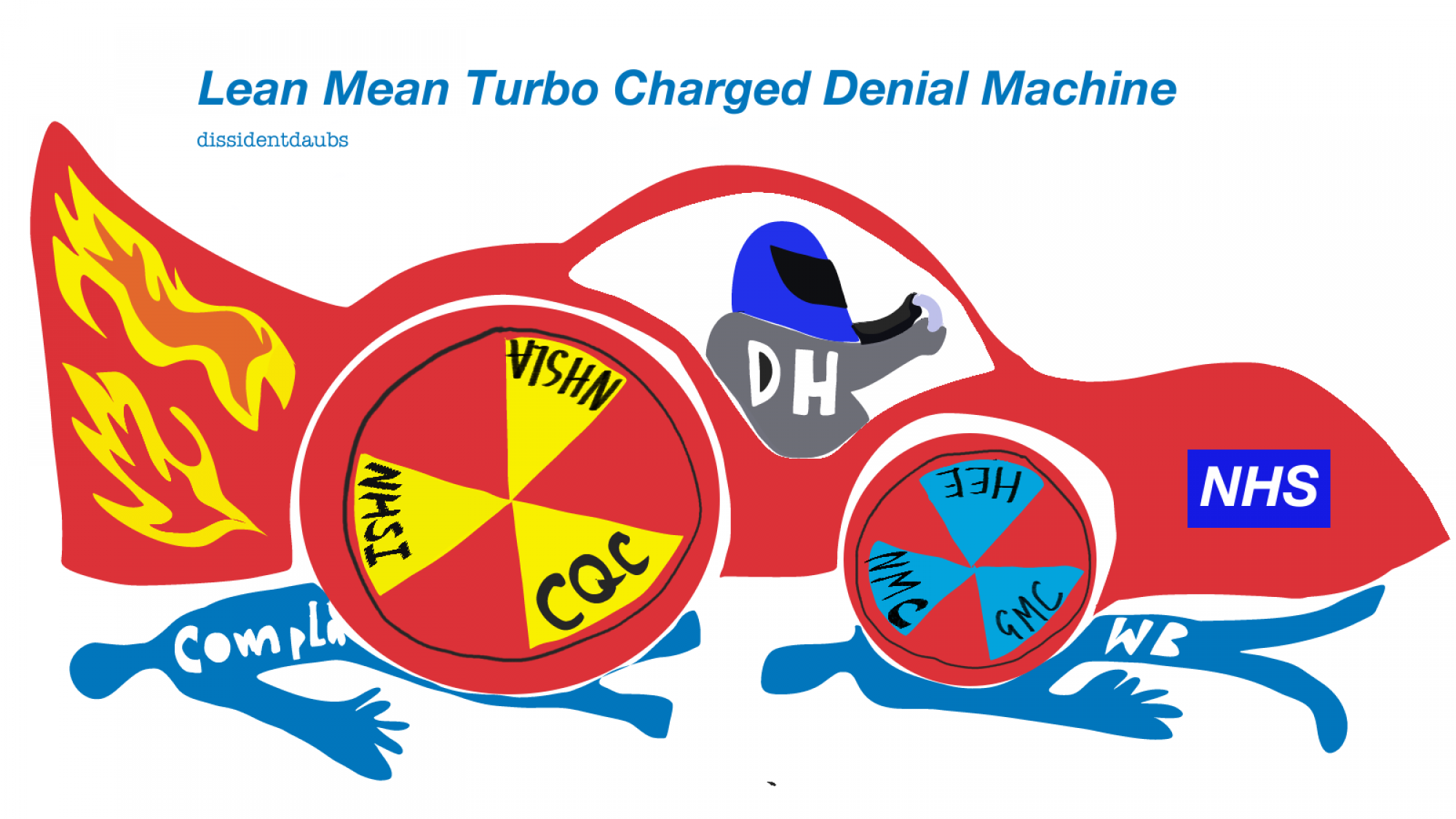
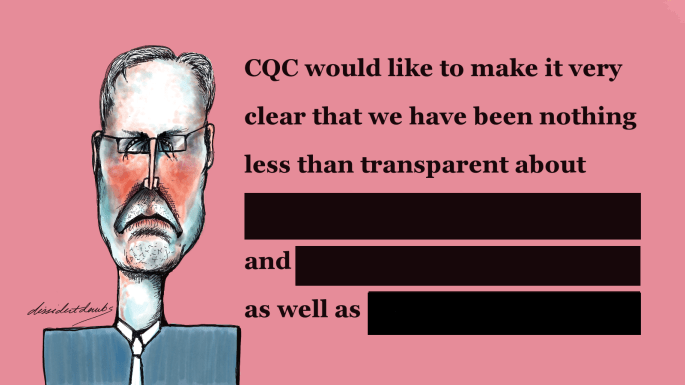
Tall stories by the CQC


By Minh Alexander @alexander_minh, Pam Linton @midwiferysister, Clare Sardari @SardariClare and a fourth NHS whistleblower, 9 December 2016

Summary

Some folks may think the Care Quality Commission is in denial of the scale of its failure, obfuscation and lack of expertise on whistleblowing. We recently produced a report collating evidence of failure on whistleblowing and campaigners wrote a letter to the Times. Our report and the related Times article and letter by campaigners can be found here:

https://minhalexander.com/2016/12/05/whistleblowers-unheard-by-cqc/

We have now invited the CQC to respond to our report and to publish whistleblowing data that the CQC chief executive claims has been reviewed by the CQC Board on a quarterly basis, but which we cannot find in the public CQC Board meeting papers. We also ask the CQC to clarify once and for all if it will investigate individual whistleblowing cases, not least because its Chief Inspector claimed two years ago that every single case would be taken seriously and investigated.

Several individuals submitted written evidence about CQC’s failures on whistleblowing to Health Committee’s CQC accountability hearing, and the Times article and letter to the Times by campaigners was published just before the hearing.

At the hearing, the Times letter came up and it was evident that CQC’s two chief officers are in denial of the scale of the failure. David Behan its Chief Executive claimed he was not “complacent”. Yet he dismissed concerns about CQC’s whistleblowing failures and repeatedly claimed that the CQC had a “good story to tell”.

Behan also cited the fact that CQC consulted whistleblowers when it reviewed its response to whistleblowing disclosures. He conveniently side-stepped the fact that the whistleblower whom the CQC employed for six months to conduct this work has now joined the chorus of criticism about CQC.

Behan implied that some signatories to the Times letter have been droning on about the same point for four years, when in fact what has been presented is evidence of continuing failure.

All that Behan could muster was a few bald statistics and anecdotes that sounded superficially reassuring but proved nothing.

He also claimed that detailed activity data about the issues has been presented to the CQC Board on quarterly basis, but we found no such data in CQC’s public Board meeting papers for the last year. So if it is true that such data has been collated but not shared with the public, it is ironic that CQC has been working in the dark about purported transparency.

Behan’s claims at Health Committee in fact conflict with CQC’s recent claims via FOI that it held no centrally analysed data and so could not provide such data:

“Currently the CQC has not conducted any analysis of enquiries recorded as whistleblowing…We do not hold data on the nature grading or outcomes of such disclosures” CQC 13 September 2016 1

“CQC can give you the number of enquiries we hold on our system for all NHS services, but no other data is centrally collated.” CQC 21 September 2016 2

Peter Wyman CQC Chair, whose former trust Yeovil District Hospital admitted to super-gagging 22 members of staff 3, patronised campaigners: He attributed the dissatisfaction with CQC to campaigners’ lack of understanding of the issues.

Wyman also suggested that it is a simple matter of the CQC forgetting sometimes to tell whistleblowers what action it has taken. This may come as a surprise to the many anxious and distressed whistleblowers who contact CQC repeatedly – in vain – for confirmation that CQC has acted upon their disclosures. In such cases, it does not appear to be so much a matter of mere CQC oversight, as deliberate resistance and silence.

Both men omitted to mention that CQC’s own published papers have flagged risks on delivery of CQC’s “Responding to Concerns” programme and “inadequate” performance on responses to Safeguarding alerts and concerns. 4 5

But perhaps Behan is right. What the CQC does best is tell stories and hit out at critics.

A late submission published by the Health Committee comes from a departing CQC NED, who also shakes a fist at CQC’s critics:

Most people who pass on concerns to CQC don’t see themselves as whistleblowers but there are people who do, sometimes to the extent it is central to their identity. In truth I have been dismayed at the behaviour of a small group who seem unwilling or unable to listen to different perspectives and work collaboratively on a common purpose to improve things.” 6

CQC has demonstrated yet again that it is not a friend to whistleblowers, responds poorly to challenge and is unfit to host the office of the National Freedom to Speak Up Guardian.

We have written to the CQC Chair to invite CQC to respond to our report and to publish all the detailed activity data that Behan says has been reported to the CQC Board.

We also suggested that CQC clarifies why its Chief Inspector of Hospitals’ claims that “every single [whistleblowing] case will be investigated” 7 have not been acted upon, and what exactly CQC will do in future in response to individual whistleblowing disclosures.

Will CQC investigate and if so, which cases, what and how will it investigate?


RELATED ITEMS

  1. Our letter of 9 December 2016 to the CQC chair, which contains a transcript of the relevant sections of Health Committee’s CQC accountability hearing can be found here:

open-letter-to-peter-wyman-final

  1. The televised Health Commitee annual accountability hearing on 6 December 2016 can be viewed here:

http://www.parliamentlive.tv/Event/Index/dcab362b-f24c-4bdb-95e4-c6af585edcb4

  1. Letter 19 October 2015 by whistleblowers to CQC about its lack of credible inspection methodology on whistleblowing:

https://minhalexander.com/wp-content/uploads/2016/09/c2a0letter-to-cqc-19-october-2015.pdf


REFERENCES

1 CQC FOI response IAT 1617 0354, 13 September 2016

pam-linton-cqc-foi-correspondence-september-2016

2 CQC FOI response IAT 1617 0243, 21 September 2016

https://minhalexander.com/wp-content/uploads/2016/09/cqc-correspondence-21-09-2016-only-numbers-held-centrally.pdf

3 Yeovil District Hospital FOI response 4 January 2016

https://minhalexander.com/wp-content/uploads/2016/09/yeovil-foi-309-use-of-compromise-agreements-4-01-2016.pdf

4 CQC Chief Executive report to the CQC Board, Annex, 22 September 2016

http://www.cqc.org.uk/sites/default/files/CM091604_Item4_Chief_Executive_report_Annex_July_performance.pdf

This showed medium risk even after mitigation:

chief-exec-report-sept-2016-annex

5 18 May 2016 Board paper 2015/16 Quarter 4 Corporate Performance and Finance report

http://www.cqc.org.uk/sites/default/files/CM051608_Item8_Q4_performance_cover_paper.pdf

The KPI which requires inspectors to action one of four mandatory actions within 0- 5 days for alerts and concerns however remains inadequate at 83%, but this is an improvement from Q3 (79%). The figures for hospitals and PMS are significantly below target considering numbers of safeguarding records being managed.”

6 Late submission by Kay Sheldon to Health Committee’s CQC annual accountability hearing 2016, ordered to be published 6 December 2016

http://data.parliament.uk/writtenevidence/committeeevidence.svc/evidencedocument/health-committee/care-quality-commission-accountability-hearing/written/44075.html

7 Oral evidence by Mike Richards CQC Chief Inspector of Hospitals 17 June 2014 to Health Committee inquiry on whistleblowing:

What we can say is that every single case will be investigated. We will look at those whistleblowing cases as we hear about them, or other patient concerns, and say, “Who is the most appropriate person to be dealing with that?” It may be one of our inspectors or it may be one of our managers, one of our heads of hospital inspection, but we will take it seriously every time.”

http://data.parliament.uk/writtenevidence/committeeevidence.svc/evidencedocument/health-committee/complaints-and-raising-concerns/oral/10801.html

Whistleblowers unheard by CQC


Please sign and share:

Petition to replace weak UK whistleblowing law to protect whistleblowers and the public


By Minh Alexander @alexander_minh, Pam Linton @midwiferysister, Clare Sardari @SardariClare and a fourth NHS whistleblower. First published 2 December 2016 by Open Democracy

This is a report by whistleblowers that has been submitted to the Health Committee. It describes how the Cat Quality Commission continues to fail whistleblowers and keeps a lid on national whistleblowing data. This vital information should in fact be published and used to drive improvement.

The full report with links to supporting FOI data can be found here:

Click to access whistleblowers-unheard-by-cqc-final1.pdf

An article of 6 December 2016 by the Times, which drew on the data from this report and a related article published by Open Democracy on 2 December 2016, can be found here:

cqc-times-article-and-letter-6-december-2016


Report Summary:

Common decency and good governance requires that whistleblower’s concerns are listened to, properly explored, analysed for patterns and transparently learned from. However, governments may deliberately put ineffective or inadequate structures and processes in place to deal with whistleblowers, to make it look as if something is being done when it is not. 1 The Public Interest Disclosure Act (PIDA) 2 is critically flawed partly because it does not set out the responsibilities of the bodies that have a legal duty to receive disclosures from whistleblowers – so called “prescribed persons”. Since PIDA came into force in 1999, prescribed bodies have revealed little information about the nature and extent of whistleblowers’ concerns.

The Care Quality Commission (CQC) is a prime example of such opacity, despite repeated promises to be transparent. The CQC has for years resisted proper, proactive use of whistleblower intelligence. The CQC has unparalleled whistleblowing data, yet it has still not provided a systematic, national picture of whistleblowing in health and social care. The CQC has responded reluctantly, scantily and sometimes inaccurately when asked for data about its analysis and use of whistleblower intelligence. Even with very incomplete and possibly inaccurate reporting by CQC, it seems there have well been over 33,347 whistleblowing contacts with CQC since its inception. From data for the year 2012/13, the great majority (86%) of whistleblowing contacts have related to social care.

However, there is very little data on the nature of concerns or how they were resolved. Only partial information has been provided under FOI, but even this shows that CQC is often informed about serious care failures and institutional cover ups. However, the data also suggests that CQC relies heavily on what employers say they have done to resolve staff concerns. Quite often, CQC does not even contact the regulated body and merely records very serious disclosures as “information noted for future inspections”, with no further record of outcome.

Questions arise about CQC’s past claim to Health Committee that it would investigate “every single [whistleblower] case”. 3

There is no evidence that CQC systematically tracks whether whistleblowers experience detriment after whistleblowing. CQC has made no effort to analyse intelligence supplied by Employment Tribunals about whistleblowing claims against employers. CQC largely does not reveal the numbers of whistleblowers in each organisation. This adds to isolation and marginalisation to which whistleblowers are sometimes deliberately subjected by employers.

CQC has not taken any evident action to deter still widespread use of gags in the NHS. It has not used its powers to remove any senior managers who have covered up and mistreated whistleblowers.

Whistleblowers are not properly protected. Unmet harm and need, and malfeasance identified by whistleblowers remain largely obscured, at a time of harsh public sector cuts when whistleblowers’ voices need to be heard loud and clear.

CQC has failed whistleblowers and the public in the past. It still does not meet parliament’s expectations on whistleblowing. CQC has also not acted properly on the recommendations of the Freedom to Speak Up Review on NHS whistleblowing.

We call on parliament to recognise that CQC has seriously failed and is unlikely to change its approach, and to ensure that there is now serious and credible whistleblowing reform.


Please sign and share:

Petition to replace weak UK whistleblowing law to protect whistleblowers and the public


1 An example of this is the situation in Hungary where whistleblower protection law was passed, but no agency was established to receive or investigate disclosures.

http://blog.transparency.org/2013/11/12/hungarys-whistleblower-law-offers-no-real-protection/

2 Public Interest Disclosure Act 1998

http://www.legislation.gov.uk/ukpga/1998/23/contents

3 Oral evidence by Mike Richards CQCChief Inspector of Hospitals 17 June 2014 to Health Committee inquiry on whistleblowing:

What we can say is that every single case will be investigated. We will look at those whistleblowing cases as we hear about them, or other patient concerns, and say, “Who is the most appropriate person to be dealing with that?” It may be one of our inspectors or it may be one of our managers, one of our heads of hospital inspection, but we will take it seriously every time.”

http://data.parliament.uk/writtenevidence/committeeevidence.svc/evidencedocument/health-committee/complaints-and-raising-concerns/oral/10801.html

Is CQC’s handling of Regulation 5 “Fit and Proper”?

By Dr Minh Alexander NHS whistleblower and former consultant psychiatrist 21 November 2016

CQC has today admitted that St George’s trust’s approach to Regulation 5 Fit and Proper Persons (FPPR) is “ineffective”. CQC advises that it has issued the trust with a warning, for which a reply is required by 30 November. However, questions remain about CQC’s handling of FPPR at St George’s and why CQC shut down an FPPR process on Paula Vasco Knight.

CQC’s handling of Regulation 5 has been discredited to the extent that Robert Francis has now publicly admitted that FPPR is not working, and he has opened the door to possible managerial regulation. [1]

The CQC has delayed inordinately in responding to a referral on Paula Vasco-Knight, made under Regulation 5 Fit and Proper Persons, on 12 October 2015.

The referral related to her recycling to a board position, as chief operating officer at St. Georges, after her previous fall from grace due to a whistleblower scandal at South Devon Healthcare NHS Foundation Trust. [2] [3]

Behind the scenes, the CQC in fact quietly shut down the FPPR process in February this year. Mike Richards CQC Chief Inspector wrote to St George’s on 16 February to advise that the CQC had concluded that the trust’s FPPR process had been “thorough”. This letter only came to light in April through a disclosure by St. George’s itself. Mike Richards wrote:

richards

The full letter is here:  cqc-fppr-closure-letter-vasco_knight-re-pvk-16-02-16

After being cleared thus by Mike Richards, Paula Vasco-Knight was promoted to chief executive, only to be removed within two weeks in relation to financial allegations. [4] St. Georges initially announced that she had been ‘suspended’ but later admitted that it had terminated her agency contract on the same day. Paula Vasco-Knight and two co-accused are scheduled for a two week trial in the Crown Court in January. [5]

Despite reminders, the CQC has taken until now to respond to the original, outstanding FPPR referral. It had this to say today:

audit

The full letter is here: fppr-outcome-letter-cqc-21-november-2016

This raises questions about why Mike Richards concluded in February that St. George’s FPPR process was sound, and why the failings that are now acknowledged were not previously identified. Did the CQC previously only rely on what it was told by the trust? Have other FPPR referrals been mishandled by CQC due to lack of thorough checking? Why has CQC reduced FPPR to a bureaucratic exercise about compliance with process, and less about whether the right judgment was made?

The recycling of senior managers who have harmed whistleblowers sends the worst possible message to the NHS workforce, and gives licence to would-be abusers.

A letter about these issues by Clare Sardari South Devon whistleblower to St George’s governors can be found here:

Click to access clare-sardari-open-letter-st-georges.pdf

Clare Sardari tweets at @SardariClare

A complaint has now been made to the CQC about the handling of the matter, including the failure by CQC to disclose in February that it had closed down the FPPR process.

Given CQC’s comment in its latest letter that Paula Vasco-Knight was not directly employed by St. Georges but via an agency, CQC has also been asked to clarify whether it will apply FPPR equally to interim directors who are not directly employed by trusts.


RELATED ITEMS

CQC’s Fit and Proper Parade

This summarises the history of the controversy surrounding CQC’s prosecution of FPPR and provides relevant documents and correspondence.

CQC’s Fit and Proper Parade

Silent Knight

Clare Sardari’s correspondence with Robert Francis.

Silent Knight


REFERENCES

[1] Robert Francis calls for regulation of senior managers. Health Service Journal Shaun Lintern 9 November 2016

https://www.hsj.co.uk/topics/workforce/exclusive-robert-francis-calls-for-regulation-of-senior-managers/7013089.article

[2] Ex Torbay Hospital worker awarded £230,000 compensation after ‘nepotism’ row, HE Paul Greaves, Herald Express 19 July 2015

http://www.torquayheraldexpress.co.uk/ex-torbay-hospital-worker-awarded-230-000/story-27443632-detail/story.html

[3] Devon Health boss Dr Paula Vasco-Knight resigns, BBC 30 May 2014

http://www.bbc.co.uk/news/uk-england-devon-27636112

[4] Health boss Paula Vasco-Knight suspended over finance claims, BBC 4 May 2016

http://www.bbc.co.uk/news/uk-england-devon-36204798

[5] Former South Devon NHS boss denies £20K fraud

http://www.bbc.co.uk/news/uk-england-devon-36622340

DH, Robert Francis’ National Guardian and the dark art of delay

By Dr Minh Alexander NHS whistleblower and former consultant psychiatrist 21 November 2016

The powerless National Guardian’s office for NHS whistleblowing is Robert Francis’ brainchild. It is an expensive but rickety exercise in PR. It is not evidence based and is built on unstable sands of useless whistleblower legislation, un-remedied rotten culture and brazen impunity for those who have orchestrated cover ups and reprisal but who still prosper and roam free. In an important parliamentary debate in July about NHS failure and continuing whistleblower suppression, Ben Gummer Under-secretary of State for Health held that the government had taken adequate action by creating the National Guardian’s office. I subsequently asked Mr Gummer how the DH would track and evaluate the effectiveness of the office. Four months on, the DH reply so far amounts to “We will have meetings with the CQC”. A lack of evaluation would help the government to continue its can-kicking on whistleblowing reform.

An important parliamentary debate took place in July, which revealed that the NHS continues to make exactly the same errors that led to the Mid Staffs disaster.

The debate revolved around events at the very troubled Liverpool Community Health NHS Trust (LCH), which in its haste to please regulators and achieve Foundation status had made impossibly harsh, unsafe cuts. The trust suppressed staff concerns and it neglected clinical quality and safety. Regulators were slow to respond to the failings. Even after all the serious failings had been fully revealed, regulators behaved in an underhanded way to help recycle senior trust managers, even to the extent of misleading local MP Rosie Cooper:

https://hansard.parliament.uk/commons/2016-07-13/debates/16071339000002/CapsticksReportAndNHSWhistleblowing

capsticks-report-on-lch

For all the hot air and political capital that Jeremy Hunt has made out of MidStaffs, LCH is an important example and proof of the fact that the NHS and senior officials have not genuinely learnt the lessons of Mid Staffs.

Ben Gummer Under-secretary of State for Health attended the LCH debate and pointed to the establishment of a National Guardian for NHS whistleblowing as evidence of government action.

After the debate I asked Mr Gummer how the DH planned to evaluate and track the effectiveness National Guardian’s office.

I would be grateful if the DH would share its plans for evaluating and tracking the effectiveness of the National Guardian model…”

letter-to-ben-gummer-re-ng-15-july-2016

You might think this was a fair question. The DH has now had 21 months to think about it. It is also a crucial question as the role is not supported by any evidence base.

However, four months after the question was asked, the best that the DH can do is:

Response from Department of Health 18 November 2016

Dear Dr Alexander, 


Thank you for your email of 15 July to Ben Gummer about the National Guardian.  I have been asked to reply and apologise for the lengthy delay. 

The National Guardian will lead and support a network of individuals within NHS trusts appointed as freedom to speak up (FTSU) guardians. 

The FTSU guardians will provide support and be a point of contact for those who wish to raise concerns locally.  The National Guardian will share good practice, report on national or common themes, and identify any barriers that are preventing the NHS from having a safe and open culture. The National Guardian is independent and will speak freely and honestly about where changes are needed among NHS Trusts and Foundation Trusts.

The Department of Health holds monthly assurance meetings with Care Quality Commission (CQC) Directors and quarterly accountability meetings with the Chief Executive and Chair.  The Department is finalising the Framework Agreement with the CQC, which will cover reporting and accountability arrangements with the National Guardian. 

I hope this reply is helpful.


Yours sincerely, 


James Shewbridge 


Ministerial Correspondence and Public Enquiries
Department of Health”

A question arises about whether this sketchy DH response is symptomatic of a lack of seriousness about whistleblowing governance. Why bother expending much effort on something that was never really intended to work?

I will continue to press for details.

letter-to-jeremy-hunt-re-ng-evaluation-21-november-2016

The right thing to do is to scrap the National Guardian and to protect staff with genuine reforms. However, the DH will inevitably continue playing for time and take as many years as it can to say that it is “too soon to tell if the National Guardian works”. A lack of measurement and evaluation will help the DH prolong the delay.


delay-deny


RELATED ITEMS

Hooray Henrietta

A snippet on the exploits of the latest National Guardian, her introduction of compulsory smiling for staff and views on cheerfulness, oxytocin and Love actually.

Hooray Henrietta


Clubadoodle-doo

On the lack of independence of the National Guardian’s office.

Clubadoodle-doo


No one believes Jeremy Hunt on patient safety and whistleblowers, not even his own appointees

A critique of the National Guardian’s office and report on the debacle of the previous National Guardian’s resignation two months after her appointment.

No one believes Jeremy Hunt on patient safety or whistleblowers – not even his own appointees. Unmasking the faux National Guardian Office.