CQC, coroners’ warnings & the neglect of older people in hospital

By Dr Minh Alexander, NHS whistleblower and former consultant psychiatrist, 2 October 2017

On 29 September 2017 Professor Ted Baker the new CQC Chief Inspector reportedly made highly politicised comments stating that the NHS was not fit for the 21st Century. He said that the NHS had failed under Labour’s government to adapt to an ageing society with more complex needs. 1

Unsurprisingly he did not refer to the current Conservative government’s policy of aggressively defunding and destabilising the NHS over the last seven years.

Unhelpfully, Baker added to the corporate hectoring against beleaguered managers doing their best in increasingly intolerable conditions with this admonition:

Prof Ted Baker said it was “not acceptable” to keep “piling patients into corridors” as he urged hospital leaders to act swiftly to guard the safety of those in their care.

In his first interview as chief inspector, he said too many hospitals had normalised “wholly unsatisfactory” arrangements which endangered patients, as well as denying basic privacy and dignity.

Prof Baker has written to all hospital chief executives, calling for immediate action to improve safety in A&E, amid fears the NHS will struggle to cope with overcrowding this winter.

This follows surreal revelations that NHS England senior managers made NHS chief executives chant ‘We can do this’ in relation to forthcoming winter A&E performance. 2

The fact is, the economically unviable, frail older people, the seriously mentally ill and learning disabled and the severely physically disabled have rarely been treated by politicians with the care and respect that they deserve. There aren’t enough votes in it.

The list of NHS scandals involving the care of older people is long.

Beech House 3

I whistle blew on some neglected dementia back wards, early in my career but was intimidated and ignored by the local psychogeriatric consultants. Matters might have been worse for me if I had not been protected by other senior staff. A few years later, serious physical and mental abuse of the elders was uncovered and reported in the Beech House Inquiry by Camden and Islington.

Abuse at Beech House:

Screen Shot 2017-10-02 at 14.15.19

Shipman murders 4

The infamous and numerous murders by Harold Shipman flew under the radar for years, partly as his victims were mostly elderly.


Gosport Memorial Hospital deaths 5

The controversial deaths are now subject to yet another inquiry after years of unsatisfactory investigations.


North Lakelands scandal 6

This related to the mistreatment of psychogeriatric patients and was reported by CHI, one of CQC’s more effective predecessors:

“A culture developed within the Trust that allowed ‘unprofessional, countertherapeutic and degrading – even cruel – practices’ to take place. These practices went unchecked and were even condoned or excused when brought to the attention of the Trust.” 6

 CHI is deeply disturbed by the consultant’s lack of awareness and passive acceptance of being treated like a visitor on the ward where the abuse occurred.6


Liverpool care pathway 7

The discredited Liverpool death pathway was a significant stain on the NHS’ reputation, with reports abroad such as:

“UK to scrap notorious Liverpool care pathway, criticized as gateway to euthanasia” 8

And then there are the common or garden intermittent headlines that recur periodically about the neglect of older people in hospitals. For example, failures to ensure nutrition and help with other basic daily functions. 9

Politicians know full well that there is serious unmet need, but typically resist funding decent care for the most vulnerable. The real scale of harm is hidden by ageist assumptions, the fact that older people are expected to die, and that fewer questions are asked when they do. Cases that should be reported to coroners are not. I give an example below.

Moreover, the current government continues to delay the establishment of medical examiners, despite having accepted that they are needed. 10

It has also made a religion out of prizing profit above people, actively persecuting the vulnerable to the extent that it has attracted United Nations censure for breaching Human Rights. 11


See the Disability News Service website for in depth coverage of the UK government’s violations of the rights of disabled people:

https://www.disabilitynewsservice.com/

@johnpringdns 


This bell tolling the death of decency has been ringing for years now. CQC with its birds-eye view of both health and social services knows exactly what has been happening. Baker has worked for the CQC since 2014 11 so had three years to say something.

Baker’s intervention this weekend was a perfect sample from the Hunt public relations play book: Tough-new-shiny-independent-regulation…. by the Health Secretary who cares. The truth however is the CQC is just another arm of government, dressed up as a regulator but moving to invisible strings.


Coroners’ warnings

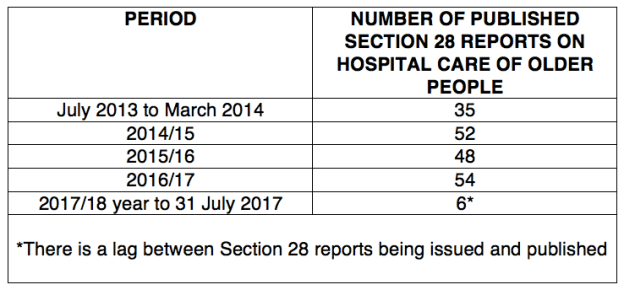
Coroners regularly issue Section 28 warning reports on ‘Action to Prevent Future Deaths’ (PFDs) about the poor care of older people in NHS hospitals, which since 2014 have been automatically copied to the CQC based on a memorandum of understanding with the Coroners’ Society.

Based on data published by the Chief Coroner, there is roughly at least one Section 28 report issued every week that relates to harm or risk associated with the care of older people in NHS hospitals.

Screen Shot 2017-10-02 at 17.05.41.png

Section 28 reports on the inpatient care of older people have accounted for at least 19.7% (195 of 987) of all published Section 28 reports relating to the NHS in the last four years.

This is a spreadsheet with reference details of the 195 cases:

https://minhalexander.com/wp-content/uploads/2016/09/nhs-inpatient-care-of-older-people-section-28-reports-published-up-to-31-july-2017-pub.xlsx

There were 101 women and 94 men.

171 deaths related to the English NHS and 24 deaths related to the Welsh NHS.

The figure of 195 is conservative because the data in Section 28 reports is not standardised, and age is not always stated. I did not include some reports that probably related to older people because there was insufficient indication of age. I have also used an age threshold of 70 and not 65 years. 12

Eleven of the 195 (5.6%) cases attracted a formal finding of neglect. Neglect was described or implied in a number of other cases where a formal finding of neglect was not reported. 13

5.6% is a slightly higher proportion than the proportion of neglect cases amongst all published Section 28 reports relating to NHS care in the same period –  49 cases of neglect out of a total 987 (4.9%). 14

This set in the context that 24 of a total of 60 (40%) published Section 28 reports from all sectors with a finding of a neglect related to people over the age of 65.

It is also important to stress that coroners’ Section 28 reports represent only the tip of the safety iceberg.

Of the 195 NHS cases of harm or risk to older people receiving NHS hospital care, some of the coroners’ concerns related to factors that applied to all patients regardless of age.

However, a number raise questions about low expectations, ageist attitudes and possible cover ups:


  1. The coroner for South Manchester felt that Elsie Mallalieu was “written off”:

https://www.judiciary.gov.uk/publications/elsie-mallalieu/

  1. There were two cases featuring the Liverpool care pathway, the deaths of Alva Jullien and Agnes Hannan:

https://www.judiciary.gov.uk/publications/agnes-hannan/

https://www.judiciary.gov.uk/publications/jullien-2013-0232/

  1. The coroner for Brighton and Hove considered that Herta Woods had been “abandoned” in hospital:

https://www.judiciary.gov.uk/publications/herta-woods/

  1. The same coroner reported that Evelyn Kennedy had been so severely neglected that one ward at Brighton and Sussex raised a Safeguarding about another ward’s practice:

https://www.judiciary.gov.uk/publications/evelyn-kennedy/

  1. The same coroner noted that Jack Molyneux was so neglected by Brighton and Sussex that a care home immediately made a Safeguarding referral when he was discharged to their care:

https://www.judiciary.gov.uk/publications/jack-molyneux/

  1. The coroner noted that Alwyn Head’s MRSA related death at Medway occurred in the context of poor care, including a 12 day period in which there was no evidence that a wound was checked and in which effectively “meaningless” nursing entries were made.

https://www.judiciary.gov.uk/publications/alwyn-head/

  1. Susanna Geraty was a fit 75 year old who died after staff failed to give her enough fluids after surgery for a fracture, and she sustained acute renal failure in consequence:

https://www.judiciary.gov.uk/publications/susanna-geraty/

  1. Mrs Care died with a large unexplained bruise:

https://www.judiciary.gov.uk/publications/mrs-care/

  1. Doreen England died of a grade 4 pressure sore which developed in hospital

https://www.judiciary.gov.uk/publications/doreen-england/

  1. Devindar Seth suffered opiate poisoning under Barts’ care and this was not detected by staff but pointed out by the family.

https://www.judiciary.gov.uk/publications/devindar-seth/

  1. In the death of Barbara Cooke with contributory neglect from serious care failures, the coroner for the Isle of Wight noted that the doctors treating her completed a death certificate instead of reporting the death. The coroner was only alerted to the death by chance:

https://www.judiciary.gov.uk/publications/barbara-cooke/

  1. In the death of Leslie Pates at Tameside hospital, the coroner was concerned that the consultant had submitted a report stating that Mr Pates was discharged from hospital without a temperature and a clean pressure sore, when the discharge quickly failed and another doctor from the trust gave the cause of death as ‘sepsis’:

https://www.judiciary.gov.uk/publications/leslie-pates/

  1. 91 year old William Beckwith died after being discharged home by the Royal Chesterfield in the small hours of the morning with an undetected cervical fracture. Eight months after his death, the coroner noted:

The Department, at that time, did not have in place any formal policy or procedure for risk assessing the safety of discharging a frail, elderly patient to home in the early hours of the morning.

https://www.judiciary.gov.uk/publications/william-beckwith/

Widespread unsafe discharges of older people, resulting in emergency re-admissions were flagged by a 2015 Healthwatch England briefing:

https://minhalexander.com/wp-content/uploads/2016/09/healthwatch-eng-older-people-briefing-2015-10090.pdf


No doubt the current bullying of trusts by NHS England and CQC to pull their socks up on A&E performance targets will do little to stem unsafe discharges.

Trusts are not expected to answer back or to highlight glaring unmet need. Indeed, the centre’s behaviour is more likely to result in cover ups.

Several coroners’ Section 28 reports referred to very unsatisfactory internal investigations into the deaths of older people. For example:

“…investigative procedures were demonstrably inadequate”

“The SI report failed to consider or acknowledge lack of fluids as a cause of her acute renal failure despite expert evidence that it was the only credible cause” 

“The report contained serious factual inaccuracies”

Staffing issues were explicitly flagged by coroners in 19 of the 195 cases of care failures involving older people, whether in terms of numbers, skill mix or lack of specialist staff. For example, a lack of physiotherapy at weekends was flagged as a risk to some frail older patients.

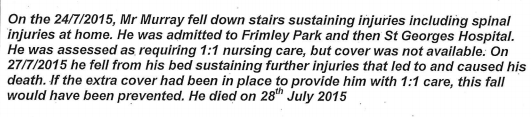
In the death of Leslie Murray under St George’s care, the coroner noted that he was assessed as needing 1:1 care but suffered a fall which led to his death because this care was not put in place:

Screen Shot 2017-10-02 at 15.32.45

Of great concern, the coroner also noted that this situation occurred ‘frequently’:

Screen Shot 2017-10-02 at 12.38.30

https://www.judiciary.gov.uk/publications/leslie-murray/

Preventing falls requires safe levels of nursing staffing, sufficient to provide attentive and responsive care for frail older people with sensorimotor handicaps.

Of recurring clinical errors flagged by coroners, failures of falls prevention were very prominent. Thirty five of the 195 cases featured poor falls management, with either inpatient falls (the majority) or falls related to unsafe discharges.

This is unsurprising given repeated reports from nursing staff that they do not have enough time to give all the care that patients need. 15

The latest Royal College of Nursing report based on 30,000 survey responses about nurses’ last shifts, advised that over half of respondents said that care had been compromised on their last shift due to understaffing:

https://www.rcn.org.uk/professional-development/publications/pub-006415

A 2012 Royal College of Nursing survey of nurses revealed these gaps in older people’s care due to inadequate staffing, which includes the vital task of preventing falls:

Screen Shot 2017-10-02 at 14.54.34

https://my.rcn.org.uk/__data/assets/pdf_file/0009/476379/004280.pdf

When there is serious, systemic and recurrent failure to meet foreseeable need this is classed as institutional abuse. To quote the DH’s own words:


Neglect and poor professional practice also need to be taken into account. This may take the form of isolated incidents of poor or unsatisfactory professional practice, at one end of the spectrum, through to pervasive ill treatment or gross misconduct at the other. Repeated instances of poor care may be an indication of more serious problems and this is sometimes referred to as institutional abuse.

Department of Health 2000

https://www.gov.uk/government/publications/no-secrets-guidance-on-protecting-vulnerable-adults-in-care


But I suspect that many of the 195 cases of poor care of older people flagged by coroners were never even formally referred as Safeguarding cases to the relevant local authorities. It would be useful to clarify this.

But who would one refer – the service providers or the government that is ultimately responsible through its policies?

I have now written to the newly created Healthcare Safety Investigation Branch, to submit the coroners’ evidence on poor care of the elderly in general, and to raise the specific issue of preventable falls and also the NHS’ compliance with Safeguarding procedures where the harm in question was caused by the NHS itself.


RELATED ITEMS

CQC an ongoing concern

http://www.compassionincare.com/sites/default/files/breakingsilence/AN%20ONGOING%20CONCERN%20PUBLISHED%20.pdf

4 years of published coroners’ Section 28 reports in England and Wales

https://minhalexander.com/2017/08/24/four-years-of-published-coroners-section-28-reports-in-england-and-wales/

Covering up cover ups: CQC revisionism

https://minhalexander.com/2016/12/15/covering-up-the-cover-ups-cqcs-revisionism/


REFERENCES

1 NHS is not fit for the 21st century hospital Chief Inspector warns, Laura Donnelly, Telegraph 29 September 2017

http://www.telegraph.co.uk/news/2017/09/29/nhs-not-fit-21st-century-hospital-chief-inspector-warns/

2 ‘Humiliated’ NHS hospital bosses forced to chant ‘we can do this’ over A&E targets, Jon Sharman, Independent,  26 September 2017

http://www.independent.co.uk/news/uk/home-news/nhs-england-hospital-bosses-we-can-do-this-a-e-targets-london-meeting-accident-emergency-a7968556.html

3

Report of the internal Inquiry Relating to the Mistreatment of Patients Residing at Beech House, St Pancras Hospital During the Period March 1993 – 1996, Camden and Islington NHS Foundation Trust 1999

Elderly patients punched and abused, BBC January 1999

http://news.bbc.co.uk/1/hi/health/260422.stm

4 The Shipman inquiry reports 2002-2005:

http://webarchive.nationalarchives.gov.uk/20090808155110/http://www.the-shipman-inquiry.org.uk/reports.asp

5 Portsmouth Healthcare NHS Trust at Gosport War Memorial Hospital, CHI 2002

http://webarchive.nationalarchives.gov.uk/20080930083325/http://www.healthcarecommission.org.uk/_db/_documents/04005353.pdf

Gosport hospital deaths inquiry looks into 800 certificates signed by Dr Opiate, Lois Rogers,  Times, 20 August 2017

https://www.thetimes.co.uk/article/hospital-deaths-inquiry-looks-into-800-certificates-signed-by-dr-opiate-jane-barton-p508dnh56

6 The North Lakeland NHS Trust, CHI report to Secretary of State for Health 2000

https://minhalexander.com/wp-content/uploads/2016/09/chi-investigation-into-north-lakeland-healthcare-nhs-trust-2000.pdf

7 DH review of Liverpool Care Pathway 2013

https://www.gov.uk/government/publications/review-of-liverpool-care-pathway-for-dying-patients

8 UK to scrap notorious Liverpool care pathway, criticized as gateway to euthanasia

https://www.lifesitenews.com/news/uk-to-scrap-notorious-liverpool-care-pathway-criticized-as-gateway-to-eutha

9 Hospitals discriminate against the elderly, BBC 2 November 1998

http://news.bbc.co.uk/1/hi/health/206270.stm

Malnutrition in the community and hospital, Patients Association 2011

http://www.patients-association.org.uk/wp-content/uploads/2014/07/Malnutrition-in-the-community-and-hospital-setting.pdf

Half of hospitals failing to feed elderly patients properly, Guardian 8 October 2011

https://www.theguardian.com/society/2011/oct/08/half-hospitals-not-feeding-elderly

Hospitals show ‘shocking’ lack of care discharging vulnerable patients, James Meikle, Guardian 21 July 2015

https://www.theguardian.com/society/2015/jul/21/healthwatch-hospitals-discharging-vulnerable-patients-lack-of-care-

Healthwatch England special inquiry: Older People briefing 2015

https://minhalexander.com/wp-content/uploads/2016/09/healthwatch-eng-older-people-briefing-2015-10090.pdf

10 Medical Examiner delay. Statement by Royal College of Pathologists March 2017

https://www.rcpath.org/discover-pathology/news/medical-examiner-delay.html

11 Government accused of breaching UN convention in its treatment of disabled people, May Bulman, Independent 20August 2017

http://www.independent.co.uk/news/uk/home-news/government-disabled-people-un-convention-treatment-breach-a7900176.html

11 CQC information about Ted Baker

http://www.cqc.org.uk/about-us/meet-our-team/professor-ted-baker

12 There is no defined age threshold for services older people. Some services operate a threshold of 65 years but others also assess functional level and frailty. The definition of ‘adults of working age’ has also changed with government policy on retirement age. I have used a threshold of 70 years to be more certain of identifying patients who are clearly older people’s services users.


13 The eleven cases with findings of neglect, in the NHS inpatient care of older people:

https://www.judiciary.gov.uk/publications/barbara-cooke/

https://www.judiciary.gov.uk/publications/kathleen-cooper/

https://www.judiciary.gov.uk/publications/audrey-daws/

https://www.judiciary.gov.uk/publications/beryl-farmer/

https://www.judiciary.gov.uk/publications/frederick-hall/

https://www.judiciary.gov.uk/publications/jean-james-2/

https://www.judiciary.gov.uk/publications/sheila-johnson/

https://www.judiciary.gov.uk/publications/david-little/

https://www.judiciary.gov.uk/publications/george-marks/

https://www.judiciary.gov.uk/publications/jack-molyneux/

https://www.judiciary.gov.uk/publications/milly-zemmel/

14 This is the list of 60 Section 28 reports with formal findings of neglect, published up to 31 July 2017:

https://minhalexander.com/wp-content/uploads/2016/09/section-28-reports-with-findings-of-neglect-published-up-to-31-july-2017-pub2.xlsx

This is a prior analysis which found a total of 987 Section 28 reports relating to the NHS, published up to 31 July 2017:

https://minhalexander.com/2017/08/24/four-years-of-published-coroners-section-28-reports-in-england-and-wales/

15 NHS staff shortages ‘mean patients dying alone’ in hospitals, Nick Triggle, BBC 29 September 2017

http://www.bbc.co.uk/news/health-41433159

Letter to BMA Chair of Council, President & Past Presidents


BY EMAIL

Dr Chaand Nagpaul

BMA Chair of Council

27 September 2017


Dear Dr Nagpaul,

Re: Transparency about BMA member services and whistleblowing

I write to ask if the BMA will publish data that it assured me in March 2015 that it would start collating on its decisions to support – or not – members’ whistleblowing claims to the Employment Tribunal.

I copy below the most recent correspondence from the BMA of 29 November 2016, in which a BMA senior policy advisor declined to release any BMA case decision data on the basis of small numbers and possible identifiability.

I would be grateful if you could review this given the time elapsed and the likelihood that more cases have accrued. This may have obviated any ‘small numbers’ objections.

I do think that as a matter of good governance and accountability to its members, the BMA should publish data on its support for all cases, and not just whistleblowing claims.

The context of the correspondence with the BMA about these matters is summarised in this article:

https://minhalexander.com/2016/09/29/is-the-bma-worth-163-are-new-socks-better/

You will note that I published an addendum today which relates to a document that the BMA sent to a member of the public, who kindly passed it to me knowing my interest in whistleblowing matters.

https://minhalexander.com/wp-content/uploads/2016/09/bma-whistleblowing-faqs-21-09-2017-issued-to-a-member-of-the-public-by-bma-on-26-sep-2017.pdf

I was concerned by the tone of this BMA document and its comments about the case of Dr Chris Day, NHS whistleblower.

Dr Day still has serious travails ahead of him, and a young family to support.

http://www.dailymail.co.uk/news/article-4503734/The-dedicated-NHS-doctor-tried-gag-destroy.html

I imagine Dr Day will respond formally in due course to the BMA’s document.

I think the BMA has much to learn and ground to cover as regards whistleblowing governance.

Although the government agreed in July 2015 to honour Sir Robert Francis’ recommendations to provide sacked NHS whistleblowers with trial employment and other help to re-enter NHS employment 1, I have seen little sign of related BMA activity on this matter.

May I ask whether the BMA will take a position on this issue, support and work with whistleblowers.

Also, will the BMA set a good practice example and consider some resource neutral options such allowing unwaged medical whistleblowers free access to the BMA’s online library and online journals to help them stay up to date professionally.

I would also be grateful to know if the BMA will help lobby for replacement of the Public Interest Disclosure Act. This is in the light of the BMA’s acknowledgment three years ago in its submission to the Freedom to Speak Up Review that this legislation is inadequate for protecting whistleblowers, and therefore patients:

“Many BMA members – and indeed their legal representatives – believe, however, that the Public Interest Disclosure Act does not give them adequate protection. The main difficulty in practice lies in showing that the detriment or dismissal is linked to 2 the disclosure. Legally there will be grounds to take action only where it can be shown that the protected disclosure has ‘materially’ influenced the employer’s treatment of the whistleblower. In many cases this will not be clear. For example, if the concern is raised in the context of a dispute with a colleague, a forthcoming reorganisation or a threat of disciplinary action, this may create doubts as to whether the employer’s subsequent actions have been influenced by the disclosure. The Freedom to Speak Up Review might wish to devise ways of strengthening the legislation.”

https://minhalexander.com/wp-content/uploads/2016/09/bma-freedomtospeakup-10-09-2014.pdf


Many thanks.

Yours sincerely,

Dr Minh Alexander

Cc

Dr Hamish Meldrum BMA Deputy Chair

Sir John Temple BMA President c/o London Medicine & Healthcare

Professor Pali Hungin Past BMA President

Professor Sir Albert Aynsley-Green BMA Past President

Baronness Ilora Finlay BMA Past President

Baronness Sheila Hollins BMA Past President

Professor Sir Michael Marmot BMA Past President

Professor Averil Mansfield BMA Past President

The Princess Royal BMA Past President

Professor Dame Parveen Kumar BMA Past President

Professor David Haslam BMA Past President

Sir Charles George c/o The Academy of Medical Science

Professor Sir Brian Jarman BMA Past President

Professor Allyson Pollock

Professor Mary Dixon Woods

Bcc Dr Chris Day

1 Sir Robert Francis’ Freedom To Speak Up Review recommendations February 2015 (accepted by the government in July 2015):

Page 153

“7.3.8

Beyond that, I believe that there is an urgent need for an employment support scheme for NHS staff and former staff who are having difficulty finding employment in the NHS who can demonstrate that this is related to having made protected disclosures and that there are no outstanding issues of justifiable and significant concern relating to their performance. This should be devised and run jointly by NHS England, the NHS Trust Development Authority and Monitor. As a minimum, it should provide:


  • remedial training or work experience for registered healthcare professionals who have been away from the workplace for long periods of time


  • advice and assistance in relation to applications for appropriate employment in the NHS


  • the development of a ‘pool’ of NHS employers prepared to offer trial employment to persons being supported through the scheme


  • guidance to employers to encourage them to consider a history of having raised concerns as a positive characteristic in a potential employee.


7.3.9 All NHS organisations should support such a scheme. Doing so would send a clear signal to their staff, and to staff across the NHS that they are willing to value people who are brave enough to raise concerns. Organisations that do should be given appropriate recognition”


RELATED ITEMS

Letter to the Health Service Journal Patient Safety Correspondent

https://minhalexander.com/2017/07/10/letter-to-the-health-service-journals-patient-safety-correspondent/

The NHS in the Employment Tribunal

https://minhalexander.com/2017/07/06/the-nhs-in-the-employment-tribunal-a-five-month-sample/

Ian Paterson and failure by oversight bodies

https://minhalexander.com/2017/06/01/ian-paterson-and-failure-by-oversight-bodies/

Engineered failure to investigate NHS whistleblowers’ concerns

https://minhalexander.com/2017/04/08/engineered-failure-to-investigate-nhs-whistleblowers-concerns/

National Guardian: Measuring Up?

By Dr Minh Alexander NHS whistleblower and former NHS consultant psychiatrist, 25 September 2017


The National Guardian has published her first tranche of data from NHS trusts on staff contacts with Freedom to Speak Up Guardians, for the period 1 April to 30 June 2017:

National Guardian data 20170831 FINAL Q1 PUBLISHED TABLE- v2

There is little discussion in her accompanying report about data quality:

National Guardian report on whistleblowing data Q1 2017:18

This is despite a past admission by the National Guardian that there was great variability between trusts in how data was being gathered:

https://minhalexander.com/wp-content/uploads/2017/02/hh-meeting-records-23-01-2017-and-2-02-2017.pdf

The lack of discussion of data quality is all the more significant given that fact that a whopping one third of trusts  (n=88) failed to return any data at all.

Four trusts rated as ‘Outstanding’ by the CQC were amongst the 88 trust that failed to return any data:

Birmingham Women’s and Children’s NHS Foundation Trust

East London NHS Foundation Trust

Salford Royal NHS Foundation Trust

Newcastle upon Tyne Hospitals NHS Foundation Trust


This is the full list of the 88 trusts that failed to return any data:

88 Trusts that returned no data to the National Guardian Q1 2017:18

The National Guardian does not account in her report for why such a large number of trusts failed to return data nor does she make proposals for improving future response rates.

Another key issue is that the system rests entirely on self reporting by trusts.

There is no indication that the National Guardian intends to pursue any form of verification.

Indeed, she was reluctant in a past discussion to consider external quality control:

From records of a telephone meeting with the National Guardian 23 January 2017:

MA What data are local guardians collating and has it been agreed with your office? Is it standardised?

HH “What” has been agreed with us and is standardised “How” – no. “How” is very much what works for the organisation. So long as information held separately from main databases. We haven’t been prescriptive.

MA How do you know data from local Guardians isn’t fiddled or flawed in some other way?

HH Ultimately it will reflect in the staff survey.

MA Have you got a means of quality control to check quality of local guardians’ data?

HH We’re working on trust….

MA So no checks?

HH We don’t have access to their information systems. Are you suggesting we do so? Is that appropriate?

MA You have the remit for picking up local failures including by local guardians, and safeguarding against local failure.

HH We haven’t received any information about problems with local guardians


The National Guardian has now admitted that 17 trusts reported that no staff made any contact with Freedom To Speak Up Guardians:

17 Trusts reported that there were no contacts with their Speak Up Guardians
 

Birmingham and Solihull Mental Health NHS FT

Blackpool Teaching Hospitals NHS FT

Calderdale and Huddersfield NHS FT

Cambridgeshire Community Services NHS Trust

Central Manchester University Hospitals NHS FT

East Kent Hospitals University NHS FT

Homerton University Hospital NHS FT

London Ambulance Service NHS Trust

Norfolk and Norwich University Hospitals NHS FT

North Staffordshire Combined Healthcare NHS Trust

Royal Free London NHS FT

Royal Surrey County Hospital NHS FT

Royal United Hospitals Bath NHS FT

Somerset Partnership NHS FT

Southend University Hospital NHS FT

The Queen Elizabeth Hospital King’s Lynn NHS FT

Wrightington, Wigan and Leigh NHS FT


This is a tad awkward as the National Guardian herself previously maintained that numbers of contacts were an indication of staff confidence:

From records of a meeting  with the National Guardian on 2 February 2017
MA But how will you measure and prove that it’s working well?

HH 1) Numbers of staff going to the Speak Up Guardians – that’s a measure of confidence”


Notably, Blackpool Teaching Hospitals NHS Foundation Trust was amongst the trusts that reported zero contacts with their Speak Up Guardians.

The Speak Up Guardian for this trust, a deputy medical director, was much feted and featured in the National Guardian’s recent publicity material, including a particularly embarassing promotional video.

Conversely, troubled Colchester Hospital University NHS Trust reported a high number of contacts (30), but it also had the highest number of reports of detriment (14).

Colchester has latterly been run by the former of CEO of Croydon Health NHS Trust, which recently lost against NHS whistleblower Dr Kevin Beatt in the Court of Appeal.

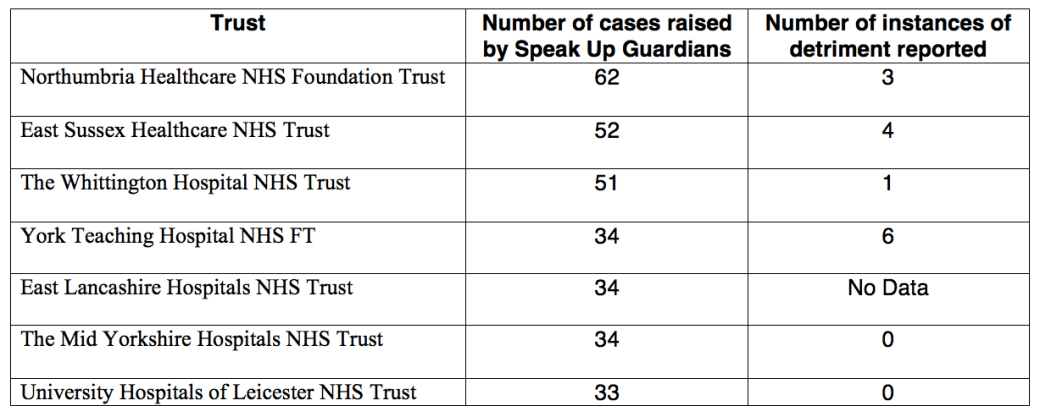
Other trusts which reported high numbers of contacts with Speak Up Guardians included the following:

Screen Shot 2017-09-25 at 01.27.37

East Lancashire and Mid Yorkshire Hospitals are notorious amongst whistleblowers.

Out of a total of 1,124 cases were raised in 144 trusts, 192 (17%) were raised anonymously.

It is unclear how cases were raised anonymously. But anonymous reporting is not an unequivocal vote of confidence in the Speak Up Guardians.

It is also alarming that there were concerns about lack of places where Guardians could meet staff confidentially. This is a basic issue that should have been sorted out by now, and reveals a lack of sensitivity and insight into the huge risks that staff take when whistleblowing.

Lastly, the National Guardian maintains that there was “an overwhelmingly positive response” from staff who had made disclosures to Speak Up Guardians, and she states that 87% said they would speak up again.

No details are given in her report about how this staff feedback data was gathered or the completeness of the data that she cites.

In any case, one third of trusts are missing from the National Guardian’s statistics and this is a potential source of bias. For example, Trusts with poorer results may have been less willing to return data.

As a doctor, the National Guardian should appreciate the importance of properly caveating any limitations in data.

Previously, she informed me that Speak Up Guardians would seek staff feedback at 3 months post contact. However, it seems unlikely that the staff experience data she cites was subsequently gathered on this basis because her report was published on or before 5 September. This would not have allowed for  a full 3 month follow up of all contacts for the relevant period.

She also previously admitted that there was no uniformity in how Speak Up Guardians were measuring staff experience of their services:


From records of a meeting with the National Guardian 2 February 2017:

“MA How are Speak Up Guardians measuring staff experience?

HH It varies, Different trusts need different things

MA What are the different ways in which Speak Up Guardians are measuring staff experience?

HH Working in partnership at local level. Pulse surveys as well as the annual staff survey.

MA What are the pulse survey questions?

HH We haven’t received the outputs of those yet.

MA But what questions are being asked?

HH We haven’t asked specifically”


However, this lack of standardisation is not acknowledged in her latest report, other than by implication in a comment that the numbers of staff contacts cannot be used to compare between trusts.

Some staff reported worries about repercussions.

Staff in 85 of the 1,124 (7.5%) cases raised by Speak Up Guardians reported detriment.

The period of follow up so far is not long enough to fully assess whether all the staff who raised concerns will suffer reprisal. Reprisal can occur long after disclosure behind closed doors, once no one is looking.

The National Guardian should also have acknowledged this limitation in her data.

In short, the National Guardian’s claim of overwhelming positive staff feedback is presently not clearly substantiated.

For transparency and accountability, the National Guardian should:

  • Clearly describe the methodology by which staff feedback is obtained
  • Provide trust level data on staff feedback, including response rates
  • Publish the surveys used by Speak Up Guardians to gather staff feedback.

I have written to ask if she will do so.


Email 24 September 2017 to the National Guardian:

BY EMAIL

Dr Henrietta Hughes

National Freedom To Speak Up Guardian

Care Quality Commission

24 September 2017

Dear Dr Hughes,


Re: Speak Up data for all trusts April – July 2017

I see that you have published broad findings on staff feedback as part of this data:

http://www.cqc.org.uk/national-guardians-office/content/speaking-data

Is it possible in future data releases to provide the following data:

– The methodology by which staff feedback is obtained by Speak Up Guardians

– Trust level data on staff feedback, including response rates

– Copies of the surveys used by local Speak Up Guardians to measure staff feedback ?

Many thanks,

Minh

Dr Minh Alexander


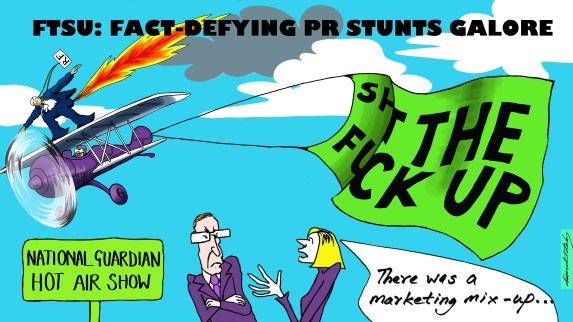
STFU not FTSU


RELATED ITEMS

Letter to PAC

Letter to Public Accounts Committee 11 Sep 2017 Re-Review of whistleblowing

CQC denies denial

https://minhalexander.com/2017/09/16/newsflash-cqc-denies-denial/

SSOTP: Robert Francis’ exemplar trust has feet of clay and Jeremy Hunt’s safety claims are unevidenced

https://minhalexander.com/2017/05/28/ssotp-robert-francis-exemplar-trust-has-feet-of-clay-and-jeremy-hunts-safety-claims-are-un-evidenced/


NEWSFLASH: CQC denies denial

Dr Minh Alexander NHS whistleblower and former consultant psychiatrist 16 September 2017


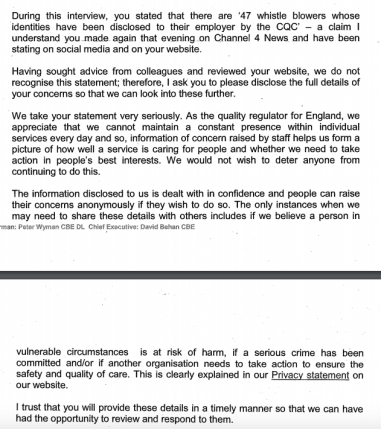
I raised a concern with the CQC Chair Peter Wyman about a Chief Inspector’s written denial of allegations, by the campaigning charity Compassion in Care, that CQC had breached the confidentiality of 47 whistleblowers.

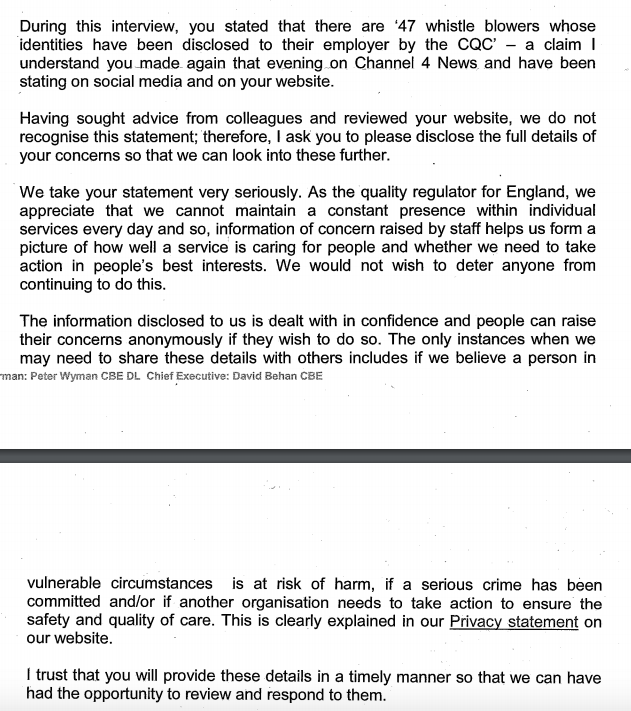
“we do not recognise this statement”

Letter by Andrea Sutcliffe CQC Chief Inspector to Compassion in Care 14 July 2017

This was in the light of a subsequent admission by CQC that it had not audited its policy of whistleblower confidentiality since 2013, when David Behan its chief executive promised that CQC would keep whistleblowers’ identities secret. The factual basis of Andrea Sutcliffe’s denial was therefore not apparent:

Letter to Peter Wyman Andrea Sutcliffe denial 13.09.2017

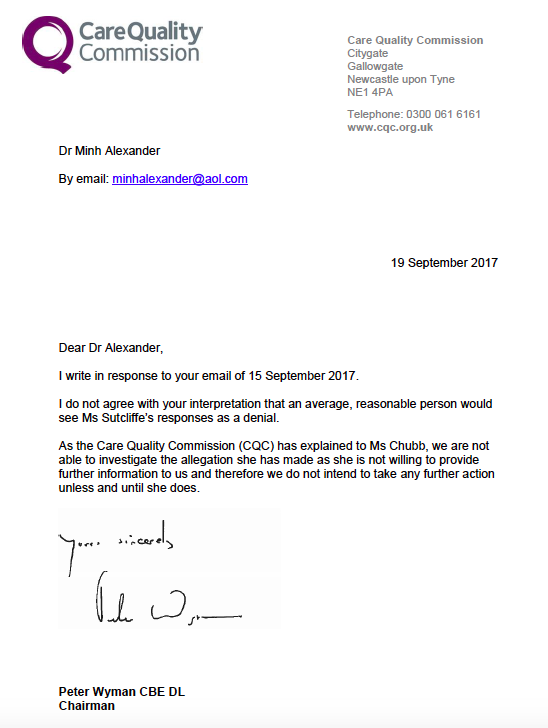
Peter Wyman Chair responded within two days to deny that Ms Sutcliffe had denied anything:

Wyman response re Sutcliffe denial 15.09.2017 POCU 1516 0181

Notwithstanding the tensions between plain English and the CQC’s linguistic acrobatics, I have asked Peter Wyman if the CQC will audit whether it has kept Behan’s promise of confidentiality, and if it will involve whistleblowers in the design of any audit.


BY EMAIL

Peter Wyman

CQC Chair

15 September 2017

Dear Mr Wyman,

Basis of denial by a CQC Chief Inspector

Thank you for your swift response.

Whilst some might accept that one interpretation of Ms Sutcliffe’s words might be that they are not an outright denial, I doubt that the average reasonable person would take her words to mean anything but a denial.

I would suggest that it would be helpful if CQC does not use such language, particularly where it knows that there is no proper basis for any denial.

Now that CQC implicitly concedes that there was no proper basis for any denial, may I ask if it will systematically audit whether it has complied with its policy of whistleblower confidentiality.

Whistleblowers would be happy to help co-produce any such audit if CQC is willing to examine its practices in this way.

Yours sincerely,

Dr Minh Alexander

Cc

PACAC, PAC and Health Committee Chairs

Sir Robert Francis CQC

Dr Henrietta Hughes National Freedom To Speak Up Guardian, CQC


delay-deny


UPDATE 19 SEPTEMBER 2017

Peter Wyman CQC Chair has today replied but omitted to answer whether CQC will audit its compliance with its policy of whistleblower confidentiality:

Screen Shot 2017-09-19 at 11.42.37


I have pointed to CQC’s own past admissions that it has breached whistleblower confidentiality and the case for audit, and put the question again to Peter Wyman:

BY EMAIL

Peter Wyman

Chair, Care Quality Commission

19 September 2017

Dear Mr Wyman,

Audit of CQC compliance with CQC’s policy of whistleblower confidentiality

Thank you for another swift response.

I do not recognise your response as an answer to my question about whether CQC will audit its compliance with its policy of whistleblower confidentiality.

It is difficult to have confidence in the CQC’s claims of progress if they are not based on evidence.

General audit is separate to any specific investigation that you may wish to undertake, or not, into the allegations by Compassion in Care of breached confidentiality.

To be clear, I have made no request that you investigate the allegations by Compassion in Care.

Notwithstanding the fact that it is good practice to conduct routine audit (which CQC admits it has not done), CQC has admitted on several occasions that it has breached whistleblowers’ confidentiality.*  This additionally makes the case for audit.

Therefore, I would be grateful for an answer on whether CQC will audit and I remain available to help co-produce any audit, as do other whistleblowers.

Yours sincerely,

Dr Minh Alexander

The occasions on which CQC has admitted breaching whistleblower confidentiality:

1) David Behan publicly admitted in 2013 that CQC had breached a whistleblower’s confidentiality

2) CQC apologised to Helen Rochester for breaching her confidentiality when she previously whistleblew in 2013

3) CQC admitted in 2014 that it breached NHS surgeon and whistleblower Shiban Ahmed’s confidentiality

cc PACAC, PAC and Health Committee Chairs

Sir Robert Francis CQC

Dr Henrietta Hughes National Freedom To Speak Up Guardian, CQC


UPDATE 21 SEPTEMBER 2017

The CQC Chair has today replied as follows:

Screen Shot 2017-09-21 at 15.39.29


Accordingly, I have referred this matter to the parliamentary Public Accounts Committee:

BY EMAIL

Public Accounts Committee

21 September 2017

Dear Ms Hillier and colleagues,

CQC refusal to audit its compliance with its policy of whistleblower confidentiality

Further to my letter of 11 September asking PAC to consider a re-review of whistleblowing 1, I write to submit additional evidence in support of my request.

Please find attached a letter of today’s date from Peter Wyman CQC Chair in which he declines to audit CQC’s compliance with its policy of whistleblower confidentiality.

Although CQC disclosed via FOI on 3 August 2 that it had not undertaken any such audit since 2013 when David Behan promised to respect whistleblowers’ confidentiality, Mr Wyman now states that CQC routinely ‘monitors’ its compliance with policies. I am not clear what this means, but I am unable to clarify it as Mr Wyman advises that he will not correspond any further on this subject.

I remain unconvinced that CQC has acted responsibly as regards its duty of care towards whistleblowers and therefore towards service users.

Yours sincerely,

Dr Minh Alexander

Cc

Chairs of PACAC and Health Committee

Sir Robert Francis CQC NED

Dr Henrietta Hughes National Freedom To Speak Up Guardian

Sir Amyas Morse NAO

Lord Bew CSPL

Margaret Hodge MP

1 https://minhalexander.com/wp-content/uploads/2017/09/letter-to-public-accounts-committee-11-sep-2017-re-review-of-whistleblowing.pdf

2 https://minhalexander.com/wp-content/uploads/2016/09/cqc-foi-disclosure-whistleblower-confidentiality-3-august-2017-foi-final-decision-notice-cqc-iat-1718-0210.pdf


RELATED ITEMS

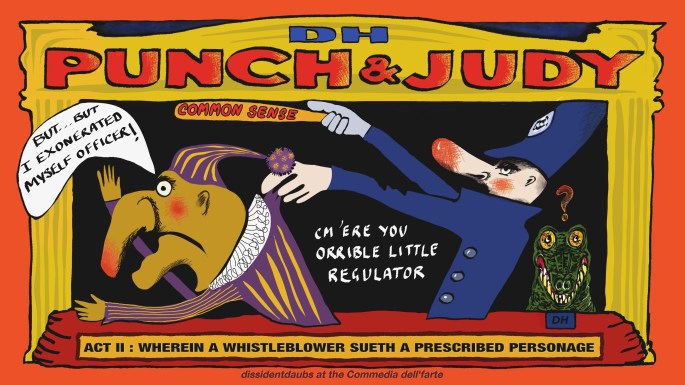
Helen Rochester v CQC, Act II: Wherein a whistleblower Sueth a Prescribed Person

https://minhalexander.com/2017/09/09/helen-rochester-v-cqc-act-ii-wherein-a-whistleblower-sueth-a-prescribed-person/

National Guardian ‘Expects’

https://minhalexander.com/2017/09/03/national-guardian-expects/

Breach of confidentiality by CQC and complicity in referring a whistleblower to the Disclosure and Barring Service

https://minhalexander.com/2017/06/22/cqc-involved-in-a-whistleblowers-referral-to-the-disclosure-barring-service/

The CQC denies…

https://minhalexander.com/2017/01/08/the-cqc-denies/

National Guardian independent: The CQC denies some more…

https://minhalexander.com/2017/01/19/national-guardian-independence-the-cqc-denies-some-more/


Helen Rochester v CQC, Act II: Wherein a Whistleblower Sueth a Prescribed Person

By Dr Minh Alexander NHS whistleblower and former consultant psychiatrist, 9 September 2017

 Screen Shot 2017-09-09 at 17.07.21.png

Helen Rochester a care home whistleblower has made a claim in the Employment Tribunal against the Care Quality Commission (CQC).

Background

On 20 June 2017 Helen Rochester confronted the CQC board about CQC’s behaviour towards her as a whistleblower on two separate occasions in 2013 and 2017. CQC first breached her confidentiality. It was then later complicit in reprisal, being party to Rochester’s inappropriate referral to the Disclosure and Barring Service by her employer.

These matters were summarised previously:

https://minhalexander.com/2017/06/22/cqc-involved-in-a-whistleblowers-referral-to-the-disclosure-barring-service/

Rochester’s 2013 whistleblowing was previously reported by Private Eye in March 2015, which was not complimentary about the CQC:

Private Eye Go Whistle Article on Helen Rochester March 2015


In a letter of 30 June, after an internal investigation, CQC still maintained to Rochester that it had acted appropriately in suggesting that her former employer should consider referring her to the Disclosure and Barring Service. CQC said that its Chair and Chief Executive both saw this letter before it was sent to Rochester.

On 24 June I informed the National Freedom to Speak Up Guardian of Rochester’s case. I asked her to hold the CQC to account and to establish how many other cases had been mishandled, as this could have not only life changing implications for whistleblowers, but potentially posed serious risk to patients.

The National Guardian, who has an annual budget of £1 million, took over two months to respond and did not actually indicate whether she had established if CQC had breached other whistleblowers’ confidentiality.

https://minhalexander.com/2017/09/03/national-guardian-expects/

Whistleblowers – with zero budget – have in fact established that CQC has conducted no audit of its performance on whistleblower confidentiality since David Behan its CEO promised categorically in 2013 that CQC would not breach whistleblowers’ confidentiality:

CQC FOI disclosure 3 August 2017

CQC FOI disclosure whistleblower confidentiality 3 August 2017 FOI FINAL Decision Notice CQC IAT 1718 0210


At the very least, this shows complacency by the regulator.

The CQC has refuted recent allegations by the campaigning charity Compassion in Care that the CQC has breached the confidentiality of 47 whistleblowers to their employers. 1

On 14 July 2017 Andrea Sutcliffe the CQC’s chief inspector of Adult Social Care wrote “we do not recognise this statement” and insisted on proof before CQC could act. 2

One wonders upon what evidence this denial was founded, if CQC has never actually audited its performance.

On 11 August 2017 Sutcliffe repeated a claim that the CQC could not look into the alleged breaches of whistleblower confidentiality unless it was first provided with proof. 3 This seems a questionable position for the CQC to take when it has obvious recourse to audit as a means of proactively answering the question for itself.


Rochester’s claim against the CQC

Rochester has now made a claim against the CQC in the Employment Tribunal.

The claim has been made on the basis that Rochester alleges CQC is jointly liable for detriment in respect of its actions in causing her unwarranted referral to the Disclosure and Barring service (DBS), and contends there is an indirect employment relationship. Rochester argues that CQC acted detrimentally and unreasonably upon information from her former employer without verifying it, despite being aware that she was a whistleblower.

Whether or not the Public Interest Disclosure Act (PIDA) 4 and Employment Rights Act 5 are the correct legal tools for dealing with CQC’s behaviour is for the Court to decide. The man on the Clapham Omnibus will very likely see CQC as being at fault, and think that a challenge in law is reasonable.

However, Rochester is an unrepresented, unemployed care worker.  CQC is resisting the claim. It is a multimillion pound corporation. Its annual income regularly exceeds £200 million. 6

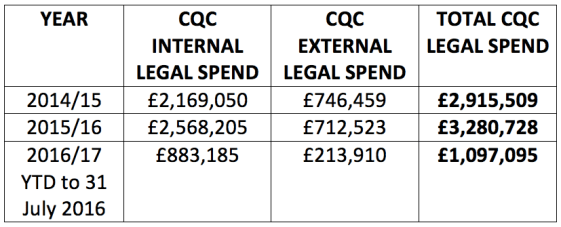
An FOI enquiry by NHS whistleblower Clare Sardari @SardariClare  last year revealed that CQC spends millions annually on legal services:

Screen Shot 2017-09-09 at 16.38.48

https://minhalexander.com/wp-content/uploads/2016/09/cqc-foi-disclosure-legal-spending-12-sept-2016.pdf

This stark inequality of arms speaks for itself.

Whatever the legal merits of Rochester’s ET claim, it is most unusual for a whistleblower to sue a PIDA Prescribed Person 7. A search has not so far revealed any precedents.

Rochester’s claim follows NHS whistleblower Dr Chris Day’s legal action against Health Education England 8 and Dr Eva Michalak’s action against the General Medical Council 9. These cases posed interesting questions  about the definition of the employment relationship under the Public Interest Disclosure Act and or what cases may be heard in the Employment Tribunal.


 CQC’s mishandling of Rochester’s safety concerns

 It is worth giving this some attention as the case is very typical of how CQC treats whistleblowers from all sectors.

As Private Eye noted of Rochester’s previous whistleblowing experience:

Ms Rochester complained to the health and social care watchdog immediately after leaving Manor Gardens in April 2013 but it was nine months before inspectors arrived.”

This time, CQC excelled itself by suggesting that Rochester – the whistleblower –  should be referred to the DBS before it acted upon her disclosures by making a Safeguarding referral.  Within 24 hours of learning of her whistleblower case on 20 April, the CQC advised her employer of its duty to refer Rochester to the DBS. Yet CQC took until 24 April to make a Safeguarding referral to the local authority: “…the first safeguarding referral we made on 24 April 2017”.

Morevover, CQC has now given Rochester’s former employer a clean bill of health despite her serious patient safety disclosures.

The CQC’s re-inspection report dated 30 August 2017  rates the care home a ‘Good’ overall, and ‘Good’ on the ‘Safe’ and ‘Well Led’ domains.

This is despite Rochester raising serious safety concerns with CQC in April, that threw doubts on the leadership of the care home.

The CQC report shows that CQC did not re-inspect the home until 13 July 2017, but claims that it acted in response to concerns:

“We carried out a comprehensive inspection of ********************** on 7 and 8 February 2017. After that inspection we received new information of concerns in relation to people’s safety and the leadership of the service. As a result we undertook a focused inspection on 13 July 2017 to look at these concerns.”

Rochester is concerned that CQC did not act upon her concerns when she first raised them, but re-inspected only after she attended the public CQC board on 20 June 2017 and because she caused the regulator severe embarrassment by exposing its inaction and its dereliction of duty both to her and service users.

Rochester raised concerns with CQC in April about numerous safety issues. Key details from her meticulous disclosure correspondence are provided below in the reference section. This audit trail puts a very human face on the dangers faced by helpless elderly people in care and the serious dilemmas that whistleblowers face everyday.


The broad areas of Rochester’s disclosure to CQC were as follows:


Unsafe staffing, especially at night 10

This is in fact an important national care home quality issue, about which the CQC has been issued with a coroners’s Section 28 warning.

The coroner considered that there should be clear standards set for night time staffing levels:

“I know that many hospitals are looking carefully at their staffing levels at night particularly in the wards where patients suffer from dementia and may be at a risk of falls through wandering and I am drawing this case to your attention so that you and your inspectors can look carefully at whether staffing levels for night time are adequate to meet the various needs of all the residents/patients in residential, nursing and hospital environments. It seems to me that only two members of staff caring for over twenty four residents, some of whom suffer from dementia and are restless, is not enough to meet all the complex needs, especially with their other duties over a long shift of almost twelve hours.”

 Coroner’s Section 28 warning report about death of John Gwyfryn Morris

https://www.judiciary.gov.uk/publications/morris-2013-0295/

This coroner’s challenge not only posed a potential threat to the care industry’s profits but to government austerity plans for health and social care. There is currently no published CQC response to this key coroner’s Section 28 report. David Behan has been asked to disclose CQC’s response to this Section 28 report.

CQC’s latest inspection report on Rochester’s former employer determined that staffing levels were safe, despite the CQC raising and not answering its own question about emergency response:

“However it was not clear how two care staff working at night would ensure emergency situations would be responded to quickly and effectively”

 This inconclusiveness by CQC is especially poor given that Rochester had told CQC in an email of 20 April 2017 that the care home falsified records to hide understaffing:

“I also worked with two people who will falsify documentation to say care given when it is not.”


 A call bell system which was not fit for purpose and unsafe 11

 CQC previously inspected the care home in February and did not detect this problem. It was not mentioned at all in the related CQC inspection report of 25 April 2017.

CQC’s latest report of 30 August 2017 mentions the problem only to say that the care home has promised to address the issue. Rochester is concerned that CQC glosses over the fact that her employer failed to act promptly upon her concerns about this issue.


Poor infection control and lack of staff training 12

In April Rochester told her former employer and the CQC of several examples of serious infection control risks:

*********’s infection control procedures are appalling. I have never seen her wash her hands and she does not change her gloves between patients. She will throw or drop soiled pads onto the floor and pile dirty linen outside of doors until she picks it all up and carries it against her uniform to the laundry. When ********* had diarrhoea she did not have a clue re universal precautions..” 12

CQC’s previous inspection of the care home in February did not detect this serious problem, and CQC’s related inspection report of 25 April 2017 does not mention infection control. Rochester has concerns about the rigour of CQC’s latest claims that the care home is compliant.


Unsafe manual handling, including pulling drag lifting and pulling patients by the neck, staff not properly trained 13

This is one of the relevant excerpts from Helen Rochester’s resignation letter of 17 April 2017 to her former employer, which she submitted to the CQC as evidence when raising her concerns about the care home’s safety:

*********‘s moving and handling is dangerous both to the residents and her. Until told by me she was not using slide sheets when indicated and was not raising beds when the facility was available to her. I have caught her pulling residents by the wrists and neck when moving them on her own and she will do it in front of me so clearly thinks this is acceptable practice. She has never been corrected.” 13

 Rochester informed the CQC that the care home had residents who were unable to weight bear even though it had no hoist equipment to safely move them.

Even though Rochester told CQC the care home had no hoists, CQC seemed to uncritically accept the care home’s practice of locating immobile residents on the first floor:

“…immobile people were cared for on the first floor”

despite clear recognition in its inspection report that this presented an additional challenge in the event of a fire.

Rochester also informed the CQC that care home staff were falsifying records to pretend that patients were being moved with two staff, when they were being unsafely moved with just one member of staff. 14

However, CQC’s latest report is blandly positive about manual handling at the home and relies in part on what the care home reported, despite Rochester’s warning that the care home falsified evidence:

“Due to the facilities and lay out of the service the mobility of people was reviewed regularly and taken into account within the care provision to ensure people’s safety. We were told that those people who needed assistance in moving used a stand aid as they could hold their weight when standing. Staff received training on moving and handling people safely and we observed them using the stand aid appropriately and safely.”


Poor care of patients with pressure sores and poor related Safeguarding practice 15

CQC’s latest inspection report gives a superficially positive account of the care home’s handling of skin care with focus on documentation, but does not address Rochester’s concerns that the care home did not purchase the appropriate – if costly – alternating air mattress equipment for nursing patients with open pressure sores.


Institutional abuse because patients were taken out of their beds very early in the morning to suit the care home’s regime and staff convenience 16

Rochester told CQC that the care home got residents out of their beds in the small hours of the morning for its own convenience, a very bad practice that marks out the worst homes. The CQC did not re-inspect early enough in the morning to detect this practice.

Despite Rochester’s serious disclosures of numerous examples of poor standards amounting to institutional abuse and the specific example of getting people out of their beds in the small hours, CQC inexplicably only spoke to three residents during its latest re-inspection:

“At the time of the inspection there were 33 people living at ****************. During the inspection we talked with three people who use the service and five relatives.”


Unsafe lack of training for staff and unsafe staff clearance 17

Rochester told the CQC that she was particularly concerned that staff lacked training in safety practices around medicines management, infection control and manual handling.

According to Rochester, staff training at the care home consists of filling in questionnaires whilst provided with the answers. CQC’s inspection regime  ticked off the paperwork generated from this ‘training’.

Rochester told the CQC that the care home put her to work unsupervised before her DBS clearance came through.

There is no issue with my DBS check but that is hardly the point. I could have been anyone with a criminal record and I was left unsupervised in charge of 34 vulnerable adults many of which have dementia purely for the sake of convenience and to avoid them having to employ expensive agency staff over the Easter weekend.”

The latest CQC inspection found no fault with the care home’s clearance procedures.

Nationally, it has emerged that the CQC has resisted the coroner’s criticism and recommendations following the unlawful killing of Ivy Atkin, in which CQC failings regarding DBS scrutiny were considered to present a risk to the public.

The neglect of Ivy Atkin a care home resident was so gross that an inquest made a finding of unlawful killing. She reportedly lost almost half her body weight in 48 days and was discovered close to death with an infected pressure sore. There was an accompanying criminal conviction of manslaughter against the care home owner. regulator, CQC was criticised for not checking DBS compliance itself and allowing smaller homes to effectively mark their own homework, because of a purported loophole in regulations. The coroner issued a Section 28 warning report on 25 October 2016 and asked CQC to rectify this. CQC did not respond until 21 March 2017. CQC’s response was not published until last month by the Chief Coroner after the lack of a published response was questioned. The response revealed that CQC had resisted the coroner’s recommendation that it should change its practices on DBS:

Screen Shot 2017-09-09 at 15.39.28

https://www.judiciary.gov.uk/publications/ivy-atkin/


Poor whistleblowing governance 18

Rochester told CQC in April that staff with whom she worked were too frightened to raise concerns. 18

On the ‘Well-Led’ domain, CQC’s latest inspection report has not mentioned that Rochester’s former employer has made factually inaccurate claims about a whistleblower, falsified a dismissal that has been rejected by the Tribunal and made a referral to the Disclosure and Barring Scheme that has also been rejected.

Instead, CQC provides this alternative vision of reality:

“Staff told us they had the opportunity to raise any concern internally and knew there were other agencies to contact if concerns were not addressed. Staff were confident any concern would be dealt with effectively and quickly by the registered manager. Staff told us they felt they were listened to and their views were taken into account. For example, one staff member told us “If anything is needed like any equipment all you have to do is ask and it is provided.”

One effect of regulators giving poor employers good reports is that they can help to undermine a whistleblower’s position.

Quis custodiet ipsos custodies?


I asked the CQC to comment on Rochester’s legal action and it said:

“The individual who has submitted an employment tribunal claim against CQC, is not and has never been an employee of CQC.  The individual has raised a complaint with the CQC and this was not upheld. However, as this is subject to ongoing tribunal proceedings, we will not comment further until these proceedings have been completed.”


CALL FOR HELP

If there are any lawyers interested in the matters raised by the Rochester case who would like to get in touch or may be able to contribute any information or help of any sort, please get in touch via the contact page of this site.


UPDATE 11 SEPTEMBER 2017

Letter to Public Accounts Committee submitting evidence about Helen Rochester’s case and requesting re-review of whistleblowing:

Letter to Public Accounts Committee 11 Sep 2017 Re-Review of whistleblowing


RELATED ITEMS

Watch Helen Rochester at the CQC public board meeting on June 20 2017 (1.15):

https://cqc.public-i.tv/core/portal/webcast_interactive/291254

FPPR: CQC has lost all moral authority but what will the National Guardian do?

https://minhalexander.com/2017/05/23/fppr-cqc-has-lost-all-moral-authority-but-what-will-the-national-guardian-do/

The CQC denies…

https://minhalexander.com/2017/01/08/the-cqc-denies/

Letter to the Health Service Journal’s Patient Safety Correspondent

https://minhalexander.com/2017/07/10/letter-to-the-health-service-journals-patient-safety-correspondent/

Ian Paterson and failure by oversight bodies

https://minhalexander.com/2017/06/01/ian-paterson-and-failure-by-oversight-bodies/

NHS gagging: How the CQC sits on its hands

https://minhalexander.com/2016/09/23/nhs-gagging-how-cqc-sits-on-its-hands-2/

Homerton maternity whistleblowers: FOI disclosure of the London Clinical Senate on four maternal deaths and the National Guardian

https://minhalexander.com/2016/09/28/homerton-maternity-whistleblowers-foi-disclosure-of-the-london-clinical-senate-report-on-four-maternal-deaths-and-the-national-guardian/

Care home deaths and more broken CQC promises

https://minhalexander.com/2016/10/08/care-home-deaths-and-more-broken-cqc-promised/

Screen Shot 2017-09-09 at 17.44.34


REFERENCES

1 Several networks reported Compassion in Care’s concern’s disclosure about CQC breaches of whistleblowers’ confidentiality

Screen Shot 2017-09-03 at 00.58.40

2 From letter 14 July 2017 by Andrea Sutcliffe CQC Chief Inspector Adult Social Care to Compassion In Care

Screen Shot 2017-09-03 at 01.28.48


3 From letter 11 August 2017 by Andrea Sutcliffe CQC Chief Inspector Adult Social Care to Compassion In Care:

Screen Shot 2017-09-08 at 16.15.21

4 Public Interest Disclosure Act 1998

http://www.legislation.gov.uk/ukpga/1998/23/contents

5 Employment Rights Act 1996 Section 47B

https://www.legislation.gov.uk/ukpga/1996/18/section/47B

CQC annual report 2016/17

Click to access CQC_annual_report_accounts_2016_17_web_version.pdf

7 Under PIDA, Prescribed Persons should in theory provide a safe haven where whistleblowers can make confidential, legally ‘protected’ disclosures, but in reality they have poorly defined roles and powers, and a poor reputation.

https://www.gov.uk/government/publications/whistleblowing-guidance-for-prescribed-persons

https://www.gov.uk/government/publications/blowing-the-whistle-list-of-prescribed-people-and-bodies–2/whistleblowing-list-of-prescribed-people-and-bodies

8 Dr Chris Day’s website:

http://www.54000doctors.org/thecase/1-intro-and-how-this-case-affects-you.html

The Court of Appeal judgment in Dr Chris Day’s case:

http://www.54000doctors.org/judgments/court-of-appeal-judgment.html

9 The Supreme Court judgment in Dr Eva Michalak’s case:

http://www.bailii.org/ew/cases/EWCA/Civ/2016/172.html

https://ukhumanrightsblog.com/2016/04/11/equality-claims-and-health-regulators-availability-of-jr-does-not-oust-jurisdiction-of-et/

10 Examples from Helen Rochester’s resignation letter to her employer, which was sent to CQC on 17 April 2017 as part of raising concerns about the care home’s safety:

I also suggested if you want real quality care on nights you need an extra member of staff  particularly at times when the dependency levels are high.”

“I have come away on all four of my shifts feeling that I have given care that is rushed and barely adequate within the resources I have which have been to the poor standard contained in this letter”

“Over the course of the night I observed both ********** and ********* adapting documentation timings to show things happening when they were not.”

Email 20 April from Rochester to CQC:

“I also worked with two people who will falsify documentation to say care given when it is not.”

11 Email 22 April 2017 by Helen Rochester to CQC:

Furthermore unless you are by the office or the kitchen you cannot hear any call bells or sensor mats activating so he could have been left unattended for some time.”

12 An example from Helen Rochester’s resignation letter to her employer, which was sent to CQC on 17 April 2017 as part of raising concerns about the care home’s safety:

********* infection control procedures are appalling. I have never seen her wash her hands and she does not change her gloves between patients. She will throw or drop soiled pads onto the floor and pile dirty linen outside of doors until she picks it all up and carries it against her uniform to the laundry. When ********* had diarrhoea she did not have a clue re universal precautions and I discussed this with ********** on Sunday.”

Rochester reports that there were no liquid handwash dispensers or paper towels in most of the residents’ rooms in April, which meant that staff had to wash and dry their hands using a used bar of soap and a used towel, or leave residents’ rooms to wash their hands.

13 An example from Helen Rochester’s resignation letter to her employer, which was sent to CQC on 17 April 2017 as part of raising concerns about the care home’s safety:

********‘s moving and handling is dangerous both to the residents and her. Until told by me she was not using slide sheets when indicated and was not raising beds when the facility was available to her. I have caught her pulling residents by the wrists and neck when moving them on her own and she will do it in front of me so clearly thinks this is acceptable practice. She has never been corrected.”

“On the Friday night I worked with her I caught her handling ******* by the ankles in an effort to drag him towards the end of the bed so he could get round the cot side. When I challenged her as to why she was doing this and put the side down she told me she had never been shown this. She also was quick to point out she had asked ********** for advice on this and said he did not know either.”

“I asked ******** what practical moving and handling training she has had. She says nothing but has apparently asked for some and it has not been given. She is reliant on other people supervising her and she is not getting this.”

14 Examples from email 22 April 2017 by Helen Rochester to CQC:

“********* needs hoist to transfer and is/was being drag lifted out of bed by night staff. Multiple skin tears due to poor handing”

“….violent and aggressive and lashes out at staff. Handed over to me needs two to put to bed. Has stand aid to transfer and also has a paralysed left arm. Agency carer (under other team leader instructions)  had put her to bed on her own putting both at risk of injury and then team leader falsifies documentation to show two people. At night when there are only two on duty the rest of the home is then left unattended whilst dealing with this challenging lady”

15 An example from an email by Helen Rochester to CQC on 20 April 2017:

There are serious issues in this home on night duty which i have outlined below. I cannot speak for what happens on days but in the case of resident ********** (cannot recall surname but in room 45) she has pressure sores and it would appear, to the best of my knowledge, nobody (days or nights) has raised this as a safeguarding issue or have they dealt with her inadequate bed. This lady needs an air mattress that alternates pressure before her hips break down as well. At present she is on a foam mattress with some other aids put in. they are not working on her hips or are they designed to.”

16 An example from an email by Helen Rochester to CQC on 20 April 2017:

I am also aware of institutional abuse happening on nights with the blessing of management. There is a list of 11 residents that have to be got up for the day staff and on Monday – Thursday carer’s start at around 04.15 to do this. I refused to do this at the weekend and when I questioned this I was told “they can sleep in their chairs”. I was also told all 11 have “other needs” that make them eligible for this treatment by the deputy. If that is the case then the home needs to be staffed accordingly so they can be got up unrushed at a sensible time.”

17 Email from Helen Rochester to CQC 22 April 2017:

“I walked out of this home on the morning of the 16th April 2017 I was so disgusted at what I was seeing and being expected to manage. I lasted four nights.

During those four nights I worked unsupervised without a valid DBS check. At the time of writing this email it is still not through. I brought this to the attention of the registered manager on Wednesday 19th April who then lied to me saying it was. As I had not received it I phoned the DBS to check. It was still at stage 4 and not complete. 

There is no issue with my DBS check but that is hardly the point. I could have been anyone with a criminal record and I was left unsupervised in charge of 34 vulnerable adults many of which have dementia purely for the sake of convenience and to avoid them having to employ expensive agency staff over the Easter weekend.”

18 An example from Helen Rochester’s resignation letter to her employer, which was sent to CQC on 17 April 2017 as part of raising concerns about the care home’s safety:

I cannot work like this and I am very uncomfortable with some of the things I have witnessed in only four nights. The problems you have on nights are overwhelming for one person to deal with when they are new. Furthermore ***********’s approach seems to be tackling this through having people into the office for a telling off whereas mine would have been through training and support .

It would then be known it was me who reported all this given I have spoken out at the time of seeing things happening and I will not be able to build working relationships with the people I have to work with for twelve hours.

I also suggested if you want real quality care on nights you need an extra member of staff  particularly at times when the dependency levels are high. According to *********** you are legal on paper and “nobody else has had a problem” indicating that I am a problem for raising this. If this is the reaction that is standard then it’s not surprising people do not say anything.”

“However because of ***********’s reaction to me I would feel uncomfortable ever raising a concern again.”


National Guardian ‘Expects’

By Dr Minh Alexander NHS whistleblower and former consultant psychiatrist,  3 September 2017


The Care Quality Commission (CQC) has been mired in even more scandal of late.

On 27 July 2017 the Times exposed and severely censured the regulator for covering up the suspected rape of a vulnerable man at an Enfield care home run by Hillgreen Care, with three blistering articles on the same day. 1

The Times accused CQC of ducking its duty, betraying its mission to protect the most vulnerable and thereby failing to deliver the values of a civilised society.

As ever, only under the strain of such a critical press attack did CQC bend and announce that an investigation would be held into its failings. 2

The campaigning charity Compassion in Care had reported on 6 July 2017 that it was aware of 47 whistleblowing cases in which CQC passed whistleblowers’ identities  to their employers. 3

Terse correspondence was exchanged between CQC and the charity. CQC was loftily dismissive of Compassion in Care’s concerns – “we do not recognise this statement” – and demanded proof.  4

But such is the level of concern about care home abuses and whistleblower suppression that Compassion in Care held two recent protests, outside of CQC headquarters and the Department of Health respectively. 5

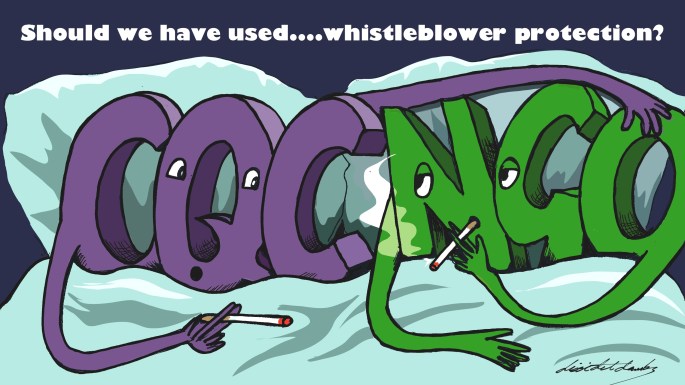
paperwork

Screen Shot 2017-09-03 at 06.00.22.png

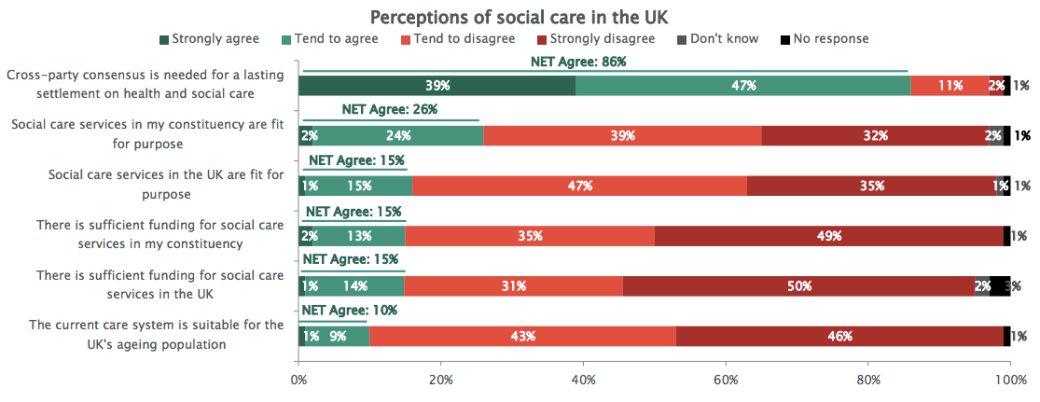
Indeed, as an indictment of government policy and CQC performance, nine out of ten MPs do not think that our care system is “suitable for the UK’s ageing population”:

https://www.independentage.org/sites/default/files/2017-08/Independent%20Age_MPs_Parliamentary_Audit_Social_Care.pdf

Results of a survey of MPs by the charity Independent Age, reported on 31 August 2017:

Screen Shot 2017-09-03 at 06.33.22.png

On 20 June 2017 Helen Rochester a care home whistleblower confronted the CQC board about the fact that CQC had breached her confidentiality and on a later occasion, had been complicit in reprisal.

These are the salient details of the extraordinary Rochester case:

https://minhalexander.com/2017/06/22/cqc-involved-in-a-whistleblowers-referral-to-the-disclosure-barring-service/

On 24 June 2017 I wrote to the National Freedom To Speak Up Guardian about the Rochester case and CQC’s approach to whistleblower confidentiality. 6

I asked the National Guardian to hold CQC to account and to establish how many other whistleblower cases had been similarly mishandled by the CQC.

She clearly appreciated the urgency of the situation and got straight back to me…on the 31 August 2017.

The National Guardian stated that she expected CQC to maintain whistleblowers’ confidentiality, but made no comment whatsover on CQC’s performance:

EMAIL FROM HENRIETTA HUGHES NATIONAL GUARDIAN 31 AUGUST 2017

“Dear Dr Alexander

Thank you for your email of 24 June (below) setting out your concerns about CQC’s handling of whistleblowers.  You particularly mention the case of Helen Rochester.

I understand that Helen Rochester’s case is the subject of a separate complaint so we do not wish to comment on that, however, I have sought assurance from CQC about aspects of their whistleblowing procedures.  In particular, I have enquired about the preservation of confidentiality. 

The CQC’s policy on maintaining the confidentiality of whistleblowers is quite clear.  Their publication ‘A quick guide to raising a concern about your workplace’ states ‘We will not disclose your identity without your consent unless there are legal reasons that require us to do so’. I would expect that anyone handling issues raised by Whistleblowers is aware of this policy, appropriately trained, and that there are assurance processes in place to ensure that the policy is consistently applied in practice. 

I understand that CQC intends to widen the scope of their safeguarding committee to include whistleblowing more specifically, and thus provide a more transparent oversight mechanism.  I will ask that the topic of confidentiality is considered as part of the work of this group 

Thank you again for your correspondence.  I want to ensure that people who speak up are treated fairly, respectfully, and that the issues they raise are acted on appropriately.

 Kind regards

Henrietta

If all the National Guardian ever does is ‘expect’, the CQC will be very happy.

But then CQC is the National Guardian’s employer and part funder. There is little reason to imagine that she will robustly insist that CQC does its job or provide meaningful transparency.

It is a mere six years since whistleblowers who tried to raise concerns about serious abuse at Winterbourne View were notoriously ignored by the CQC, and the government in consequence promised us reform.

The serious case review into the Winterbourne View scandal concluded with icy restraint:

“The review has demonstrated that the apparatus of oversight was unequal to the task of uncovering the fact and extent of institutional abuse at Winterbourne View Hospital.”

 South Glos Serious Case Review Winterbourne View


In 2012, on the heels of Winterbourne View the Department of Health cynically appointed Behan, one of its director generals to the CQC. It spun him as CQC’s saviour but we’ve just had more of the same.

Screen Shot 2017-09-03 at 05.31.08

However, this has not stopped Jeremy Hunt from recommending Behan for a knighthood, as confirmed by Compassion in Care.

Cabinet Office Letter Behan Knighthood 7 August 2017

Nevertheless, I have asked the National Guardian if she satisfied herself that CQC has actually audited its protection of whistleblowers’ confidentiality. 7

Don’t expect too much.

But more to come about the CQC shortly.


RESPONSE FROM NATIONAL GUARDIAN 9 OCTOBER 2017

The National Guardian replied after a reminder to her office, but failed to give a straight answer. This is a core mission failure given the promises by Robert Francis, CQC and the Department of Health that the office would hold CQC, its employer and paymaster, to account.

Screen Shot 2017-10-17 at 19.04.30


chateau-cqc


RELATED ITEMS

CQC an ongoing concern, a revelatory report by Compassion in Care which reveals the very longstanding extent and repetitive nature of CQC’s care home failures:

http://www.compassionincare.com/node/229

National Guardian and CQC defend Fortress DH This is an explanation of how the National Guardian’s office is designed – and operated – to be ineffective

https://minhalexander.com/2017/05/06/cqc-and-national-guardian-defend-fortress-dh/

Letter to the Health Service Journal’s Patient Safety Correspondent This provides a digest of overall government policy shortcomings on whistleblowing and reforms that are needed

https://minhalexander.com/2017/07/10/letter-to-the-health-service-journals-patient-safety-correspondent/


REFERENCES

1 Three Times articles published on 27 July 2017, related to CQC cover up of a suspected rape and other incidents at care homes run by Hill Green Care

i. CQC covered up suspected rape in care home

ii. LEADING ARTICLE Silent Witness

iii.CQC is no stranger to claims of cover-up

CQC inspection reports:

http://www.cqc.org.uk/sites/default/files/new_reports/INS2-2434774843.pdf

http://www.cqc.org.uk/sites/default/files/new_reports/INS2-2508593360.pdf

http://www.cqc.org.uk/sites/default/files/new_reports/AAAC9941.pdf

http://www.cqc.org.uk/sites/default/files/old_reports/1-215264645_Hillgreen_Care_Limited_-_14_Colne_Road_INS1-991372541_Responsive_-_Follow_Up_08-03-2014.pdf

2 Statement by David Behan on investigation into Hillgreen Care rape

CQC statement Hillgreen Care rape


3 Compassion in Care’s concerns about CQC’s breaches of whistleblower confidentiality were widely reported by networks on 6 July 2017:

Screen Shot 2017-09-03 at 00.58.40

4 From letter 14 July 2017 by Andrea Sutcliffe CQC Chief Inspector of  Adult Social Care Services to Compassion In Care

Screen Shot 2017-09-03 at 01.28.48

5 Protest by Compassion in Care and supporters at CQC headquarters, Buckingham Palace Road 22 March 2017

https://minhalexander.com/2017/03/23/protest-by-compassion-in-care-and-supporters-at-cqc-headquarters-buckingham-palace-road-22-march-2017/

6 Letter to Henrietta Hughes National Guardian 24 June 2017 about CQC breach of whistleblower confidentiality and contribution to detriment

Letter to National Guardian whistleblower confidentiality 24 June 2017


7 Letter to Henrietta Hughes 31 August 2017

BY EMAIL

Dr Henrietta Hughes

National Freedom To Speak Up Guardian

Care Quality Commission

31 August 2017

Dear Dr Hughes,

CQC breaches of whistleblower confidentiality and contribution to whistleblower detriment

Thank you for your response on this important matter of CQC regulatory probity.

You say that you expect

a. CQC staff to follow CQC’s policy on maintaining whistleblower confidentiality

b. CQC to have assurance processes in place to ensure that its policy is consistently applied in practice.

May I ask if you actually satisfied yourself that CQC has audited its adherence to its policy?

If you have not done so, may I ask if you will do so, or if it is not your intention to do so, what are the reasons for this?

Many thanks,

Minh

Dr Minh Alexander

cc Sir Robert Francis CQC NED and Chair of National Guardian’s Accountability and

Liaison Committee

Dame Moira Gibb NHS England NED and member of the National Guardian’s

Accountability and Liaison Committee

Kate Moore General Counsel NHS Improvement and member of the National

Guardian’s Accountability and Liaison Committee

Lord Bew CSPL

Sir Amyas Morse NAO

Whatever happened to Jeremy Hunt’s Just Culture Task Force?

Dr Minh Alexander NHS whistleblower and former consultant psychiatrist 30 August 2017


The Department of Health’s denial machine speeds on despite occasional reports of its demise.

Good news stories, synthetic totems and ready made ‘radicals’ are its stock in trade.

For example, NHSIQ do a notable line in manufactured cool:

Screen Shot 2017-08-30 at 15.04.55

Click to access nhsiq_white_paper.pdf

Notwithstanding, whistleblowers are unimpressed with NHSIQ’s exhortations to ‘rock the boat but not too much’.  It is an unhelpful demonisation of serious dissent.

The NHS Just Culture Task Force was another faux DH attempt at creating a ‘movement’, and was announced in January. It came with a folksy looking blogsite for added authenticity. It proclaimed its existence and an initial, core membership.

However, the task force flopped quickly when questions were asked about the status of the project and issues of inclusivity, administration and accountability. Most of the information posted on line about the project was removed. There has been no visible activity since.

https://minhalexander.com/2017/01/25/call-for-just-culture-taskforce-core-members-to-step-down/

Since then, the Department of Health has behaved quite ludicrously in response to an FOI about the establishment of the Just Culture Task Force, including Jeremy Hunt’s role in the matter. The DH has failed to answer some of the questions and resisted for months a request for internal review of its FOI response. Departmental staff have appeared embarrassed and were very apologetic about successive delays and repeatedly missed deadlines.

“I apologise profusely for the length of time it has taken to carry out your requested internal review into the handling of FOI 1069346”

Eventually, I copied the FOI correspondence to Hunt’s office to put staff out of their misery. An internal review response has now finally been provided. As suspected, there is a refusal to provide more information. This is on the grounds that it may prejudice the conduct of public affairs – a catch all that is some times used when senior officials and politicians simply do not want to be embarrassed.

“We have considered the request again and I can confirm that DH has carried out searches for information within a broader interpretation of the scope of your request and has now identified a number of emails which relate to the establishment of the Just Culture Taskforce, its terms of reference and selection of its members. However, we consider these emails to be exempt from disclosure under Section 36 (2)(b)(i) and (ii) and (c) – prejudice to the conduct of public affairs.”

The DH has retreated to this bunker before and has been reprimanded by the ICO on some occasions for the groundless use of this exemption.

But the refusal to disclose tells me all I need to know about the nature of this project, so I won’t trouble the ICO, who have enough on their hands.

The lack of visible, development activity since January suggests that the DH may be hoping that the Just Culture Task Force ‘movement’ will fade from memory and not cause the Minister too much more embarrassment. Indeed, one of the DH officials originally associated with the project has since moved to NHS Improvement.

Nevertheless, the DH gamely insists in its latest correspondence that it will properly engage whistleblowers and NHS staff in work on the Just Culture Task Force – but just not now:

“Our work on Just Culture is born out of the recommendation of the Expert Advisory Group for the Healthcare Safety Investigation Branch to set up a Just Culture Task Force to support the whole healthcare system to move towards a just culture of safety. The policy for taking this forward is still under development and any discussions and policy thinking are therefore exempt for the reasons set out above. However, our intention is that whistle-blowers and NHS staff will be properly engaged in this work.”

Not very radical at all it seems.


These are the key elements of the FOI correspondence with the DH about the Just Culture Task Force:

FOI request 23 January 2017

DH FOI launch of Just Culture Taskforce 23.01.2017

DH response 17 February 2017

DH response Just Culture Task Force FOI 1069346 reply

Request for internal review of DH’s FOI response

Request for internal review 18 Feb 2017

DH internal review response 30 August 2017

DH internal review response 30 Aug 2017 170830 Minh Alexander IR 1069346 FINAL FOR ISSUE


RELATED ITEMS

https://minhalexander.com/2017/04/18/nhs-bodies-5-years-of-ico-decisions/

Four years of published coroners’ Section 28 reports in England and Wales


By Dr Minh Alexander NHS whistleblower and former consultant psychiatrist 24 August 2017

This is a paper which reports on four years of data on coroners’ special warning reports published by the Chief Coroner, up to 31 July 2017, and which shares a database on the four years of Section 28 reports collated from the Chief Coroner’s website.

This is the full report with links to supporting data:

Four years of published coroners_ Section 28 reports to prevent future deaths in England and Wales

The summary of the report is as follows:

“SUMMARY

In the recent years of austerity, the government has run an explicitly anti-red tape programme, purportedly business friendly but openly hostile to ‘Health and Safety’ regulations.

This paper shares a database collated from four years of coroners’ Section 28 warning reports about public safety that have been published by the chief coroner, and a broad initial report about the data.

Although it is positive that Section 28 reports have been published in recent years, I collated this data because the chief coroners’ website is not searchable and does not give the public access sufficient, meaningful access to Section 28 reports. Patterns are further obscured by inconsistent indexing of cases. Some notable instances of miscategorisation of important cases were found (for example suicides, police related deaths, deaths in custody, deaths of armed forces personnel).

Questions also arise about the completeness of the data released. It is very likely that a number of reports have not been published.

Of the data that exists:


  • At least 57.2 % (987 of 1725) of published Section 28 reports related to poor NHS care and hazards.


  • Seventy Section 28 reports related to deaths in the custody of the State


  • 350 Section 28 reports related to self inflicted deaths, whether through misadventure or by suicide.


  • 60 Section 28 reports were about deaths where there had been neglect, including eight deaths in State custody.


  • The majority of the ‘neglect cases’ were accounted for by the NHS.


There were no published responses at all to 62% (1070 of 1725) of Section 28 reports by organisations and persons who had been sent them for action to prevent future deaths. Moreover, no explanation is provided for this by the chief coroner’s office.

The paucity of published responses is unexpected because past government records showed the vast majority of organisations previously responded to Rule 43 reports, which were the predecessor to Section 28 reports. Clarification is needed on whether response rates have deteriorated and or whether the Chief Coroner is choosing not to publish responses.

The lack of published responses to coroners’ warnings raises questions about whether the audit cycle is being closed and therefore the effectiveness of public protection. The Grenfell fire being the most painful illustration possible of the consequences of such failure.

Relevant to fire safety, there were twenty published Section 28 reports in the last four years relating to fire safety, including recommendations for instalment of fire sprinklers and alarms in social housing, and the need to investigate the use of flammable insulating material in Hotpoint fridge freezers which can act as an accelerant.

In relation to NHS cases, notwithstanding the limitations of the coroners’ data, a number of recurring themes are evident, raising questions about organisational learning. Coroners highlighted a lack of resources in a number of important cases, some acute.

Of great concern to public safety, it is also clear that coroners have been seriously concerned for several years about deteriorating ambulance responses and the role of related call handling and diversion services. Ambulance delays have cost lives and put the public at risk.

The effectiveness of the Department of Health’s response to coroners’ concerns is in question. The credibility of CQC’s ratings on ambulance trusts is also challenged by the concerns that coroners have been repeatedly flagging. CQC’s recent rating of an ambulance trust as ‘Outstanding’ is especially questionable when all are clearly operating in severely challenging conditions.

These concerns are underlined by the fact that Coroner’s Section 28 reports represent only the tip of a safety iceberg.

Currently, there is no evidence of a systematic government approach to learning from the Section 28 reports. There is no published evidence of central analysis.

I have written to ask the Chief Coroner about:

  • How many of the Section 28 reports issued so far have been published
  • Missing responses from recipients of Section 28 reports
  • Any government analysis that is taking place
  • What happens if coroners are dissatisfied by Section 28 responses
  • Possible improvements to the website for greater transparency.


The Department of Health, NHS regulators and other oversight bodies will be asked about their handling of Section 28 reports.”

I should be very grateful and interested to hear from anyone who is aware of coroners’ Section 28 reports that have been issued but have not been published.

Please contact me via the contact page of this site.

Many thanks.

Minh Alexander


ERRATUM

There were 27 and not 20 Section reports on fire related deaths published by the Chief Coroner up to 31 July 2017.


delay-deny


RELATED ITEMS

‘Who is the Chief Coroner?’

https://www.judiciary.gov.uk/related-offices-and-bodies/office-chief-coroner/

https://minhalexander.com/2017/07/21/after-grenfell-home-office-foi-disclosure-on-prison-fire-safety/

https://minhalexander.com/2016/10/14/cqcs-better-than-ever-or-didnt-you-know/

https://minhalexander.com/2016/10/08/care-home-deaths-and-more-broken-cqc-promised/

https://minhalexander.com/2016/11/11/coroners-warnings-terminal-inexactitude-and-cqc-opacity/

https://minhalexander.com/2016/09/25/letter-9-september-2016-to-david-behan-cqc-chief-executive-on-cqc-under-reporting-of-coroners-mental-health-deaths-warnings/


After Grenfell: Home Office FOI disclosure on prison fire safety

I was amongst other things a whistleblower about very poor care and conditions for exquisitely vulnerable mentally disordered offenders in prisons.

My thoughts turned to the prison estate after the revelations that flammable cladding had been used across our UK social housing stock despite bans in the US, especially with increasing privatisation of our prison estate.

If our prisons have also been unsafely constructed due to de-regulation, austerity and the pursuit of profit, prisoners may obviously be at grave risk in the event of fire. The security restrictions make evacuation of prisons all the more difficult in the event of fires.

I made enquiries to the relevant authorities to find out more.

An FOI to HM Inspector of Prisons led to claims that there were very few whistleblowing disclosures by prison staff to the inspectorate and that there were no recent self inflicted deaths from fire setting. However, HMIP also indicated it did not track whistleblowing disclosures properly because it did not keep a database:

HMIP FOI response Whistleblowing disclosures to HMIP_Dr Minh Alexander

An FOI enquiry to the Home Office’s Crown Premises Fire Inspection Group has revealed that eleven enforcement notices relating to fire safety have been issued to prisons:

Home Office FOI disclosure Prison Fire Safety 21 July 2017 44320 response-3

Of immense concern, the Home Office has failed to comply with its legal duties under FOIA by simply ignoring three key questions in its response:

“6) Does the Crown Premises Fire Inspection Group hold central information on the proportion of the crown prison estate (in terms of the number of establishments) that is fully fitted with sprinkler systems? If so, please advise how many prison establishments are fully fitted with sprinkler systems.

7) Does the Crown Premises Fire Inspection Group hold central information on the proportion of the crown prison estate (in terms of the number of establishments) that is fitted with flammable cladding? If so, please advise how many prison establishments are fitted with flammable cladding.

8) Does the Crown Premises Fire Inspection Group hold central information on the proportion of the crown prison estate (in terms of the number of establishments) that is fully fitted with smoke alarms? If so, please advise how many prison establishments are fully fitted with smoke alarms.”

A question arises of why the Home Office should avoid answering these questions in this manner, which does not comply with the requirements of FOIA.

I have challenged the Home Office’s FOI response.

I will also be raising a concern with the Health and Safety Executive and the Justice Committee.

CORRECTION 17.30 21.07.2017 Apologies to the Home Office which did provide an appropriate denial in its FOI response that it did not hold data for questions 6 to 8, which I missed.

RELATED ITEMS

Letter to Justice Committee re prison fire safety 22 July 2017

Further FOI disclosure by the Home Office 9 August 2017: 

Home Office Prison Fire Safety FOI 9 August 2017 44729 final response


Letter to the Health Service Journal’s Patient Safety Correspondent

BY EMAIL

Shaun Lintern

Patient Safety Correspondent

Health Service Journal

10 July 2017


Dear Shaun,

Next year’s HSJ patient safety conference and NHS whistleblowing policy

At your suggestion, I write with suggestions on NHS whistleblowing policy for next year’s HSJ patient safety conference.

Firstly though, I will address two assumptions that arose during our recent twitter exchange:

  1. You seemed to suggest that the criticisms of this year’s choice of speakers and lack of balance regarding whistleblowing matters stemmed from critics not being included. 1

I should clarify that I was very kindly offered a ticket but decided not to go, particularly after you informed me that the whistleblowing session had been cancelled. 2

  1. You seemed to imply that whistleblowers might attend in order to air grievances. 3

Whilst the DH and its organs frequently spin this line to discredit whistleblowers, it is in fact faulty policy (including policy on enforcement) that is at issue.

I think we all now know the typical NHS whistleblower 4 story by heart, and there is little use in endless reiteration. What is needed is action on the underlying failures of governance and policy.

As many whistleblowers and other interested parties see it, these are some of the key policy issues:

  1. The current UK whistleblowing law, the Public Interest Disclosure Act (PIDA), pays little attention to whistleblowers’ disclosures and does not compel employers to investigate them. 5  In a safety critical sector like the NHS, this puts lives at risk.


  1. NHS policy does not provide any failsafe for investigation of individual whistleblowers’ concerns where employers fail to conduct or commission local investigations at all, or properly. 5

Robert Francis emphasised in his report of the Freedom To Speak Up Review that this arrangement should continue. 6


  1. NHS regulators rarely use their discretionary powers to conduct thematic reviews or wider investigations even when there are clusters of whistleblowers. 7


  1. UK whistleblowing law provides only a post detriment right to claim compensation. What is needed is pre-detriment protection from the point of disclosure. There are numerous other weaknesses in UK whistleblowing law that were recently summarised by a 2016 review. 8


  1. There is no single UK agency that protects whistleblowers. There are only a huge number of Prescribed Persons under PIDA, who have no defined responsibilities under the Act other than to receive disclosures 9, and since this April, to publish relatively superficial data about this. 10

Many of these bodies are under the line management of government departments and there is a conflict of interest if whistleblowers raise concerns that relate to failure of government policy or performance, such as the consequences of the current cuts in the NHS.

In the NHS, whistleblowers frequently perceive that regulators and oversight bodies close ranks to suppress their concerns.

There is even evidence that bodies such as the CQC breach whistleblowers’ confidentiality to their employers 11 and are in some cases complicit in reprisal. 12 In one case this happened to a whistleblower after he criticised the CQC’s failures, so some very serious questions arise from that case.  13


  1. Whistleblowers rarely succeed in the courts. They may be priced out of court or beaten by inequality of arms. By the point at which litigation commences, there will usually have been a serious failure of governance.

This is data on recent and current NHS Employment Tribunal litigation including whistleblowing claims:

https://minhalexander.com/2017/07/06/the-nhs-in-the-employment-tribunal-a-five-month-sample/


  1. Government policy should refocus away from litigation on employment issues, to resolving concerns, and preventing the detriment that leads to wasteful, destructive and often futile litigation. Resolving concerns is clearly of utmost importance in safety critical sectors.

Where litigation is unavoidable, the current inequality of arms needs to be addressed through the way in which future law is drafted. More of the litigation burden also needs to be lifted away from individuals, with some of it borne by the State, in recognition of the public service performed by whistleblowers.


  1. The National Freedom To Speak Up Guardian’s office has been established without any of the necessary powers to properly protect whistleblowers. 14 It has been further compromised by being made subordinate to the CQC. 15 It is additionally refusing to fully exercise the limited remit that it was given.

For example, the National Guardian’s office was intended to review cases and challenge others to remedy detriment to patients and whistleblowers 14 but it is refusing to intervene early enough. 16

There is now written confirmation from the National Guardian’s office that it will not review cases until all processes are concluded, including Employment Tribunal claims.  17

This means that whistleblowers will as usual be hung out to dry and that by the time the National Guardian may deign to review a case, the whistleblower will most likely be in poor health, broke, de-skilled, unemployable and blacklisted.

The National Guardian has been asked to clarify what exactly her refusal to intervene in a timely manner, potentially for years, means for unresolved patient safety risks that whistleblowers are concerned about.

Despite assurance given by Robert Francis in his report of the Freedom to Speak Review that the office would act “quickly” in the event of serious safety issues coming to light, 18 the National Guardian has not so far responded to this question.

The National Guardian has also declined to actively seek reform of whistleblowing law, although there is wide recognition that PIDA is inadequate. 18b

She also has no plans to seek statutory independence. 18c


  1. No effective deterrence is currently provided against whistleblower reprisal. In most cases, there are few consequences for the culprits. Where there are consequences, abusers are often recycled with the help of regulators. 19  The implementation of CQC Regulation 5 Fit and Proper Persons has largely been inadequate, with a number of very perverse decisions by the CQC which has chosen to merely rubber stamp bureaucratic processes, rather than to weigh the validity of trusts’ decision making. 20 21

Effective sanctions are needed, including criminal sanctions, and justice needs to be seen to be done to re-set culture. Indeed, this is the advice of the employment law and whistleblowing expert Professor Lewis who led the research team that supported the Freedom to Speak Up Review:

http://www.ier.org.uk/blog/what-should-political-parties-be-offering-whistleblowers-work#.WTGZimXu8WU.twitter

  As I am sure you will be aware from your coverage of the Mid Staffs disaster and the interviews that you have conducted with Robert Francis, Francis originally recommended criminal sanctions for whistleblower reprisal. However, he has since U-turned on this recommendation. 22

  1. The current Department of Health (DH) policy of Speak Up Guardians who are employed by trusts is not evidenced based. 23 Robert Francis, the CQC and National Guardian have all conceded that this is so. 23b  This breaches all good practice in healthcare and there is already evidence that some local Speak Up Guardians have failed current whistleblowers. There has been a haphazard approach to appointments and lack of reliable quality control. Indeed, one former Freedom To Speak Up Guardian was jailed. 24


11. These issues have been brought to the attention of the National Guardian, and although she has a stated a responsibility for maintaining the integrity of the Freedom To Speak Up Guardian network 25, she has indicated that it is the responsibility of trusts to make appropriate appointments. 26 This further illustrates the weakness of the model.

Whistleblowing to the press continues, even in trusts with Speak Up Guardians, confirming the redundancy of these posts. 23 27  Indeed, the chair of the latest trust in question has felt comfortable to make a public attack on the author of a whistleblowing letter:

“This person is part of the reason the trust is in special measures. This individual is disappointing and is clearly frustrated.”

 http://www.grimsbytelegraph.co.uk/news/grimsby-news/grimsby-hospital-trust-chair-launches-175112.amp

 The recommendations of the Freedom To Speak Up Review were essentially based on appealing to people’s better nature and the power of persuasion. This is clearly not enough, but it provides the DH with a convenient means of claiming that it has taken action whilst still allowing the suppression of whistleblowers.

In the last NHS Staff Survey only 70% of the staff who were surveyed reported that they felt secure to raise concerns about unsafe clinical care, and only 58% felt confident that their organisations would address their concerns. 28  This translates into hundreds of thousands of NHS staff who do not feel safe to raise concerns about unsafe clinical care.

And as the above data shows, NHS staff continue to make claims in the Employment Tribunal for unfair dismissal after whistleblowing.

I would suggest two core elements are needed to drive better culture:

1)    Substantive law reform

2)    A fit for purpose, properly resourced central body with powers that is independent of government departments, and that can support whistleblowers and enforce good governance. This body should have powers to direct investigations, conduct investigations itself and order remedy of detriment. A power to correct detriment should help reduce the need for damaging and costly litigation and there are international precedents for such a model. 29

I see that at this year’s patient safety conference on 5 and 6 July there were observations by Robert Francis that it is still not safe for staff to speak up, comments by the CQC that whistleblowers should be better treated, and a video appearance by the Secretary of State making claims that under his stewardship that the NHS is “enthusiastically open about issues”. 30

It would improve the quality of debate at next year’s conference if specific policy issues such as those that I have laid out above could be placed on the agenda, with an element of debate.

I think it is reasonable to ask Robert Francis, the DH and NHS regulators to account properly for their ongoing policy failures on whistleblowing on a level playing field, with presentation of opposing evidence and proper time allocated for discussion, and not just a few questions from the audience at the end of set pieces.

The relevant experts could be invited to take part. For example, experts and researchers in whistleblowing like Professor Lewis, experienced lawyers who have represented NHS whistleblowers and who are critics of weak NHS disciplinary procedures which are integral to whistleblower persecution such as John Hendy QC and of course, experts by experience.

If you are agreeable to more meaningful content and format, I am sure whistleblower campaigners would be happy to contribute.

The NHS is an important and high profile test bed for government policy on whistleblowing.

However, at present the superficial and wasteful NHS Freedom To Speak Up project is in effect functioning as a bottleneck to reform across the wider system.

I am sure that many public interest journalists and campaigners from other sectors would be much obliged if you would help to pick up this important baton.

Moreover, given the DH et al’s reluctance to genuinely act upon on evidence of ongoing failures, whistleblower campaigners will inevitably have more relevant evidence to share with you by the time of next year’s conference.

I look forward to your reply and an indication of whether any of these elements may be accepted for next year’s patient safety conference.

I copy this to Norman Lamb whom I understand is in touch with an NHS whistleblower who has reported both local and National Guardian failures.

I copy it to Keith Conradi regarding the unresolved systemic issue of unsafe NHS arrangements for investigating whistleblowers’ concerns.

I also copy it to the relevant parliamentary committee chairs as an update on the National Guardian’s refusal to review cases where whistleblowers make a claim to the Employment Tribunal.

With best wishes,

Minh

Dr Minh Alexander

Cc Norman Lamb

Keith Conradi, Chief Inspector Healthcare Safety Investigation Branch

Meg Hillier

Bernard Jenkin

Sarah Wollaston


RELATED ITEMS

1.National Guardian reprieves NHS Employers but condemns whistleblowers and patients

National Guardian reprieves NHS employers, but condemns whistleblowers and patients

2. Breach of confidentiality by CQC and complicity in referring a whistleblower to the disclosure and barring service

Breach of confidentiality by CQC and complicity in referring a whistleblower to the Disclosure and Barring Service


REFERENCES


1 https://twitter.com/ShaunLintern/status/883248831663681536


2 Your email to me of 14 June 2017:


“Hi,

The programme was in draft form when that was issued and still hasn’t quite been finalised but that session isn’t going ahead. It was only an intial idea.

The final programme will be published soon.

Shaun”


3 https://twitter.com/ShaunLintern/status/883250540343328768


4 21 Ways to skin a whistleblower. Private Eye 2011

http://medicalharm.org/wp-content/uploads/2011/12/21-Ways.pdf


5 Engineered failure to investigate NHS whistleblowers’ concerns

https://minhalexander.com/2017/04/08/engineered-failure-to-investigate-nhs-whistleblowers-concerns/

6 Robert Francis’ report of the Freedom To Speak Up Review, 11 February 2015


7.6.13 I want to emphasise that I am not proposing an office to take over the investigation of concerns. As I have already said, this needs to remain the responsibility of the local organisations.”


http://webarchive.nationalarchives.gov.uk/20150218150953/https://freedomtospeakup.org.uk/wp-content/uploads/2014/07/F2SU_web.pdf


7 The CQC and Monitor published a single joint investigation into a a whistleblowing cluster at the Christie. I am not aware of any other such investigation.


https://www.gov.uk/government/uploads/system/uploads/attachment_data/file/379803/Christie_Review.pdf


8 Protecting whistleblowers in the UK, Blueprint for free speech, May 2016

https://blueprintforfreespeech.net/wp-content/uploads/2016/05/Report-Protecting-Whistleblowers-In-The-UK.pdf


9 The Role of Prescribed Persons, National Audit Office, 27 February 2015


It is not clear what is expected from the prescribed persons community. The Department is responsible for the legislation that enables whistleblowers to claim compensation for detriment or dismissal. This legislation includes the list of prescribed persons. However, it does not specify the expectations of the role. For example, prescribed persons are not required to investigate every concern or to give feedback. The Department has recognised the need to act and has recently established a working group to develop best practice for prescribed persons.”

https://www.nao.org.uk/wp-content/uploads/2015/02/The-role-of-prescribed-persons.pdf


10 Prescribed Persons guidance, BEIS, April 2017

https://www.gov.uk/government/uploads/system/uploads/attachment_data/file/604935/whistleblowing-prescribed-persons-guidance.pdf


11 On 6 July 2017 the campaigning charity Compassion in Care disclosed that it knew of 47 whistleblower cases in which CQC has revealed whistleblowers’ identities to employers.

https://twitter.com/alexander_minh/status/882943648052248581


12 CQC breach of whistleblower confidentiality and complicity in referring a whistleblower to the Disclosure and Barring Service

https://minhalexander.com/2017/06/22/cqc-involved-in-a-whistleblowers-referral-to-the-disclosure-barring-service/


13 NHS is allowing babies to be maimed, Sunday Times 21 December 2014

https://minhalexander.com/wp-content/uploads/2016/10/cqc-sunday-times-re-shiban-ahmed-confidentiality-21-dec-2014.pdf


14 In his report of the Freedom to Speak Review, Robert Francis gave the following justification for not recommending a whistleblowing body with powers:


“74 I considered whether there is a case for establishing an independent body with powers to review staff concerns. I concluded that it would be wrong to take responsibility for dealing with concerns away from trusts, and would be more likely to lead to delays and additional layers of bureaucracy.”


http://webarchive.nationalarchives.gov.uk/20150218150953/https://freedomtospeakup.org.uk/wp-content/uploads/2014/07/F2SU_web.pdf


15 National Guardian Independence: The CQC denies some more….

https://minhalexander.com/2017/01/19/national-guardian-independence-the-cqc-denies-some-more/


14 The National Guardian’s job description indicates clearly that she should borrow powers from regulators and from NHS England:


“The National Guardian, whilst not having specific statutory powers, will have sufficient authority from CQC, Monitor, the NHS Trust Development Authority (NTDA) and NHS England to ensure recommendations are taken seriously and acted upon.”


https://minhalexander.com/wp-content/uploads/2016/10/cqc-national-guardian-specification-final-760085.pdf


These are some of Robert Francis’ key statements in his report of the Freedom to Speak Up Review about how the National Guardian should operate:


“78 The INO [National Guardian] will have discretion to consider how an existing case is being or has been handled, and to advise an organisation on any actions they should take to deal with the issues raised. The officer would need to operate in a timely, non-bureaucratic way. He/she would not take on the investigation of cases themselves, but would challenge or invite others to look again at cases and would need sufficient authority to ensure that any recommendations made were taken seriously and acted upon. The office should be more nimble and less bound by legalistic process than a statutory body, with wide discretion to decide whether it is appropriate to get involved in a particular case. In essence the INO [National Guardian] would fulfil, at a national level, a role similar to that played by Freedom to Speak Up Guardians locally and provide national leadership for these issues.”


“There should be an Independent National Officer resourced jointly by national systems regulators and oversight bodies and authorised by them to carry out the functions described in this report, namely:


  • review the handling of concerns raised by NHS workers, and/or the treatment of the person or people who spoke up where there is cause for believing that this has not been in accordance with good practice
  • advise NHS organisations to take appropriate action where they have failed to follow good practice, or advise the relevant systems regulator to make a direction to that effect
  • act as a support for Freedom to Speak Up Guardians
  • provide national leadership on issues relating to raising concerns by NHS workers
  • offer guidance on good practice about handling concerns
  • publish reports on the activities of this office”


“76 Rather than establish yet another new body, which would require legislation as well as new funding, I propose that an Independent National Officer (INO) should be jointly established and resourced by the CQC, Monitor, the NHS TDA and NHS England, to operate under the combined aegis of these bodies. The INO would be authorised by these bodies to:


  • review the handling of concerns raised by NHS workers where there is reason to believe that there has been failure to follow good practice, particularly failing to address dangers to patient safety or causing injustice to staff
  • where this has occurred, to advise the relevant NHS organisation to take appropriate and proportionate action, or to recommend to the relevant systems regulator or oversight body that it make a direction requiring such action
  • offer guidance on good practice
  • act as a support for Freedom to Speak Up Guardians
  • publish reports on common themes, developments and progress towards the creation of a safe and open culture in the NHS.”


“97 I believe that the Principles and Actions in this report should together make it safe for people to speak up, and provide redress if injustice does occur. The creation of Freedom to Speak Up Guardians and an Independent National Officer in particular are key components of this, to provide support and ensure the patient safety issue is always addressed.”


16 National Guardian reprieves NHS employers but condemns whistleblowers and patients

https://minhalexander.com/2017/05/18/national-guardian-reprieves-nhs-employers-but-condemns-whistleblowers-and-patients/


17 Email 4 July 2017 by the National Guardian’s Case Review manager to a current NHS whistleblower:

“…I can confirm that outstanding decisions relating to a particular case include those to be made by an employment tribunal…Therefore, as you have informed us that you have submitted your case for consideration by an employment tribunal, I can confirm that we are unable to currently consider your case for review.” 


18 Robert Francis’ report of the Freedom To Speak Up Review, 11 February 2015


“7.6.15 It is not my intention that the INO [National Guardian] should have binding powers. I do not see this role as strictly comparable to that of an Ombudsman. Instead they would advise relevant organisations on any actions that should be taken to deal with the issues raised. The officer would need to operate in a timely, non-bureaucratic fashion, with the capacity to act quickly in the event of serious safety issues coming to light. He or she would need to have sufficient authority to ensure that reviews and any recommendations coming from them are taken seriously and acted upon quickly.”


“97 I believe that the Principles and Actions in this report should together make it safe for people to speak up, and provide redress if injustice does occur. The creation of Freedom to Speak Up Guardians and an Independent National Officer in particular are key components of this, to provide support and ensure the patient safety issue is always addressed.”


18b Letter from Henrietta Hughes National Guardian 16 February 2017:


However, we are not currently seeking to campaign for changes to the law.”


Letter from National Guardian’s Head of Office 18 April 2017:


There are many potential barriers to speaking up and, working with Freedom to Speak Up Guardians in trusts and organisations within and around the NHS, we want to take action to bring a wide ranging and long lasting change. Law reform may be part of this but, in itself, we do not see that as providing an enduring solution.” 


18c Letter from Henrietta Hughes National Guardian 16 February 2017 in response to a suggestion that there should be a properly independent whistleblowing body:

 

“Whilst the National Guardian’s Office does not have powers overseen by parliament, its thinking and the recommendations it makes are independent from any other body or organisation.  Naturally, whilst preserving our independence, it is important that we do not work in isolation so partnership working with other organisations within and around the NHS is vital – this is an approach we would take whether we held statutory powers of our own or not.”


19 An example of recycling of managers who bullied staff and suppressed safety concerns is given by Rosie Cooper MP in this parliamentary debate on Liverpool Community Health NHS Trust of 13 July 2016:


https://hansard.parliament.uk/commons/2016-07-13/debates/1DEAEDE8-BA1C-4BF7-A16A-7CFB9831CFB2/CapsticksReportAndNHSWhistleblowing


20 CQC: A Chief Inspector doesn’t call

https://minhalexander.com/2017/01/27/cqc-a-chief-inspector-doesnt-call/


21 FPPR: CQC has lost all moral authority, but what will the National Guardian do?

https://minhalexander.com/2017/05/23/fppr-cqc-has-lost-all-moral-authority-but-what-will-the-national-guardian-do/


22 Sir Robert’s Flip Flops

https://minhalexander.com/2016/09/26/sir-roberts-flip-flops/


23 These are articles summarising the lack of evidence for Robert Francis’ Speak Up Guardian model:


https://minhalexander.com/2017/05/28/ssotp-robert-francis-exemplar-trust-has-feet-of-clay-and-jeremy-hunts-safety-claims-are-un-evidenced/


https://minhalexander.com/2016/09/24/critique-of-francis-model-of-trust-appointed-guardians/


23b


  1. Robert Francis reportedly conceded at a conference on 8 March 2017 that his model was not evidence based, in the form of a comment that Speak Up Guardians were “pioneers, there’s not another model like this in the world”:


https://twitter.com/WhistleUK/status/839502184370876416


  1. The National Guardian acknowledged at a meeting on 2 February 2017 that there was no evidence for the Speak Up Guardian model.
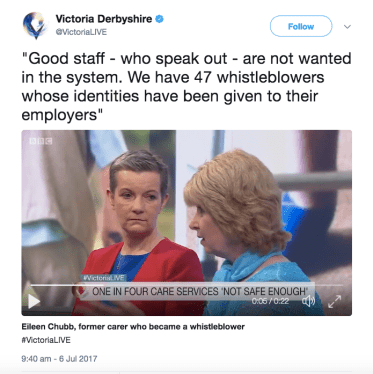
 

https://minhalexander.com/wp-content/uploads/2017/02/hh-meeting-records-23-01-2017-and-2-02-2017.pdf


  1. The CQC and National Guardian agreed to remove a misleading claim in an official CQC publication, the National Guardian’s final case process guidance, which held that all of Robert Francis’ “principles” from the Freedom to Speak Up Review were evidence based, after it was pointed out that the Speak Up Guardian model was not evidence based.


24 Freedom To Speak Up Guardian jailed

https://minhalexander.com/2017/03/07/freedom-to-speak-up-guardian-jailed/


25 National Guardian’s job description September 2015:


Key Responsibilities:


To provide support and advice for the Local Guardians: The National Guardian will support the Local Guardians, building a strong national network, for example through convening regular meetings and sharing learning. The National Guardian will have a key role in designing the consistent framework within which Local Guardians operate, and the training they receive. While Local Guardians will report to the Chief Executive of their organisation to ensure local ownership, the National Guardian should be there to provide professional support and advice.”


https://minhalexander.com/wp-content/uploads/2016/10/cqc-national-guardian-specification-final-760085.pdf


26 Email from National Guardian 9 March 2017:


… it is important that trusts appoint Freedom to Speak Up Guardians that meet the needs of their staff and the expectations that we have set out in the example job description for the role.  This is a new and important role and, although we are not involved in the recruitment process in providers we will monitor how it is being implemented.  Where we are aware of situations that indicate that a Freedom to Speak Up Guardian is not supporting staff in the way we would expect we will, in the first instance, raise this with the Chief Executive of the trust in question.”


27 In full the whistle-blower’s letter about Northern Lincolnshire and Goole NHS Trust, Grimbsy Telegraph 5 July 2017


http://www.grimsbytelegraph.co.uk/news/health/full-whistle-blowers-letter-northern-164740#ICID=sharebar_twitter


28 NHS Staff Survey 2016


Findings on unsafe clinical practice were similar, with 70% of staff feeling secure in raising any concerns they may have regarding clinical practice. Fifty-eight percent of staff had confidence that their organisation would address their concerns if they were raised.”


http://www.nhsstaffsurveys.com/Caches/Files/20170306_ST16_National%20Briefing_v6.0.pdf


29 US Office of Special Counsel https://osc.gov/


Netherlands House of the Whistleblower http://www.osborneclarke.com/insights/are-you-ready-for-the-new-dutch-house-for-whistleblowers-act/


30 Reported comments from the patient safety conference 5 July 2017:


Robert Francis:


“I’m not yet satisfied that staff in the NHS can speak up without fear”


https://twitter.com/JamesTitcombe/status/882261289107685376


Jeremy Hunt:


“The NHS has changed from sweeping problems under the carpet to being enthusiastically open about issues”


https://twitter.com/ShaunLintern/status/882550426326925312


Ted Baker:


“We don’t have a system where people can raise concerns and get them looked into without it becoming a big issue and a big concern all round”


“He [Ted Baker] said the “challenge” for the NHS and the CQC was to “create a culture” where staff feel confident in raising worries”