CQC also uses “specialist advisors” in its inspections who are current NHS staff, including managers who review the Well Led domain of inspections.
There has been an extraordinary local media report – by Leicestershire Live on 21 May 2022. This was about a former CQC specialist advisor, Shaun Chadwick. Colleagues and ex colleagues have accused Chadwick of abusive comments and social media posts.
Despite Leicestershire Live obtaining apparent evidence of the social media posts, which it has shared, Chadwick has reportedly denied the allegations:
“A manager working for the NHS has been accused of telling a former colleague Karma is a b****’ after she was diagnosed with multiple sclerosis – before calling her a “pathetic woman” and a “fat cow”.
Shaun Chadwick, senior executive partner at Spectrum Health in Oadby, has also been accused of regularly ‘fat shaming’ another former colleague. It has also been alleged he shared confidential questions with practice staff that CQC inspectors planned to ask during a visit – and telling them to be ready with the right answers.
Mr Chadwick has robustly denied the allegations in a statement issued by his current employers Spectrum Health. It says: “We can all confirm that such allegations are grossly inaccurate and insulting.”
Readers can take a look at the Leicestershire Live original article and related images of the social media posts to make up their own minds:
A comment on this article alleged that concerns had been raised with the CCG and NHS England, who failed to act:
“The repeat theme on these posts is that the Leicester/Leicestershire CCG, LMC and NHSE are continually failing in their duty to act despite suggestions of patients and staff raising concerns and it being their position to bring all those responsible to account.”
Chadwick is a GP practice manager.
According to Leicestershire Live, he is also accused of abusing his position as a CQC specialist advisor by sharing questions that CQC inspectors were due to ask with one of his own practices, whilst he was employed as a CQC specialist advisor:
“Mr Chadwick has also been accused of sharing questions that Care Quality Commission inspectors were due to ask staff at one of his practices during a forthcoming inspection, which is a breach of the CQC rules on confidentiality.
He was a specialist advisor for the CQC at the time, while he was also executive manager at nine practices across Leicestershire. But he told LeicestershireLivein 2020 that he was stepping down from his role due to his concerns within the CQC.
The email sharing the questions asks colleagues to treat the documents “in the strictest of confidence” and instructs them not to have them on the day of the inspection. He goes on to tell staff to familiarise themselves with the questions the inspectors will be asking and to approach him if anyone was “unsure of the answers.”
“…A CQC spokesperson said they would not be investigating the allegations because Mr Chadwick is no longer a specialist advisor.
The spokesperson added: “Shaun Chadwick used to work at the CQC as a specialist advisor in primary medical services, however he is no longer employed by the CQC. We are not aware that he sent an email to a GP practice including details about the CQC inspection framework.”
All of the above accusations have also been put to Mr Chadwick, Spectrum Health, NHS England and Leicestershire and Rutland CCG. Mr Chadwick has denied the allegations to LeicestershireLive.
A Spectrum Health spokesman said: “Mr Chadwick denies allegations made and legal proceedings via our solicitor and Leicestershire Police have commenced. Mr Chadwick takes such allegations extremely seriously and therefore ordered an external facilitator to investigate working culture at Spectrum Health.
“We can confirm that such allegations are grossly inaccurate and insulting.”
A joint statement from NHS England and LLR CCGs said: “We cannot comment on ongoing individual cases, but we are aware of concerns which have been raised and we are working to investigate following the appropriate NHS complaint processes.”
I can understand that CQC would not investigate Chadwick as an employee, now that his employment with his CQC has ended.
But surely CQC has grounds to investigate his service as a provider that allegedly abused the inspection process?
How many CQC specialist advisors use their insider inspector knowledge to benefit their own provider services? How does CQC manage the risk of such breaches?
“CQC recognises that in the course of your regular work outside of CQC, you may be asked to speak at conferences or make presentations to various groups. In these presentations you may wish to use your experiences of participating in CQC inspections to illustrate your talk. In such circumstances you must:
• notify the conference organisers that you are not speaking on behalf of CQC
• not imply that you are appearing and/or speaking for or on behalf of CQC;
• anonymise any data from which an individual could be identified; and
• not breach the confidentiality provisions as set out in this Agreement or any relevant CQC policy on confidentiality.
We advise you to seek guidance from CQC if you are unsure about your obligations around this and how they apply to a given set of circumstances. “
Some CQC specialist advisors have been known to sell regulatory compliance services to provider organisations.
The current National Freedom To Speak Up Guardian was a CQC specialist advisor and she also advertised consultancy services including CQC inspection advice:
Introduction: Mary Robinson Tory MP for Cheadle and Chair of the controversial Whistleblowing APPG introduced a new Bill in parliament on 26 April under the ten minute rule. A second reading was oddly scheduled on 6 May 2022 when parliament was prorogued, so the Bill fell. The Bill itself was not published until 3 May 2022, on the APPG’s website. It transpired that the real target might not actually be to pass this legislation but to secure related insertions into the Economic Crime Bill. The Whistleblowing APPG’s campaign to change UK whistleblowing law has caused concerns since its inception in 2018 with funding from US bounty hunting lawyers. The US bounty hunting model benefits only a handful of whistleblowers and is only interested in whistleblowing which recovers very large sums of money. It seems likely that the APPG will continue pushing. We have therefore examined and provided a critique of the recent, fallen Bill in anticipation of future attempts to introduce similar legislation.
A Critique of the Whistleblowing APPG’s April 2022 Whistleblowing Bill
By Minh Alexander NHS whistleblower, Martin Morton Social Care whistleblower, Clare Sardari NHS whistleblower 24 May 2022
Summary: The Whistleblowing APPG’s now fallen draft legislation could be understood as a bounty hunter’s Bill. The Bill is poorly written, mis-numbered and in parts frankly unintelligible. Although the APPG claims its Bill champions whistleblowers, it does not focus much on protection. It does not invest enough in ensuring a safe and appropriate response to whistleblowers’ concerns, nor in criminal sanctions which cover the full range of serious breaches against the public interest. Instead, the Bill focuses on:
Massively widening the definition of ‘whistleblower’, which would increase the bounty hunting market
Building in a gatekeeping mechanism to reject some whistleblowers if necessary – perhaps the less profitable?
Extracting information
Sharing information with foreign regulators
Making referrals to foreign regulators
Making provision for ‘recognition’ of whistleblowers which in other published material has been equated to financial payment
The uncapped financial aspects of redress orders
Making provision for massive financial fines, which at a later point could be made subject to bounties
Points 3 and 4 are particularly relevant to lucrative law suits under US bounty hunting law, which can be filed from overseas. The US bounty hunting business is a billion dollar industry for lawyers.
The APPG Bill borrows heavily from Dr Philippa Whitford MP’s Public Interest Disclosure Protection Bill but tellingly, it dropped the clause which expressly sought to minimise conflict and litigation. The APPG Bill also dropped a clause which prohibited financial rewards for making protected disclosures.
The APPG Bill does not particularise key areas, such as intended standards to be applied by its proposed Office of the Whistleblower. As the Bill places the Office of the Whistleblower firmly under government control, future policy and future whistleblowers will be at the government’s mercy. The poor drafting of the Bill and its failures of particularisation will also provide more employment for lawyers. The Bill does not appear to be so much a real challenge to power, but a knowing handshake. It is in short, a most dubious pig in a poke.
Some summarised comments follow on key areas
Please follow the links for more detailed discussion and references, if required.
The APPG Bill claims to:
“Establish an independent Office of the Whistleblower to protect whistleblowers and whistleblowing and uphold the Public Interest; to create offences relating to the treatment of whistleblowers and the handling of whistleblowing cases; to make provision for that body to set, monitor and enforce standards for the management of whistleblowing cases, to provide disclosure and advice services, to direct whistleblowing investigations, to order redress of detriment suffered by whistleblowers; to repeal the Public Interest Disclosure Act 1998; and for connected purposes.”
Mary Robinson MP and Whistleblowing APPG Chair claimed in her ten minute speech on 26 April 2022:
“The Whistleblowing Bill will set up an independent office of the whistleblower to make whistleblowing work properly and safely for everyone. It will champion whistleblowers and whistleblowing. It will be a central point where the would-be whistleblower could come for information and support. It will have support and advice services for regulators, organisations and the public. It will set standards and report back to the Government. It will ensure that those who inflict or suffer detriment will be properly compensated or properly held to account. It will have real teeth with the ability to issue redress orders, fines and penalties. For the worst offenders, there will be prison sentences.
The Bill will make whistleblowing work by ensuring that concerns are investigated and acted on. It will transform our culture, normalise speaking up and put an end to the discrimination against whistleblowers.”
There is no proactive legal duty to protect or to prevent detriment. The Bill makes no link to Human Rights.
The Whistleblowing APPG’s Bill provides no mechanism by which early protection, early resolution, prevention of escalation and litigation can be achieved. There are no protective provisions such as pre-approval mechanisms before dismissal. There is not even parity with current discrimination law in terms of a proactive public sector duty to promote Equality for whistleblowers.
For comparison, EU law gives whistleblowers access to legal aid.
The APPG Bill gives no clear provision for stays and injunctions against harm.
It does not encourage the use of internal channels, which can be seen as favouring the bounty hunting industry by maximising the number of potential clients who may go straight to lawyers.
The Whistleblowing APPG harvested whistleblower data and feedback, with this note in its report of April 2022:
“All of those interviewed or who participated in the call to evidence were asked what changes they would like to see introduced. We received 100% agreement for the importance of creating a truly independent Office of the Whistleblower”
It is remarkable then that the APPG has put forward its Bill for an Office which is NOT independent but under full government control.
The Whistleblowing APPG has lifted the core passage from Dr Philippa’s Bill to introduce a Whistleblowing Commissioner, but with highly significant changes and omissions which likely signal intent.
Dr Whitford’s Bill provides for a Commission as follows:
“(4) The objectives of the Commission are—
(a) to ensure that concerns raised by whistleblowers are acted upon;
(b) to promote good corporate governance and discourage misconduct and malfeasance;
(c) to protect the public purse and ensure that wrongdoers bear the cost of wrongdoing revealed by whistleblowing;
(d) to promote the normalisation of whistleblowing as part of ethical governance, operating with a presumption in favour of transparency; and
(e) to reduce conflict and litigation relating to whistleblowing.”
The APPG provides for an Office of the Whistleblower as follows:
“(4) The objectives of the Office are—
(a) to encourage and support whistleblowers to refer concerns to the appropriate authorities;
(b) to support an effective and fair whistleblowing process;
(c) to protect the public purse and ensure that wrongdoers bear the cost of wrongdoing revealed by whistleblowing;
(d) to promote good governance through the normalisation of whistleblowing:
(e) to ensure that concerns raised by whistleblowers are acted upon;
(f) to monitor and review the operation of this Act.
That is to say, the Whistleblowing APPG has actively removed the clause:
“to reduce conflict and litigation relating to whistleblowing”
These elements are of course necessary to the income of the bounty hunting industry.
The APPG Bill also gives the Office of the Whistleblower “powers to establish schemes for the recognition of whistleblowers”.
That looks like “rewards” by any other name. Indeed, some members of the Whistleblowing APPG have spoken in favour of whistleblower rewards and incentives.
The APPG Bill plants a dangerous barrier to whistleblowers who seek help from the Office of the Whistleblower by allowing it to reject complaints “determined to be frivolous, malicious or vexatious”. After so many years dispensing with the much abused “good faith” test in the Public Interest Disclosure Act (PIDA), this is a seriously retrograde step.
But the APPG’s proposed barrier could be useful to a bounty hunting organ that wanted to let through lucrative cases whilst blocking those that are unprofitable.
The APPG gives no standards of whistleblowing governance in statute. They are all left to the Office of the Whistleblower to define and by implication therefore at the government’s mercy.
An enquiry to Mary Robinson MP about her vision for the putative regulations to be applied by the Office of the Whistleblower has not been answered.
A particularly important sleight of hand to note is that the Bill seeks to control how whistleblowers’ concerns are investigated – albeit without saying how it will do so – but critically, the Bill omits enforcement of investigation and action upon whistleblower’s concerns.
The Bill borrows from Dr Whitford’s Bill in providing redress orders, but it again makes telling changes focussed on maximising financial payouts.
Dr Whitford’s Bill stated:
“A redress order may order financial redress but must not order financial reward for making a protected disclosure”
The Whistleblowing APPG has changed this to:
“A redress order shall include an order for financial redress where loss or damage has been incurred. No such order shall be subject to any cap.”
The APPG’s Bill proposes massive fines for organisations up to £18 million (or more if the government pleases). This would have a devastating effect on public services if levied against public bodies. Such fines are also self-defeating because it is often under-funding that contributes to public sector service failures, cover ups and whistleblower reprisal.
The proposed massive fines could be made subject to bounties with further legislation at a later date.
The APPG’s Bill restricts new criminal offences to only:
The EU requirements include dissuasive penalties against:
Hindering reporting
Vexatious proceedings against a whistleblower
Breaches of confidentiality of whistleblower identity
Lastly, for some light relief, we gave up at this word hurdle:
“…and, in the absence of evidence establishing the contrary, a relevant person shall be taken to decide on a failure to act when that person does an act inconsistent with doing the failed act or, if that person has done no such inconsistent act, when the period expires within which that person might reasonably have been expected to do the failed act if it were to be done.”
A prize for any soul who can unravel this contorted mystery. (Capped, and non-financial, of course).
Petition
If you would like to see effective reform of UK whistleblowing law that is genuinely in the public interest, and that is not about promoting any private interest and does not risk the good name of whistleblowers by confusing genuine public interest disclosures with bounty hunting or the use of paid criminal informants, please support this petition:
By Dr Minh Alexander, retired consultant psychiatrist 22 May 2022
In March 2021 the Employment Tribunal found in favour of Dr Sonia Mann, a salaried GP working in Bristol, formerly employed by the Helios Medical Centre.
A very rare finding of automatic unfair dismissal due to whistleblowing was made, and also findings of other whistleblowing detriment and breach of contract.
The ET has not finished calculating the compensation owed to Dr Mann. However, she was exceptionally awarded £10,500 aggravated damages earlier this month because the Tribunal found that Dr Mann’s employer seriously abused the ET process, with “malice and deceit” to intimidate Dr Mann and increased her suffering.
The case is a distressing example of the lengths that some employers will go to in order to destroy a whistleblower.
Dr Mann started working for the medical centre in 2015 and the records revealed that she was a valued and well thought of worker, as is often the case with many whistleblowers.
The practice manager wrote on 22 May 2019 only a couple of months before Dr Mann was constructively dismissed
“I know I speak on behalf of Rich and Frank when I say you are a valuable asset to the Helios team and it would be a devastating blow to the practice to lose you.”
A couple of weeks before Dr Mann’s constructive dismissal, Richard Laver managing partner wrote on 6 July 2019:
“Sonia, nobody underestimates how good you have been for Helios during the last 4 years and I do sincerely hope that matters can be resolved on Monday.”
Things only turned sour after there were problems with medical staffing and cover which the medical centre failed to manage safely, despite Dr Mann’s concerns and those of others.
Dr Mann was expected to take on an unsafe workload, which posed a threat to the safety of patients and to her own health. A fellow GP in the same position at the medical centre was also distressed, complained of ill health and was admitted to hospital with sepsis.
During her correspondence about the unsafe medical staffing situation, Dr Mann asked whether the medical centre should inform the CQC that it was struggling to provide a safe service.
“6.159. Dr Mann’s email read, “I understand Dagma is trying to get hold of Frank (I have texted him) and will contact Richard so the CQC can be informed….. “ feel it is unsafe to continue to practice under these circumstances as it poses a high risk of potential harm to patients.” (184)
6.160. Mr Laver preferred to look for other solutions. The CQC need only be informed “if we are unable to provide a service.”
Counter-allegations started to be made against Dr Mann. She was also stripped of some shifts.
There was an extraordinary incident of reported bullying in which Dagma Friis Operations Manager repeatedly called Dr Mann “love” during a difficult meeting and then followed her into the car park, whilst Dr Mann was upset and crying:
“As I fled in tears, she followed me across the car park and shouted at me. Other people in the car park who I recognised were staring at me, I felt humiliated.”
Dr Mann filed a grievance, but her employer failed to respond.
The Employment Tribunal described Dr Mann’s grievance thus:
“5.23. Her short grievance,
· Lack of support by the Partnership in my role as a Salaried GP · Unsafe working within the practice which has been highlighted on several occasions with ineffectual resolution ie lack of adequate action about concerns raised. Risk to patient safety · Poor communication amongst staff members · No response to last email regarding pay appraisal. (182)”
The Tribunal remarked:
“5.37. It was being seen as the problem that so significantly undermined Dr Mann’s confidence. She felt unsupported, belittled and intimidated. Staff felt free to be rude to her, to ignore her clinical concerns and to seek to override her clinical judgment. The partners did not respond to her reports. Mr Laver confirmed to her that Ms Friis had the authority to run the practice which therefore included for staff to undertake clinical triage without medical training or oversight. The difficulties thepractice faced had been very fully documented and the risks to patients and staff highlighted. The serious concerns Dr Mann raised had not been acknowledged but sidelined.
5.38. That had a profound effect on her. She describes it as a toxic environment and that arises out of the management failures including allowing or condoning disrespectful conduct towards Dr Mann while refusing to investigate the concerns she raised. She was anxious and fearful, her sleep badly affected.5.39. She suffered a severe loss of confidence and that has had lasting consequences for her in that her resilience in working within the NHS, a quality essential to her work, has diminished. She continues to suffer anxiety and loss of sleep.”
When Dr Mann tried to pursue the grievance, Dr Mulder the clinical partner reportedly told her she could resign:
“3.176. In her witness statement, Dr Mann says, “Our conversation began with Frank saying “I heard from Dagma that you have resigned”, I said “I think she would like me to but no I have not resigned”. Frank said “There are two ways this can go. If you were to resign, we would not need to go through the grievance meeting, or you could be off sick for 3 months.”
At this point Dr Mann resigned, setting out in writing that she had been forced to do so by her employer’s breach of trust and confidence.
She filed a claim with the Employment Tribunal. The victimisation continued, as the medical centre refused to give her a reference. The Tribunal noted:
“5.78. She continued to look for salaried roles after the dismissal, originally with some confidence and then with increasing dismay as it became clear the extent to which she was at a disadvantage both in relation to salaried roles and locum roles, because of her whistleblowing. The firm offer that she had was withdrawn within a week of the projected start date.
5.79. We are wholly satisfied that that was because the Respondent refused to give a reference – there may also have been adverse comments about her made by telephone, but the refusal to give even a bare reference was enough to cause the withdrawal of the offer. Mr Laver had, in his kindly and regretful acknowledgement of her resignation letter, commented that she had been one of the mainstays of the practice during her four years with them, and that he would give her a good reference if she required one. However, he was not a clinician, and a reference from a medical practitioner was important. Dr Mulder refused any reference. 5.80. Silence about a GP who has been a member of the practice for four years is damming. 5.81. She has had locum positions refused, and then readvertised. 5.82. Her reputation has been damaged within the local community and perhaps more widely. The respondent’s conduct, their misrepresentations and dishonesty have impacted severely on her prospects for work as a GP in Bristol, including in relation to locum work.”
Most shockingly, after Dr Mann filed a claim in the Employment Tribunal for unfair dismissal and other whistleblowing detriment, her employer used the ET response process to produce grounds of resistance (an ET3 form) which amounted to a wholesale character assassination upon Dr Mann of the most extreme nature.
However, this attack was as incompetent as it was vicious. The Employment Tribunal dissected the employer’s flawed claims at length and in detail, dismissing them with condemnation of the motives and unreliability of the witnesses who had contributed to the unpleasant counter-allegations.
These are just a few of the astonishing employer allegations provided by the ET judgment:
“The Claimant had a history of responding in what can be described as a volatile manner to reasonable queries made by the support staff and Respondent 2’s managers.”
“62. The Claimant’s conduct towards (the receptionist) was witnessed by Ms King who wrote a report setting out the Claimant’s unlawful actions of bullying and intimidating a junior member of staff in the work place. 63. Approximately 3 days after the incident of 21 May 2019, the Claimant told Ms King to change her written statement because it would have a negative impact on her upcoming appraisal. The Claimant pressed Ms King until she wrote a fresh statement of events which excluded the fact that the Claimant had shouted at (Mohima) and caused her distress.”
The Tribunal dismissed such unpleasant allegations entirely:
“6.56. The contents of paragraphs 62 and 63 are wholly unreliable”
The Tribunal rejected other unpleasant and groundless insinuations by Dr Mann’s employer:
“Para 95 6.135. At paragraph 95, the Response repeats that the Claimant was removed from the locum rota in anticipation that she would not attend, however “this was entirely based on her history of not attending work at short notice if there was a pending matter to be resolved. 6.136. We have no evidence of any occasion when Dr Mann did not come to work other than on health grounds. She had a good health record until these events. 6.137. There was no evidence put before us that in any way supported this allegation. As already explained, we have no evidence that that was the basis for the decision to cancel the sessions.
6.139. Paragraph 100 asserts that following a fair disciplinary procedure, it is likely that the Claimant would have been dismissed on the grounds of serious misconduct. 6.140. That is not supported by the evidence including the oral evidence. The witnesses identified no serious misconduct and the documentary evidence is that they hoped Dr Mann would come back.”
The Tribunal considered that the allegations made by Dr Mann’s employer were malicious in nature:
“It is the Respondent’s case that the Claimant was aware that her own actions placed junior staff and patients at risk as set out in Ms King’s letter dated 5 July 2019. Consequently at the time she sent her grievance on 12 June 2019, she was aware that any breach of a statutory duty to safeguard patients lay with her and not the Respondents. It is also submitted that the Claimant made disclosures for the purpose of orchestrating events to bring about a false whistleblowing and constructive dismissal tribunal claim. Accordingly her disclosures were not made in good faith or in the public interest.”
6.150. These are amongst the most serious accusations. 6.151. We have not heard evidence that shows that this list of 5 July 2019 was a live issue at the time or that it prompted any action.
6.152. If there is an allegation from a member of staff that a doctor is putting patients at risk, it needs to be taken up not only through internal processes but through the CQC and the GMC. This is presented as an accusation of professional misconduct. 6.153. That was not done. 6.154. From that inaction, it is clear that these matters were not a concern. 6.155. From that, the motive for making the allegations in paragraph 104 has to be questioned. It is difficult to find another explanation than that they were made for malicious purposes to besmirch the claimant and damage her reputation and to mislead the tribunal.”
The Tribunal accepted “beyond doubt” that Dr Mann was a genuine whistleblower:
“6.170. We are satisfied that her disclosures were genuinely made in good faith and in the public interest. It is beyond doubt that she so believed.”
The Tribunal dismissed all of the malicious allegations made by Dr Mann’s employer in its ET3 response:
“6.180. The allegations in the Response that Dr Mann
· Resigned because she refused to follow reasonable management instructions
· Orchestrated events to bring about a false tribunal claim
· Responded in a volatile manner to reasonable queries
· Bullied and intimidated a junior member of staff
· Was aggressive and abusive to a senior receptionist and the reception team
· Caused a senior receptionist to be signed off by her GP due to workrelated stress
· Had a history of failing to attend booked sessions
· Was repeatedly insubordinate
· Conducted herself so aggressively to junior staff that they were absent from work on her shifts · Was guilty of serious misconduct
· Placed junior staff and patients at risk
· Failed to co-operate, preventing her grievance being heard
are unsupported by evidence and untrue.”
Very seriously, the Tribunal determined that the employer had used the ET process to intimidate Dr Mann:
“In the conduct of the defence, the respondent acted in a way that was wholly inappropriate and intimidatory.”
Dr Mann in contrast was accepted by the Tribunal as a clear and credible witness, in contrast to the obvious dissembling by “unreliable” opposing witnesses:
“6.183. In resolving conflicts in this case, we have found Dr Mann herself to be clear and accurate in her evidence. By contrast, we found the Respondent’s witnesses to be unreliable. The Respondent’s witnesses had repeated difficulty in supporting their evidence by reference to the documents, even when referring to the pages they themselves cited in support. That was not the case for the Claimant.”
The Tribunal noted that even in oral evidence, Dr Mulder and Dagma Friis continued to make very serious unsupported claims about Dr Mann:
“6.184. Even in her oral evidence, Ms Friis continued to say that there were times when Dr Mann sat in her room doing nothing. She said there was evidence of that on the computer system. No dates are identified, no records produced and it has never been put to Dr Mann, nor was it put to her in the hearing. 6.185. Dr Mulder in explaining his concerns about Dr Mann spoke again about “hitting” as if that was an actual and current allegation, not a reference to something agreed to have been false months before the Claimant’s resignation. Both say that they were forced to let Mohima go because of Dr Mann’s demands, not because of a serious and false allegation. These are examples of the scope for reputational damage that can be caused by relying on and repeating unchecked allegations and rumour.”
The impact of her employer’s orchestrated untruths against Dr Mann was very serious:
““In December 2019, I received the ET3. I was devastated to read what had been written about me and developed palpitations and anxiety symptoms. My sleep was again disturbed with flashbacks of the traumatic events at Helios. The baseless accusations and allegations, such as being a bully, caused me significant harm as it called into question my professional integrity and my character. There were charts which tried to make it look as if I was not working in line with other GPs, which I knew to be false, there were different versions of what I had worked on on 12 June 2019 and evidence of clear fabrication, for example, the allegations regarding Mohima Hussein and Holly King. I felt betrayed, vulnerable and unprotected by my ex-colleagues being prepared to lie.” (witness statement para 9)”
The ET determined that the employer intimidation, with “malice and deceit”, during the ET process was seriously harmful:
“5.55. It was put to her that the way in which the respondent conducted the litigation had no effect on the way that she suffered. She did not accept that and we do not either. It is inevitable that a response put together with malice and deceit will have an impact and the impact here was profound. This response contained very serious allegations of misconduct and incompetence and even with our findings that they are unfounded, there remains always the risk that people will say, “No smoke without fire”, without exploring any further. She was very aware of the immediate and future damage to her reputation.”
And yet the only ‘crime’ that Dr Mann ever committed was to be a good doctor, and to react as any normal person might, in a highly abnormal and impossible situation. This does not deserve any, let alone an indefinite sentence.
The Tribunal records reveal just how ill the experience made Dr Mann:
“4.15. She found herself lacking confidence and resilience and the ability to tackle the issues that arose at work, fearing a recurrence of the treatment she experienced at Helios when she reported concerns. She was again losing sleep, lying awake with racing thoughts, waking her husband to help her. She found she could not raise even simple issues, asking him to check her emails before sending them.”
It is vital that UK whistleblowing law is reformed so that it recognises conspiracy and orchestrated attacks against whistleblowers (or “mobbing”, which is recognised under some European employment law) as the crimes and assaults that they are.
The medical injuries suffered by many whistleblowers, physical and psychological, are the palpable evidence of these assaults.
What became of the Helios Medical Centre?
It is no more. The ET noted:
“The GP practice at Helios was taken over by Mendip Vale Medical Group in April 2021 and insofar as it continued, closed on 31 March 2022.”
A Dr Frank Alexander Mulder remains on the GMC GP register with no restrictions of his practice. This is a LinkedIn entry for a Dr Frank Mulder, described as formerly of Helios Medical Centre. Commissioning documents reveal that Dr Frank Mulder, by then described as a single handed GP, gave notice of retirement on 22 October 2021:
“Dr Frank Mulder, the single handed GP of Helios Medical Centre formally notified the CCG on 22 October 2021 that he wished to give notice of retirement giving rise to the termination of his contract. In November 2021 the PCCC agreed a managed list dispersal for this patient list.”
There is a Dagma Friis on LinkedIn who is described as an operations manager as Sea Mills Surgery in Bristol. The surgery does not list such a person in its practice team.
I hope Bristol CCG will have the common decency to recognise Dr Mann’s public service and professionalism, and if she remains in the area, to welcome and not to impede her return to work.
Petition
Dr Mann’s ET judgment gives an unusually perceptive and personal account of the devastating effects of serious whistleblower reprisal. There are many more such cases, hidden away from the public eye. Each such case represents a failure to protect the public or sometimes harm that has occurred.
If you wish to protect whistleblowers and to help stop their concerns being covered up, please click on this link and lend your signature to this petition for much better UK whistleblowing law:
Yesterday, the Sunday Times published a useful report of an investigation into very concerning institutional practices by North East Ambulance Service NHS Trust, regarding suppression of information of about care failings in deaths. A jarring note was that the article was used to help revive Jeremy Hunt former Health Secretary’s political fortunes by casting him as the whistleblowers’ friend, who the paper claimed banned NHS gagging. This is untrue. He allowed gagging to continue. Whistleblowers will continue to suffer for as long as politicians play these games and deny them real protection under the law.
I have provided a factual rebuttal of the claim that Hunt banned gags:
In 2015 the Health Select Committee recommended that the UK government should seek out and provide harmed NHS whistleblowers with an “apology and redress”. Needless to say, this has not been forthcoming. Most importantly, self evidently, neither has there been improved protection for new whistleblowers.
By Dr Minh Alexander, retired consultant psychiatrist, 22 May 2022
Summary: Jeremy Hunt is on the prowl again for the Tory leadership and unsupportable claims are being made on his behalf about his record as Health Secretary. One claim made yesterday is that he banned gagging in the NHS. He did not. Hunt made head line grabbing claims that he did so, whilst allowing gagging to continue. In particular, pernicious super-gags which hide even the existence of settlements were allowed to continue.
Hunt has been dusting off his patient safety crusader cape lately, at the same time as signalling that his Tory leadership ambitions are far from over.
He has published a new book unpleasantly claiming that the NHS is a “rogue system”, a message amplified with the help of the Murdoch press, which has helped to crank up his profile.
No doubt those who travelled on his coat tails are hopeful too.
In contrast, NHS whistleblowers remember being led up the garden path with the Freedom To Speak Up Review commissioned by Hunt, which gave them no justice and failed to protect future whistleblowers. They also remember that Hunt did not act on a 2015 Select Committee recommendation to ensure redress and apology for harmed whistleblowers.
In the latest act in Hunt’s come-back cabaret, he has weighed in on allegations that North East Ambulance Service NHS Trust staff were asked to sign settlements seeking to prevent them from making public interest disclosures to a regulator – the Care Quality Commission – and the police.
Importantly, although a very abusive practice, such clauses would not have been legally enforceable.
The Times article which reports on this matter nudges us to remember what a good guy Hunt is, on the basis of an incorrect claim that he “banned” gags in 2014.
A Sunday Times article published late on 21 May 2022 reported that North East Ambulance Service NHS Trust is alleged to have altered documents to cover up care failings. Whistleblowers have raised concerns about managers altering or suppressing statements, and withholding evidence from coroners. It is alleged that families have not been told the whole truth about 90 deaths. Some of the concerns have been corroborated through external audit by a private company, AuditOne, which looked at a sample of 30 cases, with six cases examined in depth.
The sections of the Times article featuring gags and Jeremy Hunt’s star turn was as follows:
“Despite this, the whistleblowers claim they are being driven out of the organisation for raising the problems. This year, in return for taxpayer-funded payments of more than £40,000, two staff members were asked to sign gagging agreements that seek to limit them from making further reports about their concerns to the authorities — including the Care Quality Commission regulator and the police.
Last week the NEAS refused to “confirm or deny” the existence of such non-disclosure agreements (NDAs).Gagging clauses were supposed to have been banned in the NHS by Jeremy Hunt, then the health secretary, in 2014. In The Sunday Times last week, in an extract from his new book, Hunt branded the NHS a “rogue organisation” with an ingrained culture of cover-ups.
Hunt, a Tory MP and chairman of the Commons health select committee, said: “This case is deeply concerning and appears to be another example of the toxic blame culture in the NHS which incentivises cover-ups and means the same mistakes are repeated time and again. These types of gagging clauses have no place in a system where learning from mistakes is a matter of life and death.”
“Earlier this year, bosses at the service asked some members of staff to sign non-disclosure agreements in return for payments of more than £40,000. These agreements would have prevented the staff members from repeating their concerns — even to police — unless there was “a significant change in the nature of the concern”.
Notwithstanding a helpful account of the investigation into the deeply concerning failures by NEAS, Hunt did NOT ban gags in the NHS.
It was a factual inaccuracy by the Sunday Times to claim that he did.
Asked NHS trusts nicely in 2013 to think about what settlements they applied.
Interestingly, he added in this letter that he considered that “many organisations” in the NHS already had an open culture. It seems therefore that Hunt has trouble making up his mind about how roguish the NHS is:
2. In 2013 Hunt’s administration introduced a policy that all settlements should contain a section which explained existing law clearly. That is, no settlement could legally prevent signatories from making public interest disclosures.
This was not in fact even new policy. David Nicholson had already written to NHS trusts in January 2012 to the same effect, requiring them to make it clear in settlement agreements that whistleblowing could not be restricted by any settlement:
Whilst the wording in NHS settlement agreements told staff they could whistleblow – usually in stilted legalese which many might not fully understand – the confidentiality clauses, non-disparagement clauses and secrecy clauses or super-gags were all allowed to remain and had an intimidating effect.
Hunt allowed NHS trusts to continue freely using gags as follows:
Confidentiality clauses which prevented signatories from disclosing the contents of settlements
Confidentiality clauses which prevented signatories from even disclosing the existence of settlements – eg super-gags. These are especially pernicious as they render whistleblowers invisible. They have no public interest justification whatsoever, and exist merely to facilitate cover ups and reputation management. They were criticised by the Freedom To Speak Up Review in 2015, but HUNT allowed their continuing use.
Non-disparagement clauses which have a similar chilling effect to confidentiality clauses
The Freedom To Speak Up review concluded in 2015 that whilst NHS settlements might not have the effect in law of stopping signatories from making public interest disclosures, the fact that they contain intimidating clauses and cause uncertainty and confusion is often enough to silence staff. The Review was especially critical of super-gags which hid the existence of settlements.
But Hunt still did nothing meaningful to stop the use of gags, not even the use of completely unnecessary super-gags.
This was also despite FOI data that I extracted in 2016 showing widespread use of super-gags by some trusts, including by the trust which sacked a whistleblowing surgeon, leading to a question by Peter Bottomley MP in parliament:
The situation which Hunt allowed to fester continues today.
NHS Employers continues to give national guidance which allows NHS organisations to apply secrecy clauses to prevent signatories from even revealing the existence of settlements.
This is the critical clause in NHS Employers’ current template settlement agreement which prevents signatories from revealing the existence of settlements:
Use of super-gags has continued with the participation of the previous National Freedom to Speak Up Guardian, who jointly reviewed the national guidance with NHS Employers.
I recently asked both NHS Employers CEO Danny Mortimer and the latest National Guardian Jayne Chidgey-Clark if they were still content to allow the super-gagging of NHS staff.
Danny Mortimer did not produce a positive reason for the use of super-gags when invited to do so. Perhaps this is because there is no possible justification. He retired from the field with an indication on 30 March 2022 that the issue would be considered in the next review cycle.
The National Guardian’s Office delayed for weeks then came back with a bizarre non-answer on 10 May 2022 which in no way addressed the issue of super-gags:
“As you may be aware, in December 2018, as part of our review into Royal Cornwall NHS Trust, we made a recommendation that the Office and its partners involved in reviewing settlement agreements in the NHS, including the Department for Health and Social Care and NHS E/I, should complete this review and take all appropriate steps to implement its findings. You can find our case review here. Following this, we developed a factsheet that can be used alongside NHS Employers guidance on the use of settlement agreements and confidentiality clauses. These can be found here and here respectively.
We appreciate you raising this again, and will continue to be alive to this topic.”
None of the references cited in the National Guardian’s response deal with secrecy clauses that prevent signatories from revealing even the existence of settlements.
I imagine the responses from NHS Employers and the National Guardian indicate that the intention is to continue with business as usual, although I have pressed the National Guardian to actually answer the question put to her.
As for Hunt’s little performance via the Sunday Times, whistleblowers suffer enough without politicians capitalising on their misery. Especially those who had the power to change the system years ago but allowed these very abuses to continue. Not to mention those who rebuffed many NHS whistleblowers when in power for six years. Or those who invited cover-ups with a mixture of NHS defunding combined with KissUpKickDown culture.
But brace for more convenient cameos by our Caped Crusader, popping up wherever there is Safety Crime, heroically denouncing the dastardly deeds of the Evil NHS Empire for votes, sorry I mean for truth and honour.
Petition
If you wish to protect whistleblowers and to help stop their concerns being covered up, please click on this link and lend your signature to this petition for much better UK whistleblowing law:
By Dr Minh Alexander retired consultant psychiatrist 20 May 2022
Summary: The Practitioner Performance Advice Service (formerly the National Clinical Assessment Service or NCAS) has a history of enabling NHS employers’ victimisation of medical whistleblowers by rubber stamping unjust suspensions and disciplinary action. PPA issues advice based on what it is told by employers, which is sometimes false. Employers manipulate the process to obtain the advice that they want from PPA, in order to seriously mistreat staff who may be blameless. This poses serious health risks to the mistreated staff and represents a gross waste of precious medical personnel. NHS Resolution has now agreed to consider safeguards against being fed false information by employers, such as requiring a statement of truth from employers.
PPA, formerly NCAS, is an NHS oddity which supervises the operation of the much criticised Maintaining High Professional Standards process in the NHS – a disciplinary process for senior doctors. In recent years NCAS (PPA) has come under the control of NHS Resolution.
Maintaining High Professional Standards (MHPS) 2005
MHPS was seen as an own goal by the BMA which accepted this provision in place of much more rigorous and fair processes for disciplining senior doctors.
The well-known case of Wendy Savage obstetrician, who was successfully defended under the old procedure, would most likely have turned out quite differently if she had been at the mercy of MHPS.
Consultants used to have rights of appeal to the Secretary of State. Nowadays, whistleblowers’ letters just pile up on the floor of the Minister’s office, assuming they are even allowed to get that far. Part of the game is to block contact, to preserve plausible deniability.
For the little that it is worth, this is a link to official NHS guidance for employers on the competencies required of case investigators and case managers:
PPA has no powers, it is merely a consultative service with which employers must liaise in order to trigger suspensions and disciplinary action on grounds of incapability or misconduct.
In the experience of practitioners at the receiving end of this service, employers easily manipulate this arrangement by feeding whatever information is necessary to NCAS to get a desired outcome and a rubber stamp for their actions.
Those who are entirely blameless can be easily suspended and disciplined by abusing the MHPS/PPA mechanism.
And so many NHS whistleblowers have been roughed up by this route.
The unnecessary suspension of doctors is both traumatic for the individuals, constituting serious threat to health, and also a great waste of precious personnel resource for the NHS.
Surgeons in particular are easily de-skilled and it is very wrong that precious, expensively trained medical resource can be so easily flushed down the drain by corrupt managers covering up and protecting their own interests.
After continuing examples of baseless whistleblower exclusions such as those of Mr Tristan Reuser and, Dr Jasna Macanovic, I pressed NHS Resolution, to ensure that PPA implements safeguards against employers’ lies about whistleblowers.
This is a letter of 27 March 2022 to NHS Resolution’s CEO Helen Vernon about the issue:
Today, NHS Resolution has responded in a letter about various matters, with the relevant extract as follows:
“Turning to the first and the query about declarations from managers (including medical managers) who request advice and interventions (including assessments) from Practitioner Performance Advice. You will be aware that we already ask at the point of an initial contact with Advice whether the practitioner is a whistleblower or has made public interest disclosures and are able to offer advice within the context of that. We would anticipate this would be considered routinely throughout the lifetime of a case.
We are currently reviewing our approach to cases which go to the Assessment Consideration Group which determines whether or not a case is suitable for a behavioural or clinical performance assessment or professional support and remediation plan (and is being extended to consider team reviews and assisted mediations). This is equivalent to the type of decision making forum where the GMC have implemented Hooper’s recommendations as part of the fitness to practice referrals. We will be considering with stakeholders (including practitioners) how we can incorporate a statement of truth regarding their referral and whether we need to do something in addition to our current practice to consider whether or not the practitioner has made public interest disclosures. In our referral documentation the practitioner has space to write about the referral from their perspective and this currently provides an opportunity for practitioners to record if they consider themselves to be a whistleblower.” [my emphasis]
So we may in due course see a requirement for medical managers to make a statement of truth when referring doctors to PPA and when seeking PPA’s agreement for exclusions and disciplinary action under MHPS.
This would not stop victimisation but it would add a small safeguard that can be levered if necessary. As was a similar GMC safeguard in the case of Mr Reuser, when a false GMC referral ended in a GMC warning against his former medical director.
I have asked NHS Resolution to:
Advise of the timescale for the above work and to feed back the outcome of its deliberations.
Ask referring medical managers to make a formal declaration about whether the referred doctors are whistleblowers. It is not enough just to ask referred doctors to self-declare. The whole point is that referring organisations must be made to take responsibility and be held accountable for how they treat whistleblowers, in full awareness of a person’s status as a whistleblower.
I have emphasised that insufficient protective action, by not deterring employers’ abuse of process, would mean that NHS Resolution risks contributing to the serious personal injury of blameless whistleblowers. Which would be rich for the agency that oversees the NHS’ compensation of staff for work-related injuries.
Petition
UK whistleblowing law is currently unfit for purpose and allows employers to cover up and persecute whistleblowers with impunity.
If you wish to protect UK whistleblowers and to help stop their concerns being covered up, please click on this link and lend your signature to this petition for much better UK whistleblowing law:
By Dr Minh Alexander retired consultant psychiatrist 16 May 2022
Summary: The NHS trust which employed a bogus doctor Zholia Alemi as a consultant psychiatrist also allowed an unqualified healthcare assistant Samantha Robinson to practice far outside her scope for years as a specialist epilepsy ‘nurse’, running clinics and advising on specialist medication without any input from specialist doctors, sometimes for years. This was despite the situation being known to qualified clinicians and trust managers. When Jane Archibald a specialist nurse joined the trust, she was horrified to discover the situation. Her whistleblowing about this matter and other issues of concern was not met with a safe response by the trust. She experienced reprisal and an Employment Tribunal ultimately found that she had been unfairly constructively dismissed. A poorly executed grievance process was found to be a whistleblowing detriment, with a trust manager falsely claiming to the grievance investigator that the records of the whistleblowing disclosures were not available for inspection. The trust denied that Jane Archibald had made protected disclosures, right up to the last minute until the Tribunal ruled that she had. A disclosure letter that she sent to Stephen Eames the trust Chief Executive asking for his help with the unresolved patient safety concerns and her experience of reprisal was met only with silence. The Care Quality Commission was equally unhelpful and reportedly told her that the issues were an internal matter for the trust. Many issues remain to be resolved.
On 13 May 2022 the Employment Tribunal published a most shocking judgment in the case of Jane Archibald, an unfairly sacked whistleblower. This is the judgment against North Cumbria Integrated Care NHS Foundation Trust, which sacked her:
The Tribunal determined that she had been unfairly constructively dismissed and that the poor handling of a grievance by her constituted a whistleblowing detriment:
“The complaints of protected disclosure detriment in relation to the complaints about the outcome of the grievance and the grievance appeal are well founded.”
Jane Archibald’s whistleblowing concerns and the trust’s poor response
Jane Archibald worked at Cumbria Partnership NHS Foundation Trust, a mixed mental health trust, between 2015 and 2020 as a Senior Nurse Practitioner/Specialist Epilepsy Nurse.
In her time at the trust, she discovered extraordinarily poor clinical practice.
The most striking discovery was that an unqualified healthcare assistant Samantha Robinson had been allowed to work for years without adequate supervision. She ran epilepsy clinics and advised general practitioners on specialist medication. Sometimes the patients were not seen by a specialist doctor, a neurologist, for years.
Epilepsy medication is powerful and sometimes toxic, and it is of great concern that an unqualified person was in a position to make changes to patients’ medication.
Example
This extract from the Employment Tribunal judgment gives the type of disclosure made by Jane Archibald via the trust incident reporting procedure, and the management response to the report:
“Patient attended the Epilepsy Nurse Clinic for review at Hilltop Heights. Noted from the EMIS notes patient had not been reviewed by a Neurologist since attending the Neurology Department, patient transferred in November 2011.
“Only person to have reviewed patient was SR Epilepsy Advisor.
“SR [Samantha Robinson] had made reference to patient’s medication that she would make “no changes to patient’s medications”.
“No evidence of a referral letter on transfer letter in 2011”.
33. Jonathan Kenworthy inserted in the outcome details:
“SIRI investigation has identified the root cause of the incident – many lessons learnt including Sam Robinson no longer employed as Epilepsy Advisor. A lack of supervision and governance was historically cause of the issues. Investigation has resulted in epilepsy safety plan with clear guidance of appropriate service governance that is underwritten by Registered practitioners working with the patient group”.
Robinson was referred to by some as a “neurology specialist” and or “epilepsy nurse”, as noted by the Tribunal, who also noted the trust management’s denial of the extent of the governance failures:
“24. In or around February 2015, soon after the claimant started her role, the claimant had a meeting with Samantha Robinson. Samantha Robinson told her that she had her own clinics. We find that she told the claimant that she prescribed medicines. Fiona Dixon [Senior Network Manager for the Neurology Service] did not think that an investigation found that she had done that; however, the document at page 217 indicates that she made recommendations about medication.
25.The claimant also discovered that Samantha Robinson was described on correspondence as a nurse. An example of this is at page 217. Samantha Robinson was not a registered nurse. There are various references in documents to Samantha Robinson as a “Neurology Specialist” (p.216), and “Epilepsy Nurse” (pp.224, 226).
26. We consider it more likely than not that Samantha Robinson described herself in this way with the knowledge of at least some managers and clinicians. This appears to be supported by the evidence of Fiona Dixon, who describes the concerns the claimant raised about Samantha Robinson being the “product of the historic structure” and why there was no disciplinary action against Samantha Robinson (para 25).”
One of Jane Archibald’s peers had reportedly supervised Samantha Robinson:
“21. It appears that Graham Bickerstaff may, at some time prior to the claimant’s appointment, have had some supervisory responsibility for Samantha Robinson. In her letter to the Chief Executive dated 8 August 2019 (p.559), the claimant wrote that she had been told by Graham Bickerstaff that he used to be her supervisor. The claimant, in submissions, also relied on the document at page 763, on which Graham Bickerstaff is described as Team Leader, of the neuroscience service”.
Very worryingly, Robinson saw many vulnerable patients with a Learning Disability. She also saw patients who were women of child bearing age, with regards to the teratogenic effects of some anti-convulsant medication, especially sodium valproate. The latter can cause devastating harm to developing babies in the womb, resulting in major congenital malformations, developmental delay, intellectual disability, neurological and psychiatric disorders:
When Jane Archibald raised concerns about this surreal situation, she was met with an equally surreal organisational response. According to Archibald, no rigorous investigation was mounted and those responsible for allowing this situation oversaw the organisational response to her concerns.
The Employment Tribunal noted that Fiona Dixon the Senior Network Manager for Neurology suggested in incident forms that Samantha Robinson was removed from her post for malpractice. But the Tribunal found that the reality was that Robinson went off sick and was simply allowed to leave the trust via redundancy. An astonishing failure of Safeguarding:
“28. Samantha Robinson went on sick leave and remained on sick leave until she left the trust. Her employment was terminated by reason of redundancy and no disciplinary action was taken against her. We consider that this is contrary to the impression given on incident forms, which suggest she was removed from post because of concerns about her practice e.g. as referred to in the incident form completed 21 December 2015 on which Fiona Dixon wrote: “The unregistered member of staff was investigated and is no longer with the Trust.”
This saga of Samantha Robinson being allowed to masquerade as an epilepsy specialist is all the more concerning because Cumbria Partnership NHS Trust is where the bogus doctor Zholia Alemi, who posed as a psychiatrist for years. This first came to light through the diligent investigation of a local press reporter.
Jane Archibald also found serious problems with the use of buccal midazolam for epilepsy by nurses, mainly within the Learning Disability section of the trust. This drug is a sedative and can cause respiratory arrest. Archibald found that midazolam was not used within protocol, placing patients at risk, and that some nurses acted outside of their remit.
Reprisal and lack of protection
As a result of raising concerns, Jane Archibald found herself increasingly ostracised.
Managers started focussing on the manner in which she raised concerns, rather than the concerns. They asserted that her communication style was poor, when audit information indicated no such communication problem. It was also despite the fact that Jane Archibald’s record was hitherto unblemished. As the Employment Tribunal noted, although trust managers criticised Archibald’s communication style, they did not actually offer her any help or training with the alleged issue. When her immediate colleagues were hostile or unsupportive, managers suggested that it was her manner of raising concerns that caused problems.
One manager even suggested that the alleged communication problems were due to Jane Archibald’s diagnosis of epilepsy (which had been well controlled):
“135. On 7 June 2019, Fiona Dixon was interviewed in the grievance investigation. The interview included Fiona Dixon saying: “I have no concerns of her clinical knowledge but the impact of not being able to communicate with MDT and patients it then gets fractured, I do feel sorry for her because it is not deliberate, I think it may be linked with her epilepsy but how do you raise that?”
It was a particular disappointment to Jane Archibald that the Tribunal made no finding of discrimination on this point.
There was even a complaint which related to Archibald wearing a cardigan and refusing to take it off because she was cold. Many whistleblowers will relate to this type of ridiculous non-complaint, that arise when employers struggle to find dirt on conscientious, competent employees.
As a well-controlled epilepsy sufferer herself, Archibald’s health began to deteriorate. After eighteen years symptom free, she began experiencing breakthrough symptoms again.
Jane Archibald wrote to the then trust Chief Executive Stephen Eames in August 2019. At that point, Cumbria Partnership was in the process of merging with North Cumbria to create the current North Cumbria Integrated Care NHS Foundation Trust. The merger was completed in October 2019.
In the letter to Eames which I have seen, Archibald very clearly set out the history of her concerns and difficulties at the trust, especially her shock at the trust’s response to the issue of an unqualified healthcare assistant working as a senior specialist nurse.
Archibald reports that she did not even receive the courtesy of a response from Eames. This was cited in Tribunal proceedings and not disputed by the trust.
“147. On 8 August 2019, the claimant wrote to the Chief Executive of the respondent Trust. She wrote that she was writing to highlight concerns which she believed were in the public interest. She wrote about concerns she raised about Samantha Robinson working outside her scope of practice and about lodging other incidents regarding controlled medication, most of which involved Learning Disability Nurses, who she found to be working outside their scope of practice…. The claimant received no response to her letter to the Chief Executive.”
This is not the first time that a concern has arisen regarding Stephen Eames’ interaction with a whistleblower. On this I will provide more at another time.
Stephen Eames
Stephen Eames has held many management posts in the NHS.
This is a most detailed and harrowing account by UNISON of the grievous impact on staffing, beds and services caused by a PFI financial black hole at Mid Yorkshire Hospitals NHS Trust, where Stephen Eames was CEO from 2012 to 2016, and reportedly received a salary of approximately £300K:
Most recently, he has been appointed as Chief Executive of the Integrated Care System in the Humber region.
He was Chief Executive of the Mid Yorkshire Hospitals NHS Trust between 2012 and April 2016 when the trust’s handling of whistleblower cases gave cause for concern.
One of these cases was that of Gillian Wright a manager in the trust Occupational Health Department who raised concerns from 2013-2015 about corrupt practices of nepotism, fraud, breach of the Medicines Act and covert monitoring of her email.
Gillian Wright experienced reprisal after raising concerns and later sued the trust. The Employment Tribunal found that she had been unfairly constructively dismissed and that the trust subjected her to whistleblowing detriment by claiming that she “ might be the problem in her relations with three of her interim managers.”
This obviously has similarities with Jane Archibald’s case.
This is the Employment Tribunal judgment in Gillian Wright’s favour against Mid Yorkshire Hospitals NHS Trust:
I will provide more information about another whistleblowing matter at Mid Yorkshire Hospitals NHS Trust in due course.
Instead, the usual dreadful NHS whistleblower playbook rolled on. Jane Archibald was isolated and vilified. Her grievance about mistreatment was extraordinarily poorly handled and the grievance report joined the chorus about her alleged communication problems, despite Archibald’s previously unblemished record.
Moreover, Jane Archibald was later offered support from a Freedom To Speak Up Guardian who had given evidence against her during the grievance investigation.
The trust’s compromised Freedom To Speak Up process
According to the Employment Tribunal, Linda Turner Quality and Safety Lead gave hearsay evidence against Jane Archibald to the grievance investigation:
“133. Fiona Dixon suggested Martin Daley [the grievance investigator] should speak to Linda Turner. Linda Turner said that she personally had never had an issue with the claimant but a lot of people had told her that they had less than positive experiences of working alongside the claimant. Linda Turner said that a lot of the claimant’s concerns were based on clinical evidence and some of the things she had raised had been brilliant and led to improvements being made. She said the claimant appeared to struggle with email communication and she was aware that other clinicians had been upset by the tone and content of some emails the claimant had sent. She said that the claimant had raised a number of incidents and it was positive that she had picked up on service gaps in development and training. The notes record: “She concluded that Jane has demonstrated some good work and identified issues well but that the main concerns noted come back to communication and people feeling that she doesn’t value them or doesn’t recognize their skills.”
The Tribunal noted that in December 2019 the trust offered Jane Archibald the option of support from Linda Turner in her capacity as Freedom To Speak Up Guardian, but she understandably declined this.
“She was invited to speak to the Freedom to Speak Up Guardian, Linda Turner, but refused to do so.”
The Tribunal concluded that Jackie Molyneux Team Lead for Neurology, who was one of the subjects of the grievance, misled the grievance investigator:
“Martin Daley [the grievance investigator] asked Jacquie Molyneux whether there were copies of the incident forms. Jacquie Molyneux replied “we don’t keep a copy of the incidents”. When asked about this in cross examination, Jacquie Molyneux acknowledged that she could get the incident forms from the computer system. She did not volunteer this information to Martin Daley. No one subsequently corrected the misleading information given by Jacquie Molyneux to Martin Daley, so he did not obtain the relevant incident forms as part of his investigation.”
The trust’s response to Jane Archibald’s grievance about whistleblower reprisal
The grievance investigation into Jane Archibald’s concerns about her experience of whistleblower reprisal was fundamentally flawed because the investigator made no examination of her whistleblowing disclosures, which were mostly in the form of formal incident reports.
There were also other procedural failures in the grievance investigation. The grievance instead focused on her colleagues’ allegations about her manner of communication.
The Employment Tribunal determined that not only was the grievance procedure fundamentally unfair and a whistleblowing detriment, but that the subsequent grievance appeal process was also detrimental:
“The appeal was not a rehearing. We conclude that it was, therefore, tainted by the original flaws in the grievance investigation. We conclude that the claimant was subjected to a detriment by receiving a grievance appeal outcome relying on a flawed grievance process.”
Occupational Health advice to Archibald’s employer was not taken seriously. She went off sick, with stress exacerbating her epilepsy. She eventually resigned, without a job to go to, when it was clear to her that all hope of any fair resolution was gone. The detriment continued when the trust gave her an indefensibly poor reference for a new job with another organisation. This was later criticised by the Tribunal and recognised as a detriment.
Her claims to the Employment Tribunal were partially upheld. Remarkably, the Tribunal accepted that she had suffered whistleblower detriment, a rare finding. It also agreed that she had been unfairly and constructively dismissed.
One of the most egregious aspects of the case is that right up to the end, North Cumbria Integrated Care NHS Foundation Trust refused to accept that Jane Archibald was a whistleblower. Despite her many, serious protected disclosures.
Farcically, the trust argued during Tribunal proceedings that her disclosures were not protected because they were just part of her job:
“219. The respondent also suggested that the claimant was not making protected disclosures because she was raising matters as part of her day to day job.”
The Tribunal gave this short shrift and determined that Jane Archibald had made serious protected disclosures.
“We conclude that it does not matter that it was part of her job to flag up such concerns and complete incident forms where appropriate; the statutory test does not prevent concerns raised as part of a person’s day to day job satisfying the statutory test for protected disclosures.”
“….the incident forms we have seen which all raise legitimate concerns, most of a serious nature.”
Damningly for the trust and reflecting very badly on its persistent denial, the Tribunal accepted all of Archibald’s pleaded disclosures as protected disclosures:
“221. We conclude that all the disclosures relied upon were protected disclosures.”
But the trust has inadvertently impaled itself on a sharpened stake of its own making: it has publicly recognised that Jane Archibald was being a professional and just doing her job in raising concerns.
Small vindication though for all the suffering and lost years.
Regulators and the governance aftermath
Jane Archibald raised concerns with the Care Quality Commission but was told it was an internal matter for the trust.
The correspondence is no longer available as she sent the email from work and she does not have access to it.
The Care Quality Commission and North Cumbria
The Care Quality Commission has a deeply worrying history of helping to minimise patient safety problems at North Cumbria University Hospitals NHS Trust, a predecessor body of North Cumbria Integrated Care NHS Foundation Trust.
A later FOI response from the CQC showed that the CQC reacted reluctantly to numerous North Cumbria whistleblowers’ disclosures, often effectively just putting even the most serious disclosures in a drawer.
Many questions remain from this unedifying tale. The trust can clearly not be trusted to put right the mess of the unqualified healthcare assistant unsafely treating patients for years. Neither can the CQC it seems. Much more rigorous scrutiny is needed. In the first instance, I have asked NHS England/ Improvement to look into the matter and to review Stephen Eames’ role in particular with respect to his current post as Chief Executive of the ICS Humber, Coast and Vale Health and Care Partnership, copied to his Chair Sue Symington.
Elaine Middleton was a senior psychologist. who raised concerns about the trust adopting a cheaper model of staff support for staff coping with traumatic events at work, against NICE guidelines for trauma.
I asked York about its learning from this matter. York Teaching Hospital NHS Foundation Trust CEO’s response of 18 March 2022 was not overly remorseful in tone: “Dear Dr Alexander,
Thank you for your email.
As with any Employment Tribunal outcome we gain learning from the judgement.The learning from the judgement is used to improve our systems and processes. This was the case for the Tribunal you reference below.
The Tribunal clarified for us the need for the Trust to ensure the accuracy of job descriptions and this has now been implemented.
I feel it helpful to clarify that the tribunal confirmed the whistleblowing concern was handled appropriately and there was no connection between that and the dismissal.Kind Regards
Simon Simon Morritt Chief Executive”
I have raised concerns with Sean O’Kelly the new CQC Chief Inspector of Hospitals about the local CQC inspection team’s response to Jane Archibald’s disclosures. I have asked him to ensure that CQC reviews the trust’s compliance with regulations, especially Duty of Candour to all the patients and families affected by the trust’s negligent failure to supervise Samantha Robinson properly.
I have also asked the current trust Chief Executive Lyn Simpson for comments and information. One of the questions I have asked the trust is whether those responsible for supervising and managing Samantha Robinson have been investigated, disciplined or referred to the Nursing and Midwifery Council by the trust. I have also asked the trust for evidence of any trust Safeguarding actions arising from the Samantha Robinson matter. At the time of writing, no comments have been received.
Whilst Jane Archibald was suffering whistleblower reprisal, the National Guardian’s Office was helping to legitimise and publicise the trust’s whistleblowing governance:
This is the trust Freedom To Speak Up Ambassador, who gave hearsay evidence against Jane Archibald, discussing the importance of giving staff confidence to speak up when things go wrong:
By Dr Minh Alexander retired consultant psychiatrist 12 May 2022
Staffsuicidesat ambulance trusts in recent years
It is well known that ambulance services have been troubled organisations with higher levels of staff stress and reported bullying. This is reflected annually in the NHS Staff Survey.
Staff deaths were much publicised at East of England Ambulance Service NHS Trust, where serious leadership failures were also reported.
Media reports about the troubled East of England Ambulance Service NHS Trust
In October 2021 it was reported that an inquest had determined a “self-inflicted” death of David Cullum a paramedic at another trust, West Midlands Ambulance Service NHS Foundation Trust. The coroner considered intent was not clear. Prior to his death David Cullum had a disagreement with a manager:
“We’ve had eight suicides in the past four years. It’s just not sustainable….I’m having phone calls with paramedic friends who are saying, ‘I just want to quit, I just want to quit’….I’m turning up and I’m seeing this many 999 jobs and I know I’m going to have to do everything, I’m driving a four and a half tonne vehicle all night, I’m having to do everything and I can’t carry on. We’re not wimps as paramedics, we get on with it….The thing that annoys me is that the Service always has a get out clause, that ‘it’s the demand’ that’s to blame...…”I cannot and my colleagues cannot continue to work 15 to 17 hour shifts…
….But they couldn’t give two tosses about the staff that are run into the ground.
…I am very concerned that so many friends and colleagues are leaving the system because there’s so much pressure on them.… Lower management knows how bad things are. But the higher management… all they are doing is working the rota harder and that is killing us all.”
In particular, the whistleblower was concerned about downgrading of skill mix:
“The ACAs [Ambulance Care Assistants] are coming out with us in an ambulance uniform, but they can’t drive an ambulance on blue lights or normal conditions…The paramedic has to drive there, do all the care, all the paperwork. We can’t drive the person to hospital because if the patient needs paramedic intervention, the person we’re working with (ACA) can’t provide it….If the patient needs to be taken to hospital, the paramedic cannot do anything apart from request another crew – so literally they’re sending ambulances to people for nothing.”
Contrasting with this picture of life on the frontline, with diluted skill mix, is the trust board’s plan to build new headquarters.
I asked the trust about the eight suicides reported by the whistleblower and related matters. This is the full FOI response by the Trust:
“Late shift finishing, reduced training opportunities through reduced patient contacts, concern about safety for deteriorating patients, moral hazard from dealing with deteriorating patients on the phone, as well as violence and aggression being experienced by crews when they attend patients who have been waiting sometimes for hours on end.”
The trust does give a lengthy description of its approach to staff mental health.
I asked for reports and equivalent documentation showing learning and action arising from deaths. The trust stated there had been much learning, but it disclosed no documents. The trust stated:
“Much learning has been taken from the deaths of our colleagues, mental health awareness training and additional support services have been embedded directly as a result.”
West Midlands Ambulance Service NHS Foundation Trust and the Care Quality Commission
The CQC has rated the trust as “Outstanding” since 2017.
Safeguarding referrals were sent but not followed up by the organisation. When hundreds of emails failed to “send” due to an IT glitch, the referrals were never made, with referrers unaware of this.
After the failures became evident, CQC changed tack and advised that systems changes were needed: “The service should consider how to alert staff that safeguarding reports to the central contact point have been actioned.”
Should CQC’s effusive claims about the trust’s leadership and support for its staff now be in doubt too?
I found no reference to staff suicides in CQC’s last report of 2019. Instead, CQC emphasised the quality of staff support:
“Staff had access to support for their own physical and emotional health needs. The trust positively promoted the well- being of staff. The trust valued the well-being of its staff. There was wide range of well-being options and resources available”
CQC was effusive about trust leadership in general and the trust CEO in particular:
“There was strong, clear leadership in place, led by a chief executive who wasregarded as inspirational by every staff member and service trust wide.”
Did the CQC inspection team in question, led by Victoria Watkins, CQC Head of Hospitals Inspection, speak to every member of staff at this trust in order to justify making this expansive claim?
Certainly, the staff who sued the trust in the Employment Tribunal in recent years did not seem to feel inspired:
CQC also claimed: “Every level of the trust had sustained a highly positive culture that supported and valued staff, creating a sense of common purpose based on shared values. Staff felt supported, respected and valued and were exceptionally proud to work for and represent the trust.”
Somewhat dispelling this rose-tinted view, an FOI request previously showed that the trust failed to keep records of a meeting held by the trust CEO with whistleblowers about racism, because the meeting was not considered “formal”:
Is West Midlands Ambulance NHS Foundation Trust a specially protected organisation?
Is the National Freedom To Speak Up Guardian taking effective action to support ambulance staff?
An earlier FOI to the National Guardian’s Office (NGO) revealed that the Office had been discussing a thematic review of Speaking Up in ambulance trusts since June 2020 – around the time that public concern about East of England intensified – but had not actually done much to progress the project.
Thematic reviews often hide a multitude of sins, may diffuse accountability and shield individuals.
Notwithstanding, a request to the NGO for documents relating to the planned thematic case review was met with a blanket refusal under Section 22 FOIA (material intended for future publication), when not all the material requested was intended for publication.
In its FOI response of on 6 April 2022. The National Guardian’s Office asserted that it would be publishing information about its proposed review “in the near future”.
I enquired a month later on 4 May about timescales for publication of the withheld information about the review and timescales for the review itself.
On 10 May the National Guardian’s Office replied off the point as follows:
“In your email of 3rd May, you asked for any update on our Speaking Up review on Ambulance Trusts. We are working on the co-design of this review with the Ambulance Trusts and will deliver updates on this piece of work in due course.”
I have repeated the request for clarification of timescales for publication of information and for conducting the review and have forwarded the FOI response from WMAS confirming staff suicides to the National Guardian.
The correspondence follows below:
BY EMAIL
Dr Jayne Chidgey-Clark
National Freedom To Speak Up Guardian
11 May 2022
Dear Dr Chidgey-Clark,
Information about and progression of your planned thematic case review of Speaking Up in Ambulance Service NHS trusts
I asked you on 10 March 2022 for information on this planned review and for clarification and assurance that the relevant whistleblowers would be invited to participate, whether currently or formerly employed by ambulance trusts.
On 6 April your Office refused my request for relevant documents and declined to answer my questions about how the review would be conducted, citing exemption Section 22 FOIA (material intended for future publication). Your Office asserted that the withheld information was scheduled for publication in the “near future”.
When I asked on 4 April if there was an identified timescale yet for publication of the withheld information, and a timescale for the review itself, your Office simply stated in reply yesterday (see below):
“We are working on the co-design of this review with the Ambulance Trusts and will deliver updates on this piece of work in due course.”
I wonder if it is possible to have timescales as requested, even if they are only rough and provisional.
Also, I am a little concerned that you are co-designing with employers but do not appear to be including relevant whistleblowers at this stage. Could they be included if they wished to be?
Underlining the necessity to progress the review, please find an FOI response from West Midlands Ambulance Service NHS Trust at this link:
This very sadly confirms that there have also been nine staff suicides at this trust, including two deaths last year, in addition to those more widely reported at the East of England Ambulance Service NHS Trust.
This has been accompanied by WMAS staff whistleblowing to the media.
Although I asked the trust to disclose documents showing evidence of learning and action arising from any staff deaths, none were disclosed.
Yours sincerely,
Dr Minh Alexander
Condolences
My condolences to families, loved ones and colleagues affected by the above tragic losses of ambulance staff.
In a broken system for whistleblowing, with unreliable regulators, I would advise whistleblowers to consider going directly to the press as a means of protecting themselves and the public. It can be empowering if done carefully and responsibly, choosing your media outlet wisely to protect your confidentiality and identity, and the accuracy of reporting. Each case needs to be weighed on its own merits. A record of going directly to the press may count against you in any subsequent employment dispute, because there are legal tests for going to the press under employment law. It is accepted under the rules in some circumstances. But equally, an untraceable disclosure to the press can reduce the risk of reprisal and an employment dispute, and reduce delay in bringing very serious risks to attention. It is very important that accuracy is maintained in order to preserve confidence, credibility and fairness. A drawback of anonymous whistleblowing is that you may not be able to disclose all relevant details. Seek the best advice you can before deciding what to do.
PETITION
Please click and add your signature to this petition to reform UK whistleblowing law – whistleblowers protect us all but weak UK law leaves them wholly exposed, lets abusers off the hook and it is a threat to public safety.
Late on 21 May 2022 the Sunday Times published an investigation on management cover ups of care failings in patient deaths at North East Ambulance Service NHS Trust, which has resulted in staff whistleblowing. Some of the details of this affair are provided in this blog, which examines how the matter has been hijacked to augment Jeremy Hunt’s political fortunes, coinciding with the re-launch of his Tory leadership bid.
By Dr Minh Alexander retired consultant psychiatrist 9 May 2022
My apologies for this late posting of FOI material from March 2021. It came through at a time last year when I took a break from campaigning work due to personal commitments.
East London NHS Foundation Trust, a recent darling of regulators and the trade press, was embarrassed after the export of its executive paratroopers into stricken Norfolk and Suffolk NHS Foundation Trust came to a sticky end.
Marie Gabriel the ELFT Chair led the way as NSFT Chair, and following her, Mason Fitzgerald ELFT Deputy CEO was due to be crowned as NSFT CEO. But he fell at the last furlong when he was discovered to have faked a qualification on his CV. He withdrew his NSFT application and was eventually dismissed by ELFT.
Mason Fitzgerald and the Good Governance Institute
Astonishingly, despite the scandal, Fitzgerald was hired by of all people, the Good Governance Institute.
A month ago, I asked the Institute to comment but it has not done so.
Caveat emptor.
But the business once more raised questions about the NHS’ due diligence when appointing senior managers. Both ELFT and the CQC were in the frame – ELFT for its recruitment practices in not checking primary qualifications, and CQC for failures to do the same under Regulation 5 Fit and Proper Persons.
I therefore asked CQC for information on its processes, guidance to inspectors and quality assurance of its regulation of FPPR.
This was the CQC FOI response, along with disclosed guidance to inspectors and a single FPPR audit from November 2016 entitled “Quality Sampling Report, Fit and Proper Persons Requirement”:
The disclosed guidance to CQC inspectors describes a largely tick box, administrative exercise but it does include ensuring that qualifications are checked.
CQC ducked a question that I asked on the minimum number of directors’ files that are checked during inspections, giving only this answer:
“Our assessment of trust-wide leadership, governance, management and culture will be the starting point for the trust-level rating for well-led. We also consider improvements and changes since the last inspection. A small team of inspectors and specialist advisors with appropriate experience will look at a range of evidence applicable at the overall trust board level. This includes interviews with board members and senior staff, focus groups, analysis of data, strategic and trust-level policy documents, and information from external partners. The scope and depth of our assessment of the well-led question varies for each provider. Our approach depends on factors such as the size of the trust, the findings of previous inspections, and information gathered from the provider, external partners and other sources on performance and risks in the trust across our five key questions”
The November 2016 audit of CQC’s regulation of FPPR shows that there was much confusion and a dog’s dinner of how different CQC staff approached the task. This was two years into the Regulation taking effect.
The paper, unsigned, was critical of CQC’s then guidance for inspection staff:
“There is also a lack of clarity about what is considered to be serious mismanagement, what to do if a breach of regulation 5 is determined and how the information and any proposed action should be escalated.”
“Although staff have received some training in FPPR there remains a lack of confidence and awareness about regulation 5, what type of evidence indicates a potential breach and what to do if a breach is found.”
The report notes:
“Our current management information on FPPR cases and records of action taken in relation to FPPR is not complete or correct. There are a lack of processes to follow when FPPR information is received by CQC The way we record and manage information relating to FPPR is inconsistent and as a result we are unable to track referrals or provide an audit trail of decision making and action taken .”
“There is a lack of clarity on how we will gain assurance of FPPR from some organisations.”
Private providers may have had an easy ride:
“Inspectors are unsure when FPPR is applicable to some corporate providers…In NHS inspections FPPR is proactively inspected….Across all other providers FPPR is only addressed reactively when specific issues arise.”
The report recommended more training for inspection staff, better guidance and processes and ongoing audit.
In its response to my FOI request CQC did not disclose any other audits of its handling of FPPR other than the audit undertaken in 2016. Therefore, CQC has failed to implement the 2016 recommendation on completing the audit cycle with re-audit. A fundamental failure.
In its FOI response letter, CQC also admits:
“No central data is held on how well CQC inspectors check provider compliance with CQC Regulation 5 Fit and Proper Persons.”
which underlines the complacency and lack of ongoing audit.
But an important admission is contained in the 2016 document:
“It is not the responsibility of CQC to ensure fitness although we can take action against the provider if we believe an unfit person to be in a directorship position.”
This is what Mike Richards the then CQC Chief Inspector of Hospitals said to whistleblowers at a telephone meeting in 2014.
It is a question of whether CQC has the will to do so.
There is not much evidence of that to date.
It is also important to note that CQC’s FOI response letter is also liberally peppered with phrases such as:
“robust process”
“proper processes”
“thorough processes”
when referring to its judgments of providers’ processes for assuring directors’ fitness.
This is important because CQC recently tried to claim that it has no role in determining how providers should assure directors’ fitness. More on that another time.
CQC clearly does have responsibility to ensure that providers’ FPPR processes are fit for purpose.
If the CQC waves any silly FPPR excuses at you to justify inaction, wave these papers back.
RELATED ITEMS
Dr Jasna Macanovic’s recent NHS whistleblowing case adds to the pile of managerial recycling scandals. John Knighton the medical director found by the ET to be centrally involved in her premeditated unfair dismissal has been protected by the trust and Mark Cubbon the trust CEO who failed to ensure her protection as a whistleblower has been promoted to a senior post at NHS England.
By Dr Minh Alexander retired consultant psychiatrist 7 May 2022
On 28 January 2014 an Employment Tribunal ruled that South Devon Healthcare NHS Foundation Trust had harmed two whistleblowers, Penny Gates and Clare Sardari, who had raised concerns about nepotism by the trust’s then CEO, the infamous Paula Vasco-Knight.
The Employment Tribunal concluded that Vasco-Knight had breached the NHS managers’ code of conduct.
The regulator Monitor later helped to recycle Vasco-Knight as an NHS director to a locum post at St Georges.
The Care Quality Commission was asked to review Vasco-Knight’s fitness under CQC Regulation 5 Fit and Proper Persons (FPPR). It did so cursorily and Mike Richards the then Chief Inspector of Hospitals personally shut down the FPPR:
The CQC’s actions allowed Vasco-Knight’s promotion to the post of interim CEO at St. Georges, completing her rehabilitation despite the whistleblower reprisal and nepotism.
The CQC was severely embarrassed when shortly after this, Vasco-Knight was charged with and eventually convicted of a criminal fraud against the NHS from her tenure as CEO at South Devon.
The CQC never took any responsibility for this FPPR botch, despite a subsequent PHSO finding against it in this matter. It issued a non-apology to Clare Sardari but then undermined even this with its further public statements excusing itself:
NHS England and NHS Improvement who had also been complicit in building up the Vasco-Knight brand also evaded taking proper responsibility for their part in these matters.
Vasco-Knight was not the only director of South Devon Healthcare NHS Foundation who was criticised by the Employment Tribunal that found whistleblower reprisal.
The trust chair Peter Hildrew was criticised for an extraordinary cover up of Vasco-Knight’s misconduct.
The trust Human Resources Director Adrienne Murphy was also found guilty of whistleblower reprisal, for trying to dissuade Gates and Sardari from pursuing their concerns and making them feel intimidated. Not only did Murphy make the whistleblowers feel intimidated, but according to the ET, Murphy tried to convince the trust Chair not to investigate the whistleblowers’ concerns about her behaviour and that of Paula Vasco-Knight. The ET also determined that the trust’s procedural response to the whistleblowers had been unfair. The HR director’s role in this must be in question.
Parallel to the FPPR process on Vasco-Knight, another FPPR referral was made to the CQC on Adrienne Murphy. She had been given a job as HR director by the mental health trust Cornwall Partnership NHS Foundation Trust, despite (or perhaps it was even because of?) the history of ET proven whistleblower reprisal.
Biog taken from Cornwall Partnership NHS Foundation Trust website
The usual CQC prestidigitation resulted in a declaration in November 2016 that all was well and that the trust was compliant with FPPR.
Fast forward to 2021 and a significant scandal emerged of four trust directors at Cornwall Partnership NHS Foundation Trust being overpaid, reports of an ongoing NHS Counterfraud investigation and resignation of long served trust CEO Phil Confue.
According to Companies House, Phil Confue was a director of a company, with the former medical director of Cornwall Partnership NHS Foundation Trust 2000-2019, who is now the Chief Clinical Information Officer of the trust:
Companies House records indicate that Confue resigned his directorship of this company on 22 June 2021.
The former medical director of Cornwall Partnership NHS Foundation Trust 2000-2019
There is woefully little information about the executive overpayments in the public domain. We know that the four directors had to repay the monies, but despite their seniority and the legitimate public interest, we do not know with any certainty who they are.
Normally such arrangements are made with advice from the most senior Human Resource officer. What senior HR advice, if any, contributed to this ill-advised overpayment?
I asked the trust for more information about investigations in recent years and about the executive overpayments.
The trust indicated that there had been a flurry of activity:
“There have been eleven external reviews/ investigations commissioned by the trust in the last three years.”
“The issues covered relate to the following areas:
Governance
Trust culture
Human resources matters
Matters raised through Freedom to Speak Up”
“Four are in progress and seven have been completed. Information relating to the findings of the cultural review, carried out as part of the trust’s undertakings, have been shared in a number of forums, internally and externally and with staff.
Of the reviews/investigations that have been completed, none have been published. The nature of reviews/investigations are such that details would not be appropriate for publication, even in a heavily redacted form, and would be covered by several exemptions to the right of access under the Freedom of Information Act 2000.”
This is unwarranted secrecy by the trust, especially as the broad outcome of one of these reviews is in the public domain. The March 2022 trust board papers revealed an audit of trust complaints was undertaken by Audit South West. The audit found gross failings in trust governance underlying a huge backlog, such as lack of staff training to handle complaints, lack of complaints tracking, lack of proper investigation and breaches of regulations. The matter was reported in the Health Service Journal recently:
Moreover, minutes of a trust board meeting in December 2021 refer to actions arising from the cultural review mentioned in the trust’s FOI response, albeit I could not find the report itself amongst published trust papers:
“HR, workforce, and organisational development
Adrienne Murphy said that there was a backlog in the agenda for change job matching process and this was being prioritised. The winter offer for staff health and wellbeing was being revisited and the HR team was meeting with the leadership academy to take on the actions from the cultural review. It was also noted that a business case was being written for substantive resources to be allocated to inclusion and diversity work”
Regarding the executive overpayments, the trust made these comments in its FOI response:
“A single flat rate of payment was made to four members of the board.”
“All four payments have been repaid.”
“This information is exempt from release by virtue of Section 40 (2) of the Freedom of Information Act 2000.”
So it seems implicitly from all the above that Human Resources, including whistleblowing governance, is not a roaring success at the trust.
Who could have predicted that? Not the CQC anyway.
CQC made many nice comments about the trust board, such as:
“The culture of the trust had improved with high morale in the majority of services. Staff felt respected, supported and valued by their managers and the trust.”
“The board and senior leadership team had set a clear vision and values that were at the heart of all the work within the organisation.”
The effusive CQC inspection report authors were:
“Karen Bennett-Wilson chaired this inspection and Gary Risdale led it. An executive reviewer, Jan Bergman, supported our inspection of well-led for the trust overall.”
Jan Bergman was formerly an NHS trust CEO and has also worked as Director of Transformation and Deputy CEO at the Rotherham NHS Foundation Trust.
As a local Tory councillor for Weymouth Bergman’s current declaration of interests states that he is a “Transformation Consultant, NHS (3days/week)” as well as a CQC specialist adviser.
Despite the trust’s flashing neon “Keep Out” signs, I will ask Cornwall Partnership for more information about the extraordinary number of external reviews and investigations of the trust’s governance in the last three years, and the process by which the four directors came to be over paid. I will also challenge the decision to withhold their names on the basis of their seniority and the very legitimate public interest in the governance of an organisation responsible for so many vulnerable patients.
PETITION
Please click and add your signature to this petition to reform UK whistleblowing law – whistleblowers protect us all but weak UK law leaves them wholly exposed, lets abusers off the hook and it is a threat to public safety.
Dr Jasna Macanovic’s recent NHS whistleblowing case adds to the pile of managerial recycling scandals. John Knighton the medical director found by the ET to be centrally involved in her premeditated unfair dismissal has been protected by the trust and Mark Cubbon the trust CEO who failed to ensure her protection as a whistleblower has been promoted to a senior post at NHS England.
By Dr Minh Alexander retired consultant psychiatrist 2 May 2022
Summary: NHS England/ Improvement has reluctantly disclosed a copy of the secretly commissioned King’s Fund review report on poor culture at the Healthcare Safety Investigation Branch, under threat of possible certification to the High Court by the Information Commissioner. The King’s Fund report is a poor affair with little real factual content, and fails to deliver much transparency and accountability. It may be that is what was ordered. Related disclosed correspondence and terms of reference show that the review was never intended to look for hard evidence and it was expressly instructed to avoid specific issues of compliance against standards and policies, performance and culpability. The report’s authors’ identities have been withheld. But the report does nevertheless paint a picture of poor culture in broad strokes. The poor culture and the secrecy pervading the review process are particularly unacceptable given HSIB’s role as a safety agency. Importantly, the Department of Health and Social Care was involved throughout. It remains to be seen whether the DHSC’s related decision to strip HSIB of maternity investigations and set up a Special Health Authority under direct government control will serve patients well, or is just a pretext for controlling the maternity liability bill.
Background
The creation of the Healthcare Safety Investigation Branch was part of Jeremy Hunt’s patient safety theatrics, whilst defunding the NHS and refusing to implement core recommendations from the MidStaffs public inquiry such as safe staffing. He sold HSIB as a safety culture panacea that was based on aviation safety models. This rested on claims that everything was wonderful in aviation and at the Air Accident Investigation Branch from whence HSIB’s chief investigator came. The truth is things may not have been all peaches at AAIB. Indeed, the Department of Transport have fought tooth and nail to avoid releasing AAIB staff survey results that I first requested in 2018 and it is still a matter of litigation with the ICO opposing the government. Moreover, there are questions about aviation safety culture arising from matters such as the Boeing regulatory capture scandal and problems at the Civil Aviation Authority:
HSIB was established with heavy input from a clique of Hunt’s anointed associates. As a political instrument, it was initially protected, and was located as a sub-committee of NHS Improvement.
Shortly after the small agency was created, Hunt roped HSIB into his maternity crusader narrative. HSIB was tasked with a national maternity investigation programme which far outstripped its original capacity. Rapid expansion was required and HSIB ended up with satellite regional maternity investigation teams linked to local NHS trusts. The maternity investigation programme grew like Topsy and about a thousand cases were processed annually.
This exposed a large volume of care failings and helped victims establish liability. It had substantial financial implications nationally because liability for maternity cases is high. Injured babies and their families must be compensated for a life time of disability and care.
To complicate matters, HSIB was also supposed to be transitioning to independence, subject to the passage of the Health and Social Care Bill. The legislation passed on 28 April 2022 and HSIB is now expected to become an independent non departmental DHSC body within a year.
HSIB whistleblowers started emerging from at least June 2019:
Fast forward to January 2022. The press reported a scandal about very poor leadership at HSIB and the findings of a related King’s Fund review that had been quietly commissioned by NHSE/I and which had not been published. The headlines were lurid – “Rasputin-like characters”.
The secrecy was a concern.
Also of note, shortly after the leaks to the press, the Department of Health announced that it would strip HSIB of its maternity investigation programme. In its stead, the government would create a Special Health Authority under direct DHSC control, for only up to 5 years, to take over maternity investigations.
The purported reason for the time limit being that it expected that NHS trusts would become good enough at investigations to take back control within that time. Sigh.
FOI disclosure about the King’s Fund review
I asked NHSE/I, under FOIA, about the context in which the King’s Fund review was commissioned and for a copy of the report itself.
NHSE/I mostly ignored me, requiring two formal ICO interventions and deadlines of 10 and then 35 days, with a threat of possible certification by ICO to the High Court about non-compliance and contempt of court.
This was despite Andrew Morris NHSI Chair assuring me twice that he would liaise with the NHSE/I FOI department. On the very last day of the 35 day tranche, after I wrote and tweeted to Amanda Pritchard NHSE/I CEO, the regulator finally responded.
This is NHSE/I’s formal FOI response letter, and disclosed correspondence between NHSE/I and the King’s Fund and the review terms of reference:
In the disclosure there was correspondence exchanged between NHSE/I and the King’s Fund about prices and services as early as March 2021, and a proposal for the review by the King’s Fund dated April 2021 was included.
NHSE/I indicated that the review was commissioned in May 2021. The actual correspondence commissioning the review was not supplied, but NHSE/I informed me that Aidan Fowler, National Medical Director for Patient Safety commissioned the review in response to HSIB staff whistleblowing to the NHSE/I Freedom To Speak Up Guardian. Upon checking, it became apparent that Aidan Fowler has been both a senior manager at NHS Improvement AND Deputy Chief Medical Officer at the Department of Health and Social Care since 2018.
Bizarrely, the five authors’ identities were redacted. They were described as exceptionally senior for the purposes of the King’s Fund’s sales pitch to NHSE/I, but they were purportedly not considered senior enough for the purposes of overriding section 40 FOIA (personal data). Hey ho.
This is an excerpt from the KIng’s Fund’s proposal to NHSE/I for conducting the review of HSIB’s culture
I do wonder which senior NHS managers or former senior managers NHSE/I was so reluctant to name. Not perchance any miscreants trailing a history of scandal or any with conflicts of interest?
Of interest, the King’s Fund report revealed that this was not the first review on HSIB. It showed that HSIB staff complained that previous reviews had been carried out but were perceived to have been spiked and swept under the carpet. I have asked NHSE/I for more information about these other reviews.
The correspondence from the King’s Fund is rather ingratiating in tone, emphasising the commercial nature of the relationship with NHSE/I.
The April 2021 King’s Fund proposal for the review includes the agreed narrow terms of reference focused on soft perceived culture, with prohibitions to stay away from hard examination of compliance with policies, performance or conduct and culpability of any individuals.
For example:
“(c) Assess whether people wanting to raise a concern were aware of or had
access to appropriate policies and support identifying any actual or perceived barriers to reporting, making complaints, FTSU or other mechanisms of raising concern – although the quality of the policies and their application is outside of the scope of this review.”
“(c) The Review will not make any findings nor make any comment on the conduct, performance or competence of any individual who has raised a concern or is the subject of a concern”
There was a keenness to shut down specific cases examples, old or new:
“(b) The Review will not reopen individual cases, concerns or investigate new reports or complaints against specific individuals. Those wishing to raise or discuss any new concerns will be advised of the pathways for the resolution of such concerns.”
Additionally, the King’s Fund team were steered by a reference group composed of NHSE/I, including Aidan Fowler, and someone else from the DHSC. Steered to what end?
A draft version of the King’s Fund report was shared with NHSE/I. An email and attached comments by Aidan Fowler on this draft report were redacted and omitted from the disclosure bundle by NHSE/I under FOIA Section 36 exemption. That is on grounds that it might prejudice the effective conduct of public affairs. Or in plain English, embarrass important people.
One can only speculate on what was said that made it necessary to withhold this information.
Mr Aidan Fowler
This is Mr Fowler’s interesting CV according to his LinkedIn entry, a UCL graduate then surgeon at a DGH for ten years, followed by a rise through the management ranks via the NHS Fast Track Executive Development Programme:
The final King’s Fund report of the review dated January 2022 is an opaque piece of work with the flowery, imprecise language of appreciative inquiry technique.
Appreciative inquiry
is a cuddly technique of quality improvement based on inspiration, positivity, being your best you and all that. It is used by NHS organisations and a document posted by NHS England illustrates some of the nature of this technique:
“The Power of the Positive Image:
Dreaming
o Working in groups. Remember back to the best experiences you described earlier today.
o Its 2021 ask each other ’How’s it going? What are you doing these days?’ Be interested and co-create the story
o Create something using the materials here that expresses your positive images of the future in some way”
There is a veneer of superficial empathy by the King’s Fund team.
But their report actually contains very few facts and so fails to respect the subject matter and the people concerned.
As perhaps reflected in the way that aggrieved HSIB staff continued to whistleblow to the press after the review concluded, to expose specific examples of what happened to them. Secrecy is not conducive to justice and accountability, and the leaks were perhaps an inevitable consequence of NHSE/I’s handling of the matter.
Even survey results collected as part of the King’s Fund review were not factually reported. There was no excuse for this, because: the data was aggregated and anonymised. The results should have been clearly provided. But the King’s Fund only gave details in the appendix about response rate: “Concurrently, an anonymous staff survey was run. This was compiled of quantitative and free text questions. The response rate was 172 people, 68.5 per cent of the organisation population.”, but no specific survey results.
The technique of hiding facts and data from reports, to avoid embarrassment
An astonishing example of this was revealed when correspondence between senior managers at the Care Quality Commission surfaced.
It showed them plotting to make a CQC inspection report on Basildon hospital services appear tough, but to strip it of any real data:
“Being hard hitting without presenting critical data will I suspect be more politically acceptable than criticising with evidence”
Several months of work by the King’s Fund team of five were summed up in these meagre core findings:
HSIB has a very committed and skilled staff team who do great and important work.
The organisation exists in a very uncertain current and future context, with confusing accountability and the added complexity of being subject to legislation currently going through Parliament.
Unclear governance and accountability are compounded by confusion about organisational policies and processes not being followed, while HR support has been lacking.
We heard mixed views about leadership and culture in different teams. Many staff report poor behaviours from the executive team, individually and collectively, and the team’s leadership is regarded by many as poor.
This manifests itself through a perceived command-and-control approach to leadership, lack of openness to challenge, hierarchical approaches to management and behaviour that is out of step with the organisation’s values.
Bullying, sexism, racism and other forms of discrimination and unprofessional behaviours appear to be prevalent and tolerated – this goes right to the top of the organisation.
The national and maternity teams retain different identities and ways of working, with widespread perceptions of unfair treatment and favouritism.
All of this is very damaging to the health and wellbeing of staff, diminishes the culture and undermines the potential of the organisation.
There is a breakdown in trust and lack of confidence that these issues will be addressed by the executive team.
These findings were shared with HSIB staff in November 2021, after which HSIB’s Chief Investigator announced his retirement.
The King’s Fund report stated that not all staff perceived problems, and some were surprised to hear of them. Some thought the executive team had been unfairly blamed.
In maternity investigation teams, some managers were reportedly seen positively, but there was serious concern about others:
“There was a very strong voice from staff regarding senior maternity investigation team leaders not being held accountable for behaviours that had a very negative impact on staff.”
Irritatingly, there is no quantification of those who had concerns and those who did not, and so there is no solid factual basis on which to understand the scale of the reported problems.
HSIB staff asked for acknowledgment from the leadership of its failures, for better culture, for close supervision of HSIB by NHSE/I and DHSC and for a clear transition plan to HSIB independence.
The King’s Fund made recommendations in terms of external organisational development and HR support.
Of relevance in the disclosed correspondence, NHSE/I had noted eight months previously in correspondence of 25 March 2021 that HSIB wanted Mersey Care NHS Foundation Trust to fulfil this role, so it seems the King’s Fund plan for external support was in reality a foregone NHSE/I conclusion:
“Aidan has just flagging with me that HSIB may want to use MerseyCare NHS Trust to do the actual support/improvement element.”
There is a hint that whistleblowing arrangements were not fully satisfactory at NHSE/I as there is a recommendation to improve them. Could this relate to any failure to act sufficiently to earlier episodes of whistleblowing about HSIB?
NHSE/I have tried to draw a veil over the exact number of whistleblowing disclosures that were made, claiming small numbers and privacy arguments for not telling me more. I have asked them about the numerical threshold that they have applied.
The King’s Fund was emphatic on discrimination:
“This must be supported by some immediate actions on equality, diversity, and inclusion in the first six months of 2022.”
“Direct and urgent action must be taken in response to the racism, sexism and discrimination experienced by people in HSIB. This work must be a priority for the executive team and senior leadership of HSIB. NHS England and NHS Improvement as the employing organisation has a responsibility to support this, while the Department of Health and Social Care should be responsible for overseeing progress against this recommendation.”
The King’s Fund claimed that the issues of racism and sexism were particularly severe:
“We heard some acknowledgement and sadness regarding racism and sexism in people’s response to the findings. These are not issues that are unique to HSIB and are found in many organisations. However, the level to which they were prevalent in HSIB means inclusion needs to be at the centre of organisational development work going forward”
It is a great pity there was no specific evidence provided to demonstrate how the King’s Fund arrived at this conclusion, which had such toxic implications for HSIB’s leaders.
Despite the reluctance to report facts, there seemed to be some overreaching of competence and remit when the King’s Fund diagnosed that some HSIB staff had “trauma”, which would need workplace supplied counselling:
And finally, this being a King’s Fund paper, there was the typical exhortation:
“A sense of common purpose and drive to improve health care bound many in the organisation together. These are strengths to build on.”
All told, the King’s Fund report seems unsatisfactory in its vagueness and low information content, for what was doubtless a steep fee. (In the disclosed correspondence, NHSE/I asked if it would cost above or below £25K.)
On top of this is the hypocrisy of NHSE/I judging HSIB for poor culture when it harbours failed NHS managers, and the hypocrisy of NHSE/I and the King’s Fund not publishing their own staff survey results. Some of this was covered in this recent blog:
We know there were clearly problems at HSIB, but there are insufficient facts for real accountability and transparency. This seems unfair to both victims and accused.
And we do not know if the HSIB situation has been exploited by the DHSC.
But it is clearly unacceptable to have such poor culture at a safety agency.
We have yet to see if the DHSC’s excision of the maternity programme from HSIB will serve patients well – or if the proposed Special Health Authority will be operated as a gatekeeper to control maternity liability. The Secretary of State’s current behaviour towards bereaved families at Nottingham raises additional concerns about his intentions:
In the meantime, I have sent the King’s Fund report to the Department for Transport Permanent Secretary in case the Department may wish to review its systems for detecting failures of culture, or to comment on the reference that it likely provided for the HSIB Chief Investigator. I have yet to receive any comments.
UPDATE 31 MAY 2022
I asked NHSE/I for the earlier reviews on HSIB that were cited by the King’s Fund report of culture and leadership at HSIB. NHSE/I have disclosed a single, partially redacted 2020 report about failings in maternity investigations and cultural issues of bullying, target driven/ production line approach to reports:
Julie Dent is Sajid Javid’s controversial appointment for heading the Nottingham Maternity Review. This post is about various governance failures at the NHS trust where Julie Dent was previously the Chair:
This post is about the recycling of the disgrace former CQC Chair Jo Williams back into the NHS, quite possibly with the assistance of a former King’s Fund Chair who failed to answer questions about his role:
This about whistleblowing governance failures, made worse by collusion between the National Guardian’s Office with an NHS trust board, and failings in maternity care:
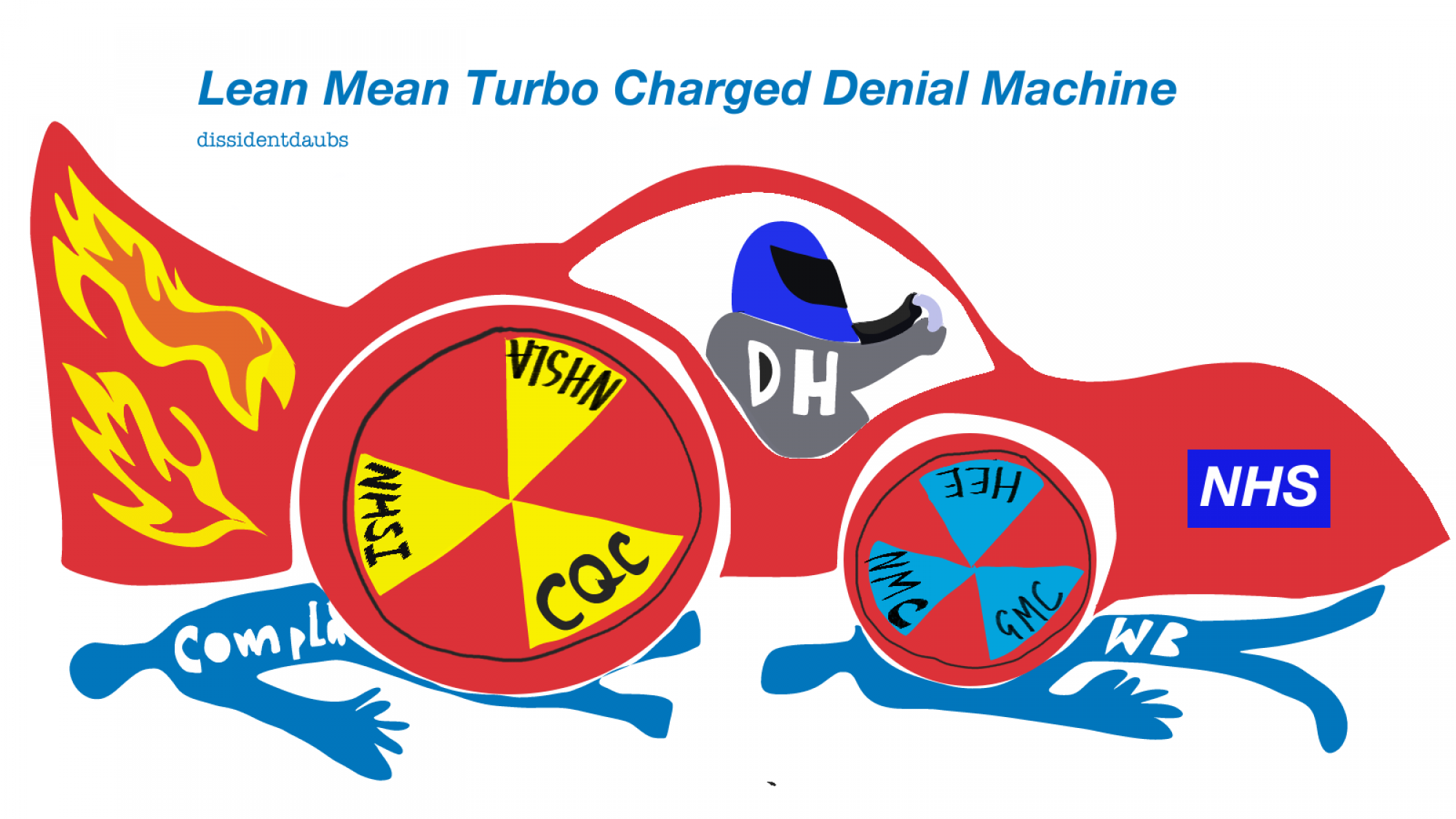
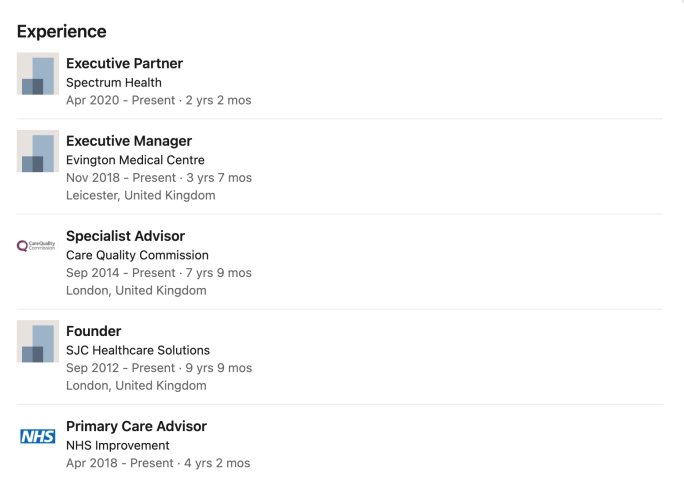
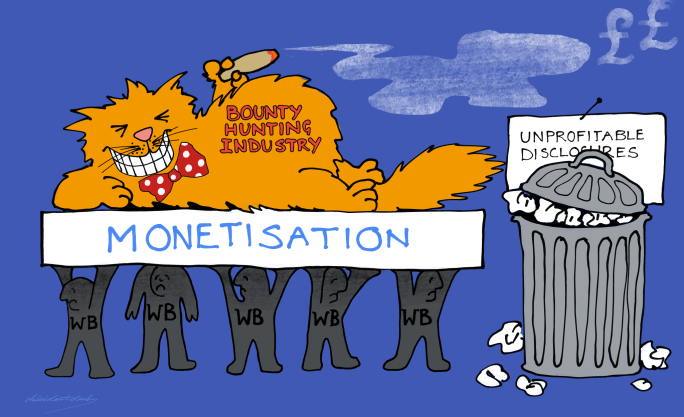
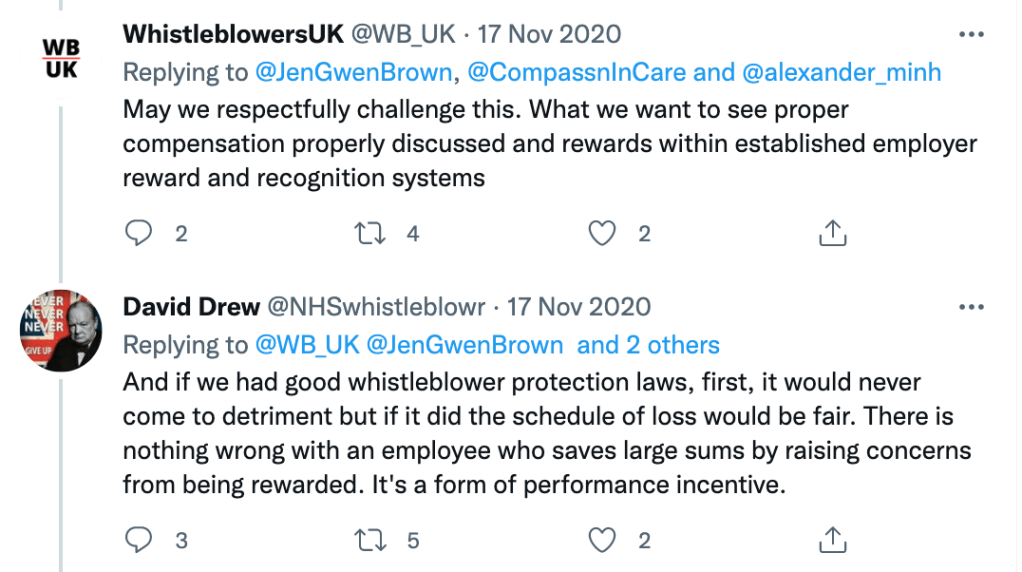
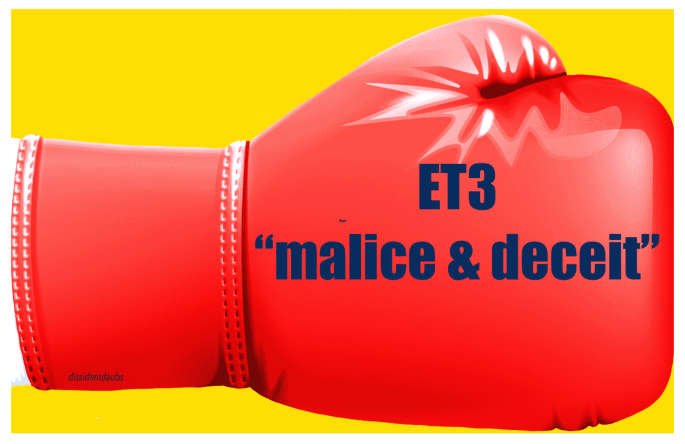
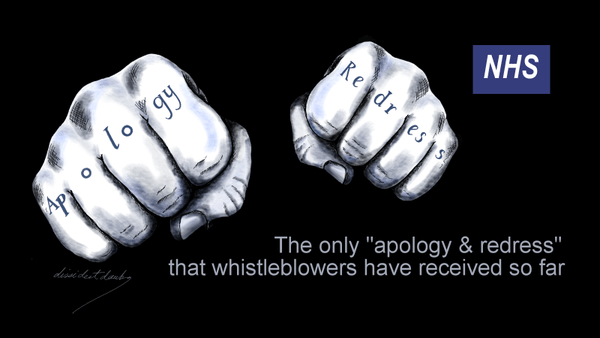
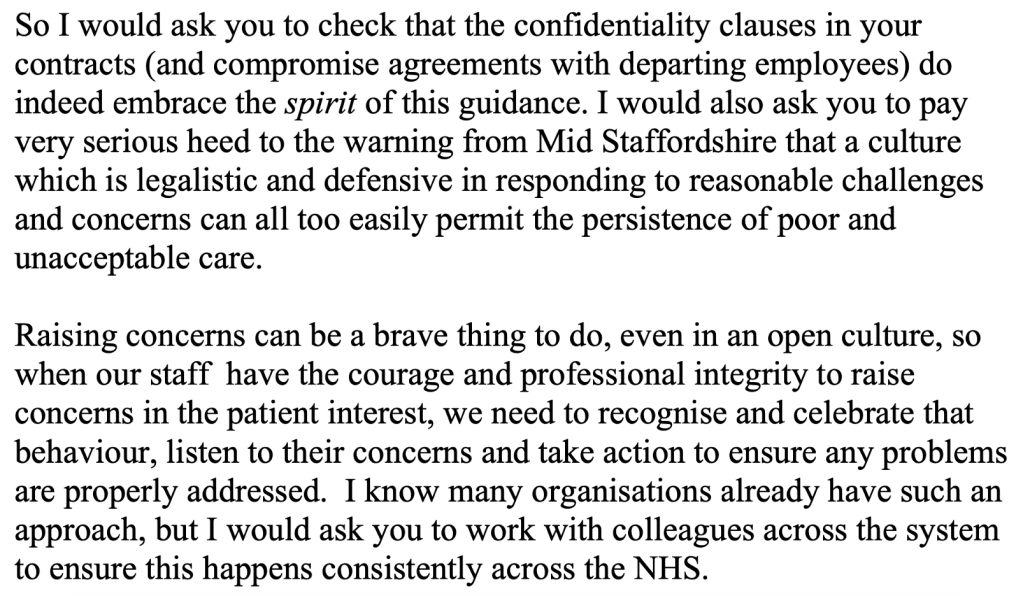
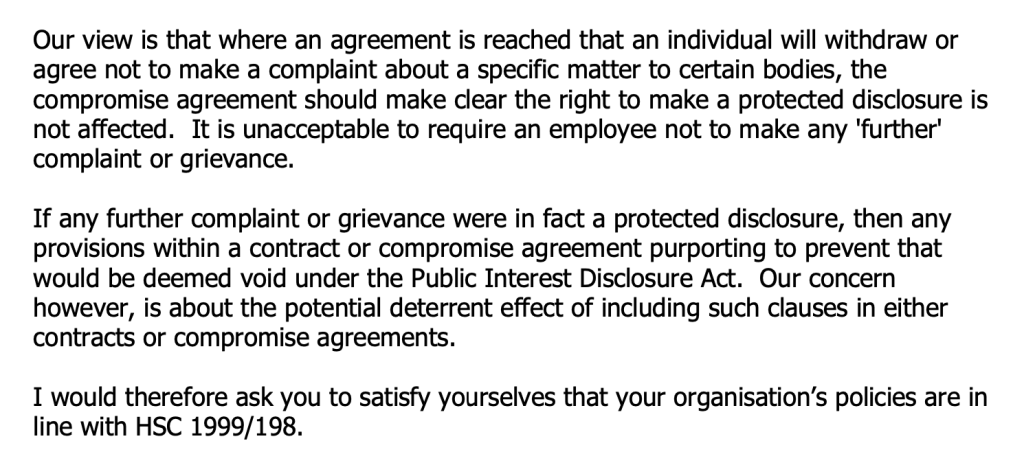
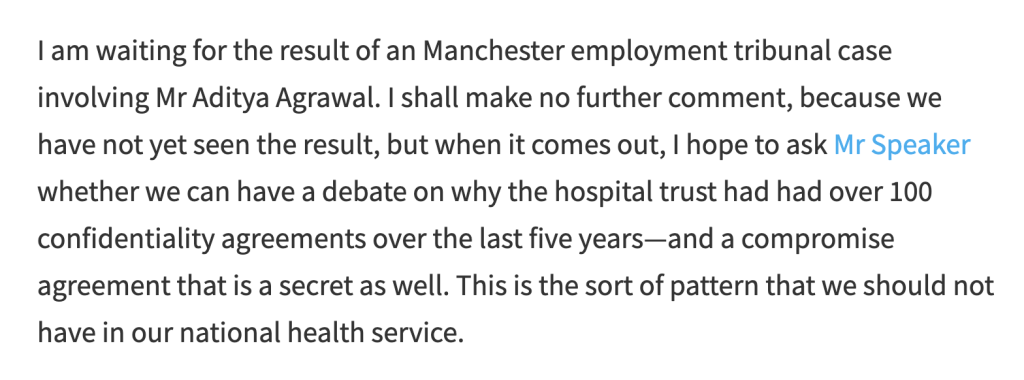
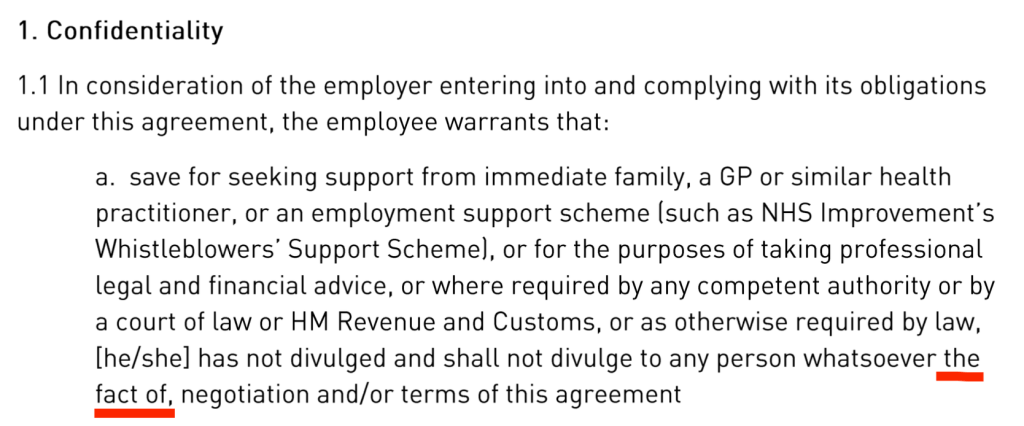
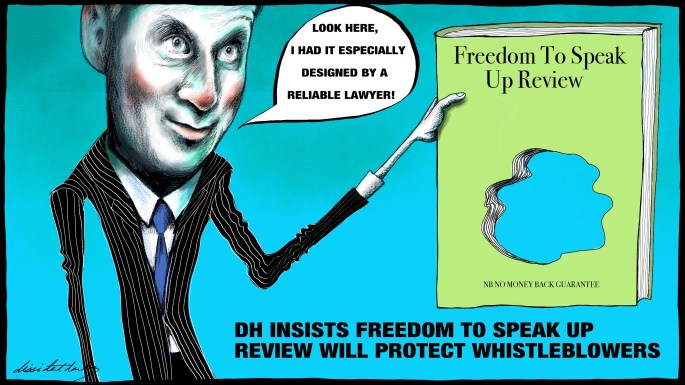

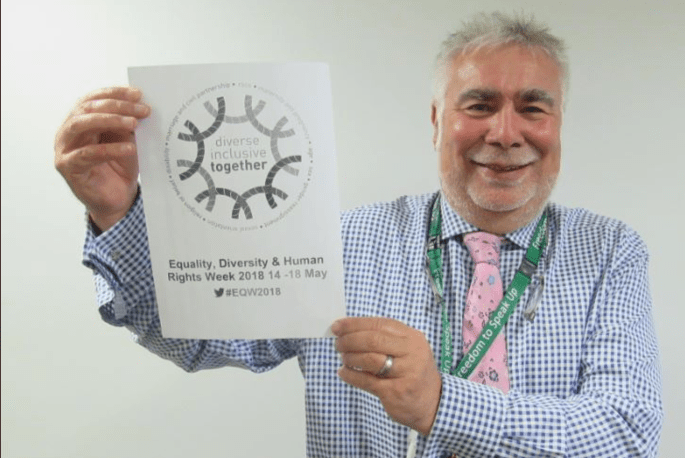
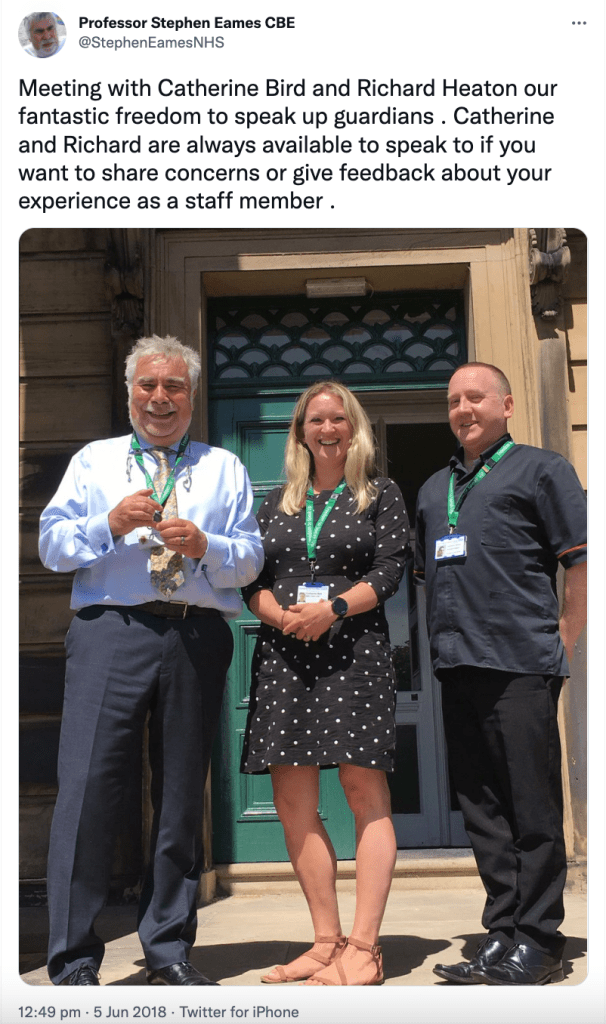
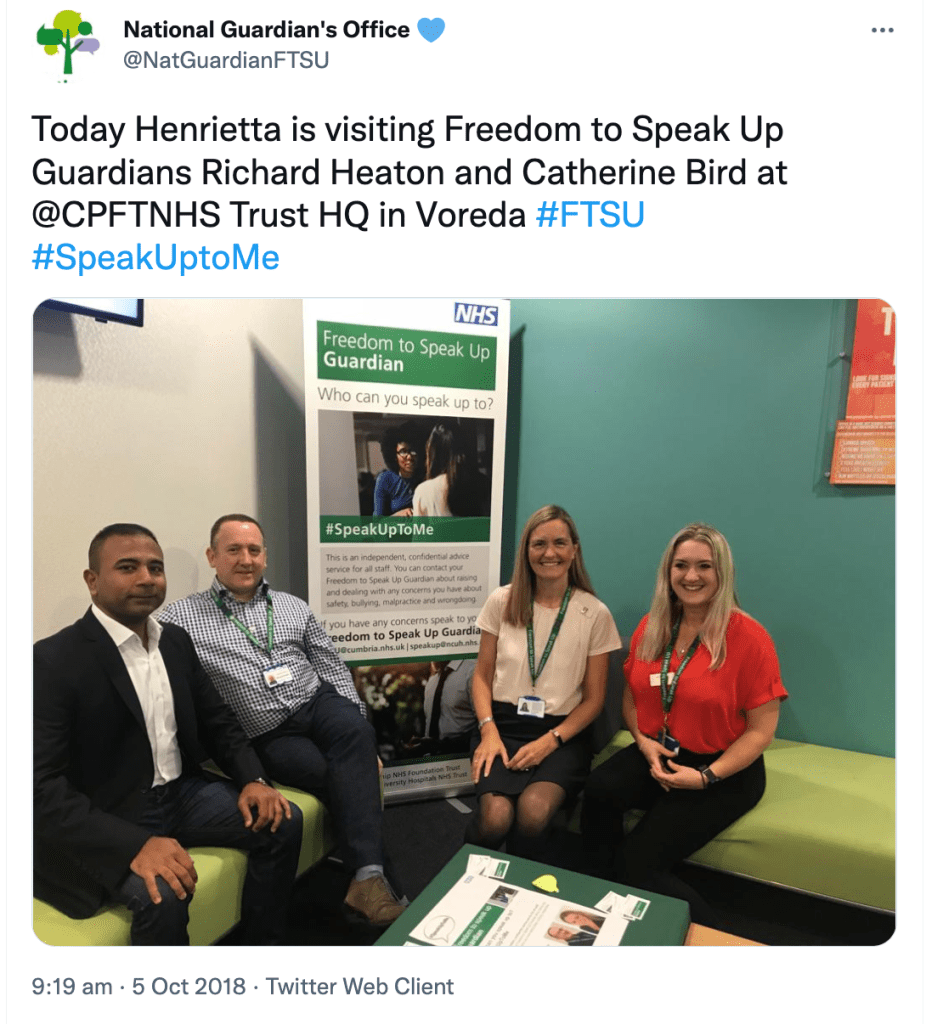
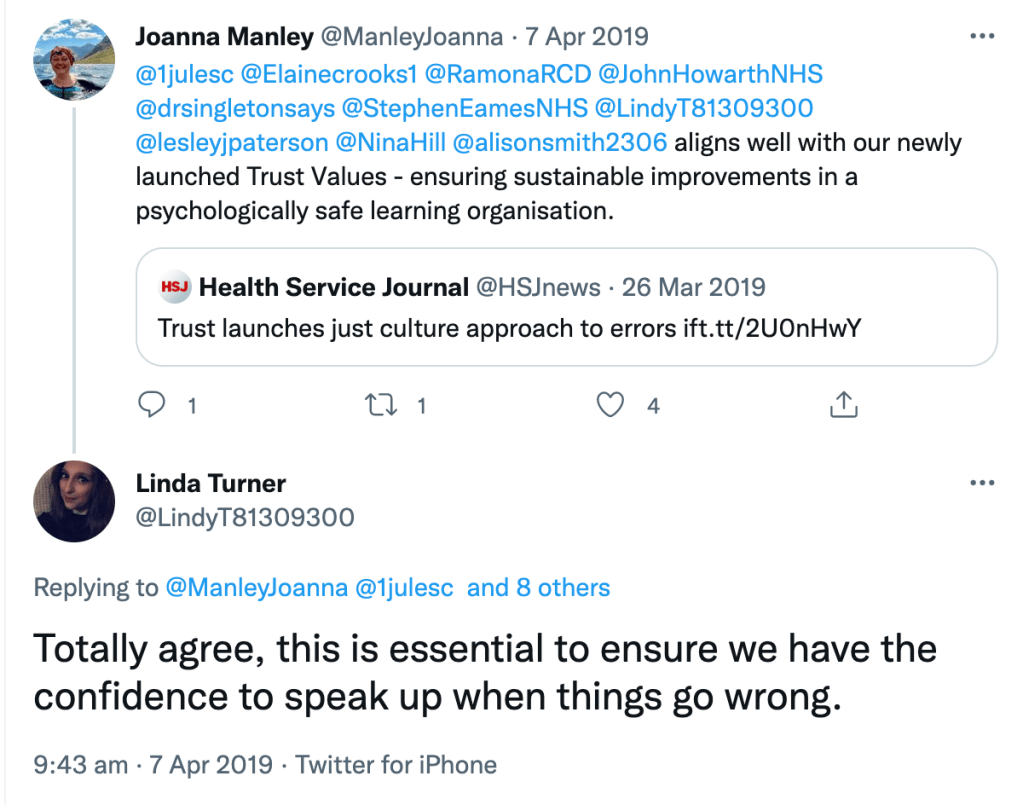
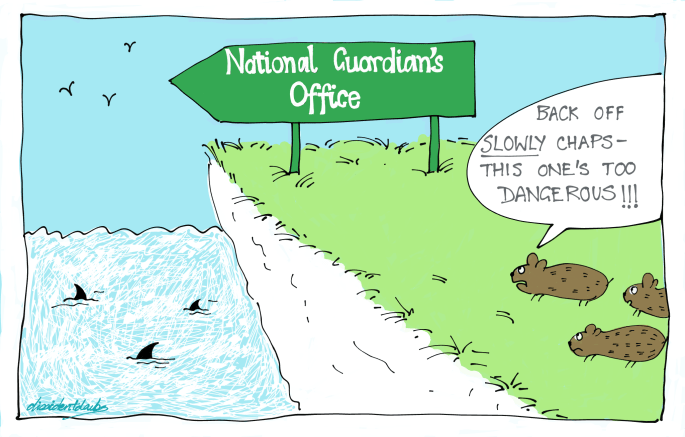
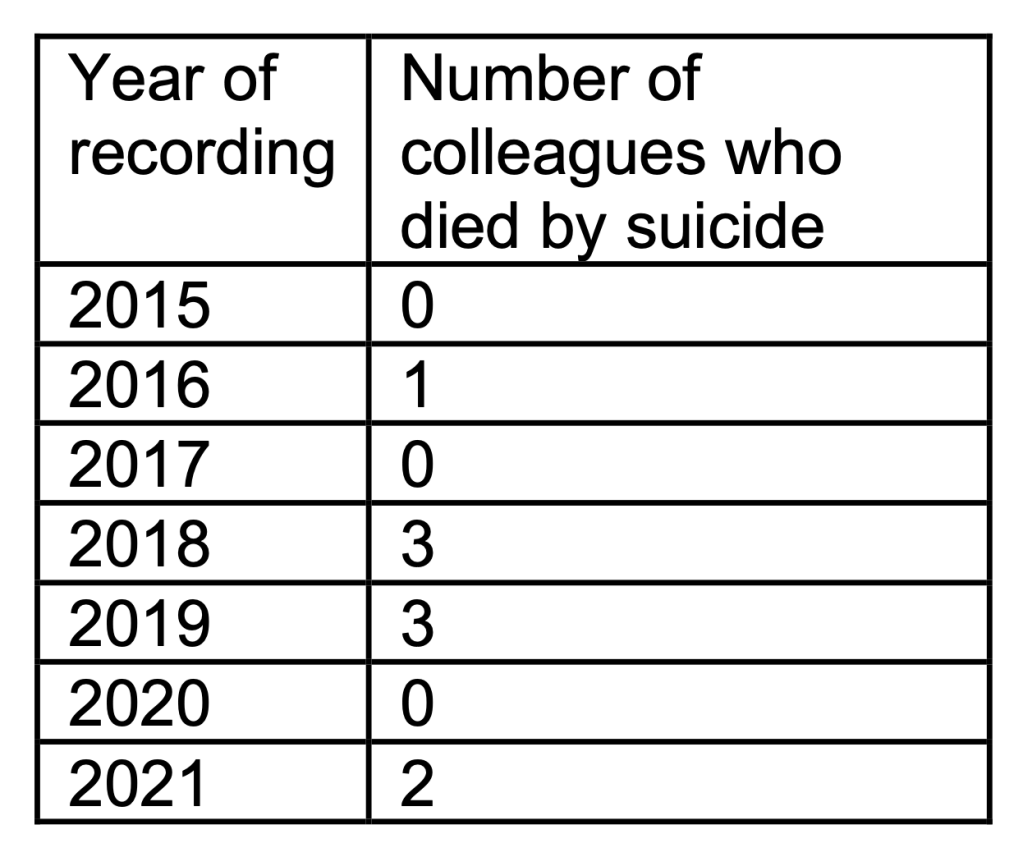



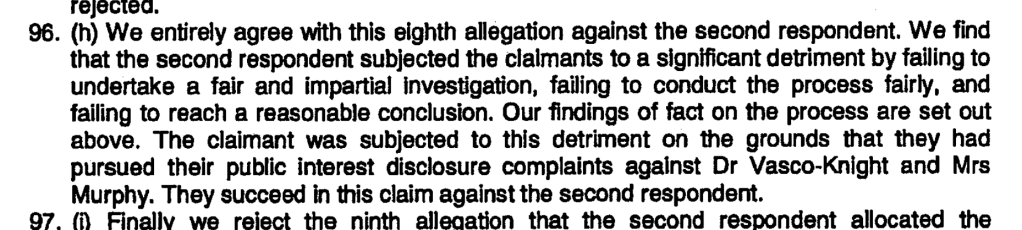
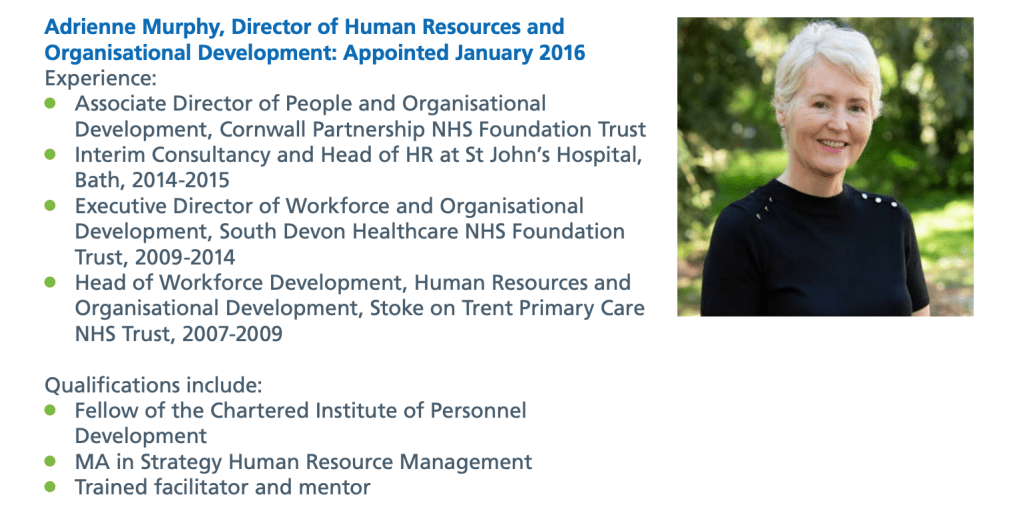
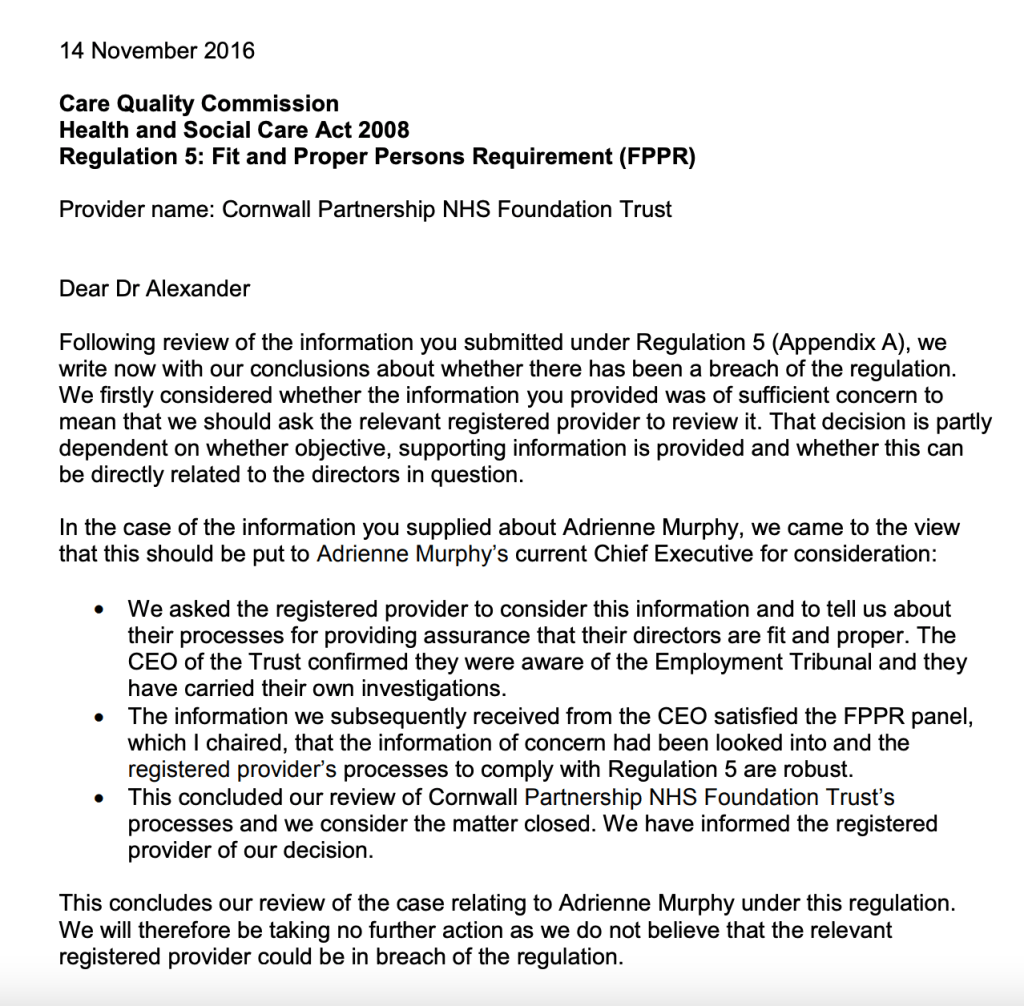

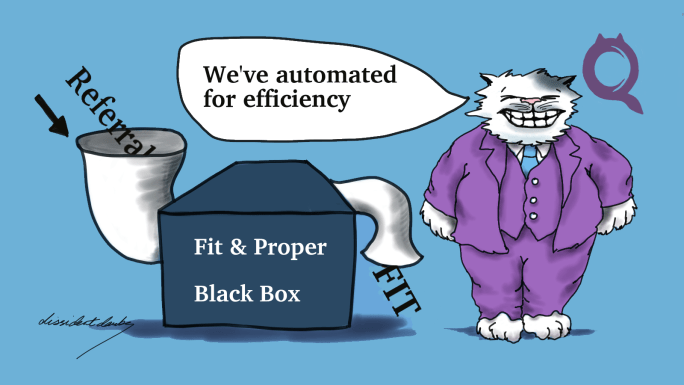

 Alexander's Excavations