By Dr Minh Alexander, retired consultant psychiatrist 21 January 2025
This is a post to share information for any harmed patients and families who may not be aware of a pattern of behaviour by this organisation.
Due to previously mentioned personal circumstances, I cannot be as active as I previously was in responding to general correspondence, but I am more than happy to be contacted by any affected patients and families on this specific matter.
In summary, a member of my family was affected by failure by North West Anglia to act upon a CT scan report which advised that there was a lung nodule which might be cancer. We later discovered through media reportage about a coroner’s hearing, and the coroner’s formal Prevention of Future Deaths warming report (PFD), that at least two other similar incidents had occurred AFTER my relative suffered great distress and potential harm. An FOI request revealed more cases.
With my relative’s permission, I set out in summary the history, including up to date FOI data disclosed by the trust which shows at least 24 similar incidents since 2021.
The member of my family had a CT scan in January 2021 which was seriously mishandled by North West Anglia, and an opportunity to treat the lung cancer was missed for another seven months.
The CT scan was ordered by a consultant urologist in the context of blood results and clinical symptoms that raised the possibility of an intra-abdominal cancer. This was set upon a past history of aggressive kidney cancer (treated effectively with surgery).
The consultant radiologist who reported on the January 2021 CT scan wrote at the start of his report that there was a suspicious new lung nodule which could be cancer that had spread from somewhere else.
“There is a new large mixed density lung nodule seen within the posterior segment of the right upper pulmonary lobe measuring 2.1cm which could represent a new metastatic lung lesion.”
The radiologist also noted a mass in the bile duct.
The lung nodule later proved to be cancerous, and was in fact thought to be a primary lung cancer. The bile duct mass was not cancer.
Two surgical teams, hepato-biliary and urology, thereafter mishandled this case. Inexplicably, both failed to act upon the reported suspicious lung nodule and they focussed only on the mass in the bile duct.
The surgeons did not inform my relative of the lung nodule.
The existence of the lung nodule was only communicated by his GP, about two months after the scan.
We asked the hepato-biliary consultant surgeon about the lung nodule and asked him to follow it up. He agreed to do so. He later denied recall of this conversation. The trust claimed there were no records of the contact.
We again reminded the hepato-biliary surgeon about the suspicious lung nodule and it was only at this point that he acted by referring my relative to the lung team.
The lung team advised that the lung nodule was most likely to be cancer which had spread from the kidney, and they recommended a PET scan to measure the metabolic activity in the nodule. This was not initially communicated to my relative.
Instead of ordering a PET scan (which required the involvement of another NHS trust), the relevant surgeons offered another CT scan, without explaining why a CT scan was being arranged or what the lung team had advised. My relative did not even know which doctor had ordered the CT scan. Only persistent enquiries revealed the sequence of events.
When we asked for details of the findings and advice from the lung team, we were met with resistance and obfuscation.
The trust’s then clinical lead for surgery refused to provide my relative with a copy of the advisory letter from the lung team to the surgeons. He advised that the only access to this document was by making a formal Subject Access Request under the relevant legislation.
This is despite an established practice in this NHS trust of copying outpatient correspondence to patients.
When we later received the lung team’s letter under Subject Access Request, we noted that it placed on the record the delay in acting upon the January 2021 CT scan.
My relative’s subsequent experience of the trust was of more chaos, inconsistencies and obfuscation. My relative’s care was eventually transferred to another trust as all confidence had been lost. This all added to the clinical delay.
My relative had little confidence in the trust’s internal processes for handling this incident, and did not believe that there was any genuine learning.
We were very disturbed but not surprised to note local media reports of the death in January 2023 of another patient, Mr Richard Roe. This occurred after failure by North West Anglia to view or act upon findings of cancer on a CT scan. Mr Roe had also reportedly been under the care of the trust’s hepato-biliary surgeons. These were the local news reports:
“A subsequent CT scan on 11.10.21 identified a lesion in excess of 3cm in the tail of the pancreas. The reporting radiologist recommended the scan be reviewed by the Hepato-Biliary MDT but the scan was neither actioned nor viewed. Had it been viewed the scan would have shown the presence of pancreatic cancer.”
The coroner noted another case from May 2021, which postdated my relative’s case:
“The evidence revealed that there is currently no method for ensuring that routine CT scan reports are reviewed by clinicians. This is despite a similar occurrence in May 2021.
The coroner, Mr Simon Milburn, issued a Prevention of Future Deaths (PFD) warning arising from Mr Roe’s case because of concern about the risk of similar future deaths. PFD warnings are only issued exceptionally for serious risks.
This is an uploaded copy of the coroner’s PFD report on Mr Roe’s death:
Based on our experience of the trust’s unreliable disclosure of information on repeated occasions, I submitted a Freedom of Information request about the instances of trust failures to review and act upon CT scans and CT scan reports.
The trust so far admits that since 1 January 2021, that there were 24 instances of failure to review CT scans/ CT scan reports, five of which in the trust’s view caused harm, and three of which were reported to the health regulator, the Care Quality Commission.
Despite the long running nature of these issues, the trust has not disclosed any remedial actions taken thus far.
A number of planned remedial actions are listed.
I will be asking some supplementary FOI questions and will post any follow up FOI results here.
I will also inform the coroner of the FOI data and also of my relative’s case, which based on the PFD report appears not to have been disclosed to the coroner by the trust.
We had already raised concerns with the General Medical Council but felt that the regulator downgraded what seemed to us to be serious failures.
Related items
Nationally, these issues have been a long recognised problem.
The Royal College of Radiologists (RCR) issues core standards to ensure that imaging results are produced in a timely way and acted upon by the clinicians who request the imaging.
Importantly, it emphasises the over-arching responsibility of organisations to ensure that there are failsafes and that systems are regularly audited.
A PHSO report of 2021 based on 25 complaints, noted that problems persist nationally, with failures to meet the Royal College’s standards:
“We found that some NHS trusts do not have clear and effective policies, processes or systems to ensure that imaging results are reported and acted upon.”
“Half of the cases show that Royal College of Radiologists’ guidelines on reporting clinically significant unexpected findings were not followed.”
This is an uploaded copy of the PHSO report for anyone who may find it useful:
By Dr Minh Alexander retired consultant psychiatrist
Summary
This post reports on inconsistent information disclosed by CQC on whether or not it has taken regulatory action under CQC Regulation 5 Fit and Proper Persons (FPPR). It also summarises FOI data from the CQC which shows that CQC apparently lacks grip on even the number of NHS FPPR investigations that have taken place. From the data available, only a small proportion of FPPR referrals result in investigations. CQC stated it has accepted all FPPR investigations that it has received, even those which made dubious or frankly perverse findings. The investigations have mostly been conducted by a small pool of external contractors, some of whom have done more than one FPPR investigation. Some contractors have also obtained other employment from the NHS trusts concerned, with questions about potential conflict of interest arising. CQC has refused to disclose the identity of three contractors, making it impossible to know if there were conflicts of interest in their appointment. This confirms the impression of secrecy and unaccountability surrounding the performance management of failing NHS senior managers, and it has serious implications for patient safety. The example of CQC’s dire handling of an FPPR referral on Paula Vennells controversial former Post Office chief executive, who became the Chair of Imperial Healthcare NHS Trust is summarised. The regulator failed to act in a timely manner and then simply shut the referral down after Vennells left the NHS. It failed to examine the trust’s wider leadership and FPPR processes. An Imperial NED had in fact written to me in an attempt to deter me from raising further concerns about Vennells’ suitability. The protection and recycling of wrongdoers continues.
Introduction
My apologies for this late post due to personal circumstances. The post is a summation of the latest information on the Care Quality Commission’s handling of the Fit and Proper Person test in the NHS.
The CQC has a poor reputation, arising in part from lack of distance between the regulator and regulated, and a revolving door between these organisations. This poor reputation includes repeated failures to enforce the 2014 CQC Regulation 5, Fit and Proper Persons which applies to NHS trust directors. It appears that almost no amount of senior management misfeasance results in overt CQC action under the regulation. I say “overt” as there has reportedly been regulatory action which CQC seems to have kept hidden from the public.
CQC’s tortuous acrobatics to avoid holding NHS trust boards to account include the regulator’s claims that it only regulates organisations’ FPPR process and not the fitness of individual directors. When the opposite suits, CQC has claimed that because some trust directors have moved on, there are no grounds to apply FPPR or to examine an organisation’s processes.
In an FOI disclosure of May 2022 CQC admitted that no NHS FPPR processes, since Regulation 5 was introduced in 2014, had led to a finding by CQC’s FPPR panel that any NHS trust was non-compliant with Regulation 5. CQC claimed that this might be due to referred directors leaving or being dismissed.
“…no FPPR referrals relating to NHS trusts have reached an outcome that the provider is noncompliant with the regulation at the conclusion of the panel process…”
The reason for the inconsistent information about regulatory action by CQC is not yet clear.
In a curious situation at University Hospitals Leicester NHS Trust, NHS England referred two former NHS trust directors after a financial scandal, only for these referrals to be rejected by CQC on the grounds that former directors did not fall under Regulation 5. Thus, a veil may be drawn over any system failings, no matter how serious.
Paula Vennells’ FPPR referral
A notable example of CQC’s behaviour is that of Paula Vennells the much-criticised former Chief Executive of the Post Office. Vennells is a key figure in the mass miscarriages of justice against innocent sub postmasters who were unsafely convicted of fraud due to Post Office computer errors, which were in fact known to the Post Office. The unsafe convictions started before Vennells joined the Post Office but continued during her tenure, both as group network director and later as CEO. Vennells left the Post Office during legal action by postmasters which was eventually successful. The Post Office resisted throughout and was excoriated by the judge for its disreputable conduct and the unreliable evidence of the Post Office’s senior managers. The subsequent and ongoing public inquiry into the scandal has yielded a wealth of damning evidence all the way up to ministerial level, of wilful blindness and collusion.
Despite the morass at the Post Office, Vennells had a soft landing after her departure from the Post Office, and took up other senior management posts including the Chair of Imperial Healthcare NHS Trust. Unusually, Dido Harding the Chair of NHS Improvement was involved in the appointment at Imperial,
taking part in the selection process. I subsequently referred Vennells to the CQC under Regulation 5 FPPR in December 2019, after the Post Office trial had ended with severe criticism by the High Court of the Post Office’s actions and omissions. Aside from the Post Office’s dissembling about the Horizon computer fiasco, the Court scrutinised the contractual relationship between the Post Office and post masters, and concluded that the Post Office behaved like a “Victorian factory owner”. This is surely a harmful culture that should not be exported into the NHS.
The CQC dragged its feet and no external FPPR investigation took place, albeit one of Imperial’s directors claimed that one had been planned. Sixteen months after my FPPR referral, CQC wrote to say that it was shutting the case down because of Vennell’s departure from Imperial. That is to say, CQC implied that FPPR revolved around an individual and not an organisation’s processes, despite its many previous claims to the contrary.
There was in fact reason to question Imperial’s FPPR process. Disclosed correspondence showed that Vennells took part in constructing comms material in response to a challenge from the public about her fitness.
An Imperial non executive also wrote to me characterising my opposition to Vennells’ appointment as a “vendetta”, as later reported by the media in January 2024.
The Imperial NED posited that Vennells might be a victim of misinformation and suggested that my opposition might “backfire” on me in some unspecified manner. The NED claimed that Imperial had given Vennells’ fitness much consideration, and he also implied that the CQC had triggered an external FPPR process:
“I can tell you privately that we have looked again and again at this issue and, as you have acknowledged, we have now agreed to bring in an external assessor to assure us, and the public, that we have shown due diligence”.
He also suggested that no action should be taken until the public inquiry had made a definitive finding about Vennells’ culpability in the Post Office affair:
“It may well be that both the new inquiries, like the past one, find no reason to chastise Paula. It might be that Fujitsu lied or withheld evidence such that her conduct was reasonable. It might that she had too much faith in British justice and in the jury system and believed that, if people had been found guilty, they were probably guilty. It might be that she was cloth eared and should have acted sooner on other evidence. It might be that she listened too intently to lawyers including (I have no doubt) those foolishly advising her to say as little as possible. Or it might be that be that she was significantly culpable, reckless, or even cynical in allowing people to lose their jobs and go to prison for the betterment of the Post Office. When we know, it will be time to act.”
It seems disturbing that thousands of patients’ and trust staff’s interests may be given lower priority than the interests of a former chief executive of a clearly failed organisation, with clear findings by the High Court. Potential patient safety risk should surely not be parked for several years whilst the interests of senior executives are protected. Who wants a director with a history of minimising bad news in a safety critical sector?
Indeed, the fact that the CQC had reportedly negotiated for an external FPPR investigation suggests that the regulator had not originally planned to defer the FPPR process until after the Post Office public inquiry, despite the Imperial NED’s assertions that no action should be taken until the public inquiry’s determinations about Vennells had concluded.
The attitude of the Imperial trust board suggests that Trust process and not just Vennell’s personal fitness was relevant to the FPPR, but it was never examined.
CQC FOI disclosures on the conduct of Regulation 5 FPPR
On 11 October 2023 and 29 November 2023 the CQC responded to FOI requests on its handling of Regulation 5 FPPR as follows:
Since 2014 CQC has received “153 referrals from trusts involving 223 directors who may have been referred once or more.”
CQC’s FPPR panel (usually chaired by the Chief Inspector of Hospitals or a deputy) had “ followed up on 96 referrals.”
Astonishingly, CQC said it did not know how many of the referrals had led to an investigation:“We don’t hold this information.”
CQC disclosed that it had received FPPR investigation reports on only a small proportion of the referrals:“We have received 30 investigation reports”
Three of these thirty investigations had been conducted internally:
“We don’t hold information on how many FPPR investigations were conducted internally. We have received 3 reports from internal reviews/investigations.”
Independent investigation reports were received in 27 of the 30 cases:
“We have received 27 reports from external independent investigations.”
When questioned about the low number of external independent investigations and asked how it satisfied itself that Regulation 5 had been met in all cases CQC replied:
“The CQC received information from the trusts that either gives assurance for regulation 5 on each of its directors or confirms what the trust is doing to ensure the regulation is being met. There are referrals recorded where directors have left the NHS during the process which would not have resulted in an investigation or report.”
CQC had not rejected any of the FPPR investigation reports:
“Question
By rejected, I mean “Did CQC find the reports to be unacceptable in nature or quality?”
For example, were any of the reports so unacceptable that CQC therefore asked for further reports or re-investigation and/or revision of some aspect of the reports?”
Answer
CQC has not rejected a report in the manor [sic] which you describe.”
Given some of the outcomes of the FPPR investigations, some sharply contradicting evidenced, legal determinations by Employment Tribunals, this too is astonishing.
These 27 investigation reports had been carried out by a small pool of external investigators:
“The number of external contractors is 17. Some contractors have been used more than once.”
CQC listed the contractors used for these external FPPR investigations thus:
Tamarix People
Fiona Scolding QC
Unique Health Solutions
Law2Business
Serjeants Inn Chambers / Clyde & Co
Mark Sutton QC
Bevan Brittan
Deloitte
Cordis Bright Consulting
YSC – Young Samuel Chambers
Good Governance Institute
Capsticks Solicitors
Ibex Gale
EY
3 Independent Individuals
In an FOI response of 20 November 2023, CQC later disclosed information on how many investigations had been conducted by each of these contractors:
Fiona Scolding KC (2) Unique Health Solutions (2)
Law2Business (1)
Serjeants Inn Chambers / Clyde & Co (1)
Mark Sutton KC (1) Bevan Brittan (1) Deloitte (2) Cordis Bright Consulting (1) YSC – Young Samuel Chambers (1) Good Governance Institute (1) Capsticks Solicitors (3) Ibex Gale (2) EY (1) 3 Independent Individuals (3)
CQC declined to disclose the identity of the three independent individuals. Interestingly, CQC justified this by asserting that barristers might expect their identities to be disclosed but that non barristers might not.
It is therefore not possible to tell if conflicts of interest surround the hiring of the three unnamed, allegedly independent individuals on CQC’s list of external contractors.
CQC refused to disclose to which NHS trusts the 30 investigations related, further obscuring any possible conflicts of interest.
But CQC admitted that the regulator itself had previously purchased services from Deloitte and EY.
There are some interconnections with NHS whistleblower cases.
CQC disclosed that the FPPR investigation on Portsmouth medical director John Knighton was conducted by Mark Sutton KC. I referred John Knighton because of his mistreatment and unfair dismissal of Dr Jasna Macanovic, Portsmouth whistleblower, as determined by an Employment Tribunal. CQC found no breach of FPPR and Knighton remains as medical director.
Of note, Mark Sutton received further employment by Portsmouth and he later represented the trust at Dr Macanovic’s employment tribunal remedy hearing. At the Tribunal hearing, which I observed, the Tribunal criticised the Trust for attempts to shift blame (and by implication, reduce liability).
Mark Sutton also represented Hampshire Hospitals in the Employment Tribunal case of Mr Martyn Pitman, Obstetric whistleblower.
Furthermore, Law2Business is on the list of contractors who have carried out FPPR investigations. This company was owned by a Portsmouth Non Executive Director who conducted a whistleblowing investigation at Hampshire Hospitals into Martyn Pitman’s case. Mr Pitman contended that the investigation was flawed and links between the two trusts were noted. CQC denied that Law2Business had carried out any FPPR investigations at Portsmouth or Hampshire.
Concerning the law firm Bevan Brittan, which appears on CQC’s list, this may relate to the FPPR investigation of David Rosser former medical director and then CEO of University Hospitals Birmingham NHS Foundation Trust. In this matter, the CQC wrongly claimed to me that an independent investigation had taken place, when it was an internally led investigation by a trust employee. The investigation had contributions from Bevan Brittan, which was a firm retained by the trust and had received half a million pounds from the trust in the three years before the FPPR investigation. The finding that there was no breach of Regulation 5 seems astounding given the seriousness of the Employment Tribunal’s criticism of Rosser.
With respect to the contractor Tamarix People, which has according to CQC conducted four NHS FPPR investigations, this one-woman company was previously engaged to investigate conflict between Trust Directors at Wirral.
Regarding the Countess of Chester Hospital NHS Trust, where the Letby killings took place and continued after clinical staff raised concerns, CQC declined to say if there is a current FPPR process:
“CQC cannot currently comment on any FPPR referrals that we may have received subsequent to the criminal conviction of Lucy Letby.
We consider this information – including confirming whether or not CQC has received referrals – to be exempt from disclosure under section 31 of FOIA (law enforcement / prejudice to regulatory functions).
We recognise the public interest in transparency on this matter but consider that there is an overriding public interest in prevention of any prejudice.”
These are the two most recent CQC FOIA disclosures about FPPR:
In short, there is limited transparency on how NHS trusts and the CQC handle Regulation 5 FPPR, even allowing for legitimate considerations of privacy. Indeed, the public interest test under FOIA should be weighted differently for the directors of NHS trusts, who handle budgets of hundreds of millions and who hold the safety of patients in their hands
Only a small proportion of FPPR referrals result in an investigation, and where the investigations are contracted out, they are given to a small pool of investigators, some of whom may provide other services to the relevant NHS trust.
There is a potential for pro-employer bias, in what are matters of huge public interest.
The waste of public money in servicing ineffective, secretive and half-hearted enforcement of Regulation 5 is lamentable.
The greatest cost is to NHS safety culture and patients’ interests.
Many NHS senior managers continue to protect their own positions.
The annual NHS staff survey report was published yesterday, with a low response rate of 47%. It nevertheless shows that roughly a third of NHS staff still do not feel safe to speak up, and about half do not think concerns would be acted on.
Personal update
I have been unwell and also much occupied with family responsibilities. For a period, I will not be able to do as much campaign work as usual. I may not be able to respond to all messages, but I appreciate the support and concern that many have shown. I hope to resume more work at some point.
Dr Minh Alexander retired consultant psychiatrist 11 November 2023
Summary: Hampshire Hospitals NHS Foundation Trust has so far spent nearly £400K on external legal services by Bevan Brittan and three external reviews on Martyn Pitman’s maternity safety whistleblowing case at Hampshire Hospitals. The total payments to date of £310,060K to Bevan Brittan for work on Martyn Pitman’s case comprises over 20% of the total trust spending of £1,497, 697.11 on external legal services since 2019. Mr Pitman was suspended for two years by the trust and became very unwell. Importantly, although the trust claims that it did everything to resolve its conflict with Mr Pitman, it now admits to hiring the law firm Bevan Brittan LLP at least four months before it received an Employment Tribunal claim from Mr Pitman. This suggests that Hampshire Hospitals NHS Foundation Trust had a legal strategy in mind, despite its protestations of focus on non-legal resolutions. The wastefulness of drawn-out conflict and the sacking of NHS whistleblowers when they could be redeployed across the vast NHS (at an early stage if they wish it), is staggeringly wasteful and irresponsible.
A common feature in NHS whistleblowing cases is the abuse of public money to protect senior reputations.
Commensurate with that is the early, secretive involvement of lawyers well before formal legal proceedings. The advice purchased is usually on legal strategy to silence and or manage whistleblowers out of organisations.
A pretext for dismissal may be manufactured, such as stoking conflict and provoking the whistleblower with unfair treatment, in order to construct a claim of breakdown of relationships.
Mr Martyn Pitman consultant obstetrician a whistleblower at Hampshire Hospitals NHS Foundation Trust was dismissed because of purported breakdown of relationships. Disclosed data now reveals that lawyers, Bevan Brittan LLP, were hired months before Mr Pitman lodged a complaint to the Employment Tribunal.
The Tribunal recently heard one of two whistleblowing claims by Mr Martyn Pitman consultant obstetrician against Hampshire Hospitals NHS Foundation Trust, on whistleblower detriment. The other as yet unheard claim is one of unfair dismissal. The Employment Tribunal found in favour of the trust and in effect, no one was held accountable for Mr Pitman’s two year suspension and related serious health problems.
At the hearing, Mr Pitman’s barrister criticised Hampshire Hospitals for hiring Gary Hay a former Capsticks partner and a non executive director at a nearby and closely linked NHS trust, reportedly on the advice of Bevan Brittan LLP. Hay was hired by Hampshire Hospitals NHS Foundation Trust to conduct an “independent” investigation of Mr Pitman’s concerns about the way he had been treated. It later became evident that the trust had hired Bevan Brittan to represent it against Mr Pitman’s Employment Tribunal claim. Mr Pitman’s barrister was interested in when Bevan Brittan was first hired to act for the trust in Mr Pitman’s case.
Information was obtained via FOIA information on Hampshire Hospitals NHS Foundation Trust’s legal spending and relationship with Bevan Brittan LLP.
The trust admits to at least £1,497, 697.11 on external legal services since 2019, as follows:
From the above table, the trust claims it has spent £429,697.45 on Bevan Brittan’s services since 2019.
The trust admits so far to spending £310,000K on Bevan Brittan’s services in Mr Pitman’s case. The trust is defensive in tone, and acknowledges that this was a considerable sum:
“6. Please give the total trust spending to date on Bevan Brittan’s services in the case of Mr Martyn Pitman, both on legal and any non-legal services, such as investigations or advisory services on pre litigation strategy.
Since the outset of this matter, Bevan Brittan have submitted invoices to the trust amounting to £310,060 (plus vat) in respect of their fees.
The cost of litigation is significant. The Trust has followed a number of routes to avoid the need for litigation or to reduce its scope. Unfortunately, however the Trust has been unsuccessful in this respect.”
The trust also provided requested data on itemised spending on Bevan Brittan’s services. According to this data, in the period 2019 to the present, the trust first employed Bevan Brittan in March 2021, when it paid the law firm £2,508.49.
The size and date of subsequent payments up to September 2023 are reported by the trust as follows:
Date
Paymentsto Bevan Brittan
29-Sep-23
£12,706.92
31-Aug-23
£8,634.84
31-Aug-23
£27,328.44
21-Aug-23
£1,057.80
31-Jul-23
£1,640.88
31-Jul-23
£14,563.44
30-Jun-23
£1,189.20
30-Jun-23
£18,591.48
31-May-23
£5,977.08
31-May-23
£17,281.68
28-Apr-23
£3,618.36
28-Apr-23
£18,665.28
31-Mar-23
£11,598.12
31-Mar-23
£23,206.80
28-Feb-23
£14,342.99
28-Feb-23
£12,443.48
01-Feb-23
£7,164.00
31-Jan-23
£8,134.37
31-Jan-23
£7,671.56
29-Dec-22
£1,461.26
29-Dec-22
£3,669.66
30-Nov-22
£487.10
30-Nov-22
£1,729.19
31-Oct-22
£1,948.37
31-Oct-22
£10,758.96
30-Sep-22
£8,153.54
26-Sep-22
£12,779.92
31-Aug-22
£3,296.64
31-Aug-22
£8,722.24
29-Jul-22
£5,795.83
11-Jul-22
£26,190.00
01-Jul-22
£4,335.31
31-May-22
£4,680.26
31-May-22
£6,741.79
29-Apr-22
£5,636.16
29-Apr-22
£1,363.82
29-Apr-22
£351.89
05-Apr-22
£9,874.68
31-Mar-22
£4,540.25
31-Mar-22
£3,646.68
28-Feb-22
£9,878.53
28-Feb-22
£1,722.44
28-Jan-22
£7,186.90
20-Dec-21
£2,230.49
02-Dec-21
£9,719.89
30-Nov-21
£20,066.57
25-Nov-21
£900.77
25-Oct-21
£414.05
18-Oct-21
£4,521.43
27-Sep-21
£1,037.64
27-Sep-21
£9,719.89
25-Jul-21
£292.25
27-Apr-21
£1,875.30
25-Mar-21
£2,508.49
Based on these itemised figures, I make the total payment to Bevan Brittan in the period to be £414,054.91, and not £429,697.45, as given by the trust’s summary data on all legal spending. This anomaly and any possible omission of payments, especially before 25 March 2021 will be queried.
Importantly, the trust admits to hiring Bevan Brittan to handle Martyn Pitman’s employment issues in July 2021. If correct, this was four months before Mr Pitman lodged an Employment Tribunal claim against the trust. It raises questions of whether the trust wanted advice on an exit strategy for Mr Pitman:
“4. Please give the date when the trust first engaged Bevan Brittan LLP to advise the trust in the matter of Mr Martyn Pitman’s employment issues at the trust
[Trust answer:] Bevan Brittan were first engaged to provide advice in this matter in July 2021.
“5. Please give the date when the trust engaged Bevan Brittan to represent it in the matter of Mr Martyn Pitman’s Employment Tribunal claim against the trust
[Trust answer] Although the complaint raised by Mr Pitman had been ongoing for some time, the formal notification that Mr Pitman had made an Employment Tribunal claim was received by the Trust in November 2021.”
At the hearing of Mr Pitman’s ET case, 25 September to 9 October 2023, it emerged that Bevan Brittan advised the trust to hire Gary Hay as an independent investigator into Mr Pitman’s concerns about being mistreated. The parties have agreed that the trust Chair made arrangements for this investigation by Gary Hay between mid April and early May 2021. So why does the trust claim that it did not hire Bevan Brittan, to handle Mr Pitman’s case, until July 2021?
The trust will be asked to disclose for what services each of the above, dated payments to Bevan Brittan were made.
The trust has additionally forked out in the region of £65K including VAT on external reviews of Mr Pitman’s case, including the Gary Hay report which cost £8,099.91 including VAT:
“7. Please disclose the cost of each external review commissioned by the trust to date in the case of Mr Martyn Pitman, the dates on which the reviews were commissioned and the parties from whom the reviews were commissioned. Please include the investigation by Gary Hay former Capsticks Partner.
In seeking to reach an early resolution with Mr Pitman the following investigations were conducted:
The investigation conducted by Gary Hay (Law2Business) amounted to £8,099.91 plus VAT. This report was commissioned in June 2021, as a result of concern’s raised by Mr Pitman.
The review conducted by Simon Devonshire KC amounted to £21,825 plus VAT. This investigation was commissioned in June 2022 following a request by Mr Pitman to consider the appropriateness of the Maintaining High Professional Standards investigation conducted by the Trust.
The cost of the investigation and resultant report completed by Ibex Gale has previously been the subject of a Freedom of Information request where the Trust has confirmed the costs to have been between £30,000 and £40,000. The Trust was concerned that the publication of the detailed cost information would be prejudicial to the commercial interests.”
So in total, senior NHS managers at Hampshire have so far spent nearly £400K firing a very expensively trained and developed senior medical specialist, on the grounds of breakdown of relationships. Mr Pitman’s expertise was a resource paid for by the public but it has been thrown away by a small number of senior NHS managers.
Regardless of the merits of the Tribunal judgment which deemed that Mr Pitman had suffered no detriment for whistleblowing, this is a ridiculous waste of very valuable human resource. Even if one were to accept the trust’s claims about irreparable breakdown of relationships, which Mr Pitman’s representatives argued the trust made no meaningful attempt to address, it must surely be wrong and disproportionate to expel this precious expertise when other options are available. For example, redeployment across the wider NHS.
Whistleblowing cases often generate great tension within organisations, because somebody somewhere is being criticised. It simply goes with the territory. A failure by the wider NHS to manage this and to provide safe harbour for NHS whistleblowers in conflict with their employers is wasteful folly.
“13. But the fact that strong feelings were aroused, as they undoubtedly were, only strengthens the connection between the disclosure and the dismissal. People are less likely to be dismissed for pointing out a trifling problem, or when they cause no inconvenience to others.”
14. The main plank of the respondent’s case is that Dr Macanovic was not dismissed for making these disclosures but for the manner in which she did so. But that distinction was not apparent in the dismissal letter, nor to any great extent during the disciplinary proceedings, and does not seem to us to be justified in hindsight. The plain fact is that after over twenty years of excellent service in the NHS, Dr Macanovic was dismissed from her post shortly after raising a series of protected disclosures about this one issue. It is no answer to a claim of whistleblowing to say that feelings ran so high that working relationships broke down completely, and so the whistleblower had to be dismissed. The position is sufficient clear that we thought it best, unusually, to set out these views in summary form at the outset. Our detailed findings of fact and conclusions are set out below. As ever, not all points raised in evidence are dealt with, only those necessary for our conclusions.”
RELATED ITEMS
Mishandling of NHS whistleblowing cases and misuse of public resources against whistleblowers have prompted regular outcry about the fitness of some senior NHS managers.
A BBC Newsnight broadcast of 8 November 2023 on related matters at University Hospitals Birmingham NHS Foundation trust re-visited the handling of former CEO David Rosser’s referral to the CQC under CQC Regulation 5 Fit and Proper Persons (FPPR).
The BBC Newsnight broadcast can be found here, commencing at about 44.05.
Rosser and former trust chair Jacqui Smith were dismissive of concerns. Smith has posted a response to the Newsnight broadcast on social media, which criticises UHB whistleblower Tristan Reuser. She maintained the trust’s line that David Rosser made only an “inadvertent mistake” in handling Mr Reuser’s case. Smith defends her decision not to sack Rosser on that basis, but her response does not address the very serious criticisms of Rosser and of trust governance, by the Employment Tribunal in particular.
Smith emphasises that Bewick’s review concluded that care at UHB is “safe” – disputed by others. However, Smith does not address the reports of bullying and cronyism in the trust’s medical management structure which featured in Bewick’s report.
Smith has referred to the matters as old news and “historical”. Rosser claimed that the concerns about UHB related to a handful of “disgruntled” individuals.
Lastly, Smith cited the Care Quality Commission’s oversight of Rosser’s FPPR process as a mark of good governance. That is the CQC which has never, in effect, found any trust director to be unfit within the meaning of its regulation.
Dr Minh Alexander retired consultant psychiatrist 3 November 2023
There are no credible controls on NHS managers.
Umpteen senior abusers who have harmed whistleblowers have escaped, assisted by very weak systems and collusive regulators.
The government made a token concession after the Lucy Letby murders, by saying that it had changed its mind and would back disbarment of erring NHS managers having previously rejected this.
In reality, a simple disbarring mechanism is very far from full, robust managerial regulation which proactively addresses quality in training and ongoing professional development.
The disbarring mechanism as proposed by the Kark review is purely reactive, and a very high bar of proof is needed for disbarment. Only a few unfit individuals would be removed, if at all. Simple disbarment will not address the whole picture. It will not provide consequences for misconduct short of the threshold for disbarment, whereas full professional regulation would offer a range of sanctions and control mechanisms, such as undertakings and restrictions of practice.
I report below more evidence of dysfunction, seen in the case of NHS whistleblower Dr Jasna Macanovic at Portsmouth Hospitals University NHS Trust.
Theresa Murphy former director of nursing Portsmouth Hospitals University NHS Trust, currently Chief Nurse East and North Hertfordshire NHS Trust
Murphy chaired the retaliatory disciplinary process by Portsmouth against Dr Macanovic (or “counter-offensive” as the Employment Tribunal described it), reporting everything back to Mark Cubbon trust CEO, as noted by the Tribunal:
106. Professor Theresa Murphy was appointed to hold the disciplinary hearing. She was the Trust’s Chief Nurse and had recently joined the Trust at the invitation of the Chief Executive, Mr Cubbon. She was also part of the cabinet group who reported to directly to him, as did Dr Knighton and Mr Powell, and like them had offices on the same corridor, attending morning planning meetings together.”
The Tribunal concluded that Murphy, in concert with the medical director John Knighton made a “foregone conclusion” to dismiss Dr Macanovic and that the dismissal was unfair and was explicitly motivated Dr Macanovic’s whistleblowing. It was in other words, whistleblower reprisal.
But Murphy has since been recycled, being appointed as Chief Nurse to East and North Hertfordshire NHS Trust in September 2022. This brings Murphy back into the scope of FPPR and accordingly, I have made an FPPR referral to the Care Quality Commission.
East and North Hertfordshire NHS Trust claimed that Murphy had been appointed after a “robust recruitment process”.
CQC noted “Staff we spoke with told us that there was not a strong enough emphasis on the safety and well-being of staff” but CQC nevertheless claimed that whistleblowing governance at the trust was good.
Based on its meaningless tick box methods, CQC also concluded that East and North Hertfordshire NHS Trust’s Fit and Proper Person (FPPR) processes for trust directors were sound:
“Leaders generally had the skills, knowledge and experience they needed to deliver quality sustainable care. This was confirmed through our interviews with senior leaders and review of documents and personnel files. The trust had a process in place to ensure that senior leaders were appointed in line with Regulation 5 of the Health and Social Care Act 2014 (Fit and Proper Persons required) and that there was on-going review. There was also clear support for leaders to develop through mentorship and access to training.”
So either CQC failed to note Murphy’s history of serious whistleblower reprisal, or CQC was unconcerned by it.
John Knighton medical director Portsmouth Hospitals University NHS Trust
Knighton was centrally involved in Dr Macanovic’s unfair dismissal, which the Employment Tribunal determined was expressly due to her whistleblowing about serious patient safety issues.
The Tribunal concluded that he conferred with Murphy director of nursing in advance of a disciplinary hearing against Dr Macanovic, and that together, the pair came to a “foregone conclusion” that she would be dismissed.
Astonishingly, during the disciplinary hearing both Knighton and Murphy repeatedly offered to allow Dr Macanovic to leave with a “good reference”.
“The questions were led by Dr Knighton, who then summarised things as follows: JK – So in summary I think Dr Lewis has described some of the atmosphere that has been pervasive over the course of the last year. I think that in conjunction with some of the witness statements and testimony investigation does describe a pervading culture of fear and intimidation resulting in a reluctance to speak up and defensive changes in clinical practice resulted from that because people are fearful of the way that practice may be changed, an inability to discuss serious and important clinical as well as non-clinical issues relating to the service and its development. I think sadly there is significant evidence Jasna that you have not worked actively with your colleagues, that you haven’t respected their skills or treated them fairly or with respect and also that you have shown a lack of insight and indeed reflection on how your behaviour may have affected others and the working of the team. Potentially at least given the appearance that you don’t care about those things as well. I think I am afraid therefore that in summary I have to say that I believe your behaviour has caused irreparable damage to the function of the renal service and to the Trust within the consultant body and therefore the management case is that unless you wish to reconsider your position and resign to pursue a career elsewhere the management case would be that the Trust must seek your dismissal, with great regret.]”
“Professor Murphy told us that she knew that this offer would be made by Dr Knighton, so clearly they had discussed things in advance.”
“Having heard this evidence, and towards the end of the hearing, Dr Knighton referred again to his suggestion of resigning with a good reference.”
“The hearing resumed on 5 March 2018 when Professor Murphy gave her decision. At the outset, she also reminded Dr Macanovic that she could instead choose to resign with a good reference.”
Clearly, the trust should not have made this offer of a “good reference” if had a real case against Dr Macanovic. Equally the trust should not have proceeded with its disciplinary process if its disciplinary charges were unfounded.
It was very serious that the two board members with prime responsibility for clinical governance and patient safety behaved in this manner to a trust whistleblower. Especially in the context that Dr Macanovic was a senior experienced, consultant of excellent standing, who did not raise concerns lightly.
I referred John Knighton to the CQC under CQC Regulation 5 Fit and Proper Persons in May 2022.
As usual, the CQC closed it all down, giving minimal justification for its actions.
This was CQC’s FPPR closure letter of 5 October 2022:
“We shared the information that you supplied to CQC with the registered provider. We asked them to consider this information and tell us about their processes for providing assurance that their directors are fit and proper.
The information that we subsequently received from the CEO satisfied CQC that the information of concern has been looked into and that the registered provider has provided evidence in respect of the individual to demonstrate their compliance with Regulation 5.
This concluded our review of Portsmouth Hospitals University NHS Trust processes, which we feel currently meet the standards required under Regulation 5. We have informed the registered provider of this, but also that we reserve the right to review the case if further information is presented to CQC.”
I therefore asked for more information from Portsmouth Hospitals University NHS Trust about its FPPR process.
Over the course of two FOI responses, the trust disclosed the following:
The trust spent £18,000 for an external review by a barrister.
The trust did NOT publish a summary of the FPPR review.
(This is despite such transparency being recommended by NHS Providers, especially in contentious cases or where public interest is heightened by whistleblowing issues).
No remediation was required of Knighton. (The trust’s exact words were “No, remediation was not applicable.”
“The view that remediation was not needed was the trust’s view informed by the findings of the barrister’s report.”
In reponse to my request for the barrister’s terms of reference for the FPPR review, the trust merely replied: “The review was requested in an email and the barrister was briefed verbally during conference with counsel.”
The trust refused to disclose the conclusions and recommendations of the barrister’s review report.
The trust refused to disclose if it had taken any action against Knighton for his actions and omissions in Dr Macanovic’s case.
The trust maintained that the withheld data was all Dr Knighton’s personal data.
The only trust officers who had seen the barrister’s FPPR report were: “The Chief Executive [Penny Emerit], the Chief People Officer [Nicole Cornelius] and relevant managers within the Trust’s HR department.”
These are the relevant FOI responses by the trust:
This last item on restriction of circulation of the barrister report was very serious in terms of trust governance. It showed that the rest of the trust board were in convenient ignorance.
There was no evident genuine, collective board scrutiny of such an important matter.
In particular the Chair was not in a position to take responsibility for the apparent decisions not to take action against Knighton or to even seek any form of remediation after gross whistleblower reprisal.
Once more, the cabal of senior NHS managers laughs at patients, staff and the general public.
The message is arguably one of impunity, arguably assisted by the regulator.
It would appear that CQC either failed to examine the trust’s FPPR governance properly, possibly deliberately, or closed the FPPR referral down knowing that the trust’s governance was poor.
I have written to the trust chair Melloney Poole to protest at the poor FPPR governance, copied to the Secretary of State, Health Committee and the CQC Chair and CEO.
Very serious harm was inflicted by the trust on a blameless whistleblower to whom Poole owed a duty of care, and there was a failure to ensure a fair MHPS process.
I have suggested that if Poole feels compromised by this, she should pass the matter to another.
I have also asked CQC to review its closure of the FPPR on Knighton in view of the trust’s admissions of poor governance and failure of oversight by the wider trust board.
I have pointed out to CQC the many concerns about the links between Portsmouth and Hampshire Hospitals NHS Foundation Trust (see related posts below), recycling of directors and the poor handling of Mr Martyn Pitman’s whistleblowing case at Hampshire. Mr Pitman was suspended for two years and became very unwell. No one has yet been held accountable for this poor HR practice. Neither organisation has impressed with its governance.
Dr Macanovic was made very unwell by her ordeal, had to spend a fortune defending herself legally, was forced to relocate and uproot her family and still did not break even financially despite proving unfair dismissal for whistleblowing and receiving compensation.
Melloney Poole was promoted to Portsmouth Hospitals University NHS Trust chair in October 2017.
NHS disciplinary processes are often unfair and arbitrary, with employers holding all the power. Procedural safeguards for staff are weak. There is often harsh and disproportionate discipline, with suspension applied too frequently when it is extremely harmful to health and should be used only as the last resort, for the shortest time. Reforms were advised by the National Audit Office twenty years ago, but were predictably ignored.
The procedure covers misconduct and incapability, whether due to competence or ill health.
In the process, the employer is investigator, judge, jury and executioner. There is no external scrutiny.
Even where disciplinary action is appropriate, MHPS procedure is often applied excessively harshly.
MHPS is also sometimes applied vexatiously, to unwanted doctors such as whistleblowers.
Application of MHPS in the cases of Dr Jasna Macanovic and Mr Martyn Pitman
Dr Macanovic’s whistleblowing case against Portsmouth Hospitals concluded in January 2023. She “won” comprehensively at all stages. The Employment Tribunal determined that Dr Macanovic was unfairly dismissed, expressly for whistleblowing to the General Medical Council.
The Tribunal rejected this and determined that Dr Macanovic did not in any way contribute to her own dismissal.
The Tribunal was refreshingly robust in pushing back against the trust’s claims that relationships had broken down irreparably as a result of Dr Macanovic’s whistleblowing.
Reassuringly, the Tribunal gave serious weight to the patient safety issues raised by Dr Macanovic, and did not lose sight of them, keeping them central to its deliberations.
In the maternity safety whistleblowing case of Mr Martyn Pitman at Hampshire Hospitals NHS Foundation Trust, the trust’s purported grounds for dismissal was breakdown of relationships, with the technical route of “Some Other Substantial Reason” invoked.
SOSR is a classic method of dismissing whistleblowers where organisations are unable to make a case of misconduct or incapability.
Mr Pitman clearly made public interest disclosures, which the Employment Tribunal has recognised.
He suffered greatly and became very ill after prolonged suspension under MHPS.
He has two claims in the ET, one for whistleblowing detriment upon which the Tribunal has ruled, and a hearing scheduled for a claim of unfair dismissal.
It is relevant to note that regardless of the disputed issue about whistleblowing detriment, there was an NHS human resources “never event” in Mr Pitman’s case, as defined by NHS England guidance of May 2019:
“Where a person who is the subject of an investigation or disciplinary procedure suffers any form of serious harm, whether physical or mental, this should be treated as a ‘never event’ which therefore is the subject of an immediate independent investigation commissioned and received by the board. Further, prompt action should be taken in response to the identified harm and its causes.”
In contrast with the Tribunal in Dr Macanovic’s case, the Tribunal in Mr Pitman’s case gave more weight to his employer’s claims about his communication style than his patient safety concerns. It has reportedly accepted that his alleged communication style was the reason for the trust’s action against him, not his whistleblowing.
This is despite the trust’s failure to fully address Mr Pitman’s patient safety concerns and his concerns about reprisal for whistleblowing. Usually, Tribunals will take such failures into account, against employers, when ruling on whistleblowing cases.
The judgment is not yet published, and Mr Pitman and his advisors have yet to decide on next steps.
MHPS governance at Hampshire Hospitals NHS Foundation Trust
In the context of claims and counter claims about Mr Pitman’s case, I asked Hampshire about its governance of MHPS process.
I was especially concerned by the very long period for which Mr Pitman was excluded, two years.
In my view, this is was very bad practice. Suspension is an extremely harmful event, with serious risk to employees’ physical and mental health. It should be considered and managed as a human resources emergency, applied sparingly and for the shortest period possible. Long periods of suspension raise questions of punitive motives by employers. They are also very wasteful.
Hampshire Hospitals NHS Foundation Trust has responded evasively to my FOI request. This is the trust’s response:
The trust admits to fewer than five instances of MHPS being applied in the last five years. According to the trust, all MHPS cases in this period were upheld. The trust refused to give the range in the length of suspensions, claiming that this was due to small numbers. This raises questions about whether other doctors besides Mr Pitman may have suffered prolonged suspensions.
In the last five years, three Hampshire Hospitals NHS Foundation Trust board members have assumed the critical role of “MHPS designated board member”:
Clancy Murphy – Non-Executive Director
Jane Tabor – Non-Executive Director
Dr Simon Holmes Non-Executive Director
MHPS designated board members have responsibility for overseeing the MHPS process, to broadly ensure fair play, to be a point of contact to whom suspended doctors can bring issues and in particular to ensure that MHPS process is timely and in accord with Article 6, the right to a fair trial.
Designated board members should not – in theory – allow organisations to punish doctors by keeping them in “MHPS jail” longer than is necessary.
At Hampshire, Jane Tabor trust NED was involved in Martyn Pitman’s case. A preliminary judgment notes that Mr Pitman raised concerns with her and with the trust Chair about his treatment, in an email of 26 February 2021:
“I would welcome the opportunity to meet with you virtually to feedback my experiences and reflections over the last 2 years, having been subjected to a Trust Disciplinary Investigation throughout this protracted time period. I also have recommendations that I wish to make that are relevant both to the Trust’s handling of my but also I believe, are potentially critical for the future health and wellbeing of every member of the HHFT workforce.”
The trust denied that this expression of concern was whistleblowing, and asked for this part of Mr Pitman’s claim to be struck out, but the judge wished to hear more detailed argument on the issue.
Regardless of the technicalities over the narrow legal definition of whistleblowing, it is disappointing that the trust minimised the concern raised by Mr Pitman, as it certainly falls within the NHS national whistleblowing (Freedom to Speak Up) policy.
As regards Simon Holmes acting as an MHPS designated board member, this is of concern in view of his past actions towards whistleblower Dr Jasna Macanovic. Holmes retired as medical director at Portsmouth in 2017 and later became at a NED at Hampshire.
The Tribunal judgment in Dr Macanovic’s case shows that Holmes was the medical director who originally launched disciplinary action against Dr Macanovic after she whistleblew to the General Medical Council about unsafe practices by her medical colleagues. This was despite the fact that several other experienced consultants had raised similar concerns. Holmes also failed to share advisory correspondence from NCAS, the body which advises NHS trusts on the proper application of NCAS. NCAS always advises NHS organisations to disclose its correspondence to suspended doctors for fairness and transparency. Unfortunately, NCAS does not check that correspondence is shared.
I asked Hampshire if it had a process for ensuring that MHPS designated board members have no history of whistleblower reprisal, and how the trust assures itself that its MHPS processes are not in fact a form of whistleblower reprisal.
The trust’s responses were weak and evasive.
Where I asked if the trust had triggered MHPS after any doctors had made public interest disclosures, the trust replied off the point. It introduced the phrase “as a result of” and replaced “public interest disclosure” with “protected disclosure” (they are legally distinct).
Question:“Please indicate if any of the MHPS investigations in the last five years have been conducted against any doctors who had made public interest disclosures, and if so, how many?”
Trust answer:“No MHPS investigation has been triggered as a result of a member of staff making a protected disclosure.”
This trust response may hide other cases of MHPS action after whistleblowing by other doctors, besides Mr Pitman.
Hampshire Hospitals NHS Foundation Trust speciously claimed that its whistleblowing and disciplinary processes are “entirely separate”:
Question: “If so, did the trust take any special precautions to satisfy itself that the MHPS investigation(s) did not represent any form of whistle-blower detriment or reprisal?”
Trust answer:“The MHPS process and the whistleblowing/Freedom to speak up process are entirely separate processes. The Trust has never and will never use the MHPS process or any other disciplinary or investigatory process in detriment or reprisal against any member of staff who has raised concerns about the safe working of the hospital.
Hampshire Hospitals NHS Foundation Trust actively encourages its staff to raise any concerns that they may have and would never take any steps which would jeopardise this.”
It is disingenuous of the trust to claim complete separation between the MHPS process and NHS whistleblowing policy.
“We will not tolerate the harassment or victimisation of anyone raising a concern. Nor will we tolerate any attempt to bully you into not raising any such concern. Any such behaviour is a breach of our values as an organisation and, if upheld following investigation, could result in disciplinary action.”
It follows that NHS trusts should have the means to identify and deter such harassment. This therefore links whistleblowing procedures and disciplinary procedures, which may be used vexatiously.
The trust’s defensive stance in insisting there is total separation between the two processes raises concern about its governance.
The trust also responded evasively to a question which partly related to NED Simon Holmes’ track record against a whistleblower, Dr Macanovic. The trust claimed that its processes addressed whether directors had a history of adverse behaviour towards whistleblowers:
Question: “Does the trust have any system of checks to ensure that any board member whom it appoints to act as an MHPS designated board member has no past history of detrimental behaviour to whistle blowers? If so, please give details.”
Trust answer:“All board members are subject to the Fit and Proper Person Test prior to appointment. The test considers someone’s behaviour in previous posts is to ensure that anybody seeking a board position is an appropriate person to hold the position. This would include whether any person seeking an appointment to the board has been found to have acted detrimentally towards anyone using the freedom to speak up policy.”
Indeed, the trust went on to flatly deny that any designated MHPS board members had harmed whistleblowers, despite the ET’s criticisms of disciplinary action against Dr Macanovic:
Question:“Please disclose if any MHPS designated board members appointed in the last five years have had, to the trust’s knowledge, any prior history of detrimental actions against whistle-blowers.”
Trust answer:“No member of the board has any prior history of acting detrimentally towards whistle-blowers.”
Hampshire also failed to account for whether it had evaluated the experience of trust doctors subjected to MHPS. It replied regarding only one case – likely to be Mr Pitman’s case – and it gave no evidence of wider evaluation. This is presumably because no general evaluation was done and because the trust does not concern itself with collecting data on doctors’ experience of its process.
Question: “In the last five years, has the trust undertaken any evaluation of the experience of trust doctors who have been subject to MHPS investigations? If so, please give details of how any evaluation has been conducted, and the broad outcome.”
Trust answer:“The Trust has reviewed the effectiveness of this process and its impact on an individual undergoing an investigation. We are assured that the process is robust and in compliance with all guidance in relation to safeguarding the wellbeing of individuals under investigation.”
Lastly, the trust flatly denied a concern by both Mr Pitman and the BMA which has supported him, that the trust was so opaque that an FOI request and a request for personal data had to be made in order for Mr Pitman to learn what was alleged against him.
“It has not been necessary for any member of staff to use the Freedom of Information Act to discover the nature of allegations made against them.”
Although the trust has for the meantime dodged a bullet and been given the benefit of the doubt by the Employment Tribunal, it hardly impresses on accountability and transparency. It is difficult to feel reassured that future whistleblowers will be treated fairly by Hampshire Hospitals NHS Foundation Trust.
Last month there was a highly significant press report on the fact that UHMBT has allegedly failed to refer serious maternity cases to the coroner.
Disgracefully a bereaved couple, Sarah Robinson and Ryan Lock, were forced to refer the death of their baby Ida at UHMBT to the coroner, because the trust had failed to do so.
This was despite the fact that expert reports had identified “a catalogue of concerns” in Ida’s care.
The couple reportedly endured a “four year fight”:
The Senior Coroner for the area James Adeley expressed concern that Ida’s parents were forced to report matters to the coroner because the trust had failed to do so:
“Coroner Dr James Adeley told a pre-inquest hearing in Preston this week he was concerned it had been left to Ida’s parents to report her death to his office after hospital managers failed to do so.”
Importantly Dr Adeley observed that, to his recollection, UHMBT had failed to refer any baby deaths since the Kirkup report on maternity failures was published in March 2015.
“He said he was worried ‘systemic’ problems in maternity care identified by Dr Bill Kirkup in March 2015 had not been addressed. He said he could ‘not recall’ a single baby death being reported to him since.
Dr Adeley said. ‘There’s no indication that matters identified in the Kirkup Report have been addressed before this case. That suggests a lack of learning from the report continues to exist, and continues to place lives at risk.’
UHMBT was previously criticised for collusive staff responses to coroners’ inquests, as noted in Kirkup’s report:
“1.93 The coroner made strong criticisms of both the clinical practice and conduct of Trust staff, including collusion in preparation for the inquest and possible destruction of evidence already discussed. Following a Rule 43 letter from the coroner expressing these concerns…”
The trust delayed the FOI process by twice asking about definitions of the serious incidents, when these definitions are standard and the basis of routine data submissions to the centre.
The trust has now responded with an obfuscatory reply.
This is the trust’s FOI response of 26 October 2023:
In brief, instead of giving total numbers of serious maternity incidents and total numbers of referrals to HSIB, the trust has avoided this by giving yearly totals and claiming that numbers in some years were too small to reveal.
Crucially, the trust has refused to disclose at all:
How many investigations of baby deaths have been shared with bereaved families
How many baby deaths have been referred to the coroner
The trust’s data indicates there have been at least 23 baby deaths at UHMBT since 2015, although the precise figure is not yet disclosed.
There seem to have been more baby deaths since 2018:
UHMBT claims that it would take too much time to retrieve the data on the number of baby deaths referred to the coroner and doing so would breach FOI limits:
“5. How many of these neonatal deaths have the trust referred to the coroner?
Due to the amount of time to answer Question 3 would be >10hours. To answer Question 5 would be an additional >10 hours. Therefore we estimate in excess of 20 hours to answer these two questions. This does not include the time it has taken to respond to the questions we have provided the information for. The Trust has used multiple systems since 2015 and a review of each care record would need to take place. This information is not held centrally and would require a review of every healthcare record.”
So extraordinarily, the trust asks us to believe that it does not track and cannot tell how many baby death it has referred to the coroner. This could imply appalling governance and failure to learn after an inquiry which slammed its maternity practices, including honesty in interactions with the coroner.
The alternative conclusion being that the trust is not being truthful in claiming that Section 12 FOIA cost exemption applies.
Although the trust claims it is unable to say how many baby deaths were referred to the coroner, it can say that maternal deaths were referred to the coroner in 2015, 2020 and 2021 (albeit without disclosing the actual numbers).
Because of UHMBT’s incomplete disclosure, it is also not clear how many of the trust’s baby deaths were referred to HSIB. At the very least, four referrals were made out of at least twenty baby deaths from 2018 onwards (when the HSIB maternity investigation programme was launched).
Also, the trust failed to disclose requested copies of its submissions to NHS Resolution’s Maternity Incentive Scheme, and instead gave very crude summary data that appears to be raw scores of compliance. Thus, it avoided revealing meaningful detail.
I have written to Aaron Cummins UHMBT CEO, 2012 to present, to ask for a valid response to my FOI request. I copied this to the Senior Coroner.
I received a response from Cummins nine minutes after sending my letter, advising me that a response would be provided “as soon as possible”.
Any further data received from UHMBT will be posted here.
In the meantime, this is a disclosed copy of the UHMBT policy governing the trust’s interactions with the coroner’s office:
4.1.3.39 Ministry of Justice Guidance Guidance for registered medical practitioners on the Notification of Deaths Regulations (publishing.service.gov.uk)
For registered medical practitioners on the Notification of Deaths Regulations March 2022 sets out the circumstances in which a death should be notified to the Coroner. In addition, the Lancashire Senior Coroner and Regional Medical Examiner has issued a Standard Operating Procedure for referrals to Coroner (see section 5 form 4)
4.1.3.40 Cases identified as potentially Coronial by MEO/QAP/ME should be jointly discussed. Taking into account local guidelines (see section 5 form 4) and Ministry of Justice Guidance
4.1.3.41 If there is agreement that it should be referred to Coroner then case should be discussed with Coroner’s Officer highlighting reason for referral and whether a cause of death can be offered in Ulysees B6
4.1.3.42 Where there is still uncertainty whether Coroner referral is appropriate the ME can contact the coroner to discuss case.
4.1.3.43 It is anticipated that usually in practice, it will be the practitioner who is qualified (QAP) to complete the medical certificate cause of death (MCCD) who will be making the notification to the senior coroner.
4.1.3.44 To facilitate referral the ME Service will where necessary complete Deceased Details (icasework.com) and include ME scrutiny and QAP Death Summary
4.1.3.45 Where the death is clearly unnatural it may be more appropriate for a notification to be made to the senior coroner straight away by the Consultant responsible for the patients care.eg where the Police are involved
4.1.3.46. Regulation 4(1) requires the notification to the senior coroner to be made as soon as is reasonably practicable after the medical practitioner has determined that the death should be notified.
4.1.3.47 While the regulations do not prescribe a specific time limit for notifications this notification should be prioritised. If the death arises from an event or occurrence that may be suspicious then the police should be informed immediately.
4.1.3.48 A death may have already been reported to the coroner by a person other than a medical practitioner, such as a friend or family member of the deceased, or the police. Such reports will not usually include the information required at regulation 4(3) and (4), and may not provide the coroner with the full medical picture.
4.1.3.49 Therefore, even if a medical practitioner is aware that someone other than a medical practitioner has reported a death to the coroner, the registered medical practitioner should still make a notification under the Regulations
4.1.3.50 The medical practitioner should usually take reasonable steps to establish the cause of death before notifying the coroner. This may include seeking advice from another medical practitioner, such as a medical examiner or any other responsible consultant.
4.1.3.51 If in opinion of ME case should be referred to Coroner and QAP wants to issue MCCD and does not want to refer to Coroner the QAP should be advised to discuss case with their senior Colleague.
4.1.3.52 If the ME and Consultant responsible for patient care cannot reach agreement and the ME still thinks it is appropriate to refer the case to the Coroner then the ME should discuss the case with another ME or Lead ME, or if necessary, in their absence Regional ME.to agree next steps.
4.1.3.53 A coroner’s investigation may not be necessary in all notifiable cases.
A recent case is that of Mr Shyam Kumar, who was doubly harmed both as a trust and a Care Quality Commission employee, after he whistleblew about the unsafe surgical practice of another trust surgeon and other matters.
But despite the trust’s questionable governance, it loomed large as a key tool in Jeremy Hunt’s campaign to present himself as a patient safety champion.
Hunt’s favourites have prospered, including Jackie Daniel the former UHMBT CEO 2012-2018, who was damed and moved onto a plum job at Newcastle.
“Jackie Daniel received a Damehood for turning around Morecambe Bay Trust, very positive, along with the staff. Would my Rt Hon Friend the Prime Minister, look forward to working with her successor and carry on turning around Morecambe Bay Trust and wish Jackie well.”
In response, Mrs May MP said: “I am happy to join my Hon Friend in paying tribute to the work of the staff at the Morecambe Bay Trust and particularly to wish Dame Jackie well and to recognise and pay tribute to the work she has done turning that trust around.”
UHMBT has made use of Capsticks’ legal services, including representing the trust against whistleblowers and the drafting of settlement agreements with whistleblowers:
In 2012 UHMBT entered into a highly questionable agreement with a midwife who was accused of cover ups, where redundancy with 14 months pay was agreed on the basis that she would not be investigated for maternity care failures:
“Following discussions between the employee and the trust, the employee has opted to take early redundancy and as a result the employer has agreed not to commence an internal investigation into the employee’s performance as maternity risk manager.”
However, in 2018, it was reported by the Nursing and Midwifery Council that the midwife admitted many of the allegations against her:
“Grace Hansen, acting for the NMC, said: ‘’Jeanette Parkinson was a maternity risk manager at Morecambe Bay Hospitals Trust from 2004 to 2012.
She was also appointed as a supervisor of midwives by the Local Supervising Authority from November 2002.
‘’In 2008 two maternity and three neonatal deaths occurred at Furness General. The charges brought by the NMC relate to Miss Parkinson’s investigation of these these tragic events on behalf of the trust and the LSA.
‘’She has admitted many of the charges and accepts they amount to misconduct and her fitness to practice has been impaired by reasons of that misconduct.
‘’The parties agree the only appropriate and proportionate action is a striking off order. This is the most serious sanction the NMC can impose.”
Dr Minh Alexander retired consultant psychiatrist 12 October 2023
Further to Devon ICB’s brief appointment of controversial former Welsh Health Board CEO Allison Williams as interim ICB CEO, followed by her resignation within weeks, Devon ICB confirmed that it applied a Fit and Proper Person process.
The information was provided via FOI Ref NHSD23/442, 28 September 2023:
“All NHS Devon Board-level appointments are subject to full engagement checks, including the Fit and Proper Person Test and an appropriate DBS check, before the candidate formally takes on the role.
Allison was due to take over the interim CEO responsibilities from November and her appointment to the role was announced to staff pending the engagement checks, as she had already been supporting the system for two years, and to provide reassurance to staff during an unsettling time (due to the organisational change process necessitated by the requirement to reduce running costs).
Like all NHS organisations, NHS Devon is currently updating its processes to ensure compliance with the requirements of the revised Fit and Proper Persons Test Framework (to be introduced on 30th September 2023) which will improve and strengthen further the existing process.”
Williams’s appointment was revealed through enquiries by NHS whistleblower Clare Sardari @SardariClare following reports:
Since then, Mr Thomas a member of the public whose late wife suffered serious harm at Cwm Taf Health Board where Allison Williams was CEO has shared concerns.
I have written to Dr Sarah Wollaston Devon ICB Chair to ask for more information about the ICB’s governance, and to pass on Mr Thomas’ concerns.
Some of the personal detail about Mr and Mrs Thomas’ experiences is held back for reasons of privacy.
The letter is hopefully self explanatory
BY EMAIL
Sarah Wollaston
Chair Devon ICB
12 October 2023
Dear Sarah,
Appointment of Allison Williams as Devon ICB CEO – further questions and review
Thank you for the attached FOI response by Devon ICB which indicates that it applied a Fit and Proper Person test when it appointed Allison Williams (CEO Cwm Taf Health Board 2011 to 2019 ) as ICB CEO.
The local press have provided this helpful chronology of the events at Cwm Taf, surrounding the maternity scandal and Allison Williams’ resignation as the Health Board CEO
I note that the ICB repeats its assertion that Ms Williams could not take up the ICB CEO post because of the travelling.
I find this hard to understand given that the ICB also indicates that Ms Williams had been working for the ICB for two years, and would presumably have been making the journey for that time, without it deterring her application for the CEO post.
Nevertheless, I would be grateful for more information about Devon ICB’s Fit and Proper Person process which was applied when appointing Ms Williams.
What did it comprise? How did the ICB satisfy itself that the very serious concerns in the public domain about her performance at Cwm Taf did not impair her fitness to be ICB CEO?
What steps did the ICB take to evaluate Ms William’s responsibility and contribution to very serious governance and patient safety failures at Cwm Taf?
Did the ICB conclude that those events were no longer relevant?
Or did the ICB either conclude that Ms Williams was not responsible, or if responsible, was no longer a risk in terms of repeating governance and patient safety failures?
What evidence did the ICB use to come its conclusions?
What screening and interview processes were followed that culminated in Allison Williams’ appointment?
What parties were involved in shortlisting and what parties were on the panel(s) which interviewed Ms Williams and made the final decision to appoint?
Please give the names, seniority and job descriptions of all those who took part in the appointment interview(s).
In hindsight, does Devon ICB accept that it has any learning arising from the Williams appointment, and should Devon ICB review its Fit and Proper Person process?
The experience of Mr and Mrs Thomas at Cwm Taf
Mr Thomas responded to my post about Allison Williams’ appointment by Devon ICB.
For your information, I provide below in the appendix the account of Mr Wayne Thomas whose late wife was very seriously and multiply harmed by Cwm Taf Health Board, where she received treatment.
You will see that it is an extraordinary and harrowing story. It includes the fact that another Welsh Health Board had to take Mrs Thomas back to theatre after surgery at Cwm Taf for an abdominal abscess, whereupon it was discovered that a Cwm Taf surgeon had completely divided Mrs Thomas’ bowel.
I also attach a letter from the relevant surgeon to Mr Thomas about what they found on re-opening Mrs Thomas’s abdomen. Names are redacted to protect the privacy of the staff involved. As you can see, the surgeon remarks: “To divide the colon and leave two ends inside is an extremely unusual finding”.
Mr Thomas believes there were other errors in Mrs Thomas’ care and she later died. The additional errors included such matters as a grade three pressure sore because Mrs Thomas had not been turned frequently enough by nursing staff (only two to three times a day instead of every two hours), and the right type of mattress was not available. There was also reportedly injury to her liver because total parenteral nutrition was given at the wrong rate on repeated occasions. There were also other issues including as spinal fracture due to Mrs Thomas being dropped, mis diagnosis of Steven-Johnson’s syndrome, an undisclosed heart attack possibly related to mismanagement of IV fluids and E coli infection.
Mr Thomas naturally wanted a proper investigation of all the harm caused to his wife and her death.
But he felt it was just “one big cover up”.
He wrote to Allison Williams in 2019 asking for the case investigation to be reopened because of new information, but she reportedly refused. The relevant correspondence is in hard copy only and currently with another party. But I have seen his correspondence to her.
Mr Thomas reports that there has never been a proper investigation, and only internal investigations took place. He has many unanswered questions, and is pursuing matters further.
I cannot imagine the suffering Mr Thomas has been through, witnessing the care failures in his late wife’s treatment.
And a question arises of how many other patients and families are in a similar position as a result of the failures at Cwm Taf. The Royal College maternity review at Cwm Taf threw up evidence of organisational cover up and failure to learn. An earlier expert report about failings was not given to the Royal College, and only came to light during the review.
“”The midwives’ skill and compassion is second to none – despite the fact they end their shifts extremely stressed and normally in tears,” said the midwife.
“I discussed my concerns with my managers about staff numbers, but they often fell on deaf ears. This would often leave the unit dangerously short.
“I was very aware that I was failing these patients. There were so, so many near misses.”
“And she added that the bullying culture within the organisation made it almost impossible for frontline workers to air their complaints without fear of repurcussions.
“It would take all my strength to approach my line manager when we needed help,” she added.
“But most of the time they wouldn’t even get out of their office. They would just blame me as the clinician for not managing my workload.
“I feel like I’m a pretty strong character, but even I was intimidated by certain managers.”
As you put it in 2015, the mistreatment of whistleblowers is a stain on the NHS’ reputation, and “inexcusable”.
Should those who have overseen poor culture and serious related patient harm be trusted to hold senior positions again?
It would be reassuring if Devon ICB acknowledges the depth of the suffering by patients, families and staff at CwmTaf, and honestly examines how it came to appoint Allison Williams, in order to learn and strengthen its safeguards for public protection.
How can it be right that someone, who has apparently not acted on concerns from patients, families and staff, was put in a position of such great power again?
The last words belong to Mrs Thomas, who at one point in her terrible patient journey asked Mr Thomas to feed the following back to Health Board staff:
“You lot have no idea what i have been through these last few years how i shouldnt be alive in REDACTED words and the nursing staff at UHW, I had to learn to sit up, learn to stand, learn to walk and learn to eat and drink and in a wheelchair for over 3 years and in and out of hospital since and also in high dependancy unit critical care where they told my husband we think we just about caught her my body was physically tortured and i am mentally scarred from it.”
I blind copy this letter to Mr Thomas to protect his privacy.
With best wishes,
Minh
Dr Minh Alexander
APPENDIX
[Correspondence from Mr Thomas about care failures at Cwm Taf Health Board, redacted]
Attachment – letter from another Welsh Health Board confirming that Mrs Thomas’ bowel was found to have been completely divided – withheld
Francis suggested on Newsnight that NHS employers are unaware of errant managers’ histories. By doing so, he drew a veil over what is an organised system of mutual protection and recycling, which has NHS regulators at its heart. The system even has a nickname, “The Donkey Sanctuary”.
The case of Paula Vasco-Knight exemplifies the collusion running throughout the system:
Dr Minh Alexander retired consultant psychiatrist 7 October 2023
An Employment Tribunal remedy judgment was published on 5 October 2023 from a case which was heard a year ago, about extraordinary events at a London NHS trust, which has been notably chaired since July 2021 by the controversial former Home Secretary Jacqui Smith.
The two claimants Ms Princess Mntoninthsi and Ms Ubah Jama, NHS biomedical scientists, were initially awarded £64,217.82 and £58,632.06 respectively for injury to feelings, aggravated damages and personal injury.
The Tribunal found that the race harassment, discrimination and victimisation was severe enough to trigger one claimant’s traumatic experiences of apartheid South Africa, which brings shame to our NHS.
A substantive judgment was issued in February 2023:
The claimants were represented by a solicitor, the trust by a barrister.
The Tribunal panel was headed by Employment Judge Massarella.
Unusually, the claim included a claim against a named respondent as well as the trust, which succeeded in the matter of victimisation.
I post briefly to help raise awareness of the case, which was originally reported by The Guardian and others, and to draw out details of whistleblowing aspects which have been reported in less detail than the race issues.
Black workers in a biochemistry lab at Barking Havering & Redbridge University Hospital NHS Trust suffered a hostile environment and a pattern of false accusations and derogatory treatment which amounted to race harassment. They raised concerns about the discrimination and also made protected disclosures about unsafe, aggressive behaviour by a white colleague which the Tribunal considered was racially charged. They suffered retaliation.
The Tribunal considered there was a white “team within a team”, which was the most obvious and influential clique in the department.
The Tribunal determined that a trust manager “plainly favoured” colleagues who happened to be white and she treated white workers more favourably. The Tribunal also determined that this manager was “consistently evasive” and “positively untruthful” when giving evidence:
“340. Beginning with Ms Valera-Larios, our starting point is that she plainly favoured working with specific colleagues, whom she regarded as more hard-working and better communicators than others. They were white: Ms Zadorozny and Ms Beck. Ms Valera-Larios involved both white Seniors in activities and decisions without involving black members of staff (paras 45, 103-105, 161-162, paras 179-181).
341. Ms Valera-Larios, Ms Zadorozny and Ms Beck effectively operated as a team within a team, without apparently questioning the appropriateness of that. We also noted that, while they were quick to identify cliques among black staff, it appears not to have occurred to them that they were the most obvious, and influential, clique in the department.
342. There were also other identifiable patterns in Ms Valera-Larios’s conduct: accepting at face value accounts given by white members of staff, but challenging accounts given by black members of staff (para 96, 173); criticising black members of staff but not white members of staff (paras 153-154, 184); seeking to mitigate poor conduct by white colleagues (paras 89-93, paras 95- 98); seeking to implicate black members of staff (paras 93, 153-154, 167, 171, 185, 208-211); reacting combatively to complaints about her (paras 186, 276).
343. As to Ms Valera-Larios’s evidence to the Tribunal, occasional evasiveness is not an unusual feature of evidence in Tribunal. Tribunals usually seek to avoid making generalised findings about credibility. However, Ms Valera-Larios was so consistently evasive in her evidence that we consider we have no alternative. There were occasions when she gave an answer, which was quickly disproved by a document; she then had no hesitation in reaching for another answer; at one point in cross-examination, she gave four different answers on the same issue, finally alighting on a fifth, which was that she could not recall why she had acted as she did (paras 214-217). She gave positively untruthful evidence on several occasions (paras 123, 148, 152, 154, 188).”
Black workers blew the whistle on aggressive and unsafe conduct by a white worker who showed poor impulse control, angrily throwing a sample bottle which was a potential biohazard nearby to black workers. She also repeatedly banged a rack of samples in temper:
“66. On 13 February 2020, Ms Zadorozny was working in the same area as Ms Jama, Ms Mntonintshi and Ms Swamba, a junior locum, who is black. The three black employees were sitting in a line at the same bench. Ms Zadorozny was working on another bench.
67. Ms Zadorozny approached Ms Swamba and asked her to help with logging the appearance of a fluid sample in a tube. Ms Swamba said that she was not trained to do that task and did not know what to do with it. While she was still speaking, Ms Zadorozny walked away from her saying ‘Well I guess that isn’t going to get done then’. As she sat down, she tossed the tube the short distance towards the sample rack which was on the bench where three colleagues were sitting; it hit the wall near Ms Mntonintshi. Ms Zadorozny threw it in a contemptuous manner but not with force.
68. There was no possibility that the tube would land safely in the rack. The fluid sample was in a plastic tube with a pop-on top; the top had a hole in it to allow air to exit the tube. It is wrapped in parafilm when it is being transported, but this tube was not wrapped. There was a real risk that the contents were infectious and a real risk that the top might come off/the liquid might escape and splash one or other of Ms Zadorozny’s colleagues. There was also an obvious risk that the sample would be spoiled, affecting patient safety.
69. Ms Zadorozny had lost her temper. She did not intend to put her colleagues at risk, but she acted recklessly and disrespectfully.”
It was noted by the ET that the sample was of pleural fluid (from the lining sac of the lungs).
“‘Tatyana Zadorozny, a Senior Biomedical Scientist, lost her temper with a black colleague and threw a pleural fluid sample at the wall close to Princess Mntonintshi and two other black employees’”
“‘[on 17 March 2020] Tatyana Zadorozny lost her temper again and threw a sample storage rack labelled coronavirus into the clinical waste bin and when the rack did not go in the bin, kept hitting it against the bin aggressively, splashing the biological samples inside, in front of 3 black employees including Ubah Jama and Pamela Akite.”
The Tribunal determined that these aggressive displays in front of black colleagues had a racial element:
“This was the second incident in which Ms Zadorozny displayed aggression in front of colleagues, all of whom were black, and triggered on both occasions by an innocent remark by one of them. There were no instances of her behaving in this manner in front of, or in response to, white colleagues. We are satisfied that there is evidence from which we could conclude that Ms Zadorozny’s reaction was related to race.”
It found race harassment.
Although the Tribunal considered these incidents were serious misconduct, the management response to these incidents, was to “not take sides” and to suggest mediation:
“During the conversation, Iris Valera-Larios showed no concern for the welfare or health and safety of the three black members of staff but instead stated that she did not want to take sides, stated that she wanted to take her to Paul Cockfield’s or Casper Myburgh’s office for mediation and when Ubah Jama asked what she was being accused of, Iris Valera-Larios did not reply.”
The same attitudes were seen again in evidence to the Tribunal.
The Tribunal considered this to be evidence of both whistleblower detriment and race discrimination.
One of the claimants, Ms Jama, was later not included in relevant training, which was accepted by the Tribunal as evidence of race discrimination by trust managers.
Ms Jama was in fact blamed by the relevant manager for not showing initiative and asking to be included.
Ms Jama was also asked to work whilst ill with COVID, whilst a white colleague in the same situation was not. The Tribunal considered this to be both discriminatory and evidence of detriment for whistleblowing.
Ms Jama was told upon return to work that she would be transferred out, expressly related to the fact that she had complained. The Tribunal accepted this as evidence of victimisation for complaining about race discrimination and for whistleblower detriment:
“Ms Valera-Larios asked for Ms Jama to be transferred; Mr Cockfield approved the request (para 155 onwards). Mr Cockfield expressly referred to the fact that its purpose was to get Ms Jama out of the environment ‘about which she had complained’. We have concluded that the reason why they did so was, in part at least because Ms Jama had complained about race discrimination and made protected disclosures. The claims of victimisation and whistleblowing detriment succeed…”
In contrast, there was no attempt to move a perpetrator:
“There was a difference of race and a difference of treatment: there was no suggestion of moving Ms Zadorozny. Mr Cockfield was evasive about whether Ms Patel (who was non-white and who had also complained about Ms ValeraLarios) had also been moved at Ms Valera-Larios’s request. We consider that there was evidence from which we could conclude that Ms Jama’s race also played a part in the decision.”
Trust managers compounded the injustice with this explanation to the Tribunal:
“Ms Valera-Larios acknowledged that she could have transferred Ms Zadorozny away but said that she ‘couldn’t afford to lose her’”
Ms Jama was also overloaded with work and then managers unfairly criticised her performance, complaining to Human Resources.
The Tribunal determined that these were detriments and evidence of victimisation for complaining about race discrimination and of whistleblower detriment.
Painfully, Ms Jama was humiliated to discover on 18 January 2021 that an uploaded spreadsheet, which colleagues across two hospital sites could see, showed that her name had been replaced by “paininarse” by Claire Beck another biomedical scientist. Beck is a named respondent in the ET claim.
Departmental managers had been aware but failed to correct this, despite being asked to.
The Tribunal concluded that Beck had acted unprofessionally. It accepted Beck’s explanation that she had inserted the phrase into the files as a “joke” about frustrations with the computer system. But the Tribunal did not believe her claim that she subsequently removed it but forgot to remove it from Ms Jama’s file. The Tribunal determined Beck’s actions and “half hearted apology” amounted to victimisation:
“Absent an adequate explanation, the victimisation claim succeeds, as against Ms Beck as Second Respondent and the First Respondent”.
Beck is held jointly and severally liable for £5,000 injury to feelings from this incident.
The Tribunal considered that managers’ failure to correct the offensive tag and to investigate the incident properly was evidence of both race harassment and whistleblower detriment.
With regard to the mistreatment of the other claimant, Princess Mntonintshi, the Tribunal determined that there was a “cynical act of victimisation”, through falsely negative appraisal and various accusations, after Ms Mntonintshi complained of race discrimination.
She raised concerns about departmental dysfunction in March 2020:
“‘I write this letter with concerns to the current work environment harbouring amongst the Biochemistry team. Upon returning to my post, I noticed a huge division amongst the staff members. The rift was so apparent and concrete that individuals would refuse to ask certain senior (Tatyana or Claire) members for assistance. There are multiple instances that have occurred in the lab as a subsequent result of this rift. These incidents have become increasingly concerning and are deteriorating the labs ability to work as an efficient team […] Their behavior is being backed up by Iris, that is why they have guts to do all these things and manage the section the way they want, not what is required. It is a toxic environment to be working in […] What is needed in this situation is there to be objective mediation for both sides involved.’
The Tribunal found that subsequently, Ms Mntonintshi was targeted for severe retaliation:
“There was an almost total disconnect between the positive way in which Ms Valera-Larioscharacterised Ms Mntonintshi in the original probation review (before the complaint) and the damning account she gave of her in the probation statement (after the complaint).”
There were also claims that:
Ms Mntonintshi was not entitled to a grievance process
that she would be a problem for the next two years
had bullied white colleagues, including the individual who had thrown a bottle of pleural fluid in the direction of black workers
Ms Mntonintshi should be sacked if she did not “adapt”.
This is an example of the disparaging accusations made against Ms Mntonintshi:
“‘It is my understanding PM is not willing to resolve the situation as she made a statement she has put in a formal grievance and was working with the union. This is another example of how Princess disruptive behaviour does not fit with the new culture I am trying to implement within the biochemistry team […] her behaviour is very strange because she had not made an effort to improve her attitude. Instead she has contacted the union to make a formal complaint. Her actions are consistent with someone who wants to cause disruption, not someone who is willing to change. I believe she could be after a financial reward.’
The Tribunal determined that Ms Mntonintshi has suffered serious detriment and upheld race harassment, racial discrimination, victimisation.
It considered that she was seriously affected because these incidents triggered past experiences of apartheid when she lived in South Africa:
“This brought back the treatment she experienced during apartheid in South Africa, when black people were accused of criminal acts they had not done and monitored for the colour of their skin.”
During the course of these matters, Ms Mntonintshi and Ms Jama filed grievances. The grievance investigator stopped short of finding racism, but he did make strong and troubling findings such as criticism of departmental management:
“…predominantly coercive style of leadership, evidenced by her staff and in her own words”.
The investigator concluded:
“This bias has led to the victimisation and harassment (intent is not in question) of [Ms Mntonintshi]. Twice [Ms Zadorozny] has endangered the safety of staff in the lab due to aggressive/inappropriate outbursts in a professional setting. No documented evidence of challenging this behaviour, supporting [Ms Zadorozny] (via occupational health) has been made.”
The senior trust manager overseeing these cases, James Ellender now BHRUT Head of Financial Planning and Reporting, asked for the investigation report to be redrafted:
“Mr Ellender was not satisfied with the report and asked Mr Ndongwe to work with HR ‘to resubmit the reports please’. He set out a point-by-point critique of the report.”
Ellender subsequently told the claimants that was no basis for any disciplinary action arising from their allegations, but that he accepted there was a case regarding inappropriate management of Ms Mntonintshi’s probationary period and that he would arrange for her appointment to be confirmed.
The trust’s chief executive Matthew Trainer previously apologised when the Tribunal’s verdict was published in March this year.
But why did such an appalling case even get to Court?
Why was it resisted by the trust and why was the case not fairly settled at a much earlier stage, with less distress to the harmed staff and expense to the public purse?
Was there any attempt to apply NDAs which resulted in rejection of settlement?
What oversight was there by the trust board?
What has happened regarding trust personnel whom the Tribunal determined acted in an unsafe or racist manner, some of them repeatedly? Or those who failed to ensure the safety and wellbeing of concerned staff?
Does the trust still claim that no disciplinary action is warranted?
Barking Havering & Redbridge University Hospital NHS Trust is in a very diverse area. It is staggering that such deplorable diversity practice managed to flourish at the trust.
For completeness, it is relevant to note Tony Chambers the controversial CEO of the Countess of Chester NHS Foundation Trust where whistleblowers were sidelined prior to the Letby killings, was interim CEO at Barking from January 2020 to August 2021.
RELATED ITEMS
Research commissioned by the Department of Health during the Freedom To Speak Up Review showed that BME whistleblowers have much worse experiences.
BME whistleblowers may not always claim race discrimination as part of their claims, sometimes on advice, sometimes because their unions will not support the claims. The level of discrimination may not be fully evident.
Two senior BME Sussex whistleblowers have cases in the Employment Tribunal at present.
Surgeon Mr Krish Singh’s case against Sussex is back before the ET on Monday 9 October 2023 at South London Employment Tribunal for case management and will be accessible by remote link.
The hearing is to determine whether the case will be stayed again or allowed to finally proceed to a full hearing.
The trust argued that there might be criminal liability for its witnesses.
The bundle papers are obviously of intense public interest. Media applications for access have been made. The trust is resisting and the Tribunal has indicated that this matter will also be dealt with on 9 October 2023.
I am currently in correspondence with the General Medical Council about a case in which the regulator criticised Asian doctors for using the imagery of slavery but acquitted a white doctor of racism, despite the EAT coming to a different view. Whilst that is a separate case to the cases of Ms Jama and Ms Mntonintshi, in general, the discrimination is sometimes so severe and painful still that one can perhaps empathise with victimised BME staff whose thoughts travel in that direction.
Anti-racism at BHRUT
In June 2020, at the time that Ms Jama and Ms Mntonintshi were going through their ordeal, Tony Chambers interim CEO posted as follows:
Black Lives Matter: a statement from our CEO, Tony Chambers
Posted Friday, 5 June 2020 by Mark Chapman
I am acutely aware of the impact on all of us of the pandemic in recent months and of events in America in recent days. The Black Lives Matters movement has never appeared more vital as we respond to George Floyd’s death in police custody. I agree with the political activist Angela Davis when she argued that “In a racist society, it is not enough to be non-racist, you must be anti-racist”.
Sadly, George Floyd’s death cannot be viewed in isolation. Many of our colleagues will have experienced racism and unequal treatment; Covid-19 has had a disproportionate impact on our BAME members of staff; and the top of our own organisation doesn’t yet properly reflect either the diversity of our workforce or of the populations we serve.
I would like to reassure our black members of staff that your colleagues are standing in solidarity with you. We appreciate your anger, pain and sadness. We are here to support you. We must be motivated by the words of Desmond Tutu who once said, “If you are neutral in situations of injustice, you have chosen the side of the oppressor.”
Dr Minh Alexander retired consultant psychiatrist 6 October 2023
Hampshire Hospitals NHS Foundation Trust is currently under the microscope because of Employment Tribunal hearings into claimed whistleblower detriment and unfair dismissal against Mr Martyn Pitman, senior consultant obstetrician.
Mr Pitman’s case has been widely covered in the media.
Notably, he is suing not only his former employer the trust who dismissed him earlier this year after a long saga of disclosures and dispute, but his former Chief Medical Officer Lara Alloway is also a named respondent.
The grounds of dismissal were “some other substantial reason”, namely a purported breakdown of relationships. This is a route frequently used by employers to dismiss whistleblowers when they have been unable to establish a case of misconduct or incapability, The other classic being redundancy.
I focus briefly here on apparent lack of transparency by Hampshire Hospitals NHS Foundation Trust about legal spending.
Mr Pitman’s barrister cross examined the trust’s Chair Steve Erskine yesterday, and in the process pointed out that Bevan Brittan are currently instructed by the trust to handle Mr Pitman’s claim, but were also presented as an independent advisor during the trust’s consideration of Mr Pitman’s concerns about whistleblower reprisal.
Erskine was asked when Bevan Brittan was hired to act for the trust against Mr Pitman.
Bevan Brittan and Capsticks in the NHS
Bevan Brittan are one of the large law firms which regularly acts for NHS organisations. For example, they were retained by University Hospitals Birmingham NHS Foundation Trust which employed an ex Bevan Brittan partner as Chief Legal Officer. Whilst retained by UHB, Bevan Brittan co-authored a Fit and Proper Person report on the then trust CEO. The whistlelower in that case, Mr Tristan Reuser, was misinformed by the trust’s lead investigator that the law firm had no previous links with the trust.
After consulting with Bevan Brittan, Hampshire Hospitals hired Gary Hay a former Capsticks partner to investigate the trust’s handling of Mr Pitman’s concerns that he had suffered reprisal for whistleblowing.
Capsticks is another large law firm which regularly acts for NHS organisations. It acted for an NHS CCG and an NHS trust in dispute with whistleblowers Maha Yassaie and Hayley Dare respectively, where the issue of impartial investigation was raised as a concern.
Hayley Dare’s witness statement recounts how her trust chief executive offered her an “independent” investigator to look into her concerns, who was in fact employed by the trust’s solicitors Capsticks:
“Mr Shrubb [trust CEO] told me that the investigation would not be internal and that arrangements would be made, so that I did not give evidence on site. (This subsequently turned out not to be true, and the report was authored by an employee of Capsticks, solicitors for the respondent, so not independent at all.”
This is a Capsticks information sheet for NHS employers about the firm’s services, from the period when Gary Hay was leading such services:
This includes advising NHS trusts with their MHPS cases against doctors (investigations of alleged misconduct and incapability). Gary Hay is listed as one of Capsticks’s key contacts in this document.
I have looked at Hampshire Hospitals NHS Foundation Trust transparency data for records of trust spending on Bevan Brittan’s services.
The trust publishes monthly transparency data on spending over £25,000.00 in line with requirements for public bodies.
I have looked at details of trust spending back to 2019, when formal processes escalated in Mr Pitman’s case and it is more than likely that legal advice would have been sought by the trust.
Mr Pitman’s Employment Tribunal claim was received in 2021, so there would at the very least have been legal expenses from that time onwards.
These are the few published details that I could find on spending badged as “legal services”:
There is remarkably little disclosed in the transparency data on trust legal spending apart from payments for insurance to Willis Ltd, payments to 4OC Ltd and Imperial for strategy, payments to DAC Beachcroft for “Pathology mgt [presumably management]” and a single payment to an unnamed “one off supplier” of £25,728.00, also for “pathology mgt”.
Nowhere in the data could I find payments for other legal services.
There are no recorded payments to Bevan Brittan amongst the spending over £25K.
Why is there no such record?
Could Bevan Brittan could have been paid in smaller amounts that did not require disclosure but if so, why?
In addition to the lack of spending data on Martyn Pitman’s case, why does there seem to be no other trace of litigation spending in the transparency data?
There is another ET claim against Hampshire Hospitals which according to an ET judgment of 6 April 2023 is due to be heard on 30 October 2023, which must also have incurred legal costs.
This is the case of Ms Theresa Lanni and a claim of disability discrimination, which features allegations of workplace bullying and stress.
The trust should account more clearly and completely for its legal spending.
Hampshire Hospitals NHS Foundation Trust is one of the most financially challenged trusts, with a reported deficit of £27.7m, and it is in financial special measures.
It is especially serious if in this setting of financial difficulties the trust has been diverting precious public money into protecting the reputations of very highly paid senior managers.
The issue of properly independent investigation of whistleblower cases also remains a vex issue.
And the question remains of whether large law firms which depend on the NHS for lucrative corporate contracts can ever be truly independent when tasked with investigation of individual NHS employees’ cases.
It remains to be seen if the Tribunal agrees with this assertion.
The fact that Bevan Brittan both advised the trust about the handling of Mr Pitman’s concerns of reprisal and acted for the trust in defending against Mr Pitman’s ET claim is a concern. Many whistleblowers will also feel uneasy about any Capsticks connection.
TRUST STATEMENT
Published on: 25 September 2023
In response to recent coverage around former member of staff, Mr Martyn Pitman, a spokesperson at Hampshire Hospitals NHS Foundation Trust said:
“Dismissal is always a last resort and since Hampshire Hospitals was formed 11 years ago, no member of staff has ever been dismissed for whistleblowing or raising concerns over patient safety; and they never will be. Mr Pitman has not been actively working at the hospital for two years and the questions surrounding his dismissal will be resolved at an Employment Tribunal later this year.
“We actively encourage our staff to raise any concerns they have in a number of different ways and support those who do so. The trust ensured that all issues raised by Mr Pitman were thoroughly and impartially investigated, including in some instances through external review. [my emphasis] Every effort was made to repair his relationships with the maternity and clinical colleagues in question – efforts which were unfortunately unsuccessful.
“We are increasingly concerned that Mr Pitman’s representation of the reasons for his dismissal could discourage others from raising important issues.
“Patient safety remains our top priority, and our maternity teams work exceptionally hard together to provide the best care to our patients. We are proud to be fully recruited to midwives, and of the progress being made to offer the best possible service to those in our care.”
Connections between Hampshire Hospitals NHS Foundation NHS Trust and the former trust board of Portsmouth Hospitals University NHS trust
There are now several links evident between Hampshire Hospitals NHS Foundation NHS Trust and the former trust board of Portsmouth Hospitals University NHS trust.
Hampshire recently appointed Tim Powell as Chief People Officer. He was previously director of workforce at Portsmouth and involved in poor decisions in the whistleblowing case of Dr Jasna Macanovic:
Simon Holmes former medical director at Portsmouth who was also involved in Dr Jasna Macanovic’s case and launched a disciplinary process against her after she whistleblew to the General Medical Council about unsafe care, is now a NED at Hampshire.
The ET determined that Dr Macanovic was blameless and did not contribute to her own unfair dismissal in any way.
The relevant section from the ET judgment about Simon Holmes launching disciplinary action is as follows.
Importantly, the ET noted that Simon Holmes failed to share NCAS advice with Dr Macanovic:
“Disciplinary Action
65. On 2 May, Dr Holmes, the Medical Director, and Ms Susie Lowe, Head of the Employee Relations team, took some telephone advice from NCAS – the National Clinical Assessment Service. They are a division of NHS Resolution (the replacement body for the NHS Litigation Service), and they generally advise on doctors who are perceived to be under-performing in some way. Their written response to Dr Holmes (p.572) on 4 May confirmed their discussion: The Trust is mindful that Dr 19339 is a whistle blower, but concerns have been expressed by her colleagues about her behaviour and you have received 3 letters of complaint alleging that she exhibits aggressive, bullying and intimidating behaviour. … The issue is, as you are aware, complicated by Dr 19339 whistle blowing status and it will be important to document carefully the preliminary information which has been received so that this is available for future scrutiny if required. Potentially it may be necessary for the Trust to be able to demonstrate that Dr 19339 is not being victimised for having raised concerns. I advised that to avoid any allegations of bias, it may also be useful for the role of Case Manager, to be delegated so that the person making any decision about how to proceed is free of any real or perceived conflict of interest. Likewise the Case Investigator should be suitably senior, experienced and independent.
66. The key principles were correctly stated in this letter – any action taken should not relate to the allegations but to her conduct, it should be investigated at a senior level, and the Case Manager should oversee things to ensure that this distinction was upheld. The letter also invited them to share their advice with Dr Macanovic, though this was not done. [my emphasis]
67. Armed with this advice, a decision was taken to initiate disciplinary action (Detriment 4). Dr Macanovic was invited to a meeting with Dr Holmes on 15 May, and afterwards his replacement, Dr Knighton, wrote to her (p.578) to confirm that an investigation into her conduct would be carried out by Dr Matthew Wood, Chief of Service for the Anaesthetists. It was to be a Level 3 investigation, i.e. one that could lead to her dismissal. HR support would be provided by Ms Lowe and Dr Knighton was to oversee all this as the Case Manager. This must have been decided at a high level given their seniority. Dr Knighton, as Medical Director, reported directly to the Chief Executive, Mr Cubbon”
Gary Hay, appointed by Hampshire to investigate the handling of Mr Pitman’s concerns of reprisal, has been a NED at Portsmouth since 2018, where he chairs the Workforce and Organisational Development Committee. This is Hay’s trust biog:
A Companies House entry for Law2Business Ltd indicates that the company was incorporated in October 2017 and dissolved in October 2019.
Law2Business Ltd’s sole officer according to Companies House was a Gary Hay, with correspondence address of Capsticks, London.
However, another similarly named company, Law2Business Limited with sole officer Gary Michael Hay of a different address was incorporated in 2020.
According to Companies House this company was also dissolved, after compulsory strike off in 2021.
Steve Erskine current chair of Hampshire was a NED at Portsmouth between May 2011 – Mar 2017. According to his LinkedIn entry, Erskine was at the Home Office 2005 to 2010 as Management Deputy Director Integrated Service Management. The LinkedIn entry gives no CV details before 2000.
Andy Hyett Hampshire Chief Operating Officer since September 2022 was according to his LinkedIn profile Divisional Business Executive at Portsmouth September 2009 – May 2011
MHPS Designated Board Members
These are senior NHS trust managers who are appointed to oversee the processes by which doctors are investigated, disciplined and dismissed.
MHPS designated board members are supposed to broadly ensure fair play, especially timely progression of cases so that accused doctors are not kept in disciplinary process “jail” for excessive periods as a punishment in itself.
“Role of designated Board member 13. Representations may be made to the designated Board member in regard to exclusion, or investigation of a case if these are not provided for by the NHS body’s grievance procedures. The designated Board member must also ensure, among other matters, that time frames for investigation or exclusion are consistent with the principles of Article 6 of the European Convention on Human Rights (which, broadly speaking, sets out the framework of the rights to a fair trial).”
The MHPS designated board member is supposed to be someone to whom an accused doctor can turn, if they have concerns about process.
I have asked Hampshire Hospitals for information on all trust senior managers who have acted as MHPS designated board members in the last five years and the governance around investigated doctors’ experience of MHPS and their wellbeing and Safeguarding.
It seems relevant to mention that at Portsmouth Hospitals University NHS Trust, Melloney Poole a then non executive director, acted as the MHPS designated board member in Dr Jasna Macanovic’s whistleblowing case.
Given that the Employment Tribunal concluded that Dr Macanovic was blameless and did not in any way contribute to her own unfair dismissal, it raises questions about how well Poole discharged her duties.
Poole is a lawyer by background, and one would imagine better equipped than most NHS trust NEDs to understand the principles of a fair trial.
The National Freedom To Speak Up Guardian’s Office was set up originally primarily, we were told, to help whistleblowers whose cases had not been handled well by NHS employers.
“There should be an Independent National Officer resourced jointly by national systems regulators and oversight bodies and authorised by them to carry out the functions described in this report, namely:
• review the handling of concerns raised by NHS workers, and/or the treatment of the person or people who spoke up where there is cause for believing that this has not been in accordance with good practice”
“7.6.12 The INO [National Guardian] should be authorised by these bodies to use his/her discretion to:
• review the handling of concerns raised by NHS workers where there is cause for concern in order to identify failures to follow good practice, in particular failing to address dangers to patient safety and to the integrity of the NHS, or causing injustice to staff • to advise the relevant NHS organisation, where any failure to follow good practice has been found, to take appropriate and proportionate action, or to recommend to the relevant systems regulator or oversight body that it make a direction requiring such action. This may include:
– addressing any remaining risk to the safety of patients or staff – offering redress to any patients or staff harmed by any failure to address the safety risk – correction of any failure to investigate the concerns adequately” [my emphasis]
The National Guardian’s primary purpose was thus to independently review whistleblower cases and facilitate redress and learning for patients and whistleblowers harmed by cover ups.
But its mission became perverted into one of propaganda and the case reviews became a minimal afterthought.
Since the Office’s inception in 2016, only a ridiculously small handful (ten) of case reviews have been conducted.
The reviews themselves have also been perverted into bland general reviews of governance, with the National Guardian refusing to intervene in individual whistleblower cases or acknowledge specific harm to patients, despite this being one of the original purposes of the Office.
Whistleblowers have felt let down because they have been unable to access a case review, or they have been through a case review process which has done nothing for them personally.
The National Guardian’s Office is now even changing its terminology from case review to “Speak Up review”. It would be unfortunate if anyone gets any strange ideas that this is about actually helping whistleblowers in distress and trouble.
Successive National Guardians have so far managed to spend over £7 million of public money.
YEAR
National Guardian’s Office expenditure
2016/17
£196,750.55
2017/18
£294,910.19
2018/19
£1,108,140.74
2019/20
£1,349,843.77
2020/21
£1,279,559.67
2021/22
£1,350,682.11
2022/23
£1,445,893.02
TOTAL
£7,025,780.05
Roughly translated, that means each of the ten National Guardian case reviews to date has cost about £700,000.
There is not even a pending case review announced presently, as there used to be.
Is the intention to stop the case reviews altogether, to focus on the hard work of propagandising?
As part of the Office’s unaccountability, its annual report is full of froth and gives almost no real accountability data about what the Office does.
I asked for more details about the National Guardian’s finances and also about a recently expanded Accountability and Liaison Board.
The New National Guardian’s Accountability and Liaison Board
This Board purportedly oversees the work of the Office. It used to consist of two to three representatives from the regulators who funded the National Guardian’s Office, the Care Quality Commission and NHS England/Improvement.
There are now six members.
Most importantly, responsibility has been outsourced with the hiring of a private contractor to act as Chair.
Professor Brian Toft’s 2004 report into the related governance failures concluded that there was a culture of secrecy at the responsible regulator, HFEA, with insufficient information sharing:
“Over time the ‘culture of confidentiality’ generated by the provisions of the HFE Act appears to have become internalised within the HFEA to such an extent that it has become transformed into a ‘culture of secrecy’ where, more recently, even their own personnel may not be informed when an adverse event has taken place without prior approval from senior managers.”
His report noted that McCarthy and her former Chair declined to give evidence in person:
“Witnesses 15. Of the witnesses invited to give evidence to the Review Panel only two replied that they were ‘not minded to attend ’1 in person. These were Dame Ruth Deech (Chairman of the HFEA 1994-2002) and Ms Suzanne McCarthy (Chief Executive of the HFEA 1996-2000). They both referred the panel to the written information available from the HFEA and offered to consider whether they could give a written reply to any questions that the panel thought only they could answer. However the panel concluded that under the circumstances such an approach was not feasible.”
The Toft review criticised the inefficacy and superficiality of the HFEA’s inspection process: “…, there can be no confidence that all centres have been or are at the time of this review being inspected to a consistent standard as required by the HFE Act and COP.”
Toft was critical of HFEA’s culture and capture as a regulator, and its failure to use enforcement powers where it found failure.
“Moreover, as licence committees have to be unanimous in their decisions relating to the grant of licences, lay Members of the Authority must have consistently agreed with clinical Members not to apply the sanctions that were available to them.”
There was also no clear system for reporting adverse events at HFEA:
“Similarly, when the Review Panel asked the HFEA Executive in 2002 for details of any adverse events that had occurred over the lifetime of the HFEA, other than those that are the subject of this review, the HFEA replied that they had experienced difficulties in locating adverse events that had been reported..”
HFEA did not seem to investigate thoroughly or proactively:
“7.27 An interim regulatory manager, who has been employed by the HFEA for several years, however informed the Review Panel that typically it was the staff at the centre where an adverse event had taken place that would carry out the investigation and they would then report their findings back to the HFEA. The inspector co-ordinator associated with a centre that had experienced an adverse event would only carry out an examination of the circumstances surrounding that incident at the next inspection, which could be many months later.”
Importantly, although there were no earlier cases similar to the index cases, Toft found that HFEA knew about earlier incidents of the wrong embryos being used because of failures to follow protocol:
“There were however seven adverse events where patients had received the wrong embryos due to errors in the identification of embryos or patients. In two of those cases the error had been caused through staff not following the written protocol that had been provided. It is of interest to note that in one of the other five adverse events the licence committee varied that centre’s licence to include the condition that, ‘…a fail-safe protocol should be devised for identifying patients prior to embryo transfer. The protocol must be submitted to the HFEA for approval.’
This does not seem a propitious background for someone who is to oversee the work of a national whistleblowing agency.
But McCarthy seems a safe enough pair of establishment hands, and her appointment provides the government an element of deniability for the embarrassment that is the Freedom To Speak Up project.
Implausibly, the National Guardian’s Office has claimed that the person spec for the ALB Chair is the same as her job description. I have written to Chidgey-Clark to question this unusual assertion and to repeat my request for the job description, as well as to ask some more detailed questions about her Office’s spending pattern.
The other significant change to the National Guardian’s Accountability and Liaison Board is that a representative from the Department of Health has appeared. This is Adam Mc Mordie Deputy Director Quality, Patient Safety and Maternity, Department of Health and Social Care.
General spending by the National Guardian
Until now, there has been near blackout on how the National Guardian’s Office spends its money.
The spending increases year on year, but the number of whistleblower case reviews has not.
According to the 2021/22 annual report there are now about twenty staff at the National Guardian’s Office. What do they do, if not the core job they were originally supposed to do???
Brainstorming sessions on new ways to turn away whistleblowers?
Seminars on how to make desperate whistleblowers cry?
Since financial year 2017/19, the National Guardian has bought publicity by sponsoring a naff Health Service Journal speak up award, spending a total of £100,800:
YEAR
Spending on HSJ Awards Sponsorship
2017/18 and 2018/19
£39,600.00
2019/20
£19,800.00
2020/21
–
2021/20
£19,800.00
2022/23
£21,600.00
TOTAL
£100,800.00
The Office has additionally spent at least a total of £74,101.20 on public engagement and public relations, with a very sharp spike since Chidgey-Clark became the National Guardian.
I say “at least” £74,101.20 has been spent on PR because the National Guardian did not include in its disclosure its spending on placing paid-for content in HSJ prior to 2020/21, which we know took place. It is not clear if such expenditure after 2020/21 is included in the disclosed public relations spend.
Year
Spending on public engagement and public relations
The National Guardian has also forked out a bundle on glitzy conferences:
Year
Expenditure on conferences
2016/17
£10,771.20
2017/18
£ 86,888.40
2018/19
£ 76,589.10
2019/20
£ 2,367.30
2020/21
–
2021/22
£ 22,612.80
2022/23
£ 56,414.40
TOTAL
£255,643.20
I asked the National Guardian what proportion of its budget is dedicated to whistleblower case reviews.
The answer?
“We do not hold this information, as we don’t track costs against specific activities of the office in a way which would enable us to identify the specifics of your question.
However, since the NGO’s inception, the office has had one FTE member of staff devoted to the case review and Speak Up review programme. The NGO works in a matrix management way, therefore colleagues from the office would have contributed to parts of both case reviews and Speak Up reviews as required.”
How princely. A whole member of staff dedicated to whistleblowers’ cases despite the Office’s busy schedule of spinning and glad-handing. How generous.
Don’t worry about the sounds of collapse all around.
Do try the fattened Galician dormice stuffed with larks’ tongues and salted with whistleblowers’ tears.
RELATED ITEMS
Further correspondence to Jayne Chidgey Clark cc Suzanne Mc Carthy and the DHSC
BY EMAIL
Jayne Chidgey-Clark
National Freedom to Speak Up Guardian
30 September 2023
Dear Jayne,
FOI request National Guardian’s finances and expanded Accountability and Liaison Board
Thank you for your Office’s response to my enquiry – attached and below.
I am rather confused by the assertion that the new ALB Chair’s person spec is the same as her job description.
I have not come across this before and assume this is a mistake.
Please could I have the job description which sets out the ALB Chair’s duties as opposed to the Person Spec which sets out her required qualities and experience.
May I ask some fresh questions:
1) Why did a staff recruitment advert by the NGO in 2022/23 cost £36,480.00?
Where was the advert placed?
What position did the advert relate to?
Was a head hunting firm engaged to handle this particular recruitment, and if so, which firm?
2) Besides “filming for Guardian training modules and costs for survey work”, what other items accounted for public relations expenditure? Please give a breakdown including details of any contractors hired.
Please also give details of contractors hired to undertake the above mentioned filming.
Why was there a steep increase in public relations expenditure in 2022/23 to £50,161.20? Please break down the PR spending in 2022/23 in particular.
3) Please disclose the annual amounts paid to the Health Service Journal for placing paid-for (“sponsored”) articles in the journal since the Office’s inception.
I am aware that such articles have been placed in the past.
For example, were these articles by you, placed in the Health Service Journal on the basis of a payment to the Journal?
“A call to action: Supporting leaders at all levels to embrace freedom to speak up” 17 May 2022
If the National Guardian’s Office paid to place these articles in the Health Service Journal, was this cost included in the FOI disclosure to me of 29 September 2023, and if so, under what category of expenditure were they badged?
4) Can the spending on “training” be particularised?
What was the training? What did it comprise? To whom was the training delivered? Where are the activity data relating to this training expenditure and can they please be disclosed?
5) Has the National Guardian’s Office made plans to continue a programme of whistleblower case reviews? If so, please disclose what the plans are.
Please disclose whether there have been any reviews of what constitutes an acceptable work rate in terms of the number of whistleblower case reviews conducted.
I ask as I am very concerned that there have been only ten case reviews since the Office’s inception, after spending of £7,025,780.05, even [sic – insert ‘though’] the primary original purpose of the Independent National Officer (the original designation of the National Guardian’s Office) was to afford wronged NHS whistleblowers the facility of independent review and someone who might point out that there should be redress for them and any patients harmed as a result of poor whistleblowing governance.
All of that seems to have been quite “forgotten”, to put it kindly.
If there are plans to discontinue whistleblower case reviews, please disclose what they are.
Many thanks.
Minh
Dr Minh Alexander
Cc
Suzanne McCarthy Chair of National Guardian’s Accountability and Liaison Board
Adam Mc Mordie, Deputy Director Quality, Patient Safety and Maternity, Department of Health and Social Care, member of National Guardian’s Accountability and Liaison Board
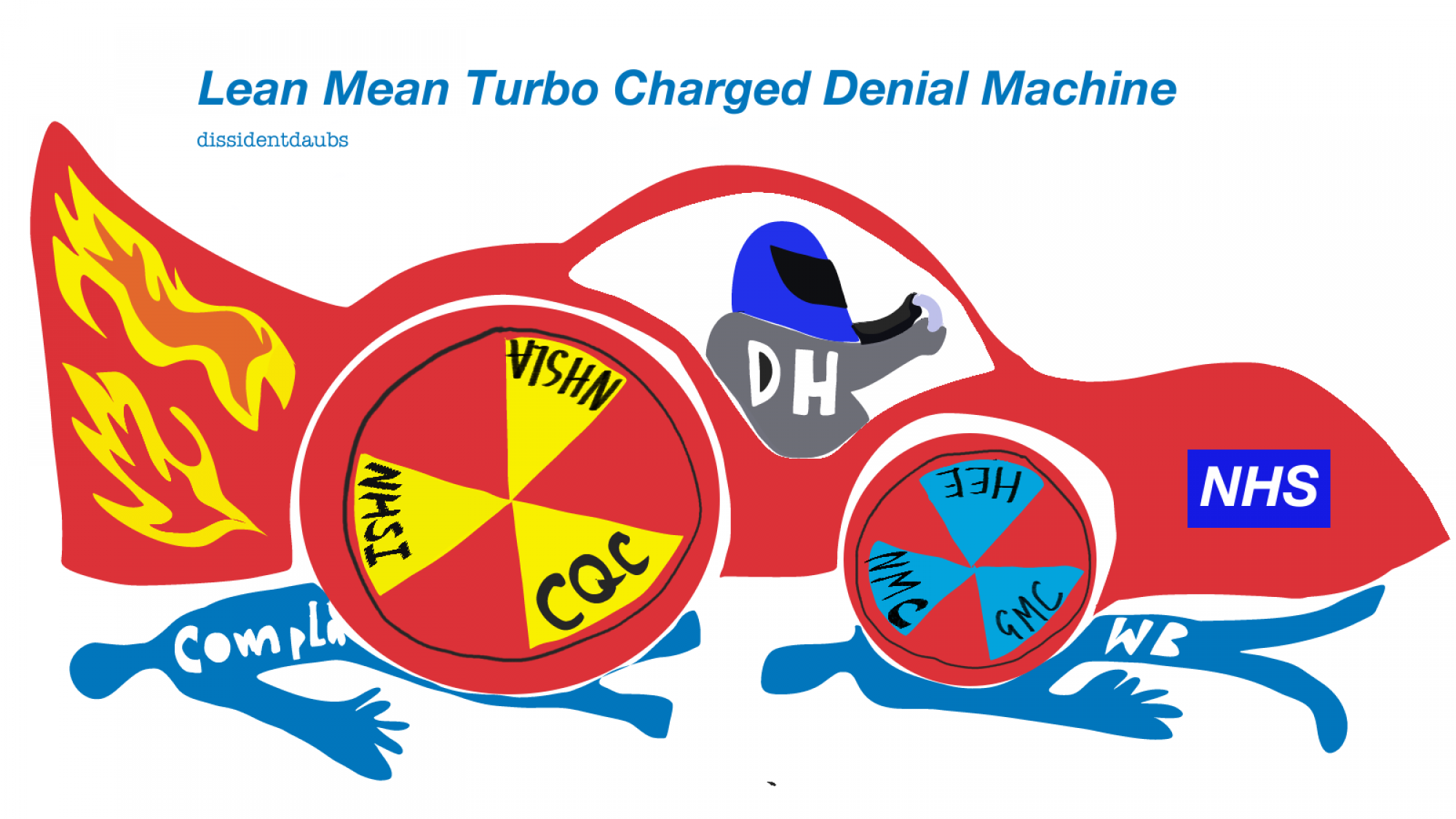
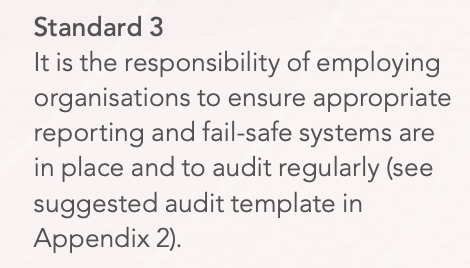


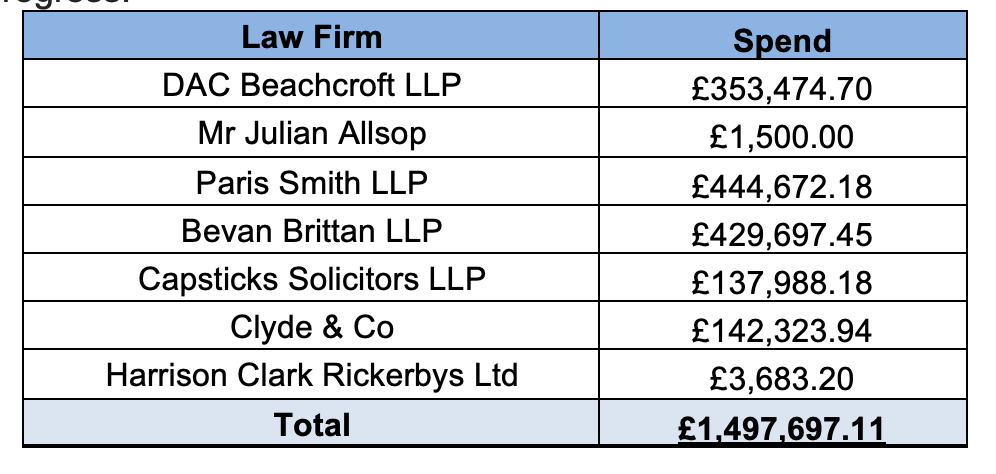
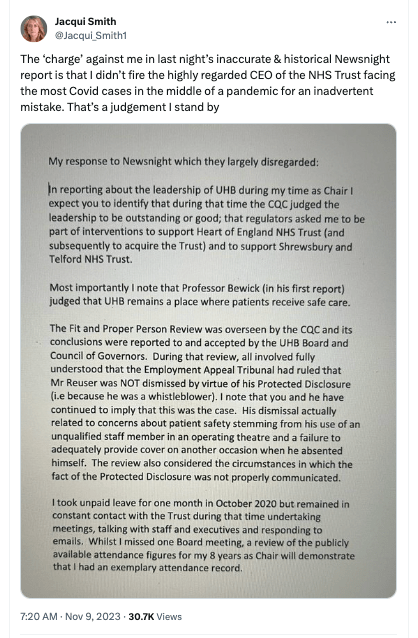

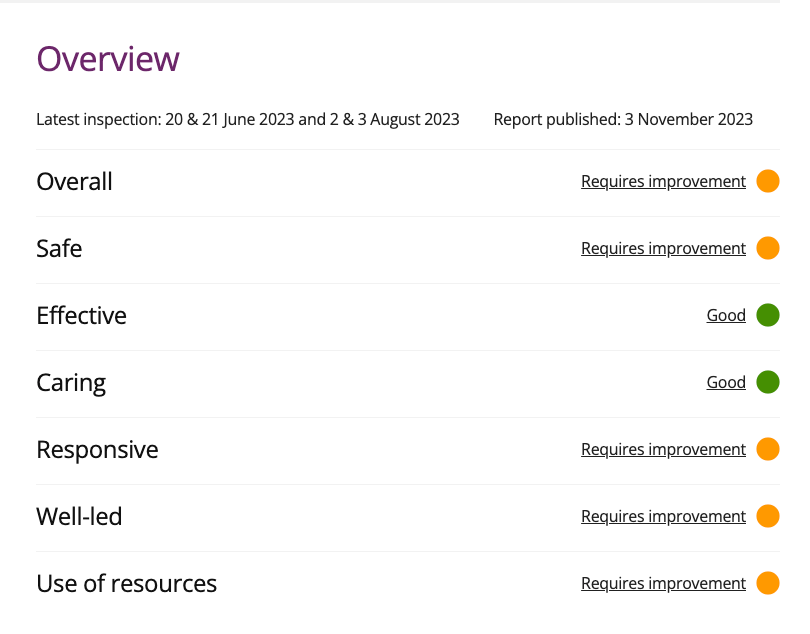
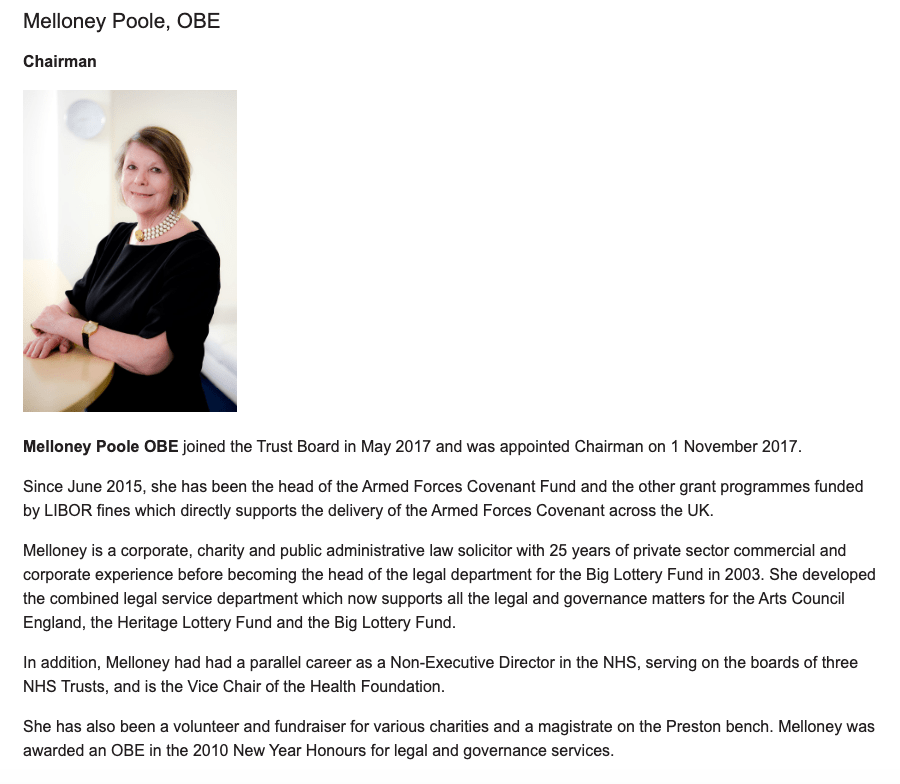
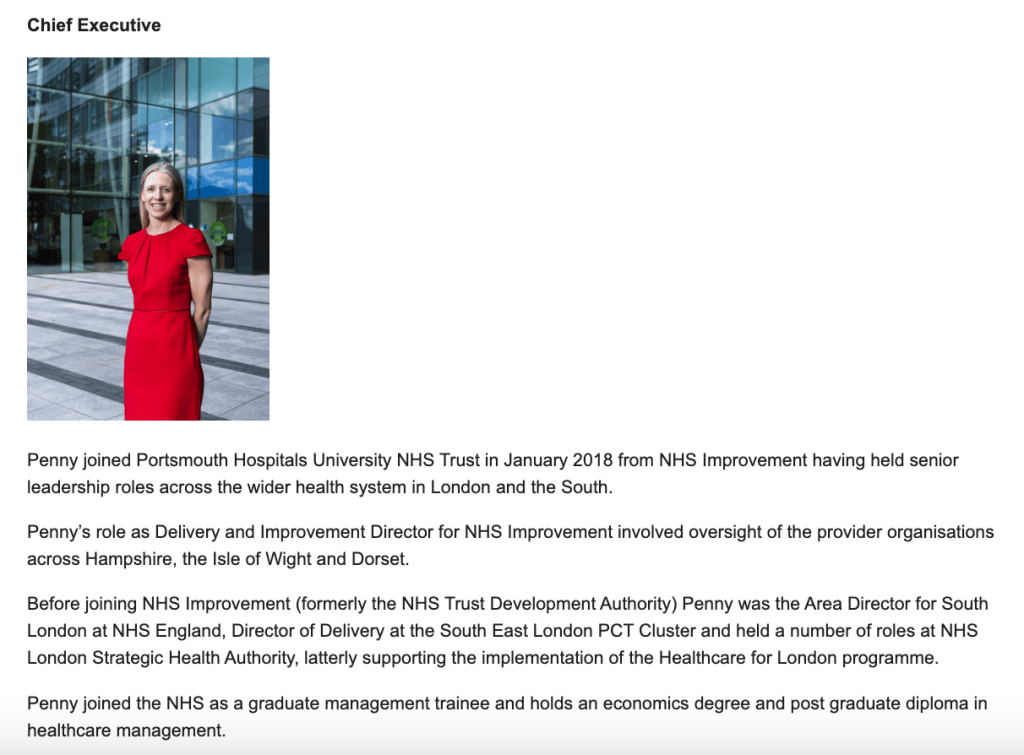
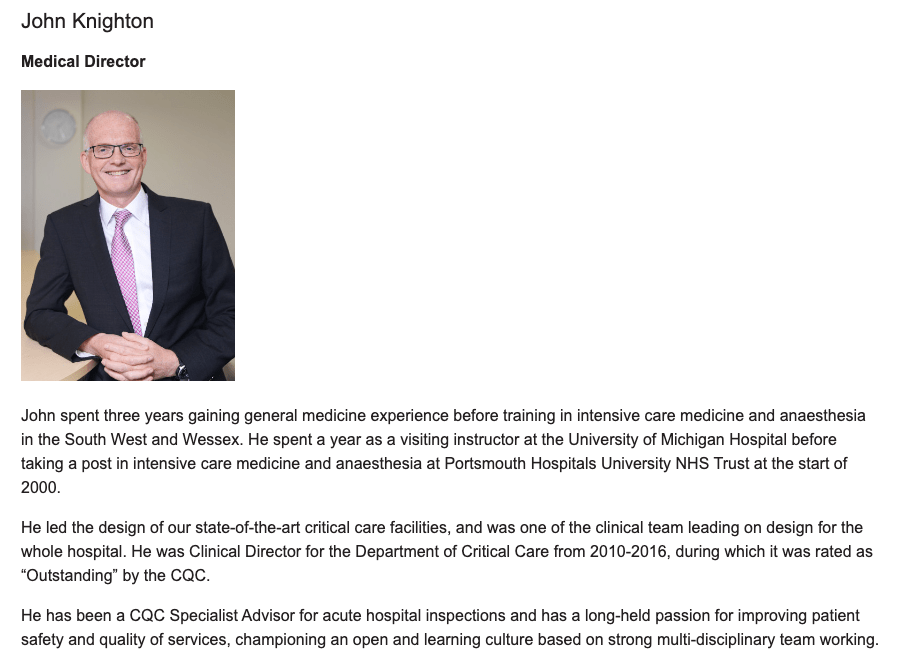
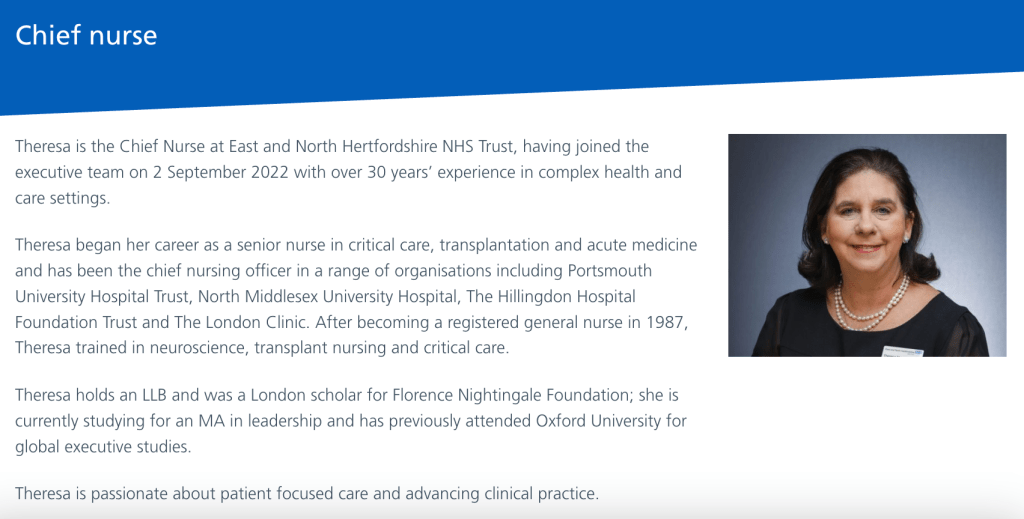
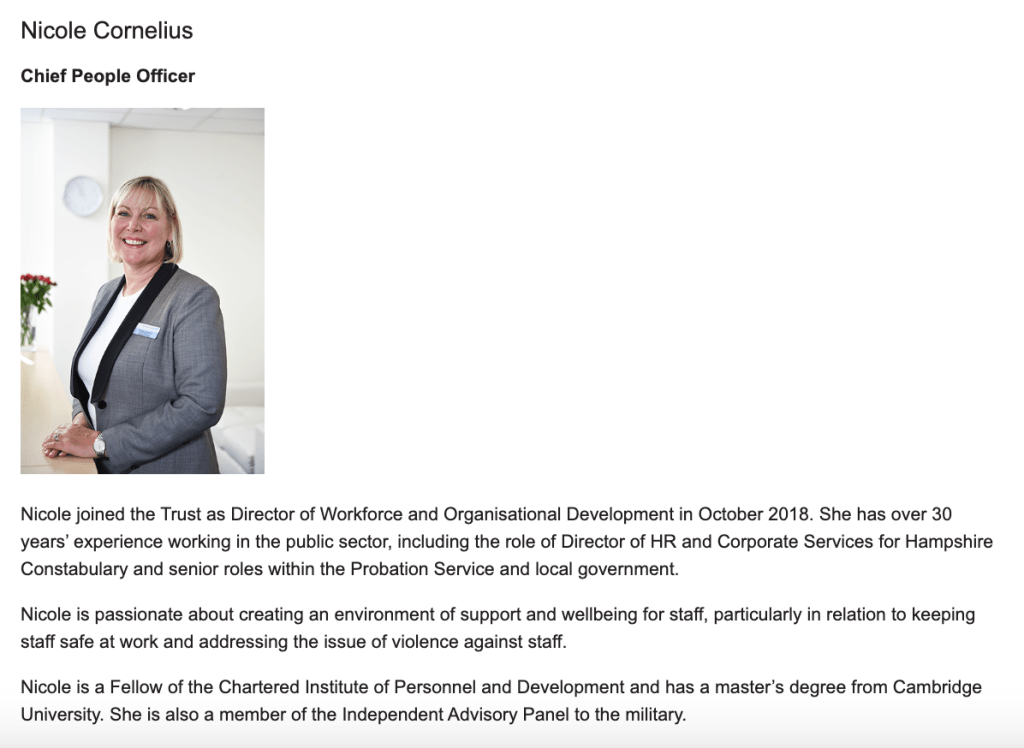
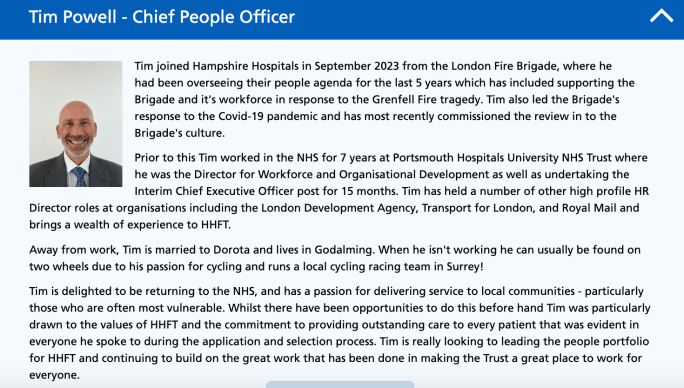
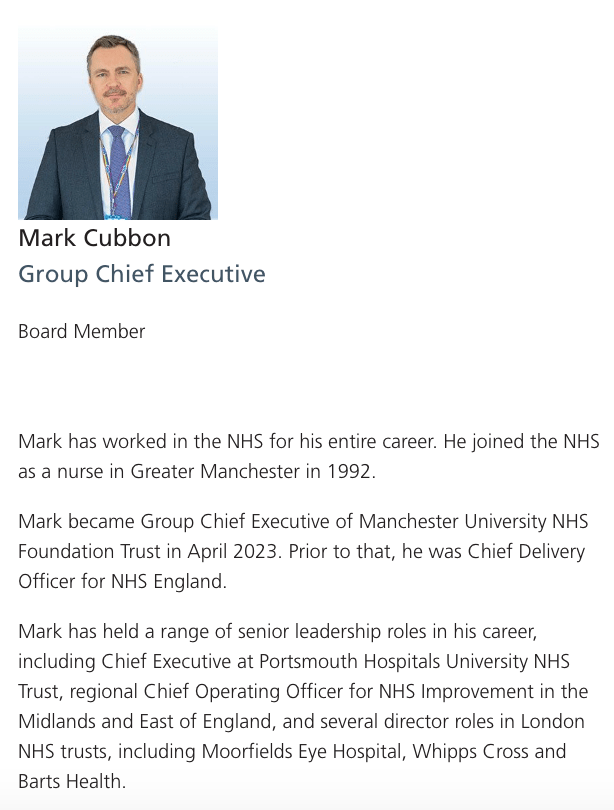

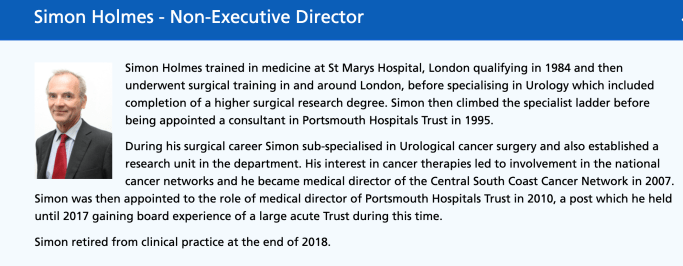
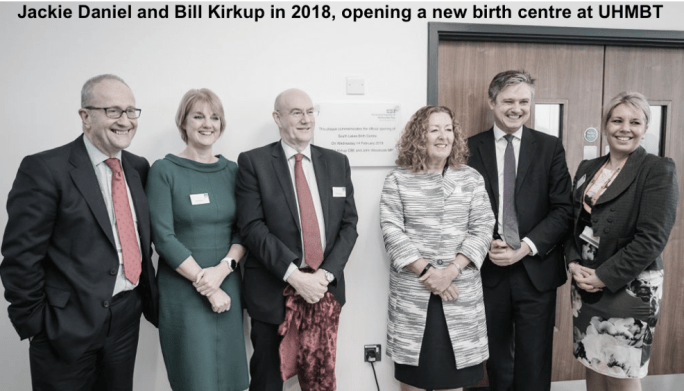
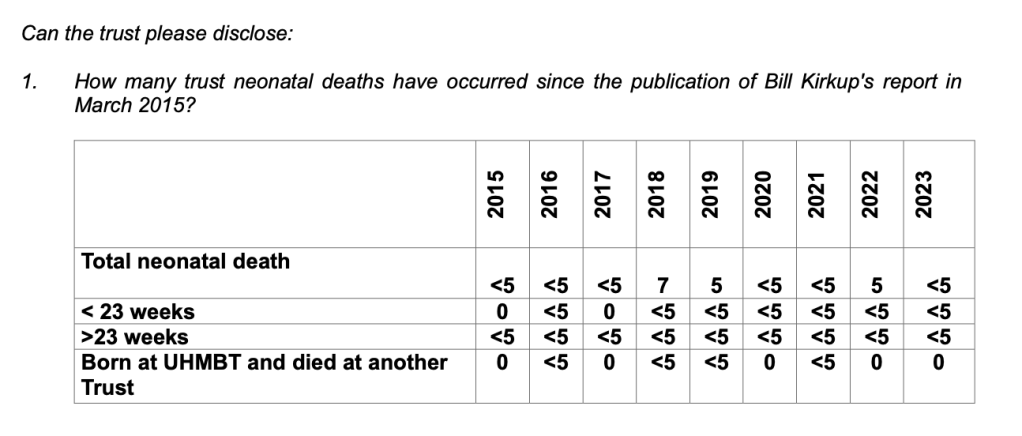
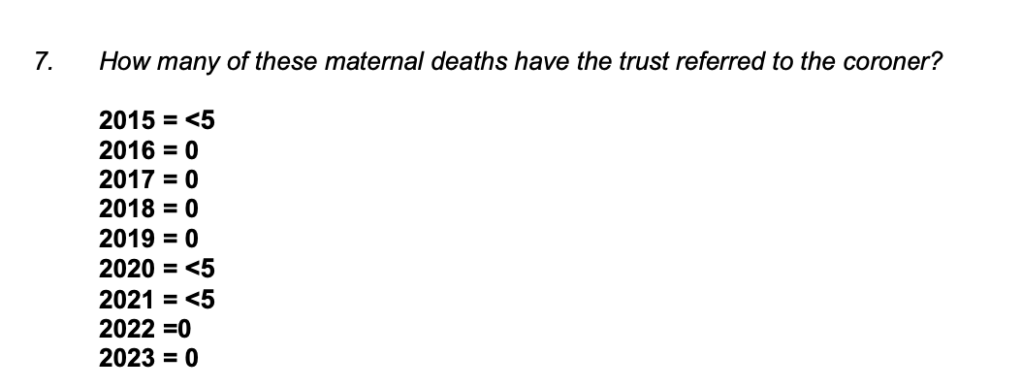
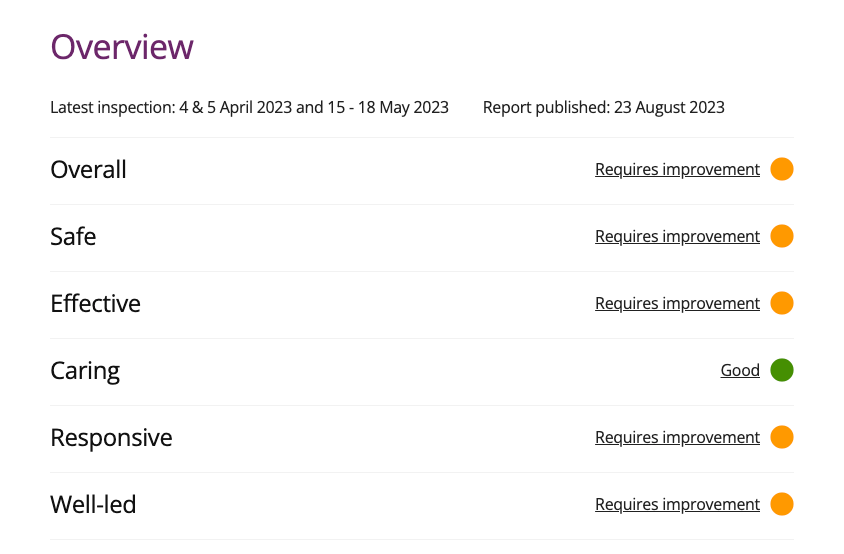
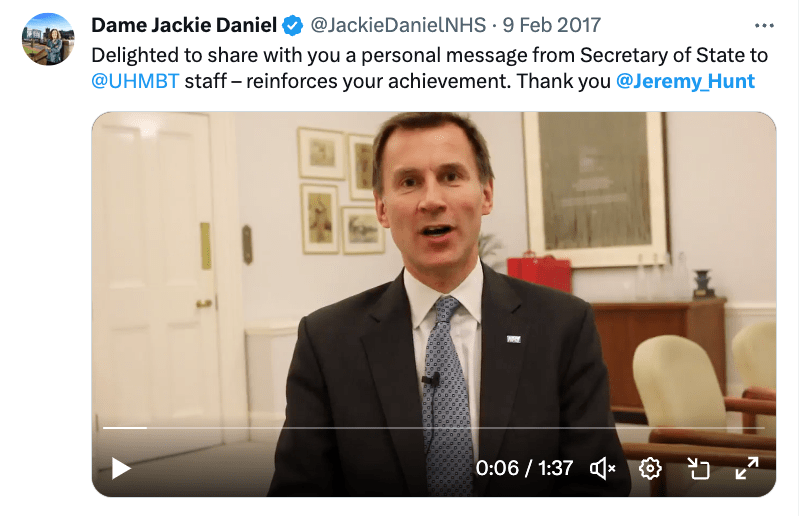
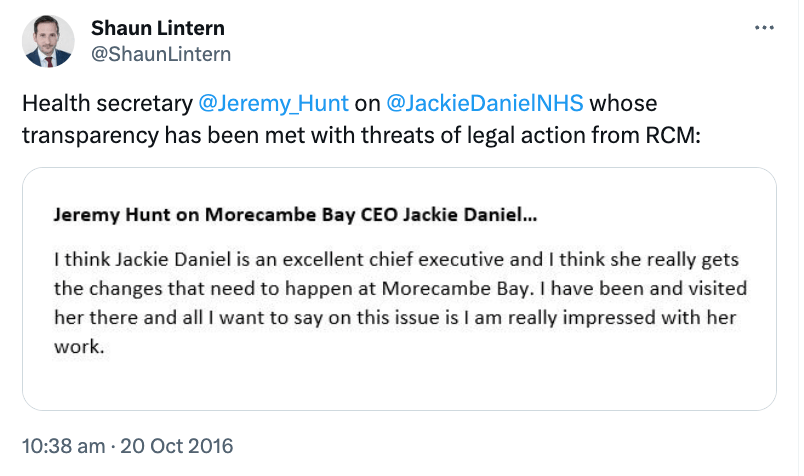

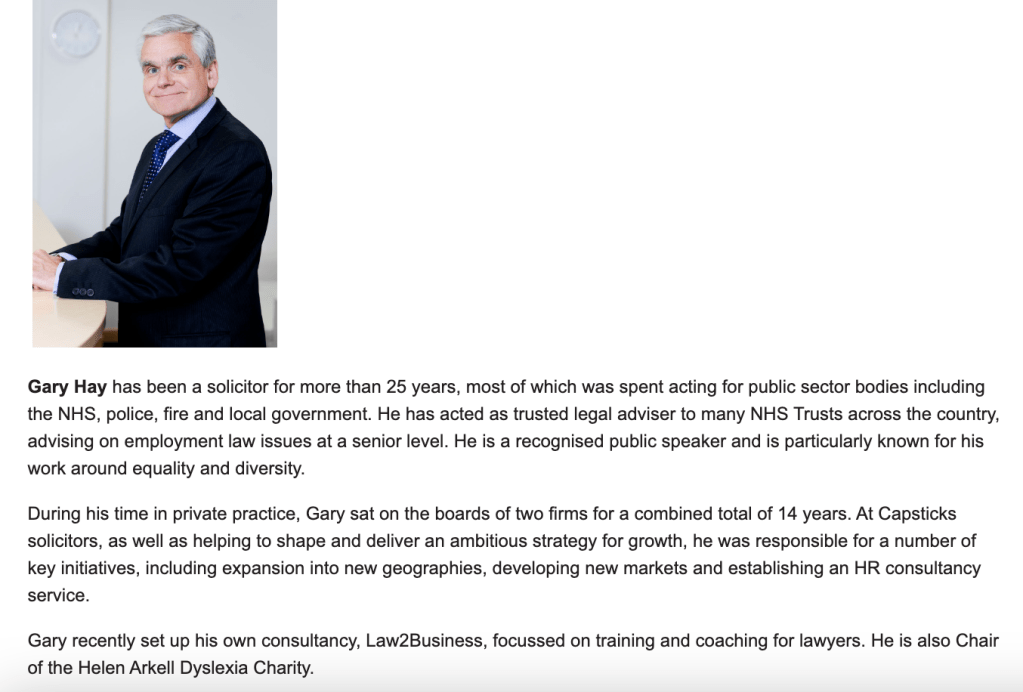
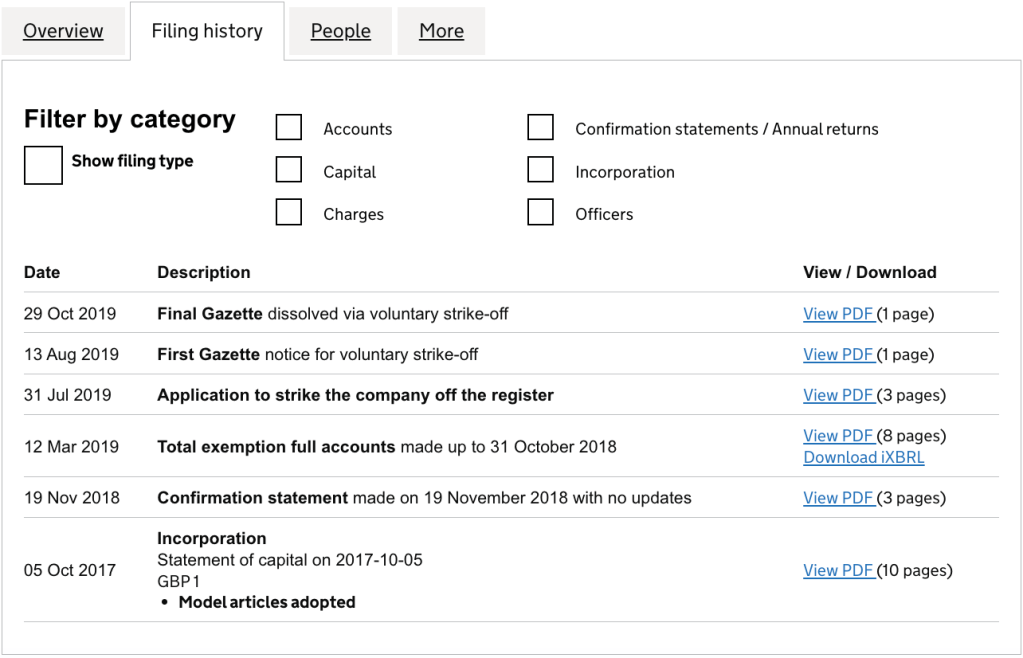
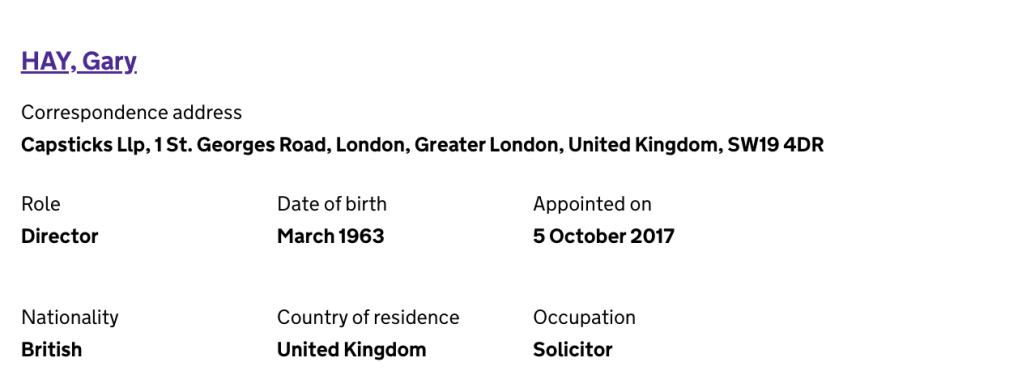
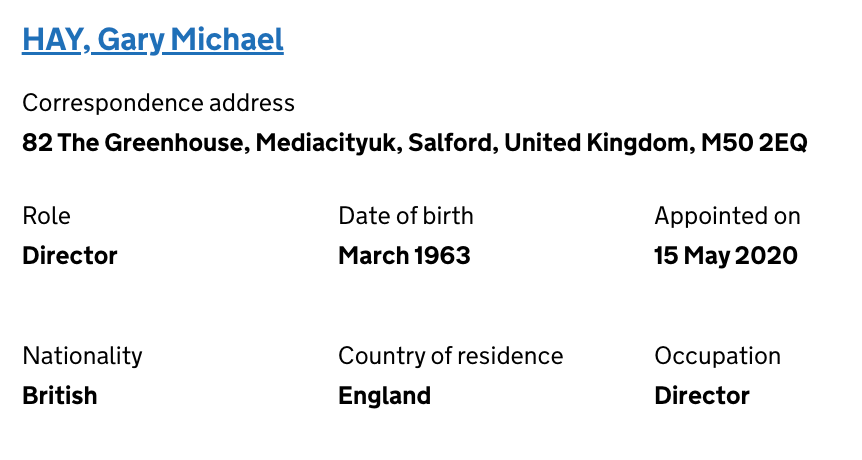
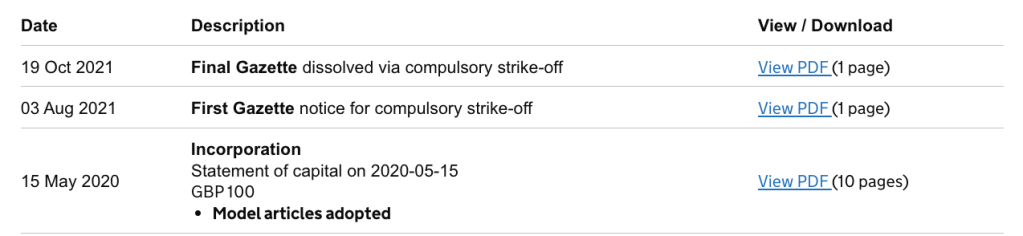

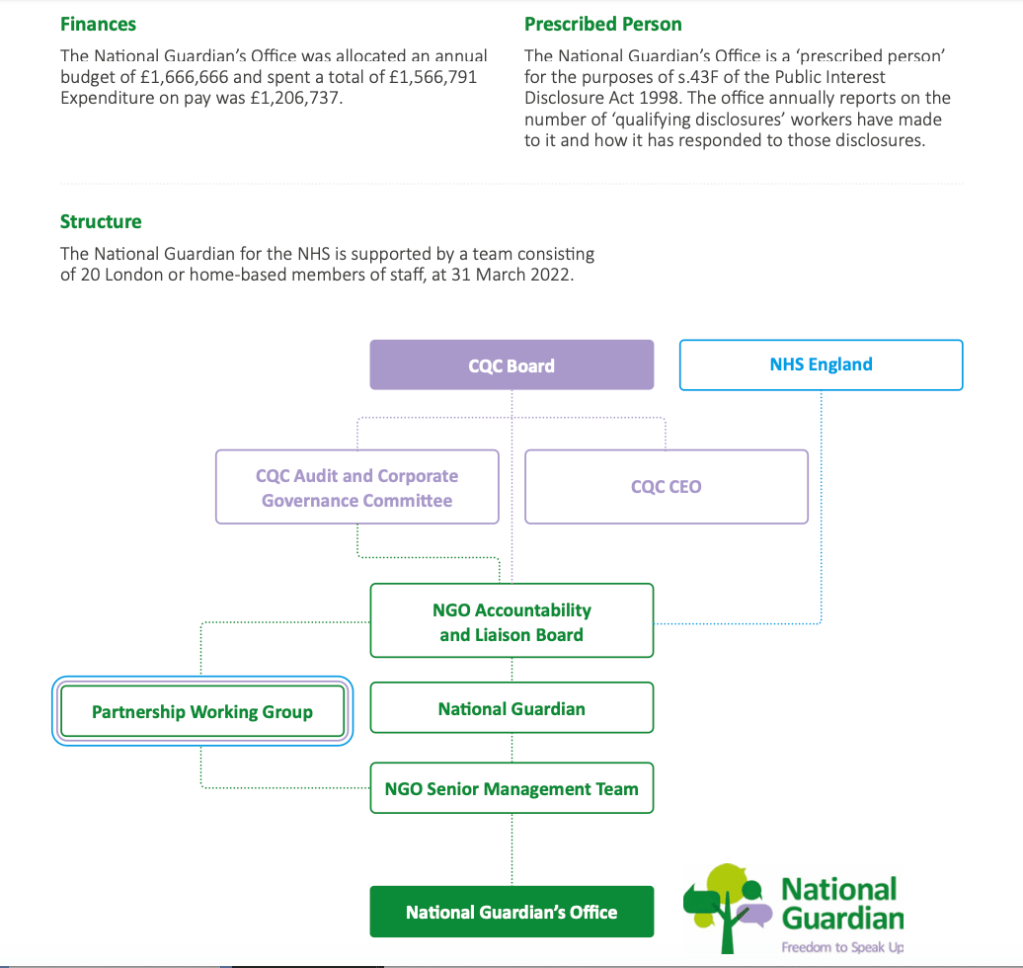

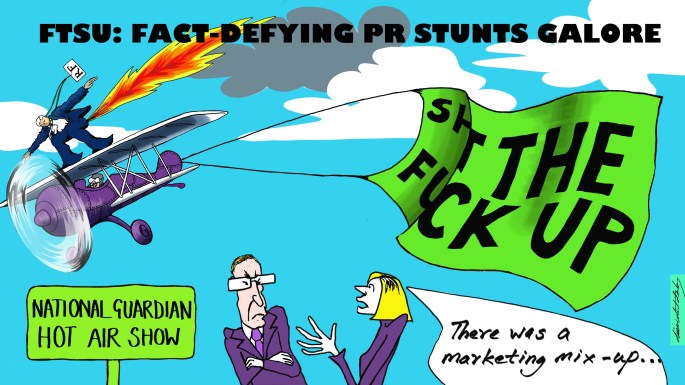

 Alexander's Excavations