Think whistleblowing in the NHS is confidential? Think again

Please sign and share:

Petition to replace weak UK whistleblowing law to protect whistleblowers and the public

By Dr Minh Alexander NHS whistleblower and former consultant psychiatrist, 24 August 2020

 Summary: NHS whistleblowers’ confidential case files, kept by NHS trust Freedom To Speak Up Guardians are being stored on insecure IT systems, an investigation by Computer Weekly has concluded. I am aware of evidence of NHS managers’ unauthorised access to such files and Computer Weekly gives an example. Some NHS staff are placing themselves at serious risk by whistleblowing when their confidentiality is not guaranteed, or may be actively undermined with hostile intent. Freedom To Speak Up Guardians may be vulnerable as whistleblowers in their own right, as part of their role in pressing organisations to act on poor whistleblowing governance. They should be aware that their confidential files may not be secure, and that the advice they give to whistleblowers may lead to their own victimisation by employers. The National Guardian should do much more to prevent abuses by employers, but in its real role as a political firewall, it is very unlikely that it will genuinely protect whistleblowers and Freedom To Speak Up Guardians. In fact, the National Guardian herself breached the confidentiality of a doctor who sought her help, and whose concerns were subsequently vindicated by external review. NHS regulators have also been known to breach whistleblower confidentiality.

NHS whistleblowers need to weigh all the risks very carefully, and consider if they should make direct disclosures to the media on an unnamed basis, to avoid reprisal and cover ups of their concerns and consequent risks to the public.

UK whistleblowing urgently needs to be reformed to put an end to this unsafe mess.

After learning of instances of breached NHS whistleblower confidentiality, including unauthorised access by senior managers to whistleblowers’ digital files kept by local NHS trust Freedom To Speak Up Guardians, Karl Flinders, a journalist at Computer Weekly has investigated.

As a specialist IT journalist, Karl Flinders has  looked into the matter and approached the National Freedom To Speak Up Guardian’s Office, NHS Improvement and relevant tech insiders.

He has concluded that highly sensitive whistleblower personal data is being held insecurely by NHS organisations.

This is his report on the issues:

NHS whistleblowers’ anonymity at mercy of inadequate trust IT policies and processes

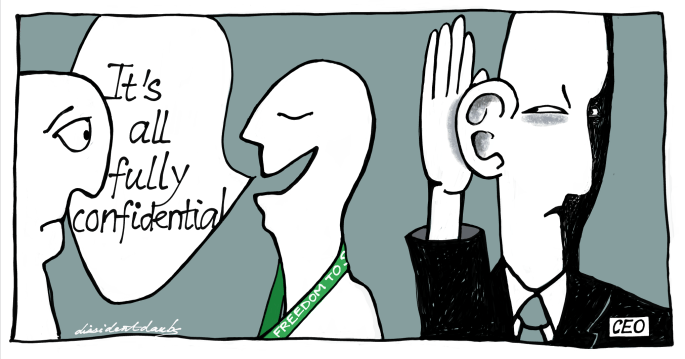
His report covers the case of a former trust Freedom To Speak Up Guardian who shockingly discovered that their confidential files on whistleblowers had been improperly accessed by trust management: a senior manager under investigation very improperly looked at confidential whistleblowing files about herself.

Deplorably, the National Guardian’s Office is not proactive in ensuring that employers adhere to the standards that it issues, including standards on whistleblower confidentiality.

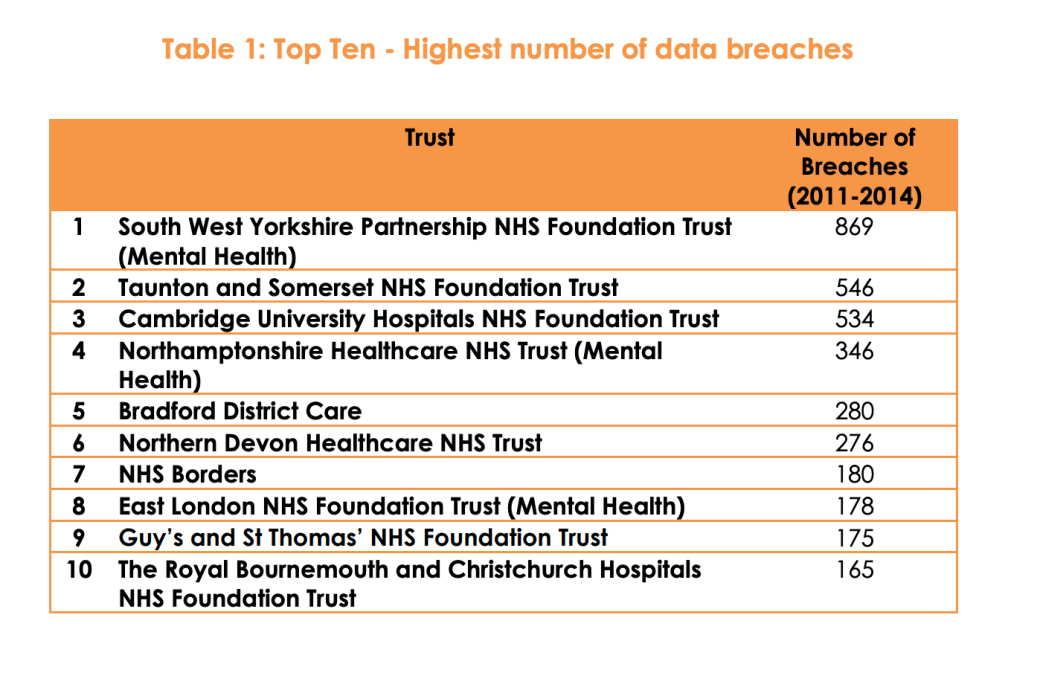
The NHS already has a record of personal data breaches related to unauthorised access by its staff.

Big Brother Watch found that these were the worst NHS trusts for all personal data breaches 2011 to 2014:

Screenshot 2020-08-24 at 12.22.50

All this has massive implications and it only throws more serious doubt on the weak internal NHS whistleblowing mechanisms, the misnamed Freedom To Speak Up mechanism,  that the government wants to palm off onto NHS workers.

Several whistleblowers had already complained to me about breach of confidentiality by the National Guardian’s Office including by the National Guardian herself.

Bullying and harassment at Harrogate and District NHS Foundation Trust & a concern about the National Freedom To Speak Up Guardian

There have also been cases of breach of confidentiality by regulators:

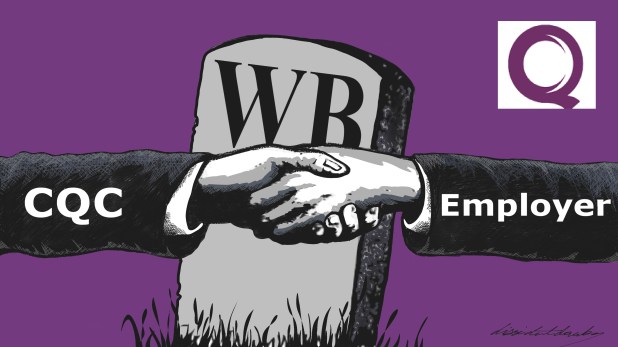
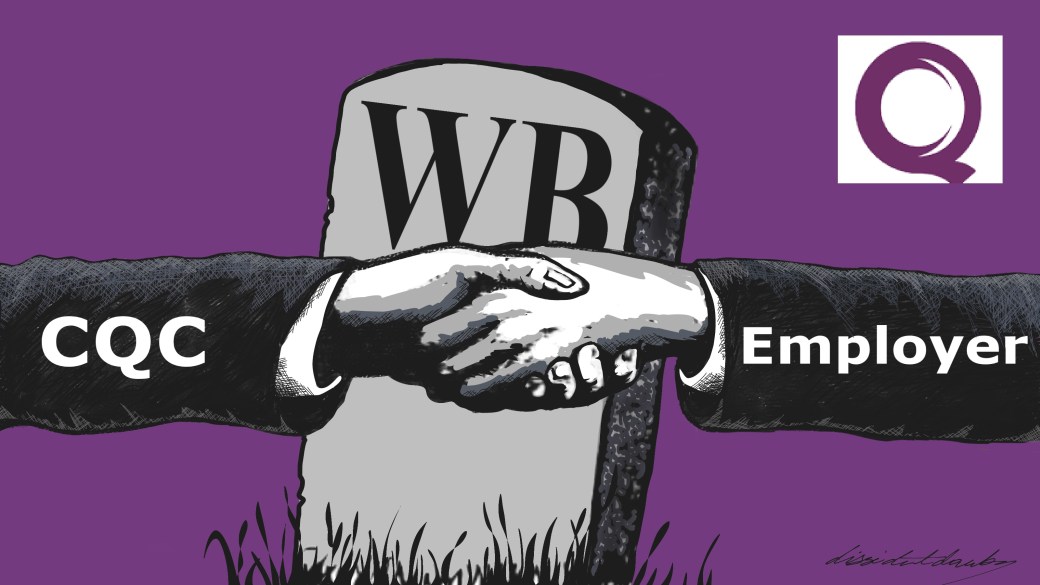
Breach of confidentiality by CQC and complicity in referring a whistleblower to the Disclosure and Barring Service

Handshake

Whistleblowers all too often learn that one of the first things that employers do when they put a whistleblower on ‘gardening leave’ or suspend them, is that employers:

  1. Shut off the individual’s access to email;
  2. Scour the whistleblower’s emails for any information about their whistleblowing, to identify any allies who need to be dealt with, or information which can be abused for manufacturing trumped up charges

In the case of Addenbrookes neuropsychologist Narinder Kapur, who raised safe staffing issues, the employing NHS trust covertly cloned his computer for interrogation:

“Hospital bosses ordered search of whistleblowing doctor’s computer”

The tribunal at Bury St Edmunds, Suffolk, heard that Addenbrooke’s management ordered his computer hard drives be “cloned” in an investigation carried out “behind Dr Kapur’s back”.”

It is therefore horrifying but not surprising to learn that some managers will snoop electronically on whistleblowers’ case files.

Such snooping poses all sorts of dangers to both whistleblowers and the public, increasing the chances of victimisation, cover ups and corrupt destruction of evidence.

During the COVID-19 pandemic the levels of suppression and reprisal against staff have been so bad, and the government has behaved in such a bullying and corrupt way, I have felt concerned that conventional routes of whistling would be too unsafe for both staff and the public.

The concerns about confidentiality, possible management snooping and insecure IT add to this.

Each whistleblower’s circumstances, preferences and personal risk assessment are unique. The decision to whistleblow externally is not taken lightly as the legal tests for doing so are more exacting, especially if the disclosures are made to non-prescribed bodies. They are summarised here.

But all told, in my view the safest looking route of disclosure for whistleblowers at present is to disclose on an unnamed basis directly to the media. If you decide to do this after weighing everything up, it is also important to choose your media outlet carefully. Research any biases and look for objectivity and professionalism.

Lastly, this further, major scandal brings us back to the desperate need for reform of UK whistleblowing law, to prevent such grave abuses.

Please sign and share the petition for law reform if you have not done so already.

With thanks and best wishes.

Please sign and share:Replace weak UK whistleblowing law, and protect whistleblowers and the public

ceo

RELATED ITEMS:

Bullying and harassment at Harrogate and District NHS Foundation Trust & a concern about the National Freedom To Speak Up Guardian

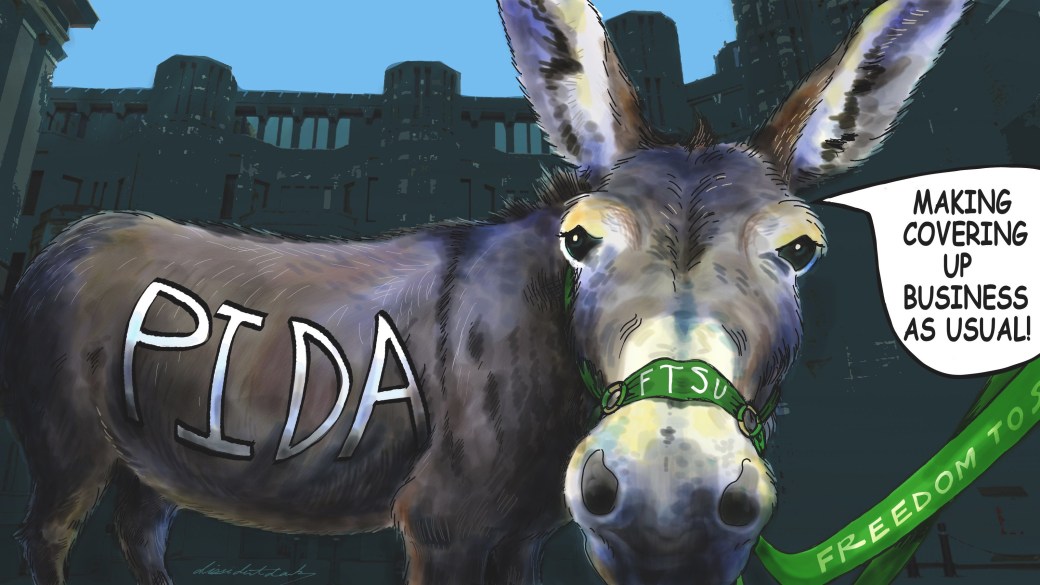
Replacing the Public Interest Disclosure Act (PIDA)

A new UK whistleblowing Bill and a petition to the UK government to strengthen protection

The Disinterested National Guardian & Robert Francis’ Unworkable Freedom To Speak Up Project

The toothlessness of the National Guardian’s Office: Why it cannot be a model for protecting whistleblowers

From the 2015 archives:

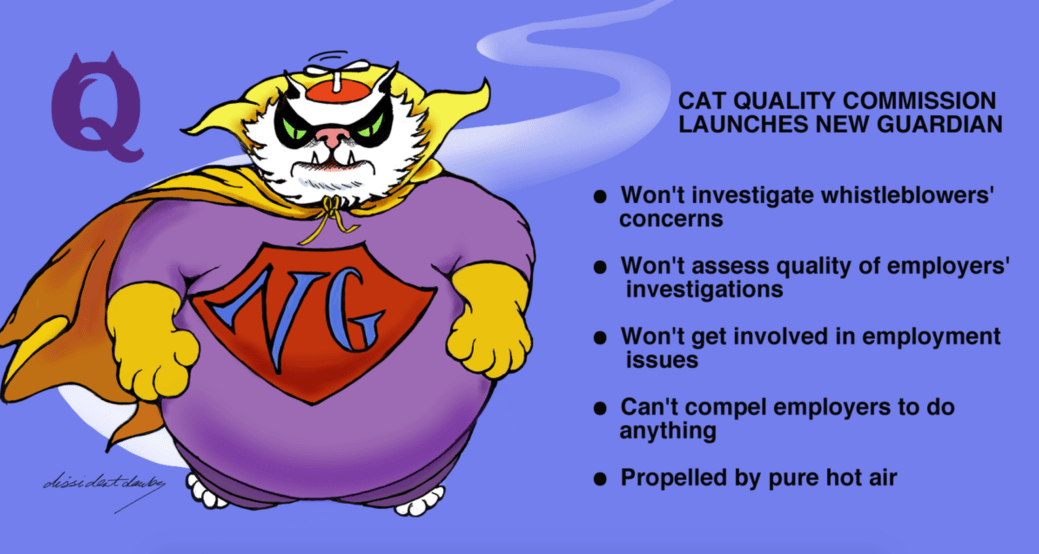
National Guardian super hero cat propelled by hot air

Coronavirus: CQC, care workers’ Safeguarding concerns and COVID-19 deaths of vulnerable people receiving domiciliary care services


Please sign and share:

Petition to replace weak UK whistleblowing law to protect whistleblowers and the public


By Dr Minh Alexander NHS whistleblower and former consultant psychiatrist 25 August 2020

The CQC has shamed itself deeply once more in its failure to raise the alarm quickly enough on COVID-19 deaths of highly vulnerable people in residential care or who receive care in their own homes from domiciliary care services.

CQC is by law notified of the deaths of all users receiving care from regulated providers:

CQC Regulation 16: Notification of death of service user

CQC should have proactively anticipated the risks posed by the pandemic to vulnerable people and raised the alarm about any failures to protect them from COVID-19.

CQC certainly received a much elevated number of Safeguarding concerns from care workers during the pandemic  (2,043 Safeguarding referrals by care workers to the CQC 1 March -21 May 2020 compared to 1,230 in the prior year period).

Instead, it took CQC months after the World Health Organisation warnings of COVID-19 threat to even ask care home and domiciliary care providers to report whether COVID-19 was a factor in service user deaths – the regulator only did so on 9 April 2020, and the reporting obligation has only been in force since 10 April 2020.

There has been a great deal of media coverage on the COVID-19 devastation in our care homes resulting from gross UK government negligence, its much damned herd immunity strategy, and its lies that it threw a protective ring around care homes.

There has been less coverage of the failure to protect domiciliary care service users, even though peripatetic care staff pose an obvious virus transmission risk.

I asked the CQC to provide statistics on COVID-19 deaths of people who receive care at home, and evidence that the CQC is actively tracking and learning from these events.

A delayed FOI response has been issued which reveals that as of 20 August 2020:


  • There have been 892 confirmed or suspected COVID-19 service user deaths


  • 474 domiciliary care providers had notified CQC of at least one confirmed or suspected COVID-19 death


  • Some care providers did not report any such deaths


  • One care provider reported 17 confirmed or suspected COVID-19 service user deaths, which is the highest number


Of great concern, the CQC has not produced actual written evidence of analysis of trends and lessons learned. It only says that it is working with ONS.

The regulator cannot or will not even say if any domiciliary care service users died or may have died of COVID-19 as a result transmission from care workers.

The FOI response is reproduced below in the appendix.

I will pass the information to parliament to feed into both scrutiny of the government’s response to the COVID-19 crisis and the CQC’s regular accountability hearings with the Health and Social Care Committee and the Public Accounts Committee.

The CQC is an example of UK regulatory capture and failure to properly champion the public interest, or importantly, to defend the rights of vulnerable people.

It continues to ignore and silence whistleblowers, including its own whistleblowers, with impunity partly because UK whistleblowing law is so weak.

Please sign the petition and share to call for law reform to make UK whistleblowing law fit for purpose and to serve the interests of the public and not the powerful.

Thank you


Please sign and share:

Petition to replace weak UK whistleblowing law to protect whistleblowers and the public


UPDATE 27 AUGUST 2020

The Healthcare Safety Investigation Branch has today published an intelligence report which reveals that it was informed of a case of a vulnerable service user being fatally infected with COVID-19 by domiciliary care workers who did not wear PPE during the pandemic:

National Intelligence Report Personal protective equipment (PPE): care workers delivering homecare during the Covid-19 response

Screenshot 2020-08-27 at 10.51.10

This raises very serious questions about CQC’s above claim in its FOI response that it held no data on transmission from domiciliary care workers to vulnerable clients.

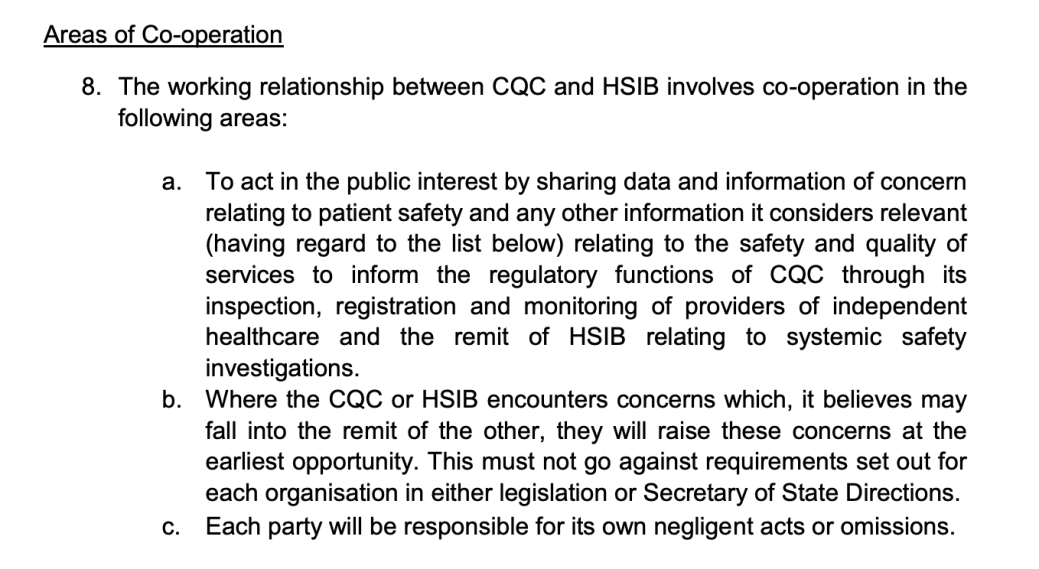
HSIB and CQC have a memorandum of understanding which includes sharing risk and safeguarding information. It is very hard to believe that information was not shared on the above issues.

Screenshot 2020-08-27 at 10.52.17

However, if there was a failure to share information, that too would be very serious.

I will pursue more answers from HSIB and CQC.


APPENDIX

CQC FOI response

From: Information Access <REDACTED>

Subject: CQC IAT 2021 0126

Date: 25 August 2020 at 11:21:16 BST

To: Minh Alexander <REDACTED>

Dear Dr Alexander

Our Ref: CQC IAT 2021 0126

I write in response to your request under the Freedom of Information Act 2000 (FOIA) of 3 July 2020. I apologise again for the delay in this response.

You asked:

  1. What data does CQC hold on COVID-19 deaths of service users who receive domiciliary care services (home care)?

Does CQC collate such data on a database/ spreadsheet? If so, what data fields does CQC operate on this database/spreadsheet (column and row titles)?

Regulation 16 of the Care Quality Commission (Registration) Regulations 2009 requires that care providers must notify CQC of the death of a service user.

You can access the notification form on our website at:

www.cqc.org.uk/guidance-providers/notifications/death-person-using-service-%E2%80%93-notification-form

We are able to run reports from the information we receive in the notifications, however we don’t have a standing spreadsheet containing the information at any one time.  We would however be able to pull a report to collate the specific data on numbers of notifications that we required for a particular purpose.

Providers are only required under the regulation to submit a notification to CQC where:

  • the person died while a regulated activity was being provided
  • their death may have been a result of the regulated activity or how it was provided

Therefore CQC will not be notified of all deaths of people who use domiciliary care services.

2/ The total number of COVID-19 deaths of service users who receive domiciliary care services that have been notified to CQC since the start of the pandemic

Since 10 April 2020, providers submitting notifications under regulation 16 have been required to state whether the death was confirmed or suspected as being a result of coronavirus.

On 3 July, the ONS published data on deaths of recipients of domiciliary care in England. See section 8 of this report –

https://www.ons.gov.uk/peoplepopulationandcommunity/birthsdeathsandmarriages/deaths/articles/deathsinvolvingcovid19inthecaresectorenglandandwales/deathsoccurringupto12june2020andregisteredupto20june2020provisional#deaths-of-recipients-of-domiciliary-care-in-england

This report is based upon regulation 16 notifications received by CQC between 10 April and 19 June.  As of that date, 819 deaths of people who use domiciliary care service had been reported to CQC as being confirmed or suspected to have resulted from coronavirus.

Since that data was published, we have been reviewing how we register hospices which provide community services (to support people with end-of-life care in their own homes). This work is ongoing but three of these services are no longer reported as domiciliary care services in the figures provided in this response.

As of 20 August, 892 deaths of people who use domiciliary care services had been notified by providers to CQC as being confirmed or suspected to have resulted from coronavirus.

3/ The total number of domiciliary care providers who have reported COVID-19 deaths of service users to CQC since the start of the pandemic

As of 20 August, 474 domiciliary care providers had notified CQC of at least one death that they recorded as being either confirmed or suspected of resulting from coronavirus.

4/ The lowest and the highest number of COVID-19 deaths of service users notified to CQC by individual domiciliary care providers since the start of the pandemic (ie. the range in number of COVID-19 deaths reported by domiciliary care providers)

As of 20 August, the lowest number of notifications received from any individual domiciliary care services is 0.

308 providers had each notified CQC of a single death.

The highest number (other than for a hospice that provides community services) is 17. This figure relates to a provider that has a number of services (locations) in different areas. The highest number for a single service is 8.

The majority of deaths reported by domiciliary care services as being related to Covid-19 occurred in hospital.

5/ Has CQC reviewed the pattern of notified COVID-19 deaths of service users who receive domiciliary care?

If so, please share a copy of any related report and or findings

CQC has supported ONS in publication of the report linked above. We are monitoring notification data on an ongoing basis and are working with provider organisations and with other organisations to understand the data. CQC has not produced findings or a report.

6/ What evidence does CQC hold on actual or potential COVID-19 transmission by domiciliary care workers to vulnerable service users?

7/ Please advice in summary of the number of confirmed or suspected instances of transmission of COVID-19 by domicilary care staff to domiciliary care service users, of which CQC is aware

CQC does not hold the information requested in questions 6 and 7.

Kind regards

Information Access Team

Governance and Legal Services

Customer & Corporate Services Directorate

Care Quality Commission


RELATED ITEMS:

A new UK whistleblowing Bill and a petition to the UK government to strengthen protection

Replacing the Public Interest Disclosure Act (PIDA)

Breach of confidentiality by CQC and complicity in referring a whistleblower to the Disclosure and Barring Service

Two years of national CQC whistleblowing data on health and social care services

Prescribed Persons or the Pretence of PIDA. How UK whistleblowers are ignored

Whistleblowers unheard by CQC

Handshake


Petition to replace UK whistleblowing law and protect whistleblowers and the public

By Dr Minh Alexander NHS whistleblower and former consultant psychiatrist, 19 August 2020


Petition link:

Replace UK whistleblowing law and protect whistleblowers and the public


Why are we running this petition?

Whistleblower colleagues and I have set up a Westminster petition calling for much better protection of  whistleblowers and their valuable disclosures, which protect us all.

UK whistleblowing law is very weak and favours employers and corporate interests, not the public nor whistleblowers. It allows cover ups all the time, which endangers public safety and allows corruption to flourish.

We would be most grateful if you would sign and share with others, to make the government respond.

This is more background if needed:

A new UK whistleblowing Bill and a petition to the UK government to strengthen protection

If you would like to write to your MP about helping whistleblowers, we have drawn up a letter template that you can use:

Send this letter to your MP to help protect UK whistleblowers

All my best,

Minh

Dr Minh Alexander

A new UK whistleblowing Bill and a petition to the UK government to strengthen protection

By Martin Morton @NitramNotrom, Clare Sardari @SardariClare and Minh Alexander

17 August 2020


The petition link: 

Replace UK whistleblowing law and protect whistleblowers and the public


Background

In 2018 the twentieth anniversary of the notoriously weak UK whistleblowing law, the Public Interest Disclosure Act 1998 (PIDA), we were invited by Dr Philippa Whitford to produce a concise advisory paper on PIDA’s core weaknesses. This was to inform debate and feed into parliamentary work on this topic. This is the paper that we wrote:

Replacing the Public Interest Disclosure Act (PIDA)

Chiefly, the paper fed into the Westminster Hall debate on 18 July 2018 led by Dr Philippa Whitford MP:

Hansard: NHS whistleblowers

As evident from this transcript of the parliamentary debate, the UK government’s response was tepid.

Indeed, the government had already expressed scepticism about the new proposed EU whistleblowing directive, which was since become law.

Although the EU directive crucially requires the proper handling of whistleblowers’ disclosures, which UK law indefensibly does not, our government absurdly suggested in a memo to the parliamentary European Scrutiny Committee that UK whistleblowing law was already strong.


The new Public Interest Disclosure (Protection) Bill

Two years on, the parliamentary activity that started in 2018 has culminated in the production of a Bill, led by Dr Philippa Whitford and supported by Peter Grant, Alison Thewliss, Andrew Mitchell, Dr Julian Lewis, Kevin Hollinrake and Wera Hobhouse to model potential improvements that could be made in UK whistleblowing law and governance:

Public Interest Disclosure (Protection) Bill

The Bill has been developed with input from a variety of parties.

It calls for repeal of PIDA and provides a new freestanding law. It has wider scope and breaks away from the confines of employment law where PIDA is situated, seriously restricting PIDA’s efficacy.

The Bill contains several essential elements of good practice that whistleblowers have been calling for, such as:

  • Compelling the proper handling and follow up on whistleblowers’ concerns and the correction of wrongdoing


  • Criminal sanctions for individuals for harming whistleblowers or failing to act appropriately upon their disclosures, to provide meaningful deterrence of victimisation and suppression


  • Wider definitions of detriment which capture some of the subtler means by which whistleblowers may be persecuted


  • An expeditious mechanism for redress of harm to whistleblowers that does not require them to face the risk and trauma of litigation, as is the case under PIDA


  • Legal recognition that third parties such as close relatives of a whistleblower can suffer detriment, and should also be entitled to redress


  • The Bill establishes a principle of fair compensation for harm and loss but specifically precludes rewards for whistleblowing, to protect credibility in whistleblowing


  • The introduction of the concept of ‘moral harassment’ or mobbing, currently recognised under EU law, and an issue that is important in many whistleblowing cases


  • A central body to enforce better whistleblowing governance by employers and bodies such as regulators


The Bill is a constructive step forwards and a sound reference point for future debate on UK whistleblowing governance. It represents a better offer than PIDA.


Independence of the proposed whistleblowing body

Our one key reservation is the independence of the proposed central whistleblowing body, which the new Bill terms “the Commission”.

As currently drafted, the Bill states that the body should be independent, but implies that the Commission will be under the purview of a government department and gives the relevant Secretary of State powers to amend the Commission’s regulations.

We have advised against any such government control and maintain our position that guarding the independence of any whistleblowing body is a mission-critical issue.

A great deal of whistleblowing, especially in the public sector, is ultimately whistleblowing about government policy and its effects. Government control over a whistleblowing body sets up instant conflict of interest.

Screenshot 2020-08-06 at 09.32.11
NHS staff protesting outside Number 10 Downing Street

As per our original 2018 paper, we not only believe that a whistleblowing body should be constituted to be independent, but that specific procedural safeguards are required to ensure that is the case. In our view new legislation should include safeguards of regular parliamentary scrutiny and intermittent review and external audit.

Whistleblowing bodies are easily captured, and much vigilance is needed to prevent this.

The upheaval of the COVID-19 crisis has revealed the ugliness of what can happen when a government’s political interests collide with the public interest. Government economy with the truth and disinformation are currently reported and evident on a daily basis. Public servants are whistleblowing much more frequently to the media. Trust in conventional channels of reporting has clearly been shaken, with good reason.

The political interest of any government of the day will always be a threat to transparency and to whistleblowers.

Current events, such as the government’s attack on the public’s right to challenge it through judicial review,  suggest that this threat is likely to get worse.

Screenshot 2020-08-05 at 23.39.43
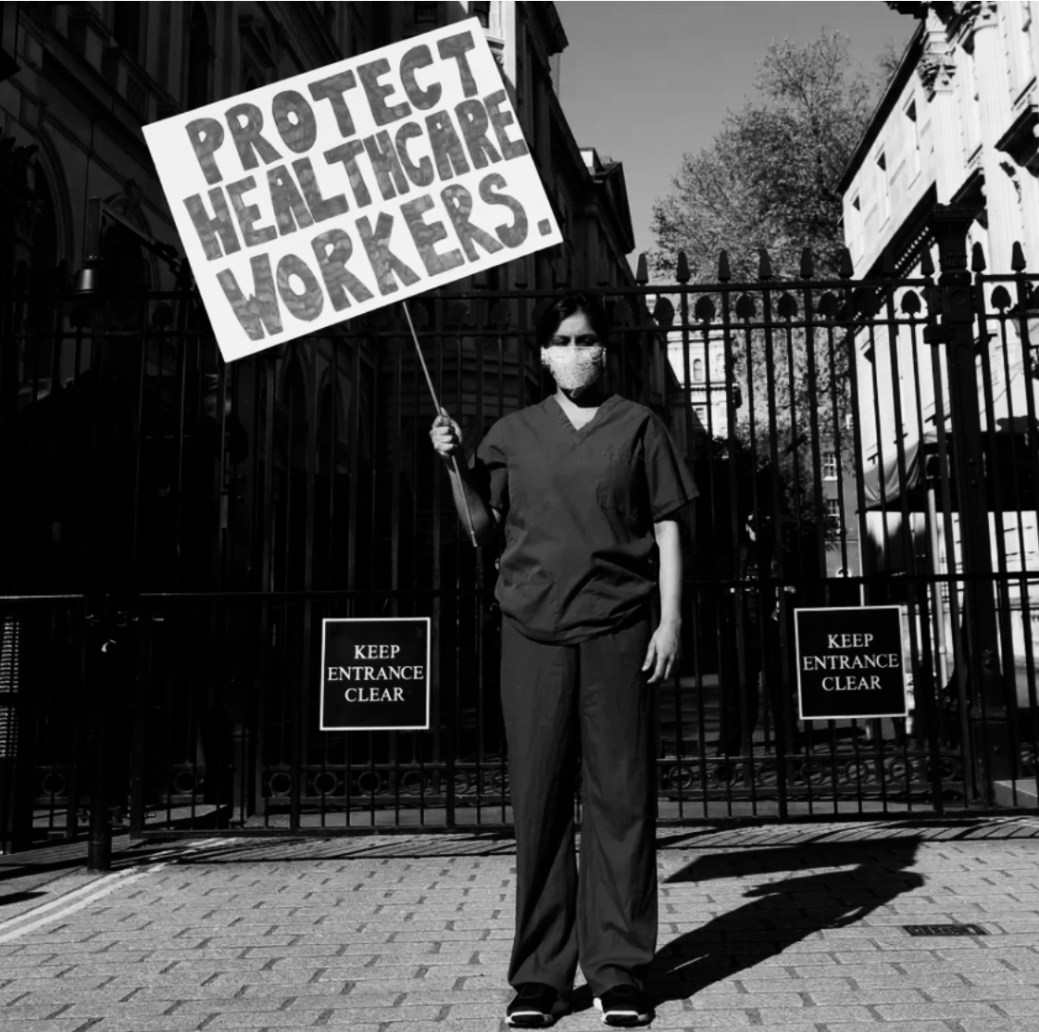
A pregnant doctor Meenal Viz outside Downing Street in April. She and her husband Dr Nishant Joshi have since filed for judicial review of the UK government’s flawed PPE guidelines and related failure to protect health and social care staff with adequate PPE during the pandemic

An important recent High Court judgment against the Secretary of State for Justice included a startling finding that the government interfered with the Criminal Cases Review Commission. It did so by abusing its appointment powers, in not renewing the tenure of a Commission Non Executive Director who had been oppositional to the government.

The High Court concluded “This was political interference”:

The Queen (on the application of Gary Warner) v Secretary of State for Justice

“63. A submission dated 19 July 2018 was prepared by the ALB CoE for the Minister (Edward Argar, again). The name of the author is redacted on the document. But the document was cleared by Ms Wedge and was copied to her when sent. This was the submission seeking a final decision on the proposed recruitment of up to six new commissioners on 3-year fee-paid terms. The issue of extension of X’s term was addressed in that same submission. The Chair’s recommendation of a temporary extension of X’s tenure and the mixed views on his performance were noted. The submission continued (emphasis added):

“Given the concerns about performance (and a lack of any more recent information about whether they have been addressed) and the fact that we are aiming to conclude the new campaign by early December in any event, we suggested that you do not agree to either a re-appointment or short extension but instead invite [X] to apply for the forthcoming campaign …

We are also aware that [X] has been amongst the cadre of Commissioners seeking to resist further changes to governance/working arrangements. We consider that refusing the re-appointment request will provide the new Chair of the Commission with the opportunity to assess X’s skills and strengths afresh against the job description and criteria for the new campaign as well as against a fresh applicant field. Opening the vacancy resulting from the end of [X’s] tenure will also provide an opportunity to seek to improve the diversity of the commissioners, something which the CCRC is committed to doing.”

64. This is a troubling passage. At the hearing, Mr Pobjoy, counsel for the SoS, accepted that the highlighted passage was, in his words, “not appropriate” for inclusion in the ministerial submission. Ms Wedge’s evidence skirts around this passage, so it was not until the hearing that the SoS acknowledged the problem in any way. Any fair minded and informed observer reading this submission would conclude that the Minister was being invited to reject the Chair’s recommendation that X’s tenure should be extended, albeit only temporarily, for a number of reasons including because X did not support MoJ’s proposed changes. It was not appropriate for the Minister to be advised in this way, or for the Minister to have regard to the fact that X had previously resisted changes suggested by MoJ when considering his temporary re-appointment. This was political interference. It was inconsistent with the Governance Code.

65. The Minister did not extend X’s tenure, despite the Chair’s recommendation that he should be extended temporarily. Ms Wedge says this was because at the time it was anticipated that the new recruitment campaign would be concluded within a couple of months. This rather misses the point. The Chair had recommended extension pending that recruitment campaign.”

The Law Gazette reported on the government’s scandalous behaviour:

Judges warn of ‘dysfunctional’ relationship with justice watchdog

As the backstop against miscarriages of justice, the Criminal Cases Review Commission is an  extremely important quasi-judicial body. The High Court’s finding is an indictment of the health of our democracy.

Such abuse could easily apply to a whistleblowing Commission, and it is crucial that no such government leverage can be applied to a body that is tasked with holding the government to account.

Whistleblowers have never been needed more, but the risks that they face are commensurately greater in the current climate and the strains imposed by the pandemic.

Westminster petition

We have set up a Westminster petition calling for replacement of PIDA and strengthening of protections for whistleblowers and the public interest and establishment of an independent whistleblowing parliamentary body. We have cited the new Public Interest Disclosure (Protection) Bill  as a starting point for debate:

“Replace UK whistleblowing law, and protect whistleblowers and the public

The Government should reform whistleblowing law to: require disclosures be acted upon and whistleblowers protected, with criminal and civil penalties for organisations and individuals failing to do so, establish an independent parliamentary body on whistleblowing, and provide easy access to redress.

We believe the Public Interest Disclosure Act fails to protect whistleblowers, the public and the public purse. It doesn’t compel protection, nor ensure investigation of disclosures or correction of wrongdoing. It doesn’t prevent cover ups, and gives inadequate redress after serious, irreparable harm, and can lead to wasteful, destructive litigation. Only 3% of cases succeed at hearing.

A new whistleblowing Bill by Dr Philippa Whitford MP contains several good practice elements which can inform debate on replacing PIDA.”

We are aware that change will be unlikely in the short term, and recognise the project to reform the law is a work in progress that will need sustained effort. We hope that you will support the petition and help keep the debate going.

This is the link to the petition if you would like to sign it:

Replace UK whistleblowing law and protect whistleblowers and the public

The convention is that the government responds to the petition if it attracts 10,000 signatories. If it attracts 100,000 signatories, a debate is commonly held.

Westminster petitions are time limited and open for six months only.

With thanks

Martin Morton Social Care whistleblower

Clare Sardari NHS whistleblower

Minh Alexander NHS whistleblower


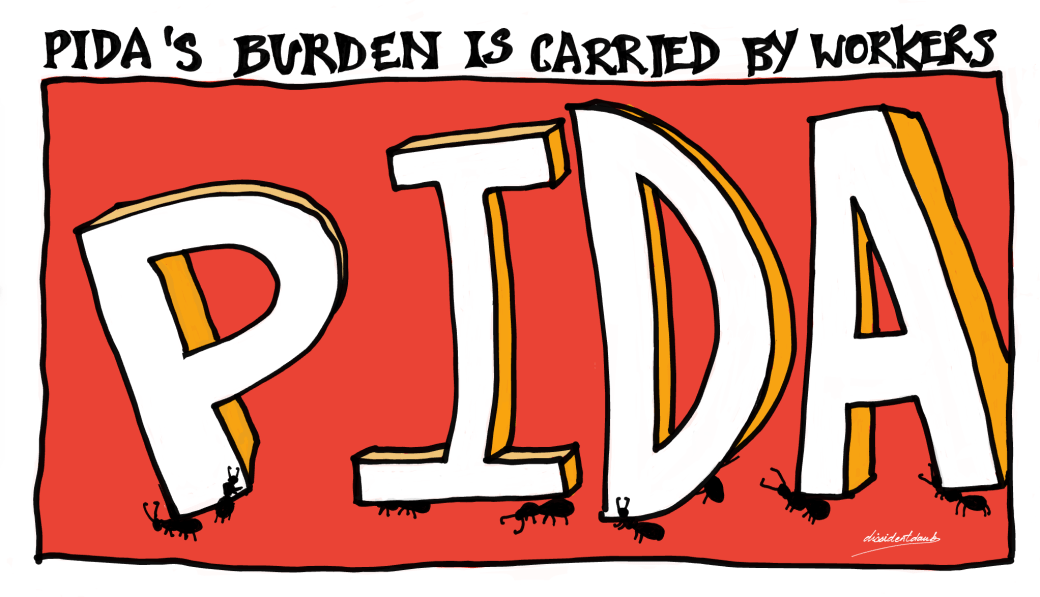
PIDA's burden is carried by workers

APPENDIX

Some other discussion points on the new Public Interest Disclosure (Protection) Bill:

  • The Bill implicitly defines a duty to protect whistleblowers in that the protection of whistleblowers is an explicit duty of the Commission which sets whistleblowing standards for others

However, we advise that an explicit, proactive, pre-detriment legal duty by employers and public authorities to protect whistleblowers should be added.

This would be consistent with the preventative principle set out in the Bill to reduce conflict and harm.


  • We believe the Bill could be improved with the addition of criminal sanction for not correcting wrongdoing (the Bill currently provides criminal sanction for failure to adequately investigate protected disclosures).


  • We suggest that the definition of detriment should include breaching or attempting to breach a whistleblower’s anonymity, and inappropriate gagging (see below).


  • Could the Bill’s section on NDAs be strengthened?

We believe that defining and making inappropriate gagging a legally recognised detriment would strengthen protections against whistleblowers being silenced.

We have also recommended that ‘super gags’, confidentiality clauses which hide even the existence of settlement agreements, should be banned.


  • What is a just maximum prison sentence with regard to any new whistleblowing law’s criminal provisions?

Should particularly egregious acts and omissions in whistleblowing governance that result in mass harm be subject to longer sentences than 18 months?

Australian corporate whistleblowing legislation provides prison sentences up to two years.

The UK Health and Safety (Offences) Act 2008 provides for prison sentences up to two years.

Gross Negligence Manslaughter has a sentence range of 1-18 years custody and potentially attracts a life sentence, “a blatant disregard for a very high risk of death” contributing to the definition of “high culpability”.


  • We advise that there is a mechanism for whistleblowers to access legal remedy as a last resort, in the event that redress via the whistleblowing body fails.

This would mirror US arrangements which allow whistleblowers to litigate if other means of redress are not satisfactory.


  • Does the Bill need to be adjusted to ensure that any new whistleblowing body has realistic focus and workload, especially when starting up?

International experience is that too wide a scope initially can reduce effectiveness.

Our concerns in regards to the width of the Bill’s scope relate in part to the Bill’s very wide definition of who is a whistleblower. For example, the list of parties defined as a whistleblower includes:

“(x)  an observer or passer-by; or

(y)  any other person.”

This echoes proposals by the controversial Whistleblowing APPG to accept anybody as a whistleblower. Such an arrangement would pave the way for deputisation of members of the public under US style bounty hunting laws.

We agree with the wider definition of whistleblowing to include groups particularly relevant to public safety and the public interest, such as patients, their families and foster carers looking after very vulnerable children, who currently may suffer retaliatory economic harm if they speak up but are not employees and thus are not protected by current law.

However, we feel the scope of the law and of any whistleblowing body should not be widened to the point of over burdening the system and affecting effectiveness.

  • The Bill is currently drafted to include close relatives only, and current law does not include co-habitees as “close relatives”.

We suggest that the definition of third parties who suffer detriment alongside whistleblowers should at least include co-habitees, if not others.


RELATED ITEMS

Emphasising the critical need for any whistleblowing body to be fully independent of the government, the case of a consultant anaesthetist Dr Julian Campbell has raised very serious questions about the NHS National Guardian’s approach to whistleblower confidentiality and her impartiality. She contacted the Freedom To Speak Up Guardian at his employing trust without his consent, causing him great distress because the trust Speak Up Guardian is married to the medical director about whom he had raised concerns:

Bullying and harassment at Harrogate and District NHS Foundation Trust & a concern about the National Freedom To Speak Up Guardian

UK Whistleblowing Law is an Ass: Helen Rochester v Ingham House Ltd and the Complicit CQC

Prescribed Persons or the Pretence of PIDA. How UK whistleblowers are ignored

Whistleblowers in Their Own Words: What’s wrong with UK whistleblowing law and how it needs to change

What could a new whistleblowing law look like? A discussion document


PIDA ASS (2)


Bullying and harassment at Harrogate and District NHS Foundation Trust & a concern about the National Freedom To Speak Up Guardian

Please sign and share: Replace weak UK whistleblowing law, and protect whistleblowers and the public

By Dr Minh Alexander NHS whistleblower and former consultant psychiatrist, 8 August 2020

Summary: Due to poorly designed systems and poor culture, NHS employers are able to treat healthcare workers unfairly with impunity. Oversight bodies allow this to continue by turning a blind eye. The disempowered status of NHS frontline workers and the consequent lack of genuine freedom to speak up is a safety issue. An example of very poor HR practice is given regarding Harrogate and District NHS Foundation, as found on a review of trust culture and leadership by Deloitte. The staff mistreatment  at Harrogate is examined through the case of Dr Julian Campbell, consultant anaesthetist who suffered a surreal six year ordeal and unofficial restriction of his practice. He informed the General Medical Council, Care Quality Commission and National Freedom To Speak Up Guardian about the poor HR practices at Harrogate and their impact on patient care, but they deflected his concerns. Of very serious concern, after Dr Campbell sought help from the National Guardian’s Office, he later discovered that the National Guardian contacted the local trust Freedom To Speak Up Guardian without his permission. This was despite this person being married to the Medical Director about whom he had raised concerns. This is additional evidence raising serious questions about the impartiality of the National Guardian’s Office and the degree to which it may pose a risk to NHS whistleblowers. To genuinely protect whistleblowers, UK whistleblowing law needs to be reformed and ineffective schemes should be replaced with robust enforcement infrastructure.

Introduction

Many cases over many years have shown that NHS doctors have few rights when their organisations take against them.

The processes which govern medical capability and conduct are weak and flawed, and in reality, external bodies largely allow employers freedom to act as they please.

Doctors are therefore dependent on a post code lottery, in which some fare well. But the lottery is determined by the competence and integrity of local managers, and whether such managers choose to abuse disciplinary processes for ulterior motives or out of incompetence.

This injustice has serious implications for patient safety because of its effect on culture and workforce confidence.

Harrogates restriction of a doctors practice

Multiple staff have raised concerns about Harrogate’s culture.

One of these is Dr Julian Campbell, consultant anaesthetist, who experienced the nightmarish disempowerment which can follow accusations about medical competence.

Allegations were made about Julian Campbell’s clinical practice in 2015 after twenty years as a consultant with no previous such concerns raised against him. Restrictions were placed on his practice. A long, very stressful saga followed for him and his family. He was referred to the National Clinical Assessment Service (NCAS). His Royal College found there were no safety concerns with his patient care, but six months training was recommended, which he successfully completed based on advice from his Medical Defence body.  But irregularly, he remained banned from working unsupervised on call and in the trust’s ITU on the grounds of “confidence”.

Alongside this, Dr Campbell raised concerns about the Deputy Medical Director’s repeatedly antagonistic behaviour  towards him and his concern that this sometimes seriously affected patients’ care. He raised these concerns with the trust personnel director and his clinical lead.

Dr Campbell and his wife Judith later made representations to regulators – the General Medical Council and Care Quality Commission, and to Henrietta Hughes the National Freedom to Speak Up Guardian, raising concerns about unfair treatment, bullying, ageist treatment (they say that at one point, he was asked if he was too old to do on call),  irregular handling of evidence by senior trust doctors and the trust’s failure to properly address the issues of patient safety raised by Dr Campbell.

For example, Judith Campbell informed the GMC of the following events:

Mrs Campbell told us about an incident referred to as the sentinel case.This case concerned a patient whom Dr Campbell had anaesthetised in May 2014 and was discussed at an ITU morbidity and mortality meeting (M&Mmeeting) on 14 May 2015. The patient had undergone a laparotomy on [date redacted to avoid patient identifiability, but the surgery had taken place one year previously]. Mrs Campbell explained that two doctors inaccurately presented that patients case to the M&M meeting without any prior communication with the professionals who had provided care for the patient. The errors in the presentation were such that Dr Campbell did not even recognise the patient when the case was presented. Mrs Campbell explained that the patient in the sentinel case was presented in such a way that prima facie, the consultant anaesthetist who had treated the patient had failed to undertake a number of basic actions and the failure had contributed to the patients death. However, Mrs Campbell says that in reality, the patient was palliative and subsequently died on ITU.

The day after the M&M meeting, the Deputy Medical Director told Dr Campbell in an email that he was the consultant anaesthetist who was responsible for the treatment and imposed supervision upon Dr Campbell, preventing him from being solely responsible for anaesthetising patients in category ASA 3 and above until he had undergone additional training. Dr Campbell was also prevented from working unsupervised on ITU.

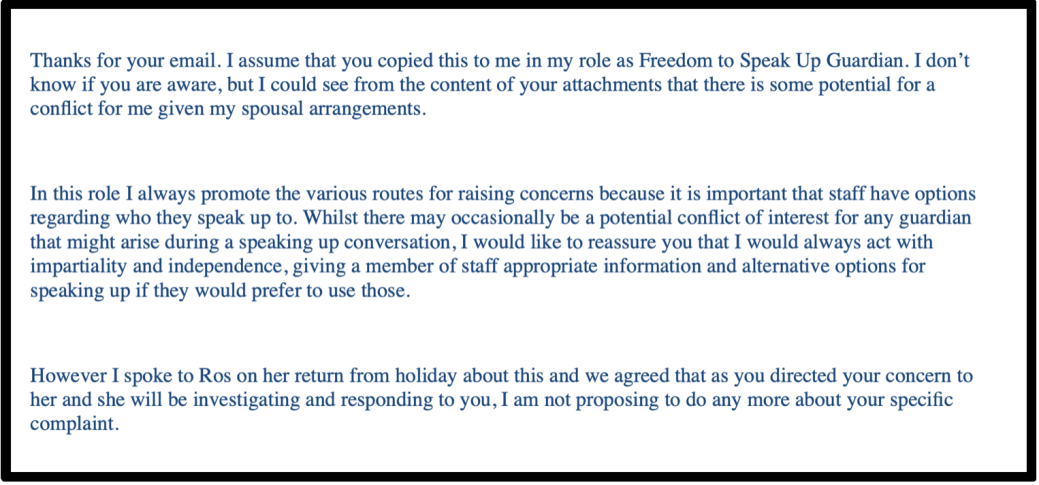
An important concern that Julian Campbell raised was that the trust’s Freedom To Speak Up Guardian, a doctor, was married to the then Medical Director David Scullion, with arising of conflict of interest.

In Julian Campbell’s case, this made it impossible for him to raise a concern about the actions of trust medical managers with any sense of safety and security. Indeed, he received an email on 23 November 2018 from the Freedom To Speak Up Guardian commenting on this issue:
Screenshot 2020-08-07 at 02.33.01

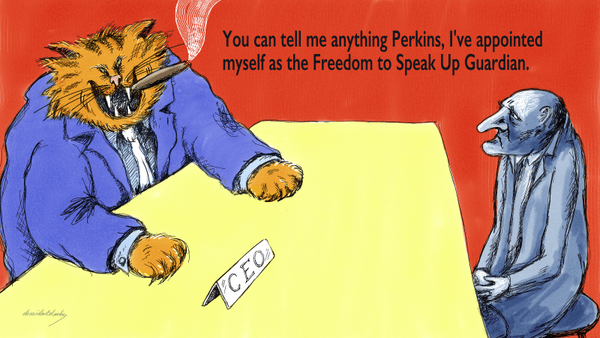
Dr Campbell subsequently flagged the conflict to the trust Chair and the then chief executive. He reports that they refused to accept that any conflict existed. The Freedom to Speak Up Guardian continued in her role despite his concerns.
ceo

Harrogates management

Harrogate’s previous chief executive until her retirement in March 2019  was a medic, Dr Ros Tolcher. Dr Campbell was told by her successor that she had hired Deloitte to undertake a review of trust culture.

In April 2019 Dr Tolcher was succeeded by Steve Russell, formerly NHS Improvement Executive Regional Managing Director London, (who incidentally oversaw the very late establishment of NHS Improvement’s useless NHS whistleblower employment support scheme).   

Under Steve Russell’s tenure, the Deloitte review commenced in August 2019. Deloitte has a very poor history of whitewashing, such as at  The Royal Wolverhampton NHS Trust and at Derbyshire Healthcare NHS Foundation Trust.

But even Deloitte, whilst emphasising positives, could not fail to make some damning findings against Harrogate’s management.

These are some of Deloitte’s critical findings, including perceived conflict of interest regarding the Harrogate Freedom To Speak Up Guardian being married to the Medical Director, and astonishingly heavy handed application of staff capability procedures. The latter included irregular “informal capability plans” [consistent with Julian Campbell’s experience] without prior communication, sometimes denying staff representation during such processes.

Independent assessment of leadership and culture at Harrogate and District NHS Foundation Trust and Harrogate Integrated Facilities Management

“A significant feature of our work was the number of both medical and nursing staff who reported apprehension or fear regarding the incident reporting and investigation approach in place at the Trust. Staff specifically cited the Complaints and Risk Management Group (CORM) as a source of fear, either as a result of personal experience or reputation. This was particularly (but not exclusively) felt to be an issue for the medical staff we spoke to. It is unusual for us to receive such consistent feedback that a single governance entity is a source of trepidation, as a result it would appear wise to revisit the governance structures around patient safety and particularly in relation to CORM.”

“The Freedom to Speak Up arrangements in place at the Trust were frequently commented on by the medical staff interviewed as part of our work, with many feeling that current arrangements presented an actual or potential barrier to openness. Whilst no individual questioned the integrity of the FTSUG (who was frequently described as accessible, approachable, compassionate and helpful), our view is that the potential conflict of interest that exists under the current arrangement is such to act as a deterrent to some who may wish to raise concerns.”

“We have been unable to undertake targeted work to evaluate the views of minority or hard to reach groups of staff due to the lack of diversity and inclusion structures, forums and arrangements in place at the Trust. In our experience not having such arrangements in place is unusual, as most NHS Trusts have implemented and well established such structures. Whilst some racist attitudes were present in free text comments in response to the survey of HIF staff, we had no direct issues raised with us regarding equality and diversity related bullying during our work.”

“Whilst it is not unusual for some staff to criticise the responsiveness or level of service provided by corporate services during our reviews, human resources support at HDFT was frequently criticised by staff during our work. The HR department was described variously as:

·      Providing variable advice (dependent upon who in the HR department a line manager spoke to);

·      Adhering rigidly and inflexibly to policy;

·      Being slow to act on issues, with cases dragging on in some instances for years; and

·      Leaving staff with a feeling that the HR position regarding behavioural issues is to try to “make them go away””.

“We asked all those in line management positions what level of training and development they had received in relation to performance management, managing difficult conversations and resolving conflict. In all cases staff told us that they felt the current offer in place at the Trust in this area to be inadequate. Our work also found concerns regarding the quality of HR policy and procedure currently being applied at the Trust. For example, a number of staff described instances where they had been placed on an ‘informal capability plan’ by the HR team with no prior discussion or communication and that they had been denied any representation at the meeting scheduled to discuss and agree this plan. We understand that a programme of work to review HR policies has now been commenced.”

B.1 Medical Leadership

A significant number of individuals raised concerns with us about the culture amongst medical staff at the Trust, in particular relating to medical leadership (it is important here to state that we received almost universal praise from staff in relation to the behaviour and leadership of the Clinical Directors). The staff reporting these concerns were of all grades and from a broad range of specialties. The concerns raised ranged from general issues about poor behaviour not aligned to the trust’s values, to direct accusations and descriptions of bullying and harassment. Of the 35 staff raising these concerns with us 26 explicitly used the term ‘bullying’ or ‘bully’ to describe behaviour and a number relayed instances where they felt they themselves, or others had been bullied. We have detailed some of the examples of bullying cited by staff in the full version of this report.

A number of the staff we spoke to during our review referenced what they felt was the impact of the medical leadership culture upon engagement, openness and incident reporting from medical staff. These individuals explicitly stated that there was a negative impact upon the patient safety reporting culture at the Trust, to the extent that some behaviours were a deterrent to reporting.”

B.2 Radiology

During phase 1 of our review a number of staff raised concerns about Radiology, either in general terms about Radiology as a department, or specifically regarding the practice and behaviour of individuals within Radiology. In all of these instances the concerns raised related to behaviours towards medical staff from specialties outside of Radiology when requesting scans. In phase 2 of our work we spoke to 14 members of staff from within Radiology directly, and a further 51 members of staff from Radiology responded to the survey based on the NHSI / Kings fund culture diagnostic tool.

A number of staff raised general concerns with us about the culture in Radiology, referring to a department with a poor culture, and describing Radiology as being ‘unhelpful’, ‘unfriendly’ and/or obstructive department. Some staff from outside of Radiology (particularly the doctors in training who spoke to us) compared the department to others where they had worked, reflecting that they had not experience such problems requesting scans in other Trusts. In our own experience of undertaking leadership, governance and cultural reviews at NHS Trusts, we have rarely come across such strength of feeling about the approach of a Radiology department to requests. We found this issue to be mirrored within Radiology, where we found staff to use combative language when describing their department’s relationship with wider organisation. Triangulating this point, 60% of survey respondents within Radiology did not agree with the statement “the Trust values the service we provide”.

“Finally, we found limited oversight and visibility of cultural and organisational development based assurance and indicators at Board and committee level. The Executives and Non Executive Directors interviewed reflected that this was a gap in the governance and assurance arrangements in place at the Trust. There is in our view scope to undertake work to strengthen this aspect of governance and provide greater opportunity to explore assurance on organisational culture at Board level.”

Given that Deloitte previously minimised the very controversial Wolverhampton CEO’s proven whistleblower suppression as a mere matter of personal style”, Deloitte’s report on Harrogate represents in relative terms, a very serious criticism

It is also relevant to note that in regards to Deloitte’s criticisms of the Radiology Department, David Scullion is according to the trust website a consultant radiologist and, he continues to work in that clinical role at Harrogate.

Deloitte’s review reported in February 2020. Its report summary dated May 2020 was published via the Trust board papers in June 2020.

In its response to the Deloitte review report, the trust has taken the upbeat tack that Harrogate is “already a great organisation”:

Harrogate District NHS Foundation Trust’s response to Deloitte review: “Towards Our Ambition to be an Outstanding Place to Work”

Nevertheless, the board papers indicated that the trust board undertook the following actions:

“6. A summary of the actions agreed by the subcommittees is set out below.  

a. Our Board will place culture and experience at the heart of its governance and decision making. This includes the creation of a people and culture committee, which will focus on culture and staff wellbeing, and the development and implementation of a more routine approach to identifying concerns about the culture and behaviours within teams. Our HR experts will focus on the proactive identification and resolution of issues, supporting first line leaders and teams to quickly address the underlying causes of behaviours that are not in line with our values. Finally, we have strengthened the leadership capacity of Harrogate Integrated Facilities through new appointments, and we have appointed a new medical director with specific leadership experience in culture and engagement who started in post on 15th June 2020.

b. In order to better support staff the culture in which the incident reporting process sits will be reviewed, and the approach of CORM in particular, will be reformed. Support will be provided to users of Radiology and the Radiology team to agree a common vision for radiology at HDFT and standards of behaviour. The time taken to address concerns or poor behaviours will be reduced and a feedback loop to check for improvements will be introduced. OD support will be provided to Harrogate Integrated Facilities and external facilitation support to our radiology team, where a number of issues were identified will be commissioned to improve the experience of staff in Radiology and those who refer to it. Finally, our Freedom to Speak up Guardian arrangements have been reviewed and changes made from 18th June 2020.  

c. To further promote fairness, consistency and responsiveness the approach to concerns being raised, the application of HR policies, and the provision of advice which support these will be reviewed. Additional controls to recruitment have been put in place, whilst the overall process is reviewed. The pilot ‘first line leaders programme’ will be rolled out to all managers and leaders in HDFT and HIF and other development programmes will be aligned to this to ensure there is comprehensive support for managers. Our staff networks will be used to learn about the specific lived experience of colleagues from minority groups. Finally, our policy is being updated to specifically include how conflicts of loyalty and relationships between work colleagues should be managed.

d. Formal investigations will take place focusing on behaviours in Radiology, into appointments identified as not meeting the required HR criteria and process in HIF and the reported culture of bullying in Estates. There will be an external assessment of the capacity and capability within HIF overall, and in more depth in Estates.”

The trust has appointed a new Executive Medical Director who has replaced David Scullion on the board:

We have recruited Dr Jacqueline Andrews as our new Executive Medical Director. She has significant medical leadership experience and has been appointed with specific objectives around the development of a positive culture. Jackie starts in June 2020.

An internal email of 17 June 2020 by the board lead for Freedom To Speak Up showed that the Harrogate trust Freedom To Speak Up Guardian was stepped down due to the concerns about perceived conflict of interest. However, she has continued in her role as Deputy Director of Governance:

“From: HDFT-UPDATE (HARROGATE AND DISTRICT NHS FOUNDATION TRUST)
Sent: 17 June 2020 15:03
To: allusers; AllUsers
Subject: Interim Freedom to Speak Up Guardian Arrangements

Sent on behalf of Jill Foster, Chief Nurse, Non-Executive Director of Harrogate Integrated Facilities, Executive Lead for Freedom to Speak Up

Dear Colleagues,

Interim Freedom to Speak Up Guardian Arrangements

HDFT is a values driven organisation; respectful, responsible and passionate. We promote the need to treat each other with kindness, civility and compassion.

We want all our colleagues at HDFT and HIF to feel supported in their work, to experience civil and respectful behaviours, to feel that different perspectives are looked for and are welcomed, where there are concerns feel able to speak up safely and to feel that concerns will be acted upon swiftly and appropriately.

The Freedom to Speak Up Guardians (FTSUG) have an important role for ensuring colleagues have a safe route for being listened to and supported in speaking up about patient safety, quality of care and their experience of working in our organisations.

We have been reviewing our current Freedom to Speak Up arrangements to ensure there are no barriers to encouraging people to speak up. Currently we have two Freedom to Speak Up Guardians, Dr Sylvia Wood, Deputy Director of Governance and Shona Kerr, Health Visitor. From today, Sylvia will not continue in the role of Freedom to Speak Up Guardian.

Sylvia was the Trust’s first Guardian and has worked tirelessly to ensure colleagues have been supported through difficult times, felt listened to and have had their concerns resolved.  At the time Sylvia was asked by the Board to take up the role, it was known that she was married to the Trust’s Medical Director. Sylvia has undertaken the role with determination, passion and integrity, has always been open about this conflict of interest, and has been thoughtful in seeking to consider how to address such issues more broadly. However, it has become clear that despite Sylvia’s personal efforts, a marital relationship with a senior colleague is seen by some as a barrier to speaking up.

On reflection, given the unique role of the FTSUG, the Board has decided that in order to be a FTSUG, it is important that there is no such conflict of interest. As David continues in a senior role in the Trust as a Consultant Radiologist it is not possible for Sylvia to continue as a FTSUG.  She will therefore step away from this role from today and I would like to say thank you on behalf of the organisation for her dedication in developing this very important route for colleagues to bring forward their concerns. I am looking forward to continuing to promote a fair and just culture with Sylvia in her role as Deputy Director of Governance.

I am delighted that Shona Kerr is continuing in the role of Freedom to Speak Up Guardian. In addition to Shona, two colleagues – Kath Banfield, Head of Nursing, and Alison Pedlingham, Head of Midwifery – have temporarily agreed to be Freedom to Speak Up Guardians. This is so we can all collectively agree to a permanent arrangement for Freedom to Speak Up Guardians.

To help us decide our future Freedom to Speak Up structure I am asking all colleagues, if you wish to, to participate in a survey linked below:

https://docs.google.com/forms/d/e/1FAIpQLScoN1RZOsX4c-tJ_478tH7NsZpAylS2TOT3ViQzFveCM3DLJg/viewform?usp=sf_link

The survey will be closed on Friday 26 June 2020.

Kind Regards,

Jill Foster

Chief Nurse

Non-Executive Director, Harrogate Integrated Facilities

Executive Lead for Freedom to Speak Up”

Inactive oversight bodies

Alongside the Deloitte review, the responses from GMC, CQC and the National Guardian to Julian and Judith Campbell’s concerns were typically deflective.

GMC

The GMC deemed that the concerns about trust medical managers were not at a threshold to bring them under GMC’s jurisdiction as fitness to practice issues, even though honesty was raised in some instances. GMC instead advised that they were matters for the trust to resolve.

The GMC stated in its final response of 23 October 2019 to Judith Campbell (ie. before the Deloitte review had reported):

I am writing to let you know that having very carefully considered your request, an Assistant Registrar has concluded that there are no grounds for commencing a review of our decisions.

The reasons for the Assistant Registrars conclusion are explained in their decision, which is enclosed at Annex A. The Assistant Registrar has authority from our Chief Executive Officer to make these decisions.

I realise that it must seem cold and insensitive that we refer to the law and our rules when dealing with such a personal matter which has clearly been upsetting for both you and Dr Campbell. These are referred to only so we can fully explain what we can and cannot do, and why we have made the decisions we have.

CQC

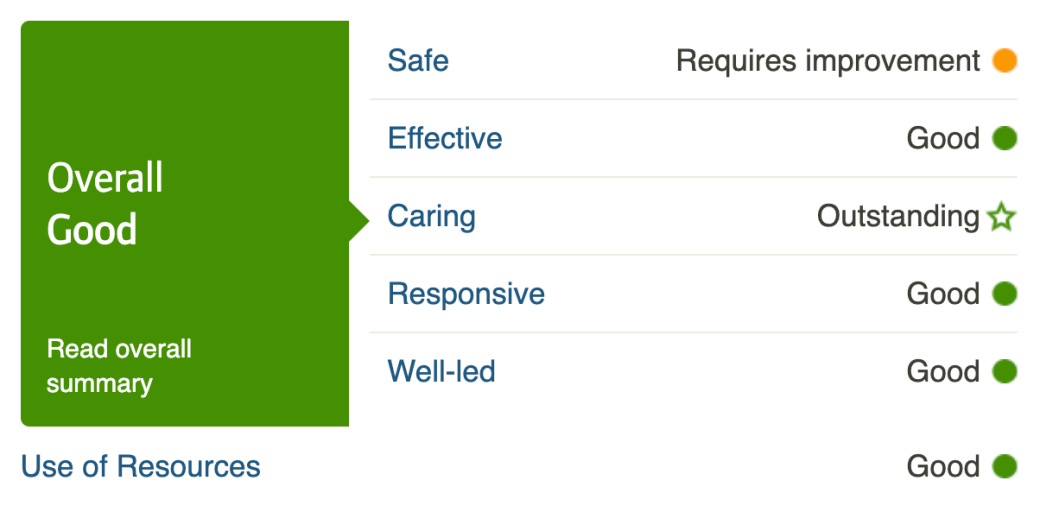
Although the CQC received Julian Campbell’s concerns in August 2018, it rated Harrogate “Good” overall and “Good” on the Well Led domain in March 2019, despite deeming the trust as “Requires Improvementon Safety.

Screenshot 2020-08-08 at 01.45.29

When later challenged with the evidence from the critical Deloitte review, the CQC stuck to its usual line of insisting that it does not investigate individuals’ concerns, and only undertakes generic inspection.

An email from CQC of 7 July 2020 to Julian Campbell stated:

To clarify, we do not undertake investigations to resolve, prove or disprove the individual concerns a person has about their place of employment.  The decisions our inspection personnel make are a result of evidence obtained and corroborated during and in between inspections. Even if CQC had concerns or found failings at the Trust in those areas raised by you, our role would be to drive improvements through issuing requirements or to take enforcement action.

From the records, I can see that the information shared with CQC was added to the central recording system alongside all the intelligence received about the Trust.  In the planning of the inspection, I can again see your information has been taken into account and used alongside the views and experiences of other staff members.

I am satisfied that we have handled your information in line with our policies and procedures for whistleblowing. Clearly the Trust were aware of your concerns prior to our involvement. Our role is not to investigate the individual issues that whistleblowers may raise but to use our inspection powers to ensure that the Trust is meeting the fundamental standards. This was undertaken via the November 2018 inspection which included focus groups speaking directly with staff to gain their views on the culture in the Trust and saw that senior management were aware of the need to make improvements in some areas.

Fit and Proper Person (FPPR) referrals have since been made to the CQC, but with little expectation that CQC will respond robustly.

The National Guardian

Julian Campbell first contacted Henrietta Hughes’ office on 21 August 2018 about his concerns with Harrogate’s managers and culture, and the conflict of interest surrounding the trust Freedom To Speak Up Guardian.

Henrietta Hughes’ Case Review & Governance Manager, Simon Pook, wrote back on 14 March 2019, implying that the conflict of interest with the trust Freedom To Speak Up Guardian had been resolved by the hiring of an additional Freedom To Speak Up Guardian:

In response to the issue you raised concerning the trust Freedom to Speak Up Guardian and a possible conflict of interest, we have taken this matter up with the trust. As a result, to address the issue you have raised, the trust informed us at the end last week that they have now begun recruiting an additional Freedom to Speak Up Guardian to provide workers with an alternative source of support.

In respect of the other issues you describe in your referral, we are able to assist you to access support to raise this in your trust, for example should you wish to raise a formal complaint, or request an internal review of the handling of your case. While we appreciate that you may not wish support from the Freedom to Speak Up Guardian to do this, for the reasons you have given, we can help facilitate contact with others with responsibility for supporting workers to speak up, for example the organisations non-executive director.

On 18 March 2019 Dr Campbell challenged this National Guardian’s Office (NGO) response and he expressed a serious lack of confidence in internal trust processes.

To be offered support to raise the issues internally when I had understood that you would be an independent reviewer of the issues that I have raised is, quite frankly, devastating. Who will hold HDFT to account if the National Freedom to Speak Up Guardian won’t?

In response, the NGO advised that it might consider a review of the trust, pending further enquiries:

If we conclude…that the investigation was potentially flawed, we would undertake a review of how the trust responded to the issues you spoke up about to identify learning and improvement for the trust. Where we find evidence on such reviews of both speaking up culture, as well as process and policies that need improvement, we jointly agree actions to address this with the trust and our colleagues at NHS Improvement.

Dr Campbell gave the National Guardian permission to contact NCAS and the trust Non Executive board lead for Freedom To Speak Up in order to make further enquiries about his case.

However, he later discovered that National Guardian in fact contacted the local Freedom To Speak Up Guardian about his case without his permission. He was told this by Steve Russell the trust CEO at a meeting on 11 June 2019.

He wrote in distress to the National Guardian’s Office on 13 June 2019:

It has therefore caused me great distress to discover that the National Guardian did not contact the CEO, as your email indicated she would, but that she in fact contacted Sylvia Wood, who is now able to inform her husband.”

Following this challenge, the NGO wrote the next day to report that the National Guardian had spoken to the trust CEO that morning and:

This discussion was encouraging. The CEO gave assurance to Dr. Hughes that the trust is keen to identify any learning and improvement concerning the matters you have raised with us. It was agreed that the trust will now contact you to discuss how to move forward on this, including agreeing a point of contact with you, with whom the NGO can liaise.”

But no National Guardian case review of Speaking Up at Harrogate has since been announced.

It is poor that the NGO initially accepted a governance bodge by the trust as “resolution” of the conflict of interest issues at Harrogate, instead of ensuring a truly safe solution was found.

It is especially worrying that the National Guardian contacted the trust Freedom To Speak Up Guardian about a case without permission, and without disclosing that she had done so. What does this say about the independence and impartiality of the NGO? How many other times has such communication taken place behind the scenes? The NGO already has little credibility with whistleblowers. Its failure to date to genuinely challenge vested interests has only strengthened the nagging impression that it was established to be a government PR tool. The Office was designed to be weak. If it fails to observe even whistleblowing basics such as respecting confidentiality, that would make it an active risk to whistleblowers and the public interest.

Hypocritically in its most recent case review report published on 11 June 2020, relating to the Whittington Health NHS Trust, the National Guardian’s Office criticised the Whittington’s whistleblowing policy because of:

“Lack of information about how the trust would support and protect an individual’s confidentiality” 

Criminals have more rights than doctors

Julian Campbell and his family have endured six years of gruelling institutional processes, ending his long career as a public servant on a sour note. Whilst no oversight body has investigated what happened to him, the findings of the Deloitte review give credence to his concerns. Importantly, the review suggests that others have experienced mistreatment and arbitrary treatment, and that there is still potential for the pattern to continue.

Dr Campbell wrote to the NGO on 13 June 2019:

“ I have handed in my notice with the Trust. I reach the age of 60 on July 15th and my last day of service will be July 14th. My desire to leave not just HDFT but also medicine, and probably never return, is completely due to the maltreatment I have suffered. The ability of medical managers to behave badly without restraint seems to be complete.

Reflecting on what happened to him, he comments:

“NHS safety is severely damaged by a culture of fear and the inappropriate promotion of those who are unsuitable to have power over others. With fear of reprisal by managers there is no freedom to speak up. In Harrogate the current national regulatory structures have protected those whose failings have led to poor patient outcomes and harmed those who have provided safe care.

Superficial initiatives are ineffective. Harrogate had a campaign of encouraging “kindness” in 2019. This will have limited effect on those who lack empathy.

I believe that the current national medical (and other) regulatory structures need to be changed, and that investigation of clinicians’ performance and conduct issues should be conducted independently, to avoid abuse of process by employers and managers with axes to grind.”

Dr Campbell’s wife Judith is a lawyer, who based on her professional experience commented:

I really think we give more rights to our criminals than we do to our Drs”

The alleged serious mistreatment of NHS staff through overbearing HR process needs to be taken much  more seriously. Staff are the NHS’ most precious resource. Doctors like Julian Campbell are trained and developed at great public expense. It is unacceptable and wasteful that there are insufficient checks against local management abuses. The NHS is a valuable public asset, not a private fiefdom, and Nolan principles of accountability should fully apply.

Alongside this, the ineffective National Guardian’s Office and NHS Freedom To Speak Up Guardian network should be replaced with genuine reform of UK whistleblowing law and related infrastructure.

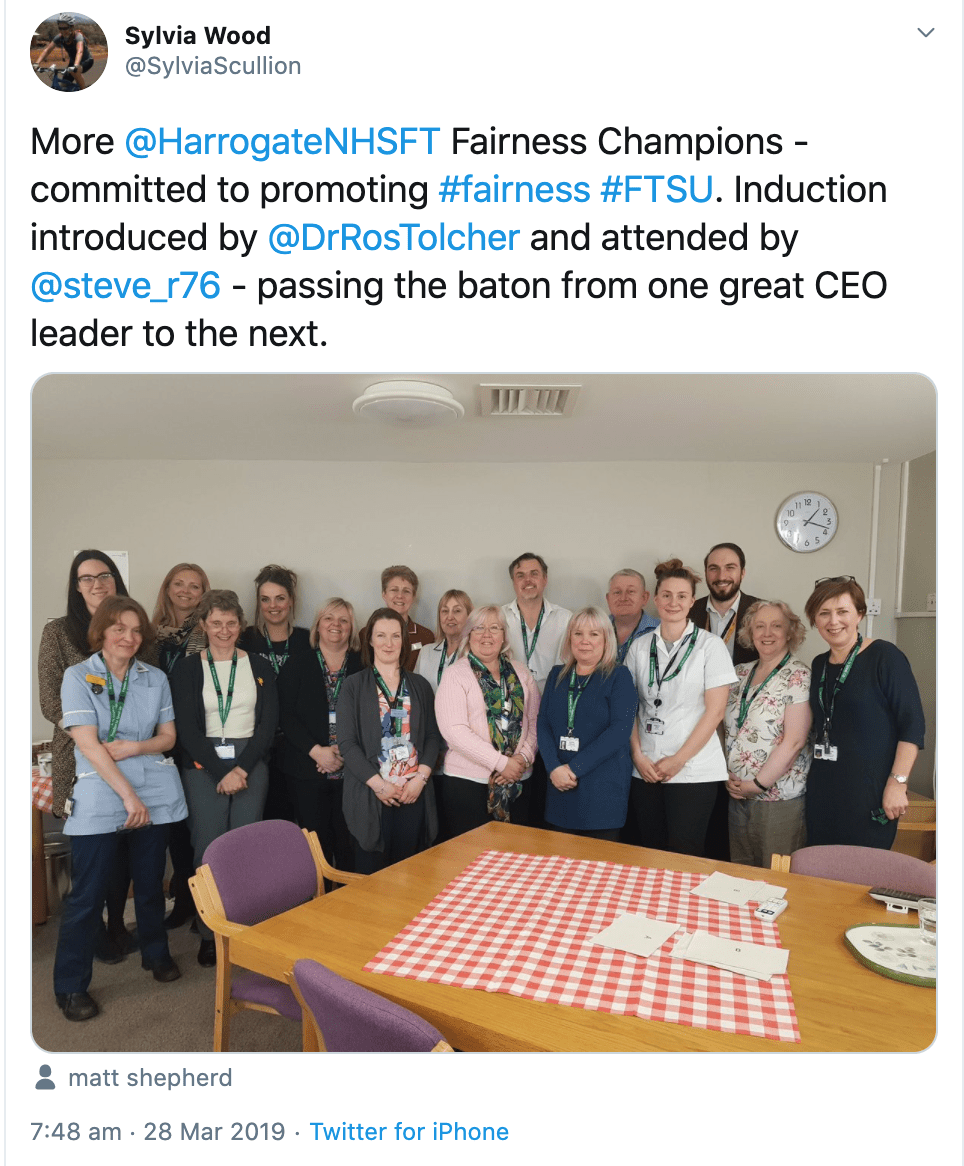
The Deputy Governance Manager and former Freedom To Speak Up Guardian of Harrogate District NHS Foundation Trust, tweeting compliments to trust senior management in May 2019:
Screenshot 2020-08-08 at 01.22.15

UPDATE 27 FEBRUARY 2021

An NHS Improvement investigation, albeit flawed, has upheld that the National Guardian’s Office breached Dr Campbell’s confidentiality:

An unsatisfactory complaint investigation by NHS Improvement into breach of confidentiality by the National Guardian’s Office

RELATED ITEMS

  1. In another matter, based on reports received, I asked Harrogate if any concerns had been raised in the last five years about disrespectful or unlawful treatment of deceased trust patients’ bodies. On 21 February 2020, the Trust denied any such concerns:

3. With respect to the reports that Savile was allowed to treat the bodies of deceased patients in a disrespectful manner at Leeds General Infirmary –
please advise if any concerns have been raised about any disrespectful, and or unlawful treatment, of deceased patients
bodies at your trust in the last 5 years? No”

However, another roughly contemporaneous FOI request to the CQC revealed that the regulator had received a disclosure about the handling of a patient’s body:

I can confirm that we hold one record from 2015 regarding one allegation of poor manual handling of a body and the staff concerned making inappropriate comments.

The matter is inconclusive but a concern arises about whether the trust answered truthfully in February.

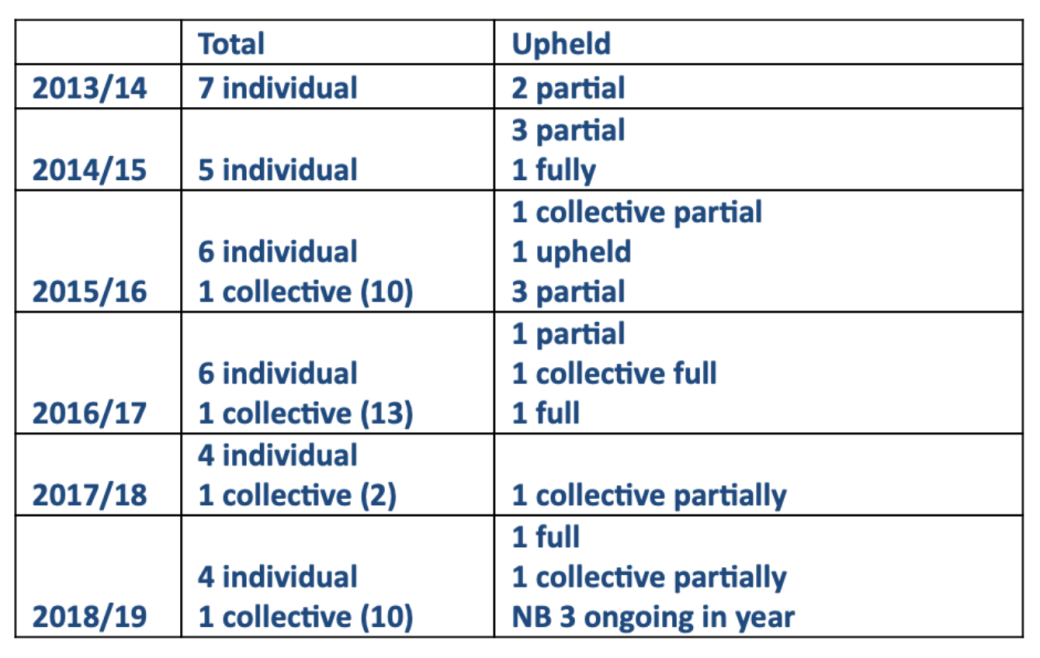
Unrelated to Julian Campbell’s case, I asked Harrogate under FOIA for data on trust grievances.

This too has since proved anomalous. The trust claimed to me that no individual grievances were upheld in 2017/18, but I now understand that Julian Campbell’s grievance was partially upheld.
Screenshot 2020-08-08 at 01.17.58

Again, a concern arises about the truthfulness of the trust’s response.

2. In April 2020 Harrogate District NHS Foundation Trust staff whistleblew directly to the media over trust managers’ handling of PPE safety safety issues:

NHS removing PPE from cleaners, porters; clinical staff sharing visors; no proper PPE in maternity, say staff

3. The toothlessness of the National Guardian’s Office: Why it cannot be a model for protecting whistleblowers

4. My Beautiful (Ministerial) Launderette: The National Guardian and Paula Vennells

5. Safe staffing and North Tees’ unfair sacking of ‘unblemished’ whistleblower nurse Linda Fairhall. HR Director was also the Freedom To Speak Up Guardian

6. Robert Francis’ denial and a major failure of the government’s Freedom To Speak Up model at West Suffolk NHS Foundation Trust
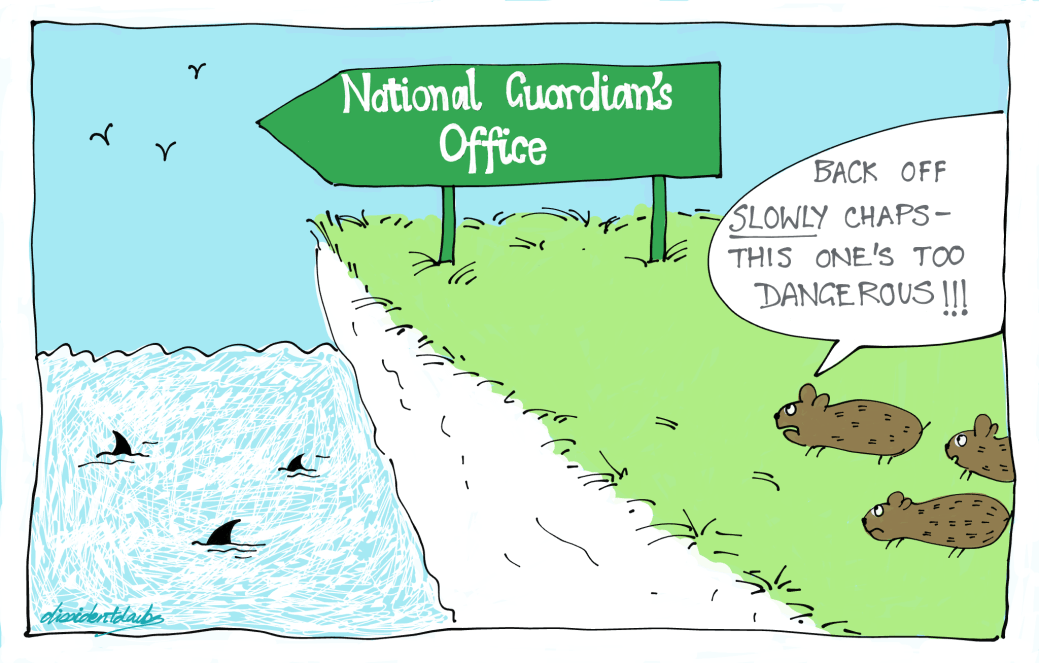
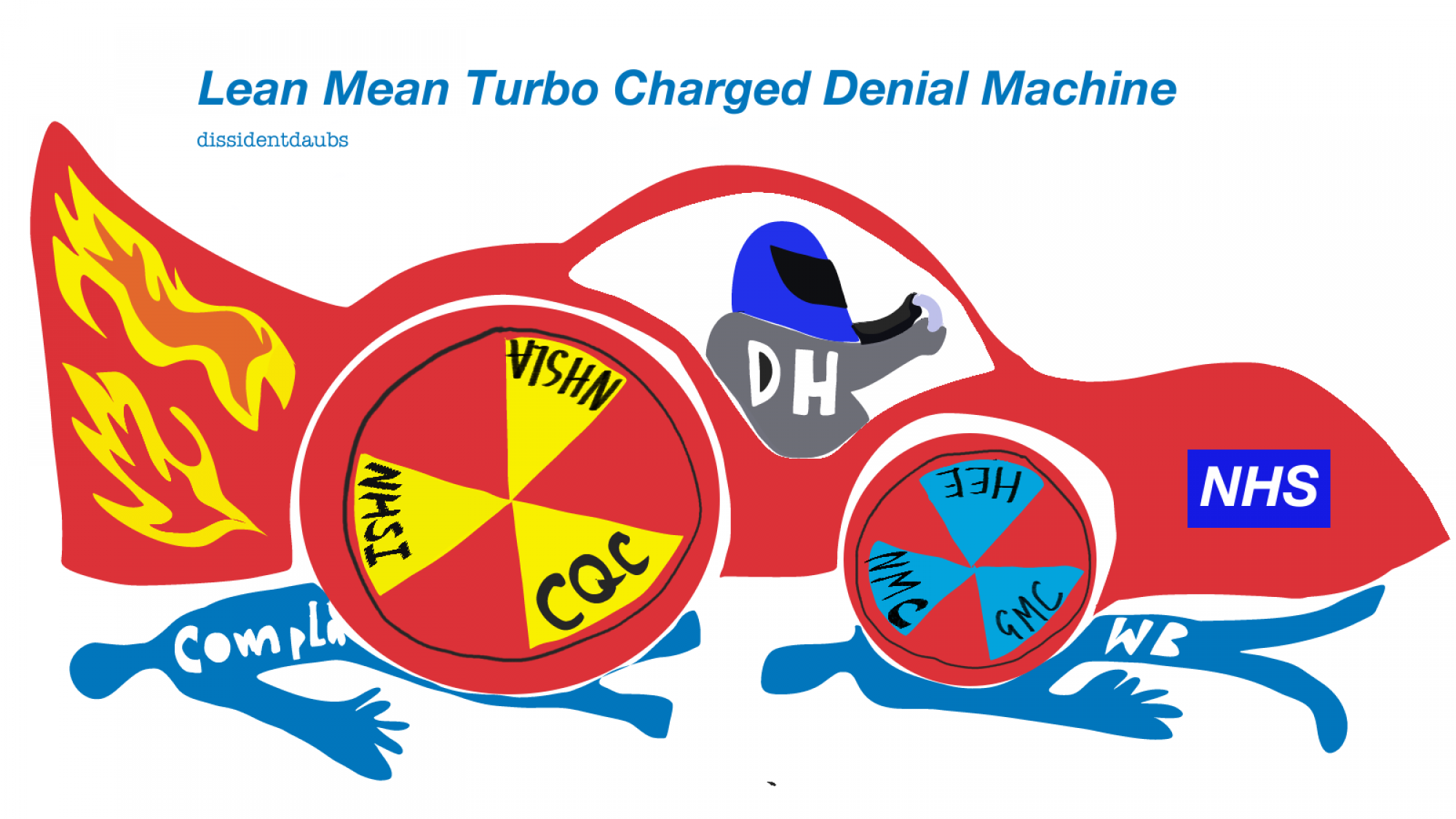
Lemmings National Guardian cliff

Post Office Horizon scandal: How Dido Harding helped to recycle Paula Vennells, FPPR and a suggestion for the BEIS Minister

Please sign and share:

Petition to replace weak UK whistleblowing law to protect whistleblowers and the public


By Dr Minh Alexander, NHS whistleblower and former consultant psychiatrist, 11 June 2020


Summary: The Criminal Cases Review Commission which is responsible for scrutinising possible miscarriages of justice has determined that at least 47 and implicitly, possibly up to 900 private prosecutions  by the Post Office, based on evidence from the flawed Post Office Horizon computer system, are unsafe. It has advised that those who have been prosecuted on the basis of Horizon evidence who have not appealed so far should consider doing so, and it has advised that there should be a review of the Post Office’s misused prosecution powers.

Related to this, the former Post Office CEO Paula Vennells’ fitness as a director has been further questioned by a government minister, who has asked the Care Quality Commission to review her fitness in her current role of Chair of Imperial College Healthcare NHS Trust. A problem is that she has been carefully protected by the powerful, including the leadership of the Church of England. Furthermore, Dido Harding the Chair of NHS Improvement was personally involved in Vennells’ selection for the Imperial Chair. NHS Improvement has admitted that it gave no ‘specific weight’ to the major litigation against the Post Office nor to MPs’ concerns about the Post Office’s leadership at the time that it appointed Vennells to the Imperial Chair. NHS Fit and Proper Person arrangements are not fit for purpose. They are also under the control of Dido Harding and NHS Improvement, who have delayed in acting properly upon the recommendations of a review by Tom Kark QC into these issues.

Justice has been brutally rough for the subpostmasters, and that deep wrong is rubbed in by impunity for those responsible. This injustice is also highly corrosive to NHS safety culture.


Background

The Post Office Horizon mass miscarriage of justice scandal is one of the deepest stains in the history of British justice and governance.

The full details can be found at the website Justice For Subpostmasters Alliance, the website PostOfficeTrial.com by Nick Wallis  and in coverage by Computer Weekly, especially by Karl Flinders

In short, the Post Office has archaic powers of investigation and prosecution, from its days of pinching highwaymen.

It has used them unwisely and there is a long  record of concern about its rough justice, as illustrated by this example from Hansard 1955, about the case of Frederick Turvey, Subpostmaster Worcester, who was subjected to bruising treatment by the Post Office investigation branch & ultimately dismissed:

Debate 24 June 1955: Subpostmaster (dismissal)

In the last twenty years, there have been hundreds if not thousands of cases in which the Post Office abused its powers to intimidate and unjustly prosecute sub postmasters because of phantom financial shortfalls caused by the faulty Horizon computer system, an unfit DWP cast off.

Instead of fixing the root problem, of which it was aware for many years, the Post Office brazened it out and scapegoated sub postmasters. It accused them of theft, extorted money from them which they did not owe, and prosecuted them with some cases resulting in jail sentences.

The cover up continued despite pressure from parliament and campaigners over many years, during which time the Post Office continued to harass and unjustly prosecute yet more sub postmasters.

When faced with evidence it did not like, such as the finding of investigations by forensic accountants Second Sight, the Post Office buried it.

When sub postmasters finally launched a class action at the High Court, the Post Office went into suppression overdrive with the full panoply of dirty tricks, earning it censure by the trial judge and an appeal court judge for its disreputable conduct.

Alas for the sub postmasters, the Post Office’s dirty tricks were effective in halting litigation prematurely because their resources had been depleted. They were forced to accept a sub optimal settlement, which after payment of legal costs leaves them with heartbreakingly little for the losses and the deep pain that they and their loved ones have endured.

Nonsensically, those subpostmasters who bravely risked so much by litigating, and who thereby forced disclosure of evidence which revealed that the Post Office had known that Horizon was faulty all along, will receive less through settlement than those who did not litigate will receive in compensation.

Most recently, the Criminal Cases Review Commission (CCRC) finally concluded its agonisingly lengthy review of complaints of unsafe prosecutions and convictions of subpostmasters by the Post Office.

CCRC has referred a total of 47  cases to the Court of Appeal for re-examination of unsafe convictions:

CCRC press statement 3 June 2020

CCRC sends 47 subpostmaster miscarriages of justice for appeal, asks for prosecution powers review

The subpostmasters who have effectively had their names cleared by the CCRC:


The list below provides details of all of the cases whose referral has been announced today. They details appear in this order:

Surname, forename – Offence(s) – Date of Conviction – Court of Conviction

Ashraf, Kamran – Theft – 28/1/04 – South Western Mags’ Court
Barang, Jasvinder – Fraud 3/8/12 – Luton Mags’ Court

Blakey, David – Theft and false accounting -17/12/04 – Great Grimsby CC
Brennan, Lisa – Theft – 4/9/03 – Liverpool Crown Court
Buffrey, Wendy – False accounting – 17/10/10 – Gloucester Crown Court
Burgess, Tim – False accounting – 12/8/11 – Teesside Crown Court

Butoy, Harjinder – Theft – 25/9/08 – Nottingham CC
Capon, Barry – Theft and false accounting – 9/10/09 – Ipswich Crown Court
Clark, Nicolas – False accounting – 23/2/10 – Doncaster Crown Court

Cleife, Julie – false representation – 26/10/10 – Basingstoke MC
Cousins, Wendy – Theft – 5/5/09 – St Albans Crown Court
Darlington, Scott – False accounting – 22/2/10 – Chester Crown Court
Fell, Stanley – False accounting – 27/7/07 – Leicester Crown Court
Felstead, Tracy – Theft + false accounting – 2001 – Kingston-Upon-Thames CC
Gill, Kashmir – False accounting – June 2010 Oxford Crown Court
Graham, William – False accounting – 14/1/11 – Maidstone Crown Court
Hall, Alison – False accounting – 30/6/11 – Leeds Crown Court
Hamilton, Jo – False accounting – 2008 – Winchester Crown Court
Hedges, David – Theft and false accounting – 7/1/11 – Lincoln Crown Court
Henderson, Allison – False accounting – 15/12/10 – Norwich Crown Court
Holmes, Peter – False accounting – 22/12/09 -Newcastle-Upon-Tyne CC

Howard, Gillian – False accounting – 26/4/11 – Bradford CC
Hussain, Neelam – Theft – 20/6/11 – Wolverhampton Crown Court
Hutchings, Lynette – False accounting – 30/7/12 – Portsmouth Crown Court
Ishaq, Khayyam – Theft – 7/3/13 – Bradford Crown Court

Mahmood, Tahir – False accounting – 16/12/05 – Birmingham CC
McDonald, Jacqueline – Theft and false accounting – 2011 – Preston CC
Misra, Seema – Theft and false accounting – 21/10/10 – Guildford CC
O’Connell, Dawn -False accounting – 12/9/08 – Harrow Crown Court
Owen, Damien – Theft – 7/12/11 – Mold Crown Court
Page, Carl, Theft – 1/1/07 – Stafford Crown Court
Parekh, Vijay – Theft – 8/11/1 – Harrow Crown Court
Patel, Vipinchandra – Fraud – 3/6/11 – Oxford Mags’ Court
Rasul, Mohammed – Theft – 20/6/07 Manchester (Minshull) Crown Court
Robinson, Della – False accounting – 30/11/12 – Manchester Crown Court
Rudkin, Susan – False accounting – 23/3/09 – Burton-upon-Trent Mags’ Court
Sayer, Siobhan – False accounting – 15/2/10 Norwich Crown Court
Shaheen, Rubbina- False accounting – 22/11/10 – Shrewsbury Crown Court
Skinner, Janet – False accounting – 5/1/07 – Kingston Upon Hull Crown Court
Thomas, Hughie – False accounting – June 2006 – Caernarfon Crown Court
Thomson, Pauline – False accounting – 1/2/10 – Maidstone Crown Court
Trousdale, Christopher – False accounting – 8/3/04 Scarborough Mags’ Court
Ward, Gail – False accounting -15/10/07 – Bristol Crown Court

Warren, Ian – Theft – 30/3/09 Chelmsford CC

Williams, Margery – false representation 16/2/12 -Caernarfon CC
Wilson, Julian – False accounting – 15/6/09 – Worcester Crown Court

Yates, David – Theft and false accounting – 31/10/03 – Guilford CC


Very importantly, CCRC has called for review of the Post Office’s prosecution powers.

The lack of effective government oversight of the Post Office as a prosecutor is one of the most shocking aspects of the scandal.

When I asked the Post Office for copies of all audit, investigation and review reports of its performance as a private prosecutor, it simply replied “Post Office does not hold this information”:

Post Office FOI response on private prosecutions 8 April 2020

The CCRC has also advised that anyone else who has been prosecuted by the Post Office on the basis of Horizon evidence should consider an appeal:

The CCRC’s position is that if anyone believes their criminal conviction may
be unsafe because of the impact on their case of performance issues with the Horizon computer system, they should consider challenging their conviction.

If they have not already appealed and were convicted in a Crown Court, or were convicted in a magistrates’ court after pleading not guilty, they can still appeal in the normal way (seeking leave from the court where necessary). Guidance and the necessary forms can be found here:
www.gov.uk/appeal-against-sentence-conviction

If they have already tried to appeal and failed, or pleaded guilty in a
magistrates court (from where there is no right of appeal against conviction
following a guilty plea), they should consider applying to the CCRC for a
review of their Horizon-related conviction. Details of how to do so can be
found on the CCRC website at www.ccrc.gov.uk

As the Post Office has admitted that there were approximately 900 such prosecutions, we may see a flood of appeals:

900 more criminal prosecutions of subpostmasters could be unsafe because of IT failures

The above trail of destruction obviously requires a public inquiry. No liberal democracy should allow a public body to brutalise and lock people up based on insufficient evidence, and certainly not to do so when it knows its evidence is unreliable.

As ever, the UK government is resisting a public inquiry and currently offering only a toothless review.

This protects many of the politicians and senior Post Office managers who were responsible for the disaster and or for not stopping the harm.


Paula Vennells former Post Office CEO and CQC Regulation 5 Fit and Proper Persons 

Paula Vennells left the Post Office last spring when the subpostmasters’ litigation against the Post Office gathered pace. She received a golden parachute onto the Cabinet Office board and the Chair of Imperial College Healthcare NHS Trust.

Yesterday, an exchange took place in parliament about the Post Office scandal in which she was mentioned:

Debate: Horizon: Sub-Postmaster Convictions 10 June 2020

During this debate, the responding minister Paul Scully, Parliamentary Under Secretary of State in the Department for Business, Energy and Industrial Strategy, stated that he had written to the Care Quality Commission (CQC). He said he had asked the CQC to check if Paula Vennells, Post Office CEO 2012-2019, was a “Fit and Proper Person” to lead Imperial College Healthcare NHS trust:

Screenshot 2020-06-11 at 12.54.22

However, the CQC’s discharge of its powers under Regulation 5 Fit and Proper Persons (FPPR) has been farcical in general.

Despite a government-triggered review by Tom Kark QC, former counsel to the Mid Staffs public inquiry, CQC’s FPPR response continues to be largely useless and is by design protective of senior wrongdoers.

Paul Scully’s claim that he has asked the CQC to assess Vennells’ fitness is flawed, because the CQC refuses to determine whether NHS trust directors are fit and proper persons. CQC will only superficially review whether a trust has followed an adequate procedure to check for fitness. CQC insist that it is the responsibility of trusts to check if their directors are fit and proper persons.

Nevertheless, I made an FPPR referral to CQC on Vennells last December and so did others. The only stirring since has been a report that the trust confirmed it received a FPPR enquiry from the CQC.

It is quite usual for CQC to drag FPPR processes out for many months, in the hope that fuss dies down. Regardless, I will chase again.

In the case of Imperial College Healthcare NHS Trust, a non-Foundation NHS trust, it is the responsibility of the regulator NHS Improvement (NHSI) to appoint Chairs and NEDs.

I asked NHSI for information on how it appointed Vennells to the Chair of Imperial. This was the reply:

NHS Improvement response 4 March 2020 about Paula Vennells’ appointment as Chair of Imperial College Healthcare NHS Trust

As you can see, the Chair of NHSI, Diana “Dido” Harding, a Tory member of the House of Lords, took part in appointing Vennells to the Imperial Chair:

Screenshot 2020-06-11 at 12.54.32


Of great concern, NHSI stated in its response that it gave no “specific weight” to either the commencement of the subpostmasters’ class action against the Post Office, nor to MPs’ criticisms of the Post Office’s leadership in the Horizon dispute.

NHSI is the regulator charged with the action plan from the Kark review of FPPR. So far, NHSI has dragged its feet and done its best to water down the recommendations. It is significant and particularly troubling that NHSI shows little commitment to FPP issues in its own recruitment behaviour.

Furthermore, Dido Harding has been tasked by Matt Hancock Secretary of State for Health and Social Care to lead the persistently shambolic UK coronavirus test and trace programme. This sits ill with the fact that she remains a member of the Jockey Club board of directors, which decided to go ahead with the Cheltenham Festival despite concerns about coronavirus transmission.

Screenshot 2020-06-11 at 13.33.35

Dido Harding also sits on the government’s Health Honours Committee, along with David Behan former CQC CEO who embarrassingly walked through the revolving door onto the board of the care home giant HC-One. Harding thus helps pull the central strings that decide who rises and falls.

Screenshot 2020-06-11 at 14.57.41

The close knit club which has for so long helped to recycle the unfit will not like the idea of acting against one of their own, such as Vennells.

BUT Vennells was quietly dumped by the Cabinet Office in response to heavy pressure from MPs. And the scandal and pressure on the government has since deepened because of the CCRC intervention and Court of Appeal cases. So who knows?

In the meantime, I have suggested to the minister that if he thinks the CQC should determine whether NHS trust directors are Fit and Proper Persons, he ought to ask his friend at the Department of Health and Social Care to amend CQC regulation 5, and excise CQC’s wriggle room.


Letter to Paul Scully, BEIS, 11 June 2020

Dear Mr Scully,

Paula Vennells and CQC Regulation 5, Fit and Proper Persons

I see that you reported in parliament yesterday that you have written to the Care Quality Commission (CQC) to the regulator to check whether Paula Vennells is a Fit and Proper Person to be an NHS Trust director.

I should point out that the CQC is at pains to claim that it has no power to do so, and that it only determines whether regulated bodies have followed an adequate process to ensure that their directors are Fit and Proper Persons. 

If you think that the CQC should determine fitness per se, this would require a tightening up of CQC Regulation 5,  to ensure that the CQC takes greater responsibility for ensuring NHS trust directors are  Fit and Proper Persons. Obviously, you would need to liaise with Matt Hancock about this.

For completeness, I copy below correspondence from NHS Improvement, which is responsible for the appointment of Chairs and NEDs at non-Foundation NHS trusts such as Imperial. As you will see, Dido Harding NHSI Chair was personally involved in the decision to select Paula Vennells as Chair of Imperial. 

With best wishes,

Dr Minh Alexander

Cc Matt Hancock Sec State Health & Social Care


RELATED ITEMS

FOI disclosure by CPS on complaints about the Post Office’s private prosecutions

My Beautiful (Ministerial) Launderette: The National Guardian and Paula Vennells

A Safeguarding referral to the Church of England regarding Rev Paula Vennells, former Post Office Ltd CEO & current Chair of Imperial College Healthcare NHS Trust

After the Post Office Horizon Trial: Paula Vennells, Mammon and the bishops

Justin Welby Archbishop of Canterbury welcomed Vennells into the heart of his corporate schemes  at the Church of England. He declined to get his hands dirty after the end of the Post Office trial, referring the thorny issue of Vennells’ continued ministry to her local bishop. Her bishop, St Albans, has refused to consider Safeguarding issues raised by her conduct at the Post Office, claiming wrongly that he must confine his considerations to her conduct at the Church. Efforts continue to hold the Church to account.

Why Harding couldn’t hang on at TalkTalk

Update 19 July 2020: Dido Harding was appointed by the Secretary of State as national ‘test and trace’ tsar. Her claims that this much criticised programme is improving week on week has been formally debunked by BBC fact checking.

Screenshot 2020-07-19 at 10.55.31

It is farcical for someone who behaves like this to be in charge of the Kark FPPR review implementation, as head of NHS Improvement, the regulatory body tasked with this work.

Please sign and share:

Petition to replace weak UK whistleblowing law to protect whistleblowers and the public


About some of the victims of the Post Office Horizon scandal

Victim Testimony

Post Office refuses to comment on pregnant sub-postmistress jailed over Horizon scandal

Alan Bates: The ‘details man’ the Post Office paid the price for ignoring

The Post Office computer problem that destroyed the lives of pillars of the community

Criminal Cases Review Commission investigation of miscarriages of justice

A former village postmistress sentenced to 18 months in jail is one of 34 people whose convictions are being reviewed

Rubbina Shaheen was jailed for 12 months at Shrewsbury Crown Court in 2010 after she was accused of stealing £43,269.

Noel Thomas: “But his life was turned upside down when he was jailed for nine months in 2006 after being accused of taking £48,000.”

Post Office IT fiasco: ‘Decade of hell’ for accused

Decent lives destroyed by the Post Office: The monstrous injustice of scores of sub-postmasters driven to ruin or suicide when computers were really to blame

My uncle took his own life after the Post Office went after him – this High Court ruling is too little, too late

Victims of the Post Office’s sub-postmaster scandal on their decade of hell Hundreds of sub-postmasters had their lives ruined when a faulty IT system led to them being accused of fraud. Katie Glass hears their stories of torment, prison — and the unfinished battle to clear their names

Woman who was thrown in jail aged 19 for ‘stealing’ from Post Office is among hundreds who are suing amid claims they were wrongly sacked because of an IT glitch

Jo Hamilton ‘Victory against Post Office one of the best days of my life’

Oxford Post Office manager speaks out after £57m pay-out

“I hate everything about it. I will not go into a post office.”

“…I was told by Post Office that their system was infallible…. At the time the PO assured me I was the only person, claiming it was a computer error”

Tragic Redditch postmaster died before being exonerated of false accounting

“The horror of that whole Post Office fiasco was a major factor in her death.”

Depression, bankruptcy and jail: Why we sued the Post Office

28973828-0-image-a-3_1590762260684


Coronavirus: Records of UK Government’s New and Emerging Respiratory Virus Threats Advisory Group (NERVTAG)

Dr Minh Alexander NHS whistleblower and former consultant psychiatrist 11 May 2020


Introduction

This post is to share records of this key government advisory group that has had little coverage.

On 1 May 2020 BylineTimes @BylineTimes reported that the UK government was aware in late February 2020 that there could be over a million Covid-19 deaths in the UK, but took little action for 3 weeks:

Government Anticipated More Than A Million COVID-19 Deaths But Refused to Take Action for Three Weeks

On 16 March, ministers received advice from Imperial College modellers led by NERVTAG member Professor Neil Ferguson, who found that the Government’s stated approach at the time of simply ‘slowing’ the virus could result in as many as 250,000 deaths. The Imperial College paper had further warned that, in the absence of any control measures, an unmitigated epidemic in the UK would lead to 510,000 deaths in Britain.

It is widely believed that the formulation of these figures was the first time the Government had visibility of the catastrophic loss of life that could result from its own previous strategy. However, NERVTAG minutes dated 21 February reveal that, according to working assumptions at the time about the rate and deadliness of transmission provided to Government by its scientific advisors, anywhere between 833,313 and 1,333,330 Britons would potentially die.”

The source from which Byline Times’ figures of “833,313 to 1,333,330” potential deaths were derived was the minutes of the New and Emerging Respiratory Virus Threats Advisory Group meeting on 21 February 2020, which gave the following government assumptions at that time:

Screenshot 2020-05-11 at 14.58.29

[From: Minutes of a meeting on 21 February of UK Government New and Emerging Respiratory Virus Threats Advisory Group (NERVTAG) ]


What is the “New and Emerging Respiratory Virus Threats Advisory Group” (NERVTAG)?

The government’s published material states:

“NERVTAG is an expert committee of the Department of Health (DH), and advises the Chief Medical Officer (CMO) and, through the CMO, to ministers, DH and other Government departments.

It provides scientific risk assessment and mitigation advice on the threat posed by new and emerging respiratory virus threats and on options for their management.”

This is the published NERVTAG members’ declaration of interests:

NERVTAG Register of Member’s Interests: update November 2018

This is the published NERVTAG code of practice:

Code of Practice for Members Version 1.0 – November 2015

NERVTAG is a joint venture by two government entities, the Department of Health and Social Care, and its subsidiary body, Public Health England.

Some have claimed that Public Health England is an independent agency and that it was responsible for poor decisions on the coronavirus crisis.

However, Public Health England (PHE) is an executive agency of the UK government, controversially formed by the coalition government in 2013.

PHE is part of the civil service, sitting within the line management of the Department of Health and Social Care.

Although the government states that PHE has “operational autonomy”, the Permanent Secretary of the Department of Health and Social Care has oversight of PHE, including monitoring PHE’s activities, intervening with regard to significant problems at PHE and reporting concerns about PHE’s activities to the DHSC board:

Screenshot 2020-05-11 at 14.57.17

PHE’s performance is also scrutinised partly through “PHE’s Chief Executive meeting formally with Ministers on a regular basis.”

Screenshot 2020-05-11 at 14.57.54


NERVTAG meetings

NERVTAG meetings are attended by members of the advisory group, representatives from the Department of Health and Social Care, representatives from Public Health England and Representatives from bodies such as NHS England.

The minutes of extraordinary NERVTAG meetings since 13 January 2020 in response to the novel coronavirus outbreak are a window into various aspects of advice given to the UK government and its pandemic response.

This is the link to all the government’s published NERVTAG meeting records:

NERVTAG meeting minutes 2014-2020

These are specific links to the extraordinary NERVTAG Covid-19 meetings held from 13 January 2020 onwards, (downloaded 11 May 2020):

NERVTAG extraordinary meeting 13 January 2020

NERVTAG extraordinary meeting 21 January 2020

NERVTAG extraordinary meeting 28 January 2020

NERVTAG extraordinary meeting 30 January 2020

NERVTAG extraordinary meeting 3 February 2020

NERVTAG extraordinary meeting 7 February 2020

NERVTAG extraordinary meeting 21 February 2020

NERVTAG extraordinary meeting 6 March 2020

NERVTAG extraordinary meeting 13 March 2020

NERVTAG extraordinary meeting 20 March 2020

NERVTAG extraordinary meeting 27 March 2020


The NERVTAG meeting records show contrasts with some countries like Taiwan, which reacted immediately to news from China of the novel coronavirus in December 2019.

For example, on 31 December 2019, Taiwan took immediate action to screen arrivals:

Screenshot 2020-05-11 at 16.18.17

[Taken from a list of Taiwan’s government actions published in JAMA]

In contrast, on 13 January 2020, NERVTAG deliberations include an argument that it was not worth screening at ports of entry because China was believed to be conducting exit screening, and a view that the benefits of screening arrivals was “very unlikely to outweigh the substantial effort, cost and disruption.”

The minutes of a NERVTAG meeting on 6 March 2020  gave recommendations for ending self-isolation:

  • A range of between 7 to 14 days for self isolation, with preference for a longer timescale initially
  • That more cautious timescales be given to vulnerable groups such as those with compromised immunity

“3.25  NERVTAG’s recommendation for the length of time in self-isolation should be between 7 and 14 days and this could come down as transmission reduces. In the current situation NERVTAG would prefer this period to be towards the longer end of the range. The caveat accompanying this recommendation is that those in immunocompromised groups and those on steroids (including those with lung disease) to be considered for longer periods of self-isolation due to the reports of increased shedding and vulnerability. NERVTAG would revisit this when more data is available.”

The UK government issued advice to the public which diverged from WHO guidelines.

This is the UK government’s published guidance on ending self isolation:

Screenshot 2020-05-11 at 14.55.46

I have not seen UK Government advice tailored for members of the public who may be immunosuppressed.


Herd Immunity

NERVTAG advice to the government diverged from some comments by Patrick Vallance, Government Chief Scientific Adviser.

On 13 March 2020 Patrick Vallance spoke and wrote about the UK government’s intention to pursue herd immunity, on Radio 4 Today and in The Spectator respectively.

He also told Sky News that the government wanted about 60% of the UK population to catch the virus, in order to produce herd immunity:

“The UK’s chief scientific adviser has said the government wants 60 per cent of the population to catch coronavirus to try and create “herd immunity” to protect against the virus becoming an annual crisis.”

This is the Spectator article of 13 March 2020 by Patrick Vallance which is described as an “edited transcript” of his BBC Radio 4 interview:

“How ‘herd immunity’ can help fight coronavirus”, Patrick Vallance, Spectator 13 March 2020

Patrick Vallance’s comments implied that the UK government expected people infected with the novel coronavirus would develop immunity.

However, NERVTAG held a meeting on the same day, 13 March 2020,  at which members acknowledged there was uncertainty about immunity to the new coronavirus.

NERVTAG agreed that the possibility of re-infection should be further investigated, and also reflected in modelling of the pandemic.

“NERVTAG discussed the evidence around reinfection/short term sterilising immunity. Concerns were raised that the length of immunity is unclear. Evidence from endemic coronaviruses  is  that  after  a  mild  infection  antibody  response  may  wane  and  individuals can become re-infected and shed further virus.  

Three months may be a reasonable point after which susceptibility due to waning immunity may occur in those who suffered a mild initial infection. Members agreed that the novel nature of SARS-CoV-2 means that immune response may be more robust than for seasonal coronaviruses.

Members  agreed  that  although  there  is  considerable  uncertainty,  reinfection  is  a  possibility that should be considered in modelling and longitudinal studies to identify reinfections are recommended.”

[My emphasis]

Obviously, unreliable and weak immune responses and reinfections within a short period of time would undermine the government’s claims of being able to achieve herd immunity by infecting 60% of the population.


NERVTAG recommendations to UK Government on PPE for pandemics and use of respirators

NERVTAG archives show that during Jeremy Hunt’s tenure as Health Secretary, NERVTAG made recommendations to the government on preparing for pandemics in terms of stockpiling PPE, and the need for eye protection. Some of the government’s responses to the recommendations are included in these documents:

NERVTAG Sub-committee on the pandemic influenza Facemasks and Respirators stockpile: Formal Recommendations to the Department of Health

NERVTAG Sub-committee on the pandemic influenza facemask and respirator stockpile: DH response

Updated NERVTAG Sub-committee on the pandemic influenza Facemasks and Respirators stockpile: Formal Recommendations to the Department of Health

15 September 2017 Re: Updated advice from the NERVTAG subcommittee on facemasks and respirators

In 2019 under Matt Hancock’s tenure as Health Secretary, NERVTAG advised the UK government that gowns were preferable to aprons:

“Gowns are preferential to aprons (better coverage of uniform/clothes) where there is a risk of extensive splashing of blood or bodily fluid, and for aerosol generating procedures. Again, this is in line with HSE recommendations”

NERVTAG recommended that the UK government should add gowns to the pandemic stockpile:

“The committee agreed that the addition of gowns to the pandemic stockpile for use during splash-prone or AGPs would be of benefit, as this would bring the stockpile in-line with standard infection control procedures for seasonal influenza.”

As we have since learned, the government failed to do so and healthcare workers have been put at risk due to acute shortage of gowns during the current coronavirus pandemic. The UK is on course for the highest number of healthcare worker deaths in Europe:

Britain On Track For Highest Health Worker Deaths In Europe

Additionally, there are several recorded discussions about PPE in the minutes of the extraordinary NERVTAG meetings on Covid-19, listed above.

There was also a meeting of a NERVTAG subcommittee on 3 March 2020 which looked at non-invasive ventilation and nosocomial [hospital/ institutional] transmission of the virus:

Minutes of the NERVTAG COVID-19 NIV and Nosocomial Transmission Subcommittee Meeting 3 March 2020

RELATED ITEMS

1) Astonishingly, On 5 May 2020 Patrick Vallance denied that the UK government’s strategy had been one of herd immunity by natural infection:

https://www.politico.eu/article/herd-immunity-was-never-uk-coronavirus-strategy-chief-scientific-adviser-says/

2) Exercise Cygnus

The government ran a pandemic drill in 2014 and 2016, named ‘Exercise Cygnus’, which revealed issues with preparedness.

There was limited coverage at the time, although the Times did report some public comments by Sally Davies Chief Medical Officer:

NHS fails to cope with bodies in flu test

An NHS England document indicated that the plan was to publish a report on the outcome of the exercise:

Screenshot 2020-05-11 at 15.34.05

However, on 28 March 2020 it was reported that the government decided not to publish the report because it was too “sensitive”.

The Guardian reported on 7 May 2020 that a copy of the Exercise Cygnus report had been leaked:

Revealed: the secret report that gave ministers warning of care home coronavirus crisis

What was Exercise Cygnus and what did it find?

This is a copy of the leaked Exercise Cygnus report that was redacted and uploaded by The Guardian:

Exercise Cygnus Report, Tier One Command Post Exercise, Pandemic influenza, 18 to 20 October 2016


3) UK coronavirus testing 

The Chair of the UK Statistics Authority has written to Matt Hancock UK Health Secretary, advising that UK government statistics on testing need to be more trustworthy. His letter of 11 May 2020 is reproduced below.

Sir David Norgrove letter to Matt Hancock regarding COVID-19 testing

Sir David Norgrove letter to Matt Hancock regarding COVID-19 testing

Dear Secretary of State,

On 2 April the Government announced its goal to carry out 100,000 COVID-19 tests a day by the end of April and on 6 May announced its ambition for 200,000 tests a day by the end of May. There has been widespread media coverage of the Government’s progress.

I know you are a strong supporter of the proper use of statistics and data and that you will understand that for the sake of clarity and confidence it is important that the target and its context should be set out.
It should be clear whether the target is intended to reflect:

  • testing capacity;
  • tests that have been administered;
  • test results received; or
  • the number of people tested.

Each of these is of interest of course, whether or not they are targets.

In reporting against this target, sole focus on the total national number of tests could mask helpful operational detail. The way the daily tests data have been broken down by the different ‘pillars’ to illustrate the changing purposes of the programme is useful. Further breakdowns would provide more context, for example through showing the levels of testing by geographical area.

The daily data for the UK are currently reported on the gov.uk coronavirus page and a time series is available through the slides and datasets to accompany the daily coronavirus press conferences. However, there is limited detail about the nature and types of testing and it is hard to navigate to the best source of information. It would support trustworthiness for the testing data to be more straightforward to find, with detailed breakdowns and richer commentary.

The data around COVID-19 are inevitably complex, which makes it the more important that publications should meet the standards set by the Code of Practice for Statistics. We urge Government to update the COVID-19 national testing strategy to show more clearly how targets are being defined, measured and reported. Measurements will no doubt need to change and develop as we move into new phases for tackling the pandemic.

Yours sincerely,
Sir David Norgrove


4) Immunity Passports

The US and UK governments have given much emphasis to so-called “immunity passports” based on testing positive for antibodies. This is despite a lack of scientific evidence base. The human immune response to novel coronavirus has not been fully studied and the evidence so far suggests that some individuals produce low levels of antibodies in response to infection, which are not robustly protective and are unlikely to prevent reinfection. The World Health Organisation has rightly advised that the science does NOT currently support the use of “immunity passports” and that they may INCREASE virus transmission by giving false assurance. This is the relevant WHO scientific briefing of 24 April 2020:

WHO 24 April 2020 “Immunity passports” in the context of COVID-19 Scientific Brief

5) BMJ 15 May 2020 an authoritative analysis, informed by public health expertise: “The UK’s public health response to covid-19 Too little, too late, too flawed”

6) 19 page letter of 18 May 2020 by Greg Clark Chair of UK parliamentary Science and Technology to Boris Johnson about grave failings by the UK government in its response to the coronavirus pandemic:

“The decision to pursue an approach of initially concentrating testing in a limited number of laboratories and to expand them gradually, rather than an approach of surging capacity through a large number of available public sector, research institute, university and private sector labs is one of the most consequential made during this crisis.

From it followed the decision on 12 March to cease testing in the community and retreat to testing principally within hospitals.

Amongst other consequences, it meant that residents in care homes—even those displaying COVID-19 symptoms—and care home workers could not be tested at a time when the spread of the virus was at its most rampant.”


Mr Tristan Reuser, surgeon, successfully defends an EAT appeal by University Hospitals Birmingham NHS Foundation Trust
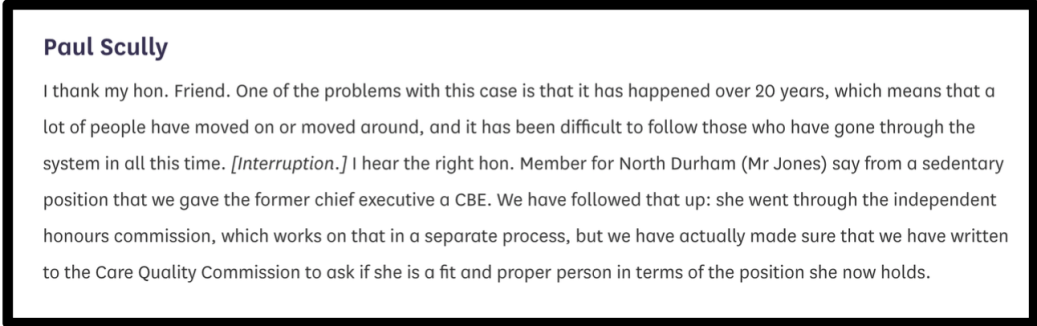
Please sign and share:

Petition to replace weak UK whistleblowing law to protect whistleblowers and the public

By Dr Minh Alexander NHS whistleblower and former consultant psychiatrist, 2 May 2020

Some good news in the midst of the terrible devastation of the coronavirus emergency.

Mr Tristan Reuser was found by an Employment Tribunal (ET) to have been unfairly dismissed by his employer University Hospitals Birmingham NHS Foundation Trust, with the added twist that his Medical Director was found to have misled the General Medical Council by referring him without disclosing that he had made public interest disclosures. This is against revised GMC rules, brought in after the Freedom To Speak Up Review was published in 2015, to deter the vexatious referral of whistleblowers as a grave form of reprisal. The ET was fulsome in it criticism of senior trust managers.

This is the ET judgment:

Employment Tribunal in the matter of Mr Tristan Reuser v University Hospitals Birmingham NHS Foundation Trust Case number 1303554/2017

I exchanged correspondence with the GMC in relation to general issues arising from Mr Reuser’s case:

Mr Tristan Reuser surgeon & GMC. Update on GMC, whistleblowing and implementation of the Hooper recommendations

The trust followed a most unfortunate path of digging itself in deeper by punishing Mr Reuser with an appeal, echoing the disgraceful repeated appeals by Croydon Health Services NHS Trust in Dr Kevin Beatt’s case which were all to no avail.

Dr Kevin Beatt NHS whistleblower & the negligent GMC

Court of Appeal Judgment Beatt v Croydon Health Services NHS Trust [2017] EWCA Civ 401

However, the Employment Appeal Tribunal (EAT) has comprehensively rejected all grounds of the Trust’s appeal against the ET finding in Mr Reuser’s favour, with an admonition from the judge that disliking criticism is not sufficient grounds of appeal:

Screenshot 2020-05-02 at 11.00.00

This is the full EAT judgment:

Employment Appeal Tribunal in the matter of Mr Tristan Reuser v University Hospitals Birmingham NHS Foundation Trust Appeal No. UKEAT/0020/19/BA
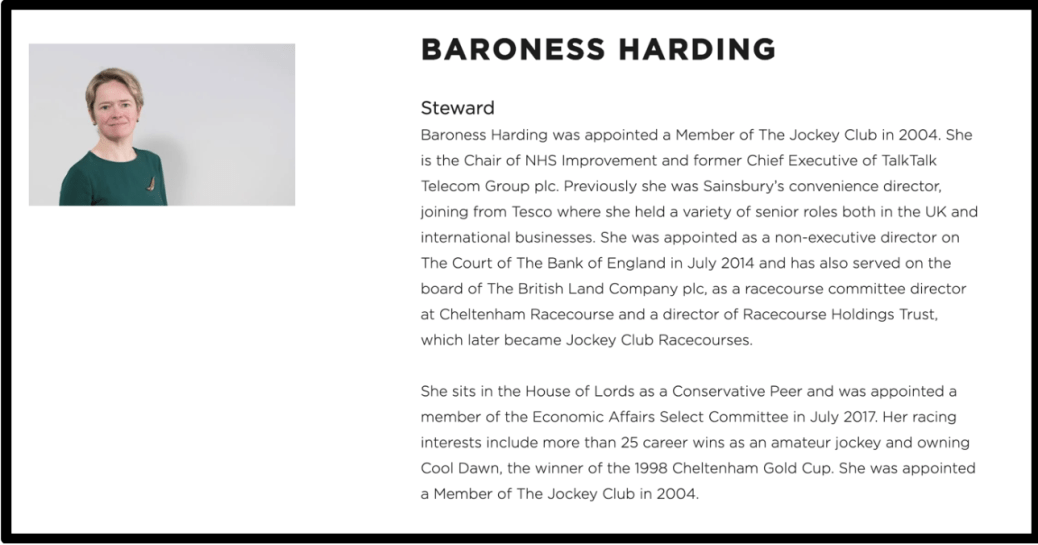
Moreover, the EAT has partially accepted a  cross appeal by Mr Reuser’s team and remitted a matter to the original ET for further consideration. This relates to the reasons for his unfair dismissal, which he contends is the fact that he made public interest disclosures:

Screenshot 2020-05-02 at 11.05.15

The EAT has remitted this matter to the original ET for reconsideration:

Screenshot 2020-05-02 at 11.07.35

Thus, the trust not only wasted precious public money on a meritless appeal, but it has also possibly shot itself in the foot.

Related GMC and FPPR referrals on senior trust managers have been spun out by the GMC and CQC, but this appeal judgment takes away their excuses for prevaricating, unless of course the trust abuses the public purse with yet another appeal.

Whistleblowing in the coronavirus emergency

I should like to stress that the risks of litigation for whistleblowers are horrendous at the best of times, the process being protracted and highly traumatic. Even ‘wins’ are not real wins, and involve many personal losses for the whistleblower. It is a scandal that whistleblowers must shoulder this burden alone, when performing a public duty that benefits us all.

Ordinarily, whistleblowers are advised to use internal and official external channels of whistleblowing for a number of reasons, including maintaining “protected” legal status, weak though that is under UK law.

At present, it seems to me from all the signs that official channels for whistleblowing are worthless and very unsafe for both whistleblowers and for the public. We have seen national bodies repeatedly colluding with the UK government’s misleading claims about its handling of the coronavirus emergency, and suppression is in overdrive.

The safest route, both for whistleblowers and the public, as far as I can see at present is to make direct disclosures to the media on an unnamed basis. Choose your media outlet wisely, based on careful assessment of their professionalism and adherence to facts.

Under the law, the test which affords whistleblowers legally “protected” status when making direct disclosures to the media is stringent and requires elements of urgency, exceptional gravity and good reasons to distrust official channels.

To my mind, these are the conditions that we are seeing with regard to the coronavirus emergency.

The Public Interest Disclosure Act itself has this to say:

43G Disclosure in other cases.

(1)A qualifying disclosure is made in accordance with this section if—

(a)the worker makes the disclosure in good faith,

(b)he reasonably believes that the information disclosed, and any allegation contained in it, are substantially true,

(c)he does not make the disclosure for purposes of personal gain,

(d)any of the conditions in subsection (2) is met, and

(e)in all the circumstances of the case, it is reasonable for him to make the disclosure.

(2)The conditions referred to in subsection (1)(d) are—

(a)that, at the time he makes the disclosure, the worker reasonably believes that he will be subjected to a detriment by his employer if he makes a disclosure to his employer or in accordance with section 43F,

(b)that, in a case where no person is prescribed for the purposes of section 43F in relation to the relevant failure, the worker reasonably believes that it is likely that evidence relating to the relevant failure will be concealed or destroyed if he makes a disclosure to his employer, or

(c)that the worker has previously made a disclosure of substantially the same information—

(i)to his employer, or

(ii)in accordance with section 43F.

(3)In determining for the purposes of subsection (1)(e) whether it is reasonable for the worker to make the disclosure, regard shall be had, in particular, to—

(a)the identity of the person to whom the disclosure is made,

(b)the seriousness of the relevant failure,

(c)whether the relevant failure is continuing or is likely to occur in the future,

(d)whether the disclosure is made in breach of a duty of confidentiality owed by the employer to any other person,

(e)in a case falling within subsection (2)(c)(i) or (ii), any action which the employer or the person to whom the previous disclosure in accordance with section 43F was made has taken or might reasonably be expected to have taken as a result of the previous disclosure, and

(f)in a case falling within subsection (2)(c)(i), whether in making the disclosure to the employer the worker complied with any procedure whose use by him was authorised by the employer.

(4)For the purposes of this section a subsequent disclosure may be regarded as a disclosure of substantially the same information as that disclosed by a previous disclosure as mentioned in subsection (2)(c) even though the subsequent disclosure extends to information about action taken or not taken by any person as a result of the previous disclosure.

43H Disclosure of exceptionally serious failure.

(1)A qualifying disclosure is made in accordance with this section if—

(a)the worker makes the disclosure in good faith,

(b)he reasonably believes that the information disclosed, and any allegation contained in it, are substantially true,

(c)he does not make the disclosure for purposes of personal gain,

(d)the relevant failure is of an exceptionally serious nature, and

(e)in all the circumstances of the case, it is reasonable for him to make the disclosure.

(2)In determining for the purposes of subsection (1)(e) whether it is reasonable for the worker to make the disclosure, regard shall be had, in particular, to the identity of the person to whom the disclosure is made.

An additional option is to disclose to the media on a named basis but to ask for your anonymity to be maintained in reporting. There are understandable circumstances in which people might prefer this. But be aware that it introduces some risk of accidents, such as interception of the data about your identity. Equally, there is a precedent of a whistleblower being questioned under oath at ET about whether they were the source of a disclosure of privileged documents to a journalist (they were). But that is less of a consideration if you intend to stay under the radar and have no intention of any open legal dispute with your employer.

If the situation changes, the risk assessment may once again favour official channels, but I suspect that will be some time.

Beware any advice at present which points you in the direction of official channels of external reporting, such as to regulators and bodies such as NHS England, which are highly compromised and have a major conflict of interest in the UK coronavirus debacle. For example:

““When this is all over, the NHS England board should resign in their entirety.” So wrote one National Health Service (NHS) health worker last weekend. The scale of anger and frustration is unprecedented, and coronavirus disease 2019 (COVID-19) is the cause.”

From the Lancet Editor’s paper  COVID-19 and the NHS—“a national scandal”

Avoid third parties on the whistleblowing scene who have vested interests, including financial motives, and who make repeated unsubstantiated or unattributable claims.

With judicious selection of  trustworthy media, and pertaining to valuable disclosures that are truly of public interest, you can be self sufficient in your whistleblowing and can avoid introducing risk from unreliable actors.

If you do seek advice at present, seek it from a lawyer whom you have personally engaged and who has a duty of confidentiality to you. Lawyers instructed by unions are answerable to your union, despite protestations otherwise, and your best interest will not necessarily be the first consideration.

Stay safe.

Please sign and share:

Petition: Replace weak UK whistleblowing law, and protect whistleblowers and the public

RELATED ITEMS

An excellent dissection by the Financial Times of the UK coronavirus PPE procurement disaster, the failures of the UK government and some of the senior officials who have enabled the government’s dissembling:

How poor planning left the UK without enough PPE

Screenshot 2020-05-02 at 08.11.55

For those who are interested in the flaws of UK whistleblowing governance and law, this is a brief summary:

Replacing the Public Interest Disclosure Act (PIDA)

Covid-19 deaths of UK health and social care workers listed

Dr Minh Alexander NHS whistleblower and former consultant psychiatrist, 22 April 2020

Pictured above is the minimum recommendation by the EU European Centre for Disease Prevention and Control for PPE for healthcare workers treating Covid-19 patients. taken from the following guidance:

Guidance for wearing and removing personal protective equipment in healthcare settings for the care of patients with suspected or confirmed COVID-19 February 2020

The UK has now seen over a hundred deaths of health and social care workers from novel SARS-CoV-2 coronavirus.

The journal Nursing Notes has collated a database of deaths that are in the public domain:

Covid-19 memorial

I have transcribed the data, as of 21 April 2020, to a spreadsheet so that it can be interrogated more easily by anyone who has an interest in these deaths, with a death of a Southwark social worker added.

Additional details have been added such as employing NHS trusts where relevant, and links to press reports of each death.

I will endeavour to update the spreadsheet periodically.

The spreadsheet can be downloaded from this link:

https://minhalexander.com/wp-content/uploads/2020/04/nursing-notes-data-health-and-social-care-staff-21.04.2020.xlsx

Of staff deaths in the public domain, the data so far shows 67 Covid-19 staff deaths in 51 NHS trust. Of these, there were 11 staff deaths in 7 mental health trusts.

The worst affected trusts are:

Screenshot 2020-04-22 at 06.44.21

The seven mental health trusts affected are as follows:

Screenshot 2020-04-22 at 06.48.49

This is a breakdown by staff groups of all 112 health and social care worker deaths in the public domain:


Screenshot 2020-04-22 at 06.54.47

RIP all

UPDATE 28 APRIL 2020

As of end of 27 April 2020, I found 145 Covid-19 deaths of UK health and social care workers in the public domain, drawn from the Nursing Notes’ Covid Memorial  database and other media sources.

This is the updated spreadsheet of frontline deaths:

nursing notes data health and social care staff 27.04.2020

This is a breakdown by staff group of all 145  health and social care worker Covid-19 deaths that are in the public domain:

Screenshot 2020-04-28 at 06.02.19

59 English NHS Trusts had a total of 80 reported staff Covid-19 deaths. The worst affected NHS trusts are as follows:

Screenshot 2020-04-28 at 05.56.43

12 mental health trusts had a total of 16 reported staff Covid-19 deaths:

Screenshot 2020-04-28 at 05.56.57

RIP all


RELATED ITEMS

BMA press release 3 May 2020:

BMA survey reveals almost half of doctors have relied upon donated or self-bought PPE and two thirds still don’t feel fully protected

The Age of Kings. Post Office Ltd’s unchecked reign and NHS Improvement’s unaccountability about Paula Vennells

By Dr Minh Alexander NHS whistleblower and former consultant psychiatrist 5 March 2020

This is a quick bulletin from the kitchen front. I am technically on a short break making marmalade, homemade aromatic bitters – mmm – and other matters domestic.

To business.

In a stable, liberal democracy, the State should not be able to rob innocents and throw them in jail. It should certainly not be able to do so with impunity.

Post Office Ltd unjustly extorted money from subpostmasters under threat of jail. It took precious capital that people had painstaking built up to buy their businesses, stole their nest eggs and long term security, and the product of their labour, sometimes from over many years.

One harmed subpostmaster has likened the relationship with Post Office Ltd to a form of “slave labour”.

Since 2015 the UK government has recognised modern slavery in law:

Modern Slavery Act 2015


This is what the government has to say about modern slavery:

“The common factors are that a victim is, or is intended to be, used or exploited for someone else’s (usually financial) gain, without respect for their human rights. The perpetrators seeking to take advantage of them could be private individuals, running small businesses or part of a wider organised crime network.

5. Types of modern slavery

Labour exploitation

Labour exploitation usually involves unacceptably low pay, poor working conditions or excessive wage deductions, but is not solely about this. In order to constitute modern slavery there will also be some form of coercion meaning that victims cannot freely leave for other employment or exercise choice over their own situation. Where the perpetrator is taking advantage of a child or vulnerable person, an offence can be committed without the element of coercion”


I see little difference in what the Post Office did compared to gangmasters. It held subpostmasters in the vice of a highly oppressive contract; they were forced to accept wholly unjustified deductions out of their own pockets for phantom shortfalls that never occurred. They lived with the terror of not knowing when another massive, ruinous financial shortfall might materialise or when Post Office Ltd might arbitrarily tax them again. They were roughed up with searches, interrogations, ready-made confessions to sign, and threatened with jail if they did not cooperate. Even when they paid, they were still prosecuted. Their human rights were abused.

There is an even more unsavoury suggestion in some of the subpostmasters’ accounts that some of the prosecutions and terminations of submostmasters just happened to be convenient to Post Office Ltd’s national closure, sorry, modernisation programme.=

Throughout my case and indeed following its outcome, I received enormous support from friends, villagers and customers who refused to believe that I had made off with any money…in fact the consensus of opinion was that POL were deliberately fabricating a case for closing our branch without the cost of significant recompense to the Postmaster (this event had occurred in the middle of a national closure programme to find 2500 branches to close). Very soon after my sentencing, I was contacted by a fellow ex Postmaster who had experienced the same treatment and further enquiries uncovered a significant number of similar cases up and down the country”

The government’s conduct through its organ, Post Office Ltd, has been so scandalous that it has left subpostmaster claimants with almost nothing to show for the appalling trauma of being forced to litigate, because Post Office Ltd failed to engage fairly with a mediation.

Seema Misra, who trusted our justice system and pleaded not guilty but wassent to prison whilst pregnant and when her son was aged ten, does the maths:

Screenshot 2020-03-05 at 06.03.02

The Crown Prosecution Service has revealed via FOIA that it holds no central data on private prosecutions such as those by Post Office Ltd, which raises questions of oversight by other branches of government besides BEIS, the government department which owns and is responsible for the Post Office. CPS has also revealed that despite the years long scandal over Post Office Ltd’s unsafe prosecutions, no government department has ever stepped in and asked CPS to scrutinise any of Post Office Ltd’s prosecutions.

Nevertheless, CPS does reveal that it received complaints about at least five of Post Office Ltd’s private prosecutions and that it exercised its prerogative to take over and put a halt to two of these prosecutions.

A public inquiry is so obviously required into this most grave matter, not least because Post Office Ltd was a wholly government owned company, and governments should not behave like hoodlums or robber barons. A detailed argument for public inquiry by Eleanor Shaikh who supports the subpostmasters can be found here:

Letter 10 January 2020 to Andrea Leadsom Secretary of State for Business, Energy and Industrial strategy

The Johnson government gave an apparent, tentative agreement to an inquiry into Post Office Ltd but will not act without huge continuing pressure. The parliamentary select committee which overseas the government department responsible for Post Office Ltd has launched its own brief  inquiry and is chasing Johnson about a public inquiry:

ESRHnEeWkAEIqmS

ESRHpsuX0AYY3Cf

According to the BEIS select committee, Paula Vennells is due to give oral evidence as part of a second panel on 24th March 2020 (assuming parliament has not been shut down by the government as has been mooted, on grounds of coronavirus risk):

“On Tuesday 24th March (am), the Committee is expected to question the current PO Ltd CEO, Nick Read, the former CEO, Paula Vennells, Fujitsu, a BEIS Minister and a representative from UKGI (UK Government Investments).”

A Westminster Hall debate led by the MP of one of the victims, Tracy Felstead,  who has jailed by Post Office Ltd at the age of nineteen, takes place today on how the unsafe convictions can be overturned:

Westminster Hall debate 5 March 1.30pm on the Criminal Cases Review Commission process for the unsafe convictions of subpostmasters with respect to the Post Office Horizon IT system

The debate can be watched on Parliament TV iplayer:

https://parliamentlive.tv/Event/Index/43a773a5-2ca3-405a-8247-0a7703534961

NHS Improvement’s reticence

And what of NHS Improvement, the NHS regulator which helped Paula Vennells Post Office Ltd CEO 2012-2019 find a new billet as a Chair of Imperial College Healthcare NHS Trust?

More illegality of course. NHSI has defaulted on an FOI about its actions in appointing Vennells as Chair of Imperial. It initially apologised for delay and promised a reply, then went silent. It maintained this silence after a personal reminder to its Chair Dido Harding, another former captain of the communications industry and collaborator with Vennells in the digital venture ‘Go On UK’.


An unanswered FOI reminder to Dido Harding:


From: 
minh alexander <REDACTED>

Subject: FOI request Fit and Proper Person issues in the appointment of Paula Vennells as Chair of Imperial College Healthcare NHS Trust
Date: 27 February 2020 at 14:35:37 GMT

To: Dido Harding <REDACTED>

Hi Dido,

I am rather concerned by a delay in NHSI’s response to the FOI request below about NHSI’s handling of Fit and Proper Person issues and Paula Vennells’ appointment by NHSI to the Chair of Imperial College Healthcare NHS Trust.

I first made my request on 16 January and was expecting a response by 13 February.

NHSI has apologised for going over this statutory deadline and last week indicated that I would be getting a reply this week. But I am concerned not to have heard anything now that we are nearing the end of the weekl.

As there is a massive weight of concern about Post Office Ltd’s actions, and as No 10 has apparently acquiesced to the growing calls for an inquiry, I would be grateful if NHSI would expedite its reply.

It does seem very important that patients are properly protected and that there is accountability for the Safeguarding process.

With best wishes,

Minh


A complaint has been filed with ICO to stop the delay from dragging on too long, but NHSI will doubtless do its best to resist transparency.

That is after all the divine right of Kings.


Case 16 Justice for Subpostmasters Alliance

“We attended this meeting leaving our home in the early hours of the morning, some of the stories I could not believe of the honest hard working individuals one postmistress had been in the job for fifty one years.”


RELATED ITEMS

“Former Post Office chief Paula Vennells told- quit public jobs”

Safeguarding referral to the Church of England regarding Rev Paula Vennells, former Post Office Ltd CEO & current Chair of Imperial College Healthcare NHS Trust
After the Post Office Horizon Trial: Paula Vennells, Mammon and the bishops
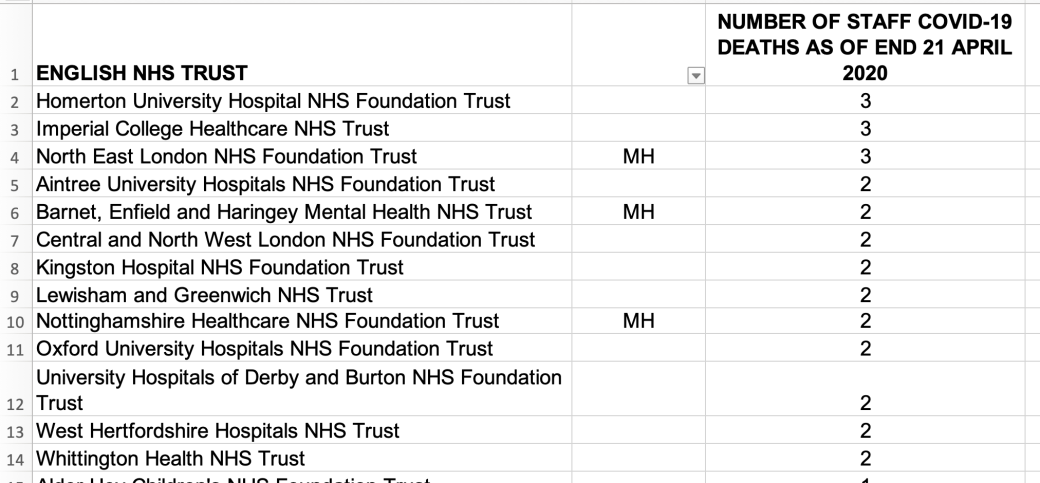
My Beautiful (Ministerial) Launderette: The National Guardian and Paula Vennells

No 10 is trying to control the media, and everyone in our democracy should be afraid

Screenshot 2020-01-11 at 05.17.06