PHSO FOI disclosure 21 September 2015 on handling of complaints: PHSO has the CQC’s back

By Dr Minh Alexander NHS whistleblower and former consultant psychiatrist 30 September 2016


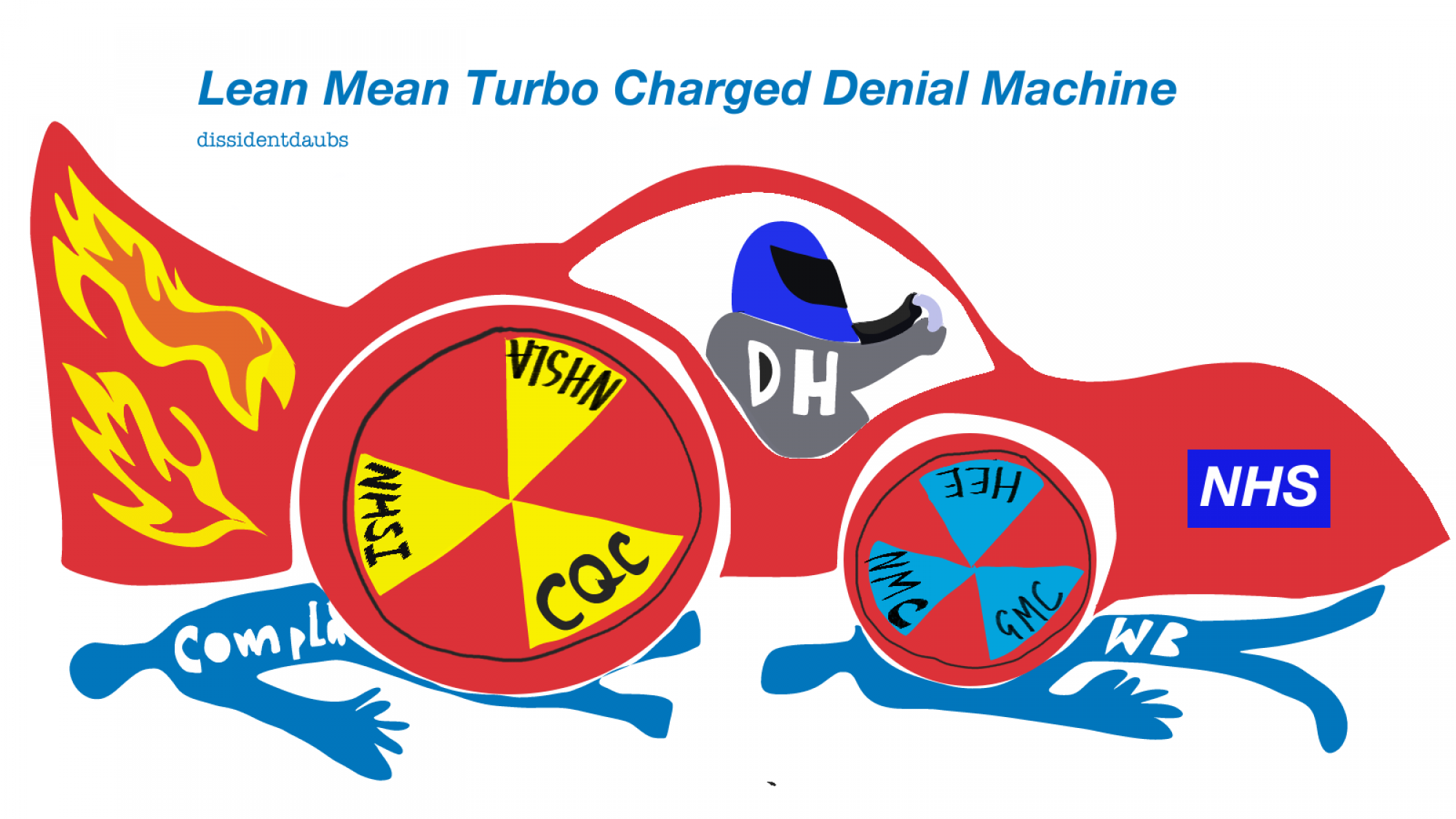
The Parliamentary and Health Service Ombudsman (PHSO) is a troubled organisation that has been much criticised. It has protected other elements of the great NHS denial machine.

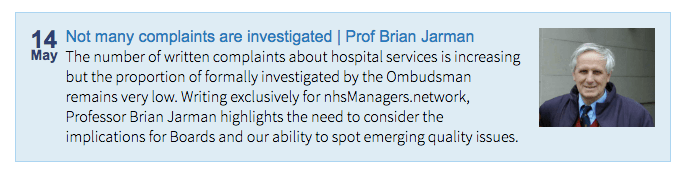
PHSO was criticised, including by Sir Brian Jarman [1], for carrying out too few investigations on complaints received about the NHS. The Ombudsman subsequently promised to increase PHSO’s rate of investigation. [2] PHSO dramatically increased the number of investigations but with dwindling resources, and questions arose about the quality of investigations. PHSO whistleblowers supported this impression earlier this year, when they complained of a “toxic environment” at PHSO, and they raised concerns that:

“…many PHSO complaint assessments were rebranded as investigations and varied in quality” [3]

PHSO has also experienced other scandal regarding questions of neutrality and probity, for example at Morecambe Bay, [4] in the handling of contracts, [5] and the appointment of Mick Martin, deputy Ombudsman – the latter despite two warnings by a harmed former employee and by Monitor. [6] Reports of unsatisfactory and slow PHSO investigations continue to arise. [7]

The PHSO is the last port of call for whistleblowers who have been unable to resolve their concerns through the health watchdog, the Care Quality Commission (CQC). Whistleblowers are often blocked and frustrated by CQC, which does its best to deal superficially with their disclosures. Whistleblowers often report that CQC prefers to accept assurance from employers, without too many questions asked and without examination of all the evidence. This was illustrated by an FOI enquiry about Sheffield Teaching Hospitals NHS Foundation Trust, which revealed that of 22 external whistleblowing episodes to CQC over three years, CQC relied on the trust’s investigation in 17 matters, and only one matter was externally reviewed. [8]

The situation is similar for complainants. The charity Action Against Medical Accidents (AvMA) has recently reviewed CQC inspection reports and has demonstrated disappointing failure in CQC’s regulation of the legal duty of candour, a fundamental care standard. AvMA noted:

“We noted that all of the inspections were heavily reliant on comments from the trusts regarding their own implementation of the duty of candour.” [9]

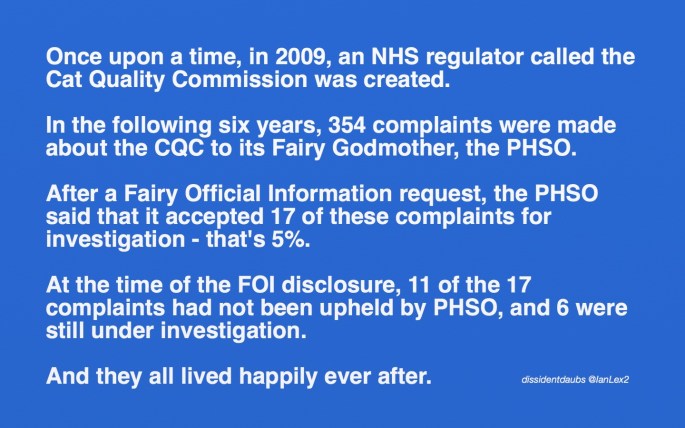
An FOI request to PHSO in 2015 showed that PHSO had received a total of 354 complaints about CQC since CQC’s inception, but none had yet been upheld. Only 17 (5%) of the 354 complaints had been investigated by PHSO. At the time of the FOI disclosure, PHSO had not upheld 11 of the 17 investigated complaints, and 6 of the complaints were still under investigation.

PHSO’s FOI disclosure of 21 September 2015 about its handling of complaints against the CQC is uploaded here: phso-foi-response-re-complaints-about-cqc-21-september-2015

Can we really believe that there have been no valid complaints about the equally criticised CQC?

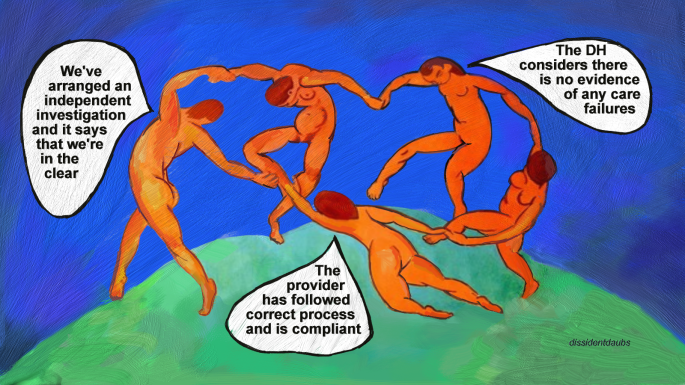
The “circular assurance” described by Bill Kirkup in his investigation report on Morecambe Bay [3], in which NHS bodies pass flawed and superficial assurance amongst themselves whilst dismissing and minimising evidence from whistleblowers and complaints, still thrives.

5.162 Assurance had become circular. The CQC was taking reassurance from the fact that the PHSO was not investigating; the PHSO was taking assurance that the CQC would investigate, the NW SHA was continuing to give assurances based in part on the CQC position. Monitor asked for assurance and received the perceived wisdom – that the issues were under control and minimal. At no time did Monitor question these circular arguments or the improbability of cultural concerns being resolved within six months.”

And they all lived happily ever after…. except the complainants and whistleblowers.

Items to cross-reference

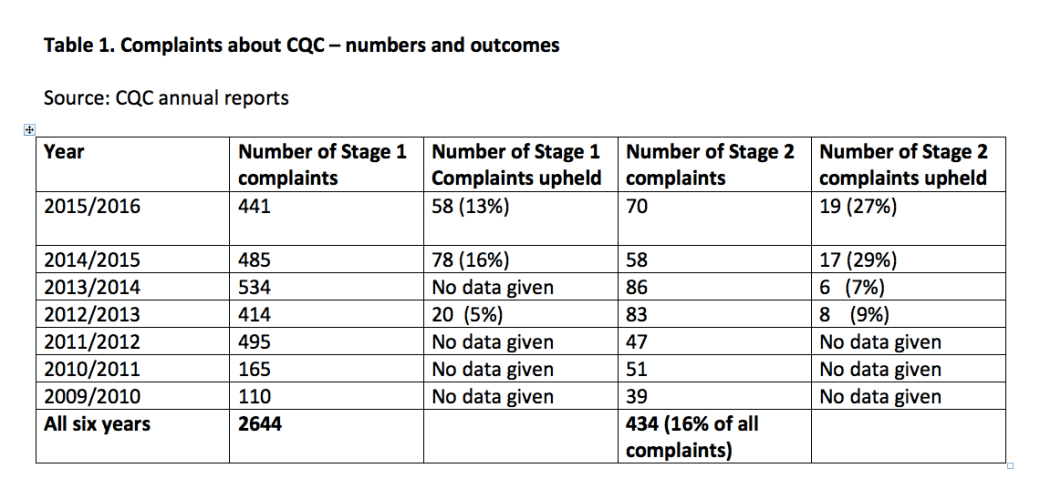
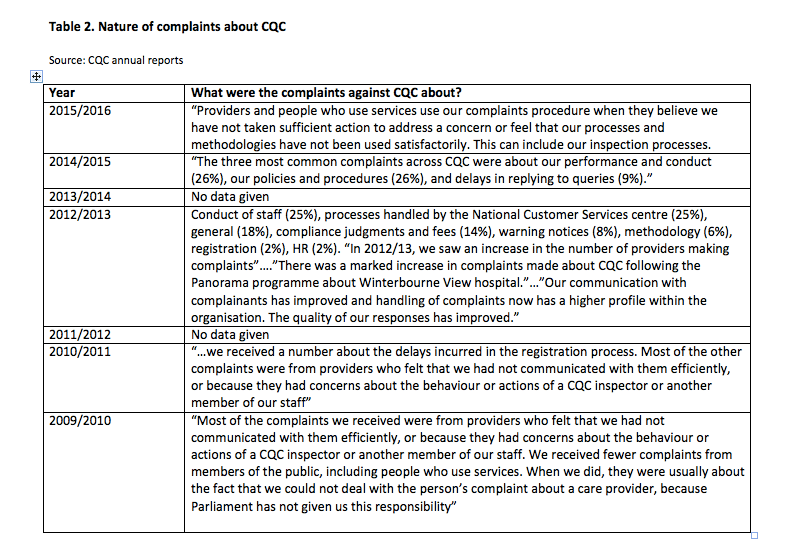
See these notes on complaints about CQC (2644 complaints over six year), set in the context of CQC’s various pronouncements on best practice complaints handling:

Do “Complaints Matter” to CQC?


References

[1] Not many complaints are investigated. Prof Brian Jarman 14 May 2013

http://www.nhsmanagers.net/guest-editorials/not-many-complaints-are-investigated/

brian

[2] Health Ombudsman to investigate more complaints, Simon Cox, BBC 19 July 2013 http://www.bbc.co.uk/news/health-23357866

[3] Whistleblowers expose ‘toxic environment’ at PHSO, Shaun Lintern, Health Service Journal, 22 March 2016

https://www.hsj.co.uk/topics/policy-and-regulation/exclusive-whistleblowers-expose-toxic-environment-at-phso/7003384.article

[4] The report of the Morecambe Bay investigation, Dr Bill Kirkup, March 2015

Click to access 47487_MBI_Accessible_v0.1.pdf

[5] Health Ombudsman was investigated over ‘contract’ failings. Shaun Lintern, Local Government Chronicle, 16 October 2014

https://www.lgcplus.com/services/health-and-care/health-ombudsman-was-investigated-over-contract-failings/5075841.article

[6] Report of investigation by Sir Alex Allan into PHSO’s appointment of Mick Martin, formerly of Derbyshire Healthcare NHS Foundation Trust

https://minhalexander.com/wp-content/uploads/2016/09/phso-mick-martin-sir-alex-phso-report.pdf

Helen Marks awarded £832, 711 by Employment Tribunal, BBC 16 February 2016

http://www.bbc.co.uk/news/uk-england-derbyshire-35581737

[7] https://twitter.com/AverilsDad/status/773109263707283456

https://twitter.com/AverilsDad/status/778599178683514881

[8] FOI diclosure by CQC about its handling of whistleblowers’ concerns about Sheffield Teaching Hospitals NHS Foundation Trust

cqc-data-disclosed-2-08-2016-by-foi-sheffield-teaching-hospitals-whistleblowing-contacts_ir7989-v2

[9] Regulating the duty of candour, AvMA August 2016

Click to access


Is the BMA worth £163? Are new socks better?

By Dr Minh Alexander, NHS whistleblower and former consultant psychiatrist 29 September 2016. Updated with addendum 27 September 2017

The British Medical Association (BMA) is the main union for doctors. It is not a good friend to whistleblowers.

The annual ritual of renewing my BMA membership came up. I dithered a bit. I have been a BMA member for thirty years. But after adventures in whistleblowing, I no longer have a medical career. I wondered if the £163 renewal fee – reduced for unwaged members from the standard fee of £443 – could be spent on more joyful things. Perhaps some nice wine, a good film, even new socks, are all of more use to me than BMA membership.

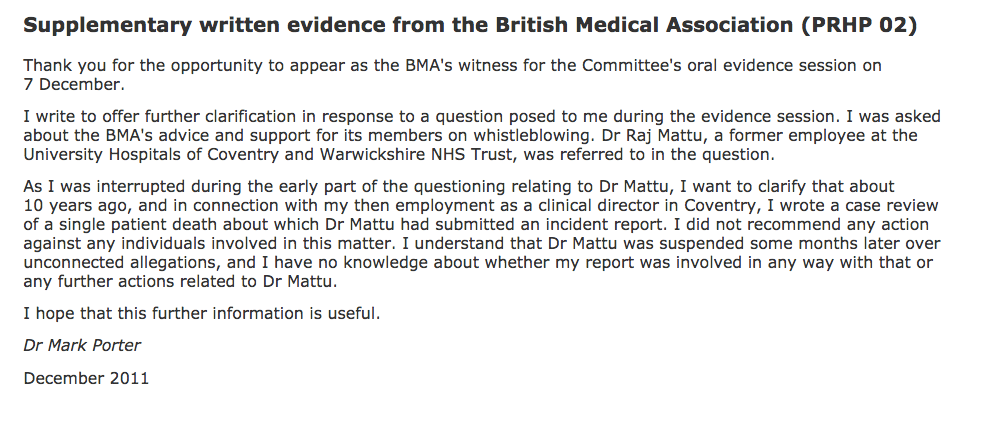
I’m talking about the BMA that has not covered itself in glory over the junior doctors’ contract, the BMA that reportedly introduced a gagging clause into the code of conduct for its Council members (which it refused to publish) [1] and the BMA that many BME doctors and whistleblowers feel let down by. I’m talking about the BMA that has taken legal action against a whistleblower [2], and which is led by Dr Porter, who was asked in parliament about Raj Mattu’s whistleblowing case and replied that he had no “specialist knowledge”. He subsequently provided parliament with a written clarification. [3] [4] I’m talking about the BMA that was the subject of an article by MD of Private Eye, entitled “With friends like the BMA….”. [5]

There is little data published to show how exactly BMA member services support members.

When I asked the BMA for a copy of its 2014 submission to Robert Francis’ Freedom to Speak Up Review on NHS whistleblowing, it was slow to disclose this, and ultimately I found the submission uninformative as regards the BMA’s activities on whistleblowing. [6]

When I asked the BMA for data about whistleblowing cases, it was slow to respond and shone little light:

“…we do not have records going back 10 years…..Our solicitors have informed us that since 2006 they have had five Public Interest Disclosure Act (PIDA) claims which have been settled via settlement agreements/COT3s.” [7]

When I heard that the BMA had set up a task and finish group to review how it supports its members to raise concerns, I asked for information about this. The BMA was slow to respond, and when it finally disclosed the report from this task and finish group, I was embarrassed on the BMA’s behalf. This is the uninformative report in all its seven paragraph glory: bma-task-finish-report-raising-concerns-c84

I cringed when I saw that the BMA implied that a key solution to addressing reprisal against whistleblower members was to help them to be more tactful:

The service would include offering advice to members on the use of language and the tone in which their concerns might be expressed.” 

Shhhhurely the BMA meant to say: “Robustly represent and defend whistleblower members to send a clear message to employers that doctors who raise concerns cannot be casually picked off, and that the profession will exercise its prerogative to focus on patients’ interests?”

I won’t even mention what some fellow campaigners said to me when they saw the BMA’s report.

I asked the BMA for more details and supporting documents seven months ago. Guess what, I’m still waiting. [8]

In particular, I’d like an answer on whether and how the BMA has commenced and or evaluated, an ‘early intervention’ pilot scheme, that it told me it would undertake on supporting members with whistleblowing.

I’d also like to see the new, improved whistleblowing stats that the BMA told me – in March 2015 – that it would start collating:

“We have decided that in view of the importance of this area we will in future regularly review cases where whistleblowing is the primary issue raised and will monitor on a quarterly basis cases where whistleblowing is a subsidiary issue”

I see the BMA now claims a victory on defending junior doctors’ rights to whistleblow against Health Education England (HEE). [9] [10] This ain’t so at all. The “I have a piece of paper” BMA spiel means absolutely nothing. Junior doctors have had a right all along to challenge HEE, as a public body subject to judicial review, in the High Court. But why should they? And would the BMA fully support costly hearings to conclusion, or pressure members to accept sub-standard settlements? The BMA has not managed to secure comparable rights for junior doctors to take their cases against HEE to the Employment Tribunal under PIDA. The well known case of Dr Chris Day continues on this matter. [11] Notably, on his campaign website, Dr Day wrote thus about the BMA:

Suddenly, 5 working days before the claim had to be submitted and before the delayed Trust and Deanery formal investigations had reported, the BMA withdrew all legal help from the case and my BMA Senior Industrial Relations Officer went on “special leave”.” [12]

I’ve heard similar from several sources.

The BMA says that its new agreement gives junior doctors the same rights to sue HEE for whistleblower reprisal as would be afforded under PIDA. Has the BMA forgotten that it previously acknowledged that PIDA legislation is weak and very unsatisfactory? [1]

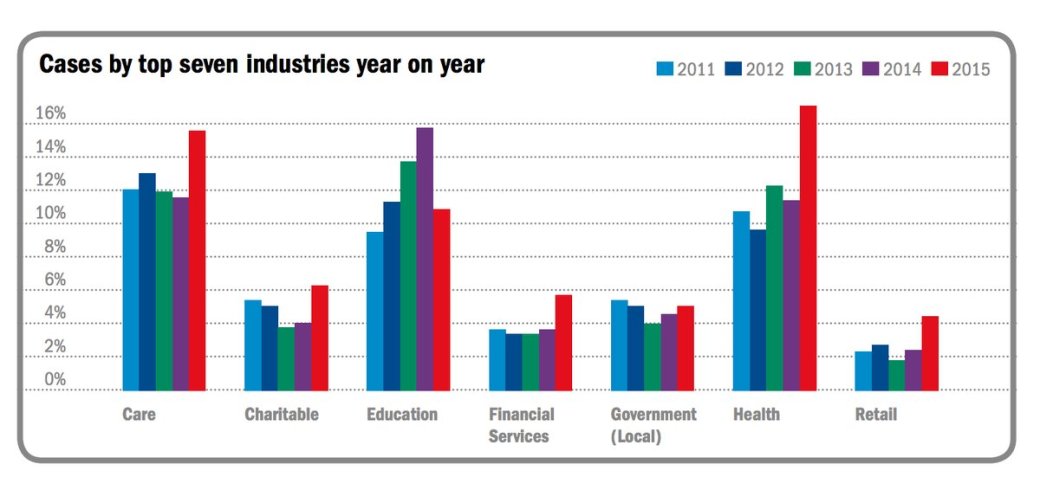
All PIDA gives you is the right to sue for compensation after you have suffered serious detriment, and your career – and probably health – are in tatters. It does not protect individuals and there is zero evidence that it deters reprisal in general. Austerity and harsh cuts have magnified an NHS culture of cover-ups and employer bullying. PIDA claims by health and social care whistleblowers rose sharply last year.

pcaw-rise-in-health-social-care-pida-claims-2015

Source: Public Concern at Work, 5 year review published 1 August 2016


What has the BMA done to lobby for reform of the law that it has admitted is ineffective? I can’t see any evidence that the BMA has done much about PIDA, but perhaps the BMA can correct me if I wrong.

So, to return to BMA binary:

Is the BMA worth £163? No.

Are new socks more useful than BMA membership? Yes.


ADDENDUM 27 SEPTEMBER 2017

One year on from my article above, there is little to celebrate about the BMA and whistleblowing.

The BMA continues to spin copiously about its good intentions towards whistleblowers.

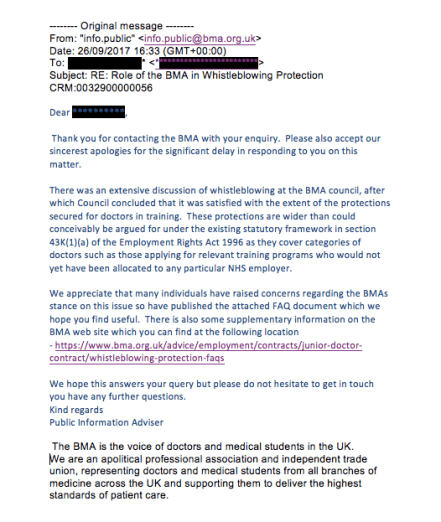
Yesterday a kind member of the public sent me a copy of an email of 26 September 2017 from the BMA, which they received after questioning the BMA about its behaviour in the much reported case of NHS whistleblower Dr Chris Day.


Dr Chris Day’s website provides updated information and supporting documents about his case: https://www.crowdjustice.com/case/junior-doctors-round-3/


Attached to the BMA’s email was a remarkable apologia which defended the BMA’s position to the hilt, and cast aspersions on criticisms of the BMA made by the Day camp.

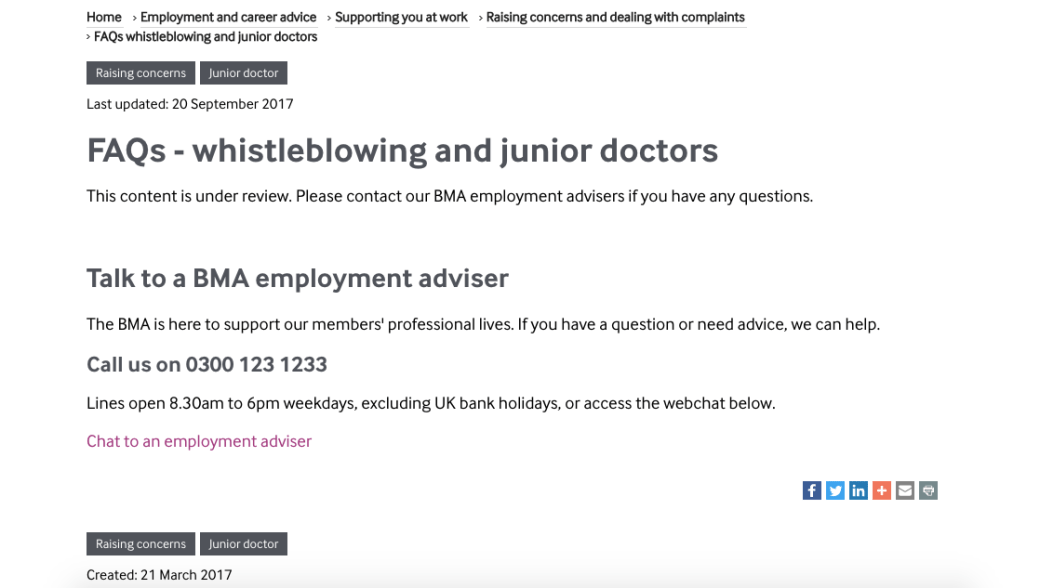
The BMA’s email of 26 September claimed that its apologia had been published. However, a search by the document’s title revealed a page on the BMA’s website that was last updated on 20 September. It featured no published document and only the message “This content is under review”.

It seems to me that despite a change in BMA Chair of Council over the course of the year, the BMA’s spots look much the same.

And the debate about whether junior doctors’ whistleblowing cases should be dealt with in the Employment Tribunal or the High Court is ultimately something of a distraction when set against the pragmatic reality of BMA merits assessments in whistleblowing cases. That is to say, it would be immaterial what technical legal rights a doctor has if his or her union chooses not to fund the necessary litigation. As the BMA has not yet opened its files to me on the statistics that it claimed in March 2015 that it would start keeping on case decisions, these waters remain unfathomed.


The BMA apologia:

BMA Whistleblowing FAQ’s (21.09.2017) Issued to a member of the public by BMA on 26 Sep 2017


The accompanying BMA email of 26 September 2017:

Screen Shot 2017-09-27 at 08.25.21

A search by the title of the BMA’s apologia ‘FAQ’s: Whistleblowing & Junior Doctors’, gave this result on the BMA website as of 08.30, 27 September 2017:

Screen Shot 2017-09-27 at 08.31.54


RELATED ITEMS

Sir Robert’s Flip Flops – this describes a central weakness of the Freedom To Speak Up review – how Francis u-turned on accountability, criminal sanctions and deterrence of whistleblower reprisal

https://minhalexander.com/2016/09/26/sir-roberts-flip-flops/

No one believes Jeremy Hunt on patient safety and whistleblowers, not even his own appointees – a summary of continuing tokenism by government and how the new National Guardian’s office, for NHS whistleblowing, is designed to be ineffective

https://minhalexander.com/2016/09/24/no-one-believes-jeremy-hunt-on-patient-safety-or-whistleblowers-not-even-his-own-appointees-unmasking-the-faux-national-guardian-office/


Letter to Mark Porter Chair of BMA Council 29 September 2016

Dear Dr Porter,

Further to my last letter to the BMA of May 2016, in which I asked again for copies of supporting documents from the BMA Task and Finish group on raising concerns, and feedback on progress of the BMA’s proposed ‘early intervention’ pilot scheme for supporting members who whistleblow, I would be very grateful for a reply.

Please could the BMA also advise if it has started proactively reviewing whistleblower cases and collating the more detailed quarterly data on whistleblower cases, as per its correspondence to me of 15 March 2015? If so, please could the data be shared.

I attach a copy of that earlier correspondence.

With best wishes,

Dr Minh Alexander

cc Mark Hope BMA Senior Policy Executive


References

[1] BMA backs code of conduct with ‘gagging clause’ for council members, Marina Soteriou, GP Online 3 December 2012

http://www.gponline.com/bma-backs-code-conduct-gagging-clause-council-members/article/1162567

[2] BMA sues whistleblower surgeon, Shaun Lintern, Health Service Journal 30 June 2014

https://www.hsj.co.uk/home/bma-sues-whistleblower-surgeon/5072451.article

[3] Dr Mark Porter in Parliament: The whole truth and nothing but the BMA’s truth

http://medicalharm.org/uncategorized/dr-mark-porter-in-parliament-the-whole-truth-and-nothing-but-the-bmas-truth/

[4] Oral evidence to House of Commons Health Committee, 7 December 2011

http://www.publications.parliament.uk/pa/cm201012/cmselect/cmhealth/uc1699-i/uc169901.htm

Supplementary written evidence by Mark Porter to Health Committee December 2011

http://www.publications.parliament.uk/pa/cm201012/cmselect/cmhealth/1699/1699w104.htm

BMA written clarif.png

[5] With friends like the BMA…., Phil Hammond, Private Eye February 2015, Issue 1385

http://www.drphilhammond.com/blog/2015/02/21/private-eye/private-eye-issue-1385/

[6]BMA submission 10 September 2014 to the Freedom to Speak Up Review

bma-freedomtospeakup-10-09-2014

[7] Letter from Mark Hope, BMA Senior Policy Executive, 5 March 2015

bma-mark-hope-5-03-2015-info-request-bma-member-services-for-whistleblowers

[8] Correspondence with BMA about its Task and Finish Group on supporting members to raise concerns

bma-correspondence-about-whistleblowing-task-finish-group

[9] Whistleblowing protection FAQs, BMA 21 September 2016

https://www.bma.org.uk/collective-voice/influence/key-negotiations/terms-and-conditions/junior-doctor-contract-negotiations/whistleblowing-protection-faqs

[10] Draft terms of legal agreement between the BMA and Health Education England 31 August 2016, posted by BMA 21 September 2016

[11] Junior doctor claims career was ‘wrecked by lack of protection for whistleblowers’, Ross Lydall, Evening Standard 22 February 2016

http://www.standard.co.uk/news/health/junior-doctor-claims-career-was-wrecked-by-lack-of-protection-for-whistleblowers-a3185751.html

Further campaign appeal 22 September 2016

https://www.crowdjustice.co.uk/case/junior-doctors-round-2/

[12] Campaign website by Dr Chris Day

https://www.crowdjustice.co.uk/case/junior-doctors/

Homerton maternity whistleblowers, FOI disclosure of the London Clinical Senate report on four maternal deaths and the National Guardian


By Dr Minh Alexander NHS whistleblower and former consultant psychiatrist 28 September 2016

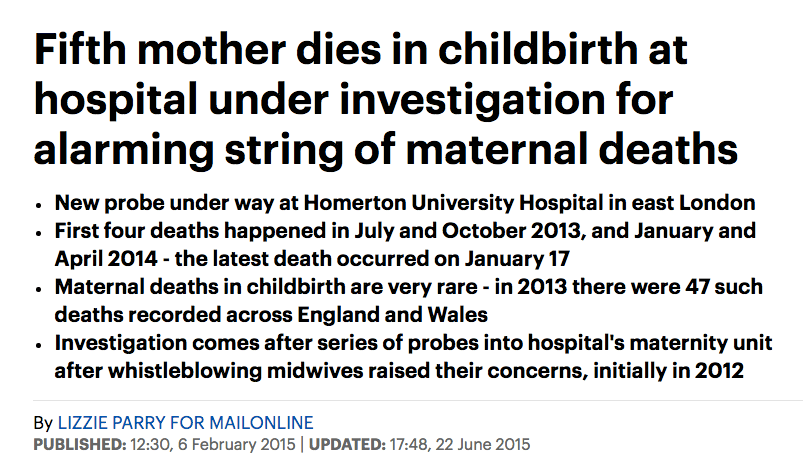
Black whistleblowers, including the ‘Unhappy Midwives’, have been raising concerns about maternity service safety and racism at Homerton since 2012, but have been vilified and marginalised. Their appeals to the trust and oversight bodies, including Jeremy Hunt, the Department of Health and the Care Quality Commission – the latter rated the Homerton service ‘Good’ in 2014 despite the whistleblowers’ evidence – fell on deaf ears. This was followed by a cluster of maternal deaths from 2013 and onwards.

Extensive audit trail of the midwives’ whistleblowing and correspondence is collated at this website:  https://homertonnhsmaternity.wordpress.com/

Their case was covered by Private Eye in September 2015:  http://www.drphilhammond.com/blog/2015/09/23/private-eye/medicine-balls-private-eye-1341/

The maternity whistleblowers were ignored and their concerns were minimised, including by the Clinical Commissioning Group and Care Quality Commission (CQC). Two successive Chief Executives vilified the ‘Unhappy Midwives’, and the current CEO deemed them “vindictive”. [1] The Department of Health, as per its usual response to whistleblowers, did its best to wash its hands of the matter and directed them back to the CQC.

At least 5 maternal deaths – usually very rare events – occurred after the midwives were ignored. There was extensive press coverage. For example, by the Daily Mail:

a-5

http://www.dailymail.co.uk/health/article-2942537/Fifth-mother-dies-childbirth-hospital-investigation-alarming-string-maternal-deaths.html

Under pressure, the trust eventually commissioned an external review by the London Clinical Senate into four of the maternal deaths. An incomplete copy was disclosed via FOI in October 2015 – senate-report-redacted-for-patient-confidentiality – but nevertheless, it showed that the Senate had concluded that there were ‘avoidable factors’.

The midwives remain concerned, and are not convinced that the trust has disclosed all relevant information about its maternal deaths, some of which occurred at surrounding trusts.

Homerton trust informed me that a total of 7 mothers died under its care between 2006 and October 2015. The midwives question whether this is an accurate figure. Nonetheless, it is noteworthy that the trust has admitted that 6 of the 7 mothers who died were non-white. [2]

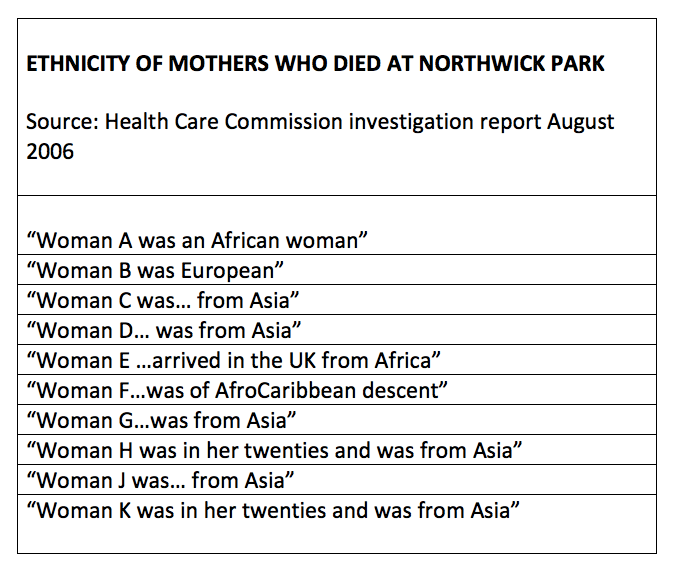
Ten years ago, when the CQC’s predecessor investigated a cluster of 10 maternal deaths at Northwick Park, 9 of the 10 women were Black [3] :

northwick-park

Unlike the Homerton trust, the Healthcare Commission published its report in full and without redacting key clinical details that were essential for full transparency and learning. It is a concern that the trust seeks to protect itself by witholding the full Senate report, purportedly because of ‘confidentiality’.

The NHS acknowledges that for a variety of reasons, BME mothers remain at higher risk of harm. Surely it is time to mitigate these known risks and expect greater equality of health outcomes, rather than just continue wringing hands?

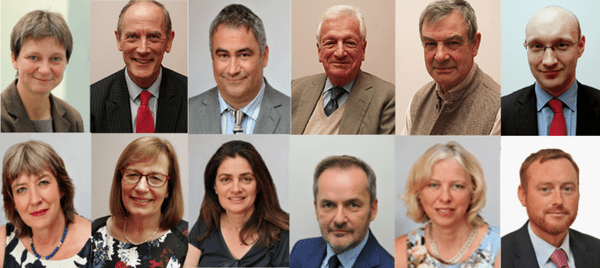
However, the NHS is notorious for its ‘snowy peaks’, and it remains poor on monitoring and delivering equality of outcomes. It is also of concern that the Homerton trust board is wholly white, when it serves one of the most deprived and racially diverse catchments nationally.

homerton-board

A Subject Access Request for personal data was made by one of the whistleblowers, Pam Linton, who originally raised her concerns independently of the Unhappy Midwives. The resulting disclosure by CQC has raised serious questions about the CQC’s response to Pam Linton’s disclosures. [4]

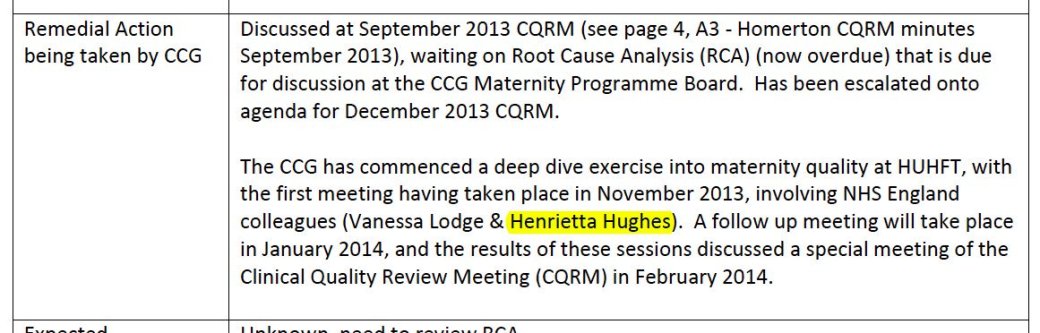
And in case you didn’t know, Henrietta Hughes CQC’s recently appointed National Guardian for whistleblowing, was the NHS England area medical director party to the multi-agency response to the Unhappy Midwives’ disclosures. She starts at CQC very shortly, in October. Questions have been asked about her role in the Homerton matter, but with no clear answers arising.

Henrietta Hughes will report to David Behan, Chief Executive of the CQC. That is, the CQC which superficially reviewed itself in regards to its handling of Homerton maternity safety,  but which has not fully acknowledged its failures. [5]

What a small world.

And what a cosy example of the “circular assurance” described by Bill Kirkup in his report of patient safety failings at Morecambe Bay. [6]


The City and Hackney Clinical Commissioning Group records which show that Henrietta Hughes was involved in the system response to the Unhappy Midwives:

Click to access Q2%20NHSE%20Assurance%20Compiled%20Exception%20Reports%2029112013.pdf

homerton-henrietta-hughes-deep-dive


Items to cross-reference

Letter to Jeremy Hunt Secretary of State for Health about his and the Department of Health’s role in the failure of the system response to the Unhappy Midwives

https://minhalexander.com/2016/09/24/letter-to-jeremy-hunt-16-october-2015-about-his-role-regarding-homerton-maternity-whistleblowers/

How the National Guardian’s office is designed to be ineffective:

https://minhalexander.com/2016/09/24/no-one-believes-jeremy-hunt-on-patient-safety-or-whistleblowers-not-even-his-own-appointees-unmasking-the-faux-national-guardian-office/

References

[1] Homerton safety review after claims from ‘unhappy midwives’, Jo Stephenson, Nursing Times, 9 April 2014

https://www.nursingtimes.net/roles/midwives-and-neonatal-nurses/exclusive-homerton-safety-review-after-claims-from-unhappy-midwives/5068283.article

[2] FOI disclosure by Homerton University Hospital NHS Foundation Trust 24 February 2016

[3] Investigation into 10 maternal deaths at, or following delivery at, Northwick Park Hospital, North West London Hospitals NHS Trust, between April 2002 and April 2005, Healthcare Commission August 2006 hcc-northwick-park-_tagged

[4] CQC response to a subject access request by Pam Linton pam-linton-294593874-cqc-sar-disclosure-1

[5] CQC internal review of CQC’s handling of Homerton maternity safety, 15 March 2016

Click to access CM031605_Item_5A_RGC_Report_to_March_Board_FINAL_Appendix_1.pdf

[6] The report of the Morecambe Bay investigation, Dr Bill Kirkup, March 2015

Click to access 47487_MBI_Accessible_v0.1.pdf


Disclosure correspondence from Homerton trust

From: Dunne Michael at Homerton University Hospital NHS Trust <Michael.Dunne@homerton.nhs.uk>

Subject: FOI Request 2108 – Homerton Maternity Services: Report of Review by London Clinical Senate

Date: 27 October 2015 at 16:09:00 GMT

To: minhalexander@aol.com

Dear Dr Alexander,

Thank you for your recent Freedom of Information request, asking for a copy of the London Clinical Senate report.

Please refer to the attached documents which includes the Trust’s formal response along with a redacted version of the report.

Yours sincerely,

Mike Dunne

Information Governance Manager & FOI Lead


CQC FOI disclosure 15 January 2016 about Section 48 investigations conducted since inception in 2009

The full disclosure by CQC on the investigations it had undertaken under Section 48, since its inception in 2009, is uploaded here:

cqc-response-section-48-iat-1516-0674-final


In summary CQC has used its investigative powers, under Section 48, six times since 2009. The details of these six investigations are copied below.

Of note, CQC has not investigated any mental health trusts,  despite immense pressure on services and CQC’s admission in July 2016 that almost two thirds of mental health trusts ‘Require Improvement’. It is also despite the fact that some mental health trusts  have been found unsafe and have not improved subsequent to warnings by CQC. For example, Norfolk and Suffolk NHS Foundation Trust. See details of the campaign about NSFT crisis here:

http://norfolksuffolkmentalhealthcrisis.org.uk/


The six investigations by CQC since 2009, using its powers under Section 48:

“University Hospitals of Morecambe Bay NHS Foundation Trust

In July 2012 we undertook a section 48 investigation into University Hospitals of Morecambe Bay NHS Foundation Trust. Our published report can be found here: http://www.cqc.org.uk/sites/default/files/20120613_rtx_university_hospitals_of_morecambe_bay_nhs_foundation_trust_investigation_report.final_for_publication_0.pdf

We also conducted a follow up to our investigation, at the same Trust in September 2013. Our published report can be found here: http://www.cqc.org.uk/sites/default/files/20130911_uhmbt_s48_final_for_publication_1.pdf)

Barking, Havering and Redbridge University Hospitals NHS Trust

In October 2011 we undertook a section 48 investigation into the Barking, Havering and Redbridge University Hospitals NHS Trust. Our published report can be found here: http://www.cqc.org.uk/sites/default/files/documents/20111026_bhrut_investigation_report_final_0.pdf

United Lincolnshire Hospitals NHS Trust

In October 2011 we undertook a section 48 investigation into United Lincolnshire Hospitals NHS Trust. Our published report can be found here:

http://www.cqc.org.uk/sites/default/files/documents/20111031__ulht_report_final.pdf

We also conducted a follow up to our investigation, at the same Trust in March 2013. Our published report can be found here: http://www.cqc.org.uk/sites/default/files/old_reports/20130321_ulht_investigation_report_-_final_for_publication.pdf

Take Care Now

We were asked in June 2009 to review the out-of-hours GP arrangements in relation to Take Care Now by NHS East of England. Our published report can be found here:

http://www.cqc.org.uk/content/care-quality-commissions-investigation-gp-out-hours-provider-take-care-now-reveals-serious

This gives a figure of six investigations (including follow-up investigations), relating to four provider organisations. Three of those organisations are NHS acute Trusts (of which, one is a Foundation Trust), the fourth is an out of hours primary care service.

None of these investigations were requested by the Secretary of State.”

Sir Robert’s Flip Flops

By Dr Minh Alexander, NHS whistleblower and former consultant psychiatrist 26 September 2016


Robert Francis has u-turned on accountability for  reprisal against NHS whistleblowers, even though he acknowledged it constitutes serious misconduct.

The public inquiry by Robert Francis into grave care failings at Mid Staffordshire NHS Foundation trust, published February 2013, saw harrowing examples of negligence and wilful blindness. There were many warnings about the failings, which were not heeded. A culture of fear was reported and staff who raised concerns experienced reprisal and suppression.

Arising from his findings, the then Mr Robert Francis was originally bullish about the need to protect NHS whistleblowers.

He recommended that it should be a criminal offence for any health worker to obstruct others trying to fulfil their duty of candour to patients and families. [1]

He emphasised in an interview with the Nursing Times that it was necessary to be absolutely firm in deterring whistleblower reprisal:

“I have called for a statutory duty of candour that trusts tell the truth to regulators and that there should be criminal sanctions if there’s willful obstruction of anyone performing their duties and informing their trusts about concerns to patients.

 “That is about as rigorous protection of whistleblowers as you can imagine, and that’s what I intended,” he said.” [2]

In January 2014, the theme continued when he publicly commented that “oppressive behaviour” and whistleblower reprisal at Paula Vasco-Knight’s former trust, South Devon Healthcare, should not be tolerated:

“It is important that no tolerance is afforded to oppressive managerial behaviour of the sort identified only last week by an employment tribunal in the South West, which victimises staff who raise honestly held concerns.

“Every such case is hugely damaging to the confidence of other staff who are contemplating raising concerns. It is clear that there is much to do in this area.” [3]

 The bullishness continued when Francis gave evidence to Health Committee in February 2014:

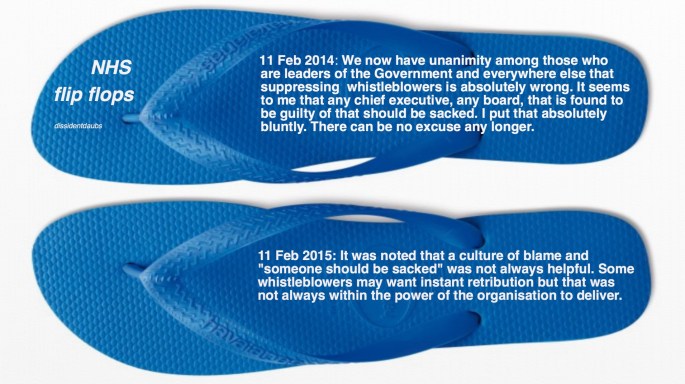
“In so far as whistleblowers are concerned, I am afraid my answer is very blunt about that. We now have unanimity among those who are leaders of the Government and everywhere else that suppressing whistleblowers is absolutely wrong. It seems to me that any chief executive, any board, that is found to be guilty of that should be sacked. I put that absolutely bluntly. There can be no excuse any longer. If you want culture change, if a step or two like that could be taken—and it is far from me to comment, but it may be there are some opportunities out there—then I would suggest that that ought to be done.” [4]

By 4 June 2014, it was announced that Francis had been appointed to the Care Quality Commission as a Non Executive Director. [5]

On 13 June 2014 we were told that Mr Francis would become Sir Robert. [6] (In March 2013, Private Eye had been critical of Francis regarding the lack of individual accountability for the grave failings at Mid Staffs, and had baldly asked: “Knighthood for a whitewash?”). [7]
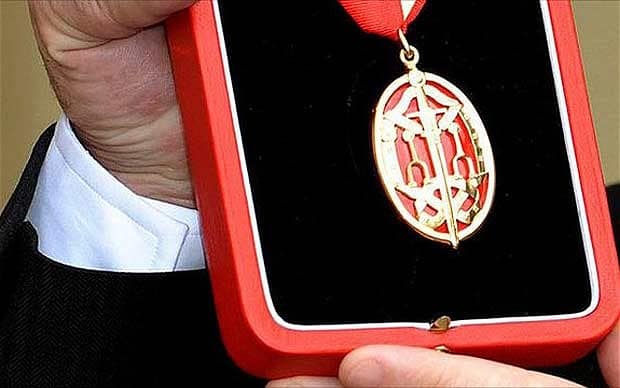
 

knights-bachelor


On 24 June 2014, Jeremy Hunt announced that Francis would be heading a review of NHS whistleblowing, dubbed the Freedom to Speak Up Review.

By 11 February 2015, when the Freedom to Speak Up Review was published, Francis had softened considerably.

He suggested that the system response to managers who victimised whistleblowers should not be too harsh, and he replaced his previous comments that leniency was bad for culture with a claim that holding erring managers to account might add to blame culture:

“7.5.5 A number of the contributors suggested that if people were seen to be held to account this would send a powerful and positive message to other staff.

7.5.6 However, there is another side to this which must be considered. Managers are just as vulnerable as other staff to the effects of the culture in which they work, and the pressures which are imposed on them. As stressed by some employers and their representatives a ‘just’ culture is equally as necessary for managers and leaders as it is for staff raising concerns. The consequence of an uneven approach could be a worsening blame culture for staff and a loss of talented managers from the NHS.” [8]

These comments misrepresented the concept of ‘just culture’, which in fact requires sanctions for recklessness, cover ups and other deliberate wrongdoing.

Francis even appeared amnesic of his own past recommendations for criminal sanctions [1], when he made this comment about some contributors’ calls for whistleblower reprisal to be criminalised:

“A small number even wanted to see criminal and custodial sentences.”

Instead of hard reform, Francis essentially opted for trust in the power of persuasion and appealing to people’s better nature to change culture.

This was despite the fact that Robert Francis acknowledged that reprisal against whistleblowers should be seen as a form of “serious misconduct”. It was also despite the fact that his lead researcher for the Freedom to Speak Up Review Prof David Lewis, Professor of Employment Law and a whistleblowing expert, is a proponent of criminal sanctions to deter reprisal. Of note, Prof Lewis robustly and publicly reiterated his views four days after Francis’ report was published. [9] On the tail of a recent conference on whistleblowing and blacklisting, at which much sobering evidence of establishment wrongdoing was presented, Prof Lewis again spoke out publicly on the need for criminal sanctions. [10]

Instead of substantive reform of the law, Francis entrusted oversight of managerial misconduct against whistleblowers to the CQC’s prosecution of the new Fit and Proper Person Regulation (FPPR). In the hands of the CQC, this has proved to be a monumental flop, [11] such that the inept CQC was compelled four months ago to announce a review of itself on this matter. [12]

What we may never know is the extent to which the Department of Health interfered with the Freedom To Speak Up Review. I and other whistleblowers who participated were certainly conscious of Whitehall minders, assigned and omnipresent, right up to the day of publication and launch. Francis’ researchers were not invited to the launch. Whistleblowers were invited but were separated from the press conference by a matter of some miles, and only given a copy of the report at the very last minute. Francis was whisked in and out for a brief audience, and left us to attend the discussion about his report in parliament. To my mind, when Francis was challenged by whistleblowers that he had not done enough, he seemed uncomfortable.

In the face of ongoing and serious CQC failure, with concerns emanating from all quarters, Francis is now making more pointed comments again:

“Non-executive director Sir Robert Francis QC asked if the regulator should “reflect… on whether there is a wider mismatch or not between the policies that emanate from this board and the executive team and what is actually happening on the ground, as that is what we look for when we inspect a hospital”. He added that it was “probably not only in this field” that such a mismatch was happening.”[13] 

It would have been wise to acknowledge this before abandoning the hard reform, which he had originally and correctly identified was essential.

In November 2013, Francis chided clinicians for ‘self-interest’ in failing to report concerns, and he called on frontline NHS workers to reassert their professionalism:

“This requires a visible and sustained commitment on the part of all medical and clinical staff to re-assert their professionalism.” [14]

These are fine but empty – and ultimately unfair – words if the system totally fails frontline staff when they dare to ask for safe standards of care. However, by focussing on front line staff, they do serve to distract from the culpability of politicians and senior officials who are ultimately responsible for suppression.


Items to cross-reference

Take a look at some of these Employment Tribunal judgments and witness statements about notorious NHS whistleblowing cases, and see if you think it’s right for senior NHS managers to be let off for serious cover ups:

Dr Kevin Beatt v Croydon Health Services NHS Trust

Click to access home

Clare Sardari and Penny Gates v South Devon Healthcare NHS Foundation Trust and Torbay and Southern Devon Health and Care NHS Trust

Click to access home

Hayley Dare’s ET witness statement

Click to access home

If you want details regarding the ineffectiveness of the centre piece of Francis’ and Hunt’s plans for persuading the NHS to do better, the toothless National Guardian’s office, you can find them here:

https://minhalexander.com/2016/09/24/no-one-believes-jeremy-hunt-on-patient-safety-or-whistleblowers-not-even-his-own-appointees-unmasking-the-faux-national-guardian-office/


UPDATE 20 NOVEMBER 2018 – OTHER RELATED ITEMS:

A Serious Health Warning about the Freedom To Speak Up Project: What all NHS staff should know before they whistleblow

Replacing the Public Interest Disclosure Act (PIDA)


UPDATE 21 DECEMBER 2018

In his report of the Freedom To Speak Up Review, Robert Francis eschewed managerial regulation in favour of a trial of CQC Regulation 5 Fit and Proper Persons, which is supposed to be enforced by his own organisation the Care Quality Commission. However, this has failed conclusively and the PHSO has partially upheld a complaint about CQC’s mishandling of the Paula Vasco-Knight FPPR. CQC protected and enabled the recycling of Vasco-Knight as an NHS director, even though Francis had told parliament that wilful obstruction of whistleblowers by chief executives was a sacking offence.

PHSO has pulled its punches and covered the government’s back by claiming that Vasco-Knight might still have passed the FPPR test if CQC had applied a fair process, despite a damning Employment Tribunal judgment. The latest events are summarised here:

Sorry is the hardest word: CQC, Paula Vasco-Knight and Regulation 5 Fit and Proper Persons


References

[1] Recommendation 183 of the Report of the Public Inquiry into Mid Staffordshire NHS Foundation Trust

“Criminal liability

It should be made a criminal offence for any registered medical practitioner, or nurse, or allied health professional or director of an authorised or registered healthcare organisation:

  • Knowingly to obstruct another in the performance of these statutory duties;
  • To provide information to a patient or nearest relative intending to mislead them about such an incident;
  • Dishonestly to make an untruthful statement to a commissioner or regulator knowing or believing that they are likely to rely on the statement in the performance of their duties.”

Click to access 0947.pdf

[2] Francis calls for new protection for whistleblowers, Shaun Lintern, Nursing Times 11 February 2013

https://www.nursingtimes.net/news/reviews-and-reports/francis-report/francis-calls-for-new-protection-for-whistleblowers/5054780.article

[3] Francis criticises Vasco-Knight trust, Judith Welikala, Health Service Journal, 7 February 2014

https://www.hsj.co.uk/sectors/acute-care/francis-criticises-vasco-knight-trust/5067807.article

[4] Oral evidence by Robert Francis to Health Committee 11 February 2014

francis-oral-evid-hsc-11-feb-2014

[5] CQC welcomes new board members 4 June 2016

http://www.cqc.org.uk/content/cqc-welcomes-new-board-members

[6] Robert Francis knighted in Queen’s birthday honours, Judith Welikala, Health Service Journal, 16 June 2014

https://www.hsj.co.uk/home/robert-francis-knighted-in-queens-birthday-honours/5071974.article

[7] Return to the killing fields. A chronicle of deaths foretold. Dr Phil Hammond, Private Eye March 2013

private-eye-mid-staffs-final

[8] Report by Robert Francis of the Freedom to Speak Up Review 11 February 2015

http://webarchive.nationalarchives.gov.uk/20150218150343/https://freedomtospeakup.org.uk/wp-content/uploads/2014/07/F2SU_web.pdf

[9] Lack of support for whistleblowers is a disgrace. Letter by Prof David Lewis to Guardian, 15 February 2016

“The Guardian has a laudable track record of supporting whistleblowing. However, in commenting on the impact of the Francis report on the culture of speaking up in the NHS (Editorial, 12 February), you demonstrate a rather conservative approach to legislative reform. First, there is no mention of possible criminal sanctions. Citizens who break the Official Secrets Act commit an offence, so why shouldn’t those who victimise people raising concerns in the public interest? TheProtection from Harassment Act can be invoked if the narrow definition of harassment is fulfilled, but, in my opinion, outlawing any form of retaliation against whistleblowers would send out a valuable message about what society expects.

Second, you do not point out that only “workers” are covered by our whistleblowing legislation. However, it is clear that those who are in a position to raise concerns may not have this status – for example, patients and their families. Other countries now recognise the role that the public can play in exposing wrongdoing; in this important respect, the UK no longer provides an international model.


Professor David Lewis
Director, Whistleblowing research unit, Middlesex University”

https://www.theguardian.com/society/2015/feb/15/whistleblowers-should-law-punish-hospital-bosses

[10] ‘Whistleblowers should be encouraged, protected by law’, Antonia Filmer, Sunday Guardian, 18 September 2016.

“Prof Lewis proposes… the outlawing of discrimination against whistleblowers at the point of hiring and making retaliation against whistleblowers a criminal offence. Prof Lewis also believes there is a case for establishing a specialist body such as a Public Interest Disclosure Agency. Such a body might receive disclosures, arrange for their investigation by an appropriate authority and ensure that advisory and counselling services are available, protect whistleblowers from reprisals”

http://www.sundayguardianlive.com/world/6512-whistle-blowers-should-be-encouraged-protected-law

[11] CQC’s Fit and Proper Parade. Dr Minh Alexander, 29 July 2016

https://minhalexander.com/2016/09/24/cqcs-fit-and-proper-parade/

[12] CQC to review whether fit and proper person rule ‘needs to change’, Will Hazel, Health Service Journal 24 May 2016

https://www.hsj.co.uk/topics/policy-and-regulation/cqc-to-review-whether-fit-and-proper-person-rule-needs-to-change/7005046.article

[13] CQC told to change culture after data loss ‘never event’, Sharon Brennan, Health Service Journal, 23 September 2016

https://www.hsj.co.uk/topics/technology-and-innovation/cqc-told-to-change-culture-after-data-loss-never-event/7010763.article

[14] Mid Staffordshire – some reflections for clinicians, Robert Francis QC, Trends in Urology and Men’s Health, November/December 2013

francis-mid-staffordshire-some-reflections-for-clinicians-362_ftp


Safety campaigners’ letter 10 February 2016 to the Times about government inaction on NHS whistleblowing, and measures required

a-times

Whistleblower Law

The Times, February 10, 2016

Sir, Tomorrow is the anniversary of Sir Robert Francis’s report into how NHS whistleblowers are treated. Since its publication there has been no evident, meaningful change. To our knowledge, not a single sacked whistleblower has been found comparable re-employment. Not a single trust director has been reprimanded under the fit and proper persons regulation. Sir Robert recommended a system of “guardians” to act independently and to help to protect whistleblowers. Controversially, the part-time national guardian is overseen by the Care Quality Commission and has a restricted remit and no statutory powers. NHS bodies have also appointed mostly internally to local guardian posts. Injustices continue, with particular impact on “protected” groups. We urgently need the following: an independent body, reporting to parliament, with powers to investigate and remedy poor whistleblowing governance by public bodies; enforcement of effective investigation of concerns and an appeal mechanism against ineffective local investigations by employers; full reform of whistleblower protection legislation; reform of NHS disciplinary processes and fully independent appeal panels, to discourage kangaroo courts; managerial regulation to apply to all grades of managers; interim financial relief for whistleblowers who are seriously struggling, pending establishment of NHS England’s re-employment scheme, which is many months away.

We urge the health committee to consider our proposals and to hold hearings on whistleblowing.

Professor Sir Brian Jarman

Julie Bailey

Dr Heather Wood

Dr Stephen Bolsin

Dr Phil Hammond

Dr Kim Holt

Professor Narinder Kapur

Dr Minh Alexander

Lady Maha Yassaie

Dr Kevin Beatt

Professor Mala Rao

Amanda Pollard

Dr Otto Chan

Professor Charles Vincent


Cross reference this item to

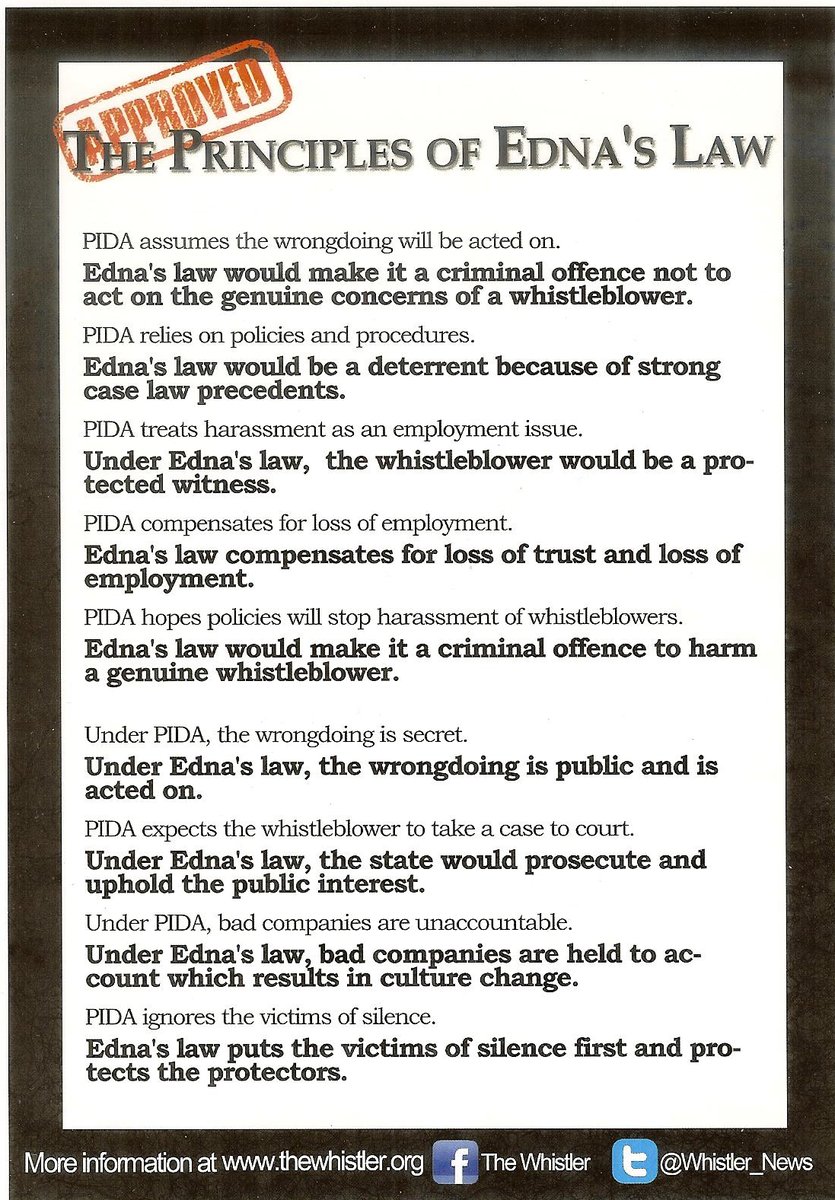
  1. Edna’s law at compassionincare.com

ednas


2. Recommendations by Prof David Lewis, Professor of Employment Law and researcher on whistleblowing.

Professor Lewis was Robert Francis’ lead researcher on the Freedom To Speak Up Review.

Four days after the Freedom To Speak Up Review was published, Prof Lewis wrote on 15 February 2015:

“The Guardian has a laudable track record of supporting whistleblowing. However, in commenting on the impact of the Francis report on the culture of speaking up in the NHS (Editorial, 12 February), you demonstrate a rather conservative approach to legislative reform. First, there is no mention of possible criminal sanctions. Citizens who break the Official Secrets Act commit an offence, so why shouldn’t those who victimise people raising concerns in the public interest? TheProtection from Harassment Act can be invoked if the narrow definition of harassment is fulfilled, but, in my opinion, outlawing any form of retaliation against whistleblowers would send out a valuable message about what society expects.

Second, you do not point out that only “workers” are covered by our whistleblowing legislation. However, it is clear that those who are in a position to raise concerns may not have this status – for example, patients and their families. Other countries now recognise the role that the public can play in exposing wrongdoing; in this important respect, the UK no longer provides an international model.
Professor David Lewis
Director, Whistleblowing research unit, Middlesex University”

https://www.theguardian.com/society/2015/feb/15/whistleblowers-should-law-punish-hospital-bosses

Prof Lewis’ further recommendations were outlined by an article on 18 September 2016:

“Among the many changes he suggests are the outlawing of discrimination against whistleblowers at the point of hiring and making retaliation against whistleblowers a criminal offence. Prof Lewis also believes there is a case for establishing a specialist body such as a Public Interest Disclosure Agency. Such a body might receive disclosures, arrange for their investigation by an appropriate authority and ensure that advisory and counselling services are available, protect whistleblowers from reprisals…”

http://www.sundayguardianlive.com/world/6512-whistle-blowers-should-be-encouraged-protected-law

Letter 8 August 2016 to Health Committee about lack of progress on NHS Improvement’s employment support scheme for whistleblowers


To House of Commons Health Committee, 8 August 2016

Dear Dr Wollaston and colleagues,

Lack of progress on NHS Improvement’s employment support scheme for whistleblowers

I write to pass on update information about the re-employment of NHS whistleblowers. As you will be aware, I have been concerned about the slow progress in implementing this important part of the Freedom to Speak Up Review recommendations. NHS Improvement(NHSI) has been especially slow and still has nothing in place for trust whistleblowers, whereas NHS England has already (In May) sought expressions of interest from primary care whistleblowers to join a pilot.

NHSI advised that it would update me in June. I chased in July for a response. It was evident that there was no substantive update available, and that NHSI’s timetable was worryingly loose.  In consequence, I asked NHSI to share documents from this workstream and also to advise on budget for the re-employment scheme. NHSI treated this as an FOI request, rather part of the normal stakeholder engagement process. Extraordinarily, NHSI has now declined to transparently share any documents about the development of its scheme with whistleblowers (see correspondence attached and below):

“The exemption is engaged as NHS Improvement’s qualified person, its Chief Executive (Jim Mackey), is of the opinion that disclosure of this information would be likely to inhibit the free and frank exchange of views for the purposes of deliberation (section 36(2)(b)(ii)). “

NHSI indicates that beyond some stakeholder engagement events organised by NHS England, last held in February 2016, NHSI has no intention of further involving whistleblowers in developing its scheme. 

NHSI has also advised that there is still no budget allocated for its part of the whistleblower re-employment scheme (NHS England has allocated about £250K).

I am very concerned about this lack of progress by NHSI and poor oversight by the Department of Health. This is a serious obstacle to setting the right tone about NHS whistleblowing governance. On a practical level, it is also unfortunate because trust whistleblowers form the majority. In common with most whistleblowers, I think that the Freedom to Speak Review was ineffective, and that evidence of this continues to mount. A much more robust and penetrating intervention is required.

Yours sincerely,

Dr Minh Alexander

cc Secretary of State for Health

Chairs of Public Accounts Committee and Public Administration and Constitutional         Affairs Committee


FOI disclosure by NHS Improvement 8 August 2016 about the development of its employment support scheme for whistleblowers

nhsi-alexander-decision-letter-08-08-16

FOI disclosure 21 September 2016 by Health and Safety Executive on complaints received against NHS bodies & Priory Group since 1 April 2014

The FOI response from HSE, which disclosed that there had been 222 complaints about NHS bodies since 1 April 2014, can be found uploaded here:

hse-nhs-priory-complaints-21-09-2016-foi-dr-m-alexander-200916


An analysis based on this data showed that there have been 38 complaints on English NHS mental health trusts since 1 April 2014. [NB. There are reports that HSE’s data may be incomplete, and a request for clarification has been made to HSE]

hse-mh

HSE has advised that there have been 4 complaints against Priory Group facilities:

 a priory.jpg

An analysis of HSE’s data shows that these are the 17 NHS bodies which have been the subject of the most complaints to HSE:hse-worst

Letter by whistleblowers 26 November 2015: CQC a fraying rope

To Mike Mire CQC Chair, 26 November 2015

Dear Mr Mire,

CQC’s approach to whistleblowers and whistleblowing

We write to raise concern about these issues. Public Accounts Committee, at its recent hearing with the CQC and Dame Una O’Brien on 28 October, noted the CQC’s continuing ineffectiveness. [1] Specifically, we believe that the CQC has failed and continues to fail whistleblowers. We have the following unresolved concerns about the CQC’s discharge of its responsibilities for ensuring good whistleblowing governance:

1) The CQC’s poor treatment of its own staff who whistleblow and its role modelling of good practice as an employer.

2) The CQC has done little or nothing to challenge the gagging of whistleblowers by the organisations that it regulates.

3) The CQC is not sufficiently transparent about whistleblowing issues.

4) The CQC is failing to act appropriately upon whistleblowers’ disclosures.

5) The CQC still has no structured inspection methodology for assessing regulated organisations’ whistleblowing governance.

6) The CQC has not made serious efforts to engage with whistleblowers.

7) The CQC has shown little will to address serious misconduct by senior managers who engage in reprisal

8) The CQC has advised whistleblowers that they can complain to PHSO about CQC’s response, but in six years PHSO has not upheld a single complaint about the CQC

9) Whistleblowers continue to be sacked or forced to move on, and this is supporting evidence of insufficient support for whistleblowers and insufficient deterrence of reprisal.

We provide the basis for our concerns in the appendix below. We ask you to ensure that the CQC rapidly improves its whistleblowing governance and that the shortcomings that we have described are rectified. In particular, we ask that the CQC’s handling of FPPR is appropriately scrutinised and corrected. To borrow from the CQC’s Board, we believe that the CQC’s poor whistleblowing governance is a “fraying rope” which poses a risk to patient safety. We look forward to hearing whether you will be able to help resolve our concerns.

Yours sincerely,

Minh Alexander

Kevin Beatt

Fiona Bell

Sharmila Chowdhury

Eileen Chubb

David Drew

Narinder Kapur

Gary Walker

Maha Yassaie

cc Health Committee

Public Accounts Committee

Secretary of State for Health

Shadow Secretary of State for Health

APPENDIX: The basis for our concerns:

1.  The CQC’s treatment of its own staff who whistleblow and the CQC’s role modelling of good practice as an employer. The CQC has a history of gagging [2] and treating its own whistleblower staff poorly. It has also still not apologised to several of its own whistleblowers. Additionally, a CQC member of staff recently made a serious external disclosure.[3] This suggests that CQC is still not properly handling concerns raised by its own staff. This does not set a good example to the organisations that the CQC regulates.

2. The CQC has done little or nothing to challenge the gagging of whistleblowers by the organisations that it regulates. The CQC’s inspection reports do not explicitly deal with this key issue of whistleblowing governance. Despite the CQC acknowledging that confidentiality clauses can be seen as gagging clauses [2], the CQC seems to have turned a blind eye to the widespread and continuing use of such clauses by regulated organisations. This allows employers to continue forcing whistleblowers into silence.

3. The CQC is not sufficiently transparent about whistleblowing issues. Despite Public Account Committee’s recommendations that public bodies make proactive and transparent use of whistleblowing data [4], the CQC has failed to analyse and publish meaningful whistleblowing activity data. This is despite the fact that the CQC holds an unparalleled national database on health and social care whistleblowing, which could clearly be powerfully used to drive learning and care quality. It is a hugely wasteful, major governance failure that the CQC has not made better use of this data. The CQC has also declined to make a definite commitment to publishing such whistleblowing data in the future [5], even though the government says that it plans to make it compulsory from April 2016 for prescribed bodies such as the CQC to publishing whistleblowing data. [6]We are also concerned that the CQC has refused to publish the outcome of an external review of its whistleblowing governance, which was conducted at a cost of £150,000 to the public purse. The cost of this exercise was revealed only through an FOI request. [7]

4. CQC’s failure to act appropriately upon whistleblowers’ disclosures. The CQC has repeatedly failed to give due weight to whistleblowers’ concerns, and has repeatedly failed to investigate their concerns either singly or as part of wider thematic review, despite the fact that the CQC acknowledges it has powers of thematic review. In the few instances where the CQC has undertaken thematic reviews, it has not been adequately supportive of whistleblowers. [8] The CQC has also far too readily accepted “independent” investigations that regulated organisations arrange to manage concerns raised by whistleblowers. These investigations are not truly independent, and there is evidence in some cases that employers have unhealthy if not clearly corrupt control of such investigations. The CQC must surely be aware of the shortcomings of such investigations, but it still permits and in some cases, encourages their use. In essence, the CQC divests itself of responsibility, does not take whistleblower intelligence seriously, and allows regulated organisations to waste public money on superficial and sometimes false assurance.

5. The CQC still has no structured inspection methodology for assessing regulatedorganisations’ whistleblowing governance. [9] We have written to the CQC about this issue. [9]Sir Robert Francis concluded the CQC was not making sufficient use of its powers to protect whistleblowers, and that it could do more. He recommended that regulatory action should be taken where organisations have poor whistleblowing practice. [10] However, it is hard to see how this will be achieved until the CQC sets clear, auditable inspection standards and measures its adherence to such standards. The CQC does notseem to have adopted Sir Robert Francis’ recommendations in any measurableway and appears to be carrying on regardless.

6. The CQC has not made serious efforts to engage with whistleblowers. It has only held two whistleblower listening events in two years. This is despite the CQC’s promise to keep whistleblowers regularly involved and informed. The CQC’s approach has been tokenistic, and it continues to postpone discussion of the real issues that concern whistleblowers. Also, the CQC stated last year that it was reviewing its customer care, including its approach to whistleblowers, but it has not yet taken an evidence-based approach and measured whistleblowers’ experience of the CQC. One important consequence of the CQC’s failure to measure whistleblowers’ experience is that it is failing its duty of Equality. The CQC has no data to evidence that it is treating protected groups as well as others, and CQC has admitted that it is not collecting data on the ethnicity of whistleblowers. This is despite the fact that the Freedom To Speak Up Review demonstrated that BME whistleblowers have a worse experience of whistleblowing. The CQC also set criteria for a recent CQC whistleblowing post which disadvantaged whistleblowers, and meant that many whistleblowers would not be eligible to apply even though they were the individuals with the very knowledge and expertise that were relevant to this post. [11]

7. CQC has shown little will to address serious misconduct by senior managers who engage in reprisal against whistleblowers. Not one director who has been referred under Regulation 5 Fit & Proper Person (FPPR) has so far been removed from office as a result of the CQC’s actions. [12] [13] Whistleblowers have in fact noted a tendency by the CQC to spare such managers. Professor Sir Mike Richards, who chairs the CQC’s FPPR panel, has stated that only certain levels of reprisal would be considered for regulatory action, although there is no clarity and transparency about the determining levels of reprisal. Professor Mike Richards has also stated to whistleblowers that it will not be possible to remove too many managers for reasons of public opinion. In our view, the CQC’s application of FPPR has been arbitrary and its position contradictory. The CQC claims that it is up to Trusts to make determinations of fitness, but the CQC itself has declared a number of FPPR referrals to be meritless and has not even passed these referrals to the relevant Trust Boards. This brings to mind recent comments by Professor Mark Baker of NICE: “I think the reason they don’t want it is if you don’t like the answer to the question, you don’t ask the question” [14] It seems logical to ask if the CQC is not allowing FPPR questions to be raised with Trusts, because it wishes to avoid the answers. This is particularly disappointing to whistleblowers as FPPR is currently the sole mechanism for holding managing victimising whistleblowers to account. This is because in his report of the Freedom To Speak Up Review report, Sir Robert Francis eschewed managerial regulation in favour of a trial of FPPR. It seems logical to ask if the CQC is not allowing FPPR questions to be raised with Trusts, because it wishes to avoid the answers. This is particularly disappointing to whistleblowers as FPPR is currently the sole mechanism for holding managing victimising whistleblowers to account. This is because in his report of the Freedom To Speak Up Review report, Sir Robert Francis eschewed managerial regulation in favour of a trial of FPPR. We do not believe that the CQC have shown robust will to deter whistleblower reprisal. Another government agency has overseen the successful barring of a company director responsible for whistleblower suppression at Winterbourne view [15], but the CQC have failed to remove other directors for even worse reprisal using FPPR. Mr Behan and Professor Mike Richards recently claimed that although no director has yet been removed under FPPR, they believed that FPPR is now having a “deterrent” effect. [13] Their view was not supported by the recent appointment by St. George’s hospital of a high profile director, who was previously found by an Employment Tribunal to have victimised whistleblowers. [16] Sir Robert Francis referred to this specific case as an example of “oppressive” employer behaviour that should not be tolerated. [17] Yet it seems to us that the CQC has tolerated many such instances of oppressive behaviour. The resulting injustice to whistleblowers and impunity for “oppressive” managers is, as Health Committee has noted, a serious patient safety issue. [18] In the case of Hayley Dare whistleblower, her former employer West London Mental Health NHS Trust has now finally admitted in EAT proceedings and after prosecuting a ferocious campaign against her, that she raised concerns in good faith. [19] Yet such is the licence afforded to employers that we have no expectation that the Trust board will be held to account for unlawful reprisal, sacking a whistleblower or for gross waste of public funds.

8. The CQC has advised whistleblowers that they can complain to PHSO if they are unhappy with its response, but this is likely to be an ineffective means of appeal.However, it is clear from the statistics that a complaint to PHSO is unlikely to beupheld. Based on FOI disclosure by PHSO, of 354 complaints to PHSO about the CQC since the CQC’s inception in 2009, none have yet been upheld. [20] An appeal to PHSO is likely to be just another journey between pillar to post for whistleblowers. So in short, whistleblowers are obstructed by the CQC’s failures to discharge its responsibilities, and in effect have nowhere else to go.

9. Whistleblowers continue to be sacked or forced to move on, and this is supporting evidence of insufficient support for whistleblowers and insufficient deterrence of reprisal. In the continuing case of whistleblower Dr Kevin Beatt illustrates the fact that even when whistleblowers are fully vindicated by Employment Tribunals, employers may still subject them to further harrowing appeals. The Employment Tribunal found that Dr Kevin Beatt was a genuine whistleblower, that he was blameless and that he suffered serious detriment which included being vexatiously referred by his employer to the GMC. However, Dr Beatt’s former employer has appealed against the ET judgment despite the recommendations of Sir Robert Francis’ whistleblowing review and his advice that employers should reflect on current legal action [21], and despite Mr Hunt’s promises to protect whistleblowers. Furthermore, the CQC arbitrarily rejected Dr Beatt’s FPPR referralabout the actions of his employer. It is clear to us that poor employers continue to victimise whistleblowers because there is a palpable lack of deterrence, and they have no fear of consequences.

References

[1] Public Accounts Committee, oral evidence on the CQC 28.10.2015

Click to access 23822.pdf

[2] Health watchdog put 20 gagging orders on staff, Patrick Sawer and Laura Donnelly, Telegraph 30 June 2013

http://www.telegraph.co.uk/news/health/heal-our-hospitals/10150664/Health-watchdog-put-20-gaggingorders-on-staff.html

[3] DH audit of the CQC’s procurement process in response to a CQC whistleblower’s disclosures to DH

https://www.gov.uk/government/publications/review-of-2-cqc-procurements-made-in-2013

[4] House of Commons Public Accounts Committee, Whistleblowing, Ninth report of session 2014-2015, 1.08.2014

Click to access 593.pdf

[5] Correspondence about the CQC’s analysis and publication of its whistleblowing data

[6] Correspondence from Sir Jeremy Heywood, Cabinet Secretary 20.10.2015

[7] Correspondence about the publication of a review of the CQC’s performance as a prescribed body under the Public Interest Disclosure Act

[8] Joint review by the CQC and Monitor into whistleblowing concerns at the Christie NHS Foundation Trust

Click to access Christie_Review.pdf

[9] Letter to Mr David Behan, CQC Chief Executive 19.10.2015

CQC Inspectors in the dark

[10] Report of Freedom to Speak Up Review by Sir Robert Francis QC, 11.02.2015

[11] Correspondence to Mr David Behan about National Guardian Set Up Manager post 10.10.2015 and 22.10.2015

CQC’s processes leaves exiled whistleblowers in the cold

CQC slams door on whistleblowers

[12] More than 60 managers have faced Fit and Proper complaints, Shaun Lintern, Health Service Journal 29.06.2015

http://www.hsj.co.uk/news/more-than-60-managers-have-faced-fit-and-proper-complaints/5087202.article

[13] Chief inspector: Fit and proper regulation having ‘deterrent effect’, Will Hazel, Health Service Journal, 24.09.2015

http://www.hsj.co.uk/news/chief-inspector-fit-and-proper-regulation-having-deterrenteffect/5090599.article

[14] NHS leaders ‘didn’t like answer’ they got on staffing levels, Shaun Lintern, Nursing Times 7.07.2015

http://www.nursingtimes.net/home/specialisms/leadership/nhs-leaders-didnt-like-answer-getting-onstaffing-levels/5087589.article?referrer=RSS

[15] Nursing home director disqualified for failing to act on whistleblower concerns

https://www.gov.uk/government/news/nursing-home-director-disqualified-for-failing-to-act-onwhistleblower-concerns

[16] Ex-South Devon Chief joins London trust, Sophie Barnes, Health Service Journal, 12.10.2015 http://m.hsj.co.uk/5091013.article

[17] Francis criticises Vasco-Knight trust, Judith Welikala, Health Service Journal, 7.02.2014 http://www.hsj.co.uk/news/acute-care/francis-criticises-vasco-knight-trust/5067807.article

[18] House of Commons Health Committee, Complaints and Raising Concerns, Fourth report of session 2014-2015, 21.01.2015

[19] NHS Mental Health Trust accepts whistleblower who spoke out about bullying acted in good faith, Paul Gallagher, Independent on Sunday 8.11.2015

http://www.independent.co.uk/life-style/health-and-families/health-news/nhs-mental-health-trust-admitswhistleblower-who-spoke-out-about-bullying-acted-in-good-faith-a6725786.html

[20] FOI disclosure 21.09.2015 by PHSO on the handling of complaints about the CQC.

http://twitdoc.com/4S1Y

[21] NHS to get whistleblower guardians, Hugh Pym, BBC 11.02.2015

http://www.bbc.co.uk/news/health-31362196

CQC Deaths Review: All fur coat….

By Dr Minh Alexander, NHS whistlerblower and former consultant psychiatrist, first published 13 August 2016

After the abject failures by CQC, DH and other oversight bodies were revealed by the Mazars [1] report on failure to investigate hundreds of unexpected patient deaths by Southern Health, Jeremy Hunt predictably asked CQC to review the way the NHS handles deaths. [2]

What better way of keeping it in the family, whilst fobbing off the public with some superficially reassuring headlines.

Never mind that CQC has long been implicated as an essential part of what Professor Brian Jarman called the NHS Denial Machine. [3]

CQC itself is only reviewing what trusts do. Purportedly, there is other work by the DH that “may” result in changes to regulatory process. There is passing reference to this in CQC’s review blurb, but I am not aware that any details of this work have been published. [4]

After I posted criticism of CQC and the limited remit of the deaths review in the twitter hashtag #CQCDeathsReview, I was approached via twitter by a CQC official who assured me that the enforcement of good practice would be reviewed as well. This person invited my contribution and offered me a meeting with the deaths review team. When I asked for more information, a telephone call was offered. When I asked for written information and the actual terms of reference of any review of regulatory performance, the communication petered out. This is unfortunate as the deadline for submission of evidence is this Sunday, 14 August.

No doubt it was a well-meaning approach, by someone who had not yet discovered that the CQC has developed a habit of writing frosty letters to me via its Director of Legal Services.

However, there is a startling contrast between the frenetic publicisation of CQC’s review of trusts’ performance in handling deaths, compared to the opacity and silence over the purported (and more important) review of oversight processes. The message is one of double standards: “No stakeholder scrutiny please, we’re too important”.

This unwillingness by the DH, and its arm lengths bodies such as CQC, to properly account for their failures to protect patients is typical of a longstanding pattern of behaviour. Major reports which criticised the DH’s role in creating a culture of fear and compliance, instead of a genuine focus on quality and patient safety, were suppressed by the DH in 2008 and only released in 2010 by FOI. [5] [6] [7]

It is most unlikely that the whole truth will be allowed to emerge about the NHS’ continued mishandling and subterfuges about patient deaths.

A review of CQC inspection reports on English mental health trusts raises serious questions of systematic evasiveness by CQC about patient deaths. [8]

Only one of the new-look CQC inspection reports published so far on mental health trusts gave the numbers of deaths of patients under the Mental Health Act. The rest of the reports carefully side-stepped this critical data, even in instances where CQC admitted that some trusts were noted to be at elevated risk of deaths and or suicides under the Mental Health Act. At Mersey Care, a CQC report of October 2015 claimed that although the trust had an elevated risk in terms of the number of suicides under the Mental Health Act, the figures were not given because the numbers of deaths were low and could lead to identification. [9] Yet there are plenty of occasions when CQC reports have referred to very small numbers of other types of incidents, for example: a serious injury sustained by a detained Southern Health patient after climbing onto a roof that was too easily accessed. Perhaps the real issue is government reluctance to reveal the scale of Article 2 Right to Life legal claims to which it is potentially exposed, with liability being most obvious in the deaths of patients detained by the State.

The Mazars report did not spare CQC’s blushes on Mental Health Act deaths. Mazars’ investigation found that Southern Health reported 27 deaths of patients under the Mental Health Act to CQC. However, CQC managed to mislay 9 of these, and told Mazars that there had only been 18 deaths of Southern Health patients under the Mental Health Act.

There is generally arbitrary variation of the way in which deaths data was presented from one CQC report to another. The time periods sampled varied for no given reason. CQC showed Goldfish grade organisational memory in that the time periods sampled were short (mostly around a year or so, distributed variably in time prior to the inspection visits), and there was very little evidence of benchmarking against past deaths. Consequently, there was almost no longitudinal perspective on the degree to which organisations were repeating the same failings. CQC sometimes gave a breakdown of the types of deaths, but sometimes not. Suicide is sometimes not mentioned at all, which is rather surreal when a regulator is reporting on mental health service safety.

The July 2015 CQC inspection report on Kent and Medway, from an inspection chaired by no less than Paul Lelliot CQC’s Deputy Chief Inspector and CQC lead for mental health, did not mention deaths at all. [10] This is rather extraordinary as Kent and Medway has received at least 13 coroner’s warning Reports to Prevent Future Deaths, including 4 reports in 2014.

Similarly, the numbers of deaths were not reported at all by the CQC inspection report on Nottinghamshire Healthcare, of July 2014. [11] Instead, there was only a brief claim that the number of Nottinghamshire Healthcare’s deaths was in the expected range. Paul Lelliot also chaired this inspection.

At the very troubled and “Inadequate” Norfolk and Suffolk, which has seen very harsh staffing cuts in recent years, CQC’s latest inspection report of February 2015 [12] also contrived not to give the numbers of any deaths whatsoever, despite the fact that the local media has been filled with frequent reports of campaigners’ concerns about increased numbers of deaths and trust inquests. In this context, a question arises of whether this failure by CQC to report the number of Norfolk and Suffolk deaths was a politicised decision.

There were other CQC reports that did not give the numbers of deaths, and some that gave conflicting numbers of deaths, with no attempt by CQC to reconcile the conflicts.

Importantly, CQC only described reported deaths. There was no evidence that CQC checked on whether reporting was accurate and reliable. In some trusts, CQC stated that no deaths had been reported at all, but gave no indication that inspectors had dug deeper to verify the number of deaths. I have told CQC many times that not all deaths and serious incidents are reported. Mazars also gave ample evidence that not all deaths are reported: there were a total of 10,306 deaths at Southern Health between 2011 to 2015, but only 195 were reported as serious incidents requiring investigation (SIRIs). Some of the trusts with zero reported deaths were rated “Good” by CQC. CQC did not describe any attempts to cross check directly with coroners. There is evidence that CQC relied on some trusts to tell them how many coroners’ warning reports had been received: The trust told us about four subsequent coroners’ rulings (regulation 28 rulings)”. In this particular instance, this information was incorrect and there had been two additional coroners’ warning reports.

Bizarrely, the November 2015 CQC inspection report on Lancashire Care NHS Foundation restricted itself to looking at Coroners’ warning reports from only 6 months in 2013:

Every six months, the Ministry of Justice publishes a summary of recommendations that had been made by coroners with the intention of learning lessons from the cause of death to help prevent deaths. There were no concerns raised regarding the trust in the most recent report (April 2013 – September 2013).” [13]

In fact, Lancashire Care had 5 coroners’ warning Reports to Prevent Future Deaths from December 2013 up to the time of CQC’s report. A very serious question arises about why CQC chose to ignore this evidence and to exclude it from its inspection report.

CQC performed the same worrying manoeuvre in its February 2015 inspection report of the extremely troubled Norfolk and Suffolk. The CQC report claimed that

“In the latest report covering the period from October 2012 to March 2013 there were no concerns regarding the trust raised by the coroner.”

Firstly, this was wrong as there was a coroner’s warning report issued on

28 March 2013 on the death of a patient detained under the Mental Health Act. Moreover, there were another 6 coroners’ warning reports after that, up to the time of CQC’s inspection report. In total, Norfolk and Suffolk have had at least 22 coroner’s warning reports, which is one of the highest if not the highest numbers of coroners’ warning reports nationally.

The same dodgy dance steps were followed at Avon and Wiltshire Partnership, when the CQC July 2015 inspection report claimed:

“In the latest report covering the period from October 2012 to March 2013 one concern regarding the trust was raised relating to the death of a patient at Fromeside” [14]

In fact, from September 2013 to the time of CQC’s inspection report, there were at least 8 further coroners’ warning reports. Avon and Wiltshire Partnership has had at least 17 coroners’ warning reports in total, and some have described the most serious failures of care. These included the highly publicised case of a 2014 suicide-infanticide in which the trust was criticised by the coroner in October 2015 for not making adequate contingency plans for a very high risk pregnancy, in a patient with known psychotic illness. [15] [16]

At Greater Manchester West, CQC’s inspection report of June 2016 [17] mentioned only one coroner’s warning report in January 2016, when in fact between September 2013 and December 2015, there were 8 other warning reports issued.

At Devon Partnership, CQC’s inspection report of January 2016 [18] did not mention coroners’ warning reports at all, despite the fact that the trust has had at least 19 warning reports, with 4 issued between July 2014 and October 2015.

CQC’s January 2016 inspection report of SLAM [19] was equally silent on coroners’ warning reports, when there had been a total of at least 19 warning reports, with 8 issued between August 2013 and July 2015.

At troubled Sussex Partnership, CQC’s inspection report of May 2015 [20] also did not mention coroners’ warning reports at all, despite the fact that there had been a total of 11 reports up to the time of CQC’s inspection report, with 8 reports issued between August 2013 and April 2015. This inspection was chaired by Paul Lelliot.

There were other examples of CQC selective omission of coroner’s warning reports from inspection reports.

The only CQC report that gave detailed data on deaths and their handling was the post Mazars inspection report on Southern Health. The superficial Pre-Mazars inspection report on Southern Health of February 2015 mentioned ‘death(s)’ only six times. [21] The post-Mazars inspection report of April 2016 mentioned ‘death(s)’ 94 times. [22] Ironically, CQC states in this latest report that the trust should “give a more transparent breakdown of deaths” in its annual report. It is a pity that CQC does not devote the same thoroughness to trusts where there has been less publicity about deaths, and does not follow its own advice about transparency regarding the pattern of deaths.

The overall superficiality, passivity, frank inaccuracy and lack of standardisation by CQC means that the deaths data presented by CQC reports is not robust, is sometimes seriously misleading, and that it is difficult to track the performance of individual trusts or to compare trusts. Politically however, the moveable measurement goal posts keep CQC’s options open, and make it easier to stretch a rating to fit when required. Jeremy Hunt’s vision of a “single version of the truth” by an authoritative and trusted regulator is yet more tarnished tinsel.

They really should all toddle off to M&S for some items of intimate apparel.

References

[1] Mazars December 2015 report on Independent review of deaths of people with a Learning Disability or Mental Health problem in contact with Southern Health NHS Foundation Trust April 2011 to March 2015

https://www.england.nhs.uk/south/wp-content/uploads/sites/6/2015/12/mazars-rep.pdf

[2] Written statement by Jeremy Hunt Secretary of State 17 December 2015 on Southern Health

https://www.parliament.uk/business/publications/written-questions-answers-statements/written-statement/Commons/2015-12-17/HCWS421/

[3] Labour’s ‘denial machine’ over hospital death rates. Telegraph 14 July 2013

http://www.telegraph.co.uk/news/health/heal-our-hospitals/10178552/Labours-denial-machine-over-hospital-death-rates.html

[4] CQC scoping paper for deaths review http://www.cqc.org.uk/sites/default/files/20160624%20Investigating_deaths_across_mental_health_acute_and_community_setting_Scoping_Paper.pdf

[5] When managers rule, patients may suffer and they’re the ones that matter. Prof Brian Jarman BMJ Editorial 19 December 2012 BMJ 2012;345:e8239

http://www.ajustnhs.com/wp-content/uploads/2012/06/Brian-Jarman-BMJ-Dec-2012.pdf

[6] Institute of Health Improvement 2008 report, Achieving the Vision of Excellence in Quality: Recommendations for the English NHS System of Quality Improvement

https://www.dropbox.com/home?preview=IHI+report+achieving+the+vision+of+excellence+in+quality+(2).pdf

[7] Joint Commission International 2008 report, Quality Oversight in England – Findings, Observations and Recommendations for a New Model

https://www.dropbox.com/s/dpnhg605fhrsq52/JCI%20report%20Quality%20oversight%20in%20England.pdf?dl=0

[8] The main data collated on data about deaths in CQC mental health trust inspection reports can be found uploaded here:

https://www.dropbox.com/home?preview=CQC+data+on+deaths+in+inspection+reports+.xlsx

[9] http://www.cqc.org.uk/sites/default/files/new_reports/AAAD5292.pdf

[10] https://www.cqc.org.uk/sites/default/files/new_reports/AAAC9675.pdf

[11] http://www.cqc.org.uk/sites/default/files/new_reports/AAAA1862.pdf

[12] http://www.cqc.org.uk/sites/default/files/new_reports/AAAA3470.pdf

[13] http://www.cqc.org.uk/sites/default/files/new_reports/AAAD1977.pdf

[14] http://www.cqc.org.uk/sites/default/files/new_reports/AAAC0116.pdf

[15] Bristol mother Charlotte Bevan and missing baby CCTV issued. BBC 3 December 2014 http://www.bbc.co.uk/news/uk-england-bristol-30316699

[16] Coroner’s Report to Prevent Future Death in the case of Charlotte Bevan, 27 October 2015 https://www.judiciary.gov.uk/publications/charlotte-bevan/

[17] http://www.cqc.org.uk/sites/default/files/new_reports/AAAF1696.pdf

[18] http://www.cqc.org.uk/sites/default/files/new_reports/AAAD7774.pdf

[19] http://www.cqc.org.uk/sites/default/files/new_reports/AAAE6494.pdf

[20] https://www.cqc.org.uk/sites/default/files/new_reports/AAAC1746.pdf

[21] http://www.cqc.org.uk/sites/default/files/new_reports/AAAB9266.pdf

[22] http://www.cqc.org.uk/sites/default/files/new_reports/AAAF4191.pdf