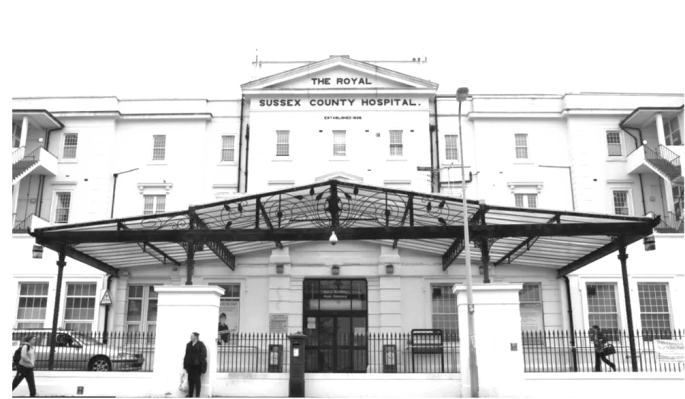
There are currently FOURTEEN Employment Tribunals against Marianne Griffiths’ former NHS trust, University Hospitals Sussex NHSFT. The trust refuses to say how many include whistleblowing claims

By Dr Minh Alexander retired consultant psychiatrist 2 March 2023

Marianne Griffiths a former NHS trust CEO and a Jeremy Hunt favourite, is an NHS insider who has been picked by NHS England to investigate the deaths scandal at NEAS revealed  by whistleblowers.

Both whistleblowers and bereaved families have expressed fears of a whitewash.

Griffiths’ former trust at Sussex had whistleblower scandals of its own during her tenure.

A Study in Delay: The National Guardian & Brighton and Sussex University Hospitals NHS Trust

A Study in Delay II : The National Guardian, maternity safety & University Hospitals Sussex NHS Foundation Trust

NHS England has to date failed to give a straight answer on whether it has checked that there are no ongoing matters at Sussex that might call into question Griffiths’ suitability to investigate the NEAS affair.

Her former trust University Hospitals Sussex NHS Foundation Trust has been resistive to recent FOIs about its recent whistleblowing and HR governance.

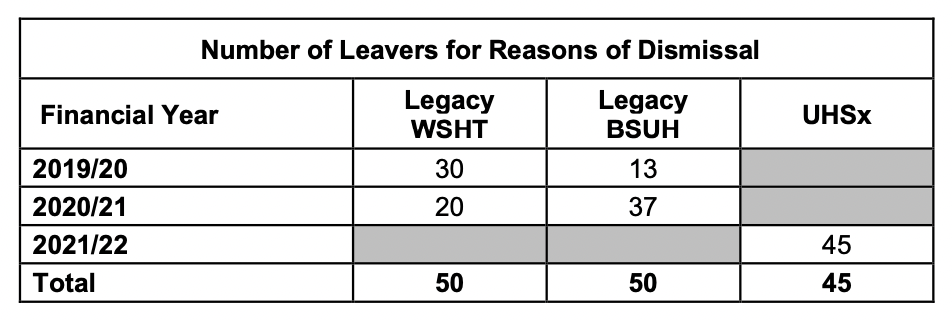
But the trust did admit that it had sacked 145 staff in financial years 2019/20 to 2021/22. (Griffiths stepped down as Sussex CEO on 1 April 2022).

Sussex claimed that it was unable to give any details about Employment Tribunal claims filed against the trust, including those filed under the jurisdiction code of public interest disclosure (whistleblowing). This was on the unlikely basis that there was no central file and that it would cost too much to retrieve the data manually.

The trust also claimed that it had no central data on settlement agreements and could provide no data on confidentiality clauses used.

I wrote to Griffith’s successor George Findlay CEO (who like David Rosser ex CEO of UHB was the former medical director of the trust) to question the claim that the trust could not even tell me about current Employment Tribunal claims against the trust.

I also suggested that if Findlay was following the recommendations of the 2015 Freedom to Speak Up Review and personally taking responsibility as CEO for the contents of the trust’s settlement agreements, he should be able to give me some idea of the trust’s approach.

Letter to George Findlay trust CEO 2 February 2023

I did not receive a reply from Findlay, but a further FOI response was issued by the trust which reveals that there are currently FOURTEEN live employment tribunal claims against the trust. The trust refuses to say if any of these cases include whistleblowing claims:

“There are currently 14 employment tribunal cases in progress. We are unable to provide any further information relevant to these cases (e.g. those that include a PID as per your request) due to the small number of staff involved and the risk of identification.”

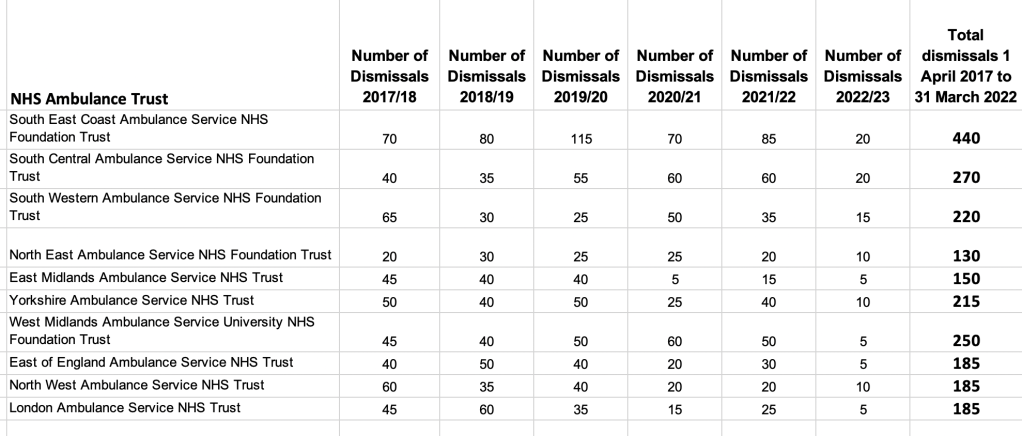
Moreover, the trust discloses that it has dismissed staff by professional group in the three years 1 April 2019 to 31 March 2022 as follows:

(The total here is different from that given in the previous trust FOI response)

The trust claims the total number of medical staff dismissed in this period is six. Also, that six doctors were referred to the General Medical Council in this period.

The trust claimed that this is its current template for confidentiality requirements in settlement agreements:

“1. Confidentiality

  1. The Employee understands and accepts that she/he/they will remain bound by any pre- existing confidentiality obligations in her/his/their contract of employment, including the obligation to keep confidential any patient confidential information and all confidential information and know how that the Trust may have disclosed to the Employee, whether orally, in writing or digitally which includes but is not limited to data, financial information, financial projections, financial records, spreadsheets, computer software, patient information and any information which has been given to the Trust in confidence and any other information which the Employee is told is confidential which the Employee has obtained about the Trust or its patients or its employees and its officers during the currency of the Employee’s employment, however obtained, and whether held on document, computer disc, tape or otherwise and not to publish that information to any third party without the prior written consent of the Trust.”

Sussex’s above confidentiality requirement purportedly contains no restriction on disparagement or disclosing the existence of the agreement or its contents, but it is otherwise more exhaustively drafted than NHS Employer’s template for confidentiality about past employment.

This is from NHS Employer’s template::

Whether or not it has more force in law, Sussex’s longer list of “must nots” may certainly make former employers more anxious about what they can disclose.

Sussex provided the template purportedly used for the last settlement agreement that it reached:

FOI disclosure 1 March 2023 Sussex settlement agreement template 2023

So, is it a sustainable argument for George Findlay and University Hospitals of Sussex NHS Foundation Trust to claim that the trust cannot disclose if it is facing any whistleblower detriment claims on grounds of privacy?

I hope that journalists will be testing this and exploring further, for the sake of patients at both North East Ambulance Service and at Sussex, and any Sussex whistleblowers currently suffering in the obscurity imposed by the processes that are inflicted upon them.

It seems NHS England, which allegedly has a conflict of interest through mismanagement of the original NEAS whistleblower disclosures, seems disinclined to ask hard questions.

The regulator is after all, now a proven whistleblower abuser in its own right.

UPDATE 10 JUNE

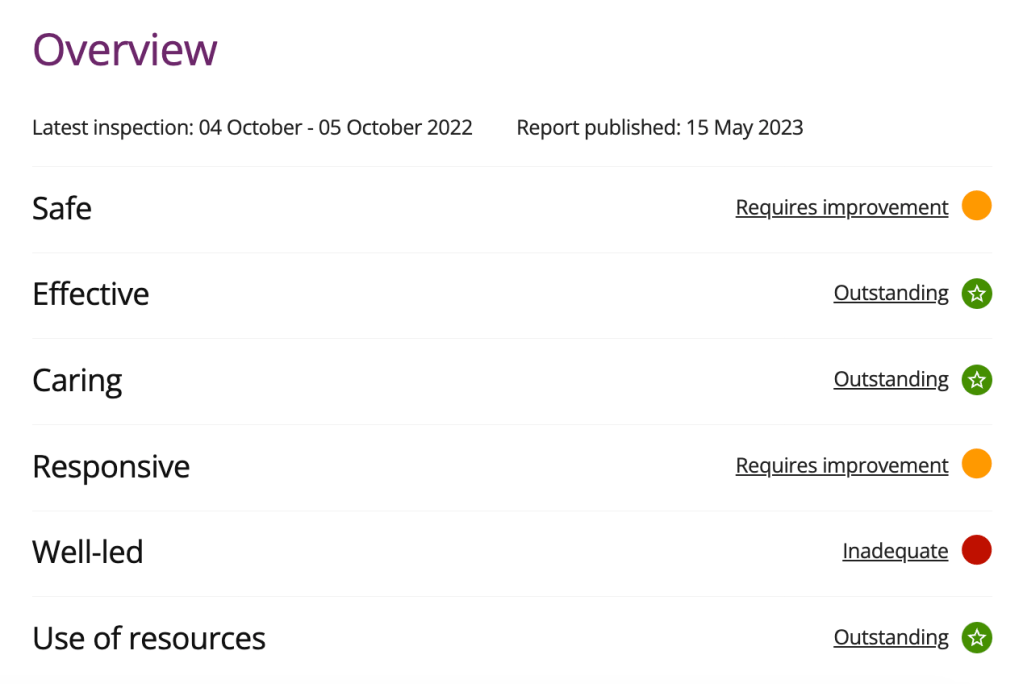
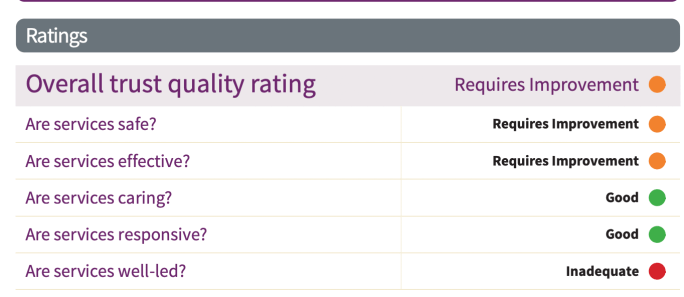
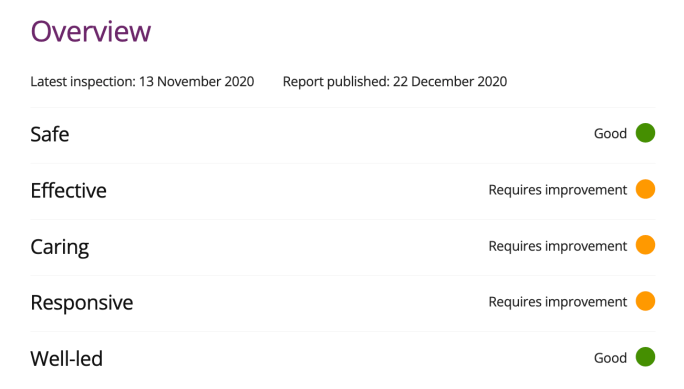
The murky reality of poor governance at Sussex has finally exploded into the public domain with a downgrading of the trust by CQC from ‘Outstanding’ to ‘Requires Improvement’ and “Inadequate’ on Well Led, and revelations of a police investigation into gross negligence manslaughter triggered by Sussex whistleblowers, from a ET hearing that commenced on 5 June 2023.

This previously unpublished inspection report by Health Education England of surgical training at the trust revealed the dire state of governance at Sussex which was suppressed by the trust, with help by CQC and the National Guardian’s Office:

Urgent Concern Review (On-site visit) Core and Higher General Surgery, March 2020

RELATED ITEMS

A predecessor body of UHSNHSFT unfairly sacked consultant neurosurgeon Mr James Akinwunmi who had raised patient safety and governance issues.

Top hospital consultant claims NHS spent £1million fighting him after he turned whistleblower

Did Griffiths and Findlay, who took over after an organisational merger, follow up properly on the governance issues arising from the case?

Are there persisting unsafe systems and practices that allowed the unfair dismissal of a doctor who raised patient safety concerns?

Have other doctors since been sacked by the trust after raising concerns?

But facts may be immaterial to regulators.

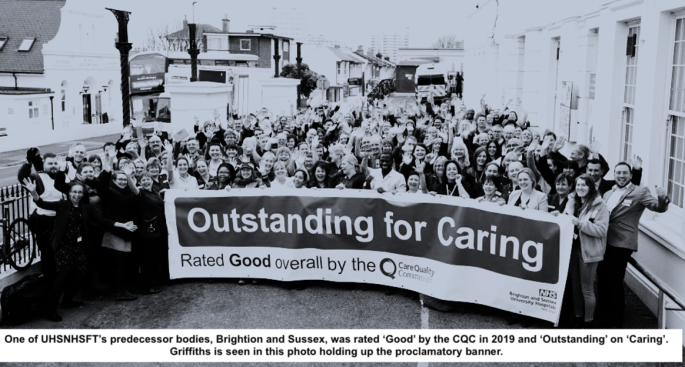
Sussex remains a favourite with the Care Quality Commission and retains its overall “Outstanding” rating from 2019 despite subsequent findings in 2021 of poor whistleblowing governance:

Trust keeps ‘outstanding’ rating despite not listening ‘enough’ to staff concerns

UPDATE 3 JUNE 2023

For all the trust’s pointless secrecy, one of the current whistleblowing cases will be heard next week at Croydon Employment Tribunal office. The case is scheduled to run from 5 to 16 June 2023.

This follows a humiliating downgrading of the Trust by the CQC from ‘Outstanding’ to ‘Requires Improvement’ on 15 May 2023, which included a rating of ‘Inadequate’ on the Well Led domain.

This of course is deeply embarrassing for NHS England with regards to its investigation of North East Ambulance Service, led by Marianne Griffiths the former CEO of Sussex University Hospitals NHS Foundation Trust, under whose tenure several of the whistleblowing cases arose.

NHS England found guilty of whistleblower detriment and Race victimisation against Ms Cox. Wilful blindness & power abuse at the heart of the NHS

By Dr Minh Alexander 22 February 2023

This is a brief post to draw attention to an important case of proven whistleblower detriment by an NHS regulator.

Following on the heels of the Care Quality Commission’s disgrace in Kumar v CQC, and ongoing failures to learn (more of this to come shortly), NHS England has stepped in to take a bow.

NHS England is the National Commissioning Board for the NHS, and it is also a regulator for NHS trusts. Under UK whistleblowing law, it is a so called Prescribed Person with responsibility for receiving whistleblowing disclosures and publishing periodic data about these disclosures.

It is therefore supposed to be an exemplar of good governance and a safe harbour for whistleblowers, but experience shows that it is anything but.

The current case is that of a Ms Cox, who remains an NHS England employee, so her privacy and future employment needs to be respected and protected.

I do not currently have the capacity to do the case justice but will post a summary of the case below.

This is the ET judgment:

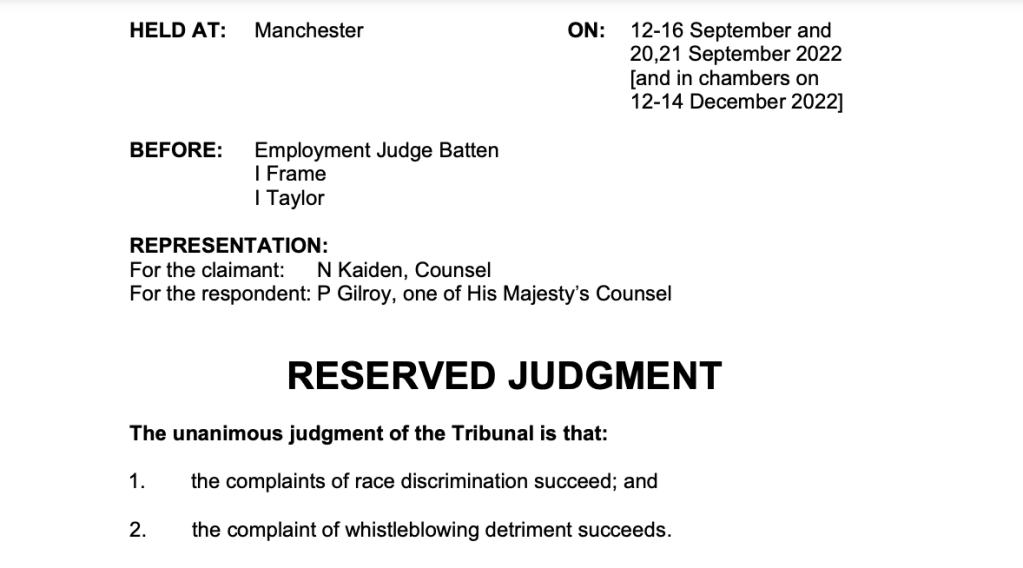
Ms A Cox v NHS Commissioning Board (NHS England) ET Judgment Case Number 2415350/2020 and 2401365/2021

Ms Cox, “The Claimant”, worked as Continuing Healthcare Manager in the NHSE North West Region. At the time, she was reportedly “the only black nurse in the respondent’s north region”. She was also part of the CNO’s BME Strategic Advisory Group and had a regional lead role on BME issues.

In the course of her work, she had cause to make several protected disclosures to her immediate line manager, Gill Paxton, regional Head of Continuing Healthcare. These concerned breaches of equality practice by NHS England and also a very important breach of neutrality by NHS England in deploying its staff to sit on Independent Review Panels which decide on the funding of continuing care.

The ET described a breach of internal HR procedure in which a member of the Claimant’s team was earmarked for promotion by Marie Boles the then NHSE Deputy Chief Nurse, and duly promoted by the Claimant’s line manager, placing her on the same grade as the Claimant. The individual also later received a new job title. These actions were without reference to the Claimant as her line manager.

There were other instances of marginalisation and exclusion cited in the ET’s findings of fact.

The ET was critical of the treatment on grounds of Race:

“Ms Paxton created an intimidating and hostile and humiliating environment for the claimant at work; her actions in excluding the claimant were intentional in many regards, and her actions had that effect. The claimant reasonably perceived that she was suffering poor treatment amounting to harassment because of race. She became aware of Ms Paxton’s conduct in early course and sought to challenge it directly but this failed to prevent the conduct continuing. The Tribunal also took account of the fact that being excluded or side-lined in the workplace had a serious effect on the claimant. It led to her being off work, sick, and latterly seconded to work elsewhere in the respondent.”

The ET also criticised NHSE’s witnesses’ and Gill Paxton’s evidence in particular on several occasions. The Tribunal described some of NHSE’s responses to the Claimant’s claim as “excuses”. For example:

“The respondent’s witnesses sought to explain the exclusion of the claimant in terms of matters of pay being confidential. However, the Tribunal takes account of the fact that the NHS is a public sector employer, with agreed and published pay bands. There was no mention of the amount of money involved for any individual and managers ordinarily are expected to know the banding of the staff they manage. In those circumstances, the Tribunal considered that the suggestion of confidentiality amounted to an excuse, given with hindsight, for the actions of Ms Paxton and Ms Boles in excluding the claimant from discussions.”

The Tribunal described Gill Paxton’s evidence as follows:

“When questioned about her actions and the factual allegations, Ms Paxton gave a number of convoluted and at times unsubstantiated explanations. The Tribunal considered that these explanations had been developed with the benefit of hindsight and did not accord with contemporaneous documentation.”

The Tribunal noted that there was no evidence for a claim by Gill Paxton that she had clearance from the legal department to allow NHSE staff to sit on IRP panels, in violation of the rules on neutrality:

“On 28 August 2019, at a monthly 1-2-1 meeting with Ms Paxton, the claimant raised an issue about the respondent’s staff who were sitting on IRP panels. The claimant told Ms Paxton that her team members sitting on IRPs was a breach of independence and legal obligations. The respondent has accepted that this conversation constituted a protected disclosure for the purposes of the whistleblowing complaint (see list of issues 9(ii)). Employees of the respondent had raised the issue with the claimant and some had declined to sit on the panels due to a conflict. Ms Paxton dismissed the claimant’s concern. When another employee queried the practice, Ms Paxton told them that she had “cleared it with legal”. There was no evidence that Ms Paxton had in fact done so.” [my emphasis]

The Tribunal noted that when the Claimant simply carried out her job as BME lead in advising on breaches of equality practice, Gill Paxton found this “difficult”:

“Importantly for the claimant, this development meant that Ms Fletcher, whom the claimant managed, was placed on the same grade as the claimant. When the claimant eventually learned of the matter, she told Ms Paxton that the desire to promote/upgrade Ms Fletcher fell outside of the respondent’s recruitment processes, breached principles of fairness and was contrary to anti-discrimination recruitment practices. The respondent has accepted that this conversation constituted a protected act for the purposes of the Victimisation complaint (see the list of issues, 6(i)) and also a protected disclosure for the purposes of the whistleblowing complaint (see list of issues 9(i)). The Tribunal considered that the conversation between the claimant and Ms Paxton was an example of the claimant fulfilling her brief as regional lead for BME employees and noted that Ms Paxton described this and other interactions with the claimant as “difficult”.” [my emphasis]

The Tribunal also concluded that Gill Paxton had most likely tried to encourage an adverse report of some sort about the claimant’s health:

“On 7 October 2019, while the claimant was on annual leave, Ms Paxton had a conversation with Chrissy Luff, a junior member of the team, about the claimant. Ms Paxton said to Ms Luff that she was concerned about the claimant and asked Ms Luff, “is [the claimant] OK?” In evidence, Ms Paxton was adamant that this was not a question about the claimant’s state of health or mental health and that she did not mention health. However, when asked by the Tribunal to explain what it was about, if not the claimant’s health, Ms Paxton admitted that she was referring to the claimant’s health. In the course of the conversation, Ms Paxton reminded Ms Luff of her status as a nurse, and encouraged Ms Luff to report any concerns she might have about the claimant. Despite this, Ms Paxton, herself a registered nurse, took no action about her own concerns and did not report them nor did she refer the claimant to occupational health. The respondent’s grievance appeal found this to be an inappropriate conversation between a manager and junior staff. The Tribunal agreed with that view. In evidence, Ms Paxton sought to play the matter down, framing her approach to Ms Luff as a general enquiry as to whether the claimant was alright, but the Tribunal considered it was more than that and concluded on a balance of probabilities that Ms Paxton was seeking an opportunity to encourage a member of staff to report the claimant.” [my emphasis]

Perhaps one of the most extraordinary aspects of this case is NHS England’s institutional handling of the response.

The initial grievance failed to uphold the Claimant’s concerns and shied away from issues of Race.

It woefully relied on a purported lack of intent to harm, when this is no defence at all.

The grievance appeal process recognised that the Claimant had been poorly treated, and it concluded that Gill Paxton had been untruthful:

“The Tribunal noted and agreed with the appeal’s conclusions on the matter (bundle page 695) that the episode showed evidence of Paxton being misleading and untruthful.”

Yet it still resisted the final step of joining up the dots and recognising a pattern of actions comprising discrimination on grounds on race.

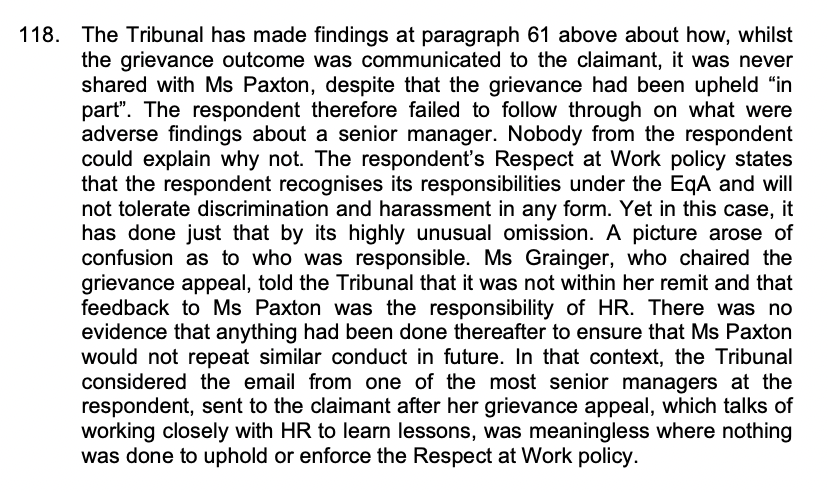
Astonishingly, no one fed back the outcome of the grievance appeal to Gill Paxton.

The Tribunal considered that this “negated” the grievance process:

“The Tribunal considered that, as a result, the grievance outcome was not effectively actioned and this failure by the respondent negated the purpose of the grievance process.”

“When asked to explain this omission, Ms Grainger told the Tribunal that it was not within her remit and that feedback to Ms Paxton was the responsibility of HR. It was apparent from the evidence that such feedback had never taken place.”

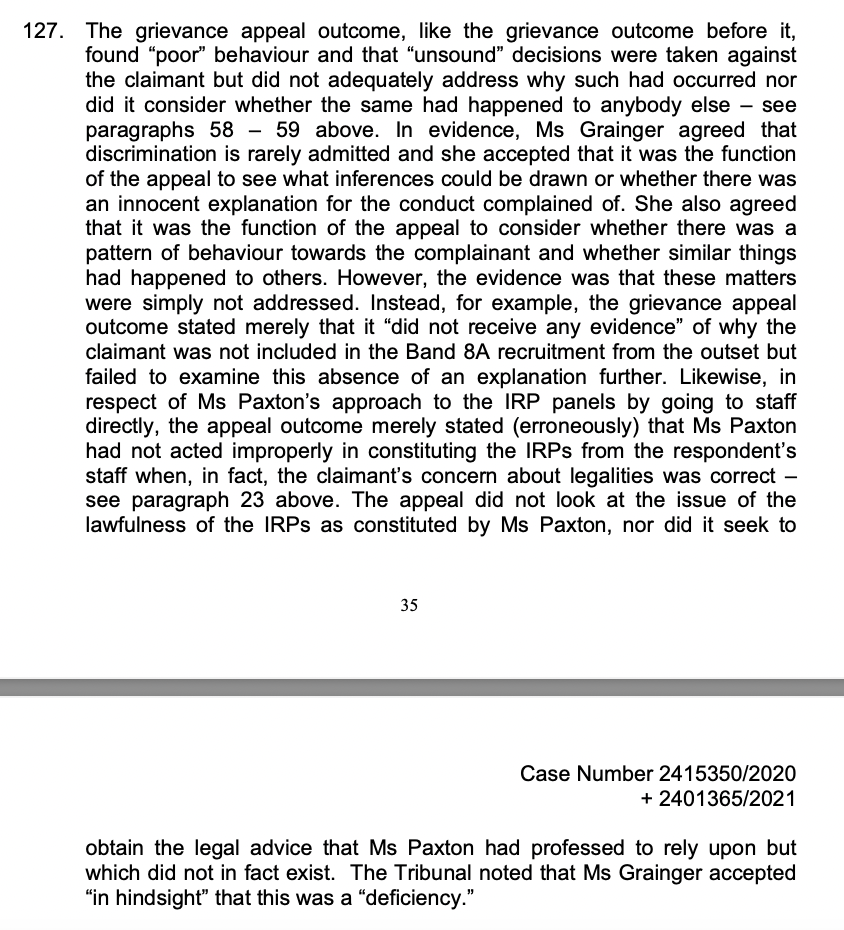
Very seriously, the Tribunal noted that Tracey Grainger failed to examine the “lawlessness of the IRP panels as constituted by Mrs Paxton”. This is another classic example of a whistleblower’s concerns being ignored:

NHS England of course spent a huge amount of money on the Workforce Race Equality Standard initiative, but this is just wasteful tokenism if when it comes to the crunch, the institution chooses to protect the powerful.

It should not have ended in a contested and now lost Employment Tribunal claim.

It was breath-taking arrogance and incompetence that led to this conclusion.

And who would feel safe to whistleblow to this lot?

We should also remember that NHS England is in ultimate control of both the investigation into the deaths and whistleblowing scandal at North East Ambulance Service and the whistleblowing and Mid Staffs type allegations at University Hospitals Birmingham NHS Foundation Trust.

A Fit and Proper organisation that can be trusted with such tasks?

I will send this latest judgment to all Healthwatch organisations in the North West region with respect to potentially unsafe Independent Review Panel decisions, and to the parliamentary Health and Social Care Committee.

UPDATE 15 MAY 2023

I have sent the following correspondence to parliament and Health Watch organisations in the North West region:

BY EMAIL 

Health and Social Care Committee 

Public Accounts Committee

15 May 2023

Dear Mr Brine, Ms Hillier and colleagues,

NHS England whistleblower’s allegations of unlawfully constituted Independent Review Panels on continuing health care funding

I write belatedly to draw the committee’s attention to an NHS England whistleblower’s serious disclosures which were revealed by an Employment Tribunal judgment. I had intended to write sooner but did not do so because of an oversight on my part. My apologies for the delay.

This is the ET judgment of 19 January 2023, which became public in February 2023, when I published a summary of it.

Employment Tribunal judgment Ms A Cox v NHS Commissioning Board (NHS England) Case Number 2415350/2020 + 2401365/2021, 19 January 2023

Ms Cox raised concerns that NHS England North West region was convening unlawful “Independent Review Panels” (IRPs) on Continuing Health Care (CHC) cases that were not in fact independent at all. This was because NHSE North West was in fact allegedly inserting its own staff onto these panels. The question/ implication  arising being that decisions were possibly being made unfairly against the public and biased decisions were made to withhold funding from the public, to save money.

Clearly, this has serious implications and very large sums of money could be involved. It may beg questions of whether large numbers of decided cases should be re-opened and might be contestable. 

This seems to be something that parliament might wish to investigate, especially with a view to establishing whether such alleged practices might operate in other NHS England regions, to the disadvantage of the public.

I would be grateful to know if either Health and Social Care Committee or Public Accounts Committee would be minded to look into this matter.

I copy it to Healthwatch organisations in the North West region, Paul Lewis and to Hugh James Solicitors for information.

Lastly, I should say that I wrote to Amanda Pritchard NHS England CEO in February 2023 to ask if NHSE would conduct a review for learning as result of the Cox v NHSE judgment. I have received no response. But obviously if any such review has been conducted, it might contain further information regarding the handling of the IRPs and any unfairness in funding of continuing health care.

With best wishes,

Dr Minh Alexander

Cc Paul Lewis via BBC Moneybox

     Hugh James Solicitors media office

     Healthwatch organisations North West region

UPDATE 24 MAY 2023

The parliamentary Health and Social Care Committee has written back to say that it will put independent review panels and continuing healthcare funding on a list of POSSIBLE inquiries for its future work programme. The email exchange is copied below:

From: REDACTED

Subject: NHS England whistleblower’s allegations of unlawfully constituted Independent Review Panels on continuing health care funding

Date: 24 May 2023 at 17:50:21 BST

To: REDACTED

Cc: REDACTED

Thank you very much indeed Joanna

That is the reassurance that I was seeking.

I hope the Committee intends, as part of its future examination of independent review panels, to review their independence!

With best wishes,

Minh

Dr Minh Alexander

Steve Brine

Meg Hillier

Paul Lewis

Victoria MacDonald C4

From: REDACTED

Subject: RE: NHS England whistleblower’s allegations of unlawfully constituted Independent Review Panels on continuing health care funding

Date: 24 May 2023 at 16:40:38 BST

To: REDACTED

Cc: REDACTED

Dear Dr Alexander

Thank you for your email to the Health and Social Care Committee and sorry for the delay in replying. The Committee has no current plans to conduct an inquiry in this area, and does not investigate individual cases, but we will make sure the general topic of Independent Review Panels and continuing healthcare funding is added to the list of possible inquiry topics next time the Committee considers its future programme. 

Best wishes

Joanna 

Joanna Dodd

Clerk of the Health and Social Care Committee

PETITION

Please click and add your signature to this petition to reform UK whistleblowing law – whistleblowers protect us all but weak UK law leaves them wholly exposed and it is a threat to public safety

Replace weak UK whistleblowing law and protect whistleblowers and the public

RELATED ITEMS

CQC’s reputation management of serious whistleblower reprisal, false promises of protection & denial of sensitive information sharing between CQC & National Guardian’s Office. Shyam Kumar’s & Jasna Macanovic’s cases.

Mr Shyam Kumar, Surgeon and vindicated NHS whistleblower’s case: CQC sacked a whistleblower for disclosures about its poor regulatory performance, and dug for dirt on the whistleblower

Mr Tristan Reuser’s whistleblowing case: Scandalous employer and regulatory behaviour on FPPR

CQC’s reputation management of serious whistleblower reprisal, false promises of protection & denial of sensitive information sharing between CQC & National Guardian’s Office. Shyam Kumar’s & Jasna Macanovic’s cases.

By Minh Alexander and Pam Linton, NHS whistleblowers 7 February 2023

Summary

The Care Quality Commission reluctantly donned sackcloth and ashes after an Employment Tribunal found that it unfairly dismissed a whistleblower. However, CQC has been allowed to direct investigations of its wrongdoing. One of the investigations is being conducted by a barrister and Chambers previously instructed by CQC. Tribunal proceedings revealed that CQC wrongly accused the whistleblower of bullying as grounds for dismissal and that it looked for adverse information against him for the purpose of defending the ET claim. Despite the ET outcome and despite other evidence to the contrary, CQC’s chief executive made claims to CQC staff that CQC and the National Guardian had good track records on supporting whistleblowers. However, the whistleblowing case of Dr Jasna Macanovic shows that CQC made flawed promises of protection that it did not keep. Not only that, CQC accepted the trust’s claims that the medical director involved in her unfair sacking was a Fit and Proper Person, and it rated the trust ‘Good’ on the Well Led domain. The National Guardian’s Office was similarly unhelpful to Dr Macanovic. It told her to come back after her Employment Tribunal concluded. The Tribunal process took five years to conclude. Ian Trenholm also claimed that all the individuals who whistleblew to the CQC the previous year would have seen CQC act in the public interest when no supporting evidence has been produced, and there is in fact evidence to the contrary. A comment by Ian Trenholm raised concerns about a breach of whistleblower confidentiality by the National Guardian’s Office to the CQC, but both CQC and the NGO deny this.

On 14 August 2022 the Care Quality Commission was found by an Employment Tribunal to have unlawfully sacked Mr  Shyam Kumar a surgical specialist advisor whom It had employed on a seconded basis from his NHS trust, expressly because he had made whistleblowing disclosures to the CQC.

Mr Kumar’s disclosures were made to CQC inspection staff and to a senior figure in the CQC, Mike Zeiderman, surgeon at Southport and Ormskirk and a CQC National Professional Advisor.

Mr Kumar raised concerns not only about unsafe clinical care about a surgeon at his trust (concerns which were shared by his consultant colleagues) but also about CQC’s inspection methodology such as not covering specialties properly, which he had witnessed. He was concerned that CQC was not inspecting some services with the right clinical expertise. He raised the latter with Mike Zeiderman. The criticisms of CQC’s operations were clearly much more threatening disclosures from CQC’s point of view.

The CQC concocted a means of dismissing Mr Kumar by claiming that he had bullied a doctor who supported the surgeon about whom he had raised clinical concerns. CQC dismissed Mr Kumar without a fair process and with little investigation of his concerns or any real examination of inappropriate behaviour by the surgeon whom Mr Kumar was accused of bullying. In fact, some of Mr Kumar’s whistleblowing concerns were baselessly and falsely denigrated by CQC officials as self-interested rivalry against another surgeon, an incredibly serious allegation.  This was despite Mr Kumar reporting the retaliatory behaviour against himself to the CQC at an earlier stage.

Astonishingly, after Mr Kumar filed a claim to the Employment Tribunal about CQC’s mistreatment and unfair dismissal, the CQC inspector to whom he had raised concerns tried to dig for dirt against him. She contacted his NHS trust in an attempt to find adverse information against him, explicitly for the purpose of CQC’s legal response to the ET claim, which we believe most people would characterise as a gross misuse of regulatory power.

The CQC resisted the ET claim and throughout the ET proceedings, the regulator denied that it had erred. The CQC’s barrister and witnesses maintained that Mr Kumar had acted in a bullying manner and had breached CQC’s values so egregiously that this merited dismissal, right up to the resounding judgment in Mr Kumar’s favour.

The ET rejected the CQC’s claims of bullying.

After the judgment, the CQC accepted the findings.

CQC grudgingly and unconvincingly put on “learning the lessons” sackcloth and ashes.

CQC’s investigations into its disgraceful behaviour in Shyam Kumar’s case and matters arising   

Kumar v CQC represents very serious regulatory failures to act on whistleblower disclosures, serious whistleblower reprisal and attempts to smear a whistleblower in the interests of corporate self-preservation. The CQC is a body that sits in judgment of others and is supposed to hold a high level of public trust. CQC answers only to the Department of Health and parliament, and has been allowed to mark its own homework by directing investigations into its whistleblowing governance arising from the Kumar case.

One investigation is to be conducted by a barrister from Matrix Chambers, Zoe Leventhal. Another is to be conducted by Scott Durairaj, a CQC insider. The latter was such bad optics that CQC eventually drafted in some additional external assistance, but it is still essentially an insider investigation.

With respect to the investigation by Matrix Chambers, CQC has indicated via FOI that it has instructed Matrix Chambers in the past.

CQC disclosure 2223-0519 prior links with Matrix Chambers and correspondence with Department of Health

CQC disclosed total payments to Matrix Chambers in the past five years as follows:

2022-23 to date: £5,173

2021-2022: £225.00

2020-2021: £7,035

2019-2020: £0

2018-2019: £17,975

2017-2018: £37,941”

CQC indicated that Zoe Leventhal has done other work for CQC in the past, which comprised “First-tier tribunal and other civil law activity”.

CQC advised that it appointed Leventhal to undertake the investigation into its whistleblowing governance because: “CQC chose to appoint Zoë Leventhal based on her skills and experience.”

CQC refused to divulge its letter to the headmaster at the Department of Health about its proposed investigations into its own misdeeds, relying on a most unexpected law enforcement exemption:

“CQC are not in a position to respond to this request and will aim to respond by 7 November 2022. CQC are currently considering the public interest test in regard to an exemption under s31 FOIA – Law Enforcement.”

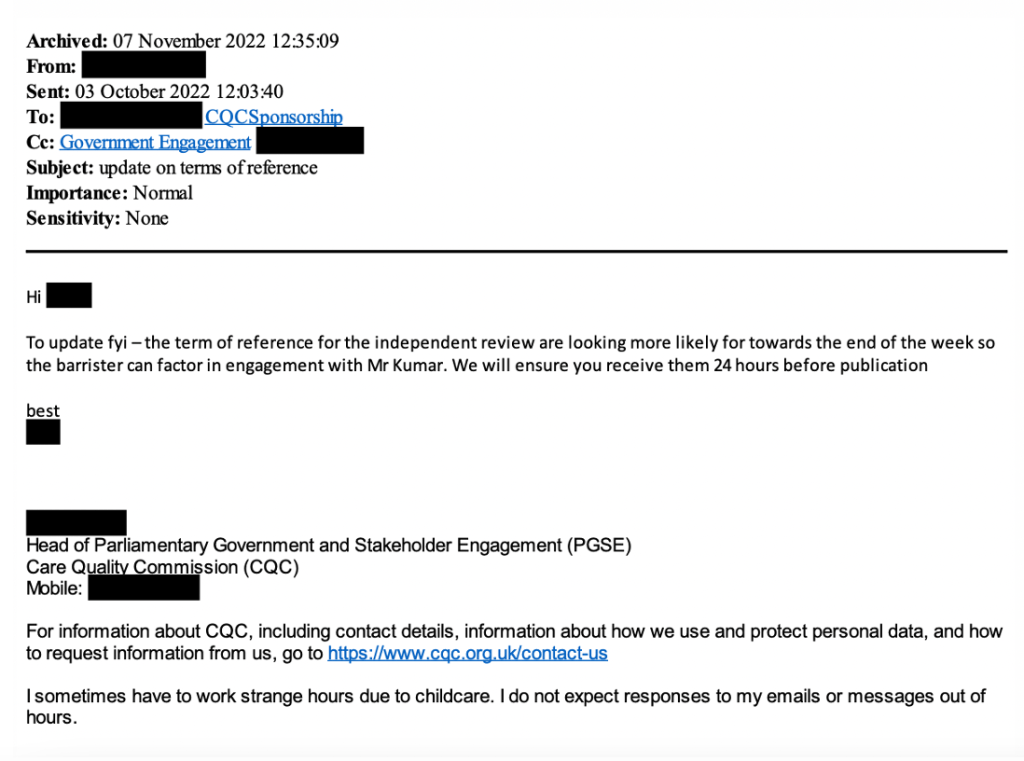
Several exchanges of correspondence with CQC followed, in which CQC shifted its grounds of objection and found new ones. It eventually conceded one small item of correspondence with the Department as below, showing that it conferred about terms of reference:

We formed the impression that the real objection to disclosure was grounds of embarrassment.

Ian Trenholm’s comments to CQC staff about Shyam Kumar’s case

CQC has disclosed via FOI the content of a strange internal briefing by Ian Trenholm CQC chief executive to CQC staff on 8 September 2022. Trenholm’s call to CQC staff that day reportedly covered other matters as well, and only the part of the call relating to Shyam Kumar’s case was disclosed:

“We have interpreted your request as for the parts of that call which relate to the Employment Tribunal case of Mr Kumar. The call did cover some other issues which are unrelated to that case. I attach a transcript of the comments made by Mr Trenholm on that call.”

CQC FOI disclosure CQC IAT 2223-0717: Text of all staff briefing by Ian Trenholm 8 September 2022

In this briefing, Trenholm complained about CQC’s critics with respect to Kumar v CQC.

“I’ve heard examples of some inconsiderate comments to colleagues about decision making – decisions that were made some years ago….I am concerned though that these comments that are on social media and so forth could cast doubt….how we both support whistleblowers”

Bizarrely, Trenholm claimed that both CQC and the National Freedom To Speak Up Guardian, which is a part of the CQC, both have good track records on supporting whistleblowers.

“…we both support whistleblowers when we both have a good track record of supporting people in some very complex circumstances.”

There are so many harmed health and social care whistleblowers who would vehemently disagree with this.

CQC’s false promises to protect whistleblowers

There are occasions when CQC falsely promises to protect whistleblowers but then does not.

One of the authors of this blog has first-hand experience of this.

A more recent experience is that of whistleblower Dr Jasna Macanovic, consultant nephrologist.

CQC inspection staff told her that if she experienced reprisal as a result of making disclosures, CQC would act upon this by reviewing her trust under CQC Regulation 5 Fit and Proper Persons.
 
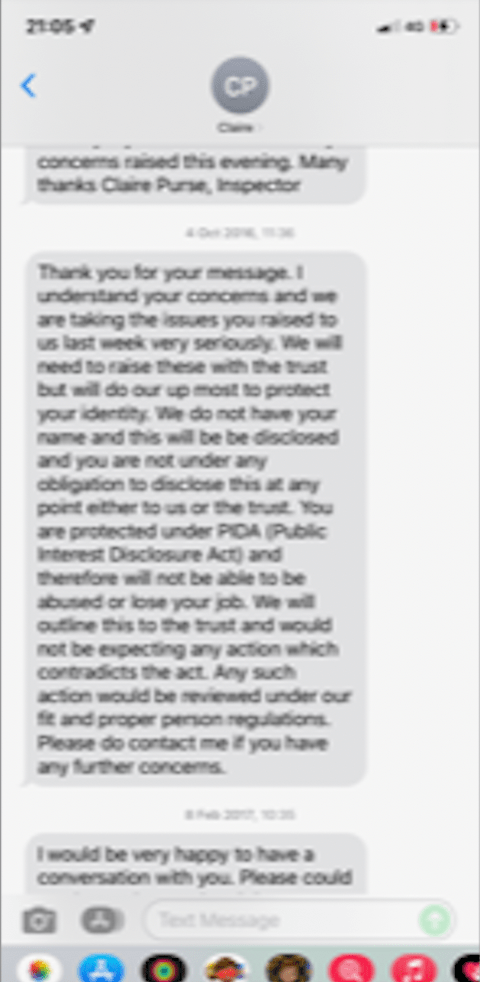
There is a record of this promise in the form of a text message in 2016, from Claire Purse CQC Inspector:

This text message stated:

“You are protected under PIDA (Public Interest Disclosure Act) and therefore will not be able to be abused or lose your job. We will outline this to the trust and would not be expecting any action which contradicts the act. Any such action would be reviewed under our fit and proper persons regulations.”

This was of course a hollow promise.

It was also highly misleading as whistleblowers lose their jobs all the time because of the weakness of PIDA, the UK’s whistleblowing law.


CQC was forced to review Dr Macanovic’s trust under FPPR after her medical director was referred under Regulation 5. But CQC found her former trust to be compliant with Regulation 5 even though her former Medical Director was centrally involved in her unfair and predetermined dismissal, explicitly for whistleblowing, as found by the Employment Tribunal.

That is to say, CQC concluded that the trust’s evidence that the Medical Director was a Fit and Proper Person was reasonable.

Letter from Sean O’Kelly CQC Chief Inspector of Hospitals shutting down FPPR referral on John Knighton Medical Director Portsmouth Hospitals October 2022

In July 2022, CQC rated Portsmouth Hospitals University NHS Trust, Dr Macanovic’s former employer, as “Good” on the Well Led domain.

CQC did not step in when Dr Macanovic suffered severe reprisal.
 
CQC admitted via FOI that it had never found any NHS trust to be in breach of Regulation 5.

Dr Macanovic endured a terrible ordeal of ostracisation, described by the Employment Tribunal as a campaign of harassment, suffered personal disruption and losses and had to relocate to another part of the country. Her resilience and professional standing were such that she found alternative employment quickly, but her health was for a time affected and she has lost several years of her life defending herself from an unwarranted attack. Her family have suffered along with her. And so have the patients whom she tried so hard to protect. 

CQC’s boasts and promises of protection are not worth very much at all.

As has been previously reported, the National Guardian’s Office was also of no support to Dr Macanovic. When she contacted the National Guardian for help, she was told to come back when her Employment Tribunal had concluded. It only finally concluded in January 2023 when remedy judgment was issued. Perhaps the National Guardian’s Office believes it is reasonable for whistleblowers to wait five years to receive its help. Public opinion is likely to differ.

Trenholm’s claim that CQC acts on all whistleblowers’ disclosures

Trenholm also made other defensive and somewhat disingenuous comments in his 8 September 2022 briefing which were not supported by the evidence, such as:

 “Last year we received over 18,000 concerns about poor practice from people who work in services right across health and social care organisations…18,000 people last year will have seen us act clearly and in the public interest”.

This was a disingenuous claim because CQC takes no further action in a great number of these cases, as documented in its board documents, and as we and other colleagues originally reported to parliament in 2016.

After the 2016 report to parliament, CQC started publishing whistleblowing activity stats. But CQC performance deteriorated to the point where it took no action in the majority of cases.

CQC either filed the cases as information merely noted for a future, scheduled inspection, or it took no action at all, much to the bewilderment of whistleblowers. Where it took other “action”, this might simply be a cursory telephone call to the provider organisation for reassurance rather than an investigation of the relevant areas of governance.

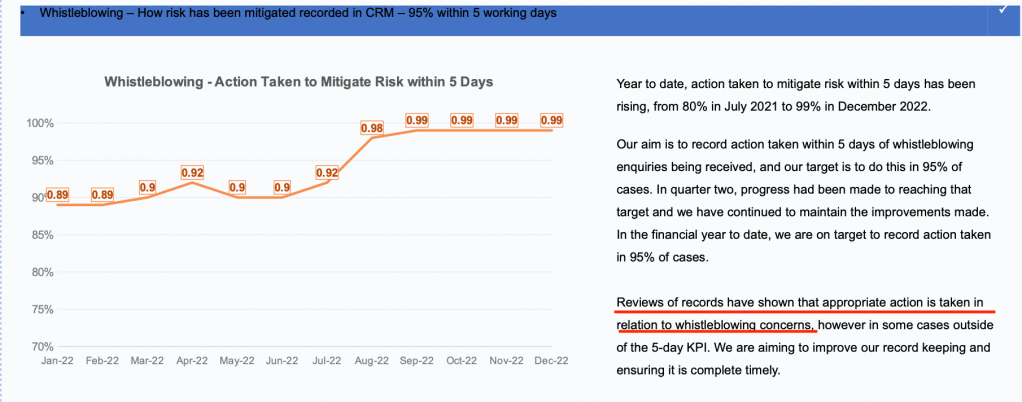
Latterly, CQC has not even published the above scant detail on how it disposes of whistleblowing contacts. It only publishes data on the percentage of cases in which a record is made within five days of any action taken by the CQC, without differentiating the types of action taken.

CQC now simply expects the public to take on trust its facile claim that: “Review of records have shown that appropriate action is taken in relation to whistleblowing concerns…”. If the CQC is so confident that this is true, why has it stopped publishing the details?

Also, as CQC does not measure the experience of those who whistleblow to it, whether as staff of provider organisations or as its own staff, it is very hard to see how Trenholm could possibly imply that all provider staff who whistleblow to CQC are satisfied. Indeed, much of the evidence in known cases suggests otherwise.

Trenholm’s briefing to CQC staff about Kumar v CQC was at best tin-eared, if not defiant and misleading, and not at all consistent with learning lessons from a serious ET defeat.

Information sharing between CQC and the National Guardian’s Office

Very importantly, Trenholm’s staff briefing suggested that the National Guardian Jayne Chidgey Clarke or her Office had shared confidential information about Mr Kumar’s case with the CQC:

“…the National Guardians [sic] Office, who are completely unrelated to this case

This was incorrect because Mr Kumar had sought help from the National Guardian’s Office. He and the BMA asked the National Guardian for a case review, but none ever materialised.

Trenholm was asked why he had incorrectly claimed that the National Guardian had nothing to do with Mr Kumar’s case.

Trenholm did not respond to the query about the incorrect claim in his CQC staff briefing.

Chidgey Clarke was also asked about the matter. She was slow to respond but after chasing eventually denied that her Office had shared any information with the CQC. Indeed, she showed herself to be conscious of the fact that any sharing of information would have been a breach of confidentiality:

“Dear Dr Alexander,

I can confirm that neither I nor the NGO were asked by Ian Trenholm for a briefing about, or to comment on, Mr Kumar’s case.

When Ian Trenholm made a statement about the NGO, it was in relation to having no involvement with the Industrial Tribunal and not related to interactions Mr Kumar had with the office. It appears that the comment by Ian Trenholm may have been taken out of context. As with all correspondence to the NGO, we adhere to confidentiality processes and do not discuss details of individual concerns with other bodies, unless specifically given consent by that individual to do so. 

I hope this answers your question.

With Kind Regards,

Jayne

Dr Jayne Chidgey-Clark”

But if there had been a breach of confidentiality by the National Guardian’s Office, it would not of course have been the first time a whistleblower’s confidentiality had been breached.

A prior confidentiality breach by the NGO and subsequent lack of learning from this was previously documented.

However, as Chidgey-Clarke denied a breach of confidentiality, Trenholm was asked on what basis he had made the comment that the National Guardian had nothing to do with Shyam Kumar’s case.

Trenholm did not reply.

After chasing, CQC’s Director of Engagement replied on Trenholm’s behalf. Echoing Chidgey-Clarke’s response, he stated that when Trenholm said that the National Guardian had nothing to do with Mr Kumar’s case, he was talking specifically about the Employment Tribunal case:

“The reference to the National Guardians Office (NGO) being unrelated to Mr Kumar’s case is in relation to the Employment Tribunal proceedings and not a wider comment about any contact between Mr Kumar and the NGO.”

Some might think this sounds like word stretching, to protect a boss.

It might also suggest coordination of responses between the CQC and the NGO.

Why would Trenholm even say that the National Guardian had nothing to do with the ET case when no one had claimed that she had, and when everyone knows that the National Guardian by policy never gets involved in Employment Tribunal cases?

Ian Trenholm was asked for an answer to these questions, copied to Zoe Leventhal. He did not answer himself. Instead, his office dispatched a curt reply to the effect that CQC had nothing further to add: “We now consider this matter closed.”

We leave readers and would-be whistleblowers to form their own views on what Trenholm’s original comment really meant, and on whether there really is strict separation between the CQC and the National Guardian’s Office, when the latter is part funded by and reports to the former.

Past experience suggests that a bubble forms around the CQC village, in which an alternate reality thrives, where boundaries warp, and where whistleblowers are all too easily monsterised for the comfort of the needy and insightless villagers.

 CQC’s claims about its internal whistleblowing governance  

Reflecting on the CQC board’s insightlessness and propaganda tendencies an annual report from 2020/21 made these claims whilst the Kumar ET case was ongoing:  

“We have three Freedom to Speak Up guardians, supported by around 70 speak up ambassadors. We champion the importance of speaking up across the organisation and support a culture of openness where staff are encouraged and supported to speak up. In 2020/21 there were 40 recorded concerns/cases reported through the speak up route. Of these, 50% were enquiries to Ambassadors or Guardians which were resolved by advice, signposting and/or informal routes for mediation. The remaining 50% were either informally investigated by the Guardians or joint work was undertaken with HR where there was either a formal process followed or advice given. One contact resulted in a whistleblowing investigation. Our Guardians regularly report to the CQC Board on their work. In 2021/22 they plan to focus more on the outcomes from speaking up to ensure any learning or change that comes from speaking up is embedded and sustained.”

It seems a major omission by the CQC board not to mention that their organisation was being sued for whistleblower detriment.  

What else has been and is being omitted from their accountability reports?  

CQC’s failure to measure feedback from whistleblowers

In the meantime, CQC’s Director of Engagement has offered a small concession in the form of a recognition that CQC is failing to measure feedback from whistleblowers:

In terms of how we collect feedback from whistleblowers for assurance on CQC’s whistleblowing governance, I agree….We don’t currently routinely ask for feedback, and this is something we are looking to change going forward. We are exploring how well we listen to colleagues when they raise concerns about providers registered with CQC, as part of the review. This will include listening to whistleblowers experience of talking to us and the results will shape changes to our practice.”

Better late than never, but firm evidence of implementation will be needed.

UPDATE

The Secretary Of State has been asked to reconsider a decision by the Department of Health not to accept a Kark recommendation for a means to disbar unfit NHS managers, based on the above and other evidence of the ineffectiveness of NHS Fit and Proper Person arrangements.

BY EMAIL

Steve Barclay

Secretary of State

Department of Health and Social Care

7 February 2023

Dear Mr Barclay,

Disbarring unfit NHS senior managers

I write as NHS England have informed me that the Department is not currently implementing the recommendation from Tom Kark’s review of the Fit and Proper Persons test in the NHS for a disbarring mechanism.

I was deeply concerned at how we have arrived at this ten years on from the Mid Staffs public inquiry, following which you campaigned for David Nicholson’s removal.

Suppression and related patient harm in the NHS continue and I do not see how they can be less important today than they were ten years ago.

As an example of a blameless whistleblower, Dr Jasna Macanovic was found by an Employment Tribunal to be have been the victim of a campaign of harassment by her employing trust, Portsmouth Hospitals University NHS Trust. Her evidence has been accepted as credible by the Tribunal. She was found to have been unfairly dismissed as a predetermined act, expressly because she had made protected disclosures about serious patient safety issues. Her employer not only failed to recognise that her disclosures to the GMC were protected, and that they were made as part of her professional duty as a doctor, but punished her for making the disclosures. The Tribunal found that her medical director was centrally involved in her predetermined unfair dismissal. The Tribunal found no contributory fault by Dr Macanovic.

But when a Regulation 5 Fit and Proper Persons (FPPR) referral was later made to the Care Quality Commission on the above medical director, the CQC concluded that the trust was not in breach of the regulation. This is in the context of the CQC previously promising Dr Macanovic, at the outset of her whistleblowing journey, that it would protect her by warning the trust against attempts at reprisal. It also promised her that it would review the trust under Regulation 5 if reprisal occurred. However, the CQC reneged and did not step in when gross reprisal occurred, and it only conducted the FPPR review when it received a formal referral. All this illustrates plainly the ineffectiveness of current arrangements for protecting staff and patients from failing managers. 

Without a disbarring mechanism, erring managers will simply continue to be protected and recycled,and be free to repeat harms.

I would be grateful if you would reconsider the Department’s decision not to implement this aspect of the Kark recommendations.

The details of CQC’s false promise of protection to Dr Macanovic can be found here:

CQC’s reputation management of serious whistleblower reprisal, false promises of protection & denial of sensitive information sharing between CQC & National Guardian’s Office. Shyam Kumar’s & Jasna Macanovic’s cases.

I do not consider conventional routes of disclosure (employers, regulators, other designated whistleblowing mechanisms) for NHS whistleblowers reliable at present.

With best wishes,

Dr Minh Alexander

Retired consultant psychiatrist

Cc Health and Social Care Committee

     Public Accounts Committee

PETITION

Please click and add your signature to this petition to reform UK whistleblowing law – whistleblowers protect us all but weak UK law leaves them wholly exposed, lets abusers off the hook and it is a threat to public safety.

Replace weak UK whistleblowing law and protect whistleblowers and the public

RELATED ITEMS

Breach of confidentiality by CQC and complicity in referring a whistleblower to the Disclosure and Barring Service

Sorry is the hardest word: CQC, Paula Vasco-Knight and Regulation 5 Fit and Proper Persons

Mr Tristan Reuser’s whistleblowing case: Scandalous employer and regulatory behaviour on FPPR

The National Guardian’s Office finally apologises for a breach of whistleblower confidentiality but fails to demonstrate sufficient learning
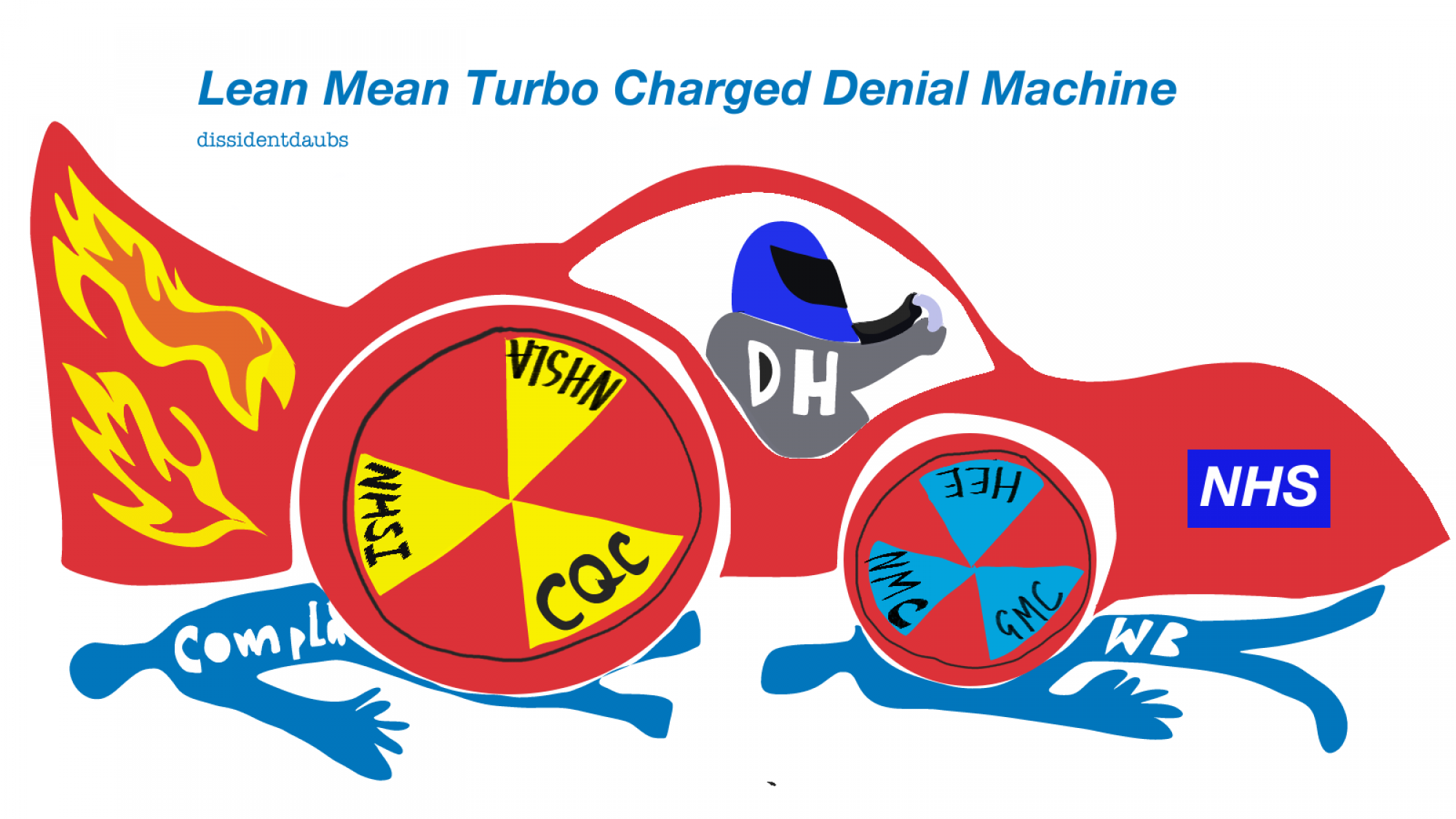
There is past evidence of a former National Guardian casually asking the CQC for a “briefing” about a whistleblower, one of the blog authors, revealed by Subject Access Request. Not so many scruples there about personal data rights.

CQC case study. Snooping, Briefing, Porkies & Vexatiously Applied ‘Vexatious’ Protocols.   Personal data guide for campaigners

NEAS and recent whistleblowing governance by Marianne Griffiths’ former NHS trust, University Hospitals Sussex NHS Foundation Trust

By Dr Minh Alexander retired consultant psychiatrist 2 February 2023

Dame Marianne Griffiths is the former trust CEO and NHS insider picked by NHS England to conduct the investigation into the North East Ambulance service (NEAS) deaths scandal. It has been alleged that there have been breaches of coronial law, an extremely serious matter. It has also been alleged that NHS England has a conflict of interest because it did not respond appropriately to the whistleblowers who raised the concerns about NEAS.

A just published report by the Care Quality Commission from a recent inspection has acknowledged that NEAS crews were so pressurised they did not have time to restock between calls. This meant that they were attending some emergencies without all necessary life-saving drugs. BBC Newsnight has reported on this further scandal:

Ambulance crews in the North East frequently responded to emergencies without access to life-saving drugs, a damning inspection report has found.

Of note, the CQC has downgraded the NEAS Well led domain to “Inadequate”

CQC stated in its report:

“Although staff were focused on the needs of patients receiving care, they did not always feel respected, supported and valued. Some staff told us they did not feel they could raise concerns without fear of blame or reprisal and the trust did not have effective systems to seek and act upon feedback from staff and other relevant persons.”

“Following this inspection, we served the trust with a notice under Section 29A of the Health and Social Care Act 2008. We told the trust it needed to make the following significant improvements: (1) to ensure governance systems operated effectively; (2) in listening, responding, and acting upon feedback from staff and other relevant persons”

Do CQC’s latest findings restrict NHS England’s and Griffiths’ room for manouevre?

There have been questions about Griffiths’ suitability.

Griffiths’ former trust at Sussex (an organisation arising from the merger of her trust Western Sussex Hospitals NHS Foundation Trust and Brighton and Sussex University Hospitals NHS Trust) was previously protected by the National Freedom To Speak Up Guardian who bizarrely and extraordinarily gave the trust board a free pass when trust whistleblowers asked for the National Guardian’s help. The then National Guardian Henrietta Hughes made up new rules by allowing Griffiths and her board a grace period to improve before conducting a review, and unsurprisingly later concluded that improvements had been made.

The dubious nature of this free pass was exposed when further signs of poor whistleblowing culture and patient risk and harm later arose at the trust, which even the CQC was forced to acknowledge.

Recent requests for information to University Hospitals Sussex NHS Foundation Trust have been met with resistance as to the number of recent whistleblowing cases at the trust.

Sussex claimed that it was unable to give any details about Employment Tribunal claims filed against the trust, including those filed under the jurisdiction code of public interest disclosure (whistleblowing). This was on the unlikely basis that there was no central file and that it would cost too much to retrieve the data manually.

“3-4. The specific information you are seeking relevant to qualifying public interest disclosures and employment tribunal claims is not held on a central administration system. Information related to this activity is recorded in a number of spreadsheet registers, but not to the level of detail that is required to answer these questions. Any effort to compile this information would require the manual audit of all individual claim files relevant to the periods outlined in your request.”

FOI response from University Hospitals Sussex 28 November 2022

The trust even claimed that it could not tell me how many of the ongoing ET cases were whistleblowing cases. I have written to the current trust CEO, formerly the Medical Director, to request at least this information.

A possible corollary of all this is that the trust has poor whistleblowing governance, by not troubling to learn from sentinel events such as being sued in the Employment Tribunal for whistleblowing detriment.

More likely in my view, University Hospitals Sussex NHS Foundation Trust is trying to draw a veil over sensitive and embarrassing matters whilst it gambles on settling and gagging its way out of current trouble.

But the trust did admit to dismissing 145 staff over financial years 2019/20 to 2021/22.

I have asked for a breakdown of dismissals by staff group and of doctors in particular. I have also asked for the number of GMC referrals by the trust in the same period to see if there is internal consistency between decisions to dismiss and to refer.

University Hospitals Sussex NHS Foundation Trust uses the specialist employment law firm, Cater Leydon Millard, who are also used by Oxford University Hospitals.

Sussex has now admitted to spending at least £1,354500.13 on their services relating to 36 ET cases in the last five years:

“As at 04/01/2023, the Trust processed invoices dated between the following periods from Cater Leydon Millard:

  • For the period between 2017/18 – 2020/21 for legacy Brighton and Sussex University Hospitals NHS Trust = £825,293.63
  • For the period from 01/04/2021 to 30/11/2022 for University Hospitals Sussex NHS Foundation Trust = £529,206.50”

The trust refused to say how many settlement agreements Cater Leydon and Millard have handled for the trust and how many of the settlements contained gags, super-gags and non-disparagement clauses because – you’ve guessed it – there is no central record and it would cost too much to collate.

University Hospitals Sussex FOI response 30 January 2023 spend on Cater Leydon Millard solicitors

The trust CEO is supposed as a matter of good practice, under the terms of the Freedom To Speak Up Review, to take personal responsibility for reviewing and ensuring that settlement agreements are not excessively restrictive. I have asked him about the trust’s use of agreements.

I hope that journalists will keep a close eye on comings and goings at Sussex and ET listings.

And perhaps join the dots up, as appropriate, with proceedings at North East Ambulance Service.

I previously asked NHS England if it had carried out due diligence in appointing Griffiths to investigate the NEAS affair, including by checking that there were no ongoing whistleblowing matters spilling over from her time as CEO of Sussex. I asked:

“May I ask if NHS England has undertaken full due diligence into Marianne Griffiths’ past record on whistleblowing governance before appointing her to lead the NEAS investigation?

Has it satisfied itself that she is a Fit and Proper Person to adjudicate on matters of whistleblowing governance, and that there are no outstanding serious matters of alleged whistleblower suppression, failure to protect whistleblowers or harm to whistleblowers, that relate to her role as CEO of University Hospitals Sussex NHS Foundation Trust and its predecessor organisations?

For example, has NHSE satisfied itself that there are no formal, current internal trust processes such as grievances by whistleblowers or current litigation against the trust for whistleblower detriment, which relate to her tenure as trust CEO?

I ask as this seems a critical issue given that NEAS is accused of harming and trying to silence whistleblowers, and is proven to have attempted to gag them with unlawful NDAs.”

I received a non-reply on 8 December 2022:

“Dame Marianne is a retired NHS Chief Executive. Having never worked in the region, but with extensive knowledge of the NHS, Dame Marianne has the relevant experience to Chair this independent investigation.”

What might this tell us?

LETTER 2 FEBRUARY 2023 TO GEORGE FINDLAY CEO OF UNIVERSITY HOSPITALS SUSSEX NHSFT AND FORMER MEDICAL DIRECTOR

BY EMAIL

George Findlay

CEO University Hospitals Sussex NHS Foundation Trust

2 February 2023

Dear Dr Findlay,

FOI request – whistleblowing governance at University Hospitals Sussex NHS Foundation Trust

  1. I write to ask how many active Employment Tribunal cases are in progress against the trust, and how many of these include a claim filed under the jurisdiction code of Public Interest Disclosure (whistleblowing). I asked this previously as part of a wider FOI request, but the trust advised that checking files for details of ET claims would be too time consuming.

I am sure that checking files on just a few active cases would be a much quicker task.

  • I would also be grateful if the trust could also disclose, drawing from the digital data submitted to NHS Digital:
  1. The number of dismissals for any reason by staff group for each of the financial years

2019/20

2020/21

2021/22

  • The total number of medical staff dismissed in the period 1 April 2019 to 31 March 2022.
  • The total number of doctors referred to the GMC by the trust in the period 1 April 2019 to 31 March 2022.
  • I understand that the trust does not keep a central record of its settlement agreements and cannot give an exact overview of how many non-disclosure agreements and non-disparagement clauses that it has applied.

One of the recommendations of the report of the NHS Freedom To Speak Up Review was that NHS Trust Chief Executives should take personal responsibility for reviewing all settlement agreements made by their trusts. This is to ensure that they are not excessively restrictive.

If you are personally overseeing settlement agreements, could you possibly give a brief overview as CEO of the settlement agreements used by your trust and whether they typically contain:

  • Clauses which require signatories to keep the existence of settlements agreements secret
  • Clauses which require signatories to keep the contents of settlement agreements secret
  • Clauses which require signatories not to disparage each other

And could you kindly supply a template of the settlement agreement commonly used by your trust, or better still, a redacted copy of the most recently applied settlement agreement which shows the restrictive clauses used?

Many thanks and best wishes,

Cc

Tom Grimes NHS England Lead for Whistleblowing

Past lack of transparency by University Hospitals Sussex NHS Foundation Trust

University Hospitals Sussex NHS Foundation Trust was previously criticised for not releasing the unredacted version of a 2019 Royal College of Surgeon’s report, which was conducted during Marianne Griffith’s tenure as Chief Executive.

Hospitals Sussex urged to release review findings

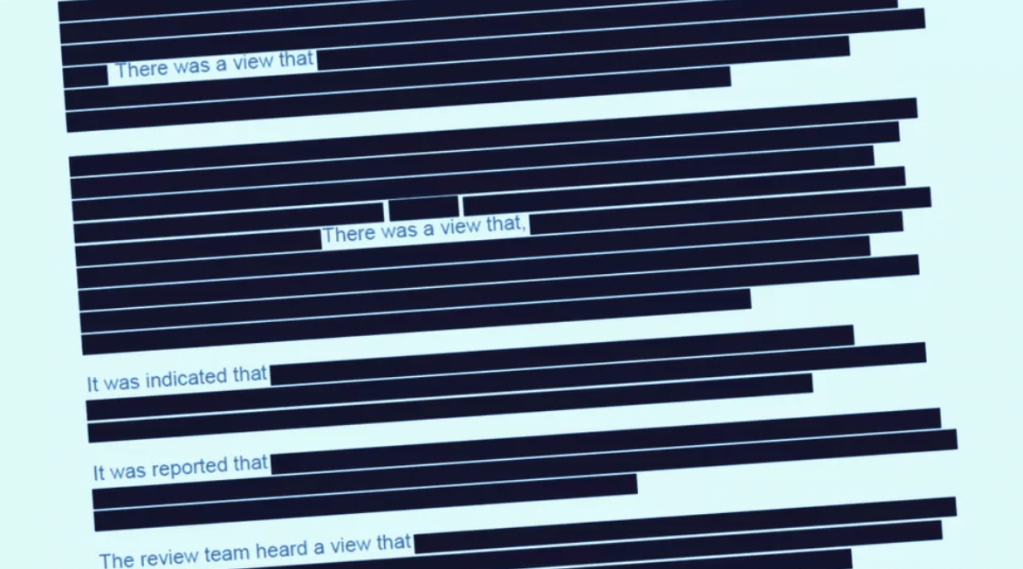
It was only released under FOI in heavily redacted form.

Reportedly, “All issues and recommendations were obscured, with only positive feedback disclosed.”

“The trust chose to reveal the number of incidents resulting in “no harm” and “low” harm, but redacted the number of incidents resulting in “moderate” and “severe” harm.”

Let us hope that this will not be the approach taken to NEAS.

But journalists may wish to further probe the trust’s denial: “The trust said the review of its neurosurgery department “did not highlight any safety concerns”, given the above propensity to selective comms.

RELATED MATTERS

Auditors concluded North East Ambulance Service failed to act on legal advice to ensure it complied with coronial legislation to disclose evidence, and vilified staff who followed the law

Staff suicides at West Midlands Ambulance Service NHS Foundation Trust

Professional regulators fail to protect frontline health and care staff from rogue employers: The HCPC and NHS ambulance trusts

The National Guardian’s Office does not put a blue light on for ambulance staff

Dismissals by NHS trusts: Ambulance trusts dismiss disproportionately more staff

The government has accepted 744 claims by the families of health and social care frontline workers in England and Wales who died during the pandemic, and has so far paid over £43million compensation

By Dr Minh Alexander retired consultant psychiatrist, 30 January 2023

There has been secrecy about how badly COVID has affected frontline workers, for obvious reasons. The government’s negligence and policy failures raise serious liability issues.

In the NHS, it remains to be seen how well supported staff affected by long COVID will be.

The NHS has avoided publishing the actual number of staff affected by long COVID.

Not all NHS trusts even collect data on long COVID affecting their staff.

Indirect assessment of changes in NHS leavers patterns raised questions about upward trends in voluntary resignations for health reasons and early retirements.

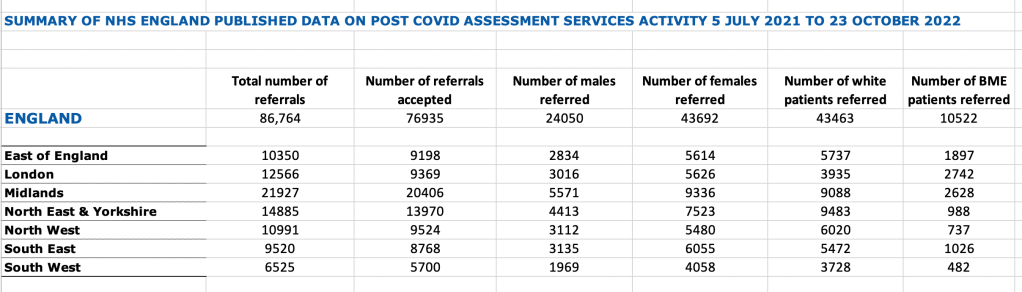
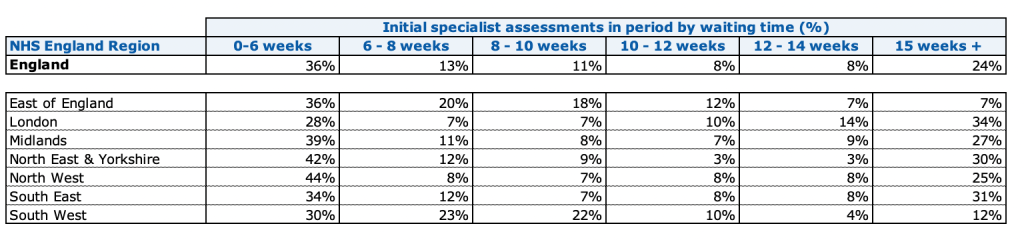
FOI data from some NHS trusts indicated that NHS England had been collecting data on the numbers of NHS staff referred to post COVID assessment services, but that it has kept this data to itself.

A subsequent FOI response from NHS England denied that NHSE held such data.

The Department of Health and Social Care has washed its hands and does not intend to collate data on NHS staff affected by long COVID.

NHS Resolution admits it is handling personal injury claims by NHS staff affected with long COVID, but says the cases are not specifically coded and it cannot search for such cases.

Another route to data on the impact of COVID on NHS staff is the government scheme to compensate the families of health and social care staff who died from COVID-19 contracted at work, the NHS and Social Care Coronavirus Life Assurance Scheme 2020, for England and Wales.

The government’s published material stated:

 “The scheme recognises the increased risk faced by staff during the crisis and will cover coronavirus related deaths of workers in frontline health and adult and children’s social care roles during the outbreak.”

The scheme was established in May 2020 and closed on 31 March 2022 (30 June 2022 in Wales). It will remain open to applications up to 31 March 2023 (30 June 2023 in Wales) for deaths that occurred whilst the scheme was open.

The NHS Business Services Authority, an Arms Length Body of the Department of Health, administrates the scheme.

An FOI request to NHSBSA has resulted in the following response.

In summary, 91.6% (744 of 812) of claims by the families of deceased health and social care workers to the government’s scheme up to 21 December have been accepted. 96.6% (719 of 744) of the accepted claims have been paid, with over £43 million paid so far.

The details given in the NHSBSA FOI response are as follows:

“As of 21 December 2022, there have been a total of 812 claims submitted to the NHS and Social Care Coronavirus Life Assurance Schemes in England and Wales.

Of these, 500 claims relate to health and social care workers in the NHS. 291 relate to those employed in social care.”

“Of the 812 claims submitted to the NHS and Social Care Coronavirus Life Assurance Schemes by the 21 December 2022, 744 had been accepted of which 451 related to the NHS and 276 to Social Care. 52 cases did not meet the eligibility criteria. The remaining 15 cases were under consideration and awaiting further information.”

“Of the 744 claims accepted on the 21 December 2022, 719 of the cases had received the payment. In total this amounts to £43,140,000 paid. In the remaining 25 cases, we were awaiting probate to enable payments to be made.”

About two thirds of the accepted claims related to NHS workers (451 of 744). But the social care workforce is slightly larger than the NHS workforce. The NHS workforce in England is about 1.3 million, the social care workforce in England is about 1.5 million.

According to an FOI release by ONS, there were a total of 1228 deaths of social care workers (aged 20 to 64 years) which involved COVID19 between 9 March 2020 and 28 February 2022. In the same period, there were 839 such deaths of healthcare workers.

It would be valuable to understand the reasons for the difference in rate of claims between NHS and social care workers, and whether the difference purely reflects the rate of work-related COVID deaths or also knowledge of and access to the compensation scheme.

The fact that the government has broadly accepted liability for the deaths must surely assist health and social care workers seeking support and redress for work-related long COVID injuries.

As does a recent coroner’s ruling early this month that the COVID deaths of two nurses in Wales constituted deaths from industrial disease.

Layla Moran MP and Chair of the coronavirus APPG is calling for frontline workers affected by long COVID, like NHS staff, to be immediately compensated.

There is a BBC Panorama broadcast tonight on how NHS workers have been affected by long COVID, and how many of them will now drop to half pay and are fearful of losing their jobs due to protracted illness and severe disability:

Forgotten Heroes of the Covid Front Line, 8 pm

UPDATE 31 JANUARY 2023

I have written to the Secretary of State for Health and Social Care to ask if the government has done everything it can to make eligible families aware of the life assurance scheme, and to consider extending the window for claims if there is any possibility of under-claiming. The letter has been copied to the Welsh minister for Health and Social Care, the UK COVID public inquiry and the general secretaries of some of the main unions.

Letter to Steve Barclay SoS 31 January 2023

Open letter to staff of University Hospitals Birmingham NHS Foundation Trust about safer routes of reporting

By Dr Minh Alexander retired Consultant Psychiatrist

25 January 2023

Dear All,

On Monday 23 January I attended a “town hall” style meeting organised by Mike Bewick, the former GP and former NHS deputy Chief Medical Officer of NHS England, who has been appointed by Birmingham and Solihull Integrated Care Board to lead a review into UHB. His appointment followed a series of articles by BBC Newsnight about alleged serious dysfunction at the trust.

Affected individuals attended the meeting, including past and current UHB staff. The meeting was co-chaired by Mike Bewick and Preet Gill the Labour MP for Birmingham Edgbaston.

I attended as someone who has worked with fellow whistleblowers, including UHB staff who do not wish to be identified.

I was horrified by what I witnessed, both in terms of what affected individuals shared and how the meeting was conducted.

Sensitive case details were openly discussed in a very large meeting where many participants did not know each other.

There was a request from Chairs that the meeting contents should be treated confidentially, but there were no means of enforcing this. Once information is shared, it can go anywhere, and often does.

This was an unsafe process with respect to protecting whistleblowers and their confidentiality.

Moreover, Mike Bewick signalled his intention to hold more meetings in group format. He will also hold individual meetings.

Protecting whistleblowers’ identity and the confidentiality of their disclosures is taken very seriously in many jurisdictions because a failure to do so can have devastating longterm effects for the whistleblower and their family.

Under the whistleblowing laws of some countries (Australia, Ireland, some EU countries) it is a criminal offence to breach whistleblower confidentiality, and attempts to unmask a whistleblower’s identity are prohibited.

Whistleblowing can never be guaranteed to be risk free. However, the risk increases with internal procedures where the whistleblower can be identified, potentially allowing reprisal by management.

I consider the ICB’s reviews of UHB to be a de facto internal procedure as they are not sufficiently independent. I anticipate that information will be shared amongst the NHS bodies, one way or another. 

I am aware of several occasions when the CQC has broken whistleblower confidentiality and one occasion when the CQC (unsuccessfully) solicited information for the purpose of discrediting a whistleblower during legal proceedings. I am also aware that NHSE has let down whistleblowers, both its own and those in provider organisations.

The way the meeting on 23 January was conducted confirmed my concerns that confidentiality will not be adequately protected.

From my overview of NHS whistleblowing cases across a range of organisations, both providers and oversight bodies, and the sometimes negligent, complicit or even abusive behaviour of regulators, I do not believe that any NHS controlled review of UHB can be truly independent or rigorous.

I also believe that contributing directly to such a review will place UHB staff at greater risk of reprisal.

Instead, I would advise making your disclosures to the media on an anonymous basis or with agreement that your confidentiality is protected. Alternatively, make a similar disclosure to a trusted local union branch with a track record of raising concerns. Not all local unions branches necessarily help whistleblowers, so research in advance. The advantage of raising concerns through a union is that individuals are less likely to be targeted. Collectively raised concerns which demonstrate patterns are especially powerful. The UNISON UHB dossier that was sent to CQC, which strongly corroborated existing concerns that UHB was intimidating doctors who raised concerns, is an excellent example.

Not going through an internal route of whistleblowing has potential legal implications if you wish to make a claim to the Employment Tribunal in future, so take advice. However, anonymous or otherwise untraceable whistleblowing means that you are unlikely to suffer victimisation, and you will not need to make a claim at all to the Employment Tribunal, saving you and your loved ones years of pain. Lives can be ruined by a bad whistleblowing experience.

Unless you can afford to be identified – perhaps if you are near retirement etc…I would not risk reprisals.

If you have already spoken up on an identifiable basis, you can make yourself less of a target if you wish, by not pressing your concerns further with UHB and the regulators. If your concerns have not been addressed, you can keep the media informed of this, with agreement that you will not be identified, including indirectly through any potential details reported.

Some may ask: “What can the media do?”

Whistleblowing to the media is not an end to itself, but it can be a way for UHB staff to communicate with power without exposing themselves to reprisal.

It can also be a means of negotiating for a better, properly constituted inquiry into what has gone wrong at UHB.

The Mid Staffs disaster was initially investigated with a non-statutory inquiry. Sustained campaigning led to a statutory public inquiry.

Similarly, hundreds of deaths at Essex Partnership mental health trust recently led only to a non-statutory inquiry. After a boycott by bereaved families and staff, the government is now being asked to rethink this.

Importantly, a statutory inquiry will be more likely to deliver accountability for the issues at UHB. NHS regulators have a notorious history of protecting and recycling failing NHS managers. At present NHS England (which has oversight of the ICB’s reviews of UHB) and the Secretary of State are in the process of watering down the Kark Review recommendations on protecting NHS staff and patients from poor managers. Any review of UHB controlled  by NHS England will not deliver true accountability for the failures.

Also, be aware that UHB is especially sensitive as it represents a failure to learn from Mid Staffs. There has already been one re-run of Mid Staffs at Liverpool Community Health NHS Trust, where a rush to Foundation status under Jeremy Hunt’s watch led to a disaster. This resulted in an investigation report by Bill Kirkup, which in turn led to the the Kark recommendations for tighter scrutiny of NHS managers. And yet we now have a further serious failure of management culture, at UHB, after NHS England and the government failed to learn and act.

There is every reason for the establishment to minimise what has happened at UHB.

If you want a better, more powerful inquiry which will handle evidence much more safely and formally, and which can protect vital witnesses including gagged former UHB staff, compel disclosure from senior witnesses, and has a greater chance of delivering accountability, ask for this through the media and the unions.

You are not obliged to cooperate with or to accept the ICB’s proposed reviews.

I attach below a letter from three senior medics and ex UHB employees:

Manos Nikolousis, Chairman Medical School EUC, Associate Professor Haematology

Professor John Watkinson, Consultant ENT Surgeon

Tristan Reuser, Consultant Opthalmic Surgeon

who have written to local MP Preet Gill and Healthwatch Chair Richard Burden, to set out their concerns about the independence of the reviews commissioned by the ICB.

Please do protect yourselves and your families in these difficult times.

Experienced whistleblowers watch the unfolding events at UHB and send all our good wishes, and also our hopes that you can avoid the pitfalls.

All my very best.

Minh

Dr Minh Alexander

NHS whistleblower and retired consultant psychiatrist

Cc

BBC Newsnight 

Unite the union

UNISON

HCSA

RCN national and local offices

Royal College of Midwives

BMA

GMB

Chartered Society of Physiotherapy

Federation of Clinical Scientists

British Association of Occupational Therapists

Society of Radiographers

Yve Buckland Interim Chair UHB

Patrick Vernon Interim Chair Birmingham and Solihull ICB

Mike Bewick

Preet Gill MP Birmingham Edgbaston

Richard Burden Chair Healthwatch

Steve Barclay Secretary of State

Parliamentary Health and Social Care Committee

Tahir Ali MP Birmingham Hall Green

Liam Byrne MP Birmingham Hodge Hill

Khalid Mahmood MP Birmingham Perry Barr

Steve McCabe MP Birmingham Selly Oak

Jess Phillips MP Birmingham Yardley

Gary Sambrook MP Birmingham Northfield

Shabana Mahmood MP Birmingham Ladywood

LETTER BY MANOS NIKOLOUSIS, JOHN WATKINSON AND TRISTAN REUSER ABOUT THE BEWICK REVIEW

16-1-2023

To


The Rt Hon Preet Kaur Gill MP


Mr R Burden, Chair , Healthwatch Birmingham

Thank you both for your continued involvement in this matter. We are contacting you again following our discussions with you last week as well as fresh revelations by the BBC on Friday 13th January about the management and culture at UHB, damaging patient safety and staff morale. These revelations were of such a serious nature that soon demands were made for an independent inquiry, which only grew stronger once the scale of the problems became clear and more facts surfaced such as a Unison report about UHB, which made a comparison with the Mid Staffs scandal.

The ICB reacted to the initial allegations by immediately commissioning three reviews, which In our view are not fit for purpose. In this letter we will focus particularly on the first review, led by Mike Bewick.

Summary:

We have grave concerns about the ICB’s reviews into UHB, which were extraordinarily commissioned in haste without involving those most seriously harmed by toxic trust management actions.

-We are concerned that a review by an NHS insider, overseen by NHS bodies with conflicts of interest, is woefully inadequate for the task and will seriously fail patients and staff.

-We believe that the haste and direction of the ICB’s reviews are aimed at controlling the narrative, and not a genuine resolution. The current Terms of Reference are unacceptable to us.

-The Secretary of State is reported to be reassured that NHS England is in overall control, but NHS England’s West Midlands region has a history of serious failures, including Mid Staffs, maternity failings at Shrewsbury and Telford, unsafe care at Worcestershire Acute and the Ian Paterson breast surgery scandal at Heartlands.

-UHB is a story of closed cultures and systemic failures, including by the regulators. The CQC in particular had a chance to stop the toxicity years ago and failed to disclose important data, such as a damning dossier sent to it by UNISON.

-The detail of the BSol ICB’s arrangements for a review betray a fundamental lack of understanding of the problem. Moreover, UHB’s public response to the scandal reveals an organisation still in denial. The current plans will not surmount these difficulties: only a forensic, external and independent investigation will enjoy the confidence of UHB’s victims and the public at large.

Our objections against the Bewick review include:

1.     The involvement of Birmingham and Solihull Integrated Care Board (ICB)

1.1  The reviews are commissioned by the ICB board, which has strong links with UHB. There is a clear conflict of interest here:

-As commissioner of healthcare for the local population, BSol CCG, the recent forerunner of the inchoate BSol ICB, neglected to treat the performance failings of its biggest acute provider (UHB) with anything like the attention they required.

-The former CEO of BSol CCG, Paul Jennings, is now a non-executive director at UHB.

-Two BSol ICB Board members are former senior employees of UHB.

1.2  David Rosser, the previous CEO of UHB, was offered a new position as regional strategic director for Digital Health and Care at a time that UHB ranked 119 out of 120 in the table of English hospital trusts, its cancer waiting times were among the worst in the country, and UHB had the country’s longest waits for cardiac surgery, resulting in devastating impact on patient care. Additionally, while David Rosser was at the helm, the trust’s own Freedom To Speak Up Guardian referred to a climate of fear and bullying in his report. As you rightly stated: “There has been a clear failure of leadership, a failure of governance and a failure of regulation.” The ICB declared in its notes of its latest board meeting dated 9 January 2023 that the ‘contribution David made….leading the system through an unprecedented period was enormous’.

1.3  David Rosser’s new role within the region will mandate a continued close working relationship with BSol ICB and he remains in a position to influence the review. We understand that the ICB was involved in his recent appointment and that after starting his new role, David Rosser was still invited to attend the above meeting of the ICB. The lack of transparency and detail about David Rosser’s new role, his appointment, the funding of his post and links to the ICB undermines accountability and public confidence in this review.

1.4  As the ICB review is not a public inquiry with statutory powers, its chair does not have the power to ungag (ex) employees who have signed non-disclosure agreements. As it is known that UHB has used these clauses to silence (ex) staff, their voices won’t be heard in this review.

1.5  Preet Gill’s letter to Steve Barclay MP also argues convincingly why an independent inquiry is needed instead of an ICB led review.

2.     The appointment of Mike Bewick

2.1  Mike Bewick, who used to work for NHSE as Deputy Medical Director, is very much part of the medical and NHS senior establishment. Despite the fact that various regulators and medical institutions, such as the CQC and NHSE, were or should have been aware of the problems at UHB, they took no or insufficient action. The fact that the CQC did not disclose a UNISON report which corroborated our concerns only highlights the possible complicity of the regulators, a recurring theme in other NHS scandals. For these reasons, Mike Bewick is unsuitable to lead any review of UHB.

2.2  Even if Mike Bewick does not have direct links with UHB/ Dr Rosser, his indirect connections are reason for concern in our view :

-Mike Bewick was Bruce Keogh’s deputy at NHS England. Bruce Keogh used to work at UHB (1996-2004).

-Bruce Keogh and David Rosser were colleagues at UHB and they co-authored an article together on Weekend Mortality.

-Mike Bewick and Dame Julie Moore, previous CEO of UHB, are current members of the Centre for Progressive Policy Advisory group.

2.3  As a former Deputy NHS MD (to Professor Sir Bruce Keogh), Mike Bewick is poorly placed to undertake an unprejudiced review: there is a risk of bias, if only unconscious, resulting from not only his duties as an NHSE employee but his discussions with Bruce Keogh as an ex-UHB employee.

2.4  Moreover, we understand that Mike Bewick has reportedly made comments which suggest he had pre-judged the outcome of the reviews already, and seems to be thinking about splitting UHB up. This would be a deflective manoeuvre. It is the toxicity of the management culture that is the issue, not the size of the trust. Other trusts of a similar size have not had the same problems. If it is true that there are signs of a pre-determined outcome, this again suggests that Mike Bewick is not suitable to lead this review.

2.5  Had we been consulted, we would have made clear that the appointment of a senior NHS insider was completely unacceptable because of inherent conflicts of interest. An independent inquiry, led by a truly impartial outsider such as a judge, would be far more suitable to deal with the scope and nature of the concerns about UHB.

3. The current Terms of Reference are unacceptable to us

3.1 To the best of our knowledge none of the victims of UHB’s behaviour have been invited to participate in the drawing up of the ToR. This is not only disrespectful but also a missed opportunity to ensure effective ToR through discussions with those who have first hand experience of the culture at UHB and the impact on staff.

3.2 According to the first term of reference the findings of the report drafted by Mr Nikolousis into concerns over the care of patients with haematological conditions will be reviewed with UHB haematologists to determine whether further expert review should be recommended. BSol ICB demonstrates no understanding of the problem of a dysfunctional department. We understand that the report should be shared with the members of the department but they should not be granted the power to veto the commissioning of any further external investigation.

3.3 Additionally the second term of reference refers to ‘the appropriateness of the governance processes which apply when determining whether or not to make a referral to a professional regulator such as the GMC, including an overview of the TR case’. Again, BSol ICB demonstrates little understanding of the issues, of which the decision to refer to a professional regulator is just one small strand. This is too loosely written and we believe this is a consequence of a lack of ICB consultation with those of us who were subject to referrals.

3.4 Emphasis must be placed on a detailed examination of each element of such cases including, inter alia, the timing of the referral; the accuracy of the content of both the referral and subsequent communications. The ICB terms of reference are too weak and non-specific to explore biased and or malicious management behaviour.

3.5 The ToR also miss out a critical issue: a flawed Fit and Proper Person process by the trust on David Rosser. The trust has admitted to at least one FPPR review in response to multiple referrals to the CQC under Regulation 5. The trust appointed a subordinate to investigate David Rosser, someone who was not even a board member, and she was assisted by a lawyer from Bevan Brittan, a firm retained by the trust. Additionally, the MHPS designated board member in the Tristan Reuser case, was also involved in the FPPR investigation. This was therefore the opposite of an independent exercise. David Rosser was deemed to be a Fit and Proper Person despite his behaviour relating to Tristan Reuser’s MHPS investigation, dismissal and employment case, including misleading the regulator for which Dr Rosser received a GMC warning. Had the ICB consulted with us, we would flagged the FPPR matter as another area for investigation.

3.6 The CQC had a chance to stop the bullying and toxicity at UHB years ago, when the FPPR referrals were first made about UHB but failed to do so. It follows that a localised review of UHB which does not even look at FPPR issues, let alone at any regulatory actions, will hardly scratch the surface of the truth.

3.7 As flagged at the meeting with Richard on 13 January, there are concerns about financial transparency at UHB, which stopped producing routine financial transparency data after 2017. The trust persisted with this despite run ins with the ICO after complaints by the public who filed FOI requests and questions have to be asked about this financial secrecy. We would have raised this with the ICB had they troubled themselves to consult us.

3.8 The ICB of course is conflicted in this matter and in general, as it too had a responsibility in its predecessor form for oversight of UHB’s performance.

3.9 Finally, the Terms of Reference extend well beyond the core issues to embrace other matters that are already well documented. This represents a wasteful distraction from the allegations that the review should focus on, if not wilful obfuscation.

4.     Methodology

4.1 There is no reassurance that all victims will be offered a confidential interview.

5.     Conclusion

5.1  In our view, Birmingham and Solihull Integrated Care Board took precipitate action without involvement of all stakeholders in order to fully control the process and therefore the outcome. This is unacceptable.

5.2  The impact of UHB’s actions on victims’ lives and the effect on patient safety cannot be underestimated. Careers have been destroyed and families damaged by the emotional, health and financial and health problems that ensued. We have fought for many years to uncover and then expose the truth. Having been largely ignored by the NHS and its regulators we have finally achieved this only with the help of the media. Now that our concerns have been recognised, it is incumbent upon us to ensure that they are appropriately investigated: independently, and without fear or favour. We owe this to ourselves, our families and UHB’s staff. Most of all we owe it to the patients at UHB whose safety has already been compromised and those at future risk.

5.3  It is surely clear to everyone, including BSol ICB, that the very nature of a central allegation, that there exists at UHB a “mafia-like culture”, demands a truly independent investigation. You have, quite rightly, called for this yourself. The current position is thus unacceptable to us. We would urge you both to use your influence in order to generate an investigation that will enjoy the confidence of all.

We ask you politely to forward our letter to all those who have approached you, so they are able take note of our concerns.

Yours sincerely,

Manos Nikolousis, Chairman Medical School EUC, Associate professor of hematology


Prof John Watkinson, consultant ENT surgeon

Tristan Reuser , consultant ophthalmic surgeon

CC


Parliamentary Health select committee:

Steve Brine MP


Paul Blomfeld MP

Martyn Day MP

Mrs Paulette Hamilton MP

Rachael Maskell MP

Taiwo Owatemi MP

Lucy Allan MP

Paul Bristow MP

Chris Green MP

Dr Caroline Johnson James Morris MP

Steve Barclay, Secretary of State for Health and Social Care, MP

RELATED ITEMS

Sorry is the hardest word: CQC, Paula Vasco-Knight and Regulation 5 Fit and Proper Persons

HSIB whistleblowers and the Secret King’s Fund Fact Lite report

Mr Tristan Reuser’s whistleblowing case: Scandalous employer and regulatory behaviour on FPPR

Fundamental failure of the NHS Freedom To Speak Up Project: Dr Rajai Al-Jehani unfairly sacked by Royal Free NHS Foundation Trust for whistleblowing on breaches of Human Tissue law, with suppression of linked investigations by University College London

The National Guardian’s Office finally apologises for a breach of whistleblower confidentiality but fails to demonstrate sufficient learning
NHS England collects data on the number of NHS staff referred to long COVID services, but does not publish it

By Dr Minh Alexander retired consultant psychiatrist 29 December 2022

There is secrecy about the numbers of NHS staff who have been affected by long COVID.

NHS England and NHS Digital publish overlapping datasets on staff productivity relating to COVID, but this is only framed as faceless statistics on days lost to COVID absence amongst NHS staff.

The failure to count the numbers of NHS staff affected by COVID and long COVID is dehumanising.

It may relate to official reluctance to embarrass the government about PPE and other infection control failures and/or avoidance of legal liability for COVID injuries suffered by NHS staff.

NHS trusts have disclosed by FOI that NHS England does not require them to report the numbers of trust staff affected by long COVID.

However, it appears from other FOI information that NHS England has been asking providers who operate long COVID assessment services (termed post COVID assessment services) to report the numbers of NHS staff who are referred to these specialist services:

The trust are required to include the number of NHS Staff assessed, as part of a regular nationally mandated Long Covid Assessment Sitrep to NHS England.”

Post COVID assessment services commissioned by NHS England

Post COVID assessment services were announced by NHS England in October 2020.

NHS England has published their activity data from July 2021 onwards.

NHS England guidance to the providers of these services sets criteria as follows:

“Ongoing symptomatic COVID-19: signs and symptoms of COVID-19 lasting from four to 12 weeks.

 Post COVID-19 syndrome: signs and symptoms that develop during or after an infection consistent with COVID19, continue for more than 12 weeks and are not explained by an alternative diagnosis. It usually presents with clusters of symptoms, often overlapping, which can fluctuate and change over time and can affect any system in the body. Post COVID19 syndrome may be considered before 12 weeks while the possibility of an alternative underlying disease is also being assessed.”

Most of the providers of post COVID assessment services are NHS trusts, but some are private organisations. The providers are listed here.

I have asked for the operational policies governing these assessment services.

Despite the fact that NHS England has been collecting data on the numbers of NHS staff referred to long COVID services, it does NOT publish these numbers.

NHS England’s published data on post COVID assessment services activity includes only the characteristics of sex, ethnicity, age and deprivation group.

There is nothing published about occupation or the sectors in which referred patients work.

This is troubling as all the characteristics of patients referred to post COVID assessment services are clearly of public health interest.

NHS England and the government acknowledged at the outset of establishing services for long COVID patients that research on long COVID was essential:

“Sir Simon said new network will be a core element of a five-part package of measures to boost NHS support for long covid patients…. (4) National Institute for Health Research (NIHR) funded research on long Covid which is working with 10,000 patients to better understand the condition and refine appropriate treatment. (5) The NHS’s support will be overseen by a new NHS England Long Covid taskforce which will include long covid patients, medical specialists and researchers.”

Health and Social Care Secretary Matt Hancock said: “Long covid can have a huge impact on people affected….. Combined with further research and the new NHS England Long Covid taskforce, these additional services will ensure people get the care they need, improve lives and aid in the fight against this global pandemic.” 

It is also possible that in addition to suppressing the numbers of NHS staff who have contracted long COVID, NHS England is withholding other sensitive data about people suffering with long COVID.

NHS England’s data requirements for providers of post COVID services are not public.

This published NHS England commissioning document refers to these data requirements but does not disclose what they are. The document instead refers providers to an NHS website for details of mandated data collection, that is not open to the public.

I have prepared a summary of the data that NHS England has so far shared with the public about post COVID assessment service activity, spanning the period 5 July 2021 to 23 October 2022:

Some of the referred patient characteristics information is incomplete, but based on what is available, females and BME people are over-represented compared to the general population.

The female to male ratio was 1.8 and the BME to white ratio was 0.24.

Referred females are also over-represented compared to ONS’s data from its coronavirus infection survey, which is based on scaling up community sampling. ONS data published on 1 December 2022 estimated that 1,101,000 females had long COVID versus 802,000 males (a ratio of 1.37 women to men).

The over-representation of females and BME people amongst those referred to the post COVID assessment services may reflect the fact that a significant number of NHS and ex NHS staff are amongst those referred.

The NHS workforce comprises 25% ethnic minority staff and 76.7% women some of whom are distributed as follows:

  • 88.6% of the 342,104 nurses and health visitors are women
  • 42.5% of 18,509 ambulance staff
  • 77.6% of 172,267 scientific, therapeutic and technical staff
  • 62% of 22,552 managers

Additionally, 43% of doctors are women and the majority of medical trainees are women.

The RCN also reported in 2019 that 81% of all UK nursing auxiliaries and assistants are female.

I have asked the CEO of NHS England if NHS England will from hereon publish the numbers of NHS staff who are unwell enough to be referred to long COVID services, and copied this to the UK COVID public inquiry.

Meanwhile, injured NHS staff and other long COVID sufferers may be waiting months for assessment. The most recent NHS England data (for the period 23 September to 23 October 2022) showed that 24% of people referred waited for more than 15 weeks to be seen, with London struggling the most at 34%.

LETTER TO AMANDA PRITCHARD 28 DECEMBER 2022:

“BY EMAIL 

Amanda Pritchard

CEO NHS England

28 December 2022

Dear Amanda,

Publication of data on number of NHS staff referred to post COVID assessment services

I am concerned about the lack of published data on the number of NHS staff who have been affected by long COVID.

So far, this information has only been available through FOI requests.

As far as I can see, the data collected from post COVID assessment services that is published by NHS England includes no data on the occupation of patients referred or the sector in which they worked:

https://www.england.nhs.uk/statistics/statistical-work-areas/covid-19-post-covid-assessment-service/

The parameters from these services, that is shared by NHS England with the public, are limited to:

Total numbers of referrals

Numbers of referrals that are accepted

Numbers of assessments and follow ups

Ethnicity

Sex

Age group

Deprivation category

Waiting times

However, I now understand that NHS England in fact requires the post COVID assessment services to report to NHSE the number of NHS staff who have been referred.

One of the participating NHS trusts has informed me:

“The trust are required to include the number of NHS Staff assessed, as part of a regular nationally mandated Long Covid Assessment Sitrep to NHS England.”

May I ask if NHS England could now kindly publish these numbers as part of its activity data on the post COVID assessment services?

This information is of great public interest not only with regard to the risks and harms suffered by NHS staff during the pandemic, but it is also important information as regards the spread of nosocomial infections.

I copy this to the UK COVID public inquiry.

Many thanks,

Minh

Cc Baroness Heather Hallett & the UK COVID public inquiry

Dr Minh Alexander”

RELATED ITEMS

An NHS England director is also CEO of an NHS mental health trust, which has failed to collate data on long COVID amongst its staff:

NHS England Mental Health Tsar’s trust does not collect data on long COVID affecting its staff

I asked if the trust would start collecting this data and whether NHS England would start requiring this data from NHS trusts.

The reply: the first will be considered, the latter should be referred to NHS England.

EMAIL RECEIVED 20 DECEMBER 2022

“Dear Dr Alexander,

We have asked Pam Duke, our Occupational Health Lead to respond to your first point.

The second point will need to be directed to NHSE.  If you would like to follow this up with them, here is the link to their web-site and the contact details:

https://www.england.nhs.uk/contact-us/

Telephone: 0300 311 22 33

Email: england.contactus@nhs.net

Thank you and kind regards

Sam Leathers

Sam Leathers

PA to Claire Murdoch, CEO &

Professor Dorothy Griffiths, Chair

Central & North West London NHS Foundation Trust”

It seems that counting long COVID in NHS staff is an unpopular and possibly career-hampering topic amongst the NHS brass.

NHS leavers during the pandemic and number of staff infected with COVID

NHS England Mental Health Tsar’s trust does not collect data on long COVID affecting its staff

The Department of Health holds no data on long COVID in NHS staff and has no intention of collating this data

Transparency about NHS staff with long COVID injuries and NHS staff personal injury claims for long COVID

NHS England does not want to know about long COVID in NHS staff

Dismissals by NHS trusts: Ambulance trusts dismiss disproportionately more staff

Dr Minh Alexander retired consultant psychiatrist 20 December 2022

The NHS currently has a serious workforce shortage.

There are questions about the fairness of many NHS dismissals.

Dismissal of staff is a relatively rare event and usually represents some degree of management failure, whether in selection and recruitment, training, supervision, remediation or conflict management.

Dismissal is wasteful and also a traumatic organisational event.

High rates of dismissals raise questions about immature and harsh management culture.

NHS dismissal stats encompass dismissals under four categories: incapability, conduct, some other substantial reason and statutory reasons.

Redundancies are counted separately.

Across the whole NHS, about four to five thousand staff are dismissed every year, under the four categories above.

Almost twenty five thousand NHS staff have been dismissed in the past five years, with a decrease since the start of the pandemic.

YEARNumber of staff dismissed across all NHS organisations
2017/185,585
2018/195,255
2019/204,905
2020/213,735
2021/224,025
2022/23 Q11,025
TOTAL24530

FOI data from NHS digital shows that NHS trusts accounted for at least 24,010 of these dismissals (there is missing data for one NHS trust).

This is disclosed NHS Digital data on staff reasons for leaving by all NHS organisation, 1 April 2017 to 31 March 2022.

This is summary data on NHS trust dismissals in the same period, extracted from the NHS Digital data.

The data shows striking variation between NHS trusts in the rates of dismissals.

In the period 1 April 2017 to 31 March 2022, the range seen in NHS trusts was as follows.

Lowest

Chesterfield Royal Hospital NHS Foundation trust dismissed only fifteen staff.

At a current total workforce of 3448, this gives a rate of 4.3 staff dismissed per 1,000 staff during this period.

Highest

South East Coast Ambulance Service NHS Foundation Trust dismissed a staggering 440 staff.

At a current total workforce of 3833, this gives a rate of 114.7 staff dismissed per 1,000 staff during this period.

Ambulance trusts

Based on the NHS Digital data, NHS ambulance trusts are outliers and have the highest rate of dismissals.

Ambulance trusts account for 4% (48,831 of 1,208,079) of the NHS trust workforce, but they accounted for 9.3% (2,230 of  24,010) NHS trust staff dismissals in the five year period.

The numbers of dismissals for ambulance trusts across the period were as follows:

The rates of dismissal per 1,000 staff in the period, based on the most recent workforce headcounts, were as follows:

NHS Ambulance TrustTotal number of dismissals during period 1 April 2017 to 31 March 2022Total workforce (NHS Digital August 2022)Number of staff dismissed per 1,000 staff in the period 1 April 2017 to 31 March 2022
South East Coast Ambulance Service NHS Foundation Trust4403,833114.7
South Central Ambulance Service NHS Foundation Trust2704,07866.2
South Western Ambulance Service NHS Foundation Trust2204,44349.5
North East Ambulance Service NHS Foundation Trust1302,76547
East Midlands Ambulance Service NHS Trust1503,67940.8
Yorkshire Ambulance Service NHS Trust2155,31340.4
West Midlands Ambulance Service University NHS Foundation Trust2506,51738.3
East of England Ambulance Service NHS Trust1855,28435
North West Ambulance Service NHS Trust1856,34529.1
London Ambulance Service NHS Trust1856,57428.1

The average number of dismissals per 1,000 staff in the period, for ambulance trusts was 47.4.

The average number of dismissals per 1,000 staff in the period, for all NHS trusts was 19.9.

For additional context, this is a list of the “top” forty NHS trusts which dismissed disproportionately more staff.

All ten of the ambulance trusts feature in this list.

It is clear from many angles that NHS ambulance trusts have been neglected for many years and are highly stressed organisations.

They are also vital organisations, upon which we all depend.

Moreover ambulance trust performance is a barometer of other dysfunction in our health and social care system, as the current collapse of emergency care has shown.

There are two reviews underway on NHS ambulance trusts at present, neither of which command much confidence.

  1. A reluctant review by the NHS National Guardian which was left on the shelf since summer 2020 and only started after an enquiry on progress earlier this year.

The NEAS deaths and coronial scandal is an important proxy for the longstanding mismanagement and neglect of our ambulance services, and for capacity issues across the health and care system

It has national importance and deserves better than an NHS England whitewash.

A judge led inquiry with the power to ungag silenced whistleblowers, and the power to require participation by relevant non-NHS bodies, is needed.

 NHS England’s due diligence on Marianne Griffiths  

Concerns continue about whistleblowing governance at Griffith’s former NHS trust, University Hospitals Sussex NHS Foundation Trust.  

I asked NHS England CEO Amanda Pritchard if NHSE had undertaken due diligence and properly reviewed Griffith’s leadership at Sussex:  

“BY EMAIL Amanda Pritchard
CEO NHS England

7 November 2022

Dear Amanda,

Marianne Griffiths’ role in investigating North East Ambulance Service

May I ask if NHS England has undertaken full due diligence into Marianne Griffiths’ past record on whistleblowing governance before appointing her to lead the NEAS investigation?

Has it satisfied itself that she is a Fit and Proper Person to adjudicate on matters of whistleblowing governance, and that there are no outstanding serious matters of alleged whistleblower suppression, failure to protect whistleblowers or harm to whistleblowers, that relate to her role as CEO of University Hospitals Sussex NHS Foundation Trust and its predecessor organisations?

For example, has NHSE satisfied itself that there are no formal, current internal trust processes such as grievances by whistleblowers or current litigation against the trust for whistleblower detriment, which relate to her tenure as trust CEO?

I ask as this seems a critical issue given that NEAS is accused of harming and trying to silence whistleblowers, and is proven to have attempted to gag them with unlawful NDAs.

I should mention that a question that I first put to NHS England on 26 June 2022, and have since repeated, about whether it had looked into allegations of poor whistleblowing governance at NEAS, remains unanswered. This is very troubling given that NHS England is in control of the current NEAS investigation.

With best wishes,

Minh

Dr Minh Alexander Cc Tom Grimes NHS England Head of Whistleblowing”  

The response from NHS England, via its head of whistleblowing, on 8 December 2022 was as follows:  

“Hi Minh Thanks for your email and sorry for the delay in responding to this. Dame Marianne is a retired NHS Chief Executive. Having never worked in the region, but with extensive knowledge of the NHS, Dame Marianne has the relevant experience to Chair this independent investigation. Regarding the question of 26 June that you refer to, please can you let me know the details and I can see what happened to this. Best wishes Tom”  

The correspondence continues.    

Related items:

A Study in Delay: The National Guardian & Brighton and Sussex University Hospitals NHS Trust

A Study in Delay II : The National Guardian, maternity safety & University Hospitals Sussex NHS Foundation Trust

North East Ambulance Service breached its obligations under FOIA, wrongly withheld data on staff suicides and appears to be under-reporting bullying incidents and serious incidents

Henrietta Hughes former National Freedom To Speak Up Guardian, South Central Ambulance Service, out of touch “extreme positivity” and failures to act on staff concerns

Staff suicides at West Midlands Ambulance Service NHS Foundation Trust

Professional regulators fail to protect frontline health and care staff from rogue employers: The HCPC and NHS ambulance trusts

The National Guardian’s Office does not put a blue light on for ambulance staff

The Dismissal of over Ten Thousand NHS Staff via ‘Some Other Substantial Reason’Waste Industry: The NHS disciplinary process & Dr John Bestley

NHS leavers during the pandemic and number of staff infected with COVID

Dr Minh Alexander retired consultant psychiatrist 17 December 2022

NHS WORKFORCE SHORTAGE

There is currently a serious NHS workforce shortage.

The most recent NHS Digital statistics show an overall vacancy rate of 9.7% and a total of 133,446 vacancies.

The NHS is short of 47,496 nurses and 9,053 doctors.

London has the highest vacancy rate, of 12.9%. Mental health services in London have a vacancy rate of 16.5%.


NHS LEAVERS DATA

There is limited transparency on how COVID has affected NHS staff.

I asked NHS Digital for data on all reasons for staff leaving the NHS, as some of these parameters may reflect poorer staff health.

This is data from NHS Digital for all reasons for leaving, across different NHS staff groups, which spans three years before the pandemic, up to Quarter 1 of 2022/23:

NHS Digital FOI response 15 December 2022

The data is drawn from the NHS electronic staff record.

The health-related elements of this NHS leavers data are summarised below.

This leavers data raises questions about the effects of the pandemic on the NHS workforce, that can only be fully answered with more detailed, direct enquiry.

DEATHS IN SERVICE

Unsurprisingly, according to the NHS Digital data, reported deaths in service increased during the pandemic.

PeriodReason for leavingAll staff groups
2017-18Death in Service920
2018-19Death in Service900
2019-20Death in Service985
2020-21Death in Service1,425
2021-22Death in Service1,225
2022-23 Q1Death in Service295

Alongside this, ONS 2020 data on COVID deaths by occupation listed 414 COVID deaths in health care workers between 9 March and 28 December 2020.

Disappointingly, a January 2022 ONS FOI response by ONS revealed that ONS holds no data for 2021 on COVID deaths by occupation:

Unfortunately, we do not hold mortality analysis for 2021 which includes details of

occupation.”

In the first year of the pandemic, all NHS staff deaths in service broke down by staff group as follows:

NHS Staff GroupNumber of deaths in service in 2020/21
HCHS Doctors70
Nurses & health visitors290
Midwives15
Ambulance staff20
Scientific, therapeutic & technical staff105
Support to doctors, nurses & midwives430
Support to ambulance staff45
Support to ST&T staff75
Central functions145
Hotel, property & estates200
Senior managers10
Managers20
Other staff or those with unknown classification5
Source: NHS Digital

ONS data reported the following COVID deaths for some clinical staff groups, in the period March to December 2020:

Staff groupDeaths involving COVID-19
 Medical practitioners35
 Psychologists2
 Pharmacists6
 Ophthalmic opticians1
 Dental practitioners2
 Medical radiographers5
 Podiatrists1
 Health professionals n.e.c.4
 Physiotherapists1
 Occupational therapists2
 Speech and language therapists0
 Therapy professionals n.e.c.2
 Nurses157
 Midwives9

DISMISSAL UNDER CAPABILITY

These dismissals theoretically may include incapability due to ill health issues.

NHS incapability dismissals have dropped during the pandemic.

If incapability proceedings are in train regarding staff affected by COVID, they may not have concluded yet.

It is also possible that there were fewer dismissals under other types of incapability proceedings, due to the NHS workforce shortage and severe service pressures.

PeriodReason for leavingAll NHS staff groups
2017-18Dismissal – Capability2,740
2018-19Dismissal – Capability2,635
2019-20Dismissal – Capability2,470
2020-21Dismissal – Capability1,965
2021-22Dismissal – Capability2,075
2022-23 Q1Dismissal – Capability550
Source: NHS Digital

RETIREMENT – ILL HEALTH

There has been a slight increase in NHS ill health retirements.

PeriodReason for leavingAll staff groups
2017-18Retirement – Ill Health1,235
2018-19Retirement – Ill Health1,175
2019-20Retirement – Ill Health1,140
2020-21Retirement – Ill Health1,240
2021-22Retirement – Ill Health1,355
2022-23 Q1Retirement – Ill Health340
Source: NHS Digital

VOLUNTARY RESIGNATION – HEALTH

There has been a rise in NHS voluntary resignations on health grounds.

PeriodReason for leavingAll NHS staff groups
2017-18Voluntary Resignation – Health4,225
2018-19Voluntary Resignation – Health4,475
2019-20Voluntary Resignation – Health5,040
2020-21Voluntary Resignation – Health5,105
2021-22Voluntary Resignation – Health7,070
2022-23 Q1Voluntary Resignation – Health1,845
Source: NHS Digital

It is also possible that COVID related issues may have contributed to other staff departures via other routes.

For example, there has been an increase in voluntary early retirements, without actuarial reduction.

VOLUNTARY EARLY RETIREMENT

PeriodReason for leavingAll NHS staff groups
2017-18Voluntary Early Retirement – no Actuarial Reduction1,290
2018-19Voluntary Early Retirement – no Actuarial Reduction1,305
2019-20Voluntary Early Retirement – no Actuarial Reduction1,250
2020-21Voluntary Early Retirement – no Actuarial Reduction1,260
2021-22Voluntary Early Retirement – no Actuarial Reduction1,595
2022-23 Q1Voluntary Early Retirement – no Actuarial Reduction370
Source: NHS Digital

NUMBER OF NHS STAFF INFECTED WITH COVID

An unprecedented study of the NHS workforce took place in 2020, in which NHS workers had blood tests for antibodies to the COVID virus (SARS-CoV-2), an indication that they had been infected by the virus.

National cross-sectional survey of 1.14 million NHS staff SARS-CoV-2 serology tests: a comparison of NHS staff with regional community seroconversion rates

The study took place before the national vaccination programme commenced, so any antibodies found would relate to infections and not vaccination.

The study gathered data between May and August 2020.

It found that 16.3% (186,897 of 1.14 million) NHS staff who participated tested positive for antibodies against Sars-CoV-2.

London NHS staff were the worst affected, with 23.9% testing positive for antibodies.

In April 2022 ONS estimated that about 70% of people in England had been infected with COVID-19, based on regular community sampling throughout the pandemic. This proactive sampling detected asymptomatically infected people, as well as the symptomatic.

How many NHS workers have now been infected?

How many NHS workers have been infected more than once?

Published NHS COVID sickness data focusses on productivity and is framed in terms of days lost.

NHS Digital publishes data on NHS FTE days lost to COVID related absence and absence rates across the NHS.

NHS England publishes related data on acute NHS trusts.

However, the actual numbers of staff known to be infected are not clearly given.

And yet it should be possible from the NHS Electronic Staff Record to tell how many staff are known to have been affected.

An FOI request made by the Guardian to acute NHS trusts in Spring 2021,  which only a proportion of trusts answered, revealed that at least 77,735 NHS staff in England were known to have caught the virus by that point.

The Guardian reported:

“Out of those trusts who responded, Frimley health trust in Surrey had the largest number of staff who caught the virus – 4,464 – followed by Guy’s and St Thomas’ in London (3,654) and University Hospitals Birmingham (2,554).”

Frimley Health NHS Foundation Trust has a workforce of about 10,000 staff   

Guy’s and St Thomas’ has a workforce of about 23,000,

Wales Online similarly received FOI responses from five out of seven Welsh health boards which showed that by May 2021, 18.2% of staff were known to have been infected with COVID-19.

An up to date FOI response from Great Western Hospitals NHS Foundation trust (acute), shows that a total of 3178 staff are known to have been infected with COVID-19. The distribution across different groups is as follows:

Staff Group Number
Add Professional Scientific and Technical79
Additional Clinical Services827
Administrative and Clerical534
Allied Health Professionals226
Estates and Ancillary58
Healthcare Scientists84
Medical and Dental157
Nursing and Midwifery Registered1213
Total3178

Great Western Hospitals has a workforce of about 6,000 staff.

RIDDOR reports provide another glimpse into the risks faced by NHS staff.

Health and Safety Executive COVID RIDDOR data shows that 27.7% (12,330 of 44,458)of COVID RIDDOR reports received between April 2020 and March 2022 related to ‘Human Health Activities’.

Of 459 fatal COVID RIDDOR reports in this period, 170 (37%) related to Human Health Activities.

But there are currently variable mitigations in place and no mask mandate in hospitals.

What long term effect will repeated exposure to COVID-19 have on the health of the NHS workforce?

It would be reassuring to see a more person centred approach, with central collation of data on numbers of affected staff and sequelae, and not just faceless productivity stats.

RELATED ITEMS

NHS England Mental Health Tsar’s trust does not collect data on long COVID affecting its staff

The Department of Health holds no data on long COVID in NHS staff and has no intention of collating this data

Transparency about NHS staff with long COVID injuries and NHS staff personal injury claims for long COVID

NHS England does not want to know about long COVID in NHS staff

Costs awards by the Employment Tribunal, 1 April 2007 to 31 March 2020

By Dr Minh Alexander retired consultant psychiatrist 13 December 2022

A frequent anxiety for claimants in Employment Tribunals, particularly the unrepresented, is the prospect of an unfavourable costs award.

It is hard for ordinary people to navigate the ET, when faced with the wiles and legal traps laid by employing public bodies, or other powerful employers, who can afford representation by counsel.

Ignorance of the law can make it hard to judge what is considered reasonable under the law.

Straying beyond the bounds of “legal” reasonableness can end in a costs award.

The media coverage of Employment Tribunal costs issues can be sensationalist, and cause alarm.

But it is worth remembering that costs awards are:

  • Rare
  • Made according to means.

Ability to pay

84.In deciding whether to make a costs, preparation time, or wasted costs order, and if so in what amount, the Tribunal may have regard to the paying party’s (or, where a wasted costs order is made, the representative’s) ability to pay.”

I recall seeing a symbolic award for £1 against a claimant who had no means.

In some cases, the Tribunal may order a claimant without present means to pay costs, if there is a prospect that they will have the means in the future. For example, an unemployed claimant who may return to employment.

Many of the judgments which award costs cite quite extreme behaviour, sometimes to the point of what the Employment Tribunal deems “scandalous”.

The ET rules of procedure say:

When a costs order or a preparation time order may or shall be made

76.—

(1) A Tribunal may make a costs order or a preparation time order, and shall consider whether to do so, where it considers that—

(a) a party (or that party’s representative) has acted vexatiously, abusively, disruptively or otherwise unreasonably in either the bringing of the proceedings (or part) or the way that the proceedings (or part) have been conducted; or

(b) any claim or response had no reasonable prospect of success; [or

(c) a hearing has been postponed or adjourned on the application of a party made less than 7 days before the date on which the relevant hearing begins].(a)

(2) A Tribunal may also make such an order where a party has been in breach of any order or practice direction or where a hearing has been postponed or adjourned on the application of a party.

(3) Where in proceedings for unfair dismissal a final hearing is postponed or adjourned, the Tribunal shall order the respondent to pay the costs incurred as a result of the postponement or adjournment if—

(a) the claimant has expressed a wish to be reinstated or re-engaged which has been communicated to the respondent not less than 7 days before the hearing; and

(b) the postponement or adjournment of that hearing has been caused by the respondent’s failure, without a special reason, to adduce reasonable evidence as to the availability of the job from which the claimant was dismissed or of comparable or suitable employment.

(4) A Tribunal may make a costs order of the kind described in rule 75(1)(b) where a party has paid a Tribunal fee in respect of a claim, employer’s contract claim or application and that claim, counterclaim or application is decided in whole, or in part, in favour of that party.

(5) A Tribunal may make a costs order of the kind described in rule 75(1)(c) on the application of a party or the witness in question, or on its own initiative, where a witness has attended or has been ordered to attend to give oral evidence at a hearing.”

Occasionally, employers will make a costs application as an intimidatory tactic.

If you conduct your case reasonably, the statistics suggest that it is unlikely that you will be made to pay part of the other side’s costs, but the law is always a gamble.

Equally, employers may be held responsible if they do not issue a costs warning, and claimants who behave unreasonably may escape an unfavourable costs award if they are not warned by the respondent (employer) of this possibility.

Helpfully, the Ministry of Justice publishes statistics on cost awards by Employment Tribunals.

I have summarised this data as follows:

Between 1 April 2007 and 31 March 2020,

  1.  A total of 7563 costs awards were made from
  2. A total of 1,845,769 ET claims,

representing only 0.4% of cases.

Respondents were more often awarded costs than claimants: 67.6% v 32.3%.

The average (mean) value of costs award between 1 April 2007 and 31 March 2020 increased from £2,095 to £5,664:

YEARMEDIAN COSTS AWARDAVERAGE COSTS AWARDMAXIMUM COSTS AWARD
2007/8£1,000£2,095£17,775
2008/9£1,152£2,665£28,394
2009/10£1,000£2,288£13,942
2010/11£1,273£2,830£83,000
2011/12£5£1,292£36,466
2012/13£1,842£3,141£54,740
2013/14£1,000£2,856£58,022
2014/15£1,000£3,228£235,776
2015/16£1,000£3,386£102,967
2016/17£925£3,747£146,404
2017/18£2,409£4,707£20,000
2018/19£2,400£6,729£329,386
2019/20£2,500£5,664£103,486

The highest costs award in the period was an eye watering £329,386, made in 2018/19.

The MoJ data does not clarify whether this award was made to a claimant or a respondent.

In the box below, I outline an unusual and very high costs award against a claimant which was made in 2020.

Tan v Copthorne Hotels Limited and a record costs award  

In September 2020, the ET made what was believed to be the highest costs award ever in favour of an employer, of £432,001.85.  

The claimant, Mr Tan submitted an enormous amount of evidence on what he claimed was an unfair redundancy. The bundle ran to over 3,000 pages.  

The Tribunal noted that the claimant took a “scatter gun” approach and it described aspects of his claim as a “fishing expedition” and “speculative”.  

It did not agree that the redundancy was unfair.  

Mr Tan admitted that he had made covert recordings of his colleagues.  

The Tribunal considered the recordings to be a breach of trust and would have resulted in his dismissal in any case:  

“We find that this showed duplicitous and underhand conduct on the part of the claimant who was collecting evidence for the purposes of proceedings.”

“Had we not found the dismissal to be fair, we would have found this conduct to have completed eroded any trust and confidence between the parties and this would have led to his dismissal in any event, had the respondent known about it.”

This is the substantive ET judgment of 9 November 2018.  

This is the 2020 costs judgment.     

A link to a critique of the case by DAC Beachcroft can be found here.  

Between 1 April 2007 and 31 March 2020, only 460 of 7563 (6%) costs awards had a value of £10,000 or more:

This emphasises how displeased the Employment Tribunal was in Reuser v University Hospitals Birmingham, when the Tribunal ordered UHB to pay £20,000 costs to Mr Reuser, after the trust persistently withheld documents material to his case.

But it is best to avoid going to law at all. With our current, weak UK whistleblowing law, the Employment Tribunal is a bed of nails for whistleblowers. Even if you “win”, after a very stressful process, compensation rarely reflects true losses. Employers also sling mud at whistleblowers to argue contributory fault and reduce compensation, so the ET process re-traumatises whistleblowers. If you can find a better path than litigation, take it.

PETITION

Please click and add your signature to this petition to reform UK whistleblowing law – whistleblowers protect us all but weak UK law leaves them wholly exposed, lets abusers off the hook and it is a threat to public safety.

Replace weak UK whistleblowing law and protect whistleblowers and the public

RELATED ITEM

Cost orders: Employment Tribunal refuses costs application against a claimant because employer did not issue costs warning

Mr Tristan Reuser’s whistleblowing case: Scandalous employer and regulatory behaviour on FPPR