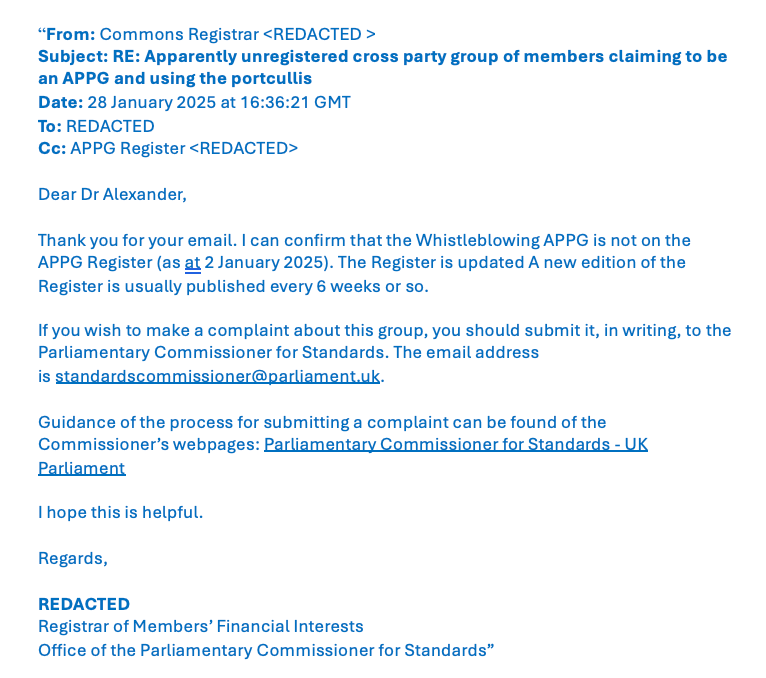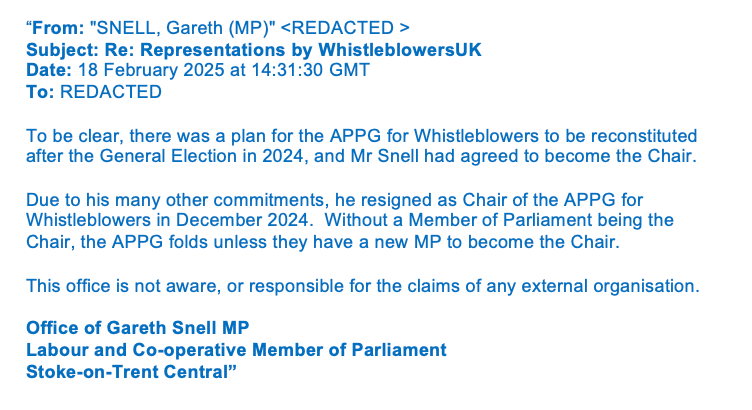
Simon Holmes, former Portsmouth medical director who launched disciplinary action against whistleblower Dr Jasna Macanovic, has since acted as a MHPS designated board member at Hampshire Hospitals NHS Foundation Trust

Dr Minh Alexander 30 October 2023

What is MHPS?

NHS disciplinary processes are often unfair and arbitrary, with employers holding all the power. Procedural safeguards for staff are weak. There is often harsh and disproportionate discipline, with suspension applied too frequently when it is extremely harmful to health and should be used only as the last resort, for the shortest time. Reforms were advised by the National Audit Office twenty years ago, but were predictably ignored.

Doctors in the NHS are disciplined according to fig leaf procedure called Maintaining High Professional Standards in the Modern NHS (MHPS).

The procedure covers misconduct and incapability, whether due to competence or ill health.

In the process, the employer is investigator, judge, jury and executioner. There is no external scrutiny.

Even where disciplinary action is appropriate, MHPS procedure is often applied excessively harshly.

MHPS is also sometimes applied vexatiously, to unwanted doctors such as whistleblowers.

Application of MHPS in the cases of Dr Jasna Macanovic and Mr Martyn Pitman

Dr Macanovic’s whistleblowing case against Portsmouth Hospitals concluded in January 2023. She “won” comprehensively at all stages. The Employment Tribunal determined that Dr Macanovic was unfairly dismissed, expressly for whistleblowing to the General Medical Council.

Portsmouth Hospitals University NHS Trust gave “serious misconduct” – not “gross misconduct” – as the reason for dismissal.

The Tribunal rejected this and determined that Dr Macanovic did not in any way contribute to her own dismissal.

The Tribunal was refreshingly robust in pushing back against the trust’s claims that relationships had broken down irreparably as a result of Dr Macanovic’s whistleblowing.

The Tribunal determined that “It is no answer to a claim of whistleblowing to say that feelings ran so high that working relationships broke down completely…”

Reassuringly, the Tribunal gave serious weight to the patient safety issues raised by Dr Macanovic, and did not lose sight of them, keeping them central to its deliberations.

In the maternity safety whistleblowing case of Mr Martyn Pitman at Hampshire Hospitals NHS Foundation Trust, the trust’s purported grounds for dismissal was breakdown of relationships, with the technical route of “Some Other Substantial Reason” invoked.

SOSR is a classic method of dismissing whistleblowers where organisations are unable to make a case of misconduct or incapability.

Thousands of unwanted NHS staff in general have been wastefully dismissed via this route, in a system where the power lies almost entirely with employers.

Mr Pitman clearly made public interest disclosures, which the Employment Tribunal has recognised.

He suffered greatly and became very ill after prolonged suspension under MHPS.

He has two claims in the ET, one for whistleblowing detriment upon which the Tribunal has ruled, and a hearing scheduled for a claim of unfair dismissal.

The Tribunal, has concluded in Mr Pitman’s from the first hearing of his case that the harm which he suffered did not comprise detriment for whistleblowing.

It is relevant to note that regardless of the disputed issue about whistleblowing detriment, there was an NHS human resources “never event” in Mr Pitman’s case, as defined by NHS England guidance of May 2019:

Where a person who is the subject of an investigation or disciplinary procedure suffers any form of serious harm, whether physical or mental, this should be treated as a ‘never event’ which therefore is the subject of an immediate independent investigation commissioned and received by the board. Further, prompt action should be taken in response to the identified harm and its causes.”

In contrast with the Tribunal in Dr Macanovic’s case, the Tribunal in Mr Pitman’s case gave more weight to his employer’s claims about his communication style than his patient safety concerns. It has reportedly accepted that his alleged communication style was the reason for the trust’s action against him, not his whistleblowing.

This is despite the trust’s failure to fully address Mr Pitman’s patient safety concerns and his concerns about reprisal for whistleblowing. Usually, Tribunals will take such failures into account, against employers, when ruling on whistleblowing cases.

The judgment is not yet published, and Mr Pitman and his advisors have yet to decide on next steps.

MHPS governance at Hampshire Hospitals NHS Foundation Trust

In the context of claims and counter claims about Mr Pitman’s case, I asked Hampshire about its governance of MHPS process.

I was especially concerned by the very long period for which Mr Pitman was excluded, two years.

In my view, this is was very bad practice. Suspension is an extremely harmful event, with serious risk to employees’ physical and mental health. It should be considered and managed as a human resources emergency, applied sparingly and for the shortest period possible. Long periods of suspension raise questions of punitive motives by employers. They are also very wasteful.

Hampshire Hospitals NHS Foundation Trust has responded evasively to my FOI request. This is the trust’s response:

FOI response by Hampshire Hospitals NHS Foundation Trust on MHPS Ref 23-24 342

The trust admits to fewer than five instances of MHPS being applied in the last five years. According to the trust, all MHPS cases in this period were upheld. The trust refused to give the range in the length of suspensions, claiming that this was due to small numbers. This raises questions about whether other doctors besides Mr Pitman may have suffered prolonged suspensions.

In the last five years, three Hampshire Hospitals NHS Foundation Trust board members have assumed the critical role of “MHPS designated board member”:

  1. Clancy Murphy – Non-Executive Director
  2. Jane Tabor – Non-Executive Director
  3. Dr Simon Holmes Non-Executive Director

MHPS designated board members have responsibility for overseeing the MHPS process, to broadly ensure fair play, to be a point of contact to whom suspended doctors can bring issues and in particular to ensure that MHPS process is timely and in accord with Article 6, the right to a fair trial.

Designated board members should not – in theory – allow organisations to punish doctors by keeping them in “MHPS jail” longer than is necessary.

At Hampshire, Jane Tabor trust NED was involved in Martyn Pitman’s case. A preliminary judgment notes that Mr Pitman raised concerns with her and with the trust Chair about his treatment, in an email of 26 February 2021:

“I would welcome the opportunity to meet with you virtually to feedback my experiences and reflections over the last 2 years, having been subjected to a Trust Disciplinary Investigation throughout this protracted time period. I also have recommendations that I wish to make that are relevant both to the Trust’s handling of my but also I believe, are potentially critical for the future health and wellbeing of every member of the HHFT workforce.”

The trust denied that this expression of concern was whistleblowing, and asked for this part of Mr Pitman’s claim to be struck out, but the judge wished to hear more detailed argument on the issue.

Regardless of the technicalities over the narrow legal definition of whistleblowing, it is disappointing that the trust minimised the concern raised by Mr Pitman, as it certainly falls within the NHS national whistleblowing (Freedom to Speak Up) policy.

As regards Simon Holmes acting as an MHPS designated board member, this is of concern in view of his past actions towards whistleblower Dr Jasna Macanovic. Holmes retired as medical director at Portsmouth in 2017 and later became at a NED at Hampshire.

The Tribunal judgment in Dr Macanovic’s case shows that Holmes was the medical director who originally launched disciplinary action against Dr Macanovic after she whistleblew to the General Medical Council about unsafe practices by her medical colleagues. This was despite the fact that several other experienced consultants had raised similar concerns. Holmes also failed to share advisory correspondence from NCAS, the body which advises NHS trusts on the proper application of NCAS. NCAS always advises NHS organisations to disclose its correspondence to suspended doctors for fairness and transparency. Unfortunately, NCAS does not check that correspondence is shared.

I asked Hampshire if it had a process for ensuring that MHPS designated board members have no history of whistleblower reprisal, and how the trust assures itself that its MHPS processes are not in fact a form of whistleblower reprisal.

The trust’s responses were weak and evasive.

Where I asked if the trust had triggered MHPS after any doctors had made public interest disclosures, the trust replied off the point. It introduced the phrase “as a result of” and replaced “public interest disclosure” with “protected disclosure” (they are legally distinct).

Question: “Please indicate if any of the MHPS investigations in the last five years have been conducted against any doctors who had made public interest disclosures, and if so, how many?”

Trust answer: “No MHPS investigation has been triggered as a result of a member of staff making a protected disclosure.”

This trust response may hide other cases of MHPS action after whistleblowing by other doctors, besides Mr Pitman.

Hampshire Hospitals NHS Foundation Trust speciously claimed that its whistleblowing and disciplinary processes are “entirely separate”:

Question: If so, did the trust take any special precautions to satisfy itself that the MHPS investigation(s) did not represent any form of whistle-blower detriment or reprisal?”

Trust answer: “The MHPS process and the whistleblowing/Freedom to speak up process are entirely separate processes. The Trust has never and will never use the MHPS process or any other disciplinary or investigatory process in detriment or reprisal against any member of staff who has raised concerns about the safe working of the hospital.

Hampshire Hospitals NHS Foundation Trust actively encourages its staff to raise any concerns that they may have and would never take any steps which would jeopardise this.

It is disingenuous of the trust to claim complete separation between the MHPS process and NHS whistleblowing policy.

Firstly, NHS national whistleblowing policy at the time of Mr Pitman’s whistleblowing explicitly included zero tolerance of reprisal against whistleblowers:

“We will not tolerate the harassment or victimisation of anyone raising a concern. Nor will we tolerate any attempt to bully you into not raising any such concern. Any such behaviour is a breach of our values as an organisation and, if upheld following investigation, could result in disciplinary action.”

It follows that NHS trusts should have the means to identify and deter such harassment. This therefore links whistleblowing procedures and disciplinary procedures, which may be used vexatiously.

(NB. The clause about zero tolerance of reprisal seems to have been removed from the latest version of the NHS national whistleblowing policy.)

Secondly NCAS, now PPA, the body responsible for advising NHS trusts about the application of MHPS process has recently been consulting with NHS trusts about strengthened processes and procedural safeguards. This is to reduce the likelihood that whistleblowers are punished by organisations using MHPS vexatiously.

The trust’s defensive stance in insisting there is total separation between the two processes raises concern about its governance.

The trust also responded evasively to a question which partly related to NED Simon Holmes’ track record against a whistleblower, Dr Macanovic. The trust claimed that its processes addressed whether directors had a history of adverse behaviour towards whistleblowers:

Question: Does the trust have any system of checks to ensure that any board member whom it appoints to act as an MHPS designated board member has no past history of detrimental behaviour to whistle blowers? If so, please give details.”

Trust answer: “All board members are subject to the Fit and Proper Person Test prior to appointment. The test considers someone’s behaviour in previous posts is to ensure that anybody seeking a board position is an appropriate person to hold the position. This would include whether any person seeking an appointment to the board has been found to have acted detrimentally towards anyone using the freedom to speak up policy.”

Indeed, the trust went on to flatly deny that any designated MHPS board members had harmed whistleblowers, despite the ET’s criticisms of disciplinary action against Dr Macanovic:

Question: “Please disclose if any MHPS designated board members appointed in the last five years have had, to the trust’s knowledge, any prior history of detrimental actions against whistle-blowers.”

Trust answer: “No member of the board has any prior history of acting detrimentally towards whistle-blowers.”

Hampshire also failed to account for whether it had evaluated the experience of trust doctors subjected to MHPS. It replied regarding only one case – likely to be Mr Pitman’s case – and it gave no evidence of wider evaluation. This is presumably because no general evaluation was done and because the trust does not concern itself with collecting data on doctors’ experience of its process.

Question: In the last five years, has the trust undertaken any evaluation of the experience of trust doctors who have been subject to MHPS investigations? If so, please give details of how any evaluation has been conducted, and the broad outcome.”

Trust answer: “The Trust has reviewed the effectiveness of this process and its impact on an individual undergoing an investigation. We are assured that the process is robust and in compliance with all guidance in relation to safeguarding the wellbeing of individuals under investigation.”

Lastly, the trust flatly denied a concern by both Mr Pitman and the BMA which has supported him, that the trust was so opaque that an FOI request and a request for personal data had to be made in order for Mr Pitman to learn what was alleged against him.

“It has not been necessary for any member of staff to use the Freedom of Information Act to discover the nature of allegations made against them.”

Although the trust has for the meantime dodged a bullet and been given the benefit of the doubt by the Employment Tribunal, it hardly impresses on accountability and transparency. It is difficult to feel reassured that future whistleblowers will be treated fairly by Hampshire Hospitals NHS Foundation Trust.

RELATED ITEMS

Transparency about Hampshire Hospitals NHS Foundation Trust’s legal spending and Martyn Pitman’s whistleblowing case

Tim Powell Director of Workforce in Dr Jasna Macanovic’s whistleblowing case at Portsmouth Hospitals University NHS Trust has been appointed Chief People Officer at Hampshire Hospitals NHS Foundation Trust

Postscripts on Paula. NHS England’s apologia & regulatory reticence

NHS musical chairs: Darren Grayson, the Good Governance Institute & University Hospitals Sussex NHS Foundation Trust

Mr Tristan Reuser’s whistleblowing case: Scandalous employer and regulatory behaviour on FPPR

University Hospitals Morecambe Bay NHS Foundation Trust dissembles about maternity safety, referrals to HSIB and to the coroner

Last month there was a highly significant press report on the fact that UHMBT has allegedly failed to refer serious maternity cases to the coroner.

Disgracefully a bereaved couple, Sarah Robinson and Ryan Lock, were forced to refer the death of their baby Ida at UHMBT to the coroner, because the trust had failed to do so.

This was despite the fact that expert reports had identified “a catalogue of concerns” in Ida’s care.

The couple reportedly endured a “four year fight”:

NHS trust at the centre of a baby-death scandal faces another inquiry into its maternity care amid fears children’s lives remain at risk

The Senior Coroner for the area James Adeley expressed concern that Ida’s parents were forced to report matters to the coroner because the trust had failed to do so:

“Coroner Dr James Adeley told a pre-inquest hearing in Preston this week he was concerned it had been left to Ida’s parents to report her death to his office after hospital managers failed to do so.”

Importantly Dr Adeley observed that, to his recollection, UHMBT had failed to refer any baby deaths since the Kirkup report on maternity failures was published in March 2015.

“He said he was worried ‘systemic’ problems in maternity care identified by Dr Bill Kirkup in March 2015 had not been addressed. He said he could ‘not recall’ a single baby death being reported to him since.

Dr Adeley said. ‘There’s no indication that matters identified in the Kirkup Report have been addressed before this case. That suggests a lack of learning from the report continues to exist, and continues to place lives at risk.’

UHMBT was previously criticised for collusive staff responses to coroners’ inquests, as noted in Kirkup’s report:

“1.93 The coroner made strong criticisms of both the clinical practice and conduct of Trust staff, including collusion in preparation for the inquest and possible destruction of evidence already discussed. Following a Rule 43 letter from the coroner expressing these concerns…”

I therefore asked the trust via FOI for information on serious maternity incidents, related referrals to the coroner and the HSIB maternity investigation programme and the trust’s documented claims about the safety and governance of its maternity services, as submitted to the NHS Resolution Maternity Incentive Scheme.

I asked for data from 2015 onwards, following the publication of Bill Kirkup’s report of the inquiry into maternity deaths at UHMBT.

The trust delayed the FOI process by twice asking about definitions of the serious incidents, when these definitions are standard and the basis of routine data submissions to the centre.

The trust has now responded with an obfuscatory reply.

This is the trust’s FOI response of 26 October 2023:

FOI Ref 22874 response by University Hospitals Morecambe Bay about maternity safety and referrals to HSIB and the coroner

In brief, instead of giving total numbers of serious maternity incidents and total numbers of referrals to HSIB, the trust has avoided this by giving yearly totals and claiming that numbers in some years were too small to reveal.

Crucially, the trust has refused to disclose at all:

  • How many investigations of baby deaths have been shared with bereaved families
  • How many baby deaths have been referred to the coroner

The trust’s data indicates there have been at least 23 baby deaths at UHMBT since 2015, although the precise figure is not yet disclosed.

There seem to have been more baby deaths since 2018:

UHMBT claims that it would take too much time to retrieve the data on the number of baby deaths referred to the coroner and doing so would breach FOI limits:

“5. How many of these neonatal deaths have the trust referred to the coroner?

Due to the amount of time to answer Question 3 would be >10hours. To answer Question 5 would be an additional >10 hours. Therefore we estimate in excess of 20 hours to answer these two questions. This does not include the time it has taken to respond to the questions we have provided the information for. The Trust has used multiple systems since 2015 and a review of each care record would need to take place. This information is not held centrally and would require a review of every healthcare record.”

So extraordinarily, the trust asks us to believe that it does not track and cannot tell how many baby death it has referred to the coroner. This could imply appalling governance and failure to learn after an inquiry which slammed its maternity practices, including honesty in interactions with the coroner.

The alternative conclusion being that the trust is not being truthful in claiming that Section 12 FOIA cost exemption applies.

Although the trust claims it is unable to say how many baby deaths were referred to the coroner, it can say that maternal deaths were referred to the coroner in 2015, 2020 and 2021 (albeit without disclosing the actual numbers).

Because of UHMBT’s incomplete disclosure, it is also not clear how many of the trust’s baby deaths were referred to HSIB. At the very least, four referrals were made out of at least twenty baby deaths from 2018 onwards (when the HSIB maternity investigation programme was launched).

Also, the trust failed to disclose requested copies of its submissions to NHS Resolution’s Maternity Incentive Scheme, and instead gave very crude summary data that appears to be raw scores of compliance. Thus, it avoided revealing meaningful detail.

I have written to Aaron Cummins UHMBT CEO, 2012 to present, to ask for a valid response to my FOI request. I copied this to the Senior Coroner.

I received a response from Cummins nine minutes after sending my letter, advising me that a response would be provided “as soon as possible”.

Any further data received from UHMBT will be posted here.

In the meantime, this is a disclosed copy of the UHMBT policy governing the trust’s interactions with the coroner’s office:

UHMBT FOI disclosure: Medical Examiner’s Office Process

These are the salient passages:

  1. Section B Coronial Cases

4.1.3.39 Ministry of Justice Guidance
Guidance for registered medical practitioners on the Notification of Deaths Regulations (publishing.service.gov.uk)

For registered medical practitioners on the Notification of Deaths Regulations March 2022 sets out the circumstances in which a death should be notified to the Coroner. In addition, the Lancashire Senior Coroner and Regional Medical Examiner has issued a Standard Operating Procedure for referrals to Coroner (see section 5 form 4)

4.1.3.40 Cases identified as potentially Coronial by MEO/QAP/ME should be jointly discussed. Taking into account local guidelines (see section 5 form 4) and Ministry of Justice Guidance

4.1.3.41 If there is agreement that it should be referred to Coroner then case should be discussed with Coroner’s Officer highlighting reason for referral and whether a cause of death can be offered in Ulysees B6

4.1.3.42 Where there is still uncertainty whether Coroner referral is appropriate the ME can contact the coroner to discuss case.

4.1.3.43 It is anticipated that usually in practice, it will be the practitioner who is qualified (QAP) to complete the medical certificate cause of death (MCCD) who will be making the notification to the senior coroner.

4.1.3.44 To facilitate referral the ME Service will where necessary complete Deceased Details (icasework.com) and include ME scrutiny and QAP Death Summary

4.1.3.45 Where the death is clearly unnatural it may be more appropriate for a notification to be made to the senior coroner straight away by the Consultant responsible for the patients care.eg where the Police are involved

4.1.3.46. Regulation 4(1) requires the notification to the senior coroner to be made as soon as is reasonably practicable after the medical practitioner has determined that the death should be notified.

4.1.3.47 While the regulations do not prescribe a specific time limit for notifications this notification should be prioritised. If the death arises from an event or occurrence that may be suspicious then the police should be informed immediately.

4.1.3.48 A death may have already been reported to the coroner by a person other than a medical practitioner, such as a friend or family member of the deceased, or the police. Such reports will not usually include the information required at regulation 4(3) and (4), and may not provide the coroner with the full medical picture.

4.1.3.49 Therefore, even if a medical practitioner is aware that someone other than a medical practitioner has reported a death to the coroner, the registered medical practitioner should still make a notification under the Regulations

4.1.3.50 The medical practitioner should usually take reasonable steps to establish the cause of death before notifying the coroner. This may include seeking advice from another medical practitioner, such as a medical examiner or any other responsible consultant.

4.1.3.51 If in opinion of ME case should be referred to Coroner and QAP wants to issue MCCD and does not want to refer to Coroner the QAP should be advised to discuss case with their senior Colleague.

4.1.3.52 If the ME and Consultant responsible for patient care cannot reach agreement and the ME still thinks it is appropriate to refer the case to the Coroner then the ME should discuss the case with another ME or Lead ME, or if necessary, in their absence Regional ME.to agree next steps.

4.1.3.53 A coroner’s investigation may not be necessary in all notifiable cases.

RELATED ITEMS

UHMBT is currently rated “Requires Improvement” by the Care Quality Commission, including on the Well Led domain.

UHMBT has been the scene of repeated whistleblower reprisals and gaggings, going back many years. I cite a few of the cases.

Breast screening whistleblowers were harmed and gagged by UHMBT.

Public Health England confirmed in 2015 that their concerns were valid:

External review into North Lancashire and South Cumbria Breast Screening Programme

Litigation continued about the gagging.

A recent case is that of Mr Shyam Kumar, who was doubly harmed both as a trust and a Care Quality Commission employee, after he whistleblew about the unsafe surgical practice of another trust surgeon and other matters.

Mr Shyam Kumar, Surgeon and vindicated NHS whistleblower’s case: CQC sacked a whistleblower for disclosures about its poor regulatory performance, and dug for dirt on the whistleblower

Tulloch report 2020 on orthopaedic safety at UHMBT (page 60 onwards)

But despite the trust’s questionable governance, it loomed large as a key tool in Jeremy Hunt’s campaign to present himself as a patient safety champion.

Hunt’s favourites have prospered, including Jackie Daniel the former UHMBT CEO 2012-2018, who was damed and moved onto a plum job at Newcastle.

Daniel was even mentioned favourably at PMQs in a question by the local Tory MP:

“Jackie Daniel received a Damehood for turning around Morecambe Bay Trust, very positive, along with the staff. Would my Rt Hon Friend the Prime Minister, look forward to working with her successor and carry on turning around Morecambe Bay Trust and wish Jackie well.”

In response, Mrs May MP said: “I am happy to join my Hon Friend in paying tribute to the work of the staff at the Morecambe Bay Trust and particularly to wish Dame Jackie well and to recognise and pay tribute to the work she has done turning that trust around.”

Jeremy Hunt et al’s re-branding of Morecambe Bay and a suppressed report on Race concerns

University Hospitals of Morecambe Bay NHS Foundation Trust’s handling of counter-allegations against whistleblowers

UHMBT has made use of Capsticks’ legal services, including representing the trust against whistleblowers and the drafting of settlement agreements with whistleblowers:

Morecambe and wise counsel

In 2012 UHMBT entered into a highly questionable agreement with a midwife who was accused of cover ups, where redundancy with 14 months pay was agreed on the basis that she would not be investigated for maternity care failures:

“Following discussions between the employee and the trust, the employee has opted to take early redundancy and as a result the employer has agreed not to commence an internal investigation into the employee’s performance as maternity risk manager.” 

Morecambe: All that glisters…

However, in 2018, it was reported by the Nursing and Midwifery Council that the midwife admitted many of the allegations against her:

“Grace Hansen, acting for the NMC, said: ‘’Jeanette Parkinson was a maternity risk manager at Morecambe Bay Hospitals Trust from 2004 to 2012.

She was also appointed as a supervisor of midwives by the Local Supervising Authority from November 2002.

‘’In 2008 two maternity and three neonatal deaths occurred at Furness General. The charges brought by the NMC relate to Miss Parkinson’s investigation of these these tragic events on behalf of the trust and the LSA.

‘’She has admitted many of the charges and accepts they amount to misconduct and her fitness to practice has been impaired by reasons of that misconduct.

‘’The parties agree the only appropriate and proportionate action is a striking off order. This is the most serious sanction the NMC can impose.”

Midwife at centre of baby death scandal faces being struck off after 11 babies died during her time at trust

Letter to Sarah Wollaston Devon ICB Chair about appointment of Allison Williams as ICB CEO

Dr Minh Alexander retired consultant psychiatrist 12 October 2023

Further to Devon ICB’s brief appointment of controversial former Welsh Health Board CEO Allison Williams as interim ICB CEO, followed by her resignation within weeks, Devon ICB confirmed that it applied a Fit and Proper Person process.

The information was provided via FOI Ref NHSD23/442, 28 September 2023:

“All NHS Devon Board-level appointments are subject to full engagement checks, including the Fit and Proper Person Test and an appropriate DBS check, before the candidate formally takes on the role.


Allison was due to take over the interim CEO responsibilities from November and her appointment to the role was announced to staff pending the engagement checks, as she had already been supporting the system for two years, and to provide reassurance to staff during an unsettling time (due to the organisational change process necessitated by the requirement to reduce running costs).


Like all NHS organisations, NHS Devon is currently updating its processes to ensure compliance with the requirements of the revised Fit and Proper Persons Test Framework (to be introduced on 30th September 2023) which will improve and strengthen further the existing process.”

Williams’s appointment was revealed through enquiries by NHS whistleblower Clare Sardari @SardariClare following reports:

Letby murders: McLellan’s arse, NHS Stalinism and reported NHS management recycling at Devon ICB

The ICB now claims there was an announcement about Williams’ appointment on 14 August 2023. If so, it was presumably internal as there appears to be no sign of any external announcement on the ICB website or otherwise.

Since then, Mr Thomas a member of the public whose late wife suffered serious harm at Cwm Taf Health Board where Allison Williams was CEO has shared concerns.

I have written to Dr Sarah Wollaston Devon ICB Chair to ask for more information about the ICB’s governance, and to pass on Mr Thomas’ concerns.

Some of the personal detail about Mr and Mrs Thomas’ experiences is held back for reasons of privacy.

The letter is hopefully self explanatory

BY EMAIL

Sarah Wollaston

Chair Devon ICB

12 October 2023

Dear Sarah,

Appointment of Allison Williams as Devon ICB CEO – further questions and review

Thank you for the attached FOI response by Devon ICB which indicates that it applied a Fit and Proper Person test when it appointed Allison Williams (CEO Cwm Taf Health Board 2011 to 2019 ) as ICB CEO.

The local press have provided this helpful chronology of the events at Cwm Taf, surrounding the maternity scandal and Allison Williams’ resignation as the Health Board CEO

March 2019: Maternity unit at Royal Glamorgan Hospital criticised for ‘significant staffing issues’
April 2019: New mums seriously failed by Cwm Taf hospital maternity wards where dozens of babies died
April 2019: Cwm Taf maternity patients reveal devastating experiences of giving birth at hospitals
April 2019: The full shocking tale of stillbirths at Cwm Taf hospitals that went unreported for years
April 2019: Cwm Taf maternity report: The heartbreaking accounts from new mums about service failings
May 2019: Mum’s baby died after she gave birth in the toilet of a labour ward
May 2019: Wales’ health minister Vaughan Gething survives no confidence vote
May 2019: The shocking account of a midwife at Cwm Taf’s maternity scandal hospitals who says she was intimidated and ignored
May 2019: Cwm Taf health board bosses ‘not giving full picture’ of failings at scandal-hit maternity wards, claims AM
May 2019: Cwm Taf health board boss says culture ‘has not changed’ amid maternity service scandal
June 2019: Mum and ill newborn baby put in a taxi instead of an ambulance to receive care from a doctor
June 2019: Councillors in RCT to back leader’s calls for health board boss to quit
June 2019: Cwm Taf chief exec Allison Williams to take ‘extended period of sickness absence’
July 2019: ‘Doctors and nurses are struck off when things go wrong – now the same needs to happen to NHS managers’
July 2019: Troubled Cwm Taf maternity services could take five years to fix
August 2019: Cwm Taf chief exec Allison Williams steps down following maternity scandal
October 2019: Investigation into Cwm Taf maternity services expanded to 150 cases
December 2019: Senior managers failed to share damning Cwm Taf report that could have exposed maternity problems sooner
January 2020: Cwm Taf maternity services making ‘good progress’ despite 20 serious incidents still occurring
February 2020: Maternity errors at Cwm Taf health board costs health service massive seven figure sum in compensation
April 2020: Review of scandal-hit Cwm Taf maternity services says they are ‘on track to deliver maternity services to be proud of’
June 2020: Former boss of scandal-hit Cwm Taf health board given £131,000 payout after resignation
September 2020: The new Cwm Taf health board boss on the maternity scandal, Covid-19 and A&E services
September 2020: Maternity services in Cwm Taf doing ‘remarkably well’ despite coronavirus challenges
January 2021: Dozens of women received substandard care at two maternity units during childbirth
September 2021: A third of stillbirths in Cwm Taf maternity units ‘could have been prevented’, review finds 

I note that the ICB repeats its assertion that Ms Williams could not take up the ICB CEO post because of the travelling. 

I find this hard to understand given that the ICB also indicates that Ms Williams had been working for the ICB for two years, and would presumably have been making the journey for that time, without it deterring her application for the CEO post.

Nevertheless, I would be grateful for more information about Devon ICB’s Fit and Proper Person process which was applied when appointing Ms Williams. 

What did it comprise? How did the ICB satisfy itself that the very serious concerns in the public domain about her performance at Cwm Taf did not impair her fitness to be ICB CEO?

What steps did the ICB take to evaluate Ms William’s responsibility and contribution to very serious governance and patient safety failures at Cwm Taf?

Did the ICB conclude that those events were no longer relevant?

Or did the ICB either conclude that Ms Williams was not responsible, or if responsible, was no longer a risk in terms of repeating governance and patient safety failures?

What evidence did the ICB use to come its conclusions?

What screening and interview processes were followed that culminated in Allison Williams’ appointment?

What parties were involved in shortlisting and what parties were on the panel(s) which interviewed Ms Williams and made the final decision to appoint?

Please give the names, seniority and job descriptions of all those who took part in the appointment interview(s).

In hindsight, does Devon ICB accept that it has any learning arising from the Williams appointment, and should Devon ICB review its Fit and Proper Person process?

The experience of Mr and Mrs Thomas at Cwm Taf

Mr Thomas responded to my post about Allison Williams’ appointment by Devon ICB.

For your information, I provide below in the appendix the account of Mr Wayne Thomas whose late wife was very seriously and multiply harmed by Cwm Taf Health Board, where she received treatment.

You will see that it is an extraordinary and harrowing story. It includes the fact that another Welsh Health Board had to take Mrs Thomas back to theatre after surgery at Cwm Taf for an abdominal abscess, whereupon it was discovered that a Cwm Taf surgeon had completely divided Mrs Thomas’ bowel. 

I also attach a letter from the relevant surgeon to Mr Thomas about what they found on re-opening Mrs Thomas’s abdomen. Names are redacted to protect the privacy of the staff involved. As you can see, the surgeon remarks: “To divide the colon and leave two ends inside is an extremely unusual finding”.

Mr Thomas believes there were other errors in Mrs Thomas’ care and she later died. The additional errors included such matters as a grade three pressure sore because Mrs Thomas had not been turned frequently enough by nursing staff (only two to three times a day instead of every two hours), and the right type of mattress was not available. There was also reportedly injury to her liver because total parenteral nutrition was given at the wrong rate on repeated occasions. There were also other issues including as spinal fracture due to Mrs Thomas being dropped, mis diagnosis of Steven-Johnson’s syndrome, an undisclosed heart attack possibly related to mismanagement of IV fluids and E coli infection.

Mr Thomas naturally wanted a proper investigation of all the harm caused to his wife and her death. 

But he felt it was just “one big cover up”.

He wrote to Allison Williams in 2019 asking for the case investigation to be reopened because of new information, but she reportedly refused. The relevant correspondence is in hard copy only and currently with another party. But I have seen his correspondence to her.

Mr Thomas reports that there has never been a proper investigation, and only internal investigations took place. He has many unanswered questions, and is pursuing matters further.

I cannot imagine the suffering Mr Thomas has been through, witnessing the care failures in his late wife’s treatment.

And a question arises of how many other patients and families are in a similar position as a result of the failures at Cwm Taf. The Royal College maternity review at Cwm Taf threw up evidence of organisational cover up and failure to learn. An earlier expert report about failings was not given to the Royal College, and only came to light during the review.

It became evident that staff concerns were ignored.

The experience of one Cwm Taf maternity whistleblower is described here by the local media:

The shocking account of a midwife at Cwm Taf’s maternity scandal hospitals who says she was intimidated and ignored

“She said despite reporting countless serious incidents and near-misses with her senior colleagues, her concerns were rarely addressed.

And after writing a letter to the chief executive of Cwm Taf Morgannwg University Health Board Allison Williams in 2017 in a desperate plea for more support, she said the problems only worsened.”

“”The midwives’ skill and compassion is second to none – despite the fact they end their shifts extremely stressed and normally in tears,” said the midwife.

“I discussed my concerns with my managers about staff numbers, but they often fell on deaf ears. This would often leave the unit dangerously short.

“I was very aware that I was failing these patients. There were so, so many near misses.”

“And she added that the bullying culture within the organisation made it almost impossible for frontline workers to air their complaints without fear of repurcussions.

“It would take all my strength to approach my line manager when we needed help,” she added.

“But most of the time they wouldn’t even get out of their office. They would just blame me as the clinician for not managing my workload.

“I feel like I’m a pretty strong character, but even I was intimidated by certain managers.”

As you put it in 2015, the mistreatment of whistleblowers is a stain on the NHS’ reputation, and “inexcusable”. 

Should those who have overseen poor culture and serious related patient harm be trusted to hold senior positions again?

It would be reassuring if Devon ICB acknowledges the depth of the suffering by patients, families and staff at CwmTaf, and honestly examines how it came to appoint Allison Williams, in order to learn and strengthen its safeguards for public protection.

How can it be right that someone, who has apparently not acted on concerns from patients, families and staff, was put in a position of such great power again?

The last words belong to Mrs Thomas, who at one point in her terrible patient journey asked Mr Thomas to feed the following back to Health Board staff:

“You lot have no idea what i have been through these last few years how i shouldnt be alive in REDACTED words and the nursing staff at UHW, I had to learn to sit up, learn to stand, learn to walk and learn to eat and drink and in a wheelchair for over 3 years and in and out of hospital since and also in high dependancy unit critical care where they told my husband we think we just about caught her my body was physically tortured and i am mentally scarred from it.”

I blind copy this letter to Mr Thomas to protect his privacy.

With best wishes,

Minh

Dr Minh Alexander

APPENDIX 

[Correspondence from Mr Thomas about care failures at Cwm Taf Health Board, redacted]

Attachment – letter from another Welsh Health Board confirming that Mrs Thomas’ bowel was found to have been completely divided – withheld

RELATED ITEMS

Tim Powell Director of Workforce in Dr Jasna Macanovic’s whistleblowing case at Portsmouth Hospitals University NHS Trust has been appointed Chief People Officer at Hampshire Hospitals NHS Foundation Trust

Medway NHS Foundation Trust director, whom Employment Tribunal determined gave “simply factually untrue” evidence to an investigator, became an NHS England manager

Letby murders: Robert Francis complements NHS England’s messaging by telling BBC Newsnight that regulation lite should be considered for NHS managers

Francis suggested on Newsnight that NHS employers are unaware of errant
managers’ histories. By doing so, he drew a veil over what is an organised
system of mutual protection and recycling, which has NHS regulators at its
heart. The system even has a nickname, “The Donkey Sanctuary”.

The case of Paula Vasco-Knight exemplifies the collusion running throughout the system:

Postscripts on Paula. NHS England’s apologia & regulatory reticence

Lucy Letby murders: Letter to Wes Streeting Shadow Secretary for Health. Club culture masquerades as NHS regulation

Lucy Letby murders: Former Countess of Chester Non Executive Director James Wilkie

Lucy Letby murders: “Ready and willing” Follow up on Bill Kirkup’s comments to the BBC about his experience of witness cooperation with non statutory inquiries

Lucy Letby murders: Robert Francis’ and Bill Kirkup’s messaging supports government’s choice of a non-statutory inquiry

Lucy Letby murders: Learning from the 1994 Clothier inquiry into the Beverly Allitt killings at Grantham and Kesteven General Hospital

Whistleblower detriment, racial harassment, discrimination and victimisation at Barking Havering & Redbridge University Hospitals NHS Trust

Dr Minh Alexander retired consultant psychiatrist 7 October 2023

An Employment Tribunal remedy judgment was published on 5 October 2023 from a case which was heard a year ago, about extraordinary events at a London NHS trust, which has been notably chaired since July 2021 by the controversial former Home Secretary Jacqui Smith.

The two claimants Ms Princess Mntoninthsi  and Ms Ubah Jama, NHS biomedical scientists, were initially awarded £64,217.82 and £58,632.06 respectively for injury to feelings, aggravated damages and personal injury.

The Tribunal found that the race harassment, discrimination and victimisation was severe enough to trigger one claimant’s traumatic experiences of apartheid South Africa, which brings shame to our NHS.

A substantive judgment was issued in February 2023:

Ms P. Mntonintshi and Ms U. Jama v Barking Havering and Redbridge University Hospital NHS Trust Case Numbers: 3202401/2020, 3202513/2020 and 3204804/2021, 24 February 2023

The claimants were represented by a solicitor, the trust by a barrister.

The Tribunal panel was headed by Employment Judge Massarella.

Unusually, the claim included a claim against a named respondent as well as the trust, which succeeded in the matter of victimisation.

I post briefly to help raise awareness of the case, which was originally reported by The Guardian and others, and to draw out details of whistleblowing aspects which have been reported in less detail than the race issues.

Black workers in a biochemistry lab at Barking Havering & Redbridge University Hospital NHS Trust suffered a hostile environment and a pattern of false accusations and derogatory treatment which amounted to race harassment. They raised concerns about the discrimination and also made protected disclosures about unsafe, aggressive behaviour by a white colleague which the Tribunal considered was racially charged. They suffered retaliation.

The Tribunal considered there was a white “team within a team”, which was the most obvious and influential clique in the department.

The Tribunal determined that a trust manager “plainly favoured” colleagues who happened to be white and she treated white workers more favourably. The Tribunal also determined that this manager was “consistently evasive” and “positively untruthful” when giving evidence:

“340. Beginning with Ms Valera-Larios, our starting point is that she plainly favoured working with specific colleagues, whom she regarded as more hard-working and better communicators than others. They were white: Ms Zadorozny and Ms Beck. Ms Valera-Larios involved both white Seniors in activities and decisions without involving black members of staff (paras 45, 103-105, 161-162, paras 179-181).

341. Ms Valera-Larios, Ms Zadorozny and Ms Beck effectively operated as a team within a team, without apparently questioning the appropriateness of that. We also noted that, while they were quick to identify cliques among black staff, it appears not to have occurred to them that they were the most obvious, and influential, clique in the department.

342. There were also other identifiable patterns in Ms Valera-Larios’s conduct: accepting at face value accounts given by white members of staff, but challenging accounts given by black members of staff (para 96, 173); criticising black members of staff but not white members of staff (paras 153-154, 184); seeking to mitigate poor conduct by white colleagues (paras 89-93, paras 95- 98); seeking to implicate black members of staff (paras 93, 153-154, 167, 171, 185, 208-211); reacting combatively to complaints about her (paras 186, 276).

343. As to Ms Valera-Larios’s evidence to the Tribunal, occasional evasiveness is not an unusual feature of evidence in Tribunal. Tribunals usually seek to avoid making generalised findings about credibility. However, Ms Valera-Larios was so consistently evasive in her evidence that we consider we have no alternative. There were occasions when she gave an answer, which was quickly disproved by a document; she then had no hesitation in reaching for another answer; at one point in cross-examination, she gave four different answers on the same issue, finally alighting on a fifth, which was that she could not recall why she had acted as she did (paras 214-217). She gave positively untruthful evidence on several occasions (paras 123, 148, 152, 154, 188).”

Black workers blew the whistle on aggressive and unsafe conduct by a white worker who showed poor impulse control, angrily throwing a sample bottle which was a potential biohazard nearby to black workers. She also repeatedly banged a rack of samples in temper:

“66. On 13 February 2020, Ms Zadorozny was working in the same area as Ms Jama, Ms Mntonintshi and Ms Swamba, a junior locum, who is black. The three black employees were sitting in a line at the same bench. Ms Zadorozny was working on another bench.

67. Ms Zadorozny approached Ms Swamba and asked her to help with logging the appearance of a fluid sample in a tube. Ms Swamba said that she was not trained to do that task and did not know what to do with it. While she was still speaking, Ms Zadorozny walked away from her saying ‘Well I guess that isn’t going to get done then’. As she sat down, she tossed the tube the short distance towards the sample rack which was on the bench where three colleagues were sitting; it hit the wall near Ms Mntonintshi. Ms Zadorozny threw it in a contemptuous manner but not with force.

68. There was no possibility that the tube would land safely in the rack. The fluid sample was in a plastic tube with a pop-on top; the top had a hole in it to allow air to exit the tube. It is wrapped in parafilm when it is being transported, but this tube was not wrapped. There was a real risk that the contents were infectious and a real risk that the top might come off/the liquid might escape and splash one or other of Ms Zadorozny’s colleagues. There was also an obvious risk that the sample would be spoiled, affecting patient safety.

69. Ms Zadorozny had lost her temper. She did not intend to put her colleagues at risk, but she acted recklessly and disrespectfully.”

It was noted by the ET that the sample was of pleural fluid (from the lining sac of the lungs).

“‘Tatyana Zadorozny, a Senior Biomedical Scientist, lost her temper with a black colleague and threw a pleural fluid sample at the wall close to Princess Mntonintshi and two other black employees’”

“‘[on 17 March 2020] Tatyana Zadorozny lost her temper again and threw a sample storage rack labelled coronavirus into the clinical waste bin and when the rack did not go in the bin, kept hitting it against the bin aggressively, splashing the biological samples inside, in front of 3 black employees including Ubah Jama and Pamela Akite.”

The Tribunal determined that these aggressive displays in front of black colleagues had a racial element:

“This was the second incident in which Ms Zadorozny displayed aggression in
front of colleagues, all of whom were black, and triggered on both occasions by
an innocent remark by one of them. There were no instances of her behaving
in this manner in front of, or in response to, white colleagues. We are satisfied
that there is evidence from which we could conclude that Ms Zadorozny’s reaction was related to race.”

It found race harassment.

Although the Tribunal considered these incidents were serious misconduct, the management response to these incidents, was to “not take sides” and to suggest mediation:

“During the conversation, Iris Valera-Larios showed no concern for the welfare or health and safety of the three black members of staff but instead stated that she did not want to take sides, stated that she wanted to take her to Paul Cockfield’s or Casper Myburgh’s office for mediation and when Ubah Jama asked what she was being accused of, Iris Valera-Larios did not reply.”

The same attitudes were seen again in evidence to the Tribunal.

The Tribunal considered this to be evidence of both whistleblower detriment and race discrimination.

One of the claimants, Ms Jama, was later not included in relevant training, which was accepted by the Tribunal as evidence of race discrimination by trust managers.

Ms Jama was in fact blamed by the relevant manager for not showing initiative and asking to be included.

Ms Jama was also asked to work whilst ill with COVID, whilst a white colleague in the same situation was not. The Tribunal considered this to be both discriminatory and evidence of detriment for whistleblowing.

Ms Jama was told upon return to work that she would be transferred out, expressly related to the fact that she had complained. The Tribunal accepted this as evidence of victimisation for complaining about race discrimination and for whistleblower detriment:

“Ms Valera-Larios asked for Ms Jama to be transferred; Mr Cockfield approved the request (para 155 onwards). Mr Cockfield expressly referred to the fact that its purpose was to get Ms Jama out of the environment ‘about which she had complained’. We have concluded that the reason why they did so was, in part at least because Ms Jama had complained about race discrimination and made protected disclosures. The claims of victimisation and whistleblowing detriment succeed…”

In contrast, there was no attempt to move a perpetrator:

“There was a difference of race and a difference of treatment: there was no suggestion of moving Ms Zadorozny. Mr Cockfield was evasive about whether Ms Patel (who was non-white and who had also complained about Ms ValeraLarios) had also been moved at Ms Valera-Larios’s request. We consider that there was evidence from which we could conclude that Ms Jama’s race also played a part in the decision.”

Trust managers compounded the injustice with this explanation to the Tribunal:

“Ms Valera-Larios acknowledged that she could have transferred Ms Zadorozny away but said that she ‘couldn’t afford to lose her’”

Ms Jama was also overloaded with work and then managers unfairly criticised her performance, complaining to Human Resources.

The Tribunal determined that these were detriments and evidence of victimisation for complaining about race discrimination and of whistleblower detriment.

Painfully, Ms Jama was humiliated to discover on 18 January 2021 that an uploaded spreadsheet, which colleagues across two hospital sites could see, showed that her name had been replaced by “paininarse” by Claire Beck another biomedical scientist. Beck is a named respondent in the ET claim.

Departmental managers had been aware but failed to correct this, despite being asked to.

The Tribunal concluded that Beck had acted unprofessionally. It accepted Beck’s explanation that she had inserted the phrase into the files as a “joke” about frustrations with the computer system. But the Tribunal did not believe her claim that she subsequently removed it but forgot to remove it from Ms Jama’s file. The Tribunal determined Beck’s actions and “half hearted apology” amounted to victimisation:

“Absent an adequate explanation, the victimisation claim succeeds, as against Ms Beck as Second Respondent and the First Respondent”.

Beck is held jointly and severally liable for £5,000 injury to feelings from this incident.

The Tribunal considered that managers’ failure to correct the offensive tag and to investigate the incident properly was evidence of both race harassment and whistleblower detriment.

With regard to the mistreatment of the other claimant, Princess Mntonintshi, the Tribunal determined that there was a “cynical act of victimisation”, through falsely negative appraisal and various accusations, after Ms Mntonintshi complained of race discrimination.

She raised concerns about departmental dysfunction in March 2020:

“‘I write this letter with concerns to the current work environment harbouring amongst the Biochemistry team. Upon returning to my post, I noticed a huge division amongst the staff members. The rift was so apparent and concrete that individuals would refuse to ask certain senior (Tatyana or Claire) members for assistance. There are multiple instances that have occurred in the lab as a subsequent result of this rift. These incidents have become increasingly concerning and are deteriorating the labs ability to work as an efficient team […] Their behavior is being backed up by Iris, that is why they have guts to do all these things and manage the section the way they want, not what is required. It is a toxic environment to be working in […] What is needed in this situation is there to be objective mediation for both sides involved.’

The Tribunal found that subsequently, Ms Mntonintshi was targeted for severe retaliation:

“There was an almost total disconnect between the positive way in which Ms Valera-Larios characterised Ms Mntonintshi in the original probation review (before the complaint) and the damning account she gave of her in the probation statement (after the complaint).”

There were also claims that:

  • Ms Mntonintshi was not entitled to a grievance process
  • that she would be a problem for the next two years
  • had bullied white colleagues, including the individual who had thrown a bottle of pleural fluid in the direction of black workers
  • Ms Mntonintshi should be sacked if she did not “adapt”.

This is an example of the disparaging accusations made against Ms Mntonintshi:

“‘It is my understanding PM is not willing to resolve the situation as she made a statement she has put in a formal grievance and was working with the union. This is another example of how Princess disruptive behaviour does not fit with the new culture I am trying to implement within the biochemistry team […] her behaviour is very strange because she had not made an effort to improve her attitude. Instead she has contacted the union to make a formal complaint. Her actions are consistent with someone who wants to cause disruption, not someone who is willing to change. I believe she could be after a financial reward.’

The Tribunal determined that Ms Mntonintshi has suffered serious detriment and upheld race harassment, racial discrimination, victimisation.

It considered that she was seriously affected because these incidents triggered past experiences of apartheid when she lived in South Africa:

“This brought back the treatment she experienced during apartheid in South Africa, when black people were accused of criminal acts they had not done and monitored for the colour of their skin.”

During the course of these matters, Ms Mntonintshi and Ms Jama filed grievances. The grievance investigator stopped short of finding racism, but he did make strong and troubling findings such as criticism of departmental management:

 “…predominantly coercive style of leadership, evidenced by her staff and in her own words”.

The investigator concluded:

“This bias has led to the victimisation and harassment (intent is not in question) of [Ms Mntonintshi]. Twice [Ms Zadorozny] has endangered the safety of staff in the lab due to aggressive/inappropriate outbursts in a professional setting. No documented evidence of challenging this behaviour, supporting [Ms Zadorozny] (via occupational health) has been made.”

The senior trust manager overseeing these cases, James Ellender now BHRUT Head of Financial Planning and Reporting, asked for the investigation report to be redrafted:

“Mr Ellender was not satisfied with the report and asked Mr Ndongwe to work with HR ‘to resubmit the reports please’. He set out a point-by-point critique of the report.”

Ellender subsequently told the claimants that was no basis for any disciplinary action arising from their allegations, but that he accepted there was a case regarding inappropriate management of Ms Mntonintshi’s probationary period and that he would arrange for her appointment to be confirmed.

The trust’s chief executive Matthew Trainer previously apologised when the Tribunal’s verdict was published in March this year.

But why did such an appalling case even get to Court?

Why was it resisted by the trust and why was the case not fairly settled at a much earlier stage, with less distress to the harmed staff and expense to the public purse?

Was there any attempt to apply NDAs which resulted in rejection of settlement?

What oversight was there by the trust board?

What has happened regarding trust personnel whom the Tribunal determined acted in an unsafe or racist manner, some of them repeatedly? Or those who failed to ensure the safety and wellbeing of concerned staff?

Does the trust still claim that no disciplinary action is warranted?

Barking Havering & Redbridge University Hospital NHS Trust is in a very diverse area. It is staggering that such deplorable diversity practice managed to flourish at the trust.

For completeness, it is relevant to note Tony Chambers the controversial CEO of the Countess of Chester NHS Foundation Trust where whistleblowers were sidelined prior to the Letby killings, was interim CEO at Barking from January 2020 to August 2021.

RELATED ITEMS

Research commissioned by the Department of Health during the Freedom To Speak Up Review showed that BME whistleblowers have much worse experiences.

BME whistleblowers may not always claim race discrimination as part of their claims, sometimes on advice, sometimes because their unions will not support the claims. The level of discrimination may not be fully evident.

A question arises about whether BME disadvantage was part of the dynamics at Sussex where the previous National Guardian helped helped to suppress whistleblowers in 2018 and protected a favoured trust board.

Two senior BME Sussex whistleblowers have cases in the Employment Tribunal at present.

Surgeon Mr Krish Singh’s case against Sussex is back before the ET on Monday 9 October 2023 at South London Employment Tribunal for case management and will be accessible by remote link.

The hearing is to determine whether the case will be stayed again or allowed to finally proceed to a full hearing.

It was due to be heard in June 2023 but the hearing was dramatically halted with news of a police investigation into deaths at Sussex.

The trust argued that there might be criminal liability for its witnesses.

The bundle papers are obviously of intense public interest. Media applications for access have been made. The trust is resisting and the Tribunal has indicated that this matter will also be dealt with on 9 October 2023.

Race Discrimination by Public Health England

NHS England found guilty of whistleblower detriment and Race victimisation against Ms Cox. Wilful blindness & power abuse at the heart of the NHS

Fundamental failure of the NHS Freedom To Speak Up Project: Dr Rajai Al-Jehani unfairly sacked by Royal Free NHS Foundation Trust for whistleblowing on breaches of Human Tissue law, with suppression of linked investigations by University College London

Portsmouth Hospitals University NHS Trust sacked Dr Jasna Macanovic consultant nephrologist for whistleblowing to the General Medical Council

I am currently in correspondence with the General Medical Council about a case in which the regulator criticised Asian doctors for using the imagery of slavery but acquitted a white doctor of racism, despite the EAT coming to a different view. Whilst that is a separate case to the cases of Ms Jama and Ms Mntonintshi, in general, the discrimination is sometimes so severe and painful still that one can perhaps empathise with victimised BME staff whose thoughts travel in that direction.

Anti-racism at BHRUT

In June 2020, at the time that Ms Jama and Ms Mntonintshi were going through their ordeal, Tony Chambers interim CEO posted as follows:

Black Lives Matter: a statement from our CEO, Tony Chambers

Posted Friday, 5 June 2020 by Mark Chapman

I am acutely aware of the impact on all of us of the pandemic in recent months and of events in America in recent days. The Black Lives Matters movement has never appeared more vital as we respond to George Floyd’s death in police custody. I agree with the political activist Angela Davis when she argued that “In a racist society, it is not enough to be non-racist, you must be anti-racist”. 

Sadly, George Floyd’s death cannot be viewed in isolation. Many of our colleagues will have experienced racism and unequal treatment; Covid-19 has had a disproportionate impact on our BAME members of staff; and the top of our own organisation doesn’t yet properly reflect either the diversity of our workforce or of the populations we serve. 

I would like to reassure our black members of staff that your colleagues are standing in solidarity with you. We appreciate your anger, pain and sadness. We are here to support you. We must be motivated by the words of Desmond Tutu who once said, “If you are neutral in situations of injustice, you have chosen the side of the oppressor.”

Tony Chambers
Chief Executive

Transparency about Hampshire Hospitals NHS Foundation Trust’s legal spending and Martyn Pitman’s whistleblowing case

Dr Minh Alexander retired consultant psychiatrist 6 October 2023

Hampshire Hospitals NHS Foundation Trust is currently under the microscope because of Employment Tribunal hearings into claimed whistleblower detriment and unfair dismissal against Mr Martyn Pitman, senior consultant obstetrician.

Mr Pitman’s case has been widely covered in the media.

Notably, he is suing not only his former employer the trust who dismissed him earlier this year after a long saga of disclosures and dispute, but his former Chief Medical Officer Lara Alloway is also a named respondent.

The grounds of dismissal were “some other substantial reason”, namely a purported breakdown of relationships. This is a route frequently used by employers to dismiss whistleblowers when they have been unable to establish a case of misconduct or incapability, The other classic being redundancy.

I focus briefly here on apparent lack of transparency by Hampshire Hospitals NHS Foundation Trust about legal spending.

Mr Pitman’s barrister cross examined the trust’s Chair Steve Erskine yesterday, and in the process pointed out that Bevan Brittan are currently instructed by the trust to handle Mr Pitman’s claim, but were also presented as an independent advisor during the trust’s consideration of Mr Pitman’s concerns about whistleblower reprisal.

Erskine was asked when Bevan Brittan was hired to act for the trust against Mr Pitman.

  Bevan Brittan and Capsticks in the NHS

Bevan Brittan are one of the large law firms which regularly acts for NHS organisations.   For example, they were retained by University Hospitals Birmingham NHS Foundation Trust which employed an ex Bevan Brittan partner as Chief Legal Officer. Whilst retained by UHB, Bevan Brittan co-authored a Fit and Proper Person report on the then trust CEO. The whistlelower in that case, Mr Tristan Reuser, was misinformed by the trust’s lead investigator that the law firm had no previous links with the trust.  

After consulting with Bevan Brittan, Hampshire Hospitals hired Gary Hay a former Capsticks partner to investigate the trust’s handling of Mr Pitman’s concerns that he had suffered reprisal for whistleblowing.

Capsticks is another large law firm which regularly acts for NHS organisations. It acted for an NHS CCG and an NHS trust in dispute with whistleblowers Maha Yassaie and Hayley Dare respectively, where the issue of impartial investigation was raised as a concern.

Hayley Dare’s witness statement recounts how her trust chief executive offered her an “independent” investigator to look into her concerns, who was in fact employed by the trust’s solicitors Capsticks:

“Mr Shrubb [trust CEO] told me that the investigation would not be internal and that arrangements would be made, so that I did not give evidence on site. (This subsequently turned out not to be true, and the report was authored  by an employee of Capsticks, solicitors for the respondent, so not independent at all.”  

This is a Capsticks information sheet for NHS employers about the firm’s services, from the period when Gary Hay was leading such services:  

Capsticks Employee Relations Support Services  

This includes advising NHS trusts with their MHPS cases against doctors (investigations of alleged misconduct and incapability). Gary Hay is listed as one of Capsticks’s key contacts in this document.    

I have looked at Hampshire Hospitals NHS Foundation Trust transparency data for records of trust spending on Bevan Brittan’s services.

The trust publishes monthly transparency data on spending over £25,000.00 in line with requirements for public bodies.

I have looked at details of trust spending back to 2019, when formal processes escalated in Mr Pitman’s case and it is more than likely that legal advice would have been sought by the trust.

Mr Pitman’s Employment Tribunal claim was received in 2021, so there would at the very least have been legal expenses from that time onwards.

These are the few published details that I could find on spending badged as “legal services”:

Data on Hampshire Hospitals NHS Foundation Trust legal spending since 2019

There is remarkably little disclosed in the transparency data on trust legal spending apart from payments for insurance to Willis Ltd, payments to 4OC Ltd and Imperial for strategy, payments to DAC Beachcroft for “Pathology mgt [presumably management]” and a single payment to an unnamed “one off supplier” of £25,728.00, also for “pathology mgt”.

Nowhere in the data could I find payments for other legal services.

There are no recorded payments to Bevan Brittan amongst the spending over £25K.

Why is there no such record?

Could Bevan Brittan could have been paid in smaller amounts that did not require disclosure but if so, why?

In addition to the lack of spending data on Martyn Pitman’s case, why does there seem to be no other trace of litigation spending in the transparency data?

There is another ET claim against Hampshire Hospitals which according to an ET judgment of 6 April 2023 is due to be heard on 30 October 2023, which must also have incurred legal costs.

This is the case of Ms Theresa Lanni and a claim of disability discrimination, which features allegations of workplace bullying and stress.

The trust should account more clearly and completely for its legal spending.

Hampshire Hospitals NHS Foundation Trust is one of the most financially challenged trusts, with a reported deficit of £27.7m, and it is in financial special measures.

Hampshire hospital trust ‘one of worst’ with £27.7m deficit

In context, there has been a PFI burden:

How Portsmouth’s Queen Alexandra Hospital patients and services will be affected by £300m loan ‘sale’

It is especially serious if in this setting of financial difficulties the trust has been diverting precious public money into protecting the reputations of very highly paid senior managers.

The issue of properly independent investigation of whistleblower cases also remains a vex issue.

And the question remains of whether large law firms which depend on the NHS for lucrative corporate contracts can ever be truly independent when tasked with investigation of individual NHS employees’ cases.

RELATED ITEMS AND DRAMATIS PERSONAE

In a statement shortly before the Tribunal hearing commenced, the trust claimed that “all” Mr Pitman’s concerns were “thoroughly and impartially investigated, including in some instances through external review”.

It remains to be seen if the Tribunal agrees with this assertion.

The fact that Bevan Brittan both advised the trust about the handling of Mr Pitman’s concerns of reprisal and acted for the trust in defending against Mr Pitman’s ET claim is a concern. Many whistleblowers will also feel uneasy about any Capsticks connection.

TRUST STATEMENT

Published on: 25 September 2023

In response to recent coverage around former member of staff, Mr Martyn Pitman, a spokesperson at Hampshire Hospitals NHS Foundation Trust said:

“Dismissal is always a last resort and since Hampshire Hospitals was formed 11 years ago, no member of staff has ever been dismissed for whistleblowing or raising concerns over patient safety; and they never will be. Mr Pitman has not been actively working at the hospital for two years and the questions surrounding his dismissal will be resolved at an Employment Tribunal later this year.

“We actively encourage our staff to raise any concerns they have in a number of different ways and support those who do so. The trust ensured that all issues raised by Mr Pitman were thoroughly and impartially investigated, including in some instances through external review. [my emphasis] Every effort was made to repair his relationships with the maternity and clinical colleagues in question – efforts which were unfortunately unsuccessful.

“We are increasingly concerned that Mr Pitman’s representation of the reasons for his dismissal could discourage others from raising important issues.

“Patient safety remains our top priority, and our maternity teams work exceptionally hard together to provide the best care to our patients. We are proud to be fully recruited to midwives, and of the progress being made to offer the best possible service to those in our care.”

Connections between Hampshire Hospitals NHS Foundation NHS Trust and the former trust board of Portsmouth Hospitals University NHS trust

There are now several links evident between Hampshire Hospitals NHS Foundation NHS Trust and the former trust board of Portsmouth Hospitals University NHS trust.

Hampshire recently appointed Tim Powell as Chief People Officer. He was previously director of workforce at Portsmouth and involved in poor decisions in the whistleblowing case of Dr Jasna Macanovic:

Tim Powell Director of Workforce in Dr Jasna Macanovic’s whistleblowing case at Portsmouth Hospitals University NHS Trust has been appointed Chief People Officer at Hampshire Hospitals NHS Foundation Trust

Simon Holmes former medical director at Portsmouth who was also involved in Dr Jasna Macanovic’s case and launched a disciplinary process against her after she whistleblew to the General Medical Council about unsafe care, is now a NED at Hampshire.

The ET determined that Dr Macanovic was blameless and did not contribute to her own unfair dismissal in any way.

The relevant section from the ET judgment about Simon Holmes launching disciplinary action is as follows.

Importantly, the ET noted that Simon Holmes failed to share NCAS advice with Dr Macanovic:

Disciplinary Action

 65. On 2 May, Dr Holmes, the Medical Director, and Ms Susie Lowe, Head of the Employee Relations team, took some telephone advice from NCAS – the National Clinical Assessment Service. They are a division of NHS Resolution (the replacement body for the NHS Litigation Service), and they generally advise on doctors who are perceived to be under-performing in some way. Their written response to Dr Holmes (p.572) on 4 May confirmed their discussion: The Trust is mindful that Dr 19339 is a whistle blower, but concerns have been expressed by her colleagues about her behaviour and you have received 3 letters of complaint alleging that she exhibits aggressive, bullying and intimidating behaviour. … The issue is, as you are aware, complicated by Dr 19339 whistle blowing status and it will be important to document carefully the preliminary information which has been received so that this is available for future scrutiny if required. Potentially it may be necessary for the Trust to be able to demonstrate that Dr 19339 is not being victimised for having raised concerns. I advised that to avoid any allegations of bias, it may also be useful for the role of Case Manager, to be delegated so that the person making any decision about how to proceed is free of any real or perceived conflict of interest. Likewise the Case Investigator should be suitably senior, experienced and independent.

66. The key principles were correctly stated in this letter – any action taken should not relate to the allegations but to her conduct, it should be investigated at a senior level, and the Case Manager should oversee things to ensure that this distinction was upheld. The letter also invited them to share their advice with Dr Macanovic, though this was not done. [my emphasis]

67. Armed with this advice, a decision was taken to initiate disciplinary action (Detriment 4). Dr Macanovic was invited to a meeting with Dr Holmes on 15 May, and afterwards his replacement, Dr Knighton, wrote to her (p.578) to confirm that an investigation into her conduct would be carried out by Dr Matthew Wood, Chief of Service for the Anaesthetists. It was to be a Level 3 investigation, i.e. one that could lead to her dismissal. HR support would be provided by Ms Lowe and Dr Knighton was to oversee all this as the Case Manager. This must have been decided at a high level given their seniority. Dr Knighton, as Medical Director, reported directly to the Chief Executive, Mr Cubbon”

Gary Hay, appointed by Hampshire to investigate the handling of Mr Pitman’s concerns of reprisal, has been a NED at Portsmouth since 2018, where he chairs the Workforce and Organisational Development Committee. This is Hay’s trust biog:

A Companies House entry for Law2Business Ltd indicates that the company was incorporated in October 2017 and dissolved in October 2019.

Law2Business Ltd’s sole officer according to Companies House was a Gary Hay, with correspondence address of Capsticks, London.

However, another similarly named company, Law2Business Limited with sole officer Gary Michael Hay of a different address was incorporated in 2020.

According to Companies House this company was also dissolved, after compulsory strike off in 2021.

Steve Erskine current chair of Hampshire was a NED at Portsmouth between May 2011 – Mar 2017. According to his LinkedIn entry, Erskine was at the Home Office 2005 to 2010 as Management Deputy Director Integrated Service Management. The LinkedIn entry gives no CV details before 2000.

Andy Hyett Hampshire Chief Operating Officer since September 2022 was according to his LinkedIn profile Divisional Business Executive at Portsmouth September 2009 – May 2011

MHPS Designated Board Members

These are senior NHS trust managers who are appointed to oversee the processes by which doctors are investigated, disciplined and dismissed.

MHPS designated board members are supposed to broadly ensure fair play, especially timely progression of cases so that accused doctors are not kept in disciplinary process “jail” for excessive periods as a punishment in itself.

MHPS is supposed to be broadly consistent with Article 6 right to a fair trial.

“Role of designated Board member 13. Representations may be made to the designated Board member in regard to exclusion, or investigation of a case if these are not provided for by the NHS body’s grievance procedures. The designated Board member must also ensure, among other matters, that time frames for investigation or exclusion are consistent with the principles of Article 6 of the European Convention on Human Rights (which, broadly speaking, sets out the framework of the rights to a fair trial).”

The MHPS designated board member is supposed to be someone to whom an accused doctor can turn, if they have concerns about process.

I have asked Hampshire Hospitals for information on all trust senior managers who have acted as MHPS designated board members in the last five years and the governance around investigated doctors’ experience of MHPS and their wellbeing and Safeguarding.

It seems relevant to mention that at Portsmouth Hospitals University NHS Trust, Melloney Poole a then non executive director, acted as the MHPS designated board member in Dr Jasna Macanovic’s whistleblowing case.

Given that the Employment Tribunal concluded that Dr Macanovic was blameless and did not in any way contribute to her own unfair dismissal, it raises questions about how well Poole discharged her duties.

Poole is a lawyer by background, and one would imagine better equipped than most NHS trust NEDs to understand the principles of a fair trial.

Poole joined the trust in May 2017 as a NED and by October 2017 was announced as the trust’s new Chair.

Dr Macanovic was dismissed by Portsmouth Hospitals University Hospitals NHS Trust a few days after a disciplinary hearing held on 28 February 2018.

This is a heart-warming BBC Hampshire piece of 5 July 2023 on Poole’s relationship with the NHS, including nice photographs:

 NHS 75: Baby born on first day becomes hospital boss

Disclosed: The NHS National Freedom To Speak Up Guardian’s new Chair and Financials

Dr Minh Alexander retired consultant psychiatrist 30 September 2023

Robert Francis’s and the government’s Freedom To Speak Up project, launched in 2015, is an exercise in endless failure.

Eight years on, the unabated NHS whistleblowing scandals make it clear that very little has changed. There is in fact evidence that some Freedom To Speak Up Guardians  and certainly the National Guardian’s Office are part of the problem. 

The Freedom To Speak Up model was launched on flim flam and on unevaluated work at an NHS trust where district nurses were forced to whistleblow to the media and to the Care Quality Commission, because managers had not acted on hundreds of incidents reports about short staffing. There was nothing about the latter in Robert Francis’ Freedom To Speak Up review report.

The National Freedom To Speak Up Guardian’s Office was set up originally primarily, we were told, to help whistleblowers whose cases had not been handled well by NHS employers.

The Freedom To Speak Up review report stated:

“There should be an Independent National Officer resourced jointly by national systems regulators and oversight bodies and authorised by them to carry out the functions described in this report, namely:

• review the handling of concerns raised by NHS workers, and/or the treatment of the person or people who spoke up where there is cause for believing that this has not been in accordance with good practice”

“7.6.12 The INO [National Guardian] should be authorised by these bodies to use his/her discretion to:

• review the handling of concerns raised by NHS workers where there is cause for concern in order to identify failures to follow good practice, in particular failing to address dangers to patient safety and to the integrity of the NHS, or causing injustice to staff
• to advise the relevant NHS organisation, where any failure to follow good practice has been found, to take appropriate and proportionate action, or to recommend to the relevant systems regulator or oversight body that it make a direction requiring such action. This may include:

– addressing any remaining risk to the safety of patients or staff
offering redress to any patients or staff harmed by any failure to address the safety risk
– correction of any failure to investigate the concerns adequately”
[my emphasis]

The National Guardian’s primary purpose was thus to independently review whistleblower cases and facilitate redress and learning for patients and whistleblowers harmed by cover ups.

But its mission became perverted into one of propaganda and the case reviews became a minimal afterthought.

Since the Office’s inception in 2016, only a ridiculously small handful (ten) of case reviews have been conducted.

Southport and Orsmkirk Hospital NHS Trust 2017

Northern Lincolnshire and Goole NHS Foundation Trust 2018

Derbyshire Community Health Services NHS Trust 2018

Nottinghamshire Healthcare NHS Foundation Trust 2018

Brighton and Sussex University Hospitals NHS Trust 2019

North West Ambulance Service NHS Trust 2019

Royal Cornwall Hospitals NHS Trust 2020

Whittington Health NHS Trust 2020

Blackpool Teaching Hospitals NHS Foundation Trust 2021

Speak Up Review of Ambulance Trusts in England 2023

The reviews themselves have also been perverted into bland general reviews of governance, with the National Guardian refusing to intervene in individual whistleblower cases or acknowledge specific harm to patients, despite this being one of the original purposes of the Office.

Whistleblowers have felt let down because they have been unable to access a case review, or they have been through a case review process which has done nothing for them personally.

The National Guardian’s Office is now even changing its terminology from case review to “Speak Up review”. It would be unfortunate if anyone gets any strange ideas that this is about actually helping whistleblowers in distress and trouble.

Successive National Guardians have so far managed to spend over £7 million of public money.

YEARNational Guardian’s Office expenditure
2016/17£196,750.55
2017/18£294,910.19
2018/19£1,108,140.74
2019/20£1,349,843.77
2020/21£1,279,559.67
2021/22£1,350,682.11
2022/23£1,445,893.02
TOTAL£7,025,780.05

Roughly translated, that means each of the ten National Guardian case reviews to date has cost about £700,000.

There is not even a pending case review announced presently, as there used to be.

Is the intention to stop the case reviews altogether, to focus on the hard work of propagandising?

As part of the Office’s unaccountability, its annual report is full of froth and gives almost no real accountability data about what the Office does.

The most recently published National Guardian’s annual report (2021/22) gives a single page at the very end of the most minimal details about the Office’s governance and finance:

I asked for more details about the National Guardian’s finances and also about a recently expanded Accountability and Liaison Board.

The New National Guardian’s Accountability and Liaison Board

This Board purportedly oversees the work of the Office. It used to consist of two to three representatives from the regulators who funded the National Guardian’s Office, the Care Quality Commission and NHS England/Improvement.

There are now six members.

Most importantly, responsibility has been outsourced with the hiring of a private contractor to act as Chair.

This individual is Suzanne Mc Carthy, a former civil servant who undertook long-term secondments to run arms length bodies such as the Human Fertilisation and Embryology Authority (HFEA), where she was CEO between 1996 to 2000.

Human Fertilisation and Embryology Authority Scandal

Notably, a scandal arose over the HFEA in 2002 after mixed race babies were born to a white couple who had received fertility treatment at Leeds Teaching Hospital NHS Trust, revealing a mix up in sperm samples.

Professor Brian Toft’s 2004 report into the related governance failures concluded that there was a culture of secrecy at the responsible regulator, HFEA, with insufficient information sharing:

“Over time the ‘culture of confidentiality’ generated by the provisions of the HFE Act appears to have become internalised within the HFEA to such an extent that it has become transformed into a ‘culture of secrecy’ where, more recently, even their own personnel may not be informed when an adverse event has taken place without prior approval from senior managers.”

His report noted that McCarthy and her former Chair declined to give evidence in person:

“Witnesses 15. Of the witnesses invited to give evidence to the Review Panel only two replied that they were ‘not minded to attend ’1 in person. These were Dame Ruth Deech (Chairman of the HFEA 1994-2002) and Ms Suzanne McCarthy (Chief Executive of the HFEA 1996-2000). They both referred the panel to the written information available from the HFEA and offered to consider whether they could give a written reply to any questions that the panel thought only they could answer. However the panel concluded that under the circumstances such an approach was not feasible.”

The Toft review criticised the inefficacy and superficiality of the HFEA’s inspection process: “…, there can be no confidence that all centres have been or are at the time of this review being inspected to a consistent standard as required by the HFE Act and COP.”

Toft was critical of HFEA’s culture and capture as a regulator, and its failure to use enforcement powers where it found failure.

“Moreover, as licence committees have to be unanimous in their decisions relating to the grant of licences, lay Members of the Authority must have consistently agreed with clinical Members not to apply the sanctions that were available to them.”

There was also no clear system for reporting adverse events at HFEA:

“Similarly, when the Review Panel asked the HFEA Executive in 2002 for details of any adverse events that had occurred over the lifetime of the HFEA, other than those that are the subject of this review, the HFEA replied that they had experienced difficulties in locating adverse events that had been reported..”

HFEA did not seem to investigate thoroughly or proactively:

“7.27 An interim regulatory manager, who has been employed by the HFEA for several years, however informed the Review Panel that typically it was the staff at the centre where an adverse event had taken place that would carry out the investigation and they would then report their findings back to the HFEA. The inspector co-ordinator associated with a centre that had experienced an adverse event would only carry out an examination of the circumstances surrounding that incident at the next inspection, which could be many months later.”

Importantly, although there were no earlier cases similar to the index cases, Toft found that HFEA knew about earlier incidents of the wrong embryos being used because of failures to follow protocol:

“There were however seven adverse events where patients had received the wrong embryos due to errors in the identification of embryos or patients. In two of those cases the error had been caused through staff not following the written protocol that had been provided. It is of interest to note that in one of the other five adverse events the licence committee varied that centre’s licence to include the condition that, ‘…a fail-safe protocol should be devised for identifying patients prior to embryo transfer. The protocol must be submitted to the HFEA for approval.’

This does not seem a propitious background for someone who is to oversee the work of a national whistleblowing agency.

But McCarthy seems a safe enough pair of establishment hands, and her appointment provides the government an element of deniability for the embarrassment that is the Freedom To Speak Up project.

This facility will cost the public £8,000 for 24 days work a year, according to the latest FOI data from the National Guardian.

Implausibly, the National Guardian’s Office has claimed that the person spec for the ALB Chair is the same as her job description. I have written to Chidgey-Clark to question this unusual assertion and to repeat my request for the job description, as well as to ask some more detailed questions about her Office’s spending pattern.

The other significant change to the National Guardian’s Accountability and Liaison Board is that a representative from the Department of Health has appeared. This is Adam Mc Mordie Deputy Director Quality, Patient Safety and Maternity, Department of Health and Social Care.

General spending by the National Guardian

Until now, there has been near blackout on how the National Guardian’s Office spends its money.

I obtained data in 2019 on the National Guardian’s distasteful spending on HSJ awards and placing paid for-content in the Health Service Journal.

I have now obtained more comprehensive breakdown of spending by the Office since inception:

FOI disclosure Ref IAT 2324 0616 National Guardian accounts 29 September 2023

The spending increases year on year, but the number of whistleblower case reviews has not.

According to the 2021/22 annual report there are now about twenty staff at the National Guardian’s Office. What do they do, if not the core job they were originally supposed to do???

Brainstorming sessions on new ways to turn away whistleblowers?

Seminars on how to make desperate whistleblowers cry?

Since financial year 2017/19, the National Guardian has bought publicity by sponsoring a naff Health Service Journal speak up award, spending a total of £100,800:

YEARSpending on HSJ Awards Sponsorship  
2017/18 and 2018/19£39,600.00
2019/20£19,800.00
2020/21
2021/20£19,800.00
2022/23£21,600.00
TOTAL£100,800.00

The Office has additionally spent at least a total of £74,101.20 on public engagement and public relations, with a very sharp spike since Chidgey-Clark became the National Guardian.

Chidgey-Clark, the self-described firewalk instructor and reiki practitioner, spent a cool £50,161.20 on PR in 2022/23.

I say “at least” £74,101.20 has been spent on PR because the National Guardian did not include in its disclosure its spending on placing paid-for content in HSJ prior to 2020/21, which we know took place. It is not clear if such expenditure after 2020/21 is included in the disclosed public relations spend.

YearSpending on public engagement and public relations  
2020/21£9,750.00 (public engagement)   £6,918.00 (public relations)  
2021/22£7,272.00 (public relations)  
2022/23£50,161.20 (public relations)
TOTAL£74,101.20

Interestingly, Chidgey-Clark also spent £36,480.00 on a “staff recruitment advert” in 2022/23.

What was that?

Not an excessive head-hunting fee for Suzanne Mc Carthy?

And after the embarrassment about the waste and excessive head hunting costs for the Eileen Sills the first National Guardian and bolter?

The National Guardian has also forked out a bundle on glitzy conferences:

YearExpenditure on conferences
2016/17£10,771.20
2017/18£ 86,888.40
2018/19£ 76,589.10
2019/20£ 2,367.30
2020/21
2021/22£ 22,612.80
2022/23£ 56,414.40
TOTAL£255,643.20

I asked the National Guardian what proportion of its budget is dedicated to whistleblower case reviews.

The answer?

“We do not hold this information, as we don’t track costs against specific activities of the office in a way which would enable us to identify the specifics of your question.

However, since the NGO’s inception, the office has had one FTE member of staff devoted to the case review and Speak Up review programme. The NGO works in a matrix management way, therefore colleagues from the office would have contributed to parts of both case reviews and Speak Up reviews as required.”

How princely. A whole member of staff dedicated to whistleblowers’ cases despite the Office’s busy schedule of spinning and glad-handing. How generous.

Don’t worry about the sounds of collapse all around.

Do try the fattened Galician dormice stuffed with larks’ tongues and salted with whistleblowers’ tears.

RELATED ITEMS

Further correspondence to Jayne Chidgey Clark cc Suzanne Mc Carthy and the DHSC

BY EMAIL

Jayne Chidgey-Clark

National Freedom to Speak Up Guardian

30 September 2023

Dear Jayne,

FOI request National Guardian’s finances and expanded Accountability and Liaison Board

Thank you for your Office’s response to my enquiry – attached and below.

I am rather confused by the assertion that the new ALB Chair’s person spec is the same as her job description.

I have not come across this before and assume this is a mistake.

Please could I have the job description which sets out the ALB Chair’s duties as opposed to the Person Spec which sets out her required qualities and experience.

May I ask some fresh questions:

1) Why did a staff recruitment advert by the NGO in 2022/23 cost £36,480.00? 

Where was the advert placed?

What position did the advert relate to?

Was a head hunting firm engaged to handle this particular recruitment, and if so, which firm?

2) Besides “filming for Guardian training modules and costs for survey work”, what other items accounted for public relations expenditure? Please give a breakdown including details of any contractors hired.

Please also give details of contractors hired to undertake the above mentioned filming.

Why was there a steep increase in public relations expenditure in 2022/23 to £50,161.20? Please break down the PR spending in 2022/23 in particular.

3) Please disclose the annual amounts paid to the Health Service Journal for placing paid-for (“sponsored”) articles in the journal since the Office’s inception.

I am aware that such articles have been placed in the past.

For example, were these articles by you, placed in the Health Service Journal on the basis of a payment to the Journal?

“A call to action: Supporting leaders at all levels to embrace freedom to speak up” 17 May 2022

https://www.hsj.co.uk/workforce/a-call-to-action-supporting-leaders-at-all-levels-to-embrace-freedom-to-speak-up/7032417.article

“We all have a duty to speak up for safety, civility and inclusion” 10 October 2022

https://www.hsj.co.uk/policy-and-regulation/we-all-have-a-duty-to-speak-up-for-safety-civility-and-inclusion/7033338.article

If the National Guardian’s Office paid to place these articles in the Health Service Journal, was this cost included in the FOI disclosure to me of 29 September 2023, and if so, under what category of expenditure were they badged?

4) Can the spending on “training” be particularised?

What was the training? What did it comprise? To whom was the training delivered? Where are the activity data relating to this training expenditure and can they please be disclosed?

5) Has the National Guardian’s Office made plans to continue a programme of whistleblower case reviews? If so, please disclose what the plans are.

Please disclose whether there have been any reviews of what constitutes an acceptable work rate in terms of the number of whistleblower case reviews conducted.

I ask as I am very concerned that there have been only ten case reviews since the Office’s inception, after spending of £7,025,780.05, even [sic – insert ‘though’] the primary original purpose of the Independent National Officer (the original designation of the National Guardian’s Office) was to afford wronged NHS whistleblowers the facility of independent review and someone who might point out that there should be redress for them and any patients harmed as a result of poor whistleblowing governance.

Page 168 in particular:

All of that seems to have been quite “forgotten”, to put it kindly.

If there are plans to discontinue whistleblower case reviews, please disclose what they are.

Many thanks.

Minh

Dr Minh Alexander

Cc 

Suzanne McCarthy Chair of National Guardian’s Accountability and Liaison Board

Adam Mc Mordie, Deputy Director Quality, Patient Safety and Maternity, Department of Health and Social Care, member of National Guardian’s Accountability and Liaison Board

The Disinterested National Guardian & Robert Francis’ Unworkable Freedom To Speak Up Project

The National Guardian’s Office finally apologises for a breach of whistleblower confidentiality but fails to demonstrate sufficient learning

Sir Robert’s Flip Flops

Lucy Letby murders: Robert Francis’ and Bill Kirkup’s messaging supports government’s choice of a non-statutory inquiry

Tim Powell Director of Workforce in Dr Jasna Macanovic’s whistleblowing case at Portsmouth Hospitals University NHS Trust has been appointed Chief People Officer at Hampshire Hospitals NHS Foundation Trust

Dr Minh Alexander retired consultant psychiatrist 27 September 2023

This is a very brief post to note more NHS managerial recycling.

Dr Jasna Macanovic is a very experienced and highly regarded renal physician who whistleblew on an unsanctioned practice introduced at Portsmouth Hospitals University NHS Trust. It was the use of synthetic vascular graft material for dialysis access by “button hole” needling, creating risk of catastrophic bleeding and other complications. Such usage was contraindicated by the manufacturers of the material.

Her concerns were shared and also raised by other senior colleagues.

What followed was an ordeal of unlawful persecution and breach of policies and procedures by Portsmouth Hospitals University NHS Trust managers in their attempts to silence and then get rid of Dr Macanovic.

The Employment Tribunal found decisively in her favour, determining that she was a bona fide whistleblower who made valid protected disclosures, who was unfairly dismissed expressly for making protected disclosures (to the General Medical Council) based on a predetermined decision and on prior consultation between the medical director and nursing director. The purported and later discredited grounds for dismissal, was “misconduct”.

Importantly, the Tribunal determined that Dr Macanovic did not contribute in any way to her unfair dismissal.

She was blameless and terribly wronged.

Her health was affected, she suffered losses, financial and non financial. She did not even break even financially despite “winning” her claim and receiving compensation.

The January 2022 ET judgment and a summary of events can be found here:

Portsmouth Hospitals University NHS Trust sacked Dr Jasna Macanovic consultant nephrologist for whistleblowing to the General Medical Council

The Portsmouth trust Director of Workforce during these events was Tim Powell.

The ET judgment notes that there was a failure by the trust to conduct a separate investigation into Dr Macanovic’s concerns of victimisation, and that Tim Powell was a significant figure in that decision:

“86. In August Dr Macanovic had a meeting with the Chief Executive, Mr Cubbon, and the Trust’s Chairman, Mr Nelthorpe. Also present was the ‘Freedom to Speak Up Guardian’ Mrs Booth. Dr Macanovic then wrote to Mr Cubbon on 26 August, summarising their discussions. She alleged, again, that she was being bullied by Dr Lewis, that the disciplinary investigation into her was an act of victimisation, and asked him to remove the restrictions to her practice. He replied on 21 September (p.760) stating that the allegations against Dr Lewis would be fully investigated by an independent investigating officer, that Dr Knighton [the trust medical director] would look into her restrictions, but refusing to intervene in the ongoing investigation. (This delay in responding is Detriment 11a.)

87. This represented a change from the position adopted by Dr Knighton, that the Wood investigation would look into all allegations. Afterwards, Mr Cubbon [the trust CEO] had discussions with Mr Tim Powell, Director of Workforce and Organisational Development, i.e. the overall head of HR at the Trust. After that, he too changed his mind, and decided not to have a separate investigation. This decision, however, was not communicated to Dr Macanovic; Mr Cubbon thought this had been done by Mr Powell or Dr Knighton. The result was that Dr Macanovic was left under the mistaken impression that there would be a separate investigation.” [My emphasis]

The ET was critical of this failure to conduct a separate investigation and noted that it contravened the trust’s whistleblowing (Freedom To Speak Up) policy:

“152. A number of procedural errors were identified on behalf of Dr Macanovic, all of which seem to us valid:

  1. The scope of the investigation was confined to her behaviour, and there was no separate investigation into her complaints of bullying, contrary to the policy on Freedom to Speak Up.”

It seems a weighty matter that a Director of Workforce failed to ensure adherence with the organisational whistleblowing policy, especially where victimisation is alleged.

According to his now deleted LinkedIn entry, Powell later left Portsmouth in August 2018 and became Director of People, London Fire Brigade.

He has this month returned to the NHS fold via Hampshire Hospitals NHS Foundation Trust.

And what a month to do so, as the Employment Tribunal hearing into NHS whistleblower Martyn Pitman Consultant Obstetrician’s ET case against Hampshire kicked off at the Southampton Office, with a demonstration outside the Tribunal yesterday.

If curious staff at Hampshire Hospitals NHS Foundation Trust staff want to know what Powell has reportedly been up to at London Fire Brigade, here he is being questioned by the London Assembly on 30 November 2021 on the big cultural push at LFB.

Apparently, it’s all about Togetherness and other worthy things:

“Tim Powell (Director of People, London Fire Brigade): What I would say is historically, they are right. That has been the process a little bit in terms of what you can remember and what you can write down. Going forward, it is fundamentally different. We have a behavioural framework that effectively sets out the expectations we place on all leaders. That is behaviours around leading with compassion, having accountability, and togetherness. All of our selection criteria are now based around that behavioural framework.”

This is Hampshire Hospitals biog on Powell:

And what does Powell’s appointment say about the Chief Executive and Chair of Hampshire Hospitals?

Dr Jasna Macanovic was interviewed by LBC about her experience in May this year. I invite Mr Erskine and Ms Whitfield to listen to this:

12 May 2023 LBC “Former NHS whistleblower Dr Jasna Macanovic on impact of sounding the alarm”

RELATED ITEMS

NHS England’s new Fit and Proper Person arrangements require
truthfulness by NHS directors
:

Under an updated NHS Fit and Proper Person framework published by NHS England on 2 August 2023,
NHS directors are now required to “self attest” to their own fitness
annually. This requires truthfulness for the system to work.

This is a copy of the “self attestation” form.

The declaration that NHS directors must make annually is as follows:

“I declare that I am a fit and proper person to carry out my role.
I:

• am of good character
• have the qualifications, competence, skills and experience which are
necessary for me to carry out my duties

• where applicable, have not been erased, removed or struck-off a register
of professionals maintained by a regulator of healthcare or social work
professionals

• am capable by reason of health of properly performing tasks which are
intrinsic to the position

• am not prohibited from holding office (eg directors disqualification
order)

• within the last five years:
‒ I have not been convicted of a criminal offence and sentenced to
imprisonment of three months or more

‒ been un-discharged bankrupt nor have been subject to bankruptcy
restrictions, or have made arrangement/compositions with creditors and has not discharged

‒ nor is on any ‘barred’ list.
• have not been responsible for, contributed to or facilitated any serious
misconduct or mismanagement (whether unlawful or not) in the course of carrying on a regulated activity or providing a service elsewhere which, if provided in England, would be a regulated activity.

I leave readers to consider the effectiveness of this arrangement.

Medway NHS Foundation Trust director, whom Employment Tribunal determined gave “simply factually untrue” evidence to an investigator, became an NHS England manager

In another employment dispute, Medway lost an ET case by default because the trust simply failed to respond to a claim:

Contempt and incompetence by Medway NHS Foundation Trust

I asked Jayne Black Medway’s CEO why the trust did not respond to the claim.

She has provided no explanation so far. Her office only responded to say that “To confirm, this decision has been revoked and the Trust has submitted a defend [sic] to the claim.”

Robert Francis appeared on BBC Newsnight on 11 September 2023 and supported NHS England’s claims that full regulation is not needed for NHS managers:

Letby murders: Robert Francis complements NHS England’s messaging by telling BBC Newsnight that regulation lite should be considered for NHS managers

Francis suggested on Newsnight that NHS employers are unaware of errant
managers’ histories. By doing so, he drew a veil over what is an organised
system of mutual protection and recycling, which has NHS regulators at its
heart. The system even has a nickname, “The Donkey Sanctuary”.

The case of Paula Vasco-Knight exemplifies the collusion running throughout the system:

Postscripts on Paula. NHS England’s apologia & regulatory reticence

Historically, Medway NHS Foundation was one of fourteen “Keogh” trusts found to have high mortality:

2013 Report out today will highlight major failings across 14 NHS hospital trusts

Letby murders: McLellan’s arse, NHS Stalinism and reported NHS management recycling at Devon ICB

Letter to Bill Kirkup and James Titcombe. Request for evidence of claimed “increased protection under the Freedom to Speak Up policy” and exposition of some contrary evidence

Lucy Letby murders: Letter to Wes Streeting Shadow Secretary for Health. Club culture masquerades as NHS regulation

Lucy Letby murders: Former Countess of Chester Non Executive Director James Wilkie

Lucy Letby murders: “Ready and willing” Follow up on Bill Kirkup’s comments to the BBC about his experience of witness cooperation with non statutory inquiries

Lucy Letby murders: Robert Francis’ and Bill Kirkup’s messaging supports government’s choice of a non-statutory inquiry

Lucy Letby murders: Learning from the 1994 Clothier inquiry into the Beverly Allitt killings at Grantham and Kesteven General Hospital


Candour and failures of Disclosure and Barring Service checks at Gateshead Health NHS Foundation Trust

Dr Minh Alexander retired consultant psychiatrist 26 September 2023

Because of concerns, I asked Gateshead Health NHS Foundation Trust about past failures of Disclosure and Barring Service (DBS) checks on its staff via a Freedom of Information request, which was refused by the trust on grounds that it would be making the information public at a forthcoming board meeting.

The FOI request to Gateshead:

These were the FOI questions, asked on 4 August 2023:

Please advise if since 1 April 2019 any failures of disclosure and barring procedure at Gateshead Health NHS Foundation Trust have been identified.

Please provide details of the nature and scale of any breaches (eg. how many staff were not subject to DBS checks or alternatively, how many staff records contained no evidence of DBS checks).


If known, when did any breaches commence?

If known, when were the breaches discovered?

What action did the trust take to address any breaches?

Did the trust inform NHS England and the Care Quality Commission of any DBS breaches, and if so, when did it inform them?

What reviews and or investigations have been conducted into any DBS breaches or potential breaches?

Please provide a broad account of any internal reviews and a summary of their outcome.

If external review has taken place, please disclose who undertook the review, the terms of reference given to them, a summary of the outcome and the report of any review.


This was Gateshead’s response of 5 September 2023 Ref FoI 2023-24.3185:

“We can confirm that the Trust holds the information requested in questions 4-13 inclusive, but considers it exempt from disclosure in accordance with s.22(1) of FOIA which covers information which is intended for future publication. The Trust intends to publicly disclose the information sought in relation to questions 4-13 at its Trust Board meeting on 28th September 2023.”

DBS checks are done to find out about past criminal convictions and in some cases, whether individuals are on barred lists.

The checks are important in health and care services to ensure that trustworthy staff are employed to provide care, especially to the most vulnerable. DBS checks are an essential component of Safeguarding patients. Failures to carry DBS checks are a failure of Safeguarding, and are a serious matter.

Importantly, Gateshead was until March 2023 led by Yvonne Ormston, who was the former CEO of North East Ambulance Service NHS Foundation Trust, which has more recently been the subject of very serious concerns about whistleblower suppression, deaths and alleged manipulation of information supplied to the coroner.

Interestingly, at NEAS, there was an earlier reported failure of DBS checks over FOUR years, leading to the CQC issuing a Section 29A warning notice in February 2014 (Ormston became NEAS CEO in October 2014).

A recent FOI request was made about this to the CQC by David Change on 7 August 2023, on the What Do They Know website:

NEAS – DBS Checks and Management Concerns – Section 29(a) Notice – CQC – August 2020

Disturbingly, CQC replied:

“The section 29A warning notice was issued at that time due to concerns that staff with positive DBS disclosures were not managed in line with trust policy. In addition, individuals employed by NEAS who had significant safeguarding concerns raised about them in respect of concerns raised outside of the workplace were not being managed appropriately or in a timely manner.”

Gateshead Health NHS Foundation Trust has now published a report on its past DBS failures, amongst its papers for a trust board meeting tomorrow. See page 104, report on Disclosure and Barring Service Checks by Amanda Venner, Interim Executive Director of People & OD.

Venner’s report admits:

“Following an internal review, some gaps were Identified in historical DBS records (either no record or record at lower level than required for job role).”

Venner fails to give the date of the “internal review” but she states:

“An internal audit in May 2023 identified that some staff did not have a DBS check recorded on their records or that their DBS check was not at the correct level of assurance.”

“After initial audit 977 staff and volunteer records had DBS either missing or incomplete.

Current position is:

• 863 checks complete.

• 1 check outstanding (Trust volunteer).

• 59 staff have left the organisation

• 10 found to be not required.

• 20 long term sick/maternity.

• 24 in progress (with the DBS or for internal checking).

There is 1 check outstanding for a Trust volunteer who is aware that they will not be able to undertake volunteering duties for the Trust until this check is complete.”

“15 individuals either self-declared or were found to have cautions/convictions on their DBS check. Any convictions declared by colleagues during the process or notified by the DBS service were risked assessed locally and signed off as low risk by the Deputy Chief Executive/Chief Nurse and Professional Lead for Midwifery and AHPs and Interim Executive Director of People and OD. There have been no formal procedures necessary as a result of information received from the DBS.”

Would the trust ever have publicly admitted to these failures if it had not been asked about them? And how long has the problem actually existed?

The trust would like us to focus on the period from May 2023, but it has not actually answered all the relevant questions.

Venner claims in her report:

“As soon as the situation became apparent to the Trust on 19th May 2023, the Care Quality Commission, the Integrated Care Board and NHS England were notified of the position and the plan to address it.”

Since 2020, up to June 2023, the Executive Director of People and OD at Gateshead was Lisa Critchton-Jones. These are details from her LinkedIn entry:

Since July 2023, she has been the Assistant Director of Engagement (North),at  NHS Employers:

And we should of course remember that Ormston was named by the Health Service Journal as one of the top 50 NHS CEOs:

The NHS boss – who has been named as one of the NHS’s top 50 chief executives by the Health Service Journal industry publication – added that she was sad to be leaving.

And HSJ has never, ever, ever been known to be wrong…..

RELATED ITEMS

The NEAS families and whistleblowers want a public inquiry into failures and cover ups.

Their case is strengthened by the growing deaths scandal at University Hospitals Sussex NHS Foundation, currently being investigated by the police, because the flawed NHS England on NEAS was conducted by Marianne Griffiths the former CEO at Sussex.

Sussex police widen inquiry into Brighton hospital deaths

Auditors concluded North East Ambulance Service failed to act on legal advice to ensure it complied with coronial legislation to disclose evidence, and vilified staff who followed the law

Medway NHS Foundation Trust director, whom Employment Tribunal determined gave “simply factually untrue” evidence to an investigator, became an NHS England manager

Dr Minh Alexander retired consultant psychiatrist 21 September 2023

This is a short post to document another example of NHS managerial recycling, in the context of debate about regulating NHS managers after the Letby killings.

A former employee of Medway NHS Foundation Trust Rosemary Bonney,service manager in acute medicine, successfully sued the trust for unfair constructive dismissal.

The matter was covered by the local press:

Unwell NHS worker wrongfully ousted by Medway Maritime Hospital in Gillingham, tribunal finds

This is the relevant Employment Tribunal judgment:

Mrs R Bonney v Medway NHS Foundation Trust case number 2301096/2021 & 2302098/2021

The relevant events took place at a time of turmoil in the trust:

“7. The First Respondent is an NHS Trust (hereafter ‘the Respondent’). It operates Medway Maritime Hospital in Gillingham. At the relevant times it was struggling:

7.1. the Respondent was in special measures between 2013 and 2017;

7.2. even after leaving special measures the respondent was in ‘SOF4’, Single Oversight Framework, grade 4. That is the highest form of external scrutiny”

Mrs Bonney’s appointment to the trust as a service manager in acute medicine was chaotic, with muddle by the trust as to which role she had actually been appointed.

“18. The confusing and chaotic approach to the Claimant’s role reflected wider chaos within the Respondent at that time:

18.1. The Respondent was operating in an at least partly dysfunctional state and was in various respects in some disarray;

18.2. There was no General Manager in post for Acute Medicine. The General Manager would normally be the line manager of the Service Manager;

18.3. Ms Spence herself was under great pressure in her role and was picking up the line management of the Service Manager in addition a very wide range of other duties.”

In short, the ET determined that Mrs Bonney, a Black worker, began working for Medway in April 2019 as a service manager and was later offered a new role in Transformation by Medway’s Chief Operating Officer, Harvey McEnroe, which she accepted.

However, the offer had been made without Human Resources input, and was withdrawn after HR discovered the offer. Mrs Bonney was eventually advised that the offered role did not exist:

“55. On 27 September 2019, the Claimant spoke to Ms Nyawade who told her that the role in Transformation did not exist and that there were no recruitment plans for the Transformation Team.”

Mrs Bonney was shortly after signed off sick with stress and remained on sick leave until her resignation. She also raised a grievance about these events. The grievance was investigated by the Head of Corporate and Legal, Paul Mullane.

During the course of the grievance investigation, Paul Mullane withdrew and the investigation was completed by John Sheath, trust solicitor.

During the grievance investigation, Harvey McEnroe denied offering Mrs Bonney the Transformation job. The ET rejected McEnroe’s evidence and cited various contemporaneous correspondence which supported Ms Bonney’s contention that this post had been offered.

For example, emails that had been exchanged with various managers and the fact that Jack Tabner Executive Director of Transformation and Digital had given Mrs Bonney a reading list to prepare for her new role in his department. Tabner had also sent Mrs Bonney an email welcoming her to his team and discussing practical details such as computer access:

Based on the job offer, Mrs Bonney said goodbye to her existing team, in correspondence.

Her post in acute medicine was filled by someone else.

Jack Tabner also denied during the grievance investigation that Mrs Bonney had been offered the Transformation post, despite the mass of evidence to the contrary.

The ET criticised the fact that Mc Enroe and Tabner gave “simply factually untrue” evidence during the grievance investigation:

177. In their evidence to the grievance investigator, Mr Tabner and Mr McEnroe gave evidence which was of great importance but that was simply factually untrue:

177.1. Mr Tabner said that “No formal offer was made and this was an early conversation. I then had no further contact with Rosemary.” Mr Tabner also said: “What arrangements did you make to receive Rosemary in the team?” he answered “none at this early stage.” This evidence was simply untrue and there is documented correspondence in which makes plain that it was agreed the Claimant would be working in the Delivery Unit and steps were taken to on board her. But for HR intervention she would indeed have commenced working in the Delivery Unit very shortly.

177.2. Mr McEnroe said: “I did not offer a formal role change but did offer to discuss RB as a possible candidate for the Delivery Unit….Possible future roles were discussed at this meeting, in response to RB asking about possible alternative roles. Transformation roles were discussed at this time.”

This account is not right. Mr McEnroe offered the Claimant a role in the Delivery Unit in the meeting of 12 September 2019. He then confirmed this when he spoke with Mr Cairney as Mr Cairney’s contemporaneous email indicates.

178. There was no reasonable and proper cause for giving the above version of events. It is not what happened and the events in question were at that point in time relatively temporally proximate – they dated back around 6 months. There was also a paper trail that could have assisted Mr Tabner/Mr McEnroe to refresh their memories had they chosen to look into the emails they themselves had sent and/or received in respect of the matters the grievance investigator was asking them about.”

Kevin Cairney, formerly Medway’s Director of Operations for Unplanned and Integrated, gave oral evidence to the ET that McEnroe and Tabner worked in the “grey”:

“56. Mr Cairney’s oral evidence was that Mr McEnroe and Mr Tabner worked “off policy” with “grey” transactions to get things done. We find that essentially something like that happened here. An offer of a role was made and it was accepted. This done in the informal way described above. However, when it came to HR’s attention the plug was pulled.”

Mrs Bonney resigned from Medway in December 2020 shortly after receiving the outcome of her grievance appeal.

The ET concluded that the trust’s actions in withdrawing the Transformation post and the handling of Mrs Bonney’s grievance amounted to repudiatory breaches and that she was unfairly constructively dismissed.

The ET also criticised adverse line management feedback to Mrs Bonney about her performance and the repetition of these sentiments in the grievance report:

“81. The report’s conclusions, fairly read, find or assume that there was indeed significant under-performance on the Claimant’s part and/or that she had a lack of suitability for her role. There was no proper basis for that finding/assumption based on the evidence gathered in the investigation.”

The grievance appeal outcome, from Gurjit Mahil deputy Chief Executive framed the offer and withdrawal of the Transformation post as a matter of ineffective communication by the trust. It was ambiguous as to Mrs Bonney’s performance. The ET considered that it was a better quality piece of work than the grievance report, but accepted that the grievance appeal outcome was the “final straw”.

According to KentOnLine, Medway NHS Foundation Trust accepted the ET’s findings.

Jack Tabner’s LinkedIn entry  indicates that he is no longer working in the NHS.

Harvey McEnroe’s linkedIn entry indicates that he moved to more senior management posts at NHS England in July 2021, rising to become Regional Head of Performance and Delivery and ICC Director – NHS South East England.

McEnroe then moved to University Hospitals Sussex NHS Foundation Trust as Hospital Director and Vaccines Director, before most recently being appointed to the plum job of Chief Operating Officer at Papworth.

The Sussex connection is interesting as Medway’s CEO Jayne Black was formerly the Chief Operating Officer at Sussex, spanning some of the years relevant to current police investigation of deaths at Sussex.

Sussex’s former medical director now CEO George Findlay also spent a year at Medway as its CEO, preceding Black’s appointment as CEO.

This is Andy Heeps, University Hospitals Sussex NHS Foundation Trust Deputy Chief Executive and Chief Operating Officer congratulating McEnroe on his appointment to Papworth earlier this year:

According to the above LinkedIn announcement by Papworth, McEnroe “began his NHS career as a ward clerk”.

RELATED ITEMS

NHS England’s new Fit and Proper Person arrangements require truthfulness by NHS directors:

Under an updated NHS Fit and Proper Person framework published by NHS England on 2 August 2023, NHS directors are now required to “self attest” to their own fitness annually. This requires truthfulness for the system to work.

This is a copy of the “self attestation” form.

The declaration that NHS directors must make annually is as follows:

“I declare that I am a fit and proper person to carry out my role. I:
• am of good character
• have the qualifications, competence, skills and experience which are necessary for me to carry out my duties
• where applicable, have not been erased, removed or struck-off a register of professionals maintained by a regulator of healthcare or social work professionals
• am capable by reason of health of properly performing tasks which are intrinsic to the position
• am not prohibited from holding office (eg directors disqualification order)
• within the last five years:
‒ I have not been convicted of a criminal offence and sentenced to imprisonment of three months or more
‒ been un-discharged bankrupt nor have been subject to bankruptcy restrictions, or have made arrangement/compositions with creditors and has not discharged
‒ nor is on any ‘barred’ list.
• have not been responsible for, contributed to or facilitated any serious misconduct or mismanagement (whether unlawful or not) in the course of carrying on a regulated activity or providing a service elsewhere which, if provided in England, would be a regulated activity.

I leave readers to consider the effectiveness of this arrangement.

In another employment dispute, Medway lost an ET case by default because the trust simply failed to respond to a claim:

Contempt and incompetence by Medway NHS Foundation Trust

I asked Jayne Black Medway’s CEO why the trust did not respond to the claim. She has provided no explanation so far. Her office only responded to say that “To confirm, this decision has been revoked and the Trust has submitted a defend [sic] to the claim.”

Robert Francis appeared on BBC Newsnight on 11 September 2023 and supported NHS England’s claims that full regulation is not needed for NHS managers:

Letby murders: Robert Francis complements NHS England’s messaging by telling BBC Newsnight that regulation lite should be considered for NHS managers

Francis suggested on Newsnight that NHS employers are unaware of errant managers’ histories. By doing so, he drew a veil over what is an organised system of mutual protection and recycling, which has NHS regulators at its heart. The system even has a nickname, “The Donkey Sanctuary”.

The case of Paula Vasco-Knight exemplifies the collusion running throughout the system:

Postscripts on Paula. NHS England’s apologia & regulatory reticence

Historically, Medway NHS Foundation was one of fourteen “Keogh” trusts found to have high mortality:

2013 Report out today will highlight major failings across 14 NHS hospital trusts

Letby murders: McLellan’s arse, NHS Stalinism and reported NHS management recycling at Devon ICB

Letter to Bill Kirkup and James Titcombe. Request for evidence of claimed “increased protection under the Freedom to Speak Up policy” and exposition of some contrary evidence

Lucy Letby murders: Letter to Wes Streeting Shadow Secretary for Health. Club culture masquerades as NHS regulation

Lucy Letby murders: Former Countess of Chester Non Executive Director James Wilkie

Lucy Letby murders: “Ready and willing” Follow up on Bill Kirkup’s comments to the BBC about his experience of witness cooperation with non statutory inquiries

Lucy Letby murders: Robert Francis’ and Bill Kirkup’s messaging supports government’s choice of a non-statutory inquiry

Lucy Letby murders: Learning from the 1994 Clothier inquiry into the Beverly Allitt killings at Grantham and Kesteven General Hospital

Wes Streeting’s promises and Labour’s legacy of captured NHS regulators. Will Labour improve the quality of NHS managers?

Dr Minh Alexander retired consultant psychiatrist 15 September 2015

Labour were responsible for installing Cynthia Bower, the former Chief Executive of the West Midlands Strategic Health Authority, which failed to prevent the disaster at Mid Staffs, as Care Quality Commission Chief Executive in 2009. She went on to fail and resigned.

Some of the CQC’s failures were eventually acknowledged in a 2012 report by the Department of Health on CQC’s performance and capability.

Labour appointed Bower as CQC CEO in 2009 in spite of Alan Johnson, Labour Health Secretary, telling parliament in 2007 after an earlier NHS disaster that incompetent NHS managers should be removed.

The CQC was a weaker version of the regulator that it replaced, the Healthcare Commission, which had embarrassed the Labour administration by exposing failings at Mid Staffs and elsewhere.

The CQC further weakened itself and disbanded its central investigation team, leading to the compromised, cosy relationships between local CQC inspection teams and providers, that have often featured in subsequent, serious failings. Indeed, the CQC rated the Countess of Chester Hospital NHS Foundation Trust favourably whilst the trust was ignoring whistleblowers who tried to raise concerns about Letby’s killings. The CQC claimed at that point: “There was a very positive culture throughout the trust. Staff felt well supported, able to raise concerns and develop professionally”

Indeed, CQC and the NHS jointly acted to recycle Jo Williams, the CQC Chair installed by Labour in 2009. This recycling was despite the fact that she had been criticised for harming CQC whistleblowers.

The CQC was shown to be politically subservient in internal correspondence which showed its senior leaders discussing how to appear tough, without actually sharing key details of service failure with the public.

Post Letby Wes Streeting, Labour Shadow Health Secretary, has intervened in the current debate about NHS management failure by promising to regulate NHS managers.

He has not clearly defined what he means by regulation, and in fact spoke on BBC Newsnight on 13 September 2023 about implementing existing recommendations.

There is currently no recommendation on the table for full managerial regulation that would bring NHS managers to the same level of accreditation and accountability as doctors, nurses and other registered healthcare professionals.

The Kark review recommended only a disbarment mechanism, with a view to full regulation in the future if this proved insufficient:

“On the evidence currently available to us, we have not at this stage recommended that the HDSC [Health Directors’ Standards Council] becomes a full ‘regulator of directors’, accrediting training, registering and regulating directors, and operating a form of revalidation process. But we do recommend that the design of the HDSC allows for a more extensive remit should that prove necessary.” [my emphasis]

Moreover, there is no proposal on the table to regulate ALL NHS managers. Only directors are covered by the Kark proposals, with the risk that more abuses will be simply commissioned further down the chain of command. Many whistleblower cases show that abuses start at middle management level. Should such power abusers be allowed to progress in their careers without any controls? As things stand, partaking in abuse often results in reward and promotion. I have only today received an anguished message from a victim about such a promotion.

UPDATE 16 SEPTEMBER 2023

I have drawn Wes Streeting’s attention to an example of serious abuse by an NHS middle manager against a whistleblower which the Employment Tribunal considered was a whistleblowing detriment and which led the whistleblower’s constructive, unfair dismissal.

The case is that of Jane Archibald, North Cumbria whistleblower, in whose case managers colluded to prevent a grievance investigator’s access to Datix incident forms. The grievance investigator was wrongly told by Jackie Molyneux, a middle manager that copies were not kept of the incident forms (when the data is in fact routinely stored electronically), and this fiction was maintained by others. Molyneux also made a number of other untruthful and/ or exaggerated negative claims about Jane Archibald, which are clearly recorded in the Employment Tribunal judgment.
 
I have asked Wes Streeting if he wishes to deter these behaviours by regulating ALL NHS managers.

Streeting has not so far answered my question to him about whether he will commit in principle to regulation for managers that is as rigorous as regulation for clinicians.

These are Streeting’s comments on BBC Newsnight on 13 September 2023:

17.14

Kirsty Wark: I’m joined now by the Shadow Health Secretary Wes Streeting, thank you very much for joining us, Wes Streeting. First of all, amongst the series of films that we’ve made over the last eighteen months, we’ve demonstrated a failure of NHS England to hold management to account for their failings. We just heard that line there, managers have no one to answer to. Why has it taken till the Lucy Letby conviction for politicians across the board to really focus on the problems of management?

Wes Streeting: Good question because there’s been a series of reviews. We’ve had Sir Robert Francis with his review, we’ve had the Kark review, we’ve had the Messenger review.

Kirsty Wark: You backed Sir Robert Francis didn’t you, on the Fit and Proper Person to be…

Wes Streeting: Of course we’ll back the recommendations but not all of the recommendations in all of those reviews have been followed. And in particular when it comes to the regulation of senior managers in the NHS, the government hasn’t gone as far as they really ought to. And one of the things I’ve said to the Health Secretary Steve Barclay because on patient safety issues, and particularly in the light of the most grotesque tragedy of what happened in the case of Lucy Letby and her heinous, undescribable crimes, don’t want to use this as a political football. I have said to the Health Secretary if he goes ahead with the recommendations of the Kark review, and the full implementation of all the other recommendations that have been made, he will have our whole hearted and full throated support.

If the government doesn’t act before the general election, if there’s a Labour government after the general election, we will act because one of the things that I find infuriating is this merry go round of failure and incompetence, which has led to the most appalling crimes going undiscovered. And that can’t be allowed to continue.

Kirsty Wark: So if those recommendations are published in full you’ll go along with that as far as the Conservatives are concerned. If a Labour government gets in, how quickly will you institute every single recommendation?

Wes Streeting:  Well I think this has got to be a first order priority which is why….

Kirsty Wark: Immediately?

Wes Streeting: ….which is why I’ve given the government our support. To say if you bring forward the measures before an election, we’ll work with you. Because one thing I will say Kirsty, recommendations and regulation is one thing, the caveat I would add is that in relation to regulation of senior managers and the disbarring of senior managers, in the cases of professional negligence and misconduct which I think is essential, that is part of the answer.

There is a deeper challenge on culture. And that’s a much harder nut to crack. And it’s partly about penalties but it’s also about inculcating good culture through training, support and making this agenda a priority.

Kirsty Wark: Let’s just look at [inaudible] very quickly. As you say the regulation is there to be enacted in full. If you win the election and come in, will you enact that immediately and I really do mean within the first six months.

Wes Streeting:  I’d hope so. Got to negotiate on the legislation programme but that would be my undertaking, because I think this is such a crucial priority. And actually Kirsty it’s one of the reasons why we started now to consult with NHS leaders and the wider workforce about getting the regulation right. Because I want to be ready to hit the ground running.

Kirsty Wark: One of the problems with this is that whistleblowers, people don’t feel safe still to come forward. There isn’t an atmosphere and there aren’t rules where people can speak out. Will you make sure that policy is cast iron?

Wes Streeting:  Yes and in fact one of the things we are asking hard questions on is why is that the Duty of Candour which has already been established isn’t working. And this is why I come back to this point about culture, because as it stands there’s meant to be a Duty of Candour, one of the reactions…

Kirsty Wark: The programme on Monday night made it clear…

Wes Streeting:  And by the way, I take my hat off to Newsnight’s investigative journalism. Thank goodness you have shone the light that you have, but this is why I have come back to this point about culture. When I spoke to someone senior in the NHS just last week about the Letby case and the merry go round of senior managers,I was told, but look, we’ve got the Fit and Proper Person’s test, and we now got a standardised form for references. My…This is why culture is crucial because my challenge back was “You think the answer is a form, I’m telling you the problem is culture, where poor performance is tolerated, where safety isn’t a genuine priority.

The Health Service Journal has meanwhile published on 12 September 2023 a letter by Streeting to NHS Confederation and NHS Providers, broaching the matter of managerial regulation:

Wes Streeting letter to NHS Confederation chief Matthew Taylor and NHS Providers chief Sir Julian Hartley

Dear Mr Taylor and Mr Hartley

I am writing following the murders of at least seven babies by Lucy Letby, and the failings in the management at the Countess of Chester Hospital uncovered by the subsequent trial.

These were acts of unspeakable evil which are impossible to fathom. However, it appears certain that the lives of newborn babies could have been saved, had hospital leaders acted when concerns were first raised by staff working on the ward. Instead, the brave doctors who sounded the alarm were met with hard-headed, stubborn refusal.

This is not the first time whistle-blowers in the NHS have been ignored at a cost to patient safety. Yet, despite the case for regulation being made pointedly and repeatedly in the past decade, little action has been taken. That is not good enough. The system must change.

I am writing to give the health service notice now that Labour is committing to act, and to state my intention that we work collaboratively towards delivering a regulatory framework that strengthens the accountability of managers and enhances patient safety.

I want to see supportive regulation that promotes excellent leadership and protects patients when things go wrong. Good management is vital for staff wellbeing, clinical outcomes, efficient services and, most of all, patient safety. Strong professional standards and training for managers can help to foster first-rate leadership throughout the health service. Likewise, I am clear that those found guilty of serious misconduct should be disbarred from the NHS.

I recognise the shortcomings of clinical regulation. It can be bureaucratic and misguided, and does not always lead to the best outcome, but this cannot be an excuse for inaction. We will learn from systems that are already in place, listening to experts and harnessing the learnings of multiple national reviews into the accountability of NHS managers.

I am keen to receive representations from NHS Confederation and NHS Providers so that I can take into account the views of your members and senior leaders in the NHS, alongside patient representatives, on four aspects:

  • How we subject managers to regulation and measure competency
  • How a professional register might work and how we avoid unnecessary bureaucracy, minimise overlap and streamline existing regulation
  • How we ensure whistle-blowers are listened to and empower staff to raise concerns.
  • How we deliver the best training to develop and support managers and how we adopt and spread good practice

We must get this right, for the sake of both patients and staff. We owe it to the victims of Lucy Letby and to the whistleblowers whose warnings were ignored.

I look forward to hearing from you.

Between now and final implementation of any controls on serious NHS leadership failures, there will no doubt be further lobbying and attempts to neuter any managerial regulation.

Those who are intimately acquainted with NHS leadership failures need to push back equally hard against the specious anti regulation arguments that are flying about.

PETITION FOR REGULATION OF NHS MANAGERS

This is a Westminster petition calling for regulation of NHS managers:

https://petition.parliament.uk/petitions/642631

If the petition reaches 100,000 signatures, the government will consider a related debate in parliament.

RELATED ITEMS

Robert Francis appeared on BBC Newsnight on 11 September 2023 and supported NHS England’s claims that full regulation is not needed for NHS managers:

Letby murders: Robert Francis complements NHS England’s messaging by telling BBC Newsnight that regulation lite should be considered for NHS managers

Francis suggested on Newsnight that NHS employers are unaware of errant managers’ histories. By doing so, he drew a veil over what is an organised system of mutual protection and recycling, which has NHS regulators at its heart. The system even has a nickname, “The Donkey Sanctuary”.

The case of Paula Vasco-Knight exemplifies the collusion running throughout the system:

Postscripts on Paula. NHS England’s apologia & regulatory reticence

Historically, Medway NHS Foundation was one of fourteen “Keogh” trusts found to have high mortality:

2013 Report out today will highlight major failings across 14 NHS hospital trusts

Letby murders: McLellan’s arse, NHS Stalinism and reported NHS management recycling at Devon ICB

Letter to Bill Kirkup and James Titcombe. Request for evidence of claimed “increased protection under the Freedom to Speak Up policy” and exposition of some contrary evidence

Lucy Letby murders: Letter to Wes Streeting Shadow Secretary for Health. Club culture masquerades as NHS regulation

Lucy Letby murders: Former Countess of Chester Non Executive Director James Wilkie

Lucy Letby murders: “Ready and willing” Follow up on Bill Kirkup’s comments to the BBC about his experience of witness cooperation with non statutory inquiries

Lucy Letby murders: Robert Francis’ and Bill Kirkup’s messaging supports government’s choice of a non-statutory inquiry

Lucy Letby murders: Learning from the 1994 Clothier inquiry into the Beverly Allitt killings at Grantham and Kesteven General Hospital