The conviction and imprisonment of Lucy Letby for killings at the Countess of Chester has set off a wider debate about the how the NHS is run.
A key issue is how NHS managers should be held accountable, given many scandals about failed managers evading accountability, being rewarded, and most crucially of all, being recycled repeatedly across the NHS to repeat harms.
The Labour Shadow Health and Social Care Secretary Wes Streeting has declared in favour of regulating managers.
Will this stand the test of time?
In 2007, Alan Johnson Labour Health Secretary placated the public, in response to a terrible NHS deaths scandal at Maidstone and Tunbridge Wells from poor infections control, by proposing to rid the NHS of incompetent NHS managers:
“…we need to ensure proper accountability throughout the system. In particular and as the hon. Gentleman suggests, we should be spotting these issues much earlier and getting rid of incompetent chief executives or chairpersons who, fortunately, are in the minority, rather than waiting for a report such as this, by which time, frankly, most of the damage has been done.”
This is the Healthcare Commission report on that disaster, which concluded that Clostridium difficile infections escalated without any managerial grip:
“….from October 2005 to September 2006 more than 500 patients developed the infection, and we estimate that there were approximately 60 deaths where C. difficile was definitely or probably the main cause.”
However, in 2009, Johnson appointed Cynthia Bowers the CEO of the notorious West Midlands Strategic Health Authority which was responsible for overseeing Mid Staffordshire NHS Foundation Trust, as the CEO of the newly formed Care Quality Commission.
Perhaps he should have taken his own advice from 2007.
I have written to Wes Streeting to ask for more information about Labour’s current position on NHS managers, such as whether Labour will support full regulation, and for ALL NHS managers, so that no room for evasion is left.
I have also flagged the need to address all the other regulatory failures in the NHS, including the CQC, Labour’s legacy.
BY EMAIL
Wes Streeting MP
Shadow Health and Social Care Secretary
28 [sic] August 2023
Dear Wes,
Your comments about regulation of NHS managers under a future Labour government
The Guardian yesterday quoted you thus:
“The case for a proper system of accountability has been made again and again. Labour will introduce this in office, and make sure those found guilty of serious misconduct are disbarred.”
The Guardian also wrote:
“The party said it would consult on the details of the regulatory system once in power, including the roles it should cover, the most appropriate regulatory body, and the competencies themselves. These would include responding to whistleblowing and empowering staff to raise concerns.”
“Any system will be proportionate and supportive and aim to deliver excellent management and leadership throughout the NHS,” the party said.”
I am glad to hear that in principle you support the concept of regulation for managers. May I ask if you have any policy outline in mind yet, as this is a subject dear to many people’s hearts.
For example, do you commit to a principle that any regulation of managers should be as rigorous as that applied to clinicians, and not a diluted affair?
“She has told health chiefs she wants an urgent meeting next week to consider whether formal regulation is the right response to the Letby case and look at whether systems for overseeing teachers and bankers could be models to follow.” [my highlight]
Teachers and bankers
From the 2019 Kark report, my understanding of the regulation of teachers and bankers, which Amanda Pritchard proposes to possibly adopt in the NHS, is that it is not equivalent to the stringent level of regulation applied to clinical healthcare professionals. Professional regulation of clinical healthcare staff requires compliance with standards and ongoing revalidation. Instead, the regulation for teachers seems to be a reactive model that primarily responds only to reports of the most serious wrongdoing. The Teachers Regulation Agency deals only with the very most serious misconduct and reflecting this, it can only recommend permanent prohibition. This means that if this model is followed, a number of NHS managers guilty of lesser degrees of misconduct, even if repeated, would still slip the net.
Also, I see that the Financial Conduct Authority’s Fit and Proper Person test does not define what training is “applicable” for a suitable senior manager. This is a far cry from the way in which the competency of clinical healthcare professionals is strictly defined and regulated.
Importantly, Kark also recommended that if a simple disbarment arrangement proved to be insufficient, the government should proceed to full regulation of NHS managers:
“On the evidence currently available to us, we have not at this stage recommended that the HDSC [Health Directors’ Standards Council – a body proposed by Kark] becomes a full ‘regulator of directors’, accrediting training, registering and regulating directors, and operating a form of revalidation process. But we do recommend that the design of the HDSC allows for a more extensive remit should that prove necessary”.
I would very grateful to understand more about Labour’s policy position and whether you will seek full regulation as opposed to the partial models for regulating teachers and bankers that NHS England is scrabbling to offer as appeasement post Letby.
The lack of a level playing field between clinicians and non-registered managers is a significant part of what has fuelled managerial abuse against doctors, nurses and other frontline practitioners.
Indeed, some abusive professionally registered managers have taken themselves off register to evade accountability.
Unregulated managers have been free to enact unsafe political orders and to provide useful plausible deniability for the Department of Health by suppressing evidence of failures to resource the NHS safely and failures of bad policy. They have not been bound by a statutory professional code to put the public interest and the needs of patients first.
If NHS managers are to be regulated, why should they be regulated to a lesser degree? Real action is needed, not the semblance of action.
Also, all grades of managers should be regulated, and not just directors, giving parity with the way in which clinicians are regulated.
If you leave some managers unregulated, it is quite conceivable that more of the dirty work will simply be commissioned lower down the chain of command.
Is Labour committed to regulating ALL NHS managers?
We have already seen some profound failures of the Care Quality Commission that was established by Alan Johnson, which seems to have done everything in its power not to investigate the concerns of patients, families and whistleblowers on the spurious pretext that it does not have a remit to investigate individual “complaints”. CQC in fact has power to investigate serious incidents under CQC Regulation 12.
As a serious example, CQC has still not explained itself properly in the case of Sally Lewis, whose terrible death by neglect (as determined by the coroner) it failed to investigate for two years. There is still a need to fully understand the catastrophic systems failures at CQC which led to this appalling, mission-critical departure from its regulatory duties. The CQC has so far simply said it does not know how it happened, and refuses to disclose more information. This is just not good enough.
The CQC is hard to distinguish from the NHS which it is supposed to regulate. There is an endless revolving door between the two, and routine use of specialist inspection staff drawn from the NHS in the form of “specialist advisors” and importantly, NHS trust executives advising on CQC’s Well Led inspections as “executive reviewers”. The latter are appraising their own peers in a small community. (There are just over 200 NHS trusts). Such a lack of separation is surely very damaging to regulatory impartiality and public confidence.
The CQC has handled Regulation 5 Fit and Proper Persons (FPPR) most shockingly. It has accepted the most dubious assurance evidence from regulated bodies and it has also misrepresented this to parties who have referred directors under FPPR. For example, CQC told me that it closed down an FPPR referral on David Rosser the former CEO and medical director of University Hospitals Birmingham NHS Foundation Trust, based on an “independent” report. This turned out to be a report by a subordinate trust employee who was not even a board member, assisted by a lawyer from a firm retained by the trust. The CQC later admitted that it should not have claimed that it was an independent report.
I think based on all the evidence to date, it would be fair to ask if club culture masquerades as regulation in the NHS.
The charade has seriously failed the public and harmed patients and staff.
It is of critical importance that regulators are properly designed to be effective.
It is also of vital importance that regulators are properly overseen and that existing regulators are cleaned up.
There is a yawning chasm of trust and probity to be repaired.
I hope to hear from you.
Yours sincerely,
Minh
Dr Minh Alexander
Retired consultant psychiatrist and NHS whistleblower
APPENDIX
These are the relevant excerpts from Tom Kark and Jane Russell’s 2019 review of the Fit and Proper Person test in the NHS, for Steve Barclay, which relate to the FCA and the TRA:
“Teaching Regulation Agency
11.30 We met with Alan Meyrick (Chief Executive Officer).
11.31 The TRA regulates the teaching profession by conducting misconduct hearings
and maintaining a database of qualified teachers.
11.32 The TRA takes action on receipt of allegations of serious misconduct pursuant to
the Teachers’ Disciplinary (England) Regulations 2012 as amended by the
misconduct is conduct that is fundamentally incompatible with being a teacher or
could lead to the teacher being prohibited from teaching. The TRA does not
concern itself with cases of less serious misconduct, incompetence or underperformance
(which it leaves for the teacher’s employer to deal with).
11.33 An allegation of serious misconduct is heard by a three-person panel who decide
whether there has been: (1) unacceptable professional misconduct, (2) conduct
likely to bring the profession into disrepute, (3) a conviction, at any time, of a
relevant criminal offence. If the panel decides that there has been conduct falling
into any of those three categories it makes a recommendation to the Secretary of
State and a senior TRA official decides whether a prohibition order is appropriate.
A prohibition order applies for life and where an individual is prohibited, their
details will appear on the prohibited list.
11.34 In very serious cases, an interim prohibition order is imposed whilst the case is
being investigated. There is a right of appeal against a prohibition order via the
Queen’s Bench Division of the High Court pursuant to Part 52 of the Civil
Procedure Rules. Under some circumstances and after a minimum period of 2
years, the Secretary of State may allow a teacher to apply for the prohibition order
to be removed following a recommendation from another TRA panel. The test
applied by that panel is whether the individual has demonstrated “clear and
unequivocal insight into misconduct that led to prohibition and the extent to which
they can demonstrate a clear commitment to adhere to and exhibit the personal
and professional conduct elements of the Teachers Standards”.
11.35 The TRA does not have the power to impose lesser sanctions than a permanent
prohibition order save for the possibility of review after 2 years.”
Kark gave this account of Financial regulation:
“Financial Conduct Authority
11.10 We met with Richard Fox (Head of Cross-Sectoral & Funds Policy) and David
Blunt (Head of Conduct Supervision).
11.11 The FCA regulates financial firms providing services to consumers and maintains
the integrity of the UK’s financial markets. It regulates 58,000 financial services
firms and financial markets in the UK and is the prudential regulator for over
18,000 of those firms.
11.12 Under the Financial Services and Markets Act 2000 (FSMA), the FCA can prohibit
any individual from performing a ‘specified function’. In 2014 and 2015 prohibition
orders were issued to 25 and 27 individuals respectively. The kinds of behaviour
that have in the past resulted in prohibition have been: providing false or
misleading information to the FCA (including information relating to identity, ability to
work in the UK and business arrangements); failing to disclose material
considerations on application forms such as details of County Court Judgments,
criminal convictions and dismissal from employment for regulatory or criminal
breaches; serious acts of dishonesty (for example which may have resulted in
financial crime); and serious lack of competence.
11.13 The FCA applies a statutory ‘fit and proper person’ test to assess whether
individuals are suitable to perform a controlled function. When considering fitness
and propriety the FCA assesses the individual’s honesty, competence and
capability and financial soundness. For senior positions, when assessing fitness
and propriety, regard must be had to the individual’s qualifications, competence,
their personal characteristics and whether they have undergone training. The FCA
may withdraw an approval where it considers that a person is not a fit and proper
person to perform the relevant function.
11.14 Individuals must submit a detailed application to the FCA in order that their fitness
and propriety can be assessed. The application form’s fitness and propriety
section asks questions of fact requiring a ‘yes’ or ‘no’ answer about particular
actions. Some questions include the word ‘ever’, meaning that the required
answers are not restricted to a specified period.
11.15 The FCA has mandatory requirements about regulatory references which came
into force on 7 March 2017 (referred to in Chapter 8). Regulatory references must
cover the past 6 years from current or previous employers including overseas
employees. Further, matters to be disclosed include breaches of the FCA Conduct
Rules, the PRA (Prudential Regulation Authority) Conduct Rules and the Conduct
Standards and Statements of Principle and Code of Practice for Approved
Persons where such breaches resulted in disciplinary action (which is limited to
formal written warnings, suspensions as a disciplinary sanction and dismissal).”
UPDATE 16 SEPTEMBER 2023
Wes Streeting has not yet replied to the question about whether he will commit to regulating NHS managers as rigorously as clinicians are regulated.
He appeared on BBC Newsnight on 13 September 2023, when he stated that Labour would implement existing recommendations. This suggests that he is only looking to implement simple, reactive disbarment as recommended by Kark.
I have written to Streeting with evidence of serious middle management misconduct against a whistleblower and asked him to consider full regulation of ALL NHS managers, which will control training, accreditation and ongoing professional development.
My letter and Streeting’s comments to BBC Newsnight and a letter by him to the NHS Confederation and NHS Providers can be found here:
Francis suggested on Newsnight that NHS employers are unaware of errant managers’ histories. By doing so, he drew a veil over what is an organised system of mutual protection and recycling, which has NHS regulators at its heart. The system even has a nickname, “The Donkey Sanctuary”.
The case of Paula Vasco-Knight exemplifies the collusion running throughout the system:
He remained on the trust board until 2017, when he moved out of area.
He is currently a non executive on the board of Blackpool Teaching Hospitals NHS Foundation Trust.
This is his published biography on the Blackpool website:
With respect to events at the Countess of Chester and concerns about Lucy Letby, the Times reported on 21 August 2023 that Wilkie helped to raise concern:
“His departure was rubber-stamped at a short meeting of the council’s employment and appointments committee.
Five hours later, just after midnight, an embargoed Audit Commission “public interest” report highlighting serious issues over a multi-million pound highways contract was released.
Mr Wilkie, 58, had been on sick leave since February. He was only appointed chief executive a year ago, having previously been deputy chief executive.
He was elevated to the top job after his predecessor Steve Maddox himself took early voluntary retirement shortly before independent consultant Anna Klonowski began her inquiries into the abuse of vulnerable adults, an first issue highlighted by the Globe in November 2008 after we were approached by adult social services whistleblower Martin Morton.
The council will pay more than £95,000 into Mr Wilkie’s pension fund.
It is not yet clear if he will also receive three months’ worth of his £132,000 salary in lieu of notice.
At the employment and appointments committee, the three Conservative group members opposed signing-off his early retirement.
They were defeated by the five Labour members and one Liberal Democrat, who approved Mr Wilkie’s early retirement.
His departure from the authority was active immediately.
Tory group leader Cllr Jeff Green said Mr Wilkie still had not offered an explanation as to why two senior adult social services workers were allowed to leave the authority less than 24 hours before the damning Klonowski report was published in January.”
Dr Minh Alexander retired consultant psychiatrist 23 August 2023
I reported on 20 August 2023 on how both Robert Francis and Bill Kirkup initially made remarks to the media which in effect supported the government’s decision to hold only a non statutory inquiry into the Letby killings:
Kirkup replied to me on the same day, confirming that there had been non cooperation by some witnesses, but he indicated this did not seriously affect his investigation because alternative sources of information existed. He made the point that out of hundreds of witnesses, only three had ever refused to cooperate with him:
Dear Minh,
Thank you for emailing.
What I said was that non-response was not a problem for investigations in my direct experience. I’ve known three refusals out of many hundreds of interviewees, but in each case their absence did not hamper the investigation because evidence was readily available from other sources. The reason that I highlighted the isolated instances of refusal, and notified professional regulators, was simply because of the appalling example that is set to more junior staff when senior staff behave this way.
Each form of inquiry has advantages and disadvantages. The one that I was referring to in the section you identify was the need for widespread legal representation, with resulting delay and adversarial responses.
Thank you,
Bill Kirkup
On the same day, 21 August 2023, after reviewing Kirkup’s report of his investigation into the failings at Liverpool Community Health NHS Trust (LCH), dubbed by some as “Jeremy Hunt’s Mid Staffs”, there was further evidence of witness non cooperation. Kirkup had mentioned the non cooperation of a “small minority of individuals” in his foreword.
Moreover, four important witnesses, LCH trust directors who had been criticised, were not included in Kirkup’s list of 63 interviewees for the LCH investigation.
I wrote again to Kirkup on 21 August 2023 to seek clarification of whether there were indeed failures of senior witness cooperation at LCH, and to ask about the reason for any such failure.
I have not yet heard from Kirkup.
In the meantime, I discovered a document deposited in parliament which seemed to confirm that key senior witnesses had indeed NOT cooperated with Kirkup’s investigation of Liverpool Community Health NHS Trust.
A letter from Steve Barclay of 20 February 2018, when he was Minister of State for Health, to the heads of NHS regulators (Simon Stevens NHSE, Ian Dalton NHSI and David Behan CQC) stated:
For definitive confirmation, I have asked William Vineall the Department of Health director who oversees sensitive NHS investigations and inquiries, if some named and criticised LCH trust directors were not interviewed by Kirkup’s investigation because they refused to cooperate.
If they refused, this raises a question of why the government has been pursuing a non statutory inquiry into the Letby killings, when it has direct evidence from another serious NHS scandal that NHS directors failed to cooperate with a non statutory inquiry.
Surely the Chester families should not be put through the delay and distress caused to families in Essex, where fifteen months were lost because of inadequate witness cooperation with a non statutory inquiry?
I have forwarded the correspondence to lawyers representing families of Letby’s victims and to Samantha Dixon MP for City of Chester, who alongside the families has called for a public inquiry.
Although the final decision to dump disbarment was confirmed under Steve Barclay’s tenure, the Telegraph reported on 22 August 2023 that Matt Hancock was the original refusenik:
Dr Minh Alexander retired consultant psychiatrist 20 August 2023
The government has announced a non statutory inquiry into the Letby affair. Two of its regulars, Francis and Kirkup, have provided supportive messaging.
Robert Francis’ rise and failure to protect NHS whistleblowers
Robert Francis is a medical negligence lawyer who did well after chairing the public inquiry into the Mid Staffs hospital disaster.
In 2014 he was knighted and got a job as a Care Quality Commission non executive director.
Francis proved himself to be a loyal servant of power.
He acknowledged the weakness of UK whistleblowing law which had failed UK whistleblowers and the public so badly since 1999 but refused to recommend law reform, on the grounds that it would take too long.
When his wobbly model later did not meet expectations, Francis changed tack and argued instead that culture change required time.
That would be the precious time in which vital reform of UK whistleblowing law could have taken place, but did not, because of Francis’ inadequate recommendations.
In Francis’ report of the Freedom To Speak Up review, he did not even acknowledge that he had ever made such a recommendation. Rather, he appeared faintly derisive of contributors who asked for criminal sanctions. In his Freedom To Speak Up review he wrote:
“A small number even wanted to see criminal and custodial sentences.”
Another betrayal of the public interest is that Robert Francis expressly left the investigation of whistleblowers’ concerns entirely in the hands of NHS employers.
This is one of the most indefensible and dangerous outcomes of Francis’ Freedom To Speak Up review.
Francis covered his governance shame with the skimpiest fig leaf by adding that NHS employers could call in independent, external investigators sometimes, if they wanted to. Even then, he stressed that whistleblowers should not be entitled to such independent investigation in all cases.
Investigations controlled and paid for by employers are de facto tainted and cannot be claimed to be reliably independent.
It is of course reasonable in some circumstances for incidents to be locally investigated in the first instance. But the most serious incidents should always be fully independently externally investigated.
For example, in NHS mental health services, homicides by patients should always trigger an externally commissioned, external independent investigation under HSG (94) 27.
This inexplicable omission helped the trust to suppress the scandal for a little longer, but at the cost of leaving Letby at large.
This is an example par excellence of why it was so dangerous that Francis left employers in sole control of investigating the most serious whistleblower disclosures.
When it became clear that Francis’ already weak and flawed Freedom To Speak Up model was being further diluted by both the regulators tasked with implementing it, and by the second National Guardian appointed, Henrietta Hughes, I raised concerns directly with Francis.
He showed his true self by sending my correspondence straight to Hughes without my knowledge or consent, and wrote to her that he would not meet with me because he did not think he could change my mind. In other words, Francis did the exact opposite of what one should do when faced with any sort of whistleblowing concern. He was hostile and dismissive, he refused to look into the matter and he showed little regard for any normal standards of confidentiality, sharing concerns with a party about whom concerns had been raised. I discovered Francis’ errant correspondence by subject access request. Years later, I mentioned to him that I knew. He did not acknowledge the matter nor did he apologise.
Never mind the decorative gong and the Department of Health’s carefully constructed branding. That is a true measure of the man.
The Daily Telegraph interview with Francis on Letby
The article opened with adulation more suited to a matinée idol:
“Sir Robert is the kind of patrician grey-haired chap who gives the establishment a good name. A barrister, King’s Counsel and President of the Patients Association, he’s the man we trust to chair big enquiries when things go terribly wrong in the NHS. The lessons for the NHS that came out of his epic five-year inquiry into high numbers of deaths in elderly patients at Stafford hospital enshrined a “duty of candour” in the NHS. His lessons on accountability and culture are taught to all medical students. If ever there was a moment for his cool, experienced head, this is it.”
This is a word picture of the public relations shield that the Department of Health has been wielding to legitimise many things since 2013.
In case the above bludgeon was too subtle, the rest of the article is scattered with more Francis-worship:
“These insights are hard-won; not just from his decades as a leading medical negligence barrister, but from his epoch-defining inquiry and report of mid Staffordshire NHS Foundation Trust”.
“He made such a name for himself as a champion of patients’ safety with the report, that afterwards he became President of the Patients Association, Chair of Healthwatch England and also chaired an NHS review into protecting whistleblowers called the Freedom to Speak Up review”.
That last claim about “protecting” whistleblowers moves things into the realm of fiction.
Please see this 2018 summary for some of the evidence about Francis’ disastrous Freedom To Speak Up model:
There has been only more evidence of its failure since then.
Shamelessly, in his interview with the Telegraph Francis reportedly stated:
“ I do hear that NHS workers now feel a protection in terms of speaking up when things go wrong.”
The article added “We saw this in the Letby case, when the neonatal consultants did raise the alarm.”
Breathtaking arrogance here from the Torygraph in the face of the horrific threats and smears that the consultant paediatricians subsequently faced, when they persisted with their concerns about Letby.
The fact that Francis’ shameful Freedom To Speak Up project took up only fourteen words of the Telegraph article says much about the fact that it is now widely recognised to be a failure.
If we listen carefully, can we hear any vicarious messages from Whitehall, transmitted through its representative on Earth?
How about this passage from the Telegraph piece:
“There needs to be a proper independent and transparent review of everything that happened, as swiftly as possible, but I would say not a public inquiry. We don’t need five years of looking at this to come to some conclusions about putting patient safety at the forefront.”
And what fine, ready-made, “patrician” pillar of the establishment might be called upon to conduct this?
And how about this little reported line from Francis?
“Fundamentally, many of the problems in the NHS are down to bad management. I don’t think there is anywhere in the private sector that would behave this badly”.
It is abundantly clear to many that the NHS is a full of dedicated frontline lions led mostly by self-serving senior management donkeys, with a number of clearly political appointments in recent years.
But to claim that the private sector is a paragon after all the terrible, terrible private sector care scandals due to profit mongering?
But we are after all talking about the Torygraph, and we are well into the Tories’ end game for the NHS.
Is Francis’ choice of media outlet significant?
Will we see the “patrician” in the House of Lords at some point?
Bill Kirkup is another government go-to guy. Some families seem satisfied with his investigations, some decidedly not.
In particular, the parents of Elizabeth Dixon were deeply concerned that allegedly, Kirkup did not conduct an appropriate investigation and that not all relevant evidence was weighed. Kirkup’s investigation into baby Lizzie’s death certainly seemed to have inexplicable gaps, in that criticism was focussed on frontline clinicians, but very little was discussed about corporate controlling minds.
But then examining the favoured management of Frimley Health NHS Foundation Trust, a much used icon in former Secretary of State Jeremy Hunt’s PR campaigns, would have trodden on powerful toes.
In various media interviews, Kirkup played down the need for a public inquiry into the Letby killings, stating that there could instead be “public involvement”.
In my view, Kirkup also appeared to subtly deflect blame by suggesting that the paediatricians at Chester could have been more top of their clinical outcomes.
There is of course always room for improvement. However, as the doctors were reportedly raising concerns about Letby with trust executives from August 2015 onwards (two months after the first known killing by Letby), I find it hard to believe that the doctors were not acutely aware and anxious about outcomes on their unit at least from that point onwards.
The far greater issue was the reflexive reputation management by trust directors and their active suppression of the doctors’ concerns. That had nothing to do with outcome data.
Guru-Murthy: Dr Bill Kirkup has led a number of independent reviews into NHS failings. Most recently the baby death scandal at East Kent hospitals. I spoke to him earlier today and asked for his reaction to the ordering of an inquiry.
Kirkup:I think it’s absolutely essential. These are just awful events. We have to learn from them. We have to get better at detecting these kind of things much more quickly. I mean prevention would be ideal of course if we could do that, but at the very least we have to get better at spotting them rapidly. The first way to do that is to monitor outcomes as they happen and we could have picked this up much, much sooner than we did.
Guru-Murthy:Doctors did that but in their own, internal way I suppose, when they tried to raise the alarm.
Kirkup:They did, they had a feeling that er there was something wrong here because of the frequency these things were happening at and they were right. But it’s hard to persuade other people unless you have concrete evidence to base it on. If they had been able to say, look this is a proper analysis week by week of these events as they happened and this is so far off the scale we have to have a serious problem here. We have to put the resources into finding out what we [inaudible] now then we have to start thinking the unthinkable.
Guru-Murthy:Are you shocked by the reaction of the hospital management?
Kirkup: It’s so disappointing that clinicians were raising concerns. They were saying that we think there’s something wrong here and they do not appear to have been taken seriously by those running the unit. That’s very, very disappointing.
Guru-Murthy:Do you think there’s a more fundamental problem there about the relationship between doctors and management? I mean there seems to be a fundamental lack of trust in this case.
Kirkup:Yes, I think that can be the case in some places. Hopefully not the majority but I think in some cases it is. I think when very drastic events like these happen that can put the system under such strain that those gaps turn into gaping chasms.
Guru-Murthy:As somebody who’s done an inquiry and came up with recommendations, you’ve just cited one thing that could make this much easier to detect, which hasn’t yet been done. So how do you do an inquiry that will be listened to and acted upon?
Kirkup:Yeah, you have to persuade people that these are serious problems and that they can get better if we do it, and we have. It’s just that it took a little while to get going after the independent investigation into East Kent. But the initial reaction was disappointing and I said so at the time. But since then, we have begun to make real progress. We’re introducing a system that does monitor outcomes, what the results of care are, on a case by case basis. If we’d had that in the Countess of Chester Hospital I’ve got no doubt that we could have picked up that this way, way off the scale, much, much sooner that happened.
Guru-Murthy:Given that this will have ramifications for many patients in the NHS and parents who are in neonatal units, do you think an inquiry like this should be held in public?
Kirkup:I think that there should be public involvement in the investigation. At the moment I would call it an investigation rather than an inquiry, but that does depend on what the final format of the thing is. There are ways to do that, without again necessarily pushing everybody into a position where they have to be legally represented. We did that in the Morecambe Bay investigation for example. We had representatives of families attended all the meetings that we had and attended all the, or at least they had the ability to attend all the interviews that we did. That’s all a way of discharging that obligation and to be transparent, and to have the families concerned assured that these things are being [inaudible] properly, without pushing for this to go down a very legal route that does complicate the issues enormously.
A BBC article of 19 August 2023 reported that Kirkup claimed that people would reliably cooperate with a non-statutory inquiry that had no power to compel evidence:
“Dr Bill Kirkup, who has led non-statutory reviews for other maternity units, said non-compliance had not been a problem in his experience and people were “ready and willing to cooperate”.
“The most troubling aspect of compiling this report has been the clear evidence that some individuals have been persistently dishonest, both by omission and by commission, and that this extended to formal statements to police and regulatory bodies.”
And Kirkup complained that some individuals would not cooperate with his investigation into the Dixon death:
“It is, however, greatly regrettable that some of those who were contacted refused to take part in interviews” [my emphasis]
Kirkup underlined the importance of failure to cooperate:
“Cooperating with an investigation into a public service is not optional for those involved, and professionally registered doctors and nurses are under a duty to do so. Dereliction of this duty, without even the offer of an excuse, is seriously detrimental to the conduct of investigations, and contrary to the requirement for candour and transparency. The professional regulatory bodies must consider whether those who elected to withhold cooperation were in breach of their professional responsibilities.”
Perhaps great men, once loftily elevated by the Department of Health, feel less obligation to fact check even their own pronouncements.
But that quality may in fact recommend one to power.
I have written to Kirkup about the apparent discordance between his report on failure of witness cooperation during the Dixon death investigation and his current, reported claim that he has experienced no difficulties with witness compliance during non statutory inquiries. The letter is copied to the relevant BBC and Channel 4 journalists and editors:
I have also pointed out that the non statutory inquiry into Essex mental health deaths failed due to uncooperative witnesses and had to be converted to a statutory public inquiry:
The families of Letby’s victims are pressing for a full public inquiry and for the Duty of Candour arrangements to be replaced by mandatory reporting. Their lawyers have made a statement on their behalf:
Samantha Dixon MP City of Chester issued this statement in favour of public inquiry on 18 August 2023, after the verdict
UPDATE 23 AUGUST 2023
The Telegraph reported yesterday that the PM was wavering on the government’s initial decision to call a non statutory inquiry, as trenchant calls for a statutory public inquiry have accumulated:
The “patrician” also seemed to sway with public opinion:
Pity he did not seem to consider the families’ wishes when he initially recommended a non statutory inquiry.
UPDATE 24 AUGUST 2023
Bill Kirkup acknowledged that key witnesses did not cooperate in his investigation of baby Lizzie Dixon’s death, but he maintained it did not affect his investigation. He stated that only three witnesses had ever refused him, out of hundreds of interviewees. Kirkup did not reply when asked about evidence that four NHS directors did not appear to have cooperated with his investigation into serious failings Liverpool Community Health NHS Trust (LCH). A letter deposited in parliament from Steve Barclay to NHS regulators in 2018 gave further evidence of the failure of witness cooperation at LCH. I have asked William Vineall Department of Health for definitive confirmation, as it begs the question of why would government pursue a non statutory inquiry when it has evidence of serious past failures of witness cooperation? The further details are provided in this post of 23 August 2023:
Despite Francis’ best attempts to disavow his former recommendation on criminal liability for NHS managers who suppress and victimise whistleblowers and who cover up, there are now understandable calls for consideration of corporate manslaughter with regard to the gross mismanagement that allowed Letby to continue killing and abusing babies.
This is the Crown Prosecution Services’ guidance on the offence of Corporate Manslaughter, which relates to serious failures by a body corporate, through its senior staff:
“The offence applies only to certain organisations, as defined by the Act. They include private bodies such as limited companies and partnerships. Public bodies such as local authorities and NHS Trusts can also be held liable, on the grounds that they are bodies incorporated by statute (see section 25 and para 15 of the explanatory notes). Specified government departments and police forces can also be held liable. Individuals cannot be prosecuted for the offence, whether as an accessory or otherwise.”
This is the CPS guidance on Gross Negligence Manslaughter, which is committed by individuals:
In a healthcare context, the CPS guidance states: “Death following medical treatment or care; the offence can be committed by any healthcare professional, including but not exclusively doctors, nurses, pharmacists, and ambulance personnel”
The CPS guidance also indicates that individuals can also be prosecuted for negligence in the workplace: “Deaths in the workplace the offence can be committed by anyone who is connected in some way to a workplace of any nature.”
“Words cannot effectively explain how we are feeling at this moment in time. We are quite simply stunned. To lose a baby is a heart breaking experience that no parent should ever have to go through. But to lose a baby or have a baby harmed in these particular circumstances is unimaginable. Over the past seven to eight years, we’ve had to go through a long, tortuous and emotional journey. From losing our precious newborns and grieving their loss, seeing our children who survived, some of whom are still suffering today. To be told years later that their death or collapse might be suspicious. Nothing can prepare you for that news. Today, justice has been served and a nurse who should have been caring for our babies has been found guilty of harming them. But this justice will not take away from the extreme hurt, anger and distress that we’ve all had to experience. Some families have not received the verdict they expected and therefore it is a bittersweet result. We are heartbroken, devastated, angry and feel numb. We may never truly know why this happened. Words cannot express our gratitude to the jury who have had to sit through 145 days of gruelling evidence which led to today’s verdict. We recognise that this has not been an easy task for them. And we will forever be grateful for their patience and their resilience throughout this incredibly difficult process. The police investigation began in 2017 and we’ve been supported from the very beginning by a team of very experienced and dedicated family liaison officers. We want to thank these officers for everything that they’ve done for us. Medical experts, consultants, doctors and nursing staff have all given evidence at court, which at times has been extremely harrowing and distressing for us to listen to. However, we recognise the determination and commitment that each witness has shown in ensuring that the truth was told. We acknowledge that the evidence given by each of them has been key in securing today’s verdict. Finally, we would like to acknowledge and thank the investigation team and more recently, the prosecution team who have led the trial to a successful conclusion. The search for the truth has remained at the forefront of everyone’s mind and we will forever be grateful for this. We would now ask for time and peace to process what has happened as we come to terms with today’s verdict.”
The police liaison officers paid tribute to the affected families and also to Court staff for facilitating proceedings: “On behalf of our team of dedicated liaison officers I would like to thank all our families for the immense fortitude and extreme resilience that they have shown over the years. They have acted with dignity and reservedness during a very long trial, hearing the most horrendous evidence. We are all extremely humbled by them.”
Lack of learning from the 1994 Beverly Allitt inquiry
The inquiry into Allitt’s killings on a children’s ward criticised failures to be alert to abuse and to piece clues together in a methodical way. It also criticised managers who did not take concerns seriously. The Letby case represents a failure by the NHS as an organisation to learn from Allitt and other similar cases, and to protect the public from avoidable risk. Notes from the Allitt inquiry can be found here.
Robert Francis’ claim that nowhere in the private sector do managers behave as badly as they do in the NHS
This claim is a pile of steaming proverbial and a great, great insult to all victims of bad care by private healthcare providers and their notorious cover ups.
The profit motive drives a lot of bad care in the private sector, and the managers there can be as cut-throat as any you might find in the NHS.
There is a long trail of injured and dead patients, and seriously harmed whistleblowers to prove it.
Dr Minh Alexander retired consultant psychiatrist 18 August 2023
There are troubling similarities between the system responses to concerns raised about about Allitt and Letby, with the difference being much greater delay in Letby’s case.
I have looked at the original 1994 Allitt inquiry report. It only seems to be available in hard copy, so I have made notes for sharing with anyone who might find the information useful.
Insulin poisoning was a common feature of the two cases, and was an important clue to foul play.
Allitt’s killings occurred over a two month span. NHS staff were criticised by the inquiry for not acting quickly enough after the possibility of insulin poisoning first arose, with an ensuing interval of eighteen days before the policed were notified.
But following the verdict of seven murders and six attempted murders by Letby, the Health Service Journal and other media have today revealed that doctors who raised concerns about Letby were castigated and threatened with referral to the General Medical Council if they persisted in raising concerns.
The doctors were also apparently undermined by their own Royal College. According to the Health Service Journal, there was an unpublished addendum to the 2016 Royal College invited review report of neonatal care at the trust which suggested that the doctors’ concerns were based on questionable grounds:
“An unpublished addendum to the RCPCH report, seen by HSJ, said specific concerns about Letby had been raised by the neonatal lead and consultants, but described them as “subjective” and based on “simple correlation” and “gut feeling”.”
This echoes events in the Allitt case when a consultant who suggested that video monitoring was needed after unexplained child deaths and collapses, was dismissed as having “fanciful ideas” and being “a bit unpredictable”.
The announcement included this significant information:
“Following on from the work already underway by NHS England, it will help us identify where and how patient safety standards failed to be met and ensure mothers and their partners rightly have faith in our healthcare system.” [my highlight]
It is quite possible, if not likely, that there will be many questions and superficial handwringing but little real learning.
The 1991 Beverly Allitt killings accuse the NHS, from across the decades, of a failure to learn.
There are too many similarities between Allitt and Letby for comfort.
The Guardian asked for my opinion and I have highlighted senior NHS managers’ lack of competence in dealing with bad news and the literally fatal weakness of UK whistleblowing law.
My condolences to all affected by the actions of Allitt and Letby, and those who failed to protect the public when it was in their power to do so.
RELATED ITEMS
Robert Francis and Bill Kirkup have predictably been helping to tune the pulpits, in an attempt to convince the public that a non statutory inquiry into Letby’s killings will suffice:
Importantly Bill Kirkup claimed to the BBC that there is no problem with cooperation with non statutory inquiries which cannot compel evidence. This is very curious as he previously made a great song and dance about individuals who refused to cooperate with his investigation into the deaths of baby Elizabeth (Lizzie) Dixon under the care of Frimley Health NHS Foundation Trust. I asked Kirkup about this anomaly.
Bill Kirkup replied on 21 August 2023. He acknowledged that key witnesses did not cooperate in his investigation of baby Lizzie Dixon’s death, but he maintained it did not affect his investigation. He stated that only three witnesses had ever refused him, out of hundreds of interviewees. Kirkup did not reply when he was also asked about evidence that four NHS directors did not appear to have cooperated with his investigation into serious failings Liverpool Community Health NHS Trust (LCH). A letter deposited in parliament from Steve Barclay to NHS regulators in 2018 gave further evidence of the failure of witness cooperation at LCH. I have asked William Vineall Department of Health for definitive confirmation, as it begs the question of why would government pursue a non statutory inquiry when it has evidence of serious past failures of witness cooperation? The further details are provided in this post of 23 August 2023:
After BBC Newsnight’s investigation into the Good Governance Institute, I asked Amanda Pritchard CEO of NHS England if the regulator would review whether the NHS should ever use this company again.
NHS England has today issued a response on behalf of Amanda Pritchard today, indicating that it has nothing to add to previous replies. (NHS England had previously merely said that it had checked current contracts and confirmed there it had no contracts with the Good Governance Institute).
So would that be a ‘no’ then?
Do NHS regulatory or ex regulatory staff have connections with the Good Governance Institute?
For example, Bob Alexander and Stephen Moir, formerly of NHS TDA and NHS England, are listed on the company’s website amongst its “people”:
The exchange of correspondence with NHS England is provided below:
From: CASEWORK (NHS ENGLAND – X24) <REDACTED>
To: Minh Alexander <REDACTED>
Sent: Wednesday, 16 August 2023 at 11:03:38 BST
Subject: NHS England Case Reference 2306-1985921 – GE. NHSE:0834279
Dear Dr Minh Alexander,
Thank you for your further email, I am sorry for the delay in responding.
Ms Pritchard is aware of your email but we are not adding anything further to the responses already provided in respect of this matter.
Regards Kimberley
Case Officer Customer Contact Centre
NHS England PO Box 16738 Redditch B97 9PT Tel: 0300 123 4484 Please quote your case reference number, calls may be recorded for training and monitoring Email: REDACTED Web: www.england.nhs.uk
BY EMAIL
Amanda Pritchard CEO NHS England
20 July 2023
Dear Amanda,
BBC Newsnight investigation into the Good Governance Institute
In the most recent exchange of correspondence, NHS England informed me that it had checked its current contracts and none were with the Good Governance Institute (GGI).
This followed NHSE’s hiring of the GGI last autumn via the Chief Nurse’s directorate, AFTER the GGI employed the sacked former NHS trust director Mason Fitzgerald. The GGI still employs Mason Fitzgerald.
Companies House advised the BBC that no company should include the sensitive word “institute” in its name without permission from the Secretary of State, and that to do so is an offence. According to the BBC, Companies House has written to the GGI to ask it to stop using its current name. There were also other matters of concern.
Will NHS England take the additional step of reviewing whether this company should ever be used again by the NHS?
As a wider point, Rachael Maskell MP questioned the usefulness and value for money in outsourcing governance reviews in this manner.
Prof Andrew Sturdy from Bristol University School of Business pointed to the “demand inflation” that is driven by the self-interest of private consultants looking for repeat business, when they transact with the NHS.
Many thanks and best wishes,
Minh
Dr Minh Alexander Cc Health and Social Care Committee BBC Newsnight
Whistleblower controversies have dogged the trust, as have allegations of spin and suppression by its senior management team, who were for a while protected favourites of Jeremy Hunt.
As the forcefield of protection has weakened, serious failings have become evident.
Accordingly, I asked the trust for all reports undertaken by the controversial Good Governance Institute for the trust, some of which informed this regulatory decision.
This is especially as one of the GGI consultants, Darren Grayson, was later appointed as the trust’s Chief Governance Officer in March 2022.
Darren Grayson was a GGI Executive Director and Partner in the period in which the trust purchased many services from the GGI, having previously resigned as CEO of a neighbouring NHS trust in 2015. The resignation followed a very critical Care Quality Commission report which concluded there was bullying by management. The unions and MPs demanded new leadership.
University Hospitals Sussex NHS Foundation Trust has responded oddly to my FOI request for the GGI reports. At first it resisted disclosure of all the requested GGI reports. The trust also claimed it could not disclose the cost of its contracts with the GGI on grounds of commercial interest, which is nonsense because as a public body it is expected to be proactively transparent about spending and to publish details of spending over £25K.
For unexplained reasons, the trust has now had a change of heart and disclosed some of the GGI reports but not a review of a clinical service, and two other reports on governance.
I cannot find any given trust grounds for withholding the latter two governance reports.
Moreover, the conduct of a clinical service review by the GGI is unusual. I am not aware that the GGI normally reviews clinical services. Indeed, most NHS trusts call in the Royal Colleges for reviews of clinical services so that they can be informed by appropriate clinical expertise.
The trust contends that disclosure of the clinical service review report is “likely” to lead to “sensationalised” reporting. The trust is so reluctant to disclose this particular report that it has claimed that if it has to disclose this report, it might not carry out invited reviews again:
“Disclosure at this stage would likely to prejudice the Trust’s ability to carry out its public affairs effectively…This would likely undermine its [the trust’s] willingness to invite external organisations to conduct service reviews in the future.”
The trust also decided that it would disclose spending on the GGI after all. It amounts to £410,419.99 in the period November 2017 to November 2020.
I believe that the 2018 clinical service review that is still being withheld is of significant public interest, and forms part of the audit trail on corporate failures. It was co-authored by Darren Grayson, now the trust’s Chief Governance Officer.
The trust has stated that Dr George Findlay the trust’s former medical director, now CEO, is the trust’s qualified person under FOIA who has agreed with the decision not to disclose. As the qualified person he is ultimately responsible for the decision to withhold this important report.
I have challenged the trust’s claimed grounds for withholding the report of the clinical service review in the following, hopefully self-explanatory correspondence to its Chair.
BY EMAIL
Alan McCarthy
Chair University Hospitals Sussex NHS Foundation Trust
13 August 2023
Dear Mr McCarthy,
Decision by George Findlay to withhold a 2018 GGI report on a Rapid Review of Digestive Diseases Clinical Directorate.
I write to request an internal review of a decision by Dr Findlay trust CEO and former trust medical director to withhold information under FOIA which I consider should be disclosed in the public interest.
Please see the attached FOI correspondence from the trust on these matters.
Firstly, I am concerned irregularity in the trust’s FOI process.
The trust withheld several GGI reports from me which it later disclosed.
The trust also initially claimed quite inappropriately that it could not disclose the cost of each piece of work that it contracted from the GGI on grounds of commercial interest, when in fact that exemption did not apply, and in any case the trust should be proactively publishing all items of spending above £25K.
The trust has now disclosed four of seven of the reports that the GGI has produced. The seven GGI reports were as follows:
But the trust has not released the two reports on:
– “Supporting the Implementation of Quality Management Structure” 2018
– “Senior Project Manager Covid-19” 2020.
I could not find any grounds given in the trust’s FOI response letter for not disclosing these two reports.
I request that the trust either discloses the reports or provides valid legal exemptions for withholding them. I also ask if Darren Grayson was a GGI consultant for either of these exercises and whether the “Supporting the Implementation of Quality Management Structure” report made any recommendations for the creation of a Chief Governance Officer post or similar.
Of special concern, the trust declined to disclose the 2018 Brighton and Sussex University Hospitals NHS Trust Rapid Review of Digestive Diseases Clinical Directorate.
The trust has claimed FOIA Section 36 exemption, prejudice to the conduct of public affairs against disclosure of this report.
I copy below in the appendix the lengthy justification that the trust has provided for claiming this exemption.
The trust has disclosed that the ultimate decision maker in withholding the rapid review report on the Digestive Diseases Clinical Directorate is Dr George Findlay trust medical director:
“This decision is supported by the Trust’s Qualified Person, Dr George Findlay (Chief Executive Officer), who is of the opinion that the disclosure of this information would likely inhibit the free and frank provision of advice and/or free and frank exchange of views for the purposes of deliberation [section 36(2)(b)(i) and (ii)], and that disclosure would otherwise likely prejudice the effective conduct of public affairs [section 36(2)(c)].”
The GGI has redacted the names of all GGI report authors, claiming FOIA S40 personal data and S43 Commercial interest exemptions.
“Although disclosure in this case would serve a legitimate interest relevant to the general principles of transparency and accountability, it is our view that these individuals would not have a reasonable expectation that their personal information would be disclosed into the public domain in this way. On this basis we do not consider disclosure necessary nor do we consider there to be sufficient legitimate interest which outweighs the rights of the data subjects in this case. The redacted information is therefore considered exempt under section 40(2) [personal information] exemption of the Act. The engagement of s.40(2) in this case is considered absolute and is not subject to further public interest considerations.
Since our initial response on 12 July 2023, the Trust further considered the public interest test associated with section 43(2) [commercial interests] exemption as it relates to the disclosure of these reports and concluded that disclosure outweighed withholding this information. No information has been redacted under section 43(2) exemption within these reports.”
My challenge to the trust’s decision to withhold the report of the 2018 rapid review of the Digestive Diseases Clinical Directorate is as follows:
I reject the trust’s claim that the need to protect internal decision making and deliberations outweighs the public interest need to disclose.
Indeed, I consider that this argument suggests a lack of insight by senior trust management and a failure to create a genuinely safe space in which concerns can be openly acknowledged.
Trust staff have clearly felt unable to raise concerns without reprisal as evidenced by recurrent Care Quality Commission inspection findings, Health Education England inspection findings, disclosures by staff to the media and the ongoing legal claims against the trust for whistleblower detriment.
I believe the withheld rapid review report on the Digestive Diseases Clinical Directorate is in fact part of the evidence trail on corporate failures to protect patient safety and ensure proper processing of staff concerns.
Contrary to the trust’s claims, all trust staff who have continued to feel suppressed and silenced by trust management since 2018 would surely welcome publication of this report.
This is especially so as corporate failure is a theme that has specifically been raised by trust whistleblowers and their concerns have triggered a police investigation into deaths where the allegations may amount to gross negligence manslaughter.
I consider the report’s contents to be of very serious public interest and that it is indefensible and unsustainable that the trust claims publication would inhibit full and frank internal discussion.
There is currently no evidence of full and frank internal discussion and safe exchanges between frontline staff and senior management at the trust, and it is a flawed argument to claim that more suppression will improve the culture.
The trust speciously contends that because the GGI’s 2018 report was produced on the basis of an invited review, and it was not a regulatory report, this lowers the expectations of public disclosure:
“Since this was an invited review and not a regulatory investigation, the willingness of staff to continue to participate and cooperate in this process is essential. Full disclosure would be likely to discourage the staff that participated in the review and those in the wider department, from continuing to assist the Trust. This would likely hinder the Trust’s ability to develop its corporate improvement plan and implement the changes that are required. Disclosure at this stage would be premature and therefore likely to prejudice the outcome of the review process.”
I reject this argument because the report was purchased with £16,248.60 of public money, and there should be accountability and transparency about what was purchased. I also reject the trust’s claim of a lesser duty to disclose because it was only an invited review. This is not least because it has been widely acknowledged that there has been a general failure of NHS accountability in not publishing invited reviews, which has impeded system learning, facilitated cover ups and represents an abuse of the public purse. BBC Panorama exposed the fact that at least 111 invited reviews had been suppressed and it led to questions in parliament and demands for new procedures to require publication.
The trust’s claim that it would be dissuaded from commissioning future invited reviews if it is forced to disclose the 2018 GGI rapid review of the Digestive Diseases Clinical Directorate only reinforces the impression that the NHS has a tendency to consider invited reviews, paid for from the public purse, as private property:
“Disclosure at this stage would likely to prejudice the Trust’s ability to carry out its public affairs effectively…This would likely undermine its [the trust’s] willingness to invite external organisations to conduct service reviews in the future.”
The trust states that it would prefer to update the public with a report about improvement through upcoming board meetings. I reject this as a reason for not disclosing the GGI report. The public has a right to see the details of the original baseline against which all claims of improvement will be made. Without the baseline information, the public would not be truly free to make up their own minds about what improvement has been made. The trust is a public body with duties of accountability. Its board meetings must be genuinely accountable and disclose all relevant information, so that the public can ask fully informed questions. The board should not cherry pick or filter information to give a favourable impression. Reputation management is not a valid FOIA exemption.
Moreover, five years have passed since the rapid review of the Digestive Diseases Clinical Directorate. Expectations of improvement are greater given the time elapsed, and there is a greater burden on the trust to demonstrate clearly the level of improvement. The trust’s arguments that it needs time to make improvements are unreasonable given that five years have elapsed.
The trust has taken me to an ICO ruling which concluded that as only two months had elapsed after an invited review, an NHS trust should be given time to compose itself and respond before disclosing the contents of the review.
However, at Sussex, if after five years the trust has not put sufficient blue water between its practice now compared to its practice in 2018, the argument for disclosure is even greater because of questions about failure of improvement. If the trust has duly improved, there should be no good reason to suppress the 2018 report.
Moreover, as the trust made claims of substantial improvement and dismissed or minimised many staff concerns about clinical safety, it is of concern that the trust now relies on this argument to justify withholding the rapid review report:
“Although we appreciate that considerable time has passed since the review, some of the more complex issues involved remain live. The information that staff provided remains relevant to the status of the service at this time and issues are ongoing for the staff involved.” [my emphasis]
The trust cannot have it both ways.
I reject the trust’s claim that the rapid review report on the Digestive Diseases Clinical Directorate cannot be disclosed because disclosure would affect public confidence as follows:
“Disclosure at this time would also likely negatively impact the relationship the Trust has with staff involved in this process, thereby hindering its ability to implement the changes that are required. This would in turn compromise the Trust’s ability to assure the public that it is taking the necessary action to improve patient care.”
I contend that this is a specious and speculative argument which is not about the public interest but about reputation management. This same argument is not applied when there are adverse regulatory findings. Instead, it usually acknowledged that there must first be accountability and transparency about difficulties, before those difficulties can be addressed. The argument presented by the trust raises a question about whether the trust is clutching at straws to protect senior reputations, and to retrospectively defend information that was given to regulators in 2018 to justify lifting the trust out of special measures. When perhaps there was cause to doubt the optimism expressed in the other GGI reports that have so far been disclosed.
I also note that the trust willingly placed adverse information in the public domain about the performance of the Digestive Diseases Clinical Directorate in 2016. This is an extract from a 2016 published trust board paper:
“Current Position
The operational standard is that 92% of patients who have not yet started treatment should be waiting no more than 18-weeks.
At BSUH, we are currently reporting 73% of patients waiting no more than 18-weeks. The backlog is now reducing with a total of 8,954 patients waiting over 18- weeks as of the 10 May. The deterioration in Digestive Diseases (Surgery and Medicine) has slowed down however they are unable to clear the current backlog with the current demand and capacity. Comprehensive plans are being developed to address the deterioration within Paediatrics especially ENT. Pain management continues to deteriorate and will require additional capacity in both admitted and non-admitted performance.
There are 100-patients that have waited over 52-weeks for treatment at the end of April. Of the 100-patients, 89 are within Digestive Diseases. 64- patients are awaiting surgery and the remaining 25-patients are awaiting investigations and follow-up appointments. The remaining 11-patients are across a range of specialties, but are all dated. The forecast is that only 18- patients will require dating in DD by July 2016.
There are now circa 5,000 patients transitioning through the NULL cohort of the Patients with Unknown Status (PUS). It will reduce further as systems and processes are improved and until such time is being routinely validated. The trust has commissioned an external IT specialist to review the current ‘business rules’ that generate our PTLs to ensure that we are reporting correctly and have sight of all patients.
Following the extensive validation of April month end, the external validation team focussed on validating the ‘planned outpatients’ who have had no target date assigned. This work was completed as the team finished. Work continues to validate the ‘to be checked’, ‘planned’ and ‘non-RTT’ cohorts of patients and ensure that we have full visibility of them, we are certain of the appropriateness of reporting and we have sufficient capacity to treat.”
It is inconsistent of the trust to have openly revealed these significant performance problems in the past, but to now claim that it cannot reveal adverse material in the 2018 GGI rapid review about the same clinical directorate.
The trust itself has created concern by claiming in its FOI response:
“Full disclosure would likely lead to greater speculation, external comment, media attention and/or pressure from other interested parties adding prejudice to the review process. Disclosure and subsequent use of this information by others without understanding the context in which it was written, is likely to lead to sensationalised or misunderstood reporting about the service in question.”
It is surely for the trust to provide context in the process of disclosure and to explain where it is appropriate and justifiable, what the disclosed data means.
Moreover, there is as yet no indication that the 2018 GGI Rapid Review of the Digestive Diseases Clinical Directorate was undertaken by anyone with relevant clinical expertise.
It is surprising that the trust did not ask the relevant Royal College to conduct an expert review of a clinical service and instead asked the GGI, an organisation which focuses on administrative matters. When medical Royal Colleges conduct invited reviews, these usually follow a very formal, standardised format and strict quality criteria, for important reasons of clinical quality, consistency and professional accountability to the public.
The trust disclosed in its previous response to me (attached) that Darren Grayson the trust’s current Chief Governance Officer was one of the GGI consultants who took part in the 2018 GGI’s Rapid Review of the Digestive Diseases Clinical Directorate.
I also understand that Mr Grayson is now acting as the senior trust liaison point for the police investigation into deaths at the trust.
In this context, I believe it is all the more important that the 2018 Rapid Review of the Digestive Diseases is disclosed so that there is transparency about any possible conflicts of interest in Mr Grayson directing the flow of evidence to the police.
Also, as you may be aware, BBC Newsnight recently investigated the Good Governance Institute and reported that the GGI has been calling itself an “Institute” without the express permission of the Secretary of State. Companies House advised Newsnight that this is an offence, and reportedly asked the GGI to stop calling itself an institute. There were also other concerns about the governance of the GGI.
In the light of this, it is additionally important that the trust discloses the GGI’s Rapid Review of the Digestive Diseases and demonstrates whether or not this review was conducted by appropriately qualified personnel, and to an acceptable standard. It would be a serious matter if a review of a clinical service and its safety was not conducted by anyone with the relevant clinical expertise and credentials.
I further note that the trust has spent a total of £410,419.99 on the Good Governance Institute’s services, in a period when Mr Grayson its current Chief Governance Office was a GGI director. According to Mr Grayson’s LinkedIn entry, he was a GGI Executive Director and Partner for the period September 2016 to March 2022.
The trust has taken me to an ICO ruling in favour of an NHS trust which pleaded against disclosure on grounds that staff might face hostility from the public if reviews of clinical services were disclosed. I ask the trust to consider the weight of ill health and unresolved grief on bereaved relatives who suffer from a lack of answers and gaslighting by NHS organisations who fail to be accountable and to take responsibility for failings.
Serious concerns were raised by the local Senior Coroner over several years about the trust’s patient safety record, with recurrent reports to Prevent Future Deaths sent to the Secretary of State and NHS regulators. It was also the current Coroner who triggered the ongoing police investigation by referring cases of concern. I ask you to acknowledge the serious suffering that is inflicted on surviving relatives, and the very great impact on their own health, when the truth is locked up and has to be dragged out. The NHS exists to serve, and not to be served.
Please therefore disclose the report of the 2018 GGI Rapid Review of the Digestive Diseases, with any relevant and proportionate redactions to protect individual staff privacy but without obscuring evidence of serious safety failings and any direct, indirect or implied evidence of corporate failures then or since. In particular, please also disclose:
The trust’s terms of reference for this 2018 GGI rapid review
The qualifications, professional credentials and seniority of all the GGI consultants who carried out the 2018 GGI Rapid Review of the Digestive Diseases and indicate whether they held any clinical qualifications or had relevant clinical experience.
Lastly, I believe there is a potential conflict of in that the trust’s “qualified person” under FOIA is Dr Findlay, who as the former medical director was directly involved in events regarding surgical safety, surgical competence and the employment case handling of medical whistleblowers at the trust.
I ask you to factor this into the trust’s further deliberations.
Lastly, I would like to ask some fresh questions as follows:
Has the trust disclosed the 2018 GGI rapid review report of the Digestive Disease Clinical Directorate to the Care Quality Commission, and if so, when was the report shared with the CQC?
If the trust presented any findings or summaries of the 2018 GGI Rapid Review of Digestive Disease Clinical Directorate at its board meetings, please provide copies of any relevant documents or excerpts from board minutes. (The published trust board papers on the trust’s website only extend back to 2021). Please also provide any updates that the trust has provided, through its trust board meetings, on improvement work flowing from the 2018 review of the Digestive Diseases Clinical Directorate. The ICO rulings to which the trust has directed me noted that other NHS organisations demonstrated good practice by issuing summaries in circumstances where they decided not to disclosure full reports.
Has the report of the 2018 GGI Rapid Review report on the Digestive Diseases Clinical Directorate in fact already been disclosed to any external processes such as Employment Tribunal proceedings or other litigation?
Many thanks and best wishes,
Dr Minh Alexander
Cc
Caroline Lucas MP Brighton, Pavilion
BBC Newsnight
The Guardian
Dr Chaand Nagpaul
Dr Phillip Banfield BMA Chair
APPENDIX
Grounds given by the trust for not disclosing the 2018 report of the GGI’s Rapid Review of Digestive Diseases Clinical Directorate
“Brighton and Sussex University Hospitals NHS Trust Rapid Review of Digestive Diseases Clinical Directorate [Report] – January 2018
In December 2017, GGI was commissioned by Brighton and Sussex University Hospitals NHS Trust to conduct a rapid review of the Digestive Diseases Clinical Directorate; GGI’s review report is dated January 2018. This final report relevant to your request is being withheld in full on the basis that it falls within section 36(2) of the FOI Act [prejudice to the effective conduct of public affairs] and that the public interest in maintaining the exemption outweighs the public interest in disclosure. This decision is supported by the Trust’s Qualified Person, Dr George Findlay (Chief Executive Officer), who is of the opinion that the disclosure of this information would likely inhibit the free and frank provision of advice and/or free and frank exchange of views for the purposes of deliberation [section 36(2)(b)(i) and (ii)], and that disclosure would otherwise likely prejudice the effective conduct of public affairs [section 36(2)(c)].
Section 36 of the FOIA provides that, “Information to which this section applies is exempt information if, in the reasonable opinion of a qualified person, disclosure of the information under this Act – (2)(b) would, or would be likely to, inhibit –
i. the free and frank provision of advice, or ii. the free and frank exchange of views for the purposes of deliberation,
or (2)(c) would otherwise prejudice, or would be likely otherwise to prejudice, the effective conduct of public affairs.”
The rationale for the application of section 36(2)(b) is as follows:
The Trust must be able to hold free and frank discussions about its services and about confidential and sensitive matters, without concern that the detail of those discussions or that advice will be prematurely disclosed. The fundamental purpose of undertaking an invited service review is to facilitate the free and frank exchange of views for the purposes of deliberation, which enables the Trust to shape and implement proposals in order to improve its services. The review report by the GGI contains analysis which reflects candid discussions between staff within the Trust and the reviewers. To be effective, invited service reviews rely on a relationship of trust and confidence between the Trust and the staff concerned. Disclosure of this report would, therefore, likely undermine this trust and inhibit the free flow of views and information that would consequently have a detrimental impact on service development and improvement.
During the review, staff were interviewed and opinions shared which forms a substantial amount of information contained in the report. This information was exchanged with the clear expectation that these discussions would remain confidential. Due to the small number of staff involved, staff could be identified by their views which would then be known by other staff, making working relationships more strained and complicated. Disclosure in this case could well exacerbate some of the problems that led to the review being commissioned in the first place. For these reasons we believe that disclosure poses a significant risk of having a chilling effect on the willingness of staff that participated in the review and the wider team from continuing to assist the Trust, and from participating in future discussions relevant to the issues involved.
The Trust must be allowed the safe space to conduct rigorous and candid reviews of its services, seek advice and deliberate openly and honestly about how to move forward without the risk of premature disclosure. There must be a safe space in circumstances such as this, which staff feel able to raise concerns and discuss issues which could benefit their work. While staff have an understanding of the FOIA, there is still an expectation that this type of free and frank discussion will remain confidential. If the information contained in the report was disclosed, staff may be reluctant to participate so freely, frankly and honestly. All levels of staff in the Directorate concerned and staff more generally, are likely to be affected by disclosure in this case which would likely have a significant chilling effect on the willingness of staff to participate in such reviews in the future. Although specific, personal identifying information can be redacted from the report under section 40(2) exemption [personal information], due to the small number of staff involved in the review the general themes and views outlined in the report could still be attributed to these staff. If staff were less willing to participate in reviews of this nature on the basis that their personal views might become known to their colleagues or the general public, this would likely undermine the ability of the Trust to effectively review its performance and implement changes to improve its services.
The rationale for the application of section 36(2)(c) is as follows:
Further to the views outlined above, the Trust’s Qualified Person is also of the opinion that disclosure of the report would otherwise prejudice the effective conduct of public affairs. The Trust is in the process of resolving some of the issues raised in the report and a safe space is necessary in which to do this. Disclosure of the report would likely prejudice the ability of the Trust to discuss and debate internally the issues it faces, the recommendations put forward and the options available to it. Although we appreciate that considerable time has passed since the review, some of the more complex issues involved remain live. The information that staff provided remains relevant to the status of the service at this time and issues are ongoing for the staff involved. Since this was an invited review and not a regulatory investigation, the willingness of staff to continue to participate and cooperate in this process is essential. Full disclosure would be likely to discourage the staff that participated in the review and those in the wider department, from continuing to assist the Trust. This would likely hinder the Trust’s ability to develop its corporate improvement plan and implement the changes that are required. Disclosure at this stage would be premature and therefore likely to prejudice the outcome of the review process.
The issues involved in the review include sensitive matters and disclosure could cause those involved distress and upset. The Trust relies on its relationship with its staff to enable free and frank communication, and has a duty to safeguard and promote positive relationships between the staff involved in such reviews and across the wider Trust. Full disclosure would likely lead to greater speculation, external comment, media attention and/or pressure from other interested parties adding prejudice to the review process. Disclosure and subsequent use of this information by others without understanding the context in which it was written, is likely to lead to sensationalised or misunderstood reporting about the service in question, which may undermine public confidence in the service and the staff that support it. The Trust requires a safe space to develop and promote its corporate improvement plan which will address the issues raised without getting unduly side-tracked with public enquiries and media attention. Disclosure at this stage would likely to prejudice the Trust’s ability to carry out its public affairs effectively and implement the necessary actions that are required to improve patient care. This would likely undermine its willingness to invite external organisations to conduct service reviews in the future.
The Public Interest Test: Section 36 is a prejudice based and qualified exemption so the Trust must apply a ‘public interest test’ and a ‘prejudice test’ to decide whether, in the circumstances of the case, the public interest in maintaining the exemption outweighs the public interest in disclosing the information.
The Trust recognises the public interest in accountability and transparency in respect of the decisions and actions it takes. Disclosure may further public understanding and public debate surrounding the issues identified by the review, what has been recommended and why, and the improvements that are required. The Trust fully appreciates the public interest in the spending of public funds and ensuring the best use of public resources. Additionally, we acknowledge the public interest in bringing to light information affecting public health and safety.
There is clearly strong public interest in ensuring the quality and safety of the Trust’s services, in demonstrating our accountability for these services and how well they are performing. We also understand how issues around quality and safety might impact on an individual basis and on the public more generally. However, this public interest is met in a variety of ways, such as through a range of internal and external quality assessment and assurance processes and CQC inspections which are formally reported. Whilst invited service review reports may also serve this purpose, it is our view that the forthcoming report that will outline the Trust’s corporate improvement plan which will address some of the issues raised by this review and will be made available via the Trust Board, is the more appropriate means by which to communicate this information to the public in these circumstances. Invited service reviews protect patient safety by supporting staff to speak up safely, which leads to robust conclusions and recommendations that are then followed up by the Trust to ensure important issues and concerns are accepted and being addressed.
It is our view that to be effective, invited service reviews rely on a relationship of trust and confidence amongst those staff involved. The Trust considers that there is a strong public
interest in respecting the confidences of those that participated in the review process and in preserving and promoting candour, reflection and freedom to speak up amongst staff. Although full disclosure of the report would provide transparency and further insight regarding the purpose of the review, we do not believe this outweighs the negative impact disclosure would likely have on future invited reviews and the willingness of staff to participate in them. Diminished cooperation by staff in this context would undermine the ability of the Trust to effectively review its performance and implement changes that would benefit patients and staff, which is firmly in the public interest. There is a public interest in safeguarding and promoting the relationships between all parties involved in these reviews, and ensuring that they remain willing to share free and frank views in the future, to help guarantee that such reviews remain fit for purpose and learning for the Trust is encouraged. It would not be in the wider interests of the public to prejudice this function.
Considering the timing of the request and the circumstances at this time, we believe the consequences of disclosure would add additional challenges for the Trust and this would not be in the public interest. Deliberations and planning which address the recommendations made in the review report remains ongoing. In order to decide on the steps and resolutions required to address the recommendations made, the Trust requires the safe space to obtain and consider free and frank internal advice and deliberate openly, candidly and honestly about how to move forward. This process needs to be rigorous so as to promote patient safety, the effective delivery of services, and to improve relationships between staff members. Disclosure of the information contained in the report at this time would be likely to prejudice this process. Those staff involved would be likely hindered or discouraged from discussing and considering the issues so openly and frankly, which would be further prejudiced by likely public enquiries and media attention. Disclosure at this time would also likely negatively impact the relationship the Trust has with staff involved in this process, thereby hindering its ability to implement the changes that are required. This would in turn compromise the Trust’s ability to assure the public that it is taking the necessary action to improve patient care. We believe such consequences would be challenging for the Trust and this would not be in the wider interests of the public. Rather it is in the best interests of the public to allow the Trust the safe space it requires to considers it options and implement the right solutions in order to address the issues identified. We believe there is compelling public interest in preserving the integrity of reviews of this nature and in giving the Trust the best opportunity to overcome the challenges it faces so that it may provide the highest quality of clinical care for its patients.
Taking into account all of these considerations, it is the view of the Trust that the public interest is best served by withholding the information contained in the report under section 36(2)(b) and (c) for the reasons explained above.
The Information Commissioner’s Office (ICO) has a duty to investigate complaints where it is
believed that an authority has failed to respond correctly to a request for information. Previous investigations and subsequent decisions by the ICO have established that it is both reasonable and in the wider public interests for NHS organisations to withhold reports which detail the findings and outcomes of Invited Service Reviews under section 36(2)(b) of the FOIA. We have considered a number of these decisions and believe the application of section 36(2) exemption is appropriate in these circumstances and this view is supported by ICO Decision Notices, reference FS50839428 and FS50730159. We have provided links to these decision notices for your information below.
Dr Minh Alexander NHS whistleblower and retired consultant psychiatrist 10 August 2023
Kevin Hollinrake MP junior minister and former vice chair of the controversial, pro bounty Whistleblowing APPG, announced a government review of UK whistleblowing law on 27 March 2023. The government gave written assurance that it would seek help from whistleblowers.
Since that announcement, the Department of Business and Trade inexplicably provided no means for whistleblowers to contribute evidence.
The Department ignored requests for clarification of how it was conducting the review and whether and how whistleblowers could contribute evidence.
Concern has been increasing as the clock runs down on the end date for the review, which the government has so far only specified as “autumn”.
Moreover, the government has resisted an FOI request for information about the conduct of its review. It has claimed that FOIA S43 “commercial interest” exemption and S27 “international relations” exemption may apply. The Department has delayed a response for another month in order to purportedly deliberate on these putative exemptions. This delay has the effect of hiding for longer whether the government has already met with and accepted evidence from Hollinrake’s former associates, the Whistleblowing APPG and WhistleblowersUK, a private company and the APPG’s much criticised external secretariat.
Of great concern, it has also been revealed that the government has outsourced its review of UK whistleblowing law to Grant Thornton, management accounts, who have been repeatedly fined by the Financial Reporting Council for breaches of audit standards. Grant Thornton also had prior links with the Whistleblowing APPG, WhistleblowersUK and the powerful US bounty industry, which funded the establishment of the Whistleblowing APPG and will benefit from the APPG’s legislative proposals. These are summaries about this issue:
Despite the undemocratic manoeuvre by the government in not allowing open access to its review, and not revealing who has been give access so far, there is nevertheless disturbing evidence the government has been favouring a few parties whilst keeping the majority in the dark.
Whistleblowing APPG
I wrote to Mary Robinson Chair of the Whistleblowing APPG about the fact that her APPG’s external secretariat, WhistleblowersUK appears to be implying that it has access to the government’s whistleblowing law review process.
Related to this, I asked her if the Whistleblowing APPG held information on how evidence could be submitted to the government’s review.
BY EMAIL
Mary Robinson MP and Chair of Whistleblowing APPG
31 July 2023
Dear Ms Robinson,
Transparency about access to the government’s review of the whistleblowing legal framework
1) I write to ask for the APPG’s assistance.
Your secretariat the company WhistleblowersUK has indicated that it will be submitting evidence to the government’s review of the whistleblowing legal framework, and that other parties who wish their evidence to be presented to the government should send their evidence to WhistleblowersUK in order to access the government’s review.
If the APPG has an arrangement with the government to submit evidence to the review, can the APPG kindly share details of how evidence can be submitted to the review by any member of the public.
I ask as there is currently no transparency about how the review is being conducted.
Many people will wish to submit evidence privately and independently of the APPG and WhistleblowersUK.
I hope that the APPG will facilitate access by all, and therefore openly disclose key issues such as who is the relevant contact at the Department of Business and Trade for the review, and their contact details, including their direct email address for submitting evidence.
Many thanks,
Dr Minh Alexander
I have received no reply to date.
I have now asked Mary Robinson for a copy of submissions by the Whistleblowing APPG to the Department of Business and Trade.
Parrhesia Inc
Parrhesia Inc a recently formed organisation, which has been granted charitable status, had been part of Hollinrake’s/ the Department of Business and Trade’s circle.
According to the Charity Commission, this is Parrhesia’s governing document, which includes “impartial research and rigorous factual analysis” (apologies for the capitals, which is how the document is drafted):
Charitable objects
THE PROMOTION AND ADVANCEMENT OF EDUCATION BY RESEARCH INTO THE PRACTICE OF WHISTLEBLOWING AND PROTECTION OF WHISTLEBLOWERS AND EDUCATING THE PUBLIC THEREIN BY ALL OR ANY OF THE FOLLOWING MEANS: (A) THE PROMOTION AND ADVANCEMENT OF RESEARCH INTO (AND THE PUBLICATION OF THE USEFUL RESULTS THEREOF) OF THE PRACTICE OF WHISTLEBLOWING AND PROTECTION OF WHISTLEBLOWERS; (B) THE PUBLICATION AND DISTRIBUTION OF JOURNALS, BOOKS, MAGAZINES, PAMPHLETS AND OTHER LITERARY WORKS TO DISSEMINATE INFORMATION AND PROMOTE DISCUSSION ON TOPICS CONNECTED WITH THE OBJECTS; (C) THE EDUCATION OF THE PUBLIC REGARDING THE PRACTICE OF WHISTLEBLOWING AND PROTECTION OF WHISTLEBLOWERS; AND (D) TO PROMOTE AND ADVANCE PUBLIC UNDERSTANDING AND INFORM PUBLIC DEBATE IN THOSE FIELDS WHETHER IN THE UK OR ABROAD AND IN PARTICULAR BY MAKING AVAILABLE TO THE PUBLIC, THROUGH A PROCESS OF OBJECTIVE, IMPARTIAL RESEARCH AND RIGOROUS FACTUAL ANALYSIS, FULL, ACCURATE AND RELEVANT INFORMATION TO ASSIST SUCH PUBLIC UNDERSTANDING AND TO INFORM AND IMPROVE THE QUALITY OF PUBLIC DEBATE. 2) TO PROMOTE THE HUMAN RIGHTS (AS SET OUT IN THE UNIVERSAL DECLARATION OF HUMAN RIGHTS, SUBSEQUENT UNITED NATIONS CONVENTIONS AND DECLARATIONS, AND THE EUROPEAN CONVENTION ON HUMAN RIGHTS) OF WHISTLEBLOWERS IN THE UNITED KINGDOM BY ALL OR ANY OF THE FOLLOWING MEANS: (A) PROVISION OF TECHNICAL ADVICE TO GOVERNMENT AND OTHERS ON WHISTLEBLOWERS’ HUMAN RIGHTS ISSUES; (B) CONTRIBUTION TO THE SOUND ADMINISTRATION OF THE LAW RELATING TO WHISTLEBLOWERS’ HUMAN RIGHTS; (C) COMMENTING ON PROPOSED LEGISLATION RELATING TO OR IMPACTING WHISTLEBLOWERS’ HUMAN RIGHTS; (D) RAISING AWARENESS OF WHISTLEBLOWERS’ HUMAN RIGHTS ISSUES; (E) PROMOTING PUBLIC SUPPORT FOR WHISTLEBLOWERS’ HUMAN RIGHTS ISSUES; (F) PROMOTING RESPECT FOR WHISTLEBLOWERS’ HUMAN RIGHTS AMONG INDIVIDUALS AND CORPORATIONS; (G) INTERNATIONAL ADVOCACY OF WHISTLEBLOWERS’ HUMAN RIGHTS. (3) NOTHING IN THIS CONSTITUTION SHALL AUTHORISE AN APPLICATION OF THE PROPERTY OF THE CLO FOR THE PURPOSES WHICH ARE NOT CHARITABLE IN ACCORDANCE WITH SECTION 7 OF THE CHARITIES AND TRUSTEE INVESTMENT (SCOTLAND) ACT 2005 AND SECTION 2 OF THE CHARITIES ACT (NORTHERN IRELAND) 2008. NOTHING IN THIS CONSTITUTION SHALL AUTHORISE AN APPLICATION OF THE PROPERTY OF THE CLO FOR THE PURPOSES WHICH ARE NOT CHARITABLE IN ACCORDANCE WITH SECTION 7 OF THE CHARITIES AND TRUSTEE INVESTMENT (SCOTLAND) ACT 2005 AND SECTION 2 OF THE CHARITIES ACT (NORTHERN IRELAND) 2008
On its website, Parrhesia states that it wishes to be thought leaders on whistleblowing:
Parrhesia declares that it does not raise funds from the public and indicates that it pursues academic, evidence-based activities to help shape UK whistleblowing policy.
“We believe that the establishment of an independent statutory authority is urgently required to create a safe environment in which wrongdoing may be disclosed and to ensure that the rights of whistleblowers are protected, respected fulfilled. We have publicly supported the APPG on Whistleblowing, and their Secretariat (Whistleblowers UK) at the launch of a Bill proposing the establishment of the Independent Office of the Whistleblower. We have purposely included support for such an authority in our discussions with Ministers.” [my emphasis]
On 1 August 2023 I asked Parrhesia’s CEO Ian Foxley for a copy of the organisation’s submission to the government’s current review of UK whistleblowing law.
He declined to share the relevant information.
This was unexpected because Parrhesia had previously published some of its advice to ministers.
At his invitation, I additionally asked:
1. What position has Parrhesia taken on financial rewards/ incentives for whistleblowers?
2. How did you/ Parrhesia come to be in contact with the Department of Business and Trade? (I am interested in the Department’s process).
Ian Foxley has replied on these two points in correspondence which he asked me not to publish.
But there is some information in the public domain about Parrhesia’s past stance on financial rewards, and it appears rather contradictory.
The above 2022 statement of support for the Whistleblowing APPG and WhistleblowersUK’s Bill, as recorded in Parrhesia’s annual report, could be seen as de facto supportive of opening the legislative door to bounty hunting in the UK and to more profit for US bounty hunting law firms.
But this statement of support in the annual report seems at odds with a published joint position statement by Foxley and the CEO of Protect on 9 May 2022. This rejected the Whistleblowing APPG and WhistleblowersUK’s Bill and legislative bid to entirely replace current law and replace it with their model of an Office of the Whistleblower.
Foxley’s joint submission with Protect, on behalf of Parrhesia, stated:
“We believe that fundamentally any OWB should supplement rather than replace existing arrangements.”
“Those proposing to introduce an Office of the Whistleblower (OWB) often make comparisons with the US whistleblowing bodies, including the OWB within the Securities and Exchange Commission (SEC) but this only deals with whistleblowing about financial matters…”
“…we do not wish to see the current tribunal structure replaced with a rewards or ‘bounty’ based programme issued by a central regulator or body.”
I have asked Parrhesia’s CEO to let me share some minimal facts about the organisation’s role and current position which I feel is of public interest.
Protect
Protect says it has not yet made a submission to the whistleblowing law review, but it appeared to have had some level of contact before others were given access:
From the above the reader may come to the conclusion that the government does not want contributions from grassroots whistleblowers, especially those who are opposed to the proposed Office of the Whistleblower.
I have directly asked Sara Wallin, the civil servant who is a point of contact for whistleblowing law review, how I and other whistleblowers might be able to contribute evidence.
She has so far not answered on this point.
As above, the Department of Business and Trade is also kicking an FOI request which seeks greater transparency about its review process and involved parties, into the long grass.
As a test, I also asked Grant Thornton how I or other whistleblowers could submit evidence to Grant Thornton. So far, this has been met with silence. (And I do not recommend that whistleblowers submit sensitive personal data to Grant Thornton in any case).
So, we wait to see who else will be allowed through the Departmental sluice gates, or alternatively, whose evidence will be flung in the shredder.
UPDATE
Ian Foxley has responded to decline my open sharing of information about Parrhesia’s role and current position.
RELATED ITEMS
Byline Times published an article on 8 August 2023 about criticism of Ian Foxley for the way in which he handled a concern about Martin Bright a Parrhesia trustee, and issues arising from the scandal about Nick Cohen a former Guardian journalist:
“Klingler wrote to Foxley and Parrhesia: “I was looking back through the most vocal supporters of Nick Cohen and was shocked that a trustee of a whistleblowing charity was publicly defending an [alleged] sexual harasser…I don’t know either of the men in question and haven’t met his [alleged] victims, but as a woman who encourages women to come to your charity for support with whistleblowing claims; I have to question how that conflict works within your organisation.”
In correspondence seen by Byline Times, Ian Foxley initially replied with information about having a daughter, adding he supported his trustee – and crucially, saying Bright “would be pleased to speak directly with you”.
Klingler alleged: “I gave him a second chance: I went back to him and said: “That actually raises more questions than it answers.” The fact that Ian gave him my information when someone could retaliate against me in the media about it…he just brushed it off.”
Grant Thornton sell whistleblowing compliance services and arguably have a conflict of interest in also reviewing UK whistleblowing law.
The company also had a prior association with the controversial Whistleblowing APPG and its disturbing secretariat, the private company Whistleblowers UK.
Both leading members of the Whistleblowing APPG and WhistleblowersUK have advocated for financial incentivisation of whistleblowing. They have campaigned for an Office of the Whistleblower mirroring the US Office of the Whistleblower rewards programme operated by the US Securities and Exchange Commission. Latterly, WhistleblowersUK explicitly advocated for whistleblower rewards in a joint paper with US bounty hunting law firms:
The main beneficiaries of the US bounty hunting model are lawyers and other middle men. The system may reward criminals who inform on other criminals. The majority of genuine whistleblowers get nothing. The model can be described as an exploitative, regulatory equivalent of the Hunger Games.
Grant Thornton and WhistleblowersUK co-hosted an event about the future of whistleblowing just four days before the government announced its review of UK whistleblowing law on 27 March 2023. At this event, rewards for whistleblowers were discussed.
The government said it would seek evidence from whistleblowers as part of its review, but it has not publicly provided any means of submitting evidence, despite making contact with some interested parties.
Is there a foregone conclusion at the back of the government’s review?
An NHS whistleblower Clare Sardari @SardariClare contacted Sara Wallin the civil servant who was reportedly the contact for the whistleblowing law review, to ask for confirmation of Grant Thornton’s appointment and how the review would be conducted.
This was the surprisingly swift reply, which confirmed that Grant Thornton have been hired:
“From: REDACTED Date: Fri, 4 Aug 2023 at 11:16 Subject: RE: Whistleblowing Law Review To: REDACTED
Dear Ms Sardari,
Thank you for your email.
The Department for Business and Trade announced a review of the whistleblowing framework earlier this year (March 2023) and published the Terms of Reference, which set out that the aims of the review are to examine the effectiveness of the whistleblowing framework in meeting its original objectives.
We have been making preparation for the review to consist of a research project which will provide an up-to-date evidence base to inform government about policy choices. As you are aware, we have recently appointed Grant Thornton UK LLP to conduct the Research Study to Understand the Effectiveness of the Whistleblowing Framework in Great Britain.
The research study will include a review of recent academic and relevant literature, examine and analyse data related to employment tribunals and whistleblowing reporting by prescribed bodies, and undertake several interviews and focus groups with various stakeholder groups to gather and hear a broad range of perspectives, views and experiences surrounding whistleblowing. The research will produce an evidence-based set of observations and themes related to the objectives of the existing legislation. These will be put to government to consider when assessing the effectiveness of the existing whistleblowing framework in meeting its intended objectives. Grant Thornton UK LLP will not be making policy proposals for the whistleblowing framework but may synthesise the evidence related to potential areas for reform.
As part of the research, Grant Thornton will be engaging directly with key individuals, bodies and organisations with insight and experience of whistleblowing.
I hope this is helpful.
Best wishes,
Sara”
[Sara Wallin, Department of Business and Trade]
Moreover, I have received correspondence which variously states that some parties had already reportedly met with the Department, had been informed of Grant Thornton’s appointment to lead the law review, and have made arrangements for contact with Grant Thornton.
I will report more on this later.
I would encourage all whistleblowers who are opposed to the US bounty hunting industry’s, the Whistleblowing APPG’s and WhistleblowersUK’s attempts to import an iniquitous and failed bounty model to the UK to write to the Department for Business and Trade to voice objections.
The longest established UK whistleblowing organisation, Protect, told me that they were not aware of Grant Thornton’s appointment.
But then, they are not wholehearted supporters of bounties, and do not agree with the Whistleblowing APPG’s and WhistleblowersUK’s attempts to deputise ALL citizens as “whistleblowers” who can earn money as informants, as opposed to genuine whistleblowers who have taken the serious risk of raising concerns related to their employment.
Protect’s reply:
Let us hope the government is not cherry picking who gets to submit evidence.
This is a follow up post of 10 August 2023 on these matters:
“Our whistle-blower reporting program is an independent, investigative ethics service operated by our multi-disciplinary team of forensic accounting and investigative professionals. Our security consultants have experience dealing with personal and corporate safety, and security concerns that may be identified by callers.”
Should a company which profits from the whistleblowing industry really be conducting a review of UK whistleblowing law?
Moreover, in common with other similar large corporations, Grant Thornton has been repeatedly fined both here and abroad for breaches of audit standards.
Also of concern, the Whistleblowing APPG’s controversial secretariat, the the private company WhistleblowersUK,, has suggested publicly that it has access to the government’s review process:
This raises a question of whether the government’s review is being conducted fairly and inclusively.
It is especially a concern given that WhistleblowersUK are pro bounty. The company recently made this very clear:
The event was co-sponsored by Kohn Kohn & Colapinto, a huge and powerful US law firm which has made a fortune out of the US bounty hunting arrangements. A partner, Stephen Kohn, spoke at the Whistleblowing APPG’s event.
I asked Grant Thornton for information on the timetable for the whistleblowing law review and how evidence is being collected and marshalled for the review.
Her LinkedIn profile states that she is/was a Departmental Assistant Director.
I suggest that any parties who oppose the US bounty hunting model, which the Whistleblowing APPG and its associates are pursuing, let the government know of their views via the above email addresses.
The Department will be asked for more information about its review and how Grant Thornton were hired.
A prominent member of the Whistleblowing APPG who daily rails on social media at financial corruption and inequity, Prem Sikka (The Lord Sikka) has been vociferous in criticising Grant Thornton:
WhistleblowersUK has also made critical comments about Grant Thornton, accusing them of colluding in “criminal activity”:
I have written to Prem Sikka about Grant Thornton’s role in the whistleblowing law review, and I have also written to Andrew Verity at the BBC, who attended one of the APPG’s events.
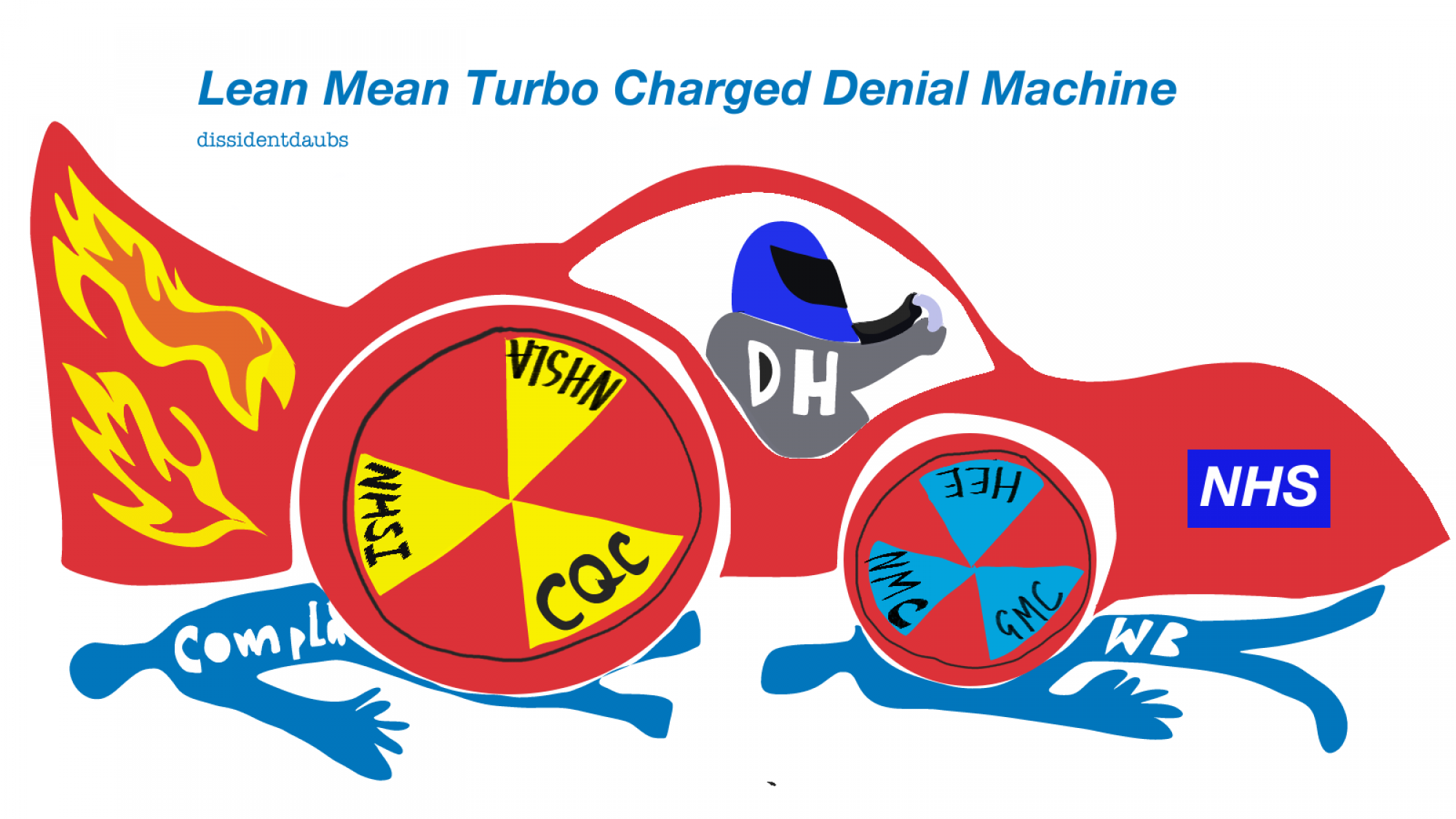

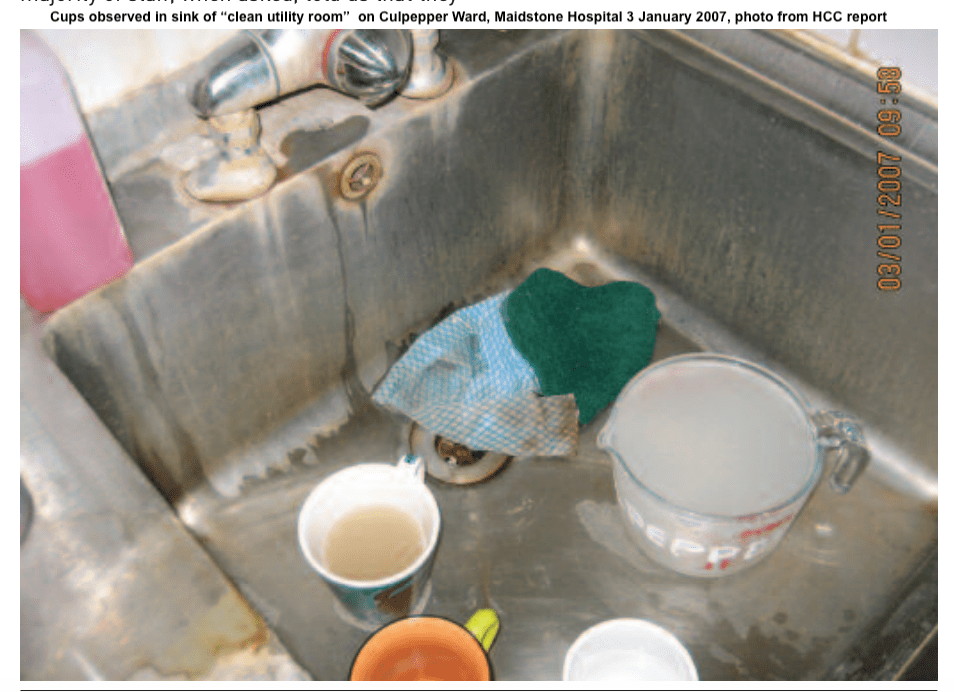

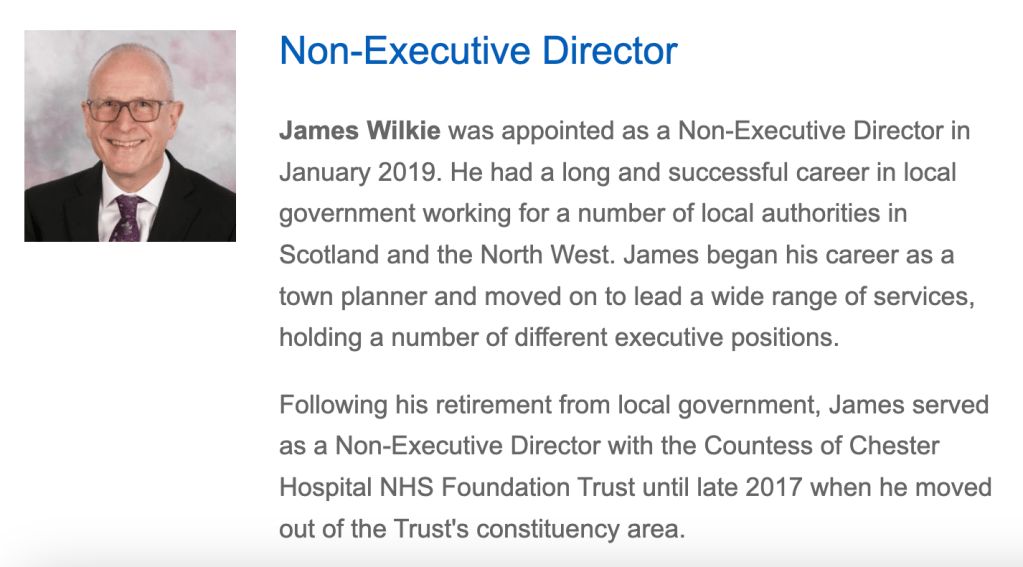

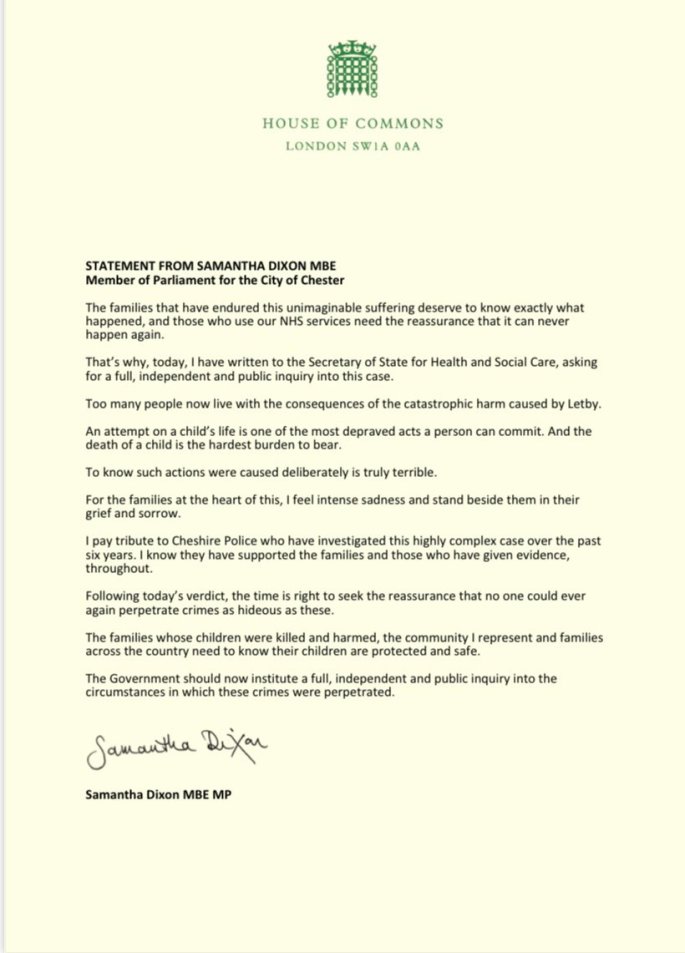
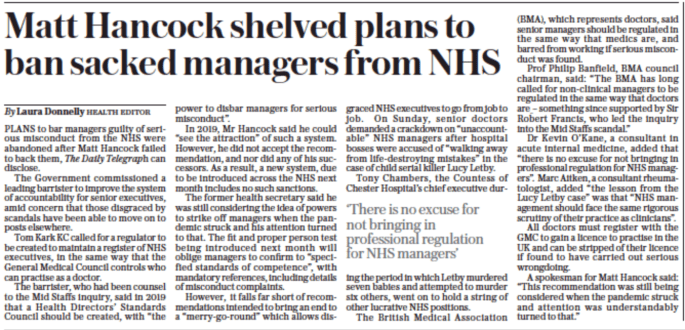
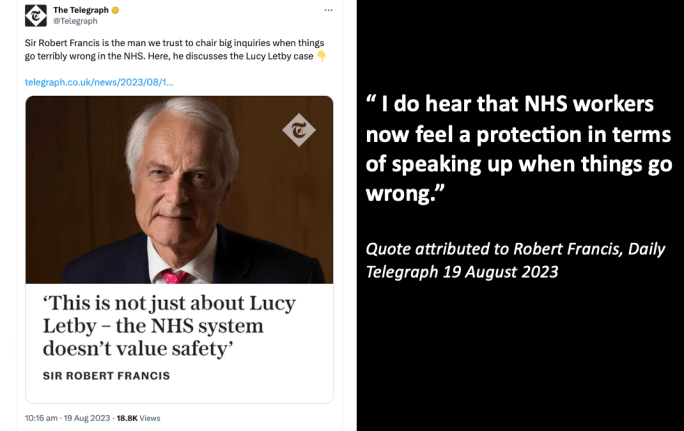
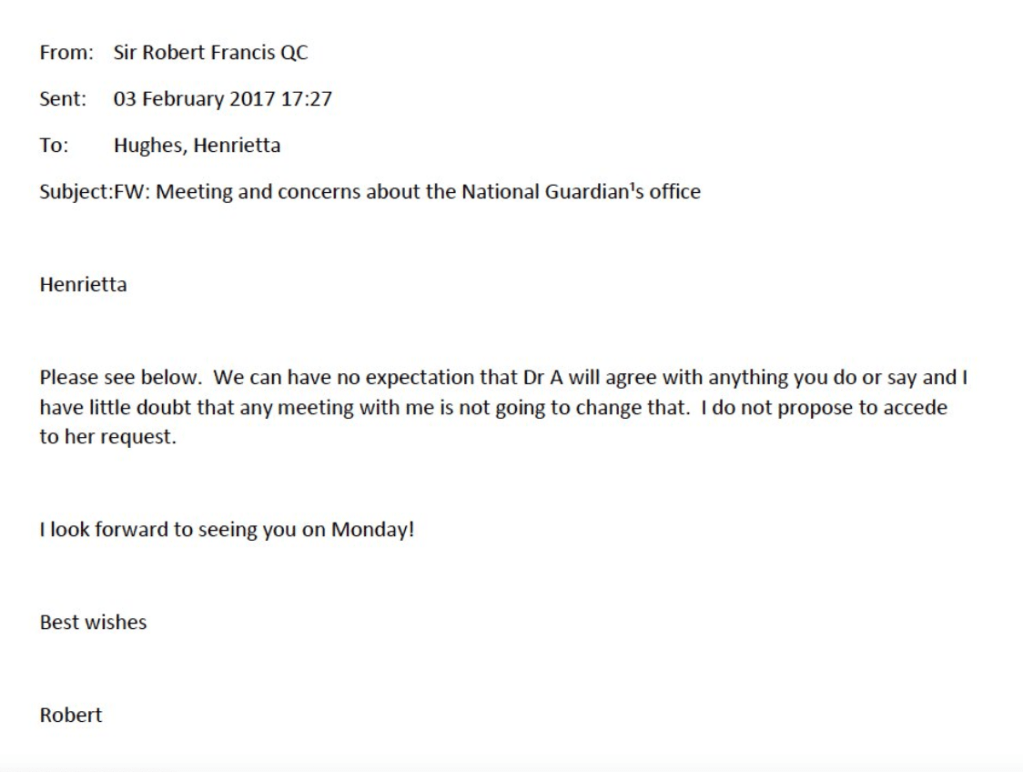
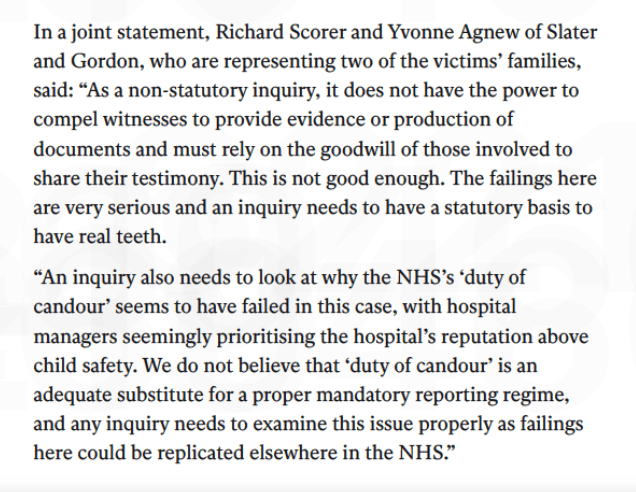
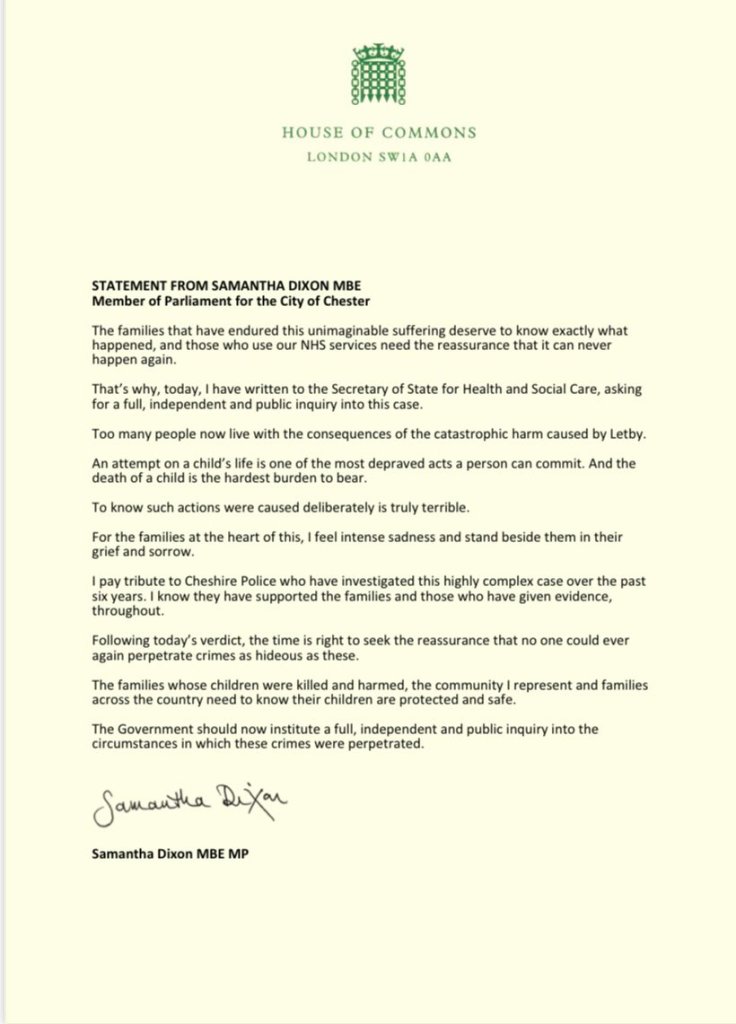
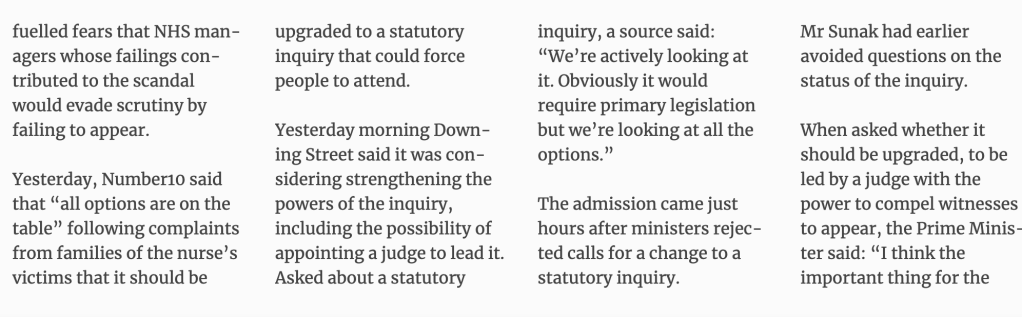






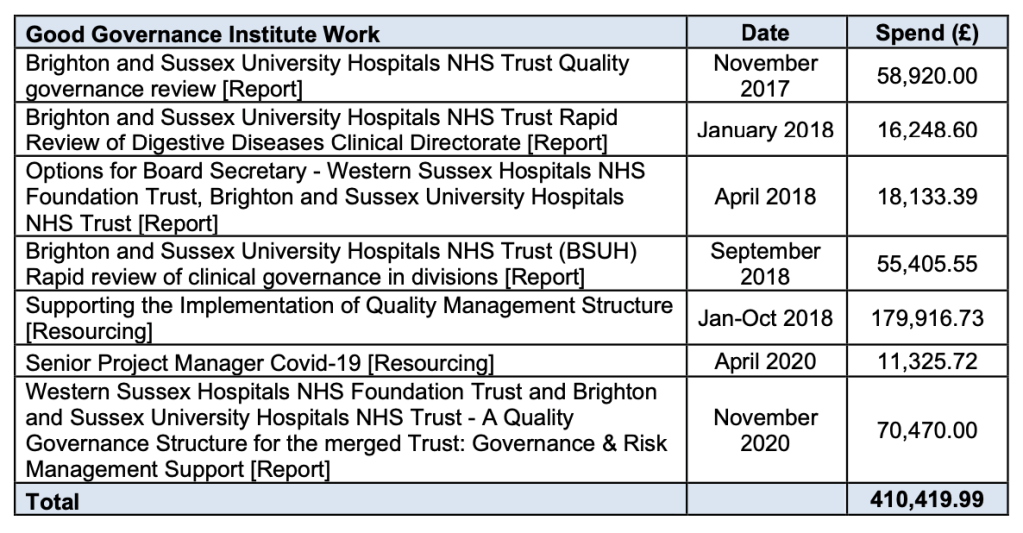
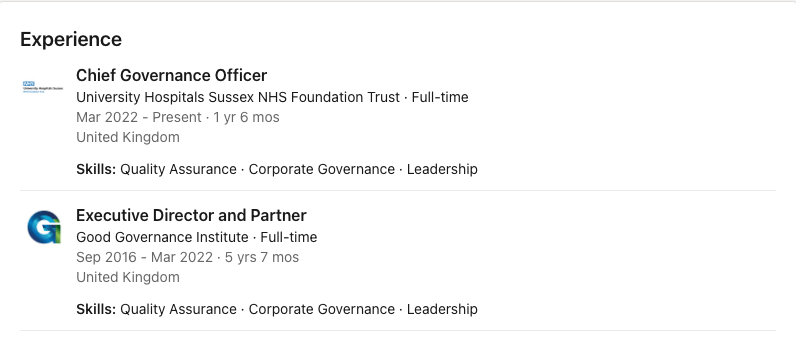
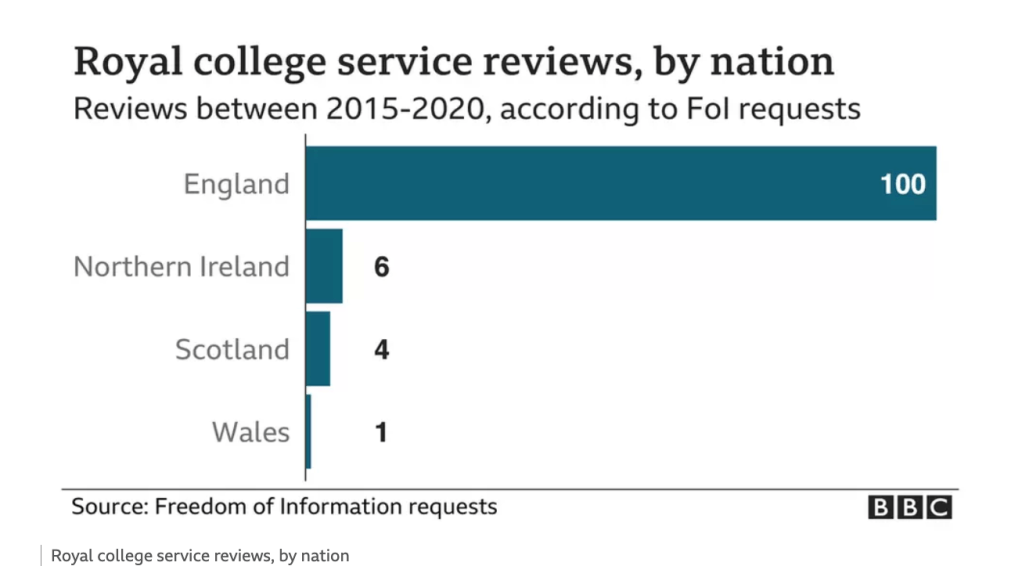

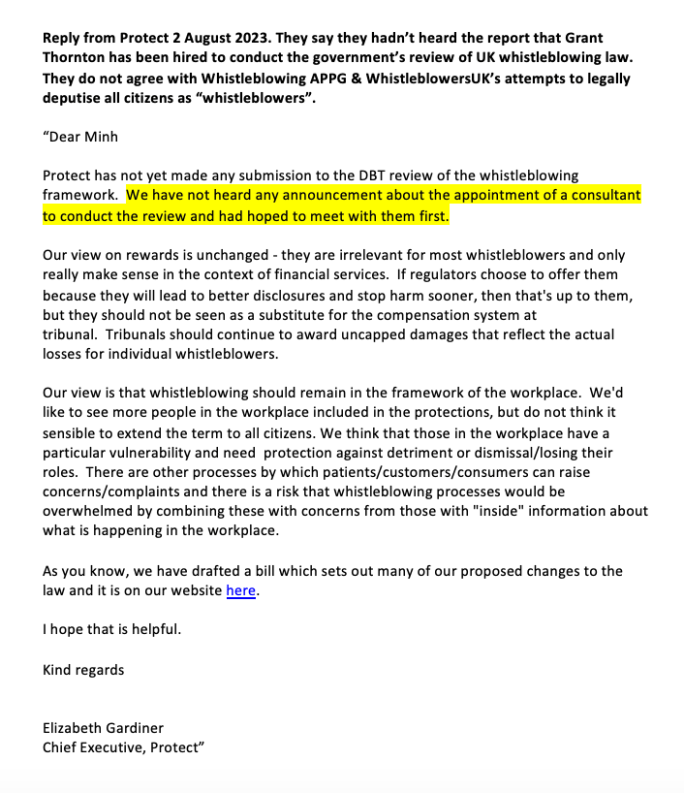




 Alexander's Excavations