By Dr Minh Alexander, retired consultant psychiatrist 14 November 2026
Summary:
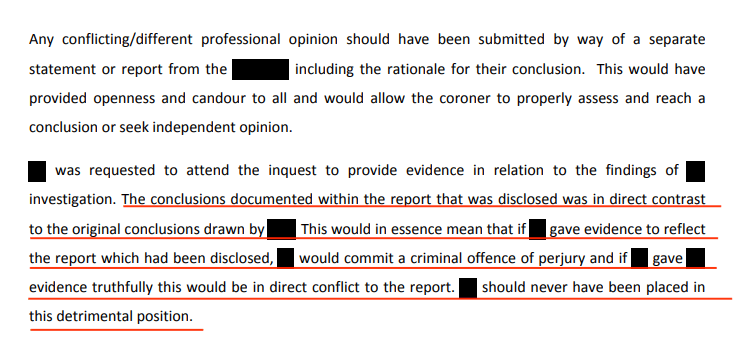
Four years ago, whistleblowers revealed extraordinary evidence that patient harm was covered up and that evidence of this harm was unlawfully held from coroners by North East Ambulance Service NHS Foundation Trust (NEAS). Marianne Griffiths’ subsequent review of this coronial ‘cover up’ scandal for NHS England was seen as a whitewash by harmed families and whistleblowers. Astonishingly, the review claimed it could not draw a conclusion of deliberate cover up because the investigators were “not there”. This was despite strong evidence of suppression and despite prior independent investigation findings that the trust had doctored documents. Evidence in support of cover up has continued to emerge since the publication of Griffiths’ review report in 2023. The latest is a bizarre HCPTS fitness to practice decision which concludes that a senior NEAS paramedic who altered an investigation report authored by someone else cannot be held as acting dishonestly, because the decision to alter was taken jointly by a group, including by a more senior manager. Specifically, the HCPTS concluded that it was the NEAS Medical Director who gave the “instructions” to amend the investigation report. Whilst the HCPTS decision is unsatisfactory in the individual fitness case, it also reflects badly on Griffiths’ claims that no conclusion of foul play was possible at NEAS. The HCPTS decision arguably implies there was dishonesty, albeit claiming it has difficulty with clear apportionment. Moreover, a letter from an HCPC executive last year indicates that the HCPC investigation concluded that senior managers had no right to act as they did to doctor an internal investigation report, and that this was not permitted by any trust policy. In my view, this further discredits the Griffiths review’s refusal to acknowledge that there was a deliberate cover up by the trust. Notably, the 2025 HCPC letter also suggests inconsistency by the HCPTS in currently exonerating the senior paramedic who doctored the investigation report, without explicitly showing that it had weighed his duty to demur and to refuse inappropriate instructions. It should also be noted that the HCPTS exonerated despite an issue of potential perjury at inquest being raised previously by independent investigators.
Background
The whistleblower disclosures of investigation documents to The Times revealed that North East Ambulance Service repeatedly doctored documents and unlawfully hid harm and evidence from coroners are reported here:
NHS ambulance service doctored documents to cover up truth about deaths
NHS England was put in charge of investigating this and did a poor job. It hired an arguably unsuitable investigator, Marianne Griffiths – a controversial former NHS trust CEO with multiple whistleblower scandals and serious unresolved patient safety matters behind her.
Griffiths and her team made came to a remarkable conclusion that it was not possible to tell if NEAS deliberately hid patient harm or misled coroners on the basis that they weren’t there:
This is a convenient but preposterous excuse for not coming to a conclusion. On that basis, there is no point in undertaking an investigation, which is by definition post hoc.
Nevertheless, Griffiths’ report allowed the waters to close over uncomfortable matters. The Department of Health concluded no public inquiry was necessary despite families and whistleblowers asking for one, and it leaned heavily on Griffiths’ report in doing so, as revealed by later FOI disclosures.
Despite Griffiths saving establishment blushes, embarrassing information has continued to trickle out after her investigation concluded in 2023. And this information relates to matters that were within the purview of her investigation.
A still ongoing NMC investigation into two senior nurses, who were formerly employed at NEAS and were referred for allegedly withholding information from the coroner and for bullying behaviour, produced a senior witness who testified that crucial evidence, including documents, were withheld from coroners by the trust. The witness also reported that senior nursing staff seemed to resent having to follow the current law on disclosure to coroners.
A widely reported inquest this year into the death of a NEAS patient, Andrew Watson, after ambulance delay revealed that paramedics considered that delay contributed to the death, but that NEAS managers sought to cover this up, with the effect of avoiding coronial scrutiny.
The coroner praised the paramedics, who refused to be browbeaten into colluding with a management narrative that harm to the patient was not serious.
Griffiths excluded Andrew Watson’s case from her review. Had she included the case, and interviewed the dissenting paramedics, it would surely have made her ridiculous ‘we don’t know if it was a deliberate cover up’ conclusion much more difficult to reach.
There is now a further awkward piece of evidence arising from a HCPC fitness to practice case, as follows.
Quinn Beadle’s death and cover up by NEAS
The HCPC case in question relates to the untimely and tragic death of Quinn Beadle, aged only 17. Quinn self-harmed by suspension from a tree.
The police found her still warm and provided initial, basic resuscitation.
A lone paramedic arrived and failed to clear her airway or provide advanced life support, despite evidence of electrical heart activity on an ECG. There was disquiet by other NEAS paramedics about how ‘ROLE’ (Recognition of Life Extinct) was declared, and they filed an incident report. The NEAS clinical audit team also raised concerns shortly after and filed an incident report. The police also expressed concerns.
The trust failed to make a timely Duty of Candour disclosure to the family despite these concerns and incident reports.
The trust also failed to inform the Coroner of the death despite the concerns raised about a possible untoward death. He later learned of the death by another route and queried the trust’s failure to disclose the death.
An internal NEAS investigation concluded that ROLE had not been enacted correctly.
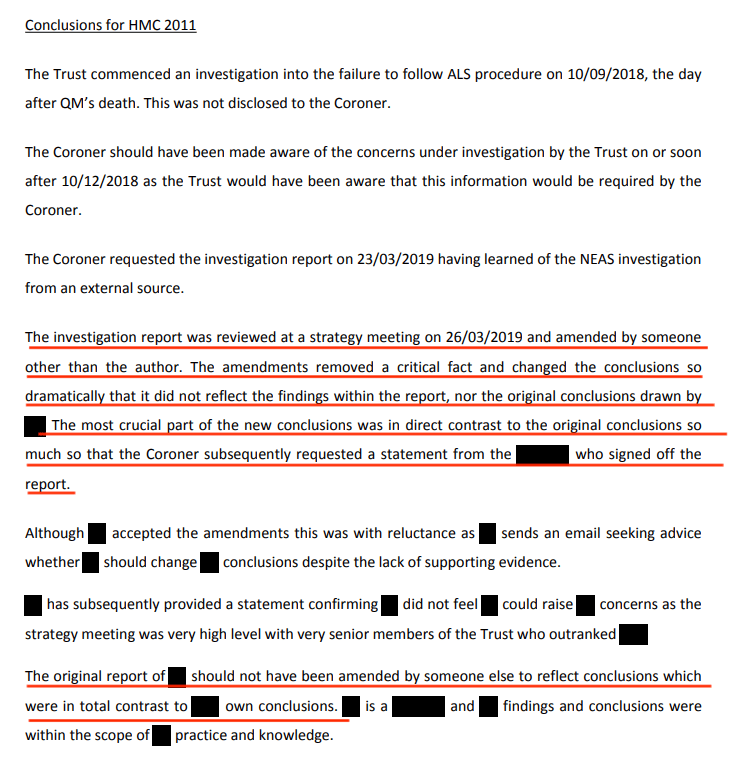
However, a trust management meeting (of the “strategy group”), attended by the NEAS medical director, instructed that the investigation report conclusion should be changed despite the report author’s protestations.
This alteration was acknowledged by the Griffiths review report, which also admitted that the alteration was wrong.
But Griffiths refused to consider the possible motives for this reprehensible action:
“1.78 We have spoken to members of the Strategy Group including the Lead Consultant Paramedic who drafted the amendments about this on behalf of the Strategy Group, but our concerns remain. As stated in 1.77 above, more details should have been sought, and further investigations carried out on the case before any addendum if required was agreed. The original document should never have been changed in any circumstances. Concerns about coronial processes had also been raised at this meeting by the Acting CSM and Head of Risk and Regulatory Services.
1.79 We cannot assign intent as to the reasons the Strategy Group made the decision to alter an independent investigation report other than they agreed with Paramedic 1’s actions. However, if the Group felt strongly about their reasoning for this then they should have provided an addendum to the report. The original report should have remained intact.
1.80 Whilst the Investigating Officer raised his concerns about the changes to his report, he was overruled and adhered to the decision made by his senior managers. He still felt very concerned about the changes and did communicate that to his colleagues. We also believe that the Trust should not have put him in a position to attend the inquest to defend a conclusion he had not reached.” [my emphasis]
Crucially, the strategy group meeting also decided that the vital ECG reading showing Quinn’s heart activity should be removed from the documents that were to be disclosed to the coroner.
The withholding of the ECG reading is documented by the Interim AuditOne report, which was an independent external investigation report that NEAS commissioned but suppressed from public view for long time:

The AuditOne interim report was disclosed to The Times in 2022 via a so-called wider whistleblowing disclosure and then published via FOIA in 2025 after a battle. I have extracted the sections relating to Quinn’s case from the AuditOne interim report and uploaded them here, for anyone who might find the information useful.
Importantly, the unlawful withholding of the ECG reading from the Coroner was NOT explicitly acknowledged by Griffiths’ review report. There is a single sentence only which refers to general withholding of appendices: “The report was sent but without the appendices that were critical to the report.”
The hiding of the ECG reading from the coroner is especially damning given that in parallel, the internal investigation report was also doctored to remove reference to heart activity, a fact that Griffiths acknowledged in her review report:
“1.47 References to the investigator’s findings relating to the ECG only being recorded for 16 seconds were removed from the narrative as were the sentences where concern was expressed about the fact that no efforts were made to clear the patient’s airways, and that Basic Life Support (BSL) was not continued, and ALS not given.” [my emphasis]
But perhaps Griffiths would have found it more difficult to claim that she was unable to make a finding of deliberate cover up by NEAS if she had explicitly acknowledged NEAS’ excision of the ECG reading from the Coroner’s evidence bundle.
Notwithstanding, Paul Calvert the NEAS whistleblower referred Paul Aitken-Fell Lead Paramedic to the HCPC for his part in the Quinn Beadle case, his alteration of the internal investigation on Quinn Beadle’s death and his removal of the ECG reading from the evidence bundle for the coroner.
Health and Care Professions Council (HCPC) decision 2026 on Paul Aitken-Fell Lead Consultant Paramedic NEAS
The HCPTS – the fitness to practice arm of the HCPC – has now decided that the facts are as presented and that Aitken-Fell altered the Quinn Beadle internal investigation report written by another trust employee. But it bizarrely asserts that he has no case to answer because the decision to alter evidence was made jointly by a senior management group and at the request of a more senior manager – the medical director:
HCPTS decision September 2026 Paul Aitken-Fell
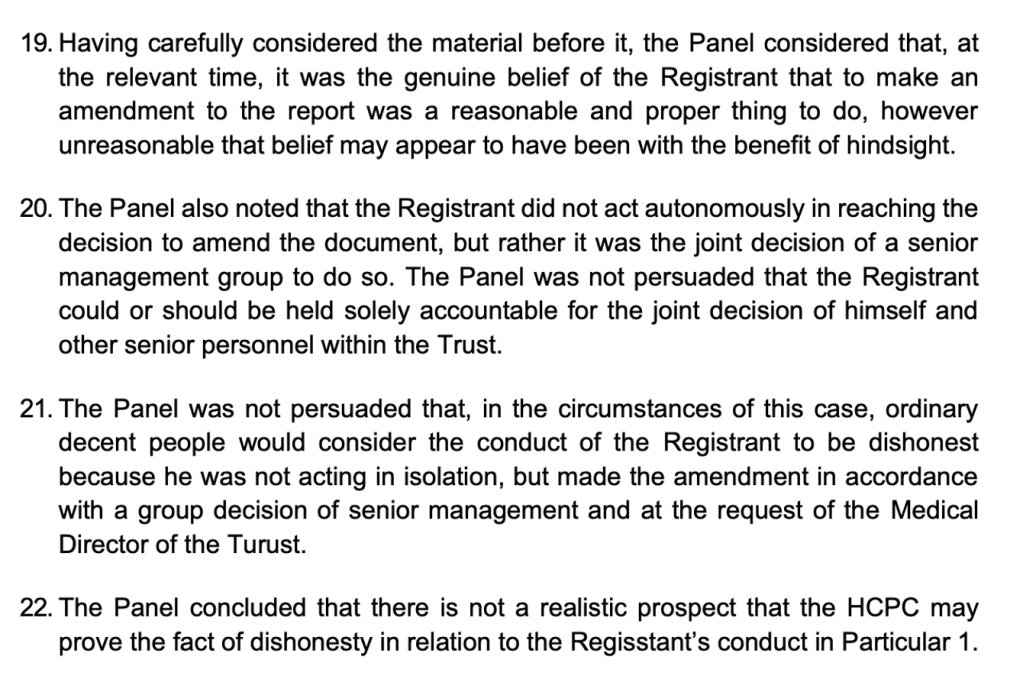
The finding that joint responsibility excludes any possibility of individual culpability seems very odd. Where would that leave matters such as the criminal concept of joint enterprise? And it was Paul Aitken after all who did the acts in question.
It also seems to me that the HCPTS implies that although a finding of “dishonesty” cannot purportedly be made against Aitken-Fell, controlling minds may be another matter.
If so, this strikes at Griffith’s weak claim that no conclusion could be reached about deliberate cover up by NEAS, and arguably emphasises the disingenuousness of the Griffiths report in refusing to make a finding of deliberate cover up.
But in my opinion the decision also represents a very weak position by the HCPC, especially in relation to a very senior paramedic and not say, an impressionable trainee who did not know any better.
“Following orders” is not a defence for unethical conduct, especially for the trust’s Lead Consultant Paramedic with substantial responsibilities.
The Lead Consultant Paramedic’s role at NEAS:
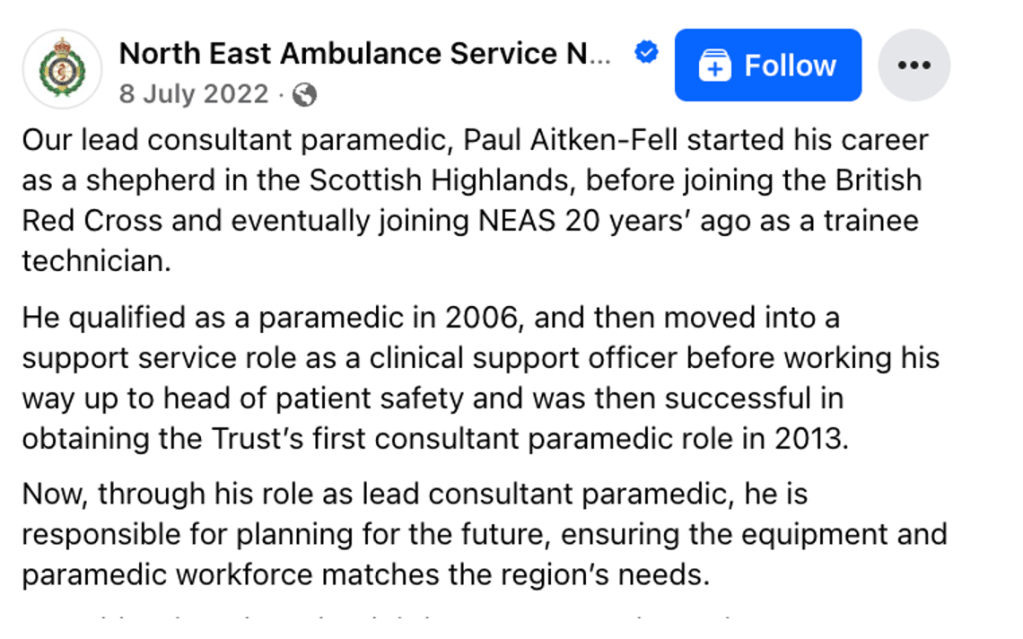
If “following orders” was a sufficient defence, why bother with the regulation of any line managed healthcare professional, who would only need to claim “Well, I was told to…”?
I find the HCPTS’ suggestion that Aitken-Fell believed at the material time that his actions were “reasonable” and “proper” astounding, especially when evidence of heart activity was excised from the report AND the ECG reading was withheld from the coroner. Also astounding is the HCPTS’ claim that “ordinary” and “decent” people would not consider Aitken-Fell’s actions dishonest, on the basis that he acted in concert with others. Surely on that tortured logic, conspiracy would excuse all offences?
It also seems inconsistent of the HCPTS to argue both that (a) Aitken-Fell was unaware of doing wrong, and that (b) dishonesty cannot be proven because culpability is diffused by the group.
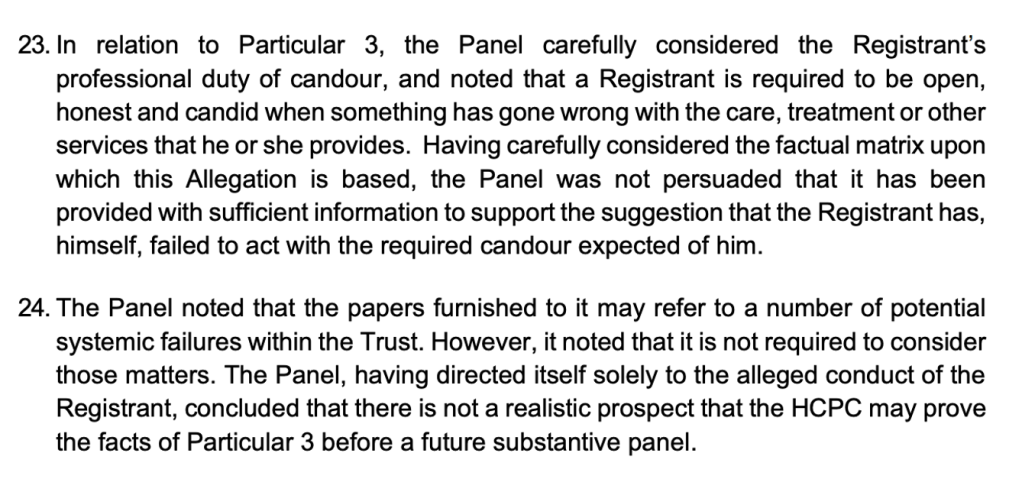
In similarly surreal vein, the HCPTS claimed that it could make no finding that Aitken-Fell had failed to discharge his professional duty of candour, despite having acknowledged that he had doctored Alan Pott’s investigation report, which had the effect of hiding harm and related service failure:
Moreover, the current HCPTS decision that Aitken-Fell cannot be held at all accountable is somewhat undermined by a letter from an executive director of the HCPC, Laura Coffey Executive Director of Fitness to Practise and Tribunal Services, of September 2025. This was sent to Quinn’s mum, Tracey.
Letter from Laura Coffey HCPC Executive Director of Fitness to Practice 22 September 2025
This letter had made it clear that a HCPC investigation concluded that Paul Aitken-Fell had not only made alterations to the internal investigation report and drastically downgraded the level of harm suffered by Quinn Beadle, but that he had a prominent role in that he had been scheduled to speak to the amended investigation report at inquest.
“Significant amendments were made to Mr Potts’ [the original author] report by the senior Lead Consultant Paramedic [Paul Aitken-Fell], including downgrading the seriousness of the incident from a rating of 5 (the most severe) to a rating of 2.”
“Mr Potts was not responsible for submitting the amended report to the coroner and he was advised that Mr Aitken-Fell would attend the inquest to speak to the amended report. Mr Aitken-Fell was subsequently unable to attend the inquest and Mr Potts was therefore asked to attend to speak to the report.”
The HCPC concluded from its original investigation that the Strategy Group meeting at which Aitken-Fell was a participant, was not authorised to alter Alan Pott’s report, and that its actions were not permitted by any trust policy. HCPC indicated that it accepted the following:
“The investigation by Ward Hadaway found that the conclusions reached by Mr Potts in his original report were thorough and accurate and that they were overruled without clear and documented justification by the Strategy Group. That Group did not have any such responsibility provided for in the Trust’s own internal policies.”
This rather dents the later HCPTS claim that Aitken-Fell believed he was acting properly.
In effect, Laura Coffey’s letter can be read as indicating that a group of rogue managers conferred at the Strategy Group meeting and took unjustified action.
It dulls the HCPC’s current argument that Aitken-Fell was just complying with legitimate authority and implicitly, is exonerated by the fact that he had no choice.
Also against such an argument, the 2025 Coffey letter, the HCPC made much of Alan Pott’s conscientious objection to management doctoring his report, and yet he was junior to Aitken-Fell.
The same course of professional action and ethical choice was arguably open to Aitken-Fell, even if it was not a comfortable one. Surely the HCPC should show that it has considered holding him accountable, as a very senior paramedic, for not taking such a path and not conscientiously objecting?
Indeed, the HCPC primly tells registrants they MUST raise concerns in the interests of patients and carers, and that they MUST “encourage and support” others to raise concerns, especially if they are in a leadership or management role.
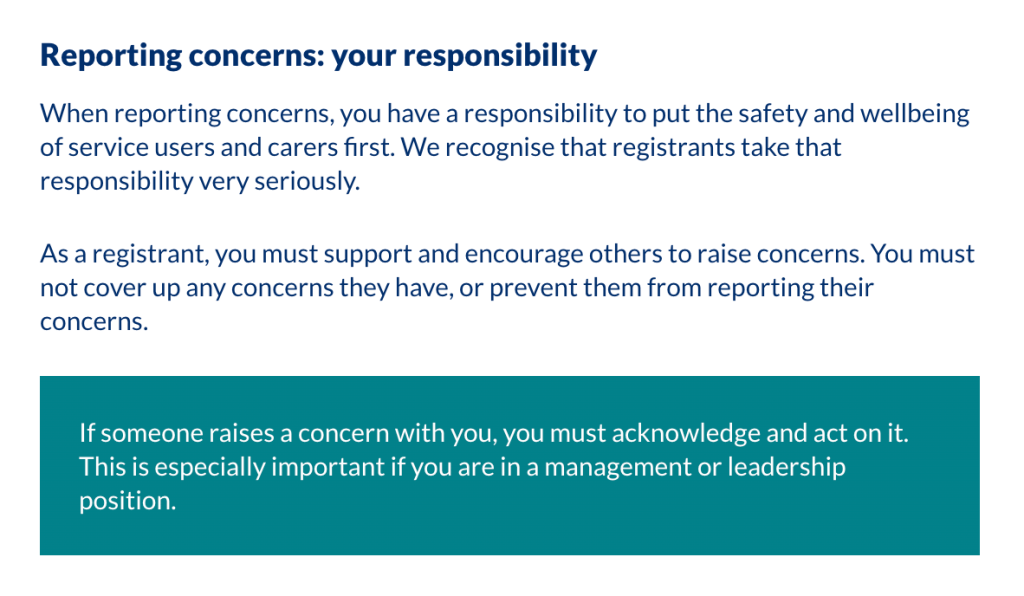
Should the regulator not apply these standards to Aitken-Fell, especially with respect to the concerns raised by Alan Potts about the trust tampering with his investigation report, and the proactive support and protection that Mr Potts should have received when he raised his concerns?
Furthermore, Alan Potts’ clear objections to the doctoring of his report, which the HCPTS has found as fact, surely weaken the HCPTS’ claim that Aitken-Fell thought he was acting reasonably and properly?
Potts had clearly questioned the legitimacy of what Aitken-Fell proposed to do, which should have served as a check. But Aitken-Fell carried out the acts despite being warned they were wrong.
It is perhaps useful at this point to compare the HPCTS’ finding exonerating Aitken-Fell with the biting conclusions of the 2020 interim AuditOne report which in fact raised a question of perjury. Importantly, AuditOne also noted that the Coroner was so concerned by the altered report that he required a statement from the person who signed off the report:
Lastly, it is important and only right to note that the HCPC concluded in 2025 that Alan Potts, the original author of the internal investigation into Quinn Beadle’s death had conducted a thorough and reasonable investigation, and that in addition to strenuously opposing trust management actions in doctoring his investigation report, there was no evidence that he lied to the Coroner when forced to attend the inquest as a result of Aitken-Fell defaulting.
I have written to the Professional Standards Authority to make them aware of this latest, serious HCPC irregularity.
I have also invited the Health Secretary to consider whether the Griffiths review was value for money. I gather the NHS is a bit short at present, including NEAS which is historically the most underfunded ambulance trust, and every little helps.
END


The bureau has become overburdened with crass incompetence. Summed by the word ‘Crassy”.
LikeLike
Thank you for your report, Dr. It’s so important to record these ‘anomalies’ – thank you.
Shameless incompetence, if not corruption, seems to have become normalised in, what is euphemistically referred to, as our society.
That’s the problem when a society regards, truth, integrity and morality as mere affectations that hinder our true mission – protecting and enhancing our self-image and filling our coffers.
I admire your patience and tenacity – I hope they achieve a successful outcome.
Wishing you a peaceful weekend.
LikeLike