Dr Minh Alexander retired consultant psychiatrist 8 July 2026
Summary: This is a very brief post to share an FOI response by the National Confidential Inquiry into Suicide and Homicide by People with Mental Illness
With the Nottingham public inquiry in progress, some media narratives have at times been sensationalised and stigmatising, and they have “othered” mental health patients, who have been portrayed as “them”.
To help illustrate that these are not simple, black and white issues, I post briefly here about mental health homicides against mental health patients.
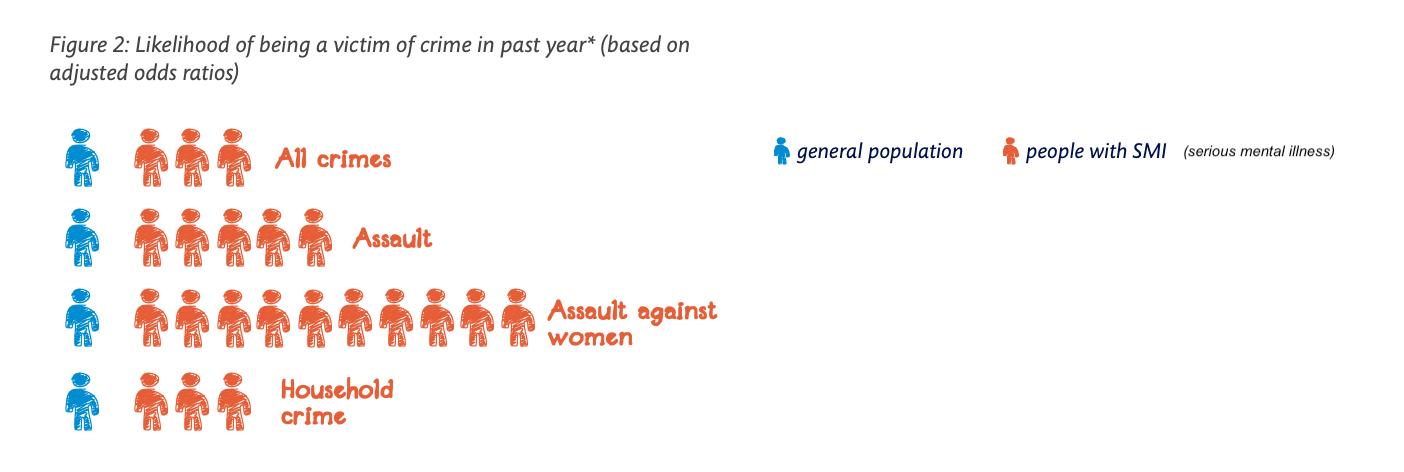
There is evidence from a 2013 study that mental health patients are more likely to be the victims of crimes, including crimes of violence. Moreover, the interview-based study noted that 9% of victims reported that the crimes took place in psychiatric inpatient settings.
There is a large literature on violence on mental health wards, with the victims often being patients. There are intermittent headlines about assaults on psychiatric units. But there is less specific data available on homicides in mental health settings.
I asked the National Confidential Inquiry into Suicide and Homicide by People with Mental Illness (NCISH)* if it had any data on mental health homicides committed against mental health patients.
*NCISH was renamed after NHS England pulled the funding for homicide research but this has been re-commissioned so I use the original name, to which the Inquiry will revert, for simplicity.
The Confidential Inquiry advised that it does not collect this data routinely, but it did examine this issue in a 2014 paper by Rodway et al. This found that 29 mental health patients over a three year period (1 January 2003-31 December 2005) had been killed by other mental health patients.
This is in the context that there are an average of 58 people a year who are the victims of mental health homicides, by NCISH’s methodology. (There is debate about this).
In total, the 2014 study found that 90 mental health patients were the victims of homicides in the three year period. The majority (86) of homicides occurred in the community and four occurred in hospital. Of the four homicides in hospital, three were committed by other patients.
This is the relevant part of the FOI response from NCISH:
“NCISH collect demographic characteristics and offence related information on victims of homicide but we do not routinely collect clinical data. We did undertake a more detailed analyses on patients as victims of homicide in our paper on ‘Patients with mental illness as victims of homicide: a national consecutive case series’ (Rodway et al., 2014). In this national consecutive case-series study, we obtained data for victims and perpetrators of all confirmed homicides between Jan 1, 2003, and Dec 31, 2005, in England and Wales. Patients were defined as people with contact with mental health services in the 12 months before death.
During this period 90 homicide victims (6% of all homicide victims) had contact with mental health services in the 12 months before their death. Of the 90 patient victims, 29 (32%) were killed by another patient with mental illness.
Overall most patient victims were community patients (n=86, 96%). Four (4%) were in-patients at the time of death. Three of these deaths were cases of homicide perpetrated by other inpatients at the same hospital. Information is not available on whether these patients were detained and whether the offence took place in a locked environment.”
This is the full FOI reply by NCISH which also gives helpful contextual information on other victim analyses:
FOI response by Manchester University 7 July 2026
Mental health homicides are horrific tragedies, overlying a complex lattice of many failures.
It is important that public protection is achieved with humanity, full understanding and the full range of evidenced-based and effective measures. I hope that the government will avoid the trap of simplistic, media-driven outcomes.
RELATED ITEMS
Examples follow of mental health patients who were victims of mental health homicides, both in hospital and in the community, in settings such as supported accommodation. The first four cases relate to East London NHS Foundation Trust.
Death of Adul Said (attempted murder charged, not yet tried)
2) The recently published public inquiry report on patient abuse at Muckamore Abbey Hospital in County Antrim by Tom Kark (previously Counsel to the Mid Staffs public inquiry) made significant findings and recommendations on the use of CCTV in the safeguarding of vulnerable populations.
It was recognised that but for CCTV, the serious abuse against patients at Muckamore would likely not have come to notice. However, there were also concerns about how some hospital managers handled CCTV evidence. Related to this, Kark made recommendations on ensuring the independent handling of CCTV evidence.
He also caveated the use of CCTV in non-public areas, which is of relevance to ongoing concerns about use by some NHS mental health trusts of camera surveillance in patient bedrooms. The Information Commissioner is reviewing complaints about privacy.
It is a matter that is also before the Lampard public inquiry at Essex Partnership University NHS Foundation Trust.


Great work. As always!
Yahoo Mail: Search, organise, conquer
LikeLike