By Dr Minh Alexander retired consultant psychiatrist 31 March 2026
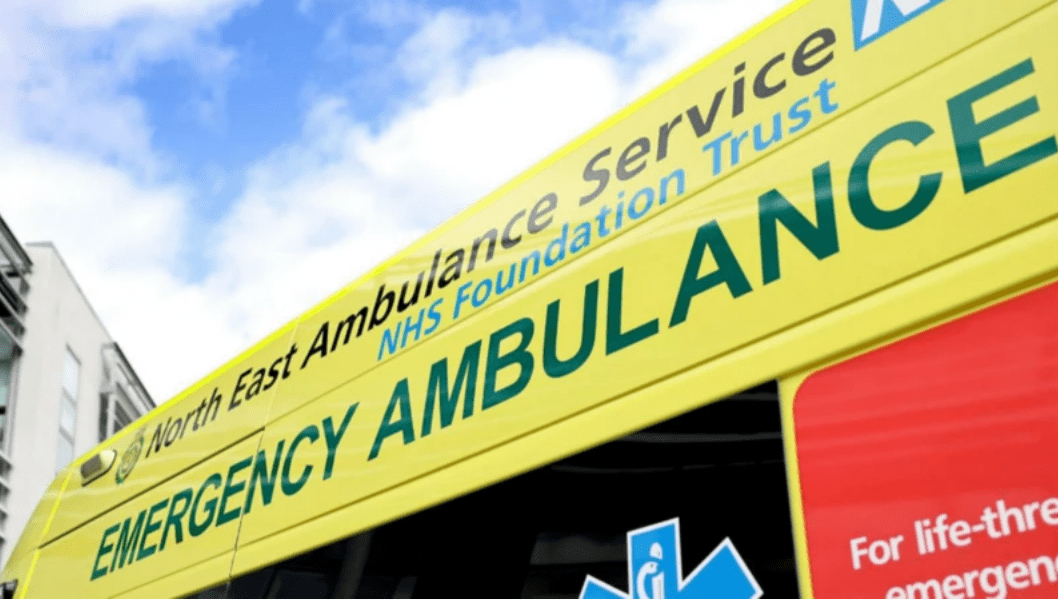
This post provides an update on the NEAS scandal via the long awaited NMC hearing on two senior nurses accused of facilitating NEAS’ cover up of deaths.
Background
In 2022 North East Ambulance Service NHS Foundation Trust was exposed by whistleblowers as having covered up care failures by not passing relevant information to coroners.
It is surmised that the trust began doing this in 2019 in response to a period of sustained criticism after high profile care failures.
Staff protested and an investigation in 2020 into a small number of cases had confirmed that information had been wrongly withheld from coroners, but the trust withheld this from families.
But the problems continued and more than 90 cases were thought to be affected.
These matters were reported by the Sunday Times:
NHS ambulance service doctored documents to cover up truth about deaths
Ambulance trust covered up paramedics’ fatal errors like a ‘criminal gang’
It is likely that the whole truth has not yet been revealed as arguably, a sufficiently independent and robust inquiry has not taken place.
Reviews were commissioned by the trust in 2020. An investigation was then commissioned by NHS England in 2022. The latter was led in 2023 by NHS insider Marianne Griffiths, former NHS trust CEO, whose own trust in Sussex has been mired in successive cover up scandals of whistleblower suppression and victimisation, unsafe surgical care with an ongoing police investigation and most recently a maternity care scandal.
NHS England’s terms of reference for the external investigation into NEAS severely limited the scope to only a small number of cases highlighted by the whistleblowers, instead of systematic investigation to fully identify all relevant breaches. It was felt to be a damage limitation exercise. Because of this Paul Calvert, the whistleblower who went public, declined to take part on principle.
Griffiths’ investigation spoke to only four affected families. The investigation refused to conclude that there was deliberate suppression by NEAS: “In some cases, the families believe that changes to reports and not sending original documentation to the Coroner was a deliberate act to avoid negative attention and accountability. We cannot say what the intent was of those individuals who authorised those changes or did not share information as we were not there”. [my emphasis]. This is an astonishing line of reasoning for investigators, who by that logic would never find any one culpable unless they had a signed confession.
The affected families have understandably had limited confidence in these investigations. But calls for a statutory, public inquiry were not heeded:
Inquiry into ambulance service failings ruled out
NEAS also persecuted the whistleblowers who raised the alarm, gagged one of them and also tried to gag the other but failed, and unlawfully required the whistleblowers not to pursue their public interest disclosures. Both were driven out of the organisation.
The trust also persisted in refusing to release some of the relevant documents into the public domain:
NHS trust accused of cover-up is refusing to release report into deaths
The matter is thus very much unresolved.
The NMC hearing
Two key trust managers involved in the trust’s process for managing information sent to coroners were senior nurses, Joanne Baxter and Shelley Dyson.
Joanne Baxter was NEAS’ then Chief Nurse and the Executive Director with primary responsibility for Quality and Safety, including the flow of information to coroners and trust whistleblowing governance. Shelley Dyson was NEAS’ Head of Quality and Patient Safety.
Both later moved on to other NHS trusts. Baxter became Chief Operating Officer at Gateshead Health NHS Foundation Trust and then retired. It is believed that Dyson remains employed by the NHS at Gateshead Health NHS Foundation Trust. According to various correspondence exchanged during several FOI requests on the What Do They Know website, her last known position at Gateshead was as Head of Risk and Patient Safety.
Baxter and Dyson were referred to the Nursing and Midwifery Council in May 2020 for alleged misconduct on grounds of bullying and improperly withholding information from the coroner.
There has been much delay in the NMC’s process and it has taken until this month for a hearing to be convened:

Two North East nurses facing tribunal over ambulance service ‘cover-ups’
Shocking evidence was heard at the Fitness to Practice Tribunal about how evidence was reportedly withheld from coroners. Local media reported thus on the NMC hearing:
Tribunal hears ambulance evidence ‘not disclosed’ to coroner
“A senior North East Ambulance Service (NEAS) boss has said that crucial information relating to patient deaths was “not disclosed” to coroners, as key legislation was challenged. Alan Gallagher, head of regulatory services at NEAS, spoke of “full evidence” including call logs and dispatch reports previously being withheld after deaths… The panel heard evidence from Mr Gallagher regarding a Rapid Process Improvement Workshop (RPIW) held in 2019, which centred around the coronial process.
According to a witness statement by Mr Gallagher, the meeting “quickly turned sour” as Ms Dyson began to question experts and suggested that legislation on what information is shared to coroners, including dispatch reports and call logs, be changed.
He said: “The experts were saying that we had a legal requirement to share relevant information with coroners that included information of staff involvement, and not to redact this was one of the points.
“At one stage, Ms Dyson stated that the legislation needed to change and stated that we should request changes to the law. Ms Dyson wasn’t happy with information being shared to the coroner.
“I had to explain that this was what was required by law.”
Mr Gallagher went on to discuss patient safety incidents, which he said were “not managed well” by the service and impacted what information was given to coroners.
He added that Ms Baxter had “very different views on NEAS processes”, and wanted to write a simpler, summary report to coroners instead of providing all details, saying NEAS had “changed processes” when it came to disclosure.
However, according to Mr Gallagher, this meant that full evidence on cases was not being given to coroners, and despite raising concerns, the ‘summaries’ were still sent.
He said: “We were not sharing full, relevant information with senior coroners.
“We were not disclosing full evidence to the coroner, which would result in the coroner not having full access to all relevant documentation and evidence to consider the case.”
This is a much more direct, alarming account of what happened than the guarded, hedged version given by NHSE’s Griffiths report. Baxter is not even named in Griffiths’ report. Upon searching, the phrase “Chief Nurse” appears only once.
The NMC Tribunal also heard evidence on alleged bullying at the trust:
Tribunal hears of ‘toxic’ environment at ambulance service
Incredibly, the NMC hearing this month did not conclude with a finding but will instead reportedly resume next year.
Paul Calvert NEAS whistleblower withdrew from the NMC process in January in protest at its flaws and delays. This is his public letter of withdrawal:
Paul Calvert open letter to NMC 22 January 2026
As an additional caveat to NMC proceedings, Paul Calvert raises reservations about how Alan Gallagher reportedly responded to staff concerns about the problems at NEAS and the trust’s alteration of a report.
Moreover, he is concerned that Baxter and Dyson are convenient lightning rods to distract from what was a more widespread organisational failure, involving other senior NEAS staff who have escaped any consequences, some of whom remain in NHS posts.
Extraordinarily, NEAS set up a committee structure in 2019 with the alleged purpose of misleading coroners (which the trust denied). It was known as SEACARE, and it operated with trust board knowledge. NEAS’ then chief executive signed off board papers which acknowledged this committee’s existence. So many besides Baxter and Dyson were aware of what happened.
The family of one of NEAS’ victims, 17 year old Quinn Beadle, were recognised participants in NMC’s process.
Quinn Beadle’s mother was devastated not only by the further delay in NMC’s proceedings, but by her general experience of the NMC process. She has posted publicly as follows:
“Tracey Beadle [27 March 2026]
Seven years.
Seven years of waiting.
Seven years of fighting to be heard.
Seven years of searching for answers about what happened to Quinn.
And now we’re being told there may still be no conclusion. The tribunal will pause and resume again in January 2027… more than eight years after Quinn’s death.
How is this justice?
Many of you will have seen the reporting in The Northern Echo and the Newcastle Chronicle about the toxic culture within the ambulance service. A culture where serious concerns have been raised again and again.
I was supposed to stand in London and give evidence in person at the @nursing and Midwifery Council hearing for 2 senior nurses.
I was ready to speak – not just for Quinn, but to give evidence against Baxter and Dyson, and to stand up for Andrew and Mr Coates too.
Two weeks before, it was moved online.
Then days before it began, I was told my evidence would only be read out.
My voice was taken away.
I was the only family member giving evidence. The only one.
And I wasn’t allowed to speak.
For 21 days, I have sat and listened, trying to follow complex evidence without even being given access to the documents being discussed. Listening to systems defend themselves while families are left on the outside.
This is not just about Quinn anymore.
This is about accountability.
This is about truth.
This is about Andrew, Mr Coates and all the families that don’t even know that their loved one died at the hands of @the north east ambulance service (They have blocked me from their page! How is that accountability)
How can there be accountability if key voices are silenced?
How can there be justice if families are pushed aside?
Seven years on, and we are still here. Still fighting. Still being denied answers.
I will not accept this.
I will keep speaking Quinn’s name.
I will keep fighting for the truth.
And I will not stay silent.


Please share this.
Because this cannot keep happening.
It is completely unacceptable for the families’ suffering to be prolonged and exacerbated. In the context of all that has happened, the NMC should have ensured that there was no further postponement.
Does NMC’s postponement signify that the authorities realise that the cover up can no longer be denied?
What can we expect to happen during the postponement?
RELATED ITEMS
1) Death of Mr Peter Coates – an example of manipulation of evidence by NEAS
On 23 March 2026 Paul Appleton the coroner for Teesside and Hartlepool issued a Prevention of Future Deaths report on the death of one of the victims of the NEAS scandal, Peter Coates.
Prevention of Future Deaths report Peter Coates 2026-0154
Mr Coates died of asphyxiation due to a combination of severe respiratory disease and a power cut at his home which meant that he was unable to access his usual oxygen treatment. He called 999 but there was a delay in an ambulance reaching Mr Coates because a nearby vehicle could not get through electrically controlled gates because of the power outage (and because the crew did not know of a manual override), and because another vehicle stopped to refuel despite having sufficient fuel in the tank.
Paul Calvert questions whether the crew in fact stopped for other reasons.
The coroner concluded that the ambulance delay may have been a contributory factor in Mr Coates’ death:
“Peter’s death was possibly contributed to by delays in the arrival of the ambulance crew to him.”
Originally, when the coroner first opened an investigation into Mr Coates’ death, NEAS did not fully disclose the circumstances of the death and excised facts from evidential documents, as reported by the Sunday Times:
“Although an investigation began the same day, the coroner was not made aware of this at the time, or of the fact that there had been any delay in getting help. Despite the mistakes and delays, a decision was made by bosses to downgrade the incident to “low harm”, on the basis that the primary reason for Coates’s death had been the oxygen equipment malfunction. The coroner, in fact, “should have been notified” straight away about the death and about the delays, the AuditOne investigation found. The NEAS internal investigation soon found that the second ambulance had in fact had sufficient fuel to complete the journey. This raised questions as to why the stop occurred. A statement made by one of the paramedics involved, explaining the decision to refuel, was never disclosed to the coroner. Instead, the paramedic was asked by bosses to produce a new statement, which made no reference to the decision to refuel. The coroner was “only supplied with the [later] statement, which does not include any reference to the refuelling”, AuditOne found.”
Unless a statutory public inquiry is held, we will never know how many other cases were subject to such manipulation of evidence and self-interested under-estimation of harm.
(2) Gateshead Health NHS Foundation Trust
According to trust FOI responses, Shelley Dyson informed Gateshead in 2022 that she was under NMC investigation and after risk assessment, coronial work was reportedly reassigned to other trust staff.
In 2023 the trust gave her a star of the month award:
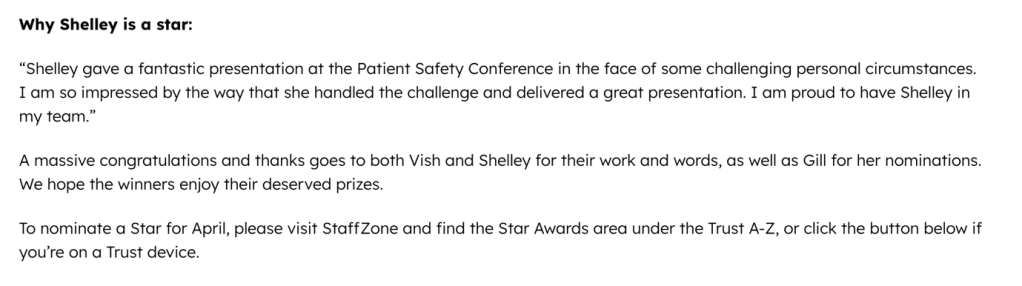
As far as is known, the NMC itself did not impose any practice restrictions.

 Alexander's Excavations