
Dr Minh Alexander retired consultant psychiatrist 3 November 2023
There are no credible controls on NHS managers.
Umpteen senior abusers who have harmed whistleblowers have escaped, assisted by very weak systems and collusive regulators.
The government made a token concession after the Lucy Letby murders, by saying that it had changed its mind and would back disbarment of erring NHS managers having previously rejected this.
In reality, a simple disbarring mechanism is very far from full, robust managerial regulation which proactively addresses quality in training and ongoing professional development.
The disbarring mechanism as proposed by the Kark review is purely reactive, and a very high bar of proof is needed for disbarment. Only a few unfit individuals would be removed, if at all. Simple disbarment will not address the whole picture. It will not provide consequences for misconduct short of the threshold for disbarment, whereas full professional regulation would offer a range of sanctions and control mechanisms, such as undertakings and restrictions of practice.
I report below more evidence of dysfunction, seen in the case of NHS whistleblower Dr Jasna Macanovic at Portsmouth Hospitals University NHS Trust.
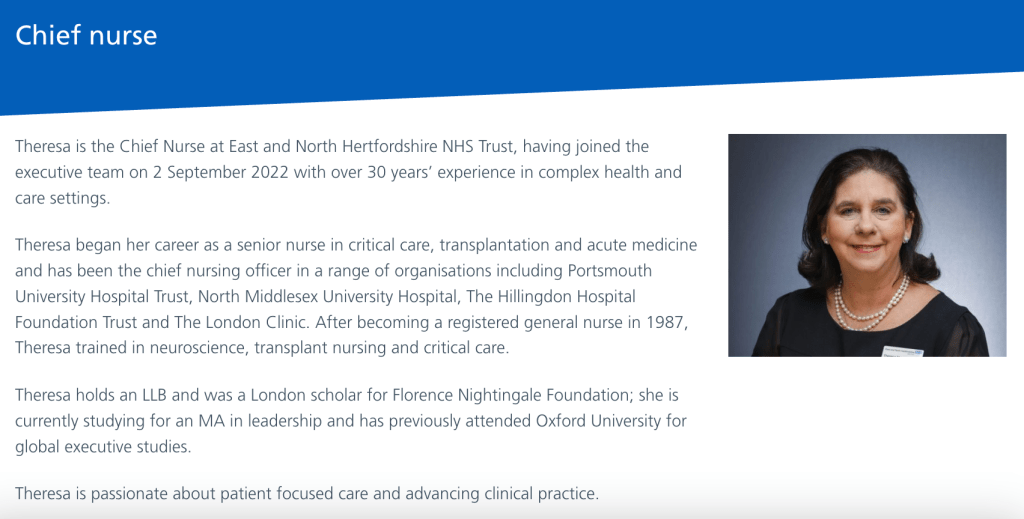
Theresa Murphy former director of nursing Portsmouth Hospitals University NHS Trust, currently Chief Nurse East and North Hertfordshire NHS Trust
Murphy was appointed director of nursing at Portsmouth in 2017. She left after two years according to her LinkedIn entry.
According to information by the trust, Murphy previously styled herself as a “professor” merely on the basis of an honorary professorial title from City of London University.
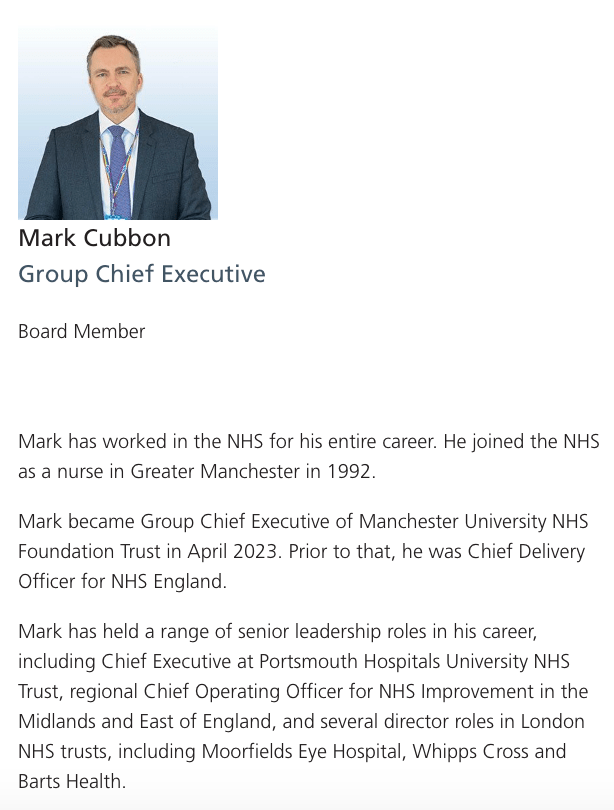
Murphy chaired the retaliatory disciplinary process by Portsmouth against Dr Macanovic (or “counter-offensive” as the Employment Tribunal described it), reporting everything back to Mark Cubbon trust CEO, as noted by the Tribunal:
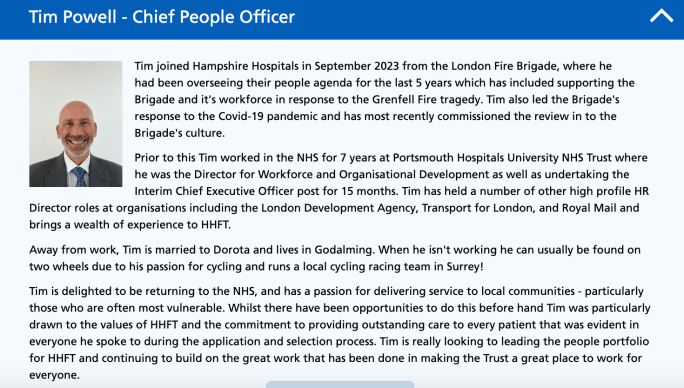
106. Professor Theresa Murphy was appointed to hold the disciplinary hearing. She was the Trust’s Chief Nurse and had recently joined the Trust at the invitation of the Chief Executive, Mr Cubbon. She was also part of the cabinet group who reported to directly to him, as did Dr Knighton and Mr Powell, and like them had offices on the same corridor, attending morning planning meetings together.”
The Tribunal noted that after Dr Macanovic whistleblew, the trust “assembled” complaints against her and it mounted a “campaign of harassment” against Dr Macanovic.
The Tribunal concluded that Murphy, in concert with the medical director John Knighton made a “foregone conclusion” to dismiss Dr Macanovic and that the dismissal was unfair and was explicitly motivated Dr Macanovic’s whistleblowing. It was in other words, whistleblower reprisal.
Theresa Murphy had left the trust by the time the ET judgment in favour of Dr Macanovic was published in March 2022 and she was not subject to CQC Regulation 5 Fit and Proper Persons at that point.
But Murphy has since been recycled, being appointed as Chief Nurse to East and North Hertfordshire NHS Trust in September 2022. This brings Murphy back into the scope of FPPR and accordingly, I have made an FPPR referral to the Care Quality Commission.
East and North Hertfordshire NHS Trust claimed that Murphy had been appointed after a “robust recruitment process”.
East and North Hertfordshire NHS Trust has just been re-rated by CQC as “Requires Improvement” overall and on the Well Led domain.
Welyn Hatfield Times 3 November 2023: CQC finds improvements still needed at Herts NHS Trust
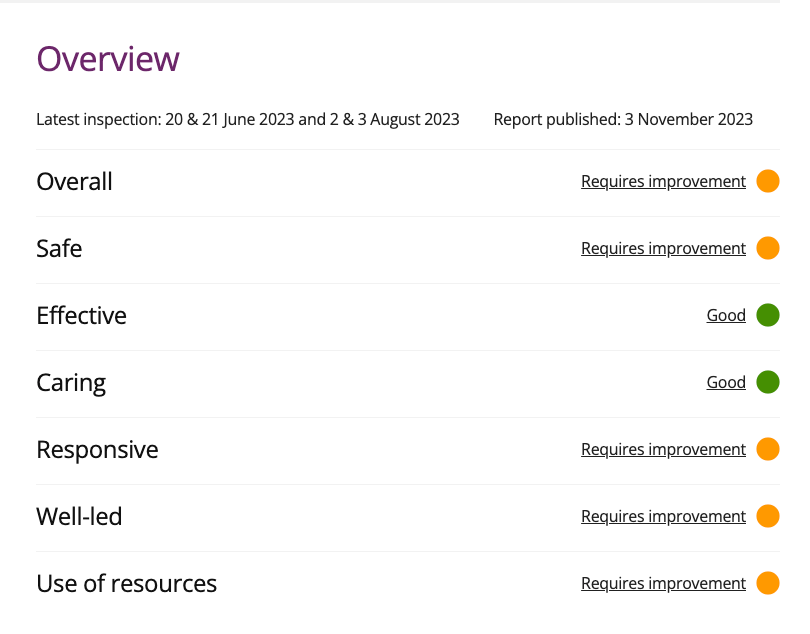
CQC noted “Staff we spoke with told us that there was not a strong enough emphasis on the safety and well-being of staff” but CQC nevertheless claimed that whistleblowing governance at the trust was good.
Based on its meaningless tick box methods, CQC also concluded that East and North Hertfordshire NHS Trust’s Fit and Proper Person (FPPR) processes for trust directors were sound:
“Leaders generally had the skills, knowledge and experience they needed to deliver quality sustainable care. This was confirmed through our interviews with senior leaders and review of documents and personnel files. The trust had a process in place to ensure that senior leaders were appointed in line with Regulation 5 of the Health and Social Care Act 2014 (Fit and Proper Persons required) and that there was on-going review. There was also clear support for leaders to develop through mentorship and access to training.”
So either CQC failed to note Murphy’s history of serious whistleblower reprisal, or CQC was unconcerned by it.
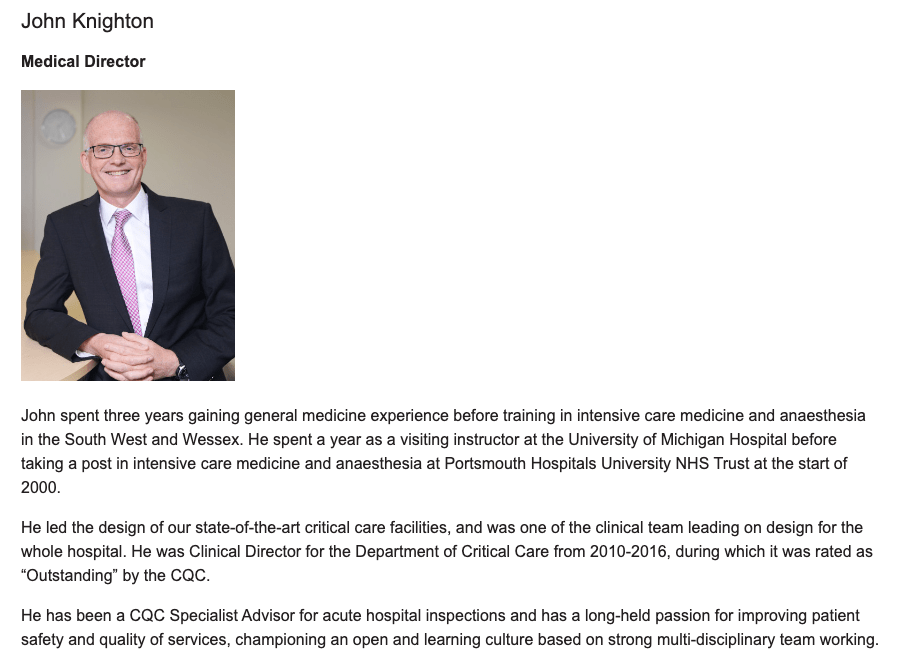
John Knighton medical director Portsmouth Hospitals University NHS Trust
Knighton was centrally involved in Dr Macanovic’s unfair dismissal, which the Employment Tribunal determined was expressly due to her whistleblowing about serious patient safety issues.
The Tribunal concluded that he conferred with Murphy director of nursing in advance of a disciplinary hearing against Dr Macanovic, and that together, the pair came to a “foregone conclusion” that she would be dismissed.
Astonishingly, during the disciplinary hearing both Knighton and Murphy repeatedly offered to allow Dr Macanovic to leave with a “good reference”.
“The questions were led by Dr Knighton, who then summarised things as follows: JK – So in summary I think Dr Lewis has described some of the atmosphere that has been pervasive over the course of the last year. I think that in conjunction with some of the witness statements and testimony investigation does describe a pervading culture of fear and intimidation resulting in a reluctance to speak up and defensive changes in clinical practice resulted from that because people are fearful of the way that practice may be changed, an inability to discuss serious and important clinical as well as non-clinical issues relating to the service and its development. I think sadly there is significant evidence Jasna that you have not worked actively with your colleagues, that you haven’t respected their skills or treated them fairly or with respect and also that you have shown a lack of insight and indeed reflection on how your behaviour may have affected others and the working of the team. Potentially at least given the appearance that you don’t care about those things as well. I think I am afraid therefore that in summary I have to say that I believe your behaviour has caused irreparable damage to the function of the renal service and to the Trust within the consultant body and therefore the management case is that unless you wish to reconsider your position and resign to pursue a career elsewhere the management case would be that the Trust must seek your dismissal, with great regret.]”
“Professor Murphy told us that she knew that this offer would be made by Dr Knighton, so clearly they had discussed things in advance.”
“Having heard this evidence, and towards the end of the hearing, Dr Knighton referred again to his suggestion of resigning with a good reference.”
“The hearing resumed on 5 March 2018 when Professor Murphy gave her decision. At the outset, she also reminded Dr Macanovic that she could instead choose to resign with a good reference.”
Clearly, the trust should not have made this offer of a “good reference” if had a real case against Dr Macanovic. Equally the trust should not have proceeded with its disciplinary process if its disciplinary charges were unfounded.
It was very serious that the two board members with prime responsibility for clinical governance and patient safety behaved in this manner to a trust whistleblower. Especially in the context that Dr Macanovic was a senior experienced, consultant of excellent standing, who did not raise concerns lightly.
I referred John Knighton to the CQC under CQC Regulation 5 Fit and Proper Persons in May 2022.
As usual, the CQC closed it all down, giving minimal justification for its actions.
This was CQC’s FPPR closure letter of 5 October 2022:
FPPR closure letter from Sean O’Kelly CQC Chief Inspector of Hospitals
The key content from CQC was as follows:
“We shared the information that you supplied to CQC with the registered provider. We asked them to consider this information and tell us about their processes for providing assurance that their directors are fit and proper.
The information that we subsequently received from the CEO satisfied CQC that the information of concern has been looked into and that the registered provider has provided evidence in respect of the individual to demonstrate their compliance with Regulation 5.
This concluded our review of Portsmouth Hospitals University NHS Trust processes, which we feel currently meet the standards required under Regulation 5. We have informed the registered provider of this, but also that we reserve the right to review the case if further information is presented to CQC.”
CQC previously misled me about the soundness of an FPPR process in the whistleblowing case of Mr Tristan Reuser, falsely informing me that an independent investigation had been arranged by University Hospitals Birmingham NHS Foundation Trust, when it had not.
I therefore asked for more information from Portsmouth Hospitals University NHS Trust about its FPPR process.
Over the course of two FOI responses, the trust disclosed the following:
- The trust spent £18,000 for an external review by a barrister.
- The trust did NOT publish a summary of the FPPR review.
- (This is despite such transparency being recommended by NHS Providers, especially in contentious cases or where public interest is heightened by whistleblowing issues).
- No remediation was required of Knighton. (The trust’s exact words were “No, remediation was not applicable.”
- “The view that remediation was not needed was the trust’s view informed by the findings of the barrister’s report.”
- In reponse to my request for the barrister’s terms of reference for the FPPR review, the trust merely replied: “The review was requested in an email and the barrister was briefed verbally during conference with counsel.”
- The trust refused to disclose the conclusions and recommendations of the barrister’s review report.
- The trust refused to disclose if it had taken any action against Knighton for his actions and omissions in Dr Macanovic’s case.
- The trust maintained that the withheld data was all Dr Knighton’s personal data.
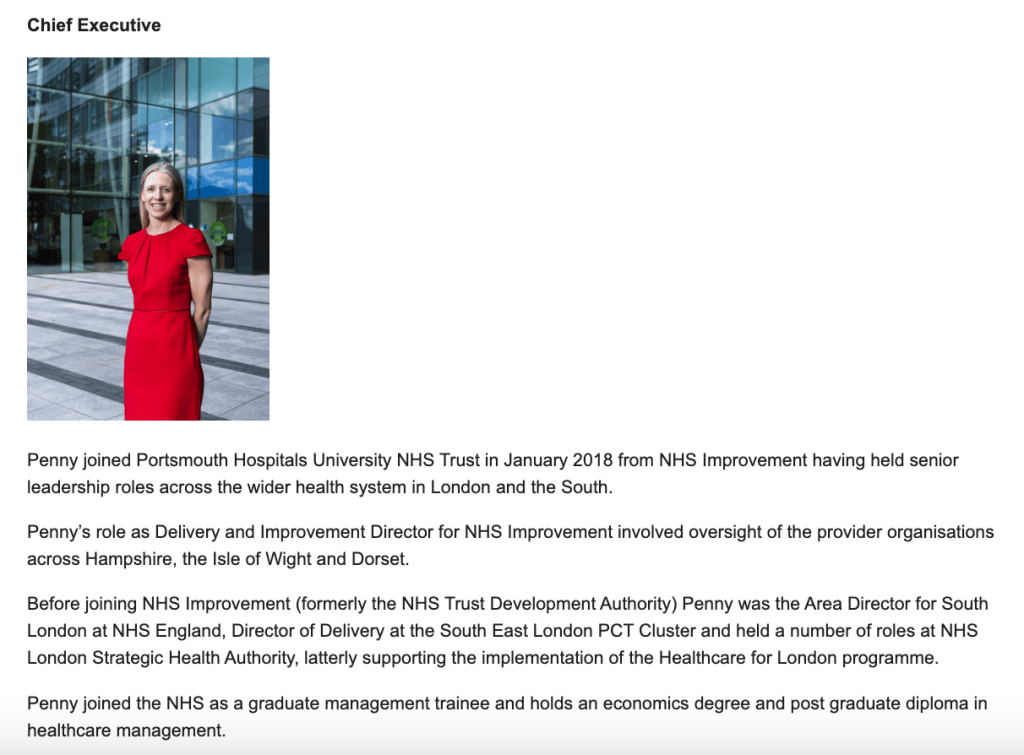
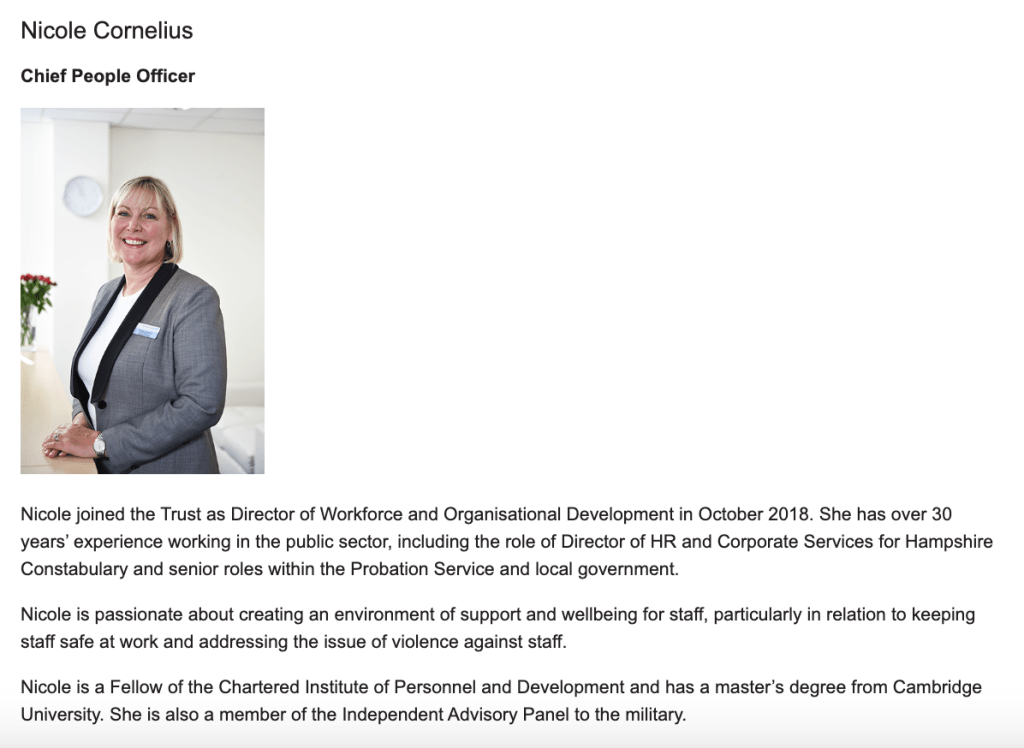
- The only trust officers who had seen the barrister’s FPPR report were: “The Chief Executive [Penny Emerit], the Chief People Officer [Nicole Cornelius] and relevant managers within the Trust’s HR department.”
These are the relevant FOI responses by the trust:
Portsmouth Hospitals NHS Foundation Trust FOI response 28 September 2023 John Knighton FPPR
Portsmouth Hospitals NHS Foundation Trust FOI response 27 Oct 2023 John Knighton FPPR
This last item on restriction of circulation of the barrister report was very serious in terms of trust governance. It showed that the rest of the trust board were in convenient ignorance.
There was no evident genuine, collective board scrutiny of such an important matter.
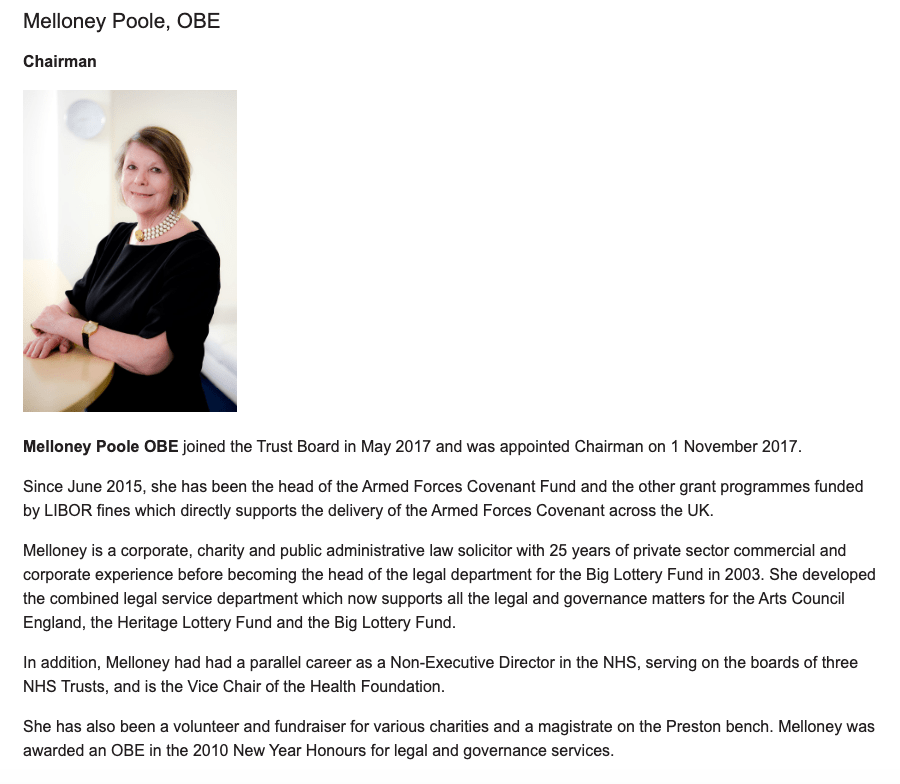
In particular the Chair was not in a position to take responsibility for the apparent decisions not to take action against Knighton or to even seek any form of remediation after gross whistleblower reprisal.
Once more, the cabal of senior NHS managers laughs at patients, staff and the general public.
The message is arguably one of impunity, arguably assisted by the regulator.
It would appear that CQC either failed to examine the trust’s FPPR governance properly, possibly deliberately, or closed the FPPR referral down knowing that the trust’s governance was poor.
I have written to the trust chair Melloney Poole to protest at the poor FPPR governance, copied to the Secretary of State, Health Committee and the CQC Chair and CEO.
Notably, in her previous role as a trust NED, Poole was the MHPS designated board member assigned to Dr Macanovic’s whistleblowing case. whistleblowing case.
Very serious harm was inflicted by the trust on a blameless whistleblower to whom Poole owed a duty of care, and there was a failure to ensure a fair MHPS process.
I have suggested that if Poole feels compromised by this, she should pass the matter to another.
I have also asked CQC to review its closure of the FPPR on Knighton in view of the trust’s admissions of poor governance and failure of oversight by the wider trust board.
I have pointed out to CQC the many concerns about the links between Portsmouth and Hampshire Hospitals NHS Foundation Trust (see related posts below), recycling of directors and the poor handling of Mr Martyn Pitman’s whistleblowing case at Hampshire. Mr Pitman was suspended for two years and became very unwell. No one has yet been held accountable for this poor HR practice. Neither organisation has impressed with its governance.
Dr Macanovic was made very unwell by her ordeal, had to spend a fortune defending herself legally, was forced to relocate and uproot her family and still did not break even financially despite proving unfair dismissal for whistleblowing and receiving compensation.
Melloney Poole was promoted to Portsmouth Hospitals University NHS Trust chair in October 2017.
Dr Macanovic was dismissed in March 2018.
In August 2020 Melloney Poole additionally took on the chair of Isle of Wight NHS Trust in addition to her duties at Portsmouth..
Penny Everitt Portsmouth Hospitals University NHS Trust CEO, who oversaw the Knighton FPPR process, was also promoted. It was announced in May 2023 that she will be group CEO for Portsmouth and the Isle of Wight NHS Trust.
RELATED ITEMS
Postscripts on Paula. NHS England’s apologia & regulatory reticence
Mr Tristan Reuser’s whistleblowing case: Scandalous employer and regulatory behaviour on FPPR


 Alexander's Excavations
I have a horrible feeling that Professor Murphy’s history and attitude would be viewed as an asset to those organisations with more than their fair share of managerial third-raters.
What might appal outsiders would be welcomed by those who are similarly deficient thus ensuring the cosy comfort of uniformity of behaviour and an apparent absence of insight, principles and courage.
I do hope that Dr Macanovic finds a more rewarding position and can eventually review with pity the shameful shower that would only be employed by an entity in rapid decline.
Thank you, Dr A. Btw, with immense self-discipline I will not say anything about the portraits of the smiling NHS employees. So tempting – but I shall resist!
LikeLike