Dr Minh Alexander retired consultant psychiatrist 7 October 2023
An Employment Tribunal remedy judgment was published on 5 October 2023 from a case which was heard a year ago, about extraordinary events at a London NHS trust, which has been notably chaired since July 2021 by the controversial former Home Secretary Jacqui Smith.
The two claimants Ms Princess Mntoninthsi and Ms Ubah Jama, NHS biomedical scientists, were initially awarded £64,217.82 and £58,632.06 respectively for injury to feelings, aggravated damages and personal injury.
The Tribunal found that the race harassment, discrimination and victimisation was severe enough to trigger one claimant’s traumatic experiences of apartheid South Africa, which brings shame to our NHS.
A substantive judgment was issued in February 2023:
The claimants were represented by a solicitor, the trust by a barrister.
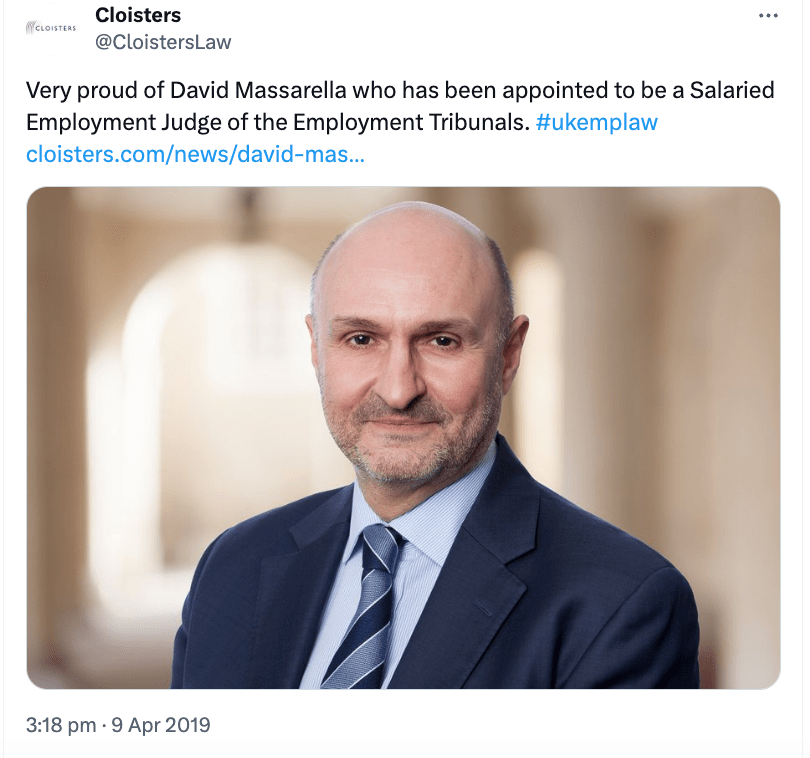
The Tribunal panel was headed by Employment Judge Massarella.
Unusually, the claim included a claim against a named respondent as well as the trust, which succeeded in the matter of victimisation.
I post briefly to help raise awareness of the case, which was originally reported by The Guardian and others, and to draw out details of whistleblowing aspects which have been reported in less detail than the race issues.
Black workers in a biochemistry lab at Barking Havering & Redbridge University Hospital NHS Trust suffered a hostile environment and a pattern of false accusations and derogatory treatment which amounted to race harassment. They raised concerns about the discrimination and also made protected disclosures about unsafe, aggressive behaviour by a white colleague which the Tribunal considered was racially charged. They suffered retaliation.
The Tribunal considered there was a white “team within a team”, which was the most obvious and influential clique in the department.
The Tribunal determined that a trust manager “plainly favoured” colleagues who happened to be white and she treated white workers more favourably. The Tribunal also determined that this manager was “consistently evasive” and “positively untruthful” when giving evidence:
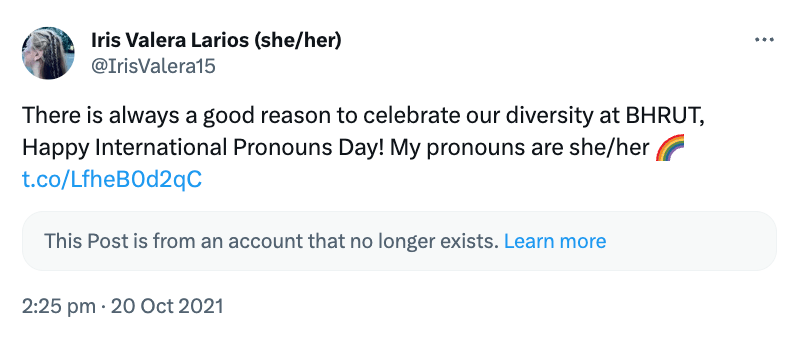
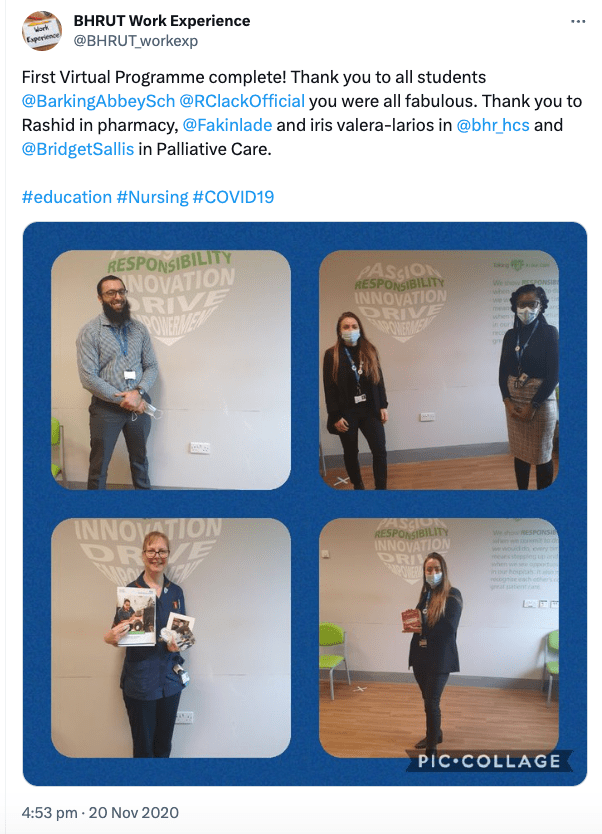
“340. Beginning with Ms Valera-Larios, our starting point is that she plainly favoured working with specific colleagues, whom she regarded as more hard-working and better communicators than others. They were white: Ms Zadorozny and Ms Beck. Ms Valera-Larios involved both white Seniors in activities and decisions without involving black members of staff (paras 45, 103-105, 161-162, paras 179-181).
341. Ms Valera-Larios, Ms Zadorozny and Ms Beck effectively operated as a team within a team, without apparently questioning the appropriateness of that. We also noted that, while they were quick to identify cliques among black staff, it appears not to have occurred to them that they were the most obvious, and influential, clique in the department.
342. There were also other identifiable patterns in Ms Valera-Larios’s conduct: accepting at face value accounts given by white members of staff, but challenging accounts given by black members of staff (para 96, 173); criticising black members of staff but not white members of staff (paras 153-154, 184); seeking to mitigate poor conduct by white colleagues (paras 89-93, paras 95- 98); seeking to implicate black members of staff (paras 93, 153-154, 167, 171, 185, 208-211); reacting combatively to complaints about her (paras 186, 276).
343. As to Ms Valera-Larios’s evidence to the Tribunal, occasional evasiveness is not an unusual feature of evidence in Tribunal. Tribunals usually seek to avoid making generalised findings about credibility. However, Ms Valera-Larios was so consistently evasive in her evidence that we consider we have no alternative. There were occasions when she gave an answer, which was quickly disproved by a document; she then had no hesitation in reaching for another answer; at one point in cross-examination, she gave four different answers on the same issue, finally alighting on a fifth, which was that she could not recall why she had acted as she did (paras 214-217). She gave positively untruthful evidence on several occasions (paras 123, 148, 152, 154, 188).”
Black workers blew the whistle on aggressive and unsafe conduct by a white worker who showed poor impulse control, angrily throwing a sample bottle which was a potential biohazard nearby to black workers. She also repeatedly banged a rack of samples in temper:
“66. On 13 February 2020, Ms Zadorozny was working in the same area as Ms Jama, Ms Mntonintshi and Ms Swamba, a junior locum, who is black. The three black employees were sitting in a line at the same bench. Ms Zadorozny was working on another bench.
67. Ms Zadorozny approached Ms Swamba and asked her to help with logging the appearance of a fluid sample in a tube. Ms Swamba said that she was not trained to do that task and did not know what to do with it. While she was still speaking, Ms Zadorozny walked away from her saying ‘Well I guess that isn’t going to get done then’. As she sat down, she tossed the tube the short distance towards the sample rack which was on the bench where three colleagues were sitting; it hit the wall near Ms Mntonintshi. Ms Zadorozny threw it in a contemptuous manner but not with force.
68. There was no possibility that the tube would land safely in the rack. The fluid sample was in a plastic tube with a pop-on top; the top had a hole in it to allow air to exit the tube. It is wrapped in parafilm when it is being transported, but this tube was not wrapped. There was a real risk that the contents were infectious and a real risk that the top might come off/the liquid might escape and splash one or other of Ms Zadorozny’s colleagues. There was also an obvious risk that the sample would be spoiled, affecting patient safety.
69. Ms Zadorozny had lost her temper. She did not intend to put her colleagues at risk, but she acted recklessly and disrespectfully.”
It was noted by the ET that the sample was of pleural fluid (from the lining sac of the lungs).
“‘Tatyana Zadorozny, a Senior Biomedical Scientist, lost her temper with a black colleague and threw a pleural fluid sample at the wall close to Princess Mntonintshi and two other black employees’”
“‘[on 17 March 2020] Tatyana Zadorozny lost her temper again and threw a sample storage rack labelled coronavirus into the clinical waste bin and when the rack did not go in the bin, kept hitting it against the bin aggressively, splashing the biological samples inside, in front of 3 black employees including Ubah Jama and Pamela Akite.”
The Tribunal determined that these aggressive displays in front of black colleagues had a racial element:
“This was the second incident in which Ms Zadorozny displayed aggression in
front of colleagues, all of whom were black, and triggered on both occasions by
an innocent remark by one of them. There were no instances of her behaving
in this manner in front of, or in response to, white colleagues. We are satisfied
that there is evidence from which we could conclude that Ms Zadorozny’s reaction was related to race.”
It found race harassment.
Although the Tribunal considered these incidents were serious misconduct, the management response to these incidents, was to “not take sides” and to suggest mediation:
“During the conversation, Iris Valera-Larios showed no concern for the welfare or health and safety of the three black members of staff but instead stated that she did not want to take sides, stated that she wanted to take her to Paul Cockfield’s or Casper Myburgh’s office for mediation and when Ubah Jama asked what she was being accused of, Iris Valera-Larios did not reply.”
The same attitudes were seen again in evidence to the Tribunal.
The Tribunal considered this to be evidence of both whistleblower detriment and race discrimination.
One of the claimants, Ms Jama, was later not included in relevant training, which was accepted by the Tribunal as evidence of race discrimination by trust managers.
Ms Jama was in fact blamed by the relevant manager for not showing initiative and asking to be included.
Ms Jama was also asked to work whilst ill with COVID, whilst a white colleague in the same situation was not. The Tribunal considered this to be both discriminatory and evidence of detriment for whistleblowing.
Ms Jama was told upon return to work that she would be transferred out, expressly related to the fact that she had complained. The Tribunal accepted this as evidence of victimisation for complaining about race discrimination and for whistleblower detriment:
“Ms Valera-Larios asked for Ms Jama to be transferred; Mr Cockfield approved the request (para 155 onwards). Mr Cockfield expressly referred to the fact that its purpose was to get Ms Jama out of the environment ‘about which she had complained’. We have concluded that the reason why they did so was, in part at least because Ms Jama had complained about race discrimination and made protected disclosures. The claims of victimisation and whistleblowing detriment succeed…”
In contrast, there was no attempt to move a perpetrator:
“There was a difference of race and a difference of treatment: there was no suggestion of moving Ms Zadorozny. Mr Cockfield was evasive about whether Ms Patel (who was non-white and who had also complained about Ms ValeraLarios) had also been moved at Ms Valera-Larios’s request. We consider that there was evidence from which we could conclude that Ms Jama’s race also played a part in the decision.”
Trust managers compounded the injustice with this explanation to the Tribunal:
“Ms Valera-Larios acknowledged that she could have transferred Ms Zadorozny away but said that she ‘couldn’t afford to lose her’”
Ms Jama was also overloaded with work and then managers unfairly criticised her performance, complaining to Human Resources.
The Tribunal determined that these were detriments and evidence of victimisation for complaining about race discrimination and of whistleblower detriment.
Painfully, Ms Jama was humiliated to discover on 18 January 2021 that an uploaded spreadsheet, which colleagues across two hospital sites could see, showed that her name had been replaced by “paininarse” by Claire Beck another biomedical scientist. Beck is a named respondent in the ET claim.
Departmental managers had been aware but failed to correct this, despite being asked to.
The Tribunal concluded that Beck had acted unprofessionally. It accepted Beck’s explanation that she had inserted the phrase into the files as a “joke” about frustrations with the computer system. But the Tribunal did not believe her claim that she subsequently removed it but forgot to remove it from Ms Jama’s file. The Tribunal determined Beck’s actions and “half hearted apology” amounted to victimisation:
“Absent an adequate explanation, the victimisation claim succeeds, as against Ms Beck as Second Respondent and the First Respondent”.
Beck is held jointly and severally liable for £5,000 injury to feelings from this incident.
The Tribunal considered that managers’ failure to correct the offensive tag and to investigate the incident properly was evidence of both race harassment and whistleblower detriment.
With regard to the mistreatment of the other claimant, Princess Mntonintshi, the Tribunal determined that there was a “cynical act of victimisation”, through falsely negative appraisal and various accusations, after Ms Mntonintshi complained of race discrimination.
She raised concerns about departmental dysfunction in March 2020:
“‘I write this letter with concerns to the current work environment harbouring amongst the Biochemistry team. Upon returning to my post, I noticed a huge division amongst the staff members. The rift was so apparent and concrete that individuals would refuse to ask certain senior (Tatyana or Claire) members for assistance. There are multiple instances that have occurred in the lab as a subsequent result of this rift. These incidents have become increasingly concerning and are deteriorating the labs ability to work as an efficient team […] Their behavior is being backed up by Iris, that is why they have guts to do all these things and manage the section the way they want, not what is required. It is a toxic environment to be working in […] What is needed in this situation is there to be objective mediation for both sides involved.’
The Tribunal found that subsequently, Ms Mntonintshi was targeted for severe retaliation:
“There was an almost total disconnect between the positive way in which Ms Valera-Larios characterised Ms Mntonintshi in the original probation review (before the complaint) and the damning account she gave of her in the probation statement (after the complaint).”
There were also claims that:
- Ms Mntonintshi was not entitled to a grievance process
- that she would be a problem for the next two years
- had bullied white colleagues, including the individual who had thrown a bottle of pleural fluid in the direction of black workers
- Ms Mntonintshi should be sacked if she did not “adapt”.
This is an example of the disparaging accusations made against Ms Mntonintshi:
“‘It is my understanding PM is not willing to resolve the situation as she made a statement she has put in a formal grievance and was working with the union. This is another example of how Princess disruptive behaviour does not fit with the new culture I am trying to implement within the biochemistry team […] her behaviour is very strange because she had not made an effort to improve her attitude. Instead she has contacted the union to make a formal complaint. Her actions are consistent with someone who wants to cause disruption, not someone who is willing to change. I believe she could be after a financial reward.’
The Tribunal determined that Ms Mntonintshi has suffered serious detriment and upheld race harassment, racial discrimination, victimisation.
It considered that she was seriously affected because these incidents triggered past experiences of apartheid when she lived in South Africa:
“This brought back the treatment she experienced during apartheid in South Africa, when black people were accused of criminal acts they had not done and monitored for the colour of their skin.”
During the course of these matters, Ms Mntonintshi and Ms Jama filed grievances. The grievance investigator stopped short of finding racism, but he did make strong and troubling findings such as criticism of departmental management:
“…predominantly coercive style of leadership, evidenced by her staff and in her own words”.
The investigator concluded:
“This bias has led to the victimisation and harassment (intent is not in question) of [Ms Mntonintshi]. Twice [Ms Zadorozny] has endangered the safety of staff in the lab due to aggressive/inappropriate outbursts in a professional setting. No documented evidence of challenging this behaviour, supporting [Ms Zadorozny] (via occupational health) has been made.”
The senior trust manager overseeing these cases, James Ellender now BHRUT Head of Financial Planning and Reporting, asked for the investigation report to be redrafted:
“Mr Ellender was not satisfied with the report and asked Mr Ndongwe to work with HR ‘to resubmit the reports please’. He set out a point-by-point critique of the report.”
Ellender subsequently told the claimants that was no basis for any disciplinary action arising from their allegations, but that he accepted there was a case regarding inappropriate management of Ms Mntonintshi’s probationary period and that he would arrange for her appointment to be confirmed.
The trust’s chief executive Matthew Trainer previously apologised when the Tribunal’s verdict was published in March this year.
But why did such an appalling case even get to Court?
Why was it resisted by the trust and why was the case not fairly settled at a much earlier stage, with less distress to the harmed staff and expense to the public purse?
Was there any attempt to apply NDAs which resulted in rejection of settlement?
What oversight was there by the trust board?
What has happened regarding trust personnel whom the Tribunal determined acted in an unsafe or racist manner, some of them repeatedly? Or those who failed to ensure the safety and wellbeing of concerned staff?
Does the trust still claim that no disciplinary action is warranted?
Barking Havering & Redbridge University Hospital NHS Trust is in a very diverse area. It is staggering that such deplorable diversity practice managed to flourish at the trust.
For completeness, it is relevant to note Tony Chambers the controversial CEO of the Countess of Chester NHS Foundation Trust where whistleblowers were sidelined prior to the Letby killings, was interim CEO at Barking from January 2020 to August 2021.
RELATED ITEMS
Research commissioned by the Department of Health during the Freedom To Speak Up Review showed that BME whistleblowers have much worse experiences.
BME whistleblowers may not always claim race discrimination as part of their claims, sometimes on advice, sometimes because their unions will not support the claims. The level of discrimination may not be fully evident.
A question arises about whether BME disadvantage was part of the dynamics at Sussex where the previous National Guardian helped helped to suppress whistleblowers in 2018 and protected a favoured trust board.
Two senior BME Sussex whistleblowers have cases in the Employment Tribunal at present.
Surgeon Mr Krish Singh’s case against Sussex is back before the ET on Monday 9 October 2023 at South London Employment Tribunal for case management and will be accessible by remote link.
The hearing is to determine whether the case will be stayed again or allowed to finally proceed to a full hearing.
It was due to be heard in June 2023 but the hearing was dramatically halted with news of a police investigation into deaths at Sussex.
The trust argued that there might be criminal liability for its witnesses.
The bundle papers are obviously of intense public interest. Media applications for access have been made. The trust is resisting and the Tribunal has indicated that this matter will also be dealt with on 9 October 2023.
Race Discrimination by Public Health England
I am currently in correspondence with the General Medical Council about a case in which the regulator criticised Asian doctors for using the imagery of slavery but acquitted a white doctor of racism, despite the EAT coming to a different view. Whilst that is a separate case to the cases of Ms Jama and Ms Mntonintshi, in general, the discrimination is sometimes so severe and painful still that one can perhaps empathise with victimised BME staff whose thoughts travel in that direction.
Anti-racism at BHRUT
In June 2020, at the time that Ms Jama and Ms Mntonintshi were going through their ordeal, Tony Chambers interim CEO posted as follows:
Black Lives Matter: a statement from our CEO, Tony Chambers
Posted Friday, 5 June 2020 by Mark Chapman
I am acutely aware of the impact on all of us of the pandemic in recent months and of events in America in recent days. The Black Lives Matters movement has never appeared more vital as we respond to George Floyd’s death in police custody. I agree with the political activist Angela Davis when she argued that “In a racist society, it is not enough to be non-racist, you must be anti-racist”.
Sadly, George Floyd’s death cannot be viewed in isolation. Many of our colleagues will have experienced racism and unequal treatment; Covid-19 has had a disproportionate impact on our BAME members of staff; and the top of our own organisation doesn’t yet properly reflect either the diversity of our workforce or of the populations we serve.
I would like to reassure our black members of staff that your colleagues are standing in solidarity with you. We appreciate your anger, pain and sadness. We are here to support you. We must be motivated by the words of Desmond Tutu who once said, “If you are neutral in situations of injustice, you have chosen the side of the oppressor.”
Tony Chambers
Chief Executive

 Alexander's Excavations
Thank you for shining a light in some very dark corners.
It seems the NHS provides a safe haven, not necessarily for patients and front line staff, but for some very dubious characters.
Hope you can stay strong.
Zara
(stay/strong)
LikeLiked by 1 person