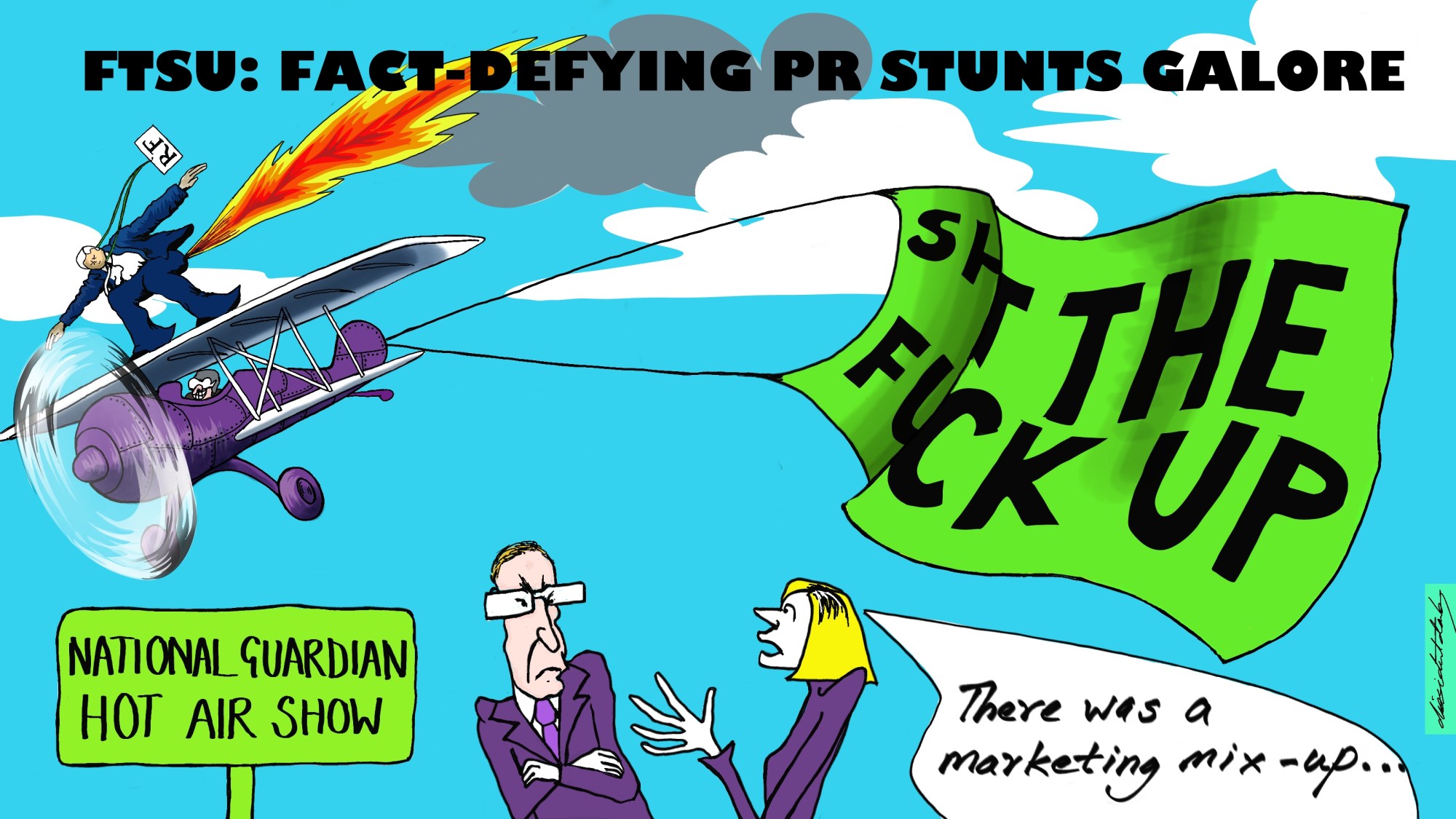
Dr Minh Alexander retired consultant psychiatrist 30 August 2023
I have today responded to an article yesterday in the British Medical Journal by Bill Kirkup and James Titcombe which stated:
“Despite increased protection under the Freedom to Speak Up policy, introduced to improve staff confidence to raise concerns following a report in 2015…”
The following letter should hopefully be self explanatory.
BY EMAIL
Bill Kirkup
James Titcombe (via https://www.patient-safety-watch.com/contact-1)
30 August 2023
Dear Bill and James,
Your BMJ article 29 August 2023: Patient safety: listen to whistleblowers
I am glad to see you supporting, in principle, the need to make it easier for NHS staff to raise concerns.
I write on two salient points.
1. Your comment: “Despite increased protection under the Freedom to Speak Up policy, introduced to improve staff confidence to raise concerns following a report in 2015…”
Could you kindly point me to what you believe has been the increase in protection conferred by the Freedom To Speak Up policy?
I am not aware of any policy of increased protection.
This is because:
a) The National Guardian has indicated that it is not the role of local NHS trust Freedom To Speak Up Guardians to advocate for NHS whistleblowers.
The National Guardian has gone so far as to publicly correct Freedom To Speak Up Guardians who interpreted their role to be one of advocacy. Two embattled Freedom To Speak Up Guardians at North West Ambulance Service NHS Foundation Trust were implicitly criticised in the National Guardian’s case review report for trying to advocate for and to protect NHS trust staff from the usual toxic ambulance management culture.
The situation has been something of a dog’s dinner as other Freedom To Speak Up Guardians have understandably also seen the role as one of advocacy, reflecting what was originally written in the report of the Freedom To Speak Up review about Guardians being appointed to support staff who had suffered detriment for whistleblowing. For example, this is a flyer from Shropshire Community Health NHS Trust referring to Freedom To Speak Up “Advocates”.
But this is some of the guidance from the National Guardian’s Office which clearly stated that Freedom To Speak Up staff should not be and should not call themselves “advocates”.
b) The National Guardian by policy does not help whistleblowers with detriment, despite this being a recommendation of the original 2015 Freedom to Speak Up policy by Robert Francis.
“A case review will not intervene in individual cases, or look into the merits of the original concern itself.”
In fact, the National Guardian’s Office usually tells whistleblowers to go back to their trusts (as in the cases of Shyam Kumar and Dr Julian Campbell to name but two), or to go away and to only come back when their case processes (such as litigation in the Employment Tribunal) have concluded, before it will even consider their case for case review. This is what happened to Dr Jasna Macanovic, who went on to be fully vindicated, but without any help or protection from the National Guardian. And when the National Guardian conducts a review, this looks at systemic issues and by policy does not investigate whistleblowers’ concerns.
This system basically favours power and whitewashes whistleblowers out of the picture.
Please see here for two examples of scandalous treatment of whistleblowers by both a local NHS trust Freedom to Speak Up Guardian and the National Guardian’s Office.
Please also see here for an ET tested example of a Freedom To Speak Up Guardian being complicit in serious detriment to a whistleblower. This is one of the most serious indictments of the system, yet the National Guardian has undertaken no case review into this trust (the Royal Free), and the case concerned alleged breaches of Human Tissue law.
Please see here for an example of a breach of whistleblower confidentiality by the National Guardian’s Office, with a shocking subsequent lack of apology and failure of learning, until formal complaints were made and upheld.
And of course, you will probably be aware of the appalling revelation that the Director of Nursing and Medical Director, who failed staff who raised concerns and the babies and their families at the Countess of Chester, were at one point the trust’s Freedom To Speak Up Guardians. I had in fact documented these appointments in 2017, as whistleblowers had been concerned that inappropriate appointments to Guardian posts would be made, as part of the power abuse that was likely with Robert Francis’ model. The relevant 2017 spreadsheet of NHS trust executives acting as Guardians can be found here. But the trouble is that whistleblowers are ignored, including when they raise concerns about bad whistleblowing governance.
If you are aware of any evidence of increased protection of NHS whistleblowers since 2015, please let me know.
But equally, in your own words, please also “listen to whistleblowers” when they say that the Freedom To Speak Up model is not fit for purpose.
In considering any response, please also be aware that the majority of issues raised with NHS Freedom To Speak Up Guardians have been confirmed by research to be low level gripes, and they do not meet the accepted definition of whistleblowing. Therefore, the information on detriment experienced by NHS staff contacting Freedom To Speak Up Guardians, as published by the National Guardian, is not a clean sample that relates only to whistleblowing. It is also data that does not come directly from whistleblowers but has been filtered and anonymised by trusts and has not been verified at source.
I consider based on research over the last eight years, that the NHS Freedom To Speak Up initiative has caused harm because it has delayed real reform. In some cases, it has allowed abusive organisations to pretend to be something that they are not, resulting in NHS staff putting themselves in harm’s way.
c) The NHS national whistleblowing policy refers to “protected disclosures”. This is merely a technical term which means that the whistleblower is potentially entitled to claim for retrospective compensation if they suffer reprisal as a result of making such disclosures. It does not mean they are actually legally protected from reprisal or that there is a mechanism to stop any reprisal.
Flawed UK whistleblowing law does not compel anybody to proactively protect whistleblowers.
2. Your comment: “Regulation of health service managers has been recommended but not implemented. The proposed Public Authorities (Accountability) Bill would place an enduring duty of candour on organisations and staff that is currently lacking; pending that possibility, health bodies’ adoption of the voluntary charter currently being signed by police forces and other bodies would be a start.”
I am unsure what such a voluntary charter would add, as we already seen that a statutory Duty of Candour under CQC Regulation 20 has self-evidently failed to give reliable transparency, because of the all the ongoing scandals in which there have been cover ups.
Please note that it is because of the failure of CQC Regulation 20 Duty of Candour that the Chester families are asking for introduction of mandatory reporting.
It is also worth noting that the 2017 Public Authorities (Accountability) Bill (more commonly known as the Hillsborough law) has a well-intentioned but not very strong clause on whistleblowing. An experienced fellow whistleblower and I in fact contributed to a symposium at the School of Law and Social Justice, Liverpool University, which was held to generate refinements to the Bill, including on whistleblowing. I was surprised at the published end result, which was:
“All public authorities shall have and publish a “Code of Ethics” which … provides reasonable protection for whistleblowers”
No non statutory code has ever provided protection for whistleblowers against a determinedly abusive employer. The NHS national whistleblowing policy, adopted as a result of the Freedom To Speak Up review, is living proof of that.
With best wishes,
Minh
Dr Minh Alexander
Retired consultant psychiatrist and NHS whistleblower
Cc Kamran Abbasi BMJ Editor in Chief
Editorials editor
RELATED ITEMS
Bill Kirkup told the media that in his experience non compliance was not an issue with non statutory investigations and that people were “ready and willing”. Review of the records shows that key witnesses did not cooperate with his investigations at Frimley and Liverpool Community Health. The relevant Department of Health director has been asked for definitive confirmation but has not so far replied. Why would the Department pursue a non statutory inquiry into the Letby killings if it has relatively recent experience of non-cooperation by key witnesses?
Countess of Chester Non Executive Director James Wilkie
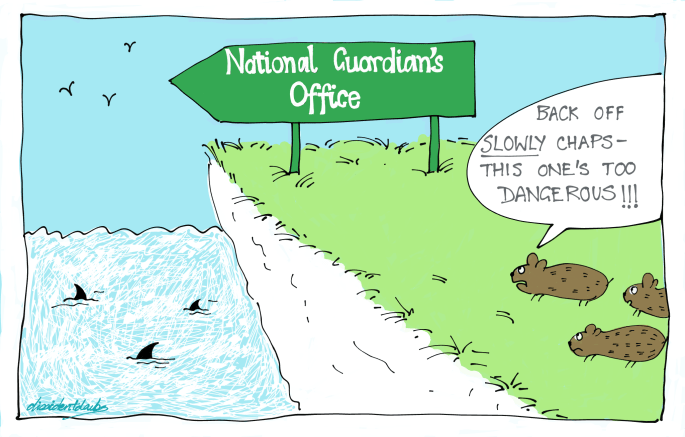

 Alexander's Excavations
Excellent, restrained response to an exuberant but ‘fact-light’ article that was, it seems, published without suitable fact-checking.
LikeLiked by 1 person
I was thinking the same, only less succinctly.
LikeLike
Excellent letter.
<
div dir=”ltr”>
<
blockquote type=”cite”>
LikeLike
Bless you Minh.
LikeLike