Dr Minh Alexander retired consultant psychiatrist 18 August 2023
There are troubling similarities between the system responses to concerns raised about about Allitt and Letby, with the difference being much greater delay in Letby’s case.
I have looked at the original 1994 Allitt inquiry report. It only seems to be available in hard copy, so I have made notes for sharing with anyone who might find the information useful.
This is a contemporaneous, short summary of the Allitt Inquiry’s criticisms of the NHS:
Chances to stop killer nurse were missed: Allitt report highlights understaffing
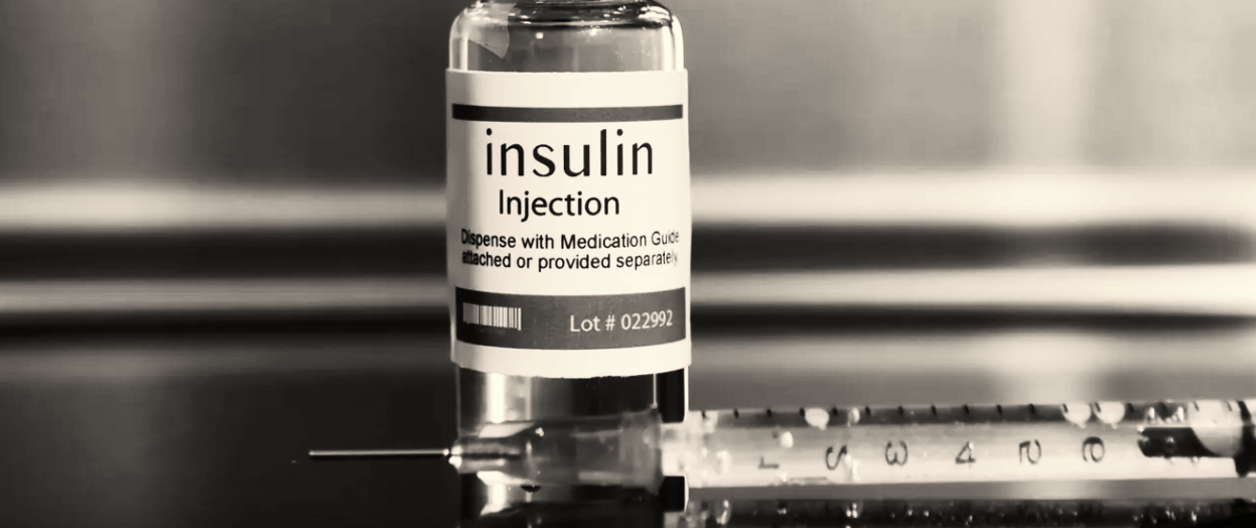
Insulin poisoning was a common feature of the two cases, and was an important clue to foul play.
Allitt’s killings occurred over a two month span. NHS staff were criticised by the inquiry for not acting quickly enough after the possibility of insulin poisoning first arose, with an ensuing interval of eighteen days before the policed were notified.
In Letby’s case, the first insulin poisoning occurred in August 2015 and then again in April 2016. She was not removed from clinical duties until after June 2016, and the police were not asked to investigate until March 2017, announced in May 2017.
Very sadly for the families affected at the Countess of Chester Hospital, the jury was unable to reach a verdict in six charges of attempted murder against Lucy Letby relating to four babies.
But following the verdict of seven murders and six attempted murders by Letby, the Health Service Journal and other media have today revealed that doctors who raised concerns about Letby were castigated and threatened with referral to the General Medical Council if they persisted in raising concerns.
“The sources claimed the consultants were told there would be consequences if they refused, as it could leave them open to a GMC referral.”
The doctors were in fact forced to write an apology to Letby for raising their concerns.
The doctors were also apparently undermined by their own Royal College. According to the Health Service Journal, there was an unpublished addendum to the 2016 Royal College invited review report of neonatal care at the trust which suggested that the doctors’ concerns were based on questionable grounds:
“An unpublished addendum to the RCPCH report, seen by HSJ, said specific concerns about Letby had been raised by the neonatal lead and consultants, but described them as “subjective” and based on “simple correlation” and “gut feeling”.”
This echoes events in the Allitt case when a consultant who suggested that video monitoring was needed after unexplained child deaths and collapses, was dismissed as having “fanciful ideas” and being “a bit unpredictable”.
Susan Gilby, who was appointed as a new medical director in August 2018 and became acting Chief Executive in September 2018, reportedly supported the paediatric consultants and helped raise the alarm about Letby. However, she also found herself in hot water. She later filed an Employment Tribunal claim against the trust, alleging bullying by the trust Chair.
The government has announced a non-statutory inquiry into the Letby killings.
The announcement included this significant information:
“Following on from the work already underway by NHS England, it will help us identify where and how patient safety standards failed to be met and ensure mothers and their partners rightly have faith in our healthcare system.” [my highlight]
It is quite possible, if not likely, that there will be many questions and superficial handwringing but little real learning.
It is not reassuring that NHS England and the government have rejected Tom Kark KC’s 2019 recommendation to introduce a disbarring mechanism to remove unfit senior managers from the NHS.
Neither is it reassuring that there seems to be a highly irregular government review of UK whistleblowing law in progress.
The 1991 Beverly Allitt killings accuse the NHS, from across the decades, of a failure to learn.
There are too many similarities between Allitt and Letby for comfort.
The Guardian asked for my opinion and I have highlighted senior NHS managers’ lack of competence in dealing with bad news and the literally fatal weakness of UK whistleblowing law.
My condolences to all affected by the actions of Allitt and Letby, and those who failed to protect the public when it was in their power to do so.
RELATED ITEMS
Robert Francis and Bill Kirkup have predictably been helping to tune the pulpits, in an attempt to convince the public that a non statutory inquiry into Letby’s killings will suffice:
Importantly Bill Kirkup claimed to the BBC that there is no problem with cooperation with non statutory inquiries which cannot compel evidence. This is very curious as he previously made a great song and dance about individuals who refused to cooperate with his investigation into the deaths of baby Elizabeth (Lizzie) Dixon under the care of Frimley Health NHS Foundation Trust. I asked Kirkup about this anomaly.
Bill Kirkup replied on 21 August 2023. He acknowledged that key witnesses did not cooperate in his investigation of baby Lizzie Dixon’s death, but he maintained it did not affect his investigation. He stated that only three witnesses had ever refused him, out of hundreds of interviewees. Kirkup did not reply when he was also asked about evidence that four NHS directors did not appear to have cooperated with his investigation into serious failings Liverpool Community Health NHS Trust (LCH). A letter deposited in parliament from Steve Barclay to NHS regulators in 2018 gave further evidence of the failure of witness cooperation at LCH. I have asked William Vineall Department of Health for definitive confirmation, as it begs the question of why would government pursue a non statutory inquiry when it has evidence of serious past failures of witness cooperation? The further details are provided in this post of 23 August 2023:

 Alexander's Excavations
Hello Minh,
Your piece on Letby was forensic and of the highest quality. We won’t get anything like this from the national press.
Thank you for this and all your invaluable articles.
Best wishes,
David
Sent from my iPhone
LikeLiked by 1 person
Thank you Minh for an excellent exposition of facts. If the Guardian know that you are an expert in these matters then it is inexcusable that NHS England do not.
The managers must be made properly accountable.
LikeLiked by 1 person
Thank you for this. I note that the NHS Chief Exec at the time of the Clothier Report was Duncan Nichol (1989-1994).
LikeLiked by 1 person