By Dr Minh Alexander, retired consultant psychiatrist 21 January 2025
This is a post to share information for any harmed patients and families who may not be aware of a pattern of behaviour by this organisation.
Due to previously mentioned personal circumstances, I cannot be as active as I previously was in responding to general correspondence, but I am more than happy to be contacted by any affected patients and families on this specific matter.
| In summary, a member of my family was affected by failure by North West Anglia to act upon a CT scan report which advised that there was a lung nodule which might be cancer. We later discovered through media reportage about a coroner’s hearing, and the coroner’s formal Prevention of Future Deaths warming report (PFD), that at least two other similar incidents had occurred AFTER my relative suffered great distress and potential harm. An FOI request revealed more cases. |
With my relative’s permission, I set out in summary the history, including up to date FOI data disclosed by the trust which shows at least 24 similar incidents since 2021.
The member of my family had a CT scan in January 2021 which was seriously mishandled by North West Anglia, and an opportunity to treat the lung cancer was missed for another seven months.
The CT scan was ordered by a consultant urologist in the context of blood results and clinical symptoms that raised the possibility of an intra-abdominal cancer. This was set upon a past history of aggressive kidney cancer (treated effectively with surgery).
The consultant radiologist who reported on the January 2021 CT scan wrote at the start of his report that there was a suspicious new lung nodule which could be cancer that had spread from somewhere else.
“There is a new large mixed density lung nodule seen within the posterior segment of the right upper pulmonary lobe measuring 2.1cm which could represent a new metastatic lung lesion.”
The radiologist also noted a mass in the bile duct.
The lung nodule later proved to be cancerous, and was in fact thought to be a primary lung cancer. The bile duct mass was not cancer.
Two surgical teams, hepato-biliary and urology, thereafter mishandled this case. Inexplicably, both failed to act upon the reported suspicious lung nodule and they focussed only on the mass in the bile duct.
The surgeons did not inform my relative of the lung nodule.
The existence of the lung nodule was only communicated by his GP, about two months after the scan.
We asked the hepato-biliary consultant surgeon about the lung nodule and asked him to follow it up. He agreed to do so. He later denied recall of this conversation. The trust claimed there were no records of the contact.
We again reminded the hepato-biliary surgeon about the suspicious lung nodule and it was only at this point that he acted by referring my relative to the lung team.
The lung team advised that the lung nodule was most likely to be cancer which had spread from the kidney, and they recommended a PET scan to measure the metabolic activity in the nodule. This was not initially communicated to my relative.
Instead of ordering a PET scan (which required the involvement of another NHS trust), the relevant surgeons offered another CT scan, without explaining why a CT scan was being arranged or what the lung team had advised. My relative did not even know which doctor had ordered the CT scan. Only persistent enquiries revealed the sequence of events.
When we asked for details of the findings and advice from the lung team, we were met with resistance and obfuscation.
The trust’s then clinical lead for surgery refused to provide my relative with a copy of the advisory letter from the lung team to the surgeons. He advised that the only access to this document was by making a formal Subject Access Request under the relevant legislation.
This is despite an established practice in this NHS trust of copying outpatient correspondence to patients.
When we later received the lung team’s letter under Subject Access Request, we noted that it placed on the record the delay in acting upon the January 2021 CT scan.
My relative’s subsequent experience of the trust was of more chaos, inconsistencies and obfuscation. My relative’s care was eventually transferred to another trust as all confidence had been lost. This all added to the clinical delay.
My relative had little confidence in the trust’s internal processes for handling this incident, and did not believe that there was any genuine learning.
We were very disturbed but not surprised to note local media reports of the death in January 2023 of another patient, Mr Richard Roe. This occurred after failure by North West Anglia to view or act upon findings of cancer on a CT scan. Mr Roe had also reportedly been under the care of the trust’s hepato-biliary surgeons. These were the local news reports:
Man died at home after doctors failed to identify cancer in CT scans
Hinchingbrooke Hospital patient died as CT scan not viewed
The coroner determined:
“A subsequent CT scan on 11.10.21 identified a lesion in excess of 3cm in the tail of the pancreas. The reporting radiologist recommended the scan be reviewed by the Hepato-Biliary MDT but the scan was neither actioned nor viewed. Had it been viewed the scan would have shown the presence of pancreatic cancer.”
The coroner noted another case from May 2021, which postdated my relative’s case:
“The evidence revealed that there is currently no method for ensuring that routine CT scan reports are reviewed by clinicians. This is despite a similar occurrence in May 2021.
The coroner, Mr Simon Milburn, issued a Prevention of Future Deaths (PFD) warning arising from Mr Roe’s case because of concern about the risk of similar future deaths. PFD warnings are only issued exceptionally for serious risks.
This is an uploaded copy of the coroner’s PFD report on Mr Roe’s death:
Coroner’s Prevention of Future Deaths report on death of Mr Richard Roe 2024-0693
Based on our experience of the trust’s unreliable disclosure of information on repeated occasions, I submitted a Freedom of Information request about the instances of trust failures to review and act upon CT scans and CT scan reports.
This was the FOI request:
FOI request to North West Anglia re missed CT scans
This was the trust’s response of 20 January 2025:
North West Anglia response email FOI 2024 – 943
North West Anglia FOI response attachment (1)
North West Anglia FOI response attachment (2)
The trust so far admits that since 1 January 2021, that there were 24 instances of failure to review CT scans/ CT scan reports, five of which in the trust’s view caused harm, and three of which were reported to the health regulator, the Care Quality Commission.
Despite the long running nature of these issues, the trust has not disclosed any remedial actions taken thus far.
A number of planned remedial actions are listed.
I will be asking some supplementary FOI questions and will post any follow up FOI results here.
I will also inform the coroner of the FOI data and also of my relative’s case, which based on the PFD report appears not to have been disclosed to the coroner by the trust.
We had already raised concerns with the General Medical Council but felt that the regulator downgraded what seemed to us to be serious failures.
Related items
Nationally, these issues have been a long recognised problem.
The Royal College of Radiologists (RCR) issues core standards to ensure that imaging results are produced in a timely way and acted upon by the clinicians who request the imaging.
This is the RCR standards document:
Standards for the communication of radiological reports and fail safe alert notification
Importantly, it emphasises the over-arching responsibility of organisations to ensure that there are failsafes and that systems are regularly audited.
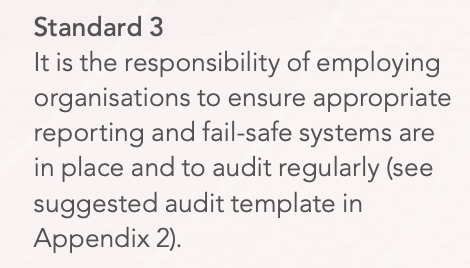
A PHSO report of 2021 based on 25 complaints, noted that problems persist nationally, with failures to meet the Royal College’s standards:
“We found that some NHS trusts do not have clear and effective policies, processes or systems to ensure that imaging results are reported and acted upon.”
“Half of the cases show that Royal College of Radiologists’ guidelines on reporting clinically significant unexpected findings were not followed.”
This is an uploaded copy of the PHSO report for anyone who may find it useful:
Unlocking Solutions in Imaging: working together to learn from failings in the NHS, PHSO July 2021

 Alexander's Excavations