
Dr Minh Alexander retired consultant psychiatrist 20 July 2023
| Summary: A BBC Newsnight investigation into the Good Governance Institute a private company which employs a sacked former NHS director has resulted in Companies House writing to the company to ask it to stop using a name for which it apparently had no prior approval. The word in contention is “institute”, which may not be used without permission from the Secretary of State for Business. The use of this name is usually reserved for bodies which conduct high level research or are professional bodies of the “highest standing”. Companies House has advised the BBC that use of the name “institute” without prior permission is an offence. Other concerns were unearthed. I have asked NHS England to consider whether it wishes to review whether this is a company with which the NHS should have any links. |
BBC Newsnight has taken a closer look at the private organisation, the Good Governance Institute (GGI), broadcast on 19 July 2023, starts at 20.45.
This arose from Newsnight’s investigation into the governance and patient safety failures at University Hospitals Birmingham NHS Foundation Trust (UHB), where the GGI has been involved.
Of concern, UHB was repeatedly and favourably assessed by external reviewers, including the GGI, despite significant issues.
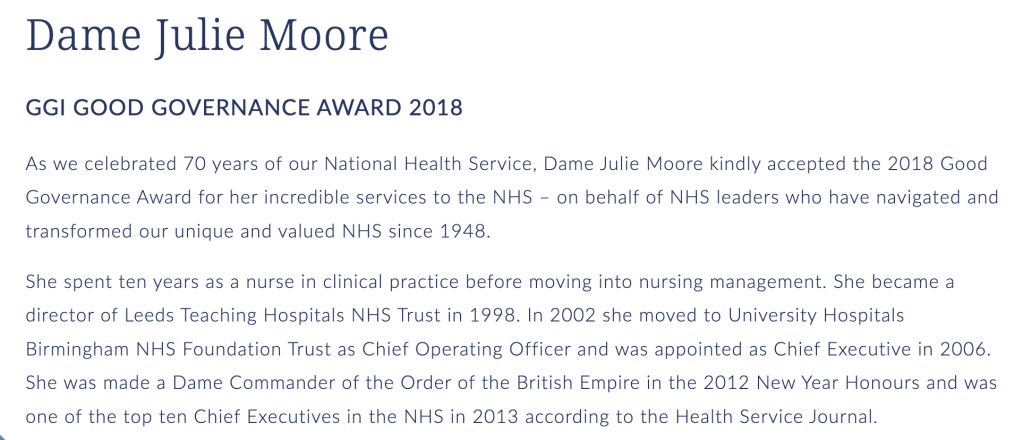
In 2018, the GGI gave UHB’s then CEO Julie Moore, who was retiring, an award as part of its “festival of governance”.
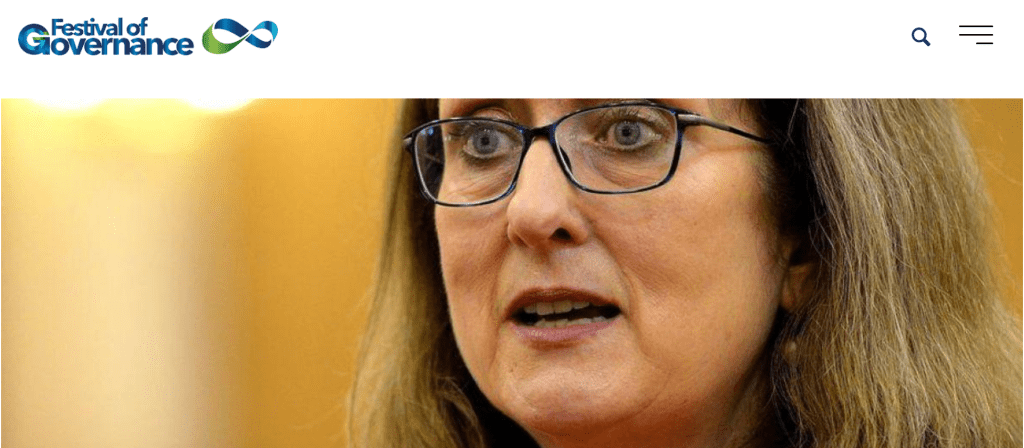
Also in 2018, the GGI showcased UHB’s then Chair Jacqui Smith as its keynote speaker at the same festival of governance.
The following year, UHB commissioned the GGI to undertake a “developmental well led review” of the trust.
This was not published, but it has since been released under FOI.
The review found no major concerns. The BBC concluded that there was no evidence that the GGI did anything wrong, but the remit of the review was too limited.
BBC Newsnight raised a question about the narrow scope of these types of well led reviews, which clearly do not always identify important problems, yet cost the public purse dear. In the case of the UHB, the GGI’s bill was reportedly £72,000 for the well led review and other services.
Newsnight reported that based on FOI requests, since 2015, the NHS has spent more than £9 million on the Good Governance Institute’s services. According to the BBC, the GGI’s website states it has reviewed over 600 NHS boards:

Of concern, Newsnight also reported that:
- The GGI does NOT have permission from the Secretary of State for Business to use the word “Institute” in its name.
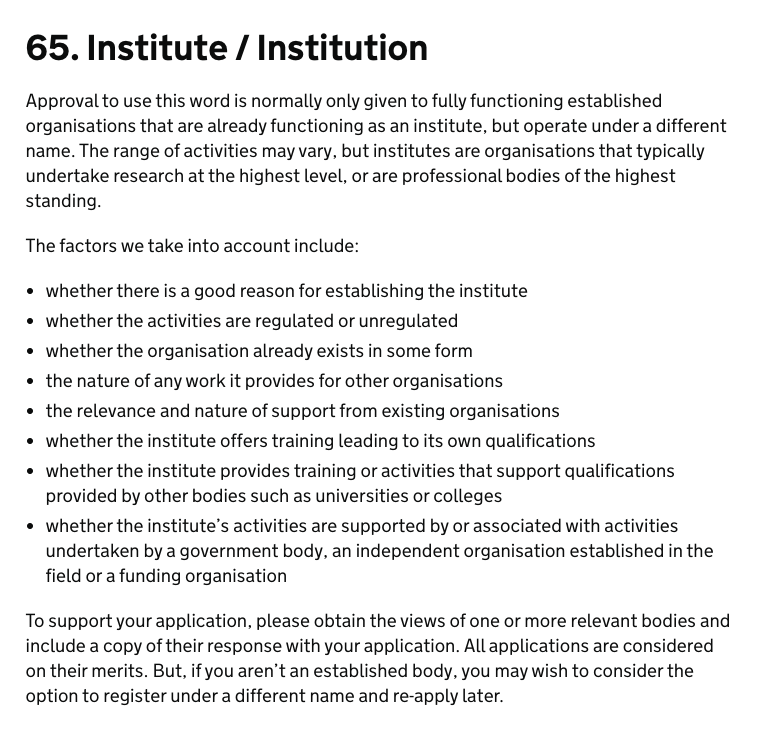
The word “institute” is designated a “sensitive” word for the purposes of naming companies and LLPs, and requires prior approval by the Secretary of State:
The BBC reported that the Good Governance Institute does not have permission from the Secretary of State, and that the GGI’s chief executive Andrew Corbett-Nolan instead registered a shell company in the Irish Republic under the name “Good Governance Institute”, where no special permission is needed to use the word “institute”. According to the BBC’s company research, this entity appears to have no assets, no staff and seems to conduct no business.
The Good Governance Institute UK’s website gives the company number as 06836117, which takes the public to a company with the registered name “GGI Ltd” on Companies House’s website, which therefore of itself does not breach UK rules.
But is it within the rules for a UK company to use a trading name that includes the word “institute” if there is no permission from the Secretary of State?
It seems it is not: The government rules apply to any names under which someone carries on business:
Companies House told the BBC that it is an offence to use the term “institute” without prior approval, and they have written to the GGI to ask it to stop using the term.
Companies House also indicated that the registration under the name “institute” in another jurisdiction had no bearing on the matter.

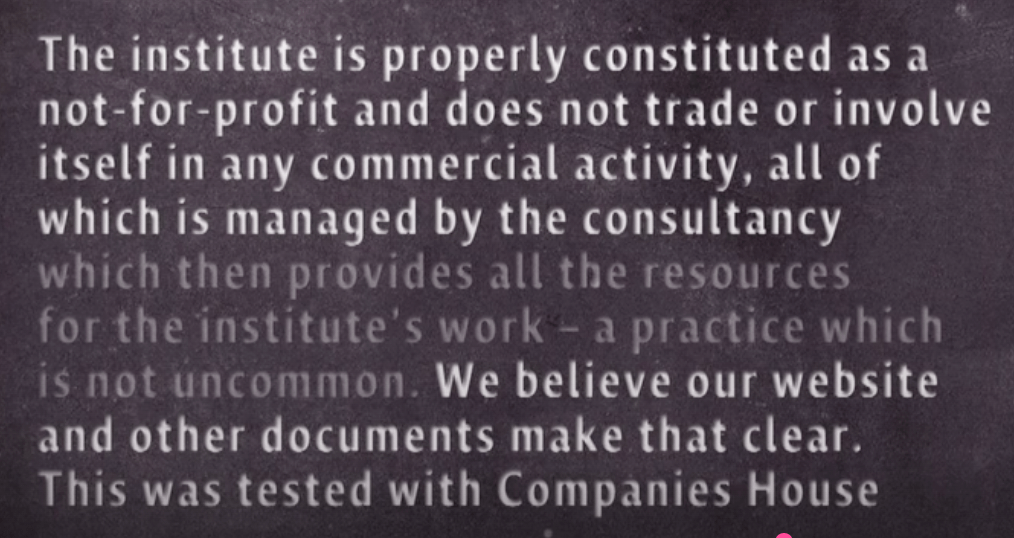
The GGI responded:
2. The GGI’s chief executive used a title of “professor” based on a visiting rather than a substantive professorial post, and that he continued to use the title “professor” after the end of his time-limited, visiting position at the University of Chester.
Following Newsnight’s enquiries, Mr Corbett-Nolan stated that he had not been informed that his visiting professorship had ended, and he removed the title of professor from his website.
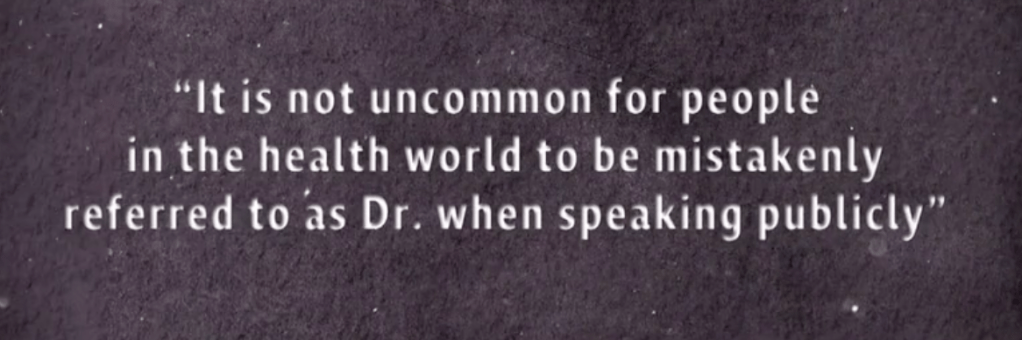
3. The GGI’s CEO had been previously repeatedly and publicly wrongly described as “Dr” in a number of GGI documents and other documents, when he did not hold a doctorate.
A colleague from the GGI had also previously been wrongly described as “Dr” when he only held a bachelor degree.
Andrew Corbett-Nolan explained this as error and confusion by others:
Of interest, Newsnight aired comments by the GGI regarding its employment of Mason Fitzgerald, a former NHS trust director who was sacked after a false qualification claim reportedly appeared on several reports and his LinkedIn entry.
Andrew Corbett Nolan commented to Newsnight that Mr Fitzgerald was “talented and experienced”.
He also commented to Newsnight that most clients were happy to receive services from Mason Fitzgerald:
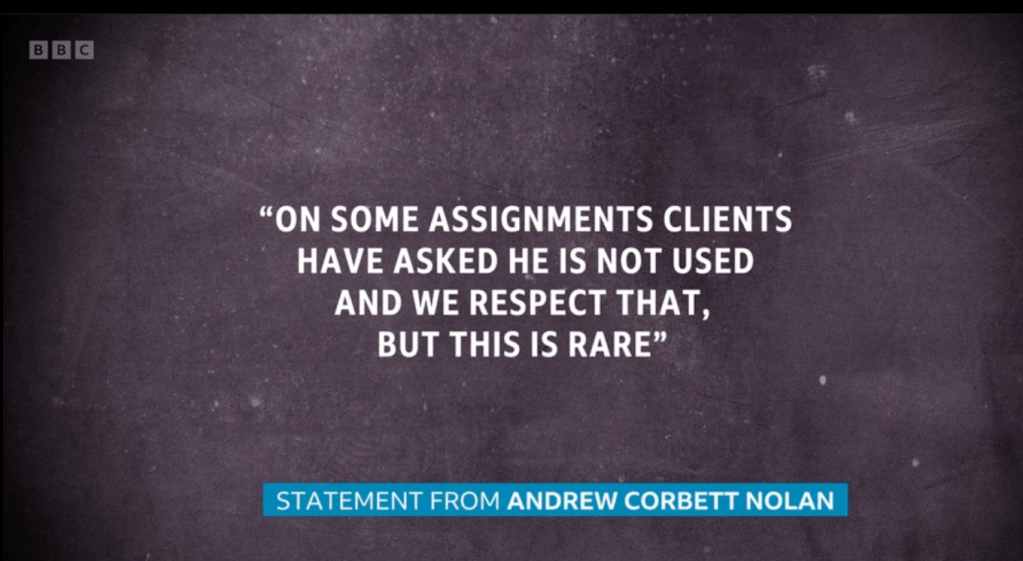
This appears to imply that Mason Fitzgerald may well be working for some NHS bodies, despite his previous dismissal by East London NHS Foundation Trust.
Mason Fitzgerald commented to the BBC:
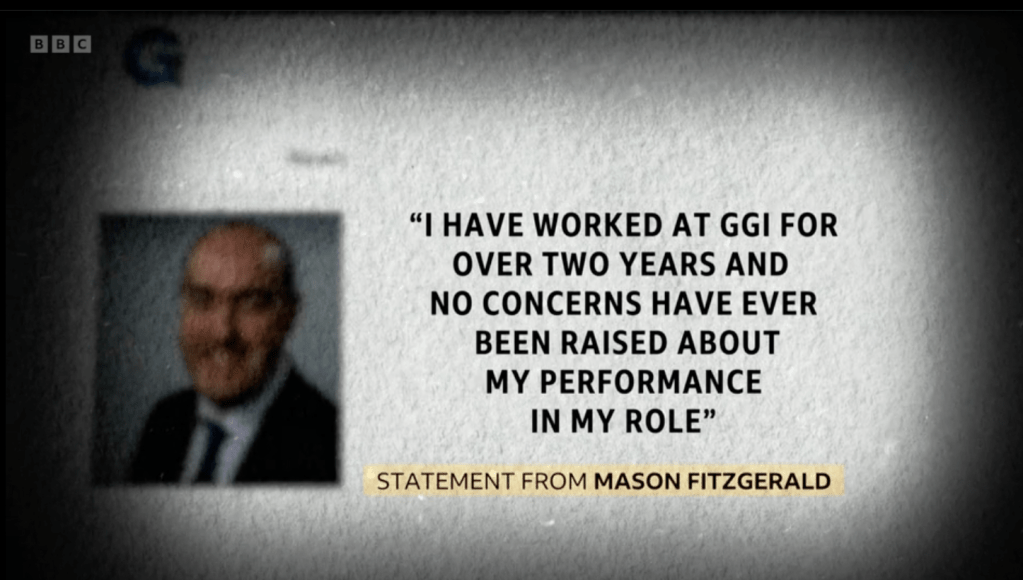
NHS England has to date refused to confirm or deny that it hired Mason Fitzgerald to work on ICS governance AFTER his false qualification claim was discovered and he was sacked by East London NHS Foundation Trust.
NHS England replied to Newsnight:
“An NHS England spokesperson said: “Any money spent by the NHS on third parties for their expertise is scrutinised in accordance with our Standard Financial Instructions and in line with public contracting regulations.
“The funding cited as spent by NHS England and Health Education England adhered to these standards, while procurements led by other NHS organisations would have been managed at local and regional levels.”
Although NHS England emphasised in its most recent correspondence that it had checked its contracts and could confirm that it had no current contracts with the GGI, it did not actually say it would not hire the GGI again in the future.
Will the further investigation findings by Newsnight make any difference, or will NHS England start hiring the GGI again when the fuss has died down?
I have asked Amanda Pritchard about her plans regarding NHS commissioning of services from the GGI.
“BY EMAIL
Amanda Pritchard
CEO NHS England
20 July 2023
Dear Amanda,
In the most recent exchange of correspondence, NHS England informed me that it had checked its current contracts and none involved the Good Governance Institute (GGI).
This followed NHSE’s hiring of the GGI last autumn via the Chief Nurse’s directorate, AFTER the GGI employed the sacked former NHS trust director Mason Fitzgerald.
Companies House advised the BBC that no company should include the sensitive word “institute” in its name without permission from the Secretary of State, and that to do so is an offence. According to the BBC, Companies House has written to the GGI to ask it to stop using its current name.
There were also other matters of concern.
Will NHS England take the additional step of reviewing whether this company should ever be used again by the NHS?
As a wider point, Rachael Maskell MP questioned the usefulness and value for money in outsourcing governance reviews in this manner. Prof Andrew Sturdy from Bristol University pointed to the “demand inflation” that is driven by the self-interest of private consultants looking for repeat business, when they transact with the NHS.
Many thanks and best wishes,
Minh
Dr Minh Alexander
Cc Health and Social Care Committee”
Newsnight sought expert advice from Prof Andrew Sturdy, School of Business, University of Bristol who advised that NHS bodies are spending on average £1.2 million annually, each, on external consultancy which is making them less efficient. External consultants in his view want repeat business, cultivate friendly relationships and are reluctant to tell Emperors that they are exposed.
Prof Sturdy and colleagues’ 2020 paper on the NHS’ wasteful use of external consultancy can be found below:
Rachel Maskell MP questioned the sense of outsourcing such high-priced consultancies. She submits that governance determinations should be formal, statutory and subject to proper review of improvement.
In other news, NHS England and the ICB have crowned a long-served Rosser/Smith lieutenant, Jonathan Brotherton, as the new Group CEO of UHB even before the Bewick reviews on UHB’s frailties have been completed.
Very disheartening for many staff, no doubt.
We have of course been assured by the relevant parties that it was a fair and competitive appointment. Perhaps in the same way that the UHB gave assurances that the FPPR investigation on David Rosser was sound, but have refused to publish it.
University Hospitals Birmingham NHS Foundation Trust announces Group Chief Executive
Published on 17/07/2023
Jonathan Brotherton, Group Chief Executive of University Hospitals Birmingham NHS Foundation Trust (UHB).
Statement from Dame Yve Buckland, Chair of University Hospitals Birmingham NHS Foundation Trust:
“I am very pleased to announce, that following a rigorous and competitive recruitment process, Jonathan Brotherton has been appointed as Group Chief Executive of University Hospitals Birmingham NHS Foundation Trust (UHB).
“Jonathan, UHB’s interim chief executive, was successful in securing the role after a multi-staged process, involving a wide range of external and internal stakeholders, including senior clinical and non-clinical staff, governors and regulators.
“On behalf of the Board, I would like to offer our sincere congratulations to Jonathan on his successful appointment.
“I very much look forward to continuing to work alongside him and the Board, to deliver our ambitious – but fundamental – priorities, which will make real and noticeable differences to our patients and colleagues.
“Jonathan takes up his role with immediate effect.”
Speaking on his appointment, Jonathan said: “I am absolutely delighted to be chief executive of such an amazing organisation. As someone who was born in Birmingham and has worked in the area for a number of years, both clinically and managerially, it is a real privilege and an honour.
“For the past seven months – as interim chief executive – I have sought out the thoughts, opinions and concerns of many people, during what has been a very challenging time for UHB, its people and its patients. There is clearly a lot which needs to happen; we are reliant on the amazing people who work here to deliver that.
“As chief executive, I will be working hard to make sure that we have the kind of culture that allows people to flourish and thrive, to enable us all to do our very best for our patients.
“I want UHB to be a place where everyone is proud to work, where our patients are proud to be treated, and where we deliver the best possible and equitable care to each and every patient.”
Lastly, I made a small cameo appearance on the Newsnight broadcast, questioning why a governance organisation would employ someone who had been dismissed after a false qualification claim.
I see that the GGI has responded.

RELATED ITEMS
Darren Grayson was a former NHS CEO at East Sussex who resigned after a very critical CQC report. He sold services to the NHS though the Good Governance Institute, including at Sussex. Most recently, he secured a job at Sussex Uiversity Hospitals NHS Foundation Trust, as Chief Governance Officer.

 Alexander's Excavations
Good heavens! ‘Festival of Governance’ is somewhat jarring. There’s always something mind-expanding, if not destroying, about the ploys of the P.R. departments of the NHS and its ‘dependent’ organisations.
So reassuring to see that you are kindly providing guidance and encouragement to those in danger of exceeding boundaries.
Perhaps it indicates a touch of genius to seek extensions to what is usually understood to mean ‘institute,’ ‘professor,’ ‘doctor,’ or, disappointingly, it demonstrates marketing. Or, of course, personnel were so occupied covertly solving delicate and long-standing problems that other matters just slipped by.
Having said that, I recall a post-death expose of Sir James Savile, in which an NHS document referred to him as ‘Dr Savile.’ And doesn’t GGI sound so similar to the more familiar and respected CGI? Maybe I should change my surname to ‘Institute’ in the hopes of being taken more seriously.
In the meantime, thank you. Stay strong.
LikeLike